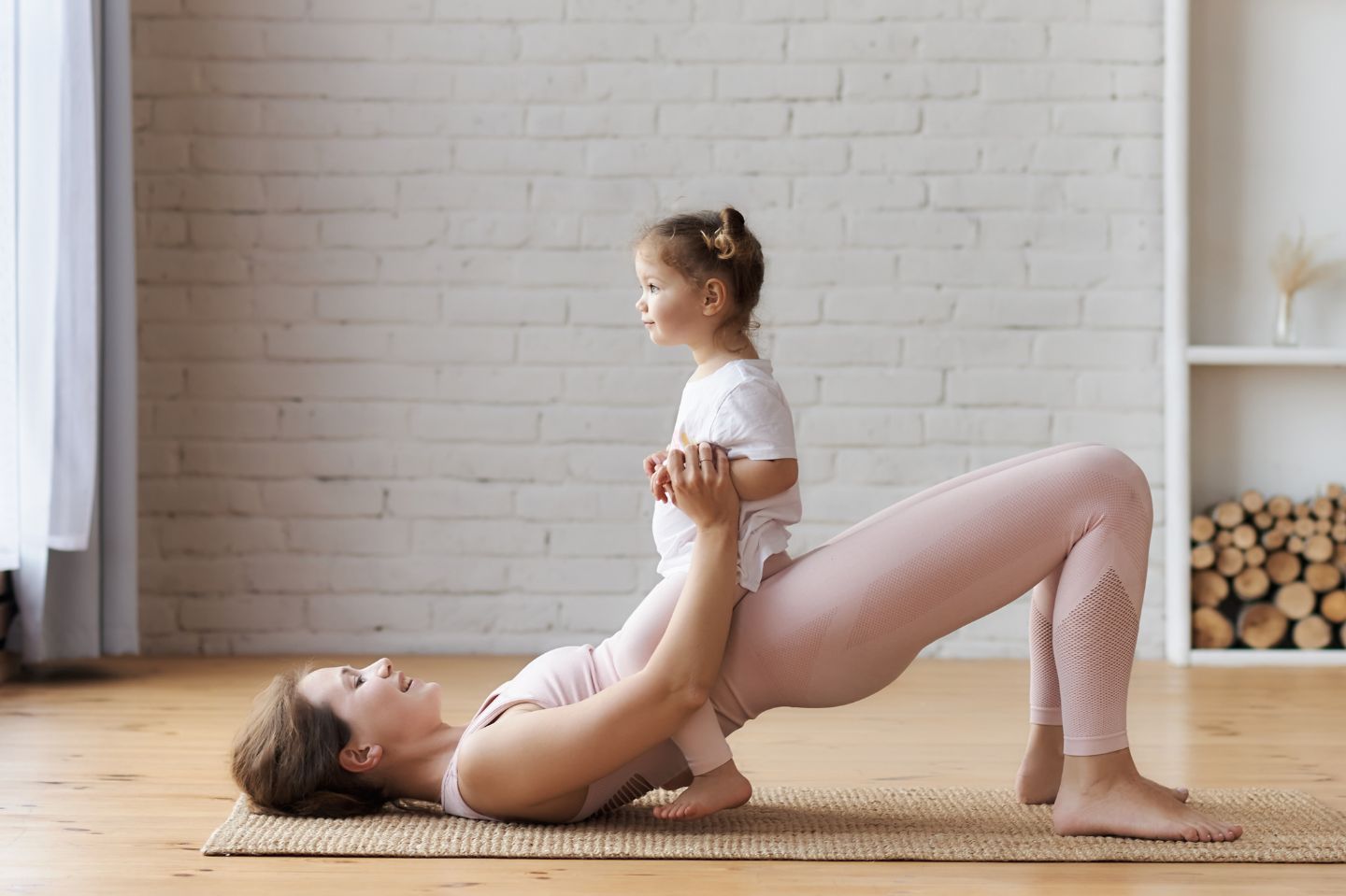

We can’t stop time, but we do have some control over how our bodies and minds age. Staying connected with others and doing activities like reading or solving puzzles can help keep your mind sharp as you get older.
Exercise is important for keeping your body strong. Cardio helps your heart and boosts endurance, flexibility training can ease pain and stiffness, and strength training builds muscle to support healthy aging.
As we age, we naturally lose muscle, a process called sarcopenia. Doing regular resistance training can help prevent this. Without it, the risk of injuries like broken hips goes up.
With this in mind, here’s a workout plan to help you stay strong at any age.
Structure of the Program
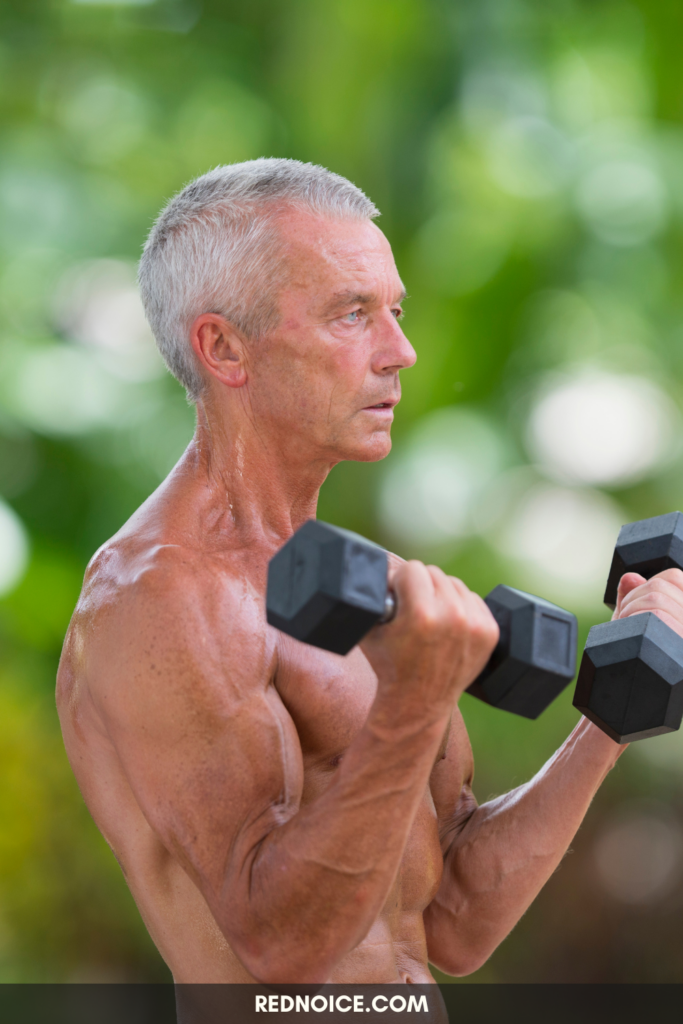
You should consider performing strength training exercises at least 2 days a week, up to 5 days per week. This will ensure you regularly hit all major muscle groups and stay as fit as possible later in life.
The following workout is a total body program. This means you should not perform this routine on consecutive days; instead, allow at least 48 hours of rest between sessions.
You’ll need a set of dumbbells (or something heavy) and some space to move. You should aim to complete 8-12 reps of each exercise, with about 1 minute of rest between sets and 3 sets per exercise. Once you’ve finished a workout, move on to the next one, in any order you like.
Strength Training Workout for Seniors
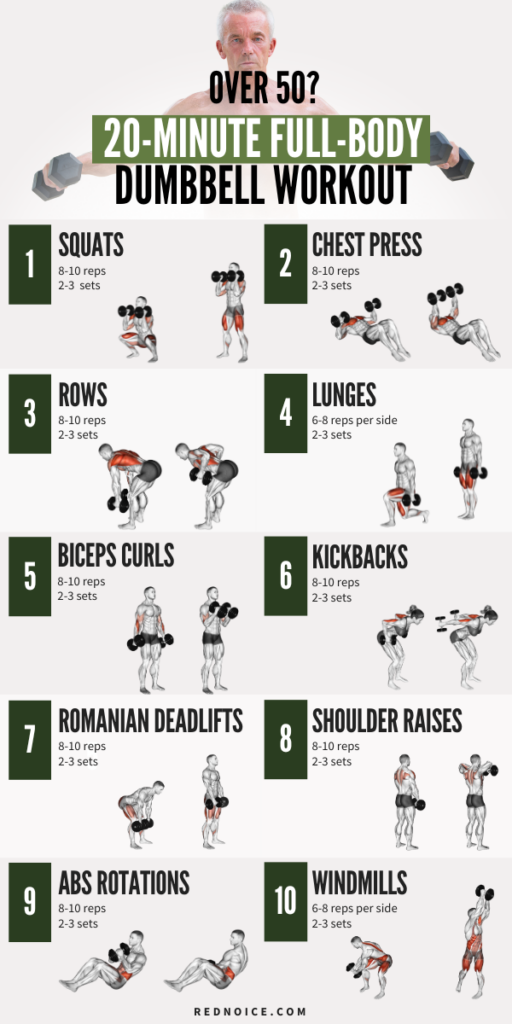
Here’s a starter program for seniors who want to get or stay in shape or address strength-related issues. If you have concerns, talk to your healthcare provider before starting.
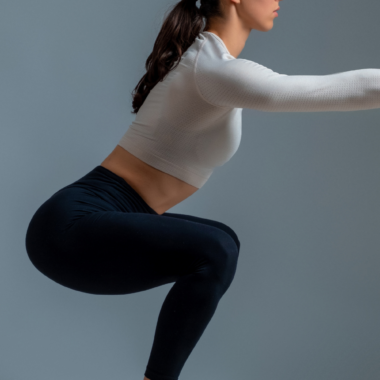
1. Squats
Squats are one of the most basic movements ever. But they are critical for good health. So, don’t sleep on these!
How to Perform
- Hold one dumbbell in each hand (or a single dumbbell with both hands).
- Bend your knees and allow your hips to hinge.
- Once you’ve gone as low as you can, stand back up.
2. Supine Chest Press From the Floor
Everyone likes working their chest muscles. But aside from being a fun, aesthetically pleasing muscle group to work with, the pecs are crucial for pushing movements in daily life.
How to Perform
- Lie on your back with your knees bent and your feet on the floor
- Hold the dumbbells, one in each hand.
- Press the weights toward the ceiling.
- Lower them back down to the starting position to complete the rep.
3. Dumbbell Row
Much like the pecs are important for pushing movements, the back muscles are essential for daily pulling movements. Rows help to improve the pulling motor pattern.
How to Perform
- Hold one dumbbell in each hand while standing.
- Bend forward at the waist, allowing the arms to hang down to the ground with the weights.
- Pull the weights up toward your chest, then let them slowly return to the extended position to complete the rep.
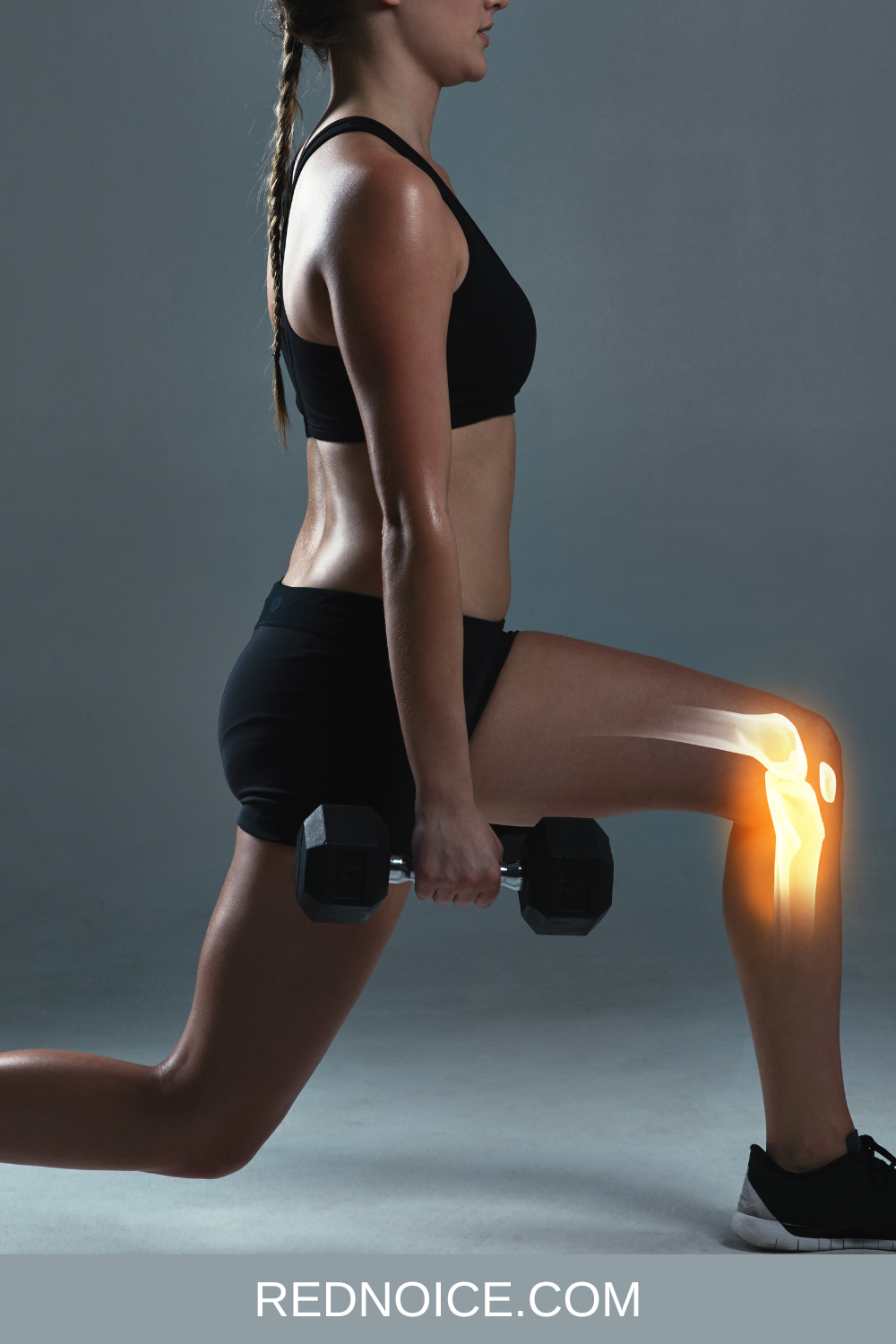
4. Alternating Lunges
Much like squats, lunges are critical for good movement health. But lunges are even better than squats in some ways, as they emphasize a single leg and allow you to address any asymmetries.
How to Perform
- Start standing, with one dumbbell in each hand.
- Step your right leg forward and bend your right knee, allowing your left knee to lower toward the ground.
- Stand back up, switch legs, and repeat on the other side.
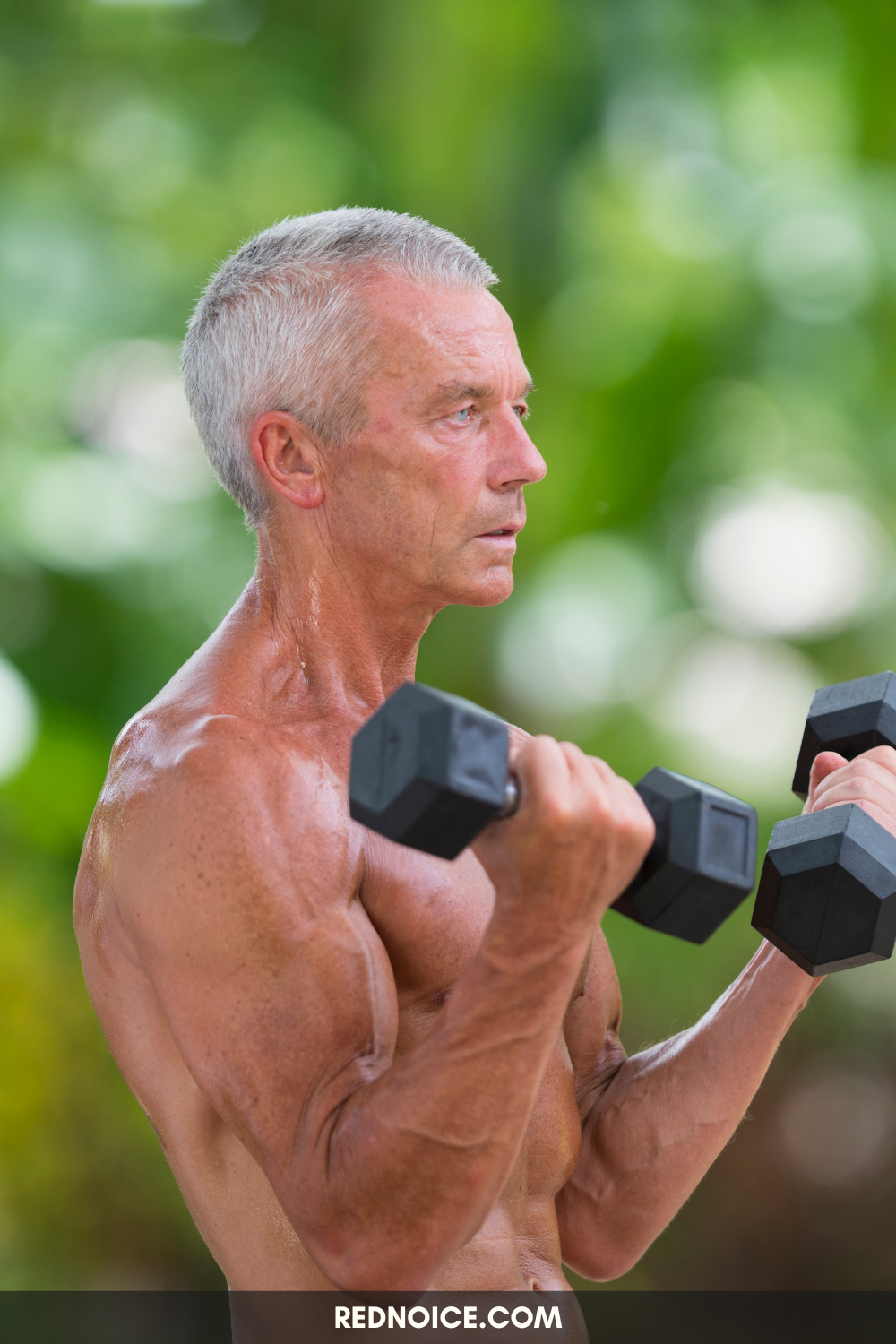
5. Traditional Dumbbell Biceps Curl
Who doesn’t love a good bicep curl? While not as functional as some other movements, bicep strength (and elbow flexion) is critical for lifting objects off the floor.
How to Perform
- In standing, hold one dumbbell in each hand.
- Bend your elbows and curl the weights upward.
- Lower the weights back down to the starting position to complete the rep.
6. Triceps Kickback with Dumbbells
The triceps make up most of the upper arm. These critical muscles are involved in most, if not all, upper-body pushing motions.
How to Perform
- Hold one dumbbell in each hand in a standing position.
- Bend over at the waist until your trunk is parallel to the ground.
- Straighten out your elbows by contracting your triceps.
- Allow your elbows to bend to complete the rep.
7. RDL with Dumbbells
Deadlifts, much like squats, are a motion we use every day. Picking up grocery bags from the floor and other similar tasks require good deadlift strength.
How to Perform
- Start in a standing position, holding one dumbbell in each hand.
- Keep your back straight, bend forward at the waist, and lower your weights toward the floor.
- Once you’ve gone as low as you can comfortably, stand back up to complete the rep.
8. 2-Way Shoulder Raise
The shoulders need to be strong in order to combat the effects of aging. This move builds “boulder shoulders,” and it can help you avoid common shoulder injuries later in life.
How to Perform
- In standing, hold one dumbbell in each hand.
- Lift the weights to the front, with your palms facing one another.
- Once you’ve lifted the weights to about 90 degrees, return them to the starting position.
- Next, lift the weight straight out to the sides.
- Once you’ve reached about 90 degrees, lower them back down to the starting position to complete one rep.
9. Ab Rotations
Abs are often only considered in terms of sit-ups or crunches. However, by incorporating a twisting motion, you can increase oblique activation, improving the exercise’s overall effectiveness.
How to Perform
- Start in a seated position on the floor.
- Hold one dumbbell with both hands.
- Lean back until you feel your abs activate.
- Twist the weight to the right side, then to the left to complete one rep.
10. Standing Windmills
Windmills are a great move for increasing shoulder stability and core strength.
How to Perform
- Hold one dumbbell in your right hand while standing.
- Turn to your right as you reach your left hand to the ground.
- Return to the starting position to complete the rep.
- Remember to perform on both sides.
Conclusion
Getting older isn’t for the weak! There are tons of orthopedic issues that plague the older population. Luckily, regular strength training can help you fight back against these everyday ailments.
Just remember to take your time and listen to your body. With just one quality workout at a time, you’ll vastly improve your chances of aging in a healthy manner.
Works Cited
- Luong G, Charles ST, Fingerman KL. Better With Age: Social Relationships Across Adulthood. J Soc Pers Relat. 2011 Feb 1;28(1):9-23. doi: 10.1177/0265407510391362. PMID: 22389547; PMCID: PMC3291125.
- Cannataro R, Cione E, Bonilla DA, Cerullo G, Angelini F, D’Antona G. Strength training in elderly: An useful tool against sarcopenia. Front Sports Act Living. 2022 Jul 18;4:950949. doi: 10.3389/fspor.2022.950949. PMID: 35924210; PMCID: PMC9339797.