You’ve probably saved a protein pancake recipe before. Maybe more than one. And then Tuesday morning arrived, you opened the fridge, and made toast.
That gap — between saving a recipe and actually making it — is the real problem with most protein pancake content. The recipes look great in a photo. Then you read the instructions and realize you need a blender, six ingredients you don’t have, and about forty minutes you don’t have either.
Here’s the thing: high-protein pancakes don’t have to taste like a punishment. When done right, they’re every bit as satisfying as the classic diner version — maybe more so, because they actually keep you full until lunch. These recipes are built for weekday mornings when you have maybe ten minutes, one functioning brain cell, and a strong desire for breakfast that actually keeps you full until noon.
Some use protein powder. Some don’t. All of them are genuinely fluffy — not dense, not rubbery, not weirdly gummy in the middle.
Pick one. Make it Sunday. Freeze the rest. That’s the system.
What Makes a Protein Pancake Actually Fluffy (And Not Rubbery)
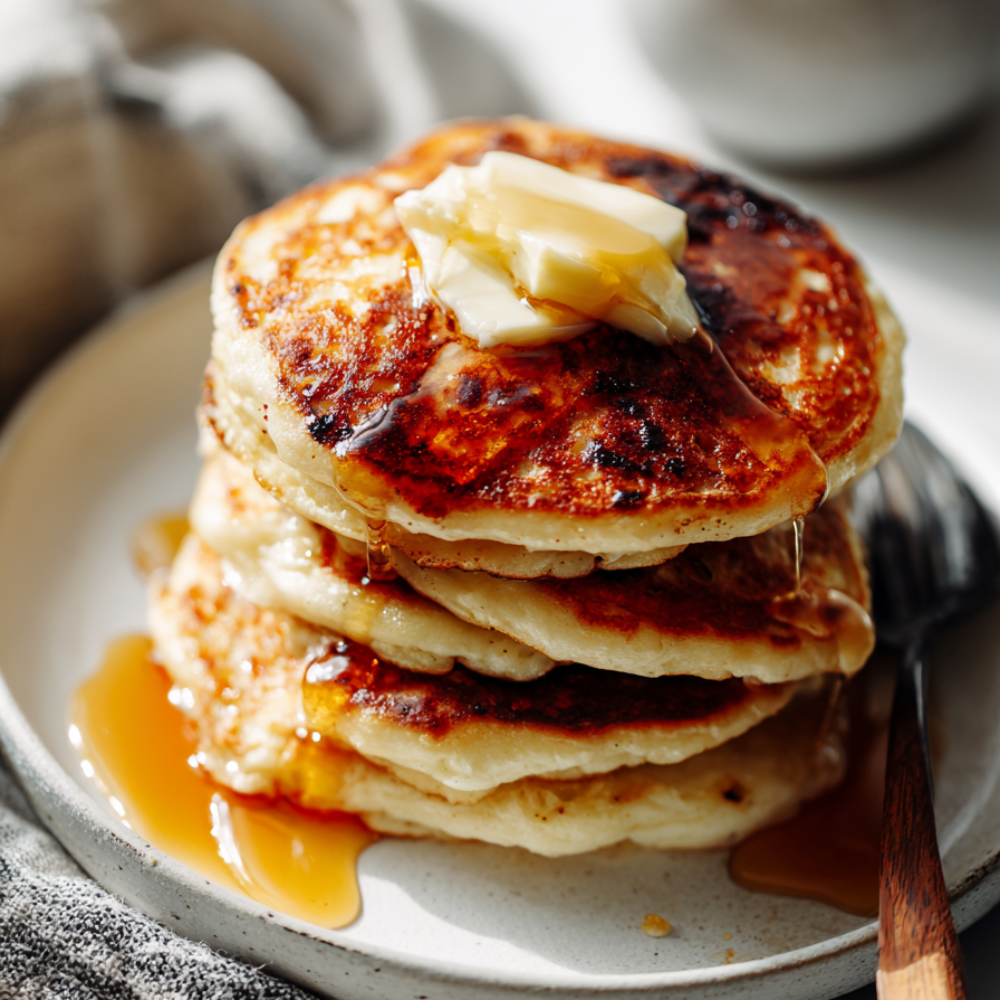
If you’ve made protein pancakes before and ended up with something that tasted like a warm protein bar, you’ll want to know why. The fix is simple once you understand what’s going wrong.
Batter thickness matters. Protein pancake batter should be slightly thicker than regular pancake batter, but still pourable. If it looks like paste, add a tablespoon of milk at a time until it loosens. A batter that’s too thick cooks unevenly and becomes dense in the center.
Don’t overmix. Lumps are fine. Overmixing develops gluten (even with oat flour), making pancakes tough rather than tender. Stir until the wet and dry ingredients are just combined, then stop.
Rest the batter. Just two minutes. Let it sit while the pan heats up. The baking powder activates, small bubbles form, and the result is noticeably lighter than if you pour it straight into the pan.
Use the right protein powder ratio. If you’re adding powder, the sweet spot is one scoop (about 25g) to roughly ½ cup of flour. More than that, and you’re heading toward rubbery territory.
Cook on medium heat, not high. A too-hot pan burns the outside before the inside cooks through, leaving dry pancakes that look done but aren’t.
That’s it. The recipes do the rest.
10 High-Protein Pancake Recipes You’ll Actually Make
Each recipe includes a protein count and prep time. They’re ordered to cover the full range — no powder, with powder, vegan, gluten-free, meal prep, and more.
1. Banana Oat Protein Pancakes (No Powder Needed)
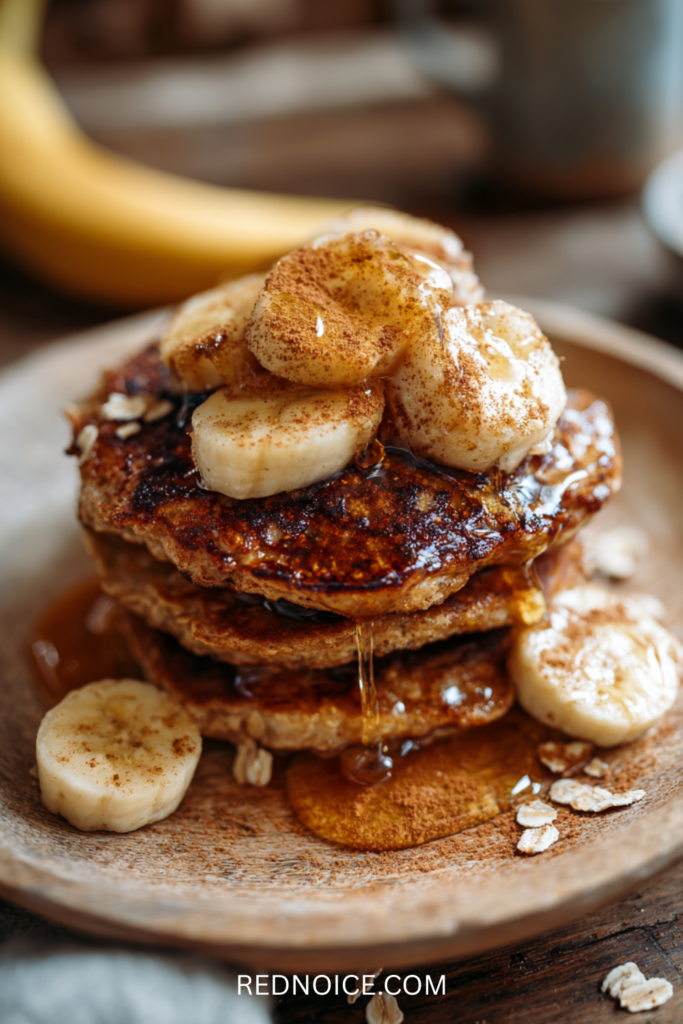
This is the one to start with. The banana acts as both a sweetener and binder — no added sugar, no measuring honey separately. The oats give you fiber and slow-digesting carbs that keep you full without a blood sugar spike. No protein powder required. The eggs and optional cottage cheese or Greek yogurt carry the protein.
Ingredients
(makes 8–10 pancakes):
- 2 ripe bananas (the riper, the sweeter)
- 2 large eggs
- 1 cup rolled oats (or oat flour)
- ½ cup cottage cheese or plain Greek yogurt
- 1 tsp baking powder
- ½ tsp cinnamon
- Pinch of salt
Instructions:
- Blend everything for 30 seconds, or mash bananas well and mix by hand if you want texture from the oats.
- Let batter rest 2 minutes.
- Cook in a lightly oiled nonstick pan over medium heat, 2–3 minutes per side. Flip when bubbles form, and edges look set.
Protein: 18–22g per serving (3 pancakes) Prep time: 5 minutes Freezer-friendly: Yes, up to 3 months
2. Cottage Cheese Protein Pancakes
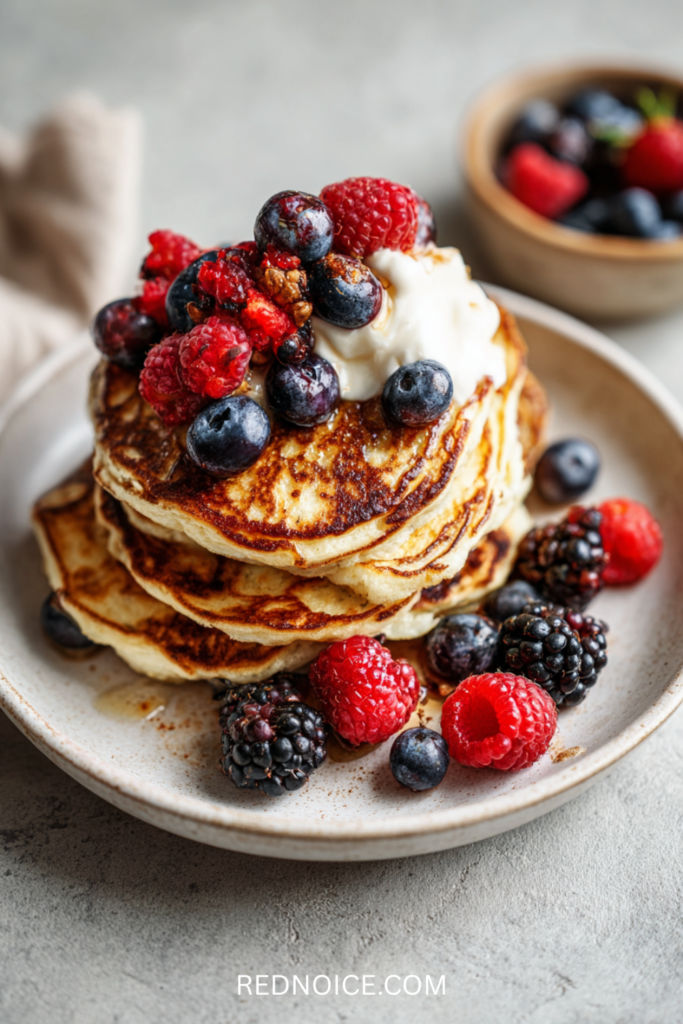
Blended cottage cheese disappears completely into the batter — no visible curds, no flavor dominance. It adds about 14g of protein per half cup, creates a creamy crumb, and keeps the pancakes moist longer than most other protein sources. This is the “hidden protein” format. You get 25g per serving from ingredients that don’t look or taste like a supplement.
Ingredients
(makes 8–10 pancakes):
- 1 cup cottage cheese (full-fat or 2%)
- 3 large eggs
- ½ cup oat flour (or blend rolled oats)
- 1 tsp baking powder
- 1 tsp vanilla extract
- Optional: 1 tbsp honey or maple syrup
Instructions:
- Blend cottage cheese until smooth (about 10 seconds).
- Mix with eggs, oat flour, baking powder, and vanilla.
- Rest 2 minutes. Cook over medium heat for 2–3 minutes per side.
Protein: ~25g per serving (3 pancakes) Prep time: 8 minutes Freezer-friendly: Yes
3. Greek Yogurt Protein Pancakes (Fluffy Every Time)
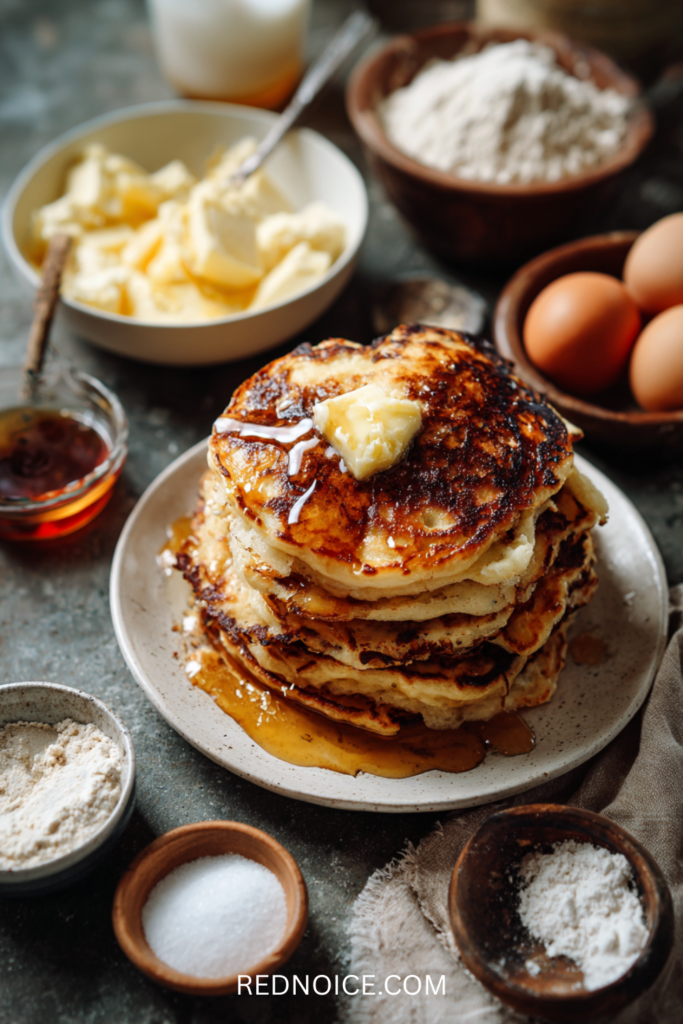
Greek yogurt pancakes are consistently fluffy because the acidity reacts with baking powder to create extra lift. You’re essentially using it the way a baker would use buttermilk — it tenderizes the crumb while adding structure. It also adds a gentle tang that makes these taste more like restaurant pancakes than anything labeled “healthy.”
Ingredients
(makes 8–10 pancakes):
- 1 cup plain Greek yogurt (full-fat for best texture)
- 2 large eggs
- ½ cup oat flour or all-purpose flour
- 1 tsp baking powder
- ½ tsp baking soda
- 1 tsp vanilla extract
- Pinch of salt
Instructions:
- Whisk eggs and Greek yogurt together until smooth.
- Add dry ingredients and stir until just combined. Do not overmix.
- Rest 2 minutes. Cook on medium-low heat — these brown faster than standard pancakes.
- Flip when bubbles form, and edges look dry.
Protein: ~20g per serving (3 pancakes) Prep time: 8 minutes Freezer-friendly: Yes
4. Protein Powder Pancakes (One Bowl, No Blender)
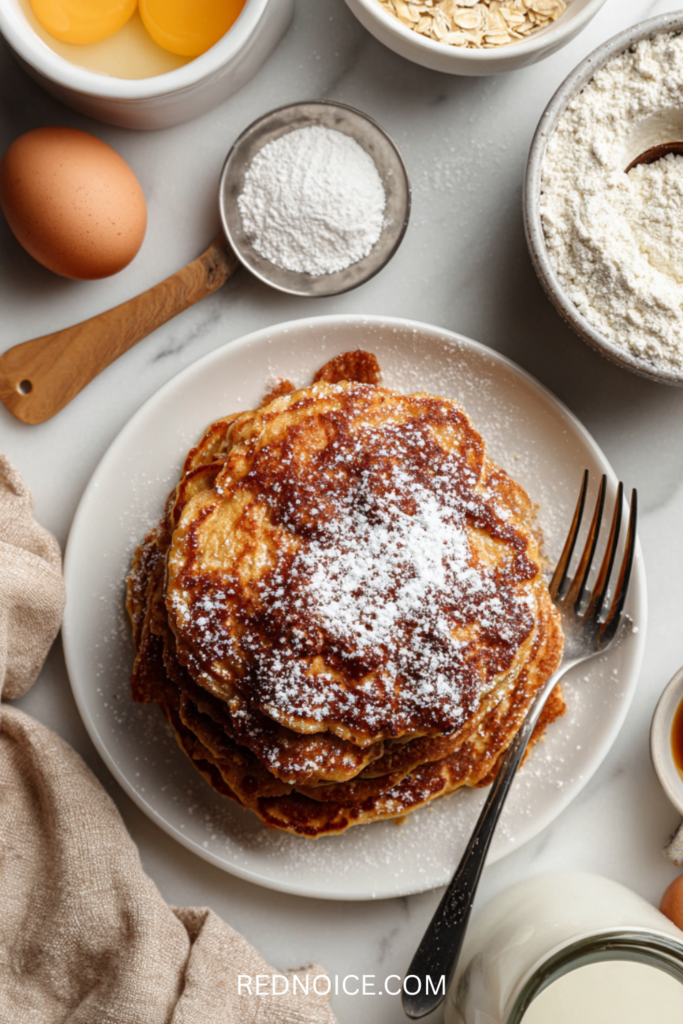
If you have protein powder, this is the most straightforward high-protein breakfast you can make. One bowl. No blender. Vanilla works best for flavor; unflavored is fine. Plant-based powders absorb more liquid, so add an extra tablespoon of milk if the batter looks too thick.
Ingredients
(makes 8–10 pancakes):
- 1 scoop (25g) vanilla or unflavored protein powder
- ½ cup oat flour or all-purpose flour
- 1 tsp baking powder
- 2 large eggs
- ½ cup milk (any kind)
- 1 tbsp maple syrup or honey
- 1 tsp vanilla extract (if using unflavored powder)
Instructions:
- Mix dry ingredients in a bowl. Add wet ingredients and stir until just combined.
- If batter is too thick, add milk a tablespoon at a time.
- Rest 2 minutes. Cook over medium heat for 2–3 minutes per side. Flip once — just once — when bubbles form.
Protein: 30–35g per serving (3 pancakes). Prep time: 5 minutes. Freezer-friendly: Yes — this version freezes especially well.
5. Chocolate Protein Pancakes (Tastes Like Dessert)
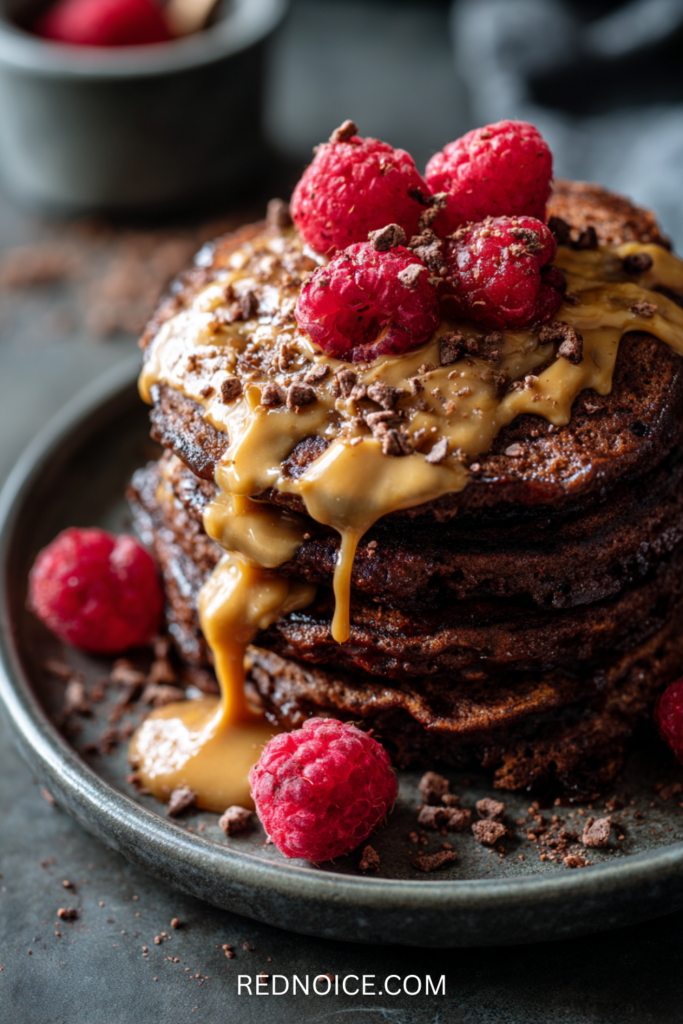
Cocoa powder and chocolate protein powder make these taste like a brownie that happens to be a reasonable breakfast. The Greek yogurt prevents the chalkiness you’d normally get from a powder-heavy batter. If you need to sell someone on healthy protein pancake recipes, start here.
Ingredients
(makes 8–10 pancakes):
- 1 scoop of chocolate protein powder
- ½ cup whole wheat or oat flour
- 2 tbsp unsweetened cocoa powder
- 1 tsp baking powder
- 1 cup plain Greek yogurt
- 2 eggs
- ¼ cup milk (any kind)
- Optional: 1 tbsp honey or maple syrup
Instructions:
- Whisk together protein powder, flour, cocoa powder, and baking powder in a bowl.
- In a separate bowl, whisk yogurt, eggs, milk, and sweetener.
- Combine wet and dry. Stir until just mixed. Rest 5 minutes.
- Cook in a greased skillet over medium heat for 2–3 minutes per side.
Protein: ~28–32g per serving Prep time: 5 minutes Freezer-friendly: Yes
6. Blueberry Protein Pancakes (Frozen Berry Hack)
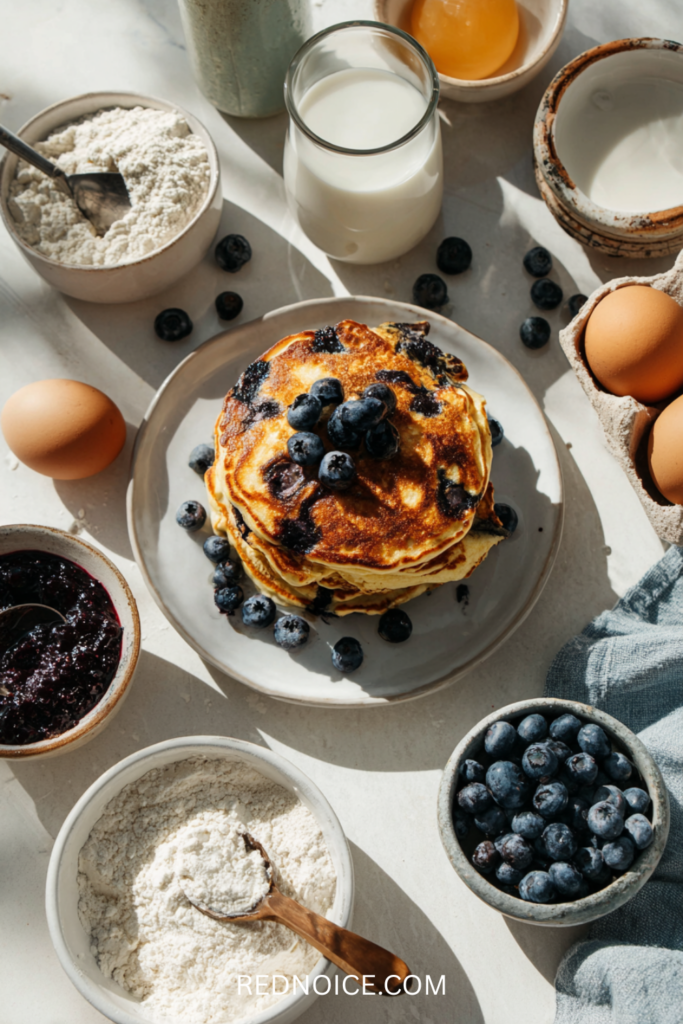
Add frozen blueberries directly to the batter — no need to thaw. They release juice as the pancake cooks, which creates natural pockets of sweetness throughout. This is a good option when fresh fruit isn’t available, or you want something that feels a little more special with minimal extra effort.
Ingredients:
(makes 8–10 pancakes):
- 1 scoop vanilla protein powder
- ½ cup oat flour
- 1 tsp baking powder
- ½ cup Greek yogurt
- 2 eggs
- ¼ cup milk
- ½ cup frozen blueberries (no need to thaw)
Instructions:
- Whisk dry ingredients together. Whisk wet ingredients separately.
- Combine, then gently fold in frozen blueberries.
- Cook over medium heat for 2–3 minutes per side. Handle gently when flipping — the berries can make these a little fragile.
Protein: ~26–30g per serving Prep time: 5 minutes Freezer-friendly: Yes
7. Peanut Butter Protein Pancakes (High Fat, High Protein)
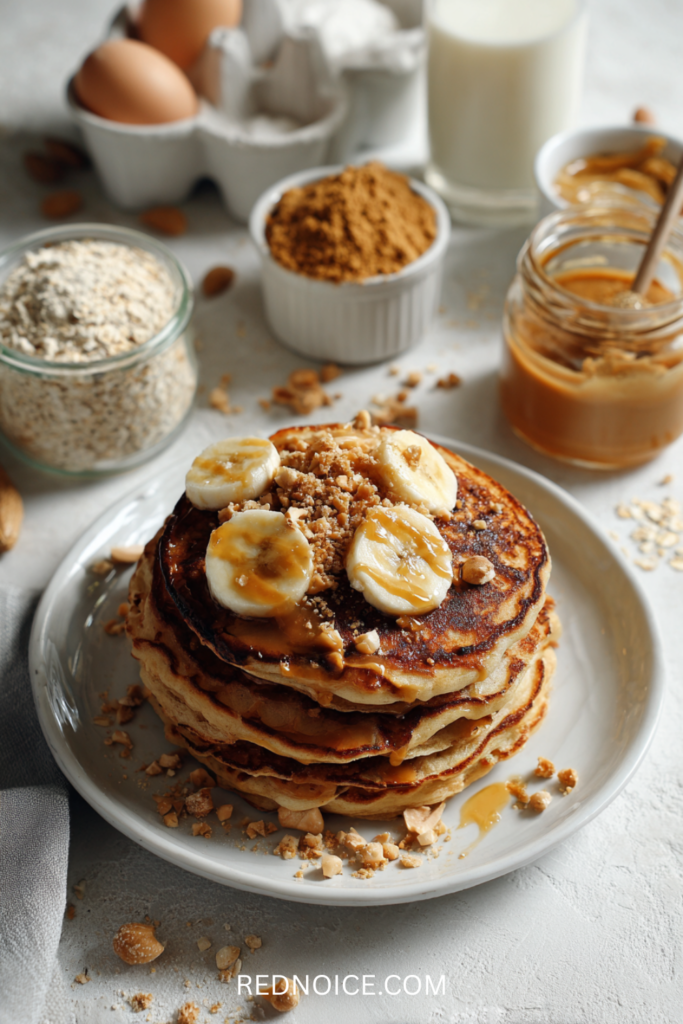
Peanut butter adds richness and staying power that most protein pancakes lack. The fat slows digestion, which means you’re not hungry again by 10 AM. This version works particularly well as a pre-workout or post-workout breakfast. Natural peanut butter blends better than the commercial kind — stir it well before measuring.
Ingredients:
(makes 8–10 pancakes):
- 1 scoop vanilla or unflavored protein powder
- ½ cup oat flour
- 1 tsp baking powder
- ¼ cup natural peanut butter
- 2 eggs
- ½ cup milk
- 1 tbsp honey (optional)
Instructions:
- Whisk together protein powder, flour, and baking powder in a bowl.
- In a separate bowl, whisk peanut butter, eggs, milk, and honey until smooth.
- Combine wet and dry. Stir just until mixed.
- Cook over medium heat for 2–3 minutes per side.
Protein: ~32g per serving Prep time: 5 minutes Freezer-friendly: Yes
8. Vegan Protein Pancakes (25g Plant Protein)
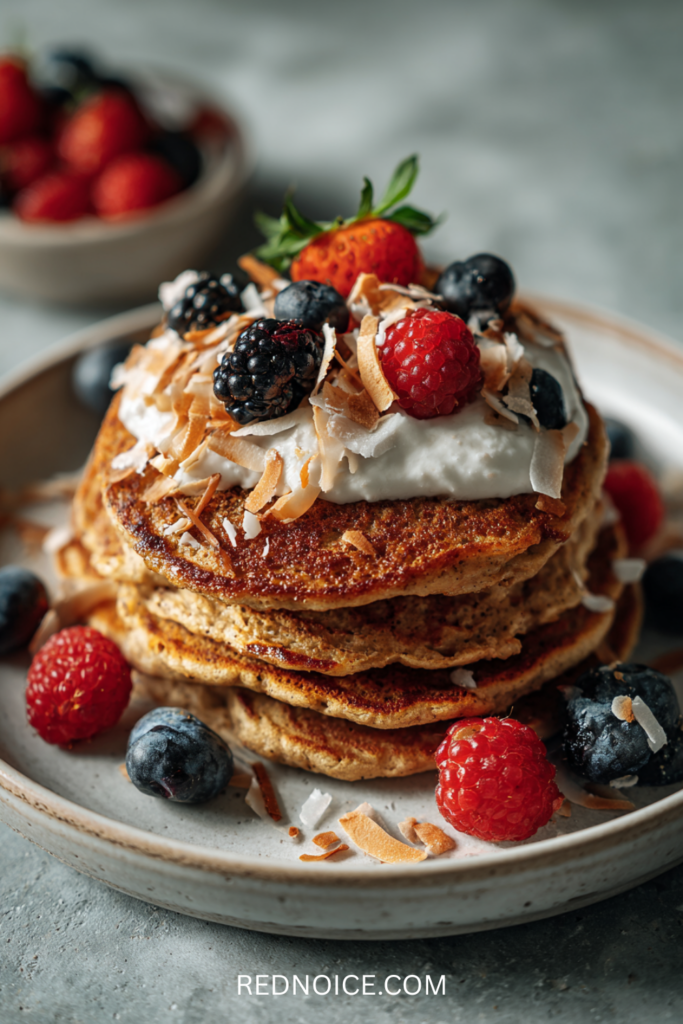
These use pea or soy protein powder and a flax egg in place of regular eggs. Still fluffy, still filling. The flax egg needs 5 minutes to set, so mix it first and let it sit while you prep everything else. Coconut yogurt can be substituted for Greek yogurt to make a dairy-free version with more moisture.
Ingredients:
(makes 8–10 pancakes):
- 1 scoop vegan protein powder (pea or soy)
- ½ cup oat flour
- 1 tbsp ground flaxseed + 3 tbsp water (flax egg — rest 5 minutes)
- 1 tsp baking powder
- ¾ cup unsweetened almond milk
- 1 tbsp maple syrup
- 1 tbsp coconut oil, melted
Instructions:
- Make the flax egg first: mix flaxseed with water, let sit for 5 minutes.
- Whisk dry ingredients together.
- Add wet ingredients, including flax egg, almond milk, maple syrup, and oil.
- Stir until just combined. Rest 5 minutes.
- Cook in a nonstick skillet over medium heat for 2–3 minutes per side.
Protein: 25g per serving Prep time: 10 minutes (includes flax egg rest) Freezer-friendly: Yes
9. Gluten-Free Protein Pancakes (No Powder Option)
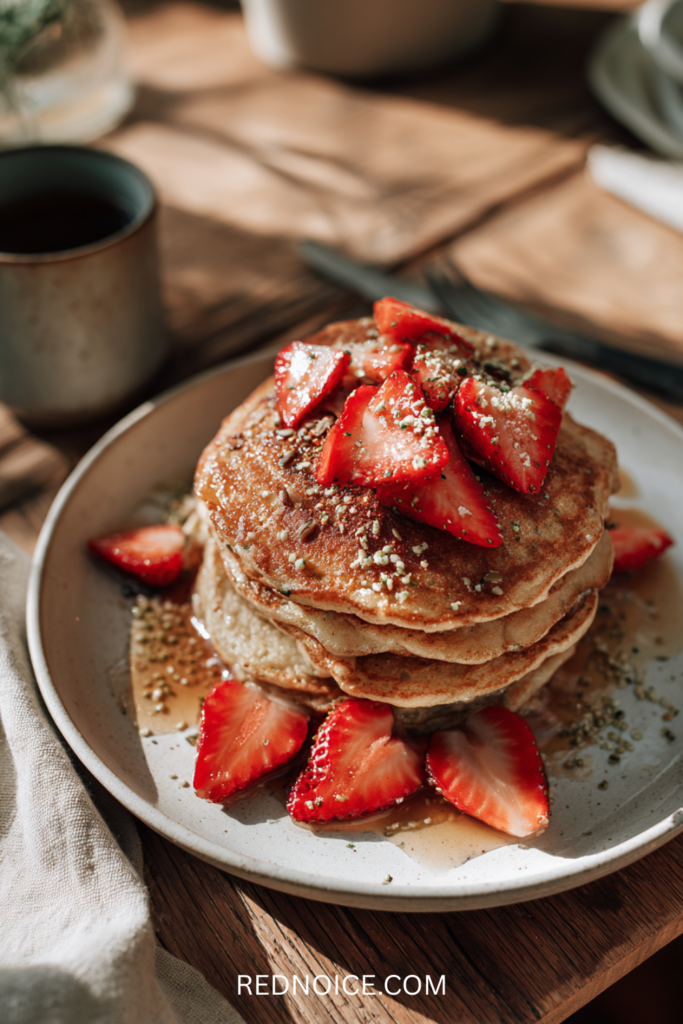
Almond flour and cottage cheese do the work here — no protein powder, no gluten. Almond flour produces a slightly denser pancake than oat flour, so an extra half teaspoon of baking powder helps. The blended cottage cheese keeps the batter smooth and the texture tender.
Ingredients:
(makes 8–10 pancakes):
- 1 cup cottage cheese
- 2 eggs
- ½ cup almond flour
- 1 tsp baking powder
- Pinch of salt
Instructions:
- Blend all ingredients until smooth.
- Let batter rest 5 minutes — almond flour absorbs moisture slowly.
- Cook in a lightly greased skillet over medium heat for 2–3 minutes per side. These are more delicate than their oat-flour counterparts, so flip carefully.
Protein: 22–26g per serving Prep time: 5 minutes Freezer-friendly: Yes
10. Sheet Pan Protein Pancakes (Batch Cook for the Week)
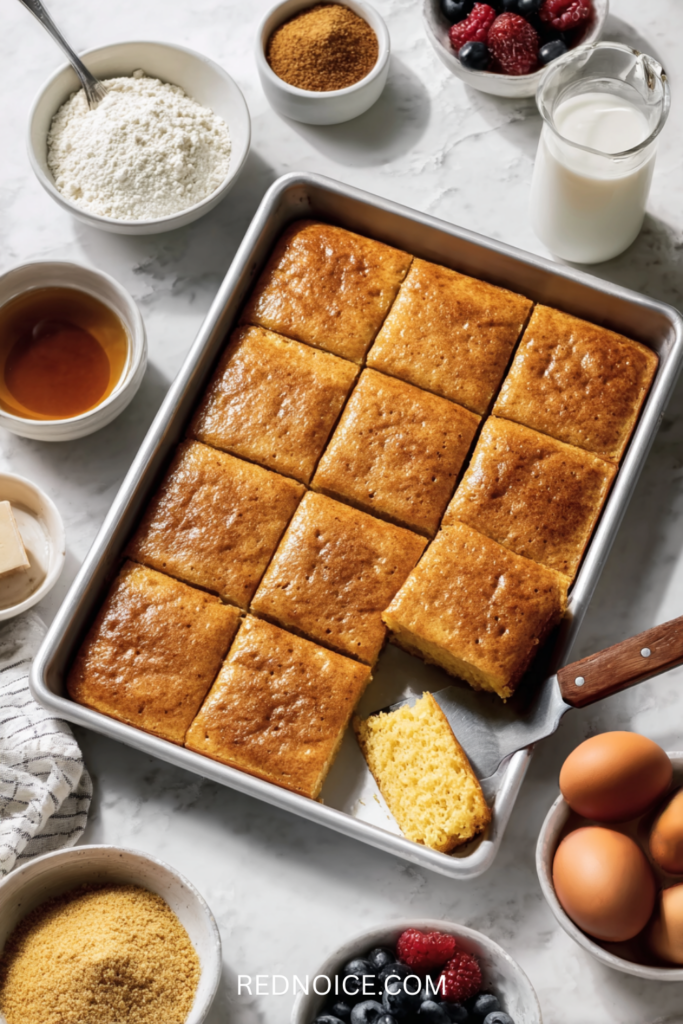
This one is for the mornings when even standing at the stove sounds like a lot. Pour batter onto a sheet pan, bake once, slice into squares, and you’re done. Zero flipping, zero standing, no watching the heat. Make a double batch on Sunday, and you have breakfast for the entire week — store squares in the freezer and reheat in the toaster.
Ingredients
(makes 4–6 servings):
- 2 scoops protein powder
- 2 cups oat flour
- 2 tsp baking powder
- ½ tsp salt
- 1 cup Greek yogurt
- 4 eggs
- 1 cup milk
- Optional: 2 tbsp maple syrup, 1 tsp vanilla
Instructions:
- Preheat oven to 375°F. Line a half-sheet pan with parchment paper.
- Whisk dry ingredients together in a large bowl.
- Whisk wet ingredients separately (yogurt, eggs, milk, maple syrup, vanilla).
- Combine wet and dry. Stir until just mixed.
- Pour batter onto prepared pan and spread evenly.
- Bake 15–18 minutes until puffed, and a toothpick comes out clean.
- Cool, then slice into squares. Store in fridge or freezer.
Protein: 30–35g per serving. Prep time: 5 minutes active, 15–18 minutes hands-off. Freezer-friendly: Excellent — best of all 10 for meal prep
Meal Prep: Make a Batch Sunday, Eat All Week
This is where the whole system pays off. Make a double batch — or two different recipes — on Sunday. Freeze in a single layer on a sheet pan first so they don’t stick together, then transfer to a zip-lock bag once frozen solid.
Reheat in the toaster, not the microwave. The toaster brings back the edges and gives you slight crispness. The microwave works in a pinch, but leaves them soft and steamy.
How long do they keep?
- Fridge: 3 days
- Freezer: up to 3 months
Which recipes freeze best:
- Sheet pan version — holds structure best, reheats cleanly.
- Protein powder version — very good, holds shape well.
- Cottage cheese version — slightly denser after freezing, still good
- Banana oat version — softest after thawing, still perfectly edible
- Baked bowls — excellent, hold well for 4 days in the fridge.
If you’re packing these for an office or commute, the sheet pan squares and baked bowl versions travel well. Pack toppings separately to avoid sogginess.
Toppings That Add Protein Without Ruining the Goal
What you put on top matters if you’re eating these for the protein. A few simple swaps from the usual syrup situation:
- Plain Greek yogurt instead of whipped cream — adds 10–15g protein, same creamy texture.
- Peanut or almond butter — 8g protein per 2 tbsp, plus healthy fat that slows digestion
- Hemp seeds — 10g protein per 3 tbsp, nearly tasteless, just sprinkle on top.
- Cottage cheese with honey — sounds unusual, tastes like a cheesecake filling, adds 14g protein per half cup.
- Microwaved frozen berries — 60 seconds turns them into a loose compote; no prep, no added sugar.
Skip the maple syrup flood if you’re watching your sugar intake. These are sweet enough from banana or vanilla that you don’t need much — a small drizzle alongside one of the above is more than enough.
Easy Swaps for Dietary Needs
These recipes are flexible. No need to buy specialty ingredients:
| Dairy-free | Coconut yogurt or oat milk instead of Greek yogurt/cottage cheese; protein count drops slightly — add a tbsp of hemp seeds |
| Gluten-free | Almond flour instead of oat flour; skip the banana and use monk fruit sweetener; add an extra egg for structure |
| Vegan | Flax egg (1 tbsp ground flax + 3 tbsp water per egg); use plant-based yogurt alternatives |
| Lower carb | Almond flour instead of oat flour; skip banana and use monk fruit sweetener; add an extra egg for structure |
| Higher protein | Add 1 tbsp hemp seeds to any batter, or replace half the milk with extra Greek yogurt |
Quick Shortcuts for Lazy Mornings
A few things that make these even easier when the week gets away from you:
- Pre-mix dry ingredients the night before. Wet ingredients take 30 seconds to add in the morning.
- Use bagged oat flour instead of blending oats—1 less step.
- Muffin tin for baked bowls — six at once, completely hands-off, no ramekin hunting required.
- Frozen fruit as topping — microwave 60 seconds for an instant compote.
- Jarred nut butter straight from the spoon as both a topping and a protein boost.
The goal isn’t perfection. It’s getting a high-protein breakfast on the table — or in the toaster — before you’ve fully woken up.
Frequently Asked Questions
Can I make protein pancakes without protein powder? Yes — recipes 1, 2, 3, and 9 above have 18–26g protein per serving with zero powder. Eggs, cottage cheese, and Greek yogurt carry the load.
Why are my protein pancakes rubbery? Two likely causes: too much protein powder relative to flour, or overmixing the batter. Stick to the 1-scoop-to-½-cup-flour ratio and stir minimally.
What’s the best protein powder for pancakes? Whey or casein blends work best—they retain moisture and create a tender crumb. Plant-based powders (pea, soy) work fine but may need an extra tablespoon of liquid. Vanilla or unflavored is more versatile than chocolate.
Can I use flavored protein powder? Yes. Vanilla works in all recipes. Chocolate is great in recipe 5. If using flavored powder, reduce or skip the added sweetener.
How do I reheat without drying them out?
- Toaster: 2–3 minutes on medium (best option)
- Microwave: 30 seconds for one pancake, covered with a damp paper towel.
- Air fryer: 350°F for 3 minutes
Are these good for weight loss? High protein meals help with satiety — you’ll eat less later in the day. Stick to one serving (3 pancakes) and use Greek yogurt or berries instead of heavy syrup.
Start With One, Then Build the System
You don’t need to make all 10. Pick one that fits your pantry tonight:
- No energy; need meal prep: Sheet-pan pancakes — bake once, eat all week.
- Want something that tastes like dessert: Chocolate protein pancakes.
- Out of protein powder: Greek yogurt or cottage cheese pancakes
- Need something fast: Banana oat — 5 minutes, one bowl, no blender required.
- Eating plant-based: Vegan protein pancakes
- Need gluten-free: Almond flour cottage cheese pancakes.
They all freeze. They all reheat in the toaster. And any of them is a better breakfast than a protein bar grabbed on the way out the door, which is usually what happens when nothing is prepped.
That’s the whole system. One batch on Sunday, five mornings of not thinking about breakfast. High protein pancakes that actually taste good — no chalky aftertaste, no rubbery texture, no complicated steps. Make them once, and you’ll understand why they stay in the rotation.