Thanksgiving turkey is the one dish that makes otherwise confident cooks nervous. It’s the centerpiece, it’s expensive, and everyone at the table has an opinion about how it should be done.
The good news is that turkey isn’t actually hard — it’s just a matter of picking the right method for your kitchen, your schedule, and your comfort level.
This list covers seven distinctly different approaches. There’s a crockpot turkey breast for small gatherings or anyone who wants the oven free.
There’s a classic garlic herb butter turkey for the traditionalist.
There’s a genuinely foolproof no-brine turkey, a dry-brined turkey with crispy skin for restaurant-quality results, a wet-brined turkey for maximum juiciness, a Cajun turkey for anyone who wants to bring the heat, and a spatchcocked rosemary lemon turkey for the fastest, crispiest bird you can make.
Whether you’re searching for easy Thanksgiving turkey recipes, juicy Thanksgiving turkey recipes, or crockpot Thanksgiving turkey recipes, this list has you covered.
Each recipe is approachable, and each delivers the two things that matter most: moist meat and beautifully browned skin.
Why These Thanksgiving Turkey Recipes Work
They cover every cooking method. Crockpot, oven-roasted, brined, dry-brined, Cajun-spiced, and spatchcocked — whatever equipment you have and whatever flavor profile you want, there’s a recipe here.
They all prioritize moisture. Every recipe includes specific techniques to keep the breast meat juicy: butter under the skin, dry brining, two-stage roasting, foil shielding, or slow cooking in broth. Dry turkey is a choice, not a requirement.
They’re written for real kitchens—no specialty equipment required beyond a roasting pan, a rack, and an instant-read thermometer. The crockpot version needs nothing but a slow cooker.
They’re genuinely different from each other. One slow-cooked, one classic, one beginner-friendly, one dry-brined, one wet-brined, one Cajun-spiced, one spatchcocked. No two are competing for the same spot on your table.
They scale for any size gathering. A crockpot turkey breast serves 6. A whole roasted turkey serves 12–14. Pick the one that matches your table.
How to Choose Your Turkey Method
Use this quick guide to pick the right recipe for your Thanksgiving:
- Small gathering or oven space is tight: Crockpot Turkey Breast.
- Classic, traditional, crowd-pleasing: Garlic Herb Butter Turkey
- First time roasting a turkey: No-Brine Thanksgiving Turkey
- Best possible skin and juiciest meat: Dry-Brined Crispy Skin Turkey
- Maximum moisture, willing to plan: Brined Turkey
- Bold, spicy, unforgettable: Cajun Roasted Turkey
- Fastest cook time and crispiest skin: Spatchcocked Rosemary Lemon Turkey
1. Crockpot Turkey Breast (Frees Up the Oven)
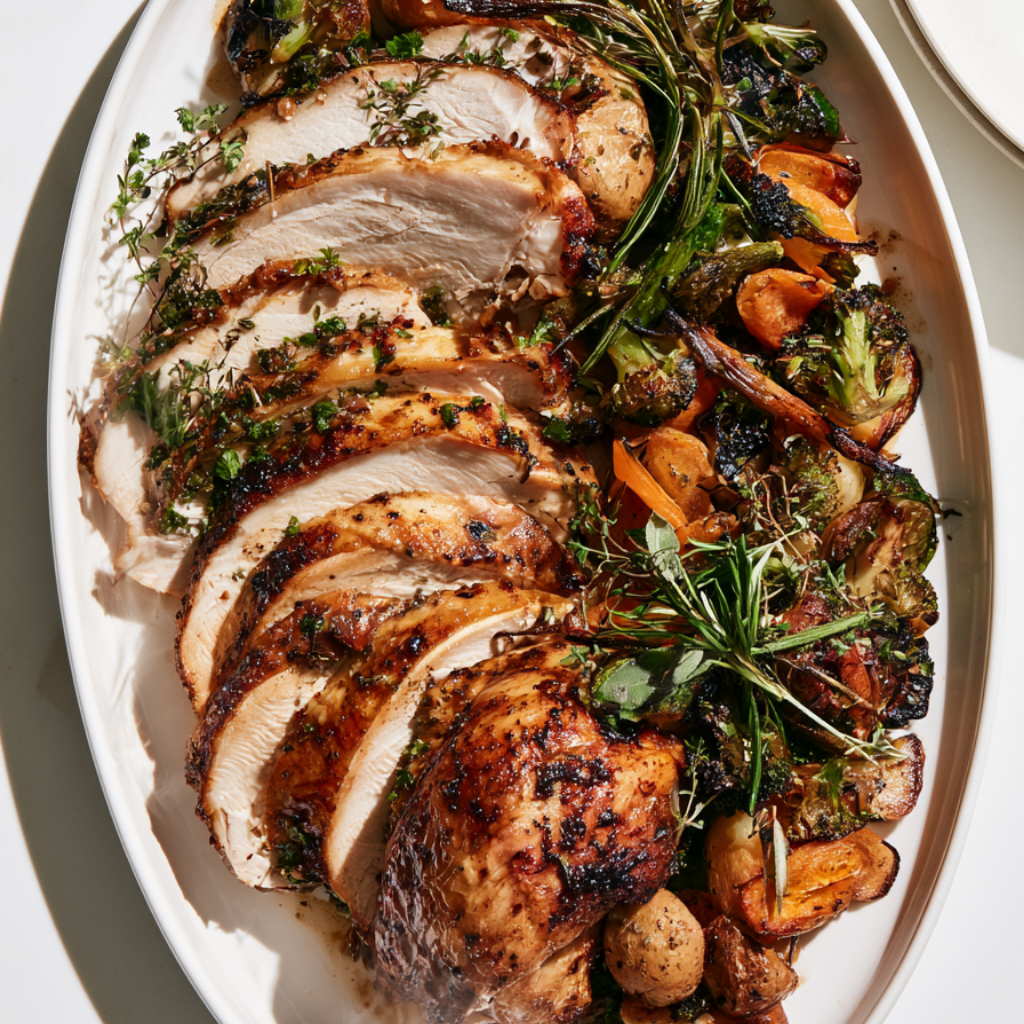
This recipe is for anyone who wants turkey without the stress. A boneless turkey breast roast cooks in the slow cooker with butter, broth, and simple seasonings until it’s tender and juicy enough to slice. It frees up the oven for sides; it’s nearly impossible to overcook, and it’s perfect for a smaller Thanksgiving dinner, a Friendsgiving, or a high-protein weeknight dinner that feels like a holiday.
Why it works: Turkey breast is one of the leanest, most protein-rich cuts you can cook — about 35g of protein per serving — but it’s notoriously easy to dry out. The slow cooker solves that with gentle, even heat that keeps the meat moist while it absorbs flavor from herbs, butter, and broth. It’s genuinely set-it-and-forget-it.
The key technique: Pull the turkey at 150–155°F, not 165°F. Carryover cooking finishes it to a safe 165°F while it rests. This is the single most important step for juicy turkey, and it’s the one most people skip. Let it rest 15–20 minutes before slicing, and always slice against the grain.
What you’ll need: A 3–4 lb boneless turkey breast, olive oil, salt, pepper, garlic powder, onion powder, dried thyme, dried rosemary, smoked paprika, an onion, garlic, low-sodium chicken broth, and butter (or an herb butter made with fresh rosemary and thyme).
Serve it with: Mashed potatoes, green beans, cranberry sauce, or keep it simple with roasted vegetables and crusty bread. Leftovers are perfect for sandwiches, salads, wraps, and soups — and they freeze well for up to 3 months.
Get the full recipe: The Juiciest Crockpot Turkey Breast You’ll Ever Make →
2. Garlic Herb Butter Turkey (The Classic)
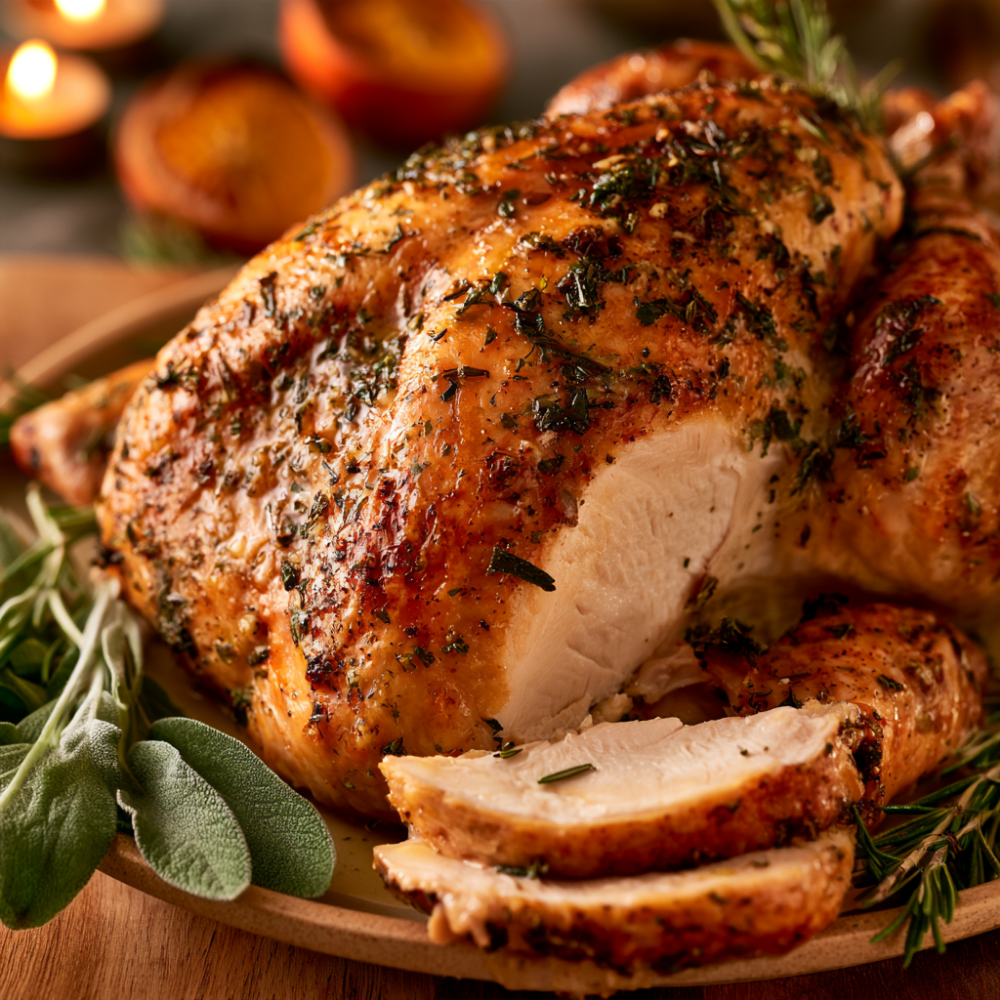
This classic Thanksgiving turkey gets rubbed with garlic herb butter under the skin and all over the outside, then roasted with citrus, onion, and fresh herbs in the cavity. The butter seasons the breast meat while helping the skin turn deeply golden and crisp.
Serves: 12–14
Prep Time: 25 minutes
Cook Time: About 3–3½ hours
Rest Time: 30–45 minutes
Ingredients
- 1 (14–16 lb) whole turkey, completely thawed
- 8 tbsp unsalted butter, softened
- 2 cloves garlic, finely minced
- 1 tbsp finely chopped fresh sage
- 1 tbsp finely chopped fresh thyme
- 1 tbsp finely chopped fresh parsley
- 1 tsp finely chopped fresh rosemary
- 1½ tsp kosher salt, plus more for the cavity and skin
- 1 tsp freshly ground black pepper
- 1 medium yellow onion, quartered
- 1 lemon, quartered
- 1 orange, quartered
- 3–4 sprigs each of fresh sage, rosemary, and thyme
Instructions
- Prepare the turkey. Remove the neck and giblets from the turkey cavity. Pat the turkey very dry with paper towels, including underneath the wings and around the cavity. Let it sit at room temperature for about 30–45 minutes while you prepare the butter. Do not leave it out for several hours.
- Make the herb butter. In a small bowl, mix the softened butter with the garlic, chopped sage, thyme, parsley, rosemary, salt, and black pepper.
- Season under the skin. Carefully loosen the skin over the turkey breast and thighs with your fingers, taking care not to tear it. Spread about two-thirds of the herb butter underneath the skin, concentrating most of it over the breasts and thighs.
- Season the outside. Rub the remaining butter over the entire outside of the turkey. Lightly season the skin with additional salt and pepper. If your turkey is labeled kosher, self-basting, enhanced, or contains a salt solution, use much less additional salt.
- Fill the cavity. Place the onion, lemon, orange, and herb sprigs loosely inside the cavity. Do not pack it tightly.
- Set up the turkey. Tuck the wing tips underneath the bird. If desired, loosely tie the legs together with kitchen twine. Place the turkey breast-side up on a rack in a large roasting pan.
- Roast. Roast at 325°F. Start checking the temperature after about 2½ hours. If the skin browns too much before the turkey is done, loosely cover the breast with foil.
- Check for doneness. Insert an instant-read thermometer into the thickest part of the breast and the innermost part of the thigh, avoiding the bone. The turkey is ready when the breast and thigh reach at least 165°F. For the most tender dark meat, the thigh can reach 170–175°F.
- Rest before carving. Transfer the turkey to a cutting board and rest for 30–45 minutes before carving. This gives the juices time to redistribute and makes carving easier.
Fail-Proof Tips
- Don’t rely on cooking time alone. A 14-pound turkey and a 16-pound turkey can finish at different times depending on shape, starting temperature, and your oven.
- Don’t baste repeatedly. Opening the oven every 30 minutes loses heat and doesn’t meaningfully make the meat juicier. The butter under the skin does the important work.
- Check multiple spots. The breast can be done before the thigh, so check both.
- If the turkey is browning too quickly, tent the breast with foil rather than lowering the oven temperature dramatically.
- Let the turkey rest before carving. Cutting too early lets the juices run out onto the board instead of staying in the meat.
3. No-Brine Thanksgiving Turkey (Foolproof for Beginners)
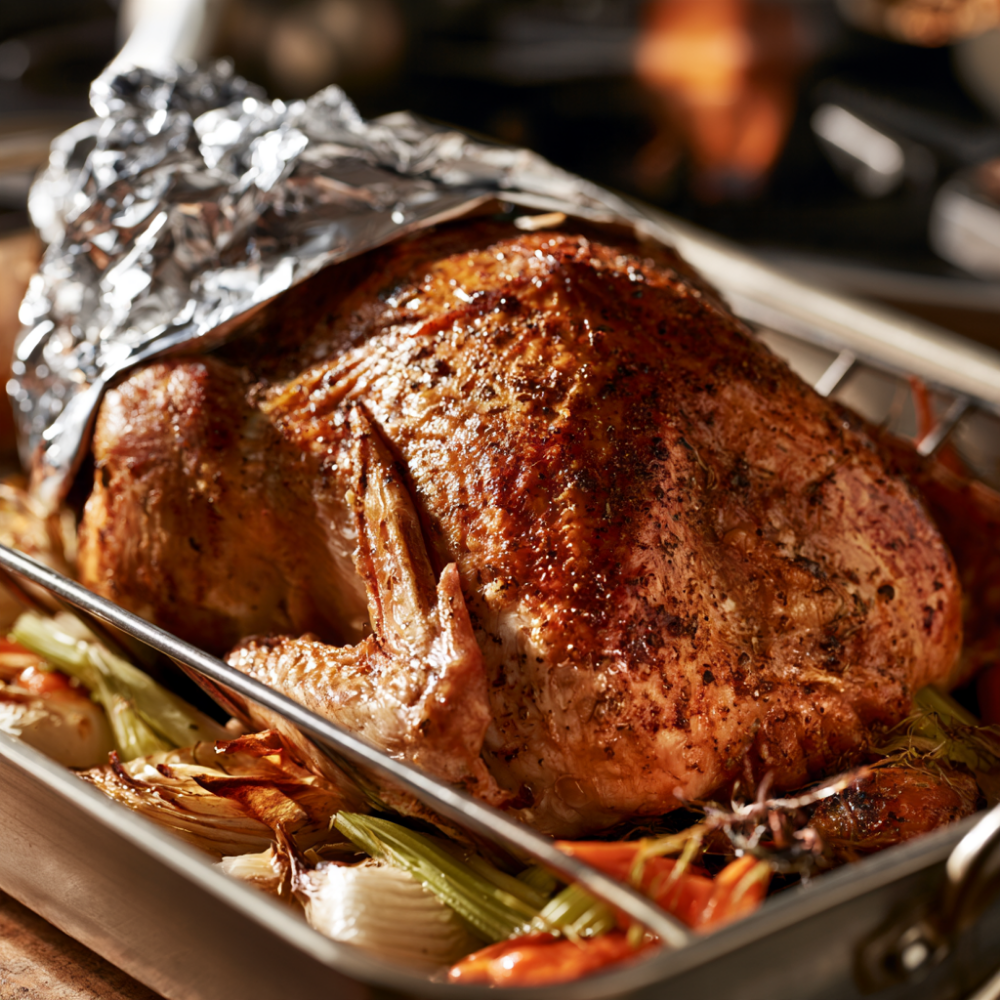
No brine, no complicated technique, and no repeated basting. This beginner-friendly turkey uses seasoned herb butter under the skin and a hot-start roasting method for deeply browned skin. A foil shield protects the breast if it begins cooking faster than the thighs.
Serves: 10–12
Prep Time: 30 minutes
Cook Time: About 2½–3 hours
Rest Time: 30 minutes
Ingredients
For the turkey:
- 1 (13 lb) whole turkey, fully thawed (11–15 lbs works; adjust time accordingly)
- Kosher salt and black pepper, for the cavity
- 1 medium yellow onion, halved
- 1 lemon, quartered
- 2 celery ribs, cut into large pieces
- 3 sprigs fresh thyme
- 3 sprigs fresh rosemary
- 3 sprigs fresh sage
For the herbed garlic butter:
- 8 oz unsalted butter, softened
- 6–7 cloves garlic, minced
- 1 heaping tsp kosher salt
- ½ tsp freshly ground black pepper
- Juice of ½ lemon
- ½ tsp orange zest
- 1 tbsp fresh thyme, finely chopped
- 1 tbsp fresh rosemary, finely chopped
- 2 tbsp olive oil
Instructions
- Prep the turkey. Thaw completely, then let it sit at room temperature for 1 hour before roasting. Preheat the oven to 420°F with the rack in the center.
- Make the herb butter. Mix all herbed garlic butter ingredients in a bowl until smooth.
- Season and butter. Pat the turkey completely dry, inside and out. Season the cavity generously with salt and pepper. Carefully loosen the skin on the breast and legs without tearing it, then spread half the butter underneath the skin.
- Stuff the cavity. Add the onion, lemon, celery, and herb sprigs to the cavity.
- Coat the outside. Melt the remaining butter mixture and brush it all over the outside of the turkey.
- Set up the pan. Add onion, celery, and carrot to the bottom of the roasting pan and set the turkey on a rack above them.
- Hot-start roast. Roast at 420°F for 25–30 minutes to brown the skin.
- Shield and finish. Remove from the oven, baste once, and tent the breast with a foil triangle. Reduce the oven to 350°F and continue roasting until the breast reaches 165°F and the thighs reach 170–175°F.
- Rest. Rest at least 30 minutes before carving.
Fail-Proof Tips
- The foil shield is not optional if you want juicy breast meat. The breast cooks faster than the thighs. Covering it with foil slows it down while the dark meat catches up.
- Season less if your turkey is enhanced. Self-basting, kosher, and “pre-brined” turkeys already contain salt—taste before adding more.
- Baste once, not repeatedly. One baste after the initial high-heat roast is plenty. Opening the oven repeatedly loses heat and unpredictably extends cooking time.
- Use the thermometer, not the clock. This is the single most important tool for a perfectly cooked turkey.
4. Dry-Brined Crispy Skin Turkey (Best Skin, Juiciest Meat)
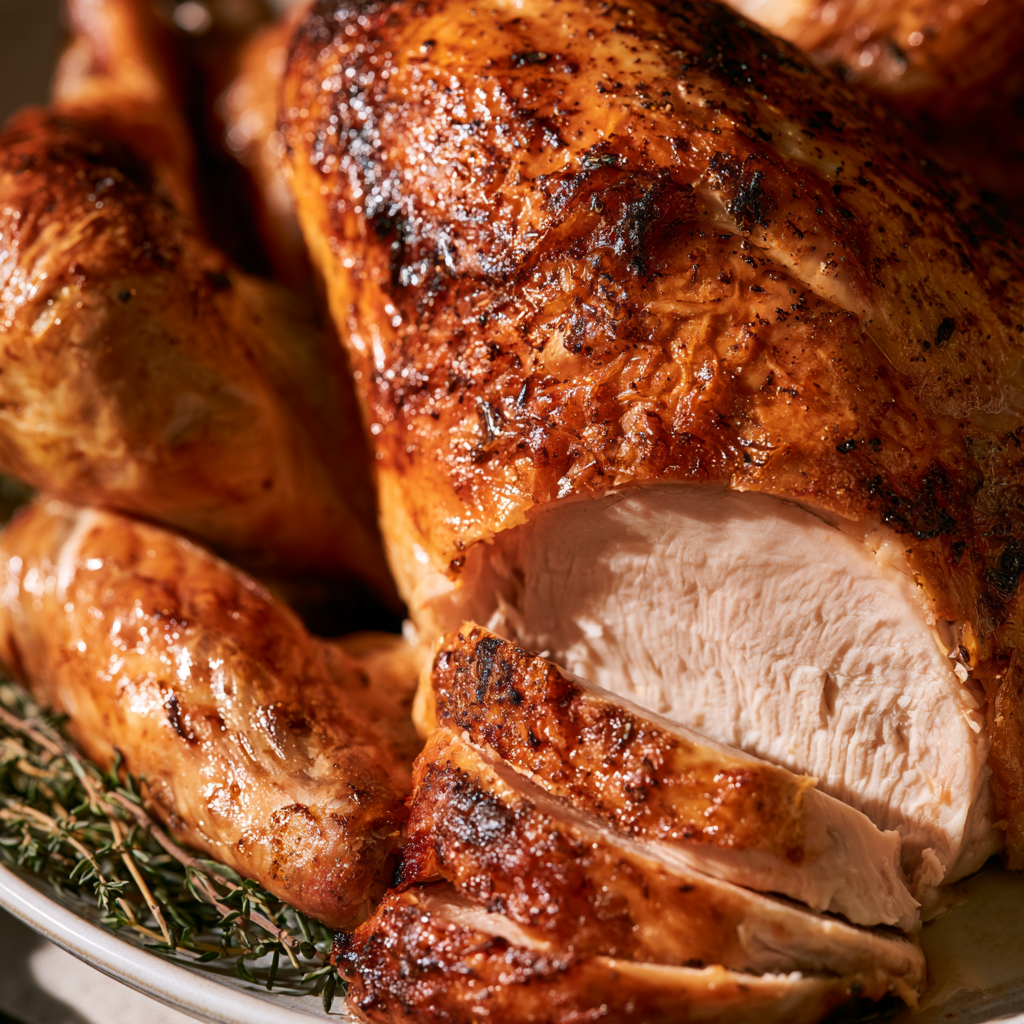
Dry brining is the technique professional chefs use to get the crispiest skin and the most flavorful meat. Rub salt and baking powder on the skin, then leave the turkey uncovered in the fridge for 12–48 hours. The salt penetrates the meat, and the baking powder raises the skin’s pH, which helps it brown and crisp—no basting required.
Serves: 10–12
Prep Time: 20 minutes, plus 12–48 hours dry brining
Cook Time: About 3–3½ hours
Rest Time: 45 minutes
Ingredients
- 1 whole turkey (12–14 lbs), fresh or fully thawed
- 3 tbsp kosher salt
- 1 tbsp baking powder (not baking soda)
- 2 tsp freshly ground black pepper
- 2 shallots, halved
- 6 garlic cloves, smashed
- 1 lemon, halved
- 6–8 sprigs fresh thyme
- 4 sprigs fresh sage
- 2 sprigs fresh rosemary
- 3 tbsp neutral oil (canola or vegetable)
Instructions
- Dry brine. Pat the turkey dry. Mix salt, baking powder, and pepper, then rub the mixture all over the skin and under the breast skin if possible.
- Air-dry. Place the turkey uncovered in the refrigerator for 12 to 48 hours. This dries the skin and creates a crispy exterior.
- Stuff the cavity. Stuff the cavity with shallots, garlic, lemon, and fresh herbs.
- Oil and set up. Brush the turkey all over with neutral oil. Tuck the wings under and place on a roasting rack inside a large roasting pan.
- Hot-start roast. Preheat the oven to 450°F. Roast the turkey for 30 minutes.
- Finish roasting. Reduce the oven temperature to 350°F and continue roasting until the breast registers 155–160°F and the thighs reach 165–170°F, about 3–3½ hours total. Carryover cooking will bring the breast to 165°F during the rest.
- Rest. Remove from the oven and tent loosely with foil. Rest at least 45 minutes before carving.
Fail-Proof Tips
- Use baking powder, not baking soda. Baking soda tastes metallic and can leave a bitter residue on the skin. Baking powder is the right choice.
- Don’t cover the turkey in the fridge. The whole point of the dry brine is airflow. Cover it, and you trap moisture, which defeats the purpose.
- Salt the skin, not just the surface. Slide your fingers under the breast skin and rub the salt mixture directly onto the meat underneath. This is where the seasoning does the most work.
- Don’t baste. Basting wets the skin and undoes the drying you spent 12–48 hours achieving. The fat under the skin keeps the meat moist.
- If the skin is browning too fast, tent the breast. But keep the legs and thighs exposed so they keep crisping.
5. Brined Turkey (Maximum Moisture)
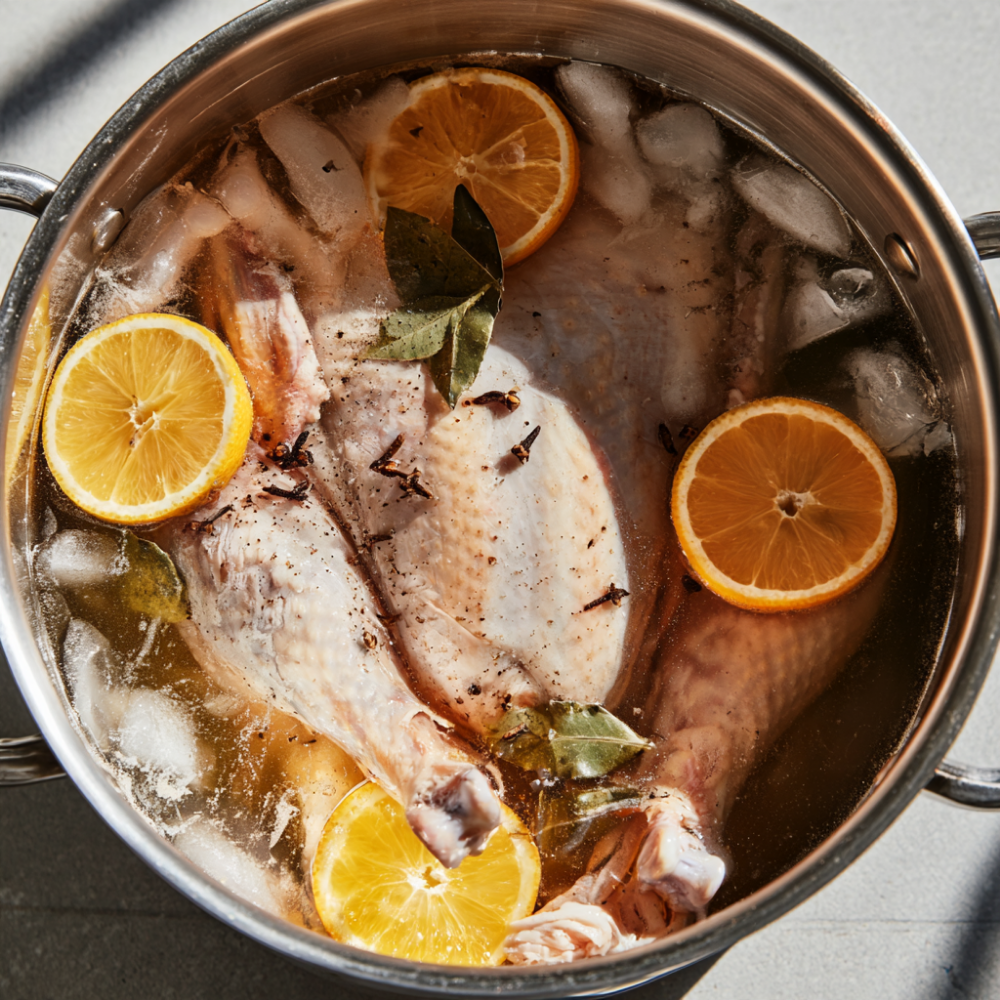
Brining is the classic method for guaranteeing juicy turkey. The turkey soaks in a salt-and-sugar solution with aromatics for 12–24 hours, seasoning the meat and helping it retain moisture during roasting. It’s a little more planning, but the payoff is melt-in-your-mouth turkey that’s nearly impossible to dry out.
Serves: 10–12
Prep Time: 20 minutes, plus 12–24 hours brining
Cook Time: About 3 hours
Rest Time: 30–45 minutes
Ingredients
For the brine:
- 1 cup kosher salt
- ½ cup brown sugar
- 2 gallons cold water
- 2 bay leaves
- 1 tsp whole cloves
- 1 gallon ice (to keep the brine cold)
For the turkey:
- 1 whole turkey (12–14 lbs), fully thawed
- 8 tbsp herbed compound butter (mix softened butter with chopped thyme, rosemary, sage, salt, and pepper)
- Salt and pepper, to taste
Instructions
- Make the brine. Add the sugar and salt to 4 cups hot water. Stir until the sugar and salt dissolve completely.
- Cool the brine. Pour the brine into a large stockpot with the remaining cold water, cloves, bay leaves, and ice. Stir to combine and make sure the water is cold before adding the turkey.
- Brine the turkey. Place the turkey breast, breast-side down, in the stockpot. The water should cover the turkey. Refrigerate for 12–24 hours, turning occasionally.
- Prep for roasting. Preheat the oven to 450°F. Remove the turkey from the brine, pat it dry, and let it sit at room temperature for 30 minutes.
- Butter the turkey. Rub the turkey with herbed compound butter, including under the skin.
- Hot-start roast. Place it on a rack in a roasting pan and roast at 450°F for 30 minutes.
- Finish roasting. Reduce the oven temperature to 350°F and continue roasting until the breast reaches 165°F and the thighs reach 170–175°F.
- Rest. Rest at least 30 minutes before carving.
Fail-Proof Tips
- Never skip the ice. The brine must stay cold throughout the entire brining process. If the turkey sits in a warm brine, bacteria can grow.
- Use the right container. A stockpot, a clean 5-gallon food bucket, or a brining bag inside a cooler all work. The turkey must be fully submerged.
- Don’t brine a self-basting or enhanced turkey. It’s already been injected with a salt solution. Brining it again will make it unpleasantly salty.
- Pat it dry before roasting. A wet turkey steams instead of roasts, so you get soft skin instead of crispy skin.
- If the skin is browning too fast, tent it with foil. Don’t lower the oven temperature, which will extend the cooking time.
6. Cajun Roasted Turkey (Bold, Spicy, Unforgettable)
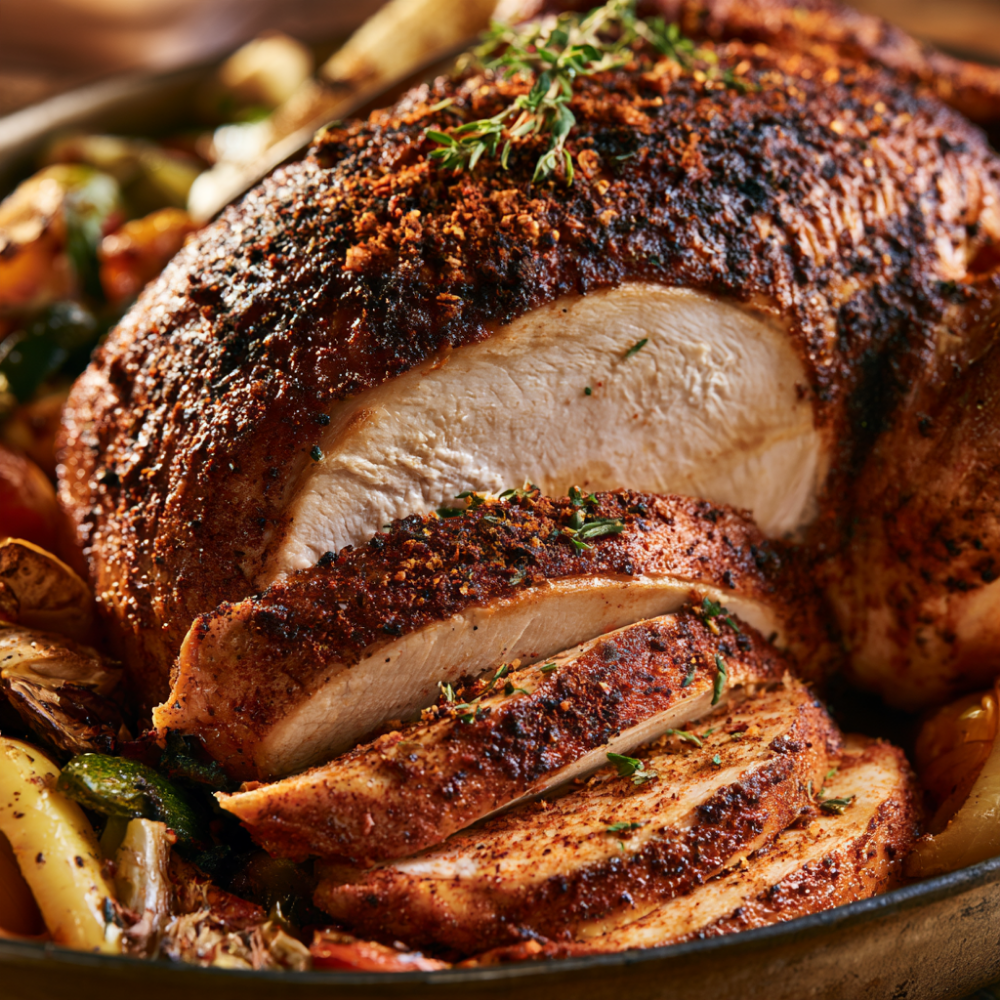
If you want a turkey that wakes up the table, this is it. Mix a Cajun spice blend into softened butter, then rub it under the skin and all over the bird. The result is juicy, tender turkey with a spicy, aromatic crust. It’s a showstopper for anyone who finds traditional turkey a little boring.
Serves: 12–14
Prep Time: 15 minutes
Cook Time: About 4 hours
Rest Time: 20–30 minutes
Ingredients
- 1 cup unsalted butter, softened
- 1 tsp kosher salt
- 1 tsp garlic powder
- 1 tsp paprika
- ½ tsp ground black pepper
- 1 tsp onion powder
- ½ tsp cayenne pepper
- ½ tsp dried oregano
- ½ tsp dried thyme
- 1 whole turkey (16–18 lbs), patted dry
- 8 cups low-sodium chicken stock
Instructions
- Preheat and prep. Preheat your oven to 325°F. Remove the turkey’s innards and pat the bird dry.
- Make the Cajun butter. In a small food processor, combine paprika, cayenne, garlic powder, onion powder, black pepper, oregano, and thyme. Pulse until finely ground. Mix this spice blend with softened butter to form a paste.
- Butter under the skin. Gently loosen the skin from the turkey. Use a spoon to insert chunks of the Cajun butter paste under the skin. Pat the skin down to spread the butter evenly.
- Add the stock. Place 2 cups of chicken stock in the bottom of the roasting pan.
- Roast covered. Cover the turkey with foil and roast for 2 hours. Baste the turkey with the stock every 30 minutes, adding more stock as needed.
- Roast uncovered. After 2 hours, remove the foil and continue roasting for another 2 hours, basting every half hour.
- Check for doneness. The turkey is done when the thickest part of the thigh reaches 165°F, and the breast reaches 165°F.
- Rest. Let it rest for 20 minutes before carving.
Fail-Proof Tips
- Basting is the point of this recipe. Unlike the other recipes on this list, this one relies on basting to build flavor and moisture. Don’t skip it.
- Adjust the cayenne to your taste. ½ tsp gives a noticeable but manageable heat. For a milder version, use ¼ tsp. For a spicier version, use ¾ tsp.
- Add stock as needed. The pan should always have some liquid in the bottom. If it dries out, the drippings will burn, and the basting liquid will be gone.
- Watch the spice crust. If it’s getting too dark before the turkey is done, tent with foil. The paprika and cayenne can burn if exposed to direct heat for too long.
- Use a smaller turkey for a shorter cook time. This recipe is written for 16–18 lbs. For a 12–14 lb bird, reduce the covered roast to 1½ hours and the uncovered roast to 1½ hours.
7. Spatchcocked Rosemary Lemon Turkey (Fastest Cook, Crispiest Skin)
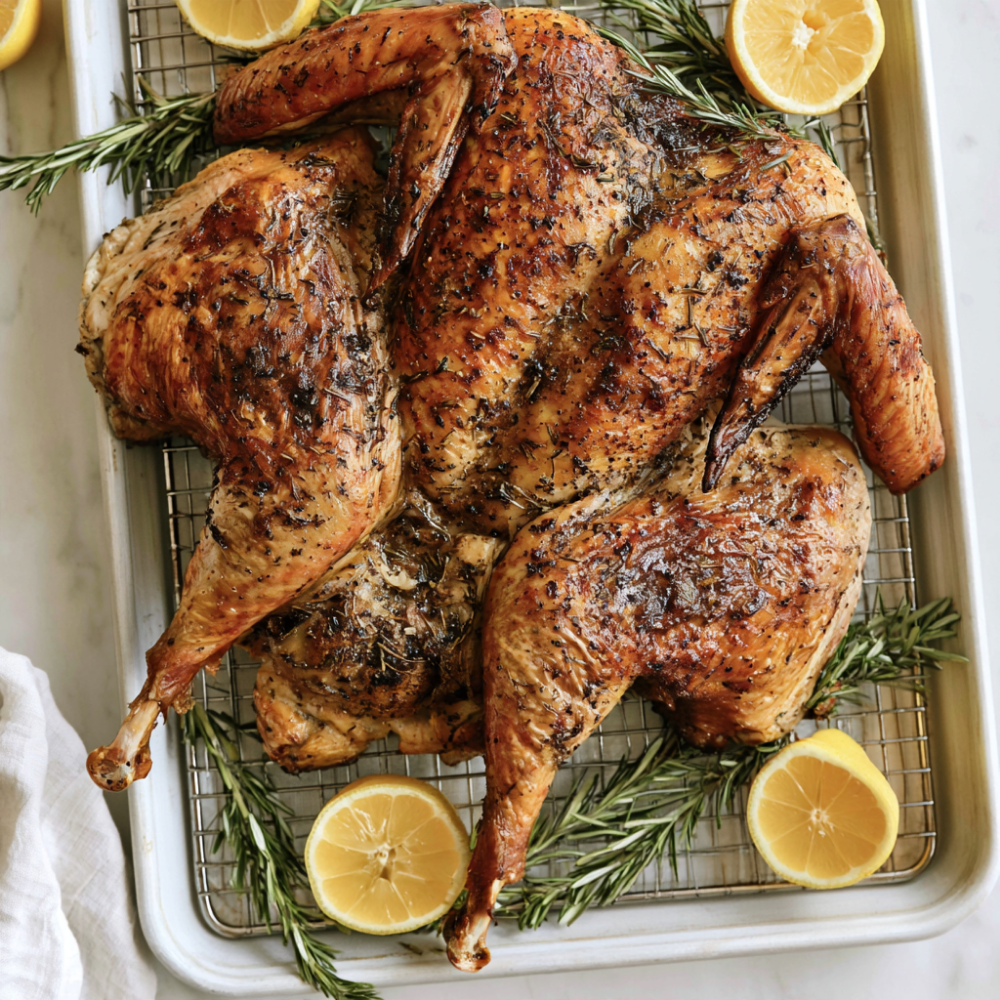
Spatchcocking — removing the backbone and flattening the turkey — is the fastest way to roast a whole bird. Because the turkey lies flat, it cooks evenly in about 90 minutes instead of 3+ hours, and the skin gets maximum exposure to the oven’s heat, which means it crisps beautifully all over. The rosemary, lemon, and garlic rub keeps it fragrant and savory.
Serves: 10–12
Prep Time: 30 minutes
Cook Time: About 1½ hours
Rest Time: 20 minutes
Ingredients
- 1 whole turkey (12–14 lbs), fully thawed
- 4 tbsp unsalted butter, softened
- 3 cloves garlic, minced
- 1 tbsp finely chopped fresh rosemary
- Zest of 1 lemon
- Juice of ½ lemon
- 1½ tsp kosher salt
- 1 tsp freshly ground black pepper
- 2 tbsp olive oil
- 1 lemon, halved (for the pan)
- 4–5 sprigs fresh rosemary (for the pan)
Instructions
- Preheat the oven. Set the oven to 450°F and place the rack in the lower-middle position.
- Spatchcock the turkey. Place the turkey breast side down on a cutting board. Using kitchen shears or a sharp knife, cut along both sides of the backbone from tail to neck and remove it. (Save it for gravy or stock.) Flip the turkey breast side up. Place both hands on the breastbone and press down firmly until you hear the breastbone crack and the turkey lies flat.
- Make the rosemary lemon butter. In a small bowl, mix the softened butter with the garlic, rosemary, lemon zest, lemon juice, salt, and pepper.
- Butter under the skin. Carefully loosen the skin over the breast and thighs and spread the butter mixture underneath. Rub any remaining butter over the skin.
- Oil the skin. Drizzle the olive oil over the turkey and rub it in evenly.
- Set up the pan. Place the flattened turkey skin-side up on a wire rack set inside a large rimmed baking sheet. Scatter the halved lemon and rosemary sprigs around the pan.
- Roast. Roast at 450°F for 20 minutes. Reduce the oven temperature to 400°F and continue roasting until the breast reaches 160°F and the thighs reach 170°F, about 60–70 more minutes.
- Rest. Transfer to a cutting board and rest 20 minutes before carving. Carryover cooking will bring the breast to 165°F.
Fail-Proof Tips
- Ask your butcher to spatchcock it. Many butchers will do this for free if you ask when you buy the turkey. It saves you the messiest step.
- Use sturdy kitchen shears. Poultry shears make cutting through the ribs much easier than a knife. Work slowly and let the shears do the work.
- Don’t skip the press-down step. Pressing the breastbone flat lets the bird cook evenly and quickly. If you skip it, the turkey will still be dome-shaped and won’t cook in the promised time.
- Roast on a wire rack over a baking sheet. This lets heat circulate underneath the turkey, which helps the bottom crisp too.
- Watch the skin closely in the last 20 minutes. At 400°F, the skin can go from golden to dark very quickly. Tent with foil if needed.
Tips for the Best Thanksgiving Turkey
Thaw your turkey properly. A frozen turkey needs about 24 hours in the refrigerator for every 4–5 pounds. For a 14-pound bird, that’s 3–4 days. Never thaw on the counter.
Use a meat thermometer. This is the single most important tool for a perfectly cooked turkey. The breast should reach 165°F, and the thighs should reach 170–175°F. Start checking early — the difference between juicy and dry is only a few degrees.
Let it rest. Rest the turkey for at least 30 minutes (45 minutes is better for a large bird) to let the juices redistribute. If you carve immediately, the juices run out onto the cutting board and the meat ends up dry.
Pat the skin dry. Moisture on the skin steams the turkey instead of roasting it. Patting it dry before roasting (and letting it air-dry in the fridge if you have time) is the secret to crispy skin.
Don’t stuff the turkey if you want faster, more even cooking. Stuffing the cavity slows cooking and can overcook the breast meat. Cook stuffing separately in a casserole dish instead.
Tent the breast with foil if it’s browning too fast. The breast cooks faster than the thighs. If the skin is getting too dark before the thighs are done, cover just the breast with a foil triangle.
Season less if your turkey is enhanced. Self-basting, kosher, and pre-brined turkeys already contain salt—taste before adding more.
Save the drippings. They’re liquid gold for gravy. Strain them, skim the fat, and use them to make gravy while the turkey rests.
Storage and Reheating
Store leftover turkey in an airtight container in the refrigerator for up to 4 days. To reheat, place slices in a covered baking dish with a splash of broth or gravy and warm in a 325°F oven for 15–20 minutes, or microwave individual portions.
To freeze: Cool completely, then freeze in portions for up to 2 months. Thaw overnight in the refrigerator.
Frequently Asked Questions
What’s the best turkey for Thanksgiving?
A fresh turkey or a fully thawed frozen turkey both work well. For the recipes on this list, a 12–16 pound turkey is ideal for a standard oven, and a 3-pound boneless breast is perfect for the crockpot.
How long do I cook a turkey?
As a general rule, roast at 325°F for about 15–20 minutes per pound. But the only reliable way to know when it’s done is a meat thermometer. The breast should reach 165°F and the thighs 170–175°F. Spatchcocked turkeys cook in about half the time.
Should I brine my turkey?
Brining adds moisture and flavor, but it’s not required. The No-Brine Turkey and the Dry-Brined Turkey on this list both deliver excellent results without a wet brine. If you have the time and want maximum juiciness, the Brined Turkey recipe is worth it.
Can I cook a turkey in a crockpot?
Yes — a boneless turkey breast roast works beautifully in a crockpot. See the Crockpot Turkey Breast entry above for the full recipe link. You can’t fit a whole turkey in a standard slow cooker, but a 3-pound breast roast is perfect.
How do I get crispy skin?
Pat the turkey dry before roasting, and consider dry brining it uncovered in the refrigerator for 12–48 hours. The Dry-Brined Crispy Skin Turkey and the Spatchcocked Rosemary Lemon Turkey are both designed for maximum crispiness.
Can I make turkey ahead of time?
You can roast the turkey a day ahead and reheat it gently, but the skin won’t be as crispy. For the best results, roast it the day of and let it rest while you finish the sides.
What do I serve with Thanksgiving turkey?
Classic sides include mashed potatoes, stuffing, green bean casserole, cranberry sauce, rolls, and roasted vegetables. For more ideas, see the Best Thanksgiving Side Dishes section below.
Are these recipes gluten-free?
The turkey recipes are naturally gluten-free as written. For the gravy, use gluten-free flour or cornstarch.
Can I use an oven bag?
Yes. Oven bags are a convenient way to keep turkey moist, especially for beginners. Follow the bag manufacturer’s instructions for cooking times, and use a meat thermometer to confirm doneness.
Best Thanksgiving Side Dishes to Serve Alongside
- Mashed Potatoes
- Cornbread Stuffing
- Green Bean Casserole
- Cranberry Sauce
- Roasted Brussels Sprouts
- Sweet Potato Casserole
- Dinner Rolls
- Maple Glazed Carrots
Conclusion
Thanksgiving turkey doesn’t have to be intimidating. Whether you’re cooking a small boneless breast in the crockpot, roasting a classic garlic herb butter bird, dry brining for the crispiest skin, wet brining for maximum moisture, bringing Cajun heat to the table, or spatchcocking for the fastest cook time, there’s a method here that fits your kitchen and your comfort level.
The key to any great turkey is the same: use a meat thermometer, let it rest before carving, and don’t be afraid to try something new. Pick your method, plan your timing, and enjoy the compliments.