Flank steak is one of the best cuts of beef you can cook on a weeknight. It’s thin, so it cooks in under 10 minutes.
It’s lean and flavorful. Seared hard in a cast iron skillet and finished with garlic butter, it tastes like something you’d pay $45 for at a steakhouse.
The catch is that flank steak has a reputation for being tough. That reputation is earned — if you cook it wrong.
Flank steak is a working muscle, which means it has long, prominent muscle fibers and almost no marbling.
Cook it past medium, and it turns chewy. Slice it with the grain instead of against it, and it’s practically inedible.
But get it right, and flank steak is one of the most rewarding cuts of beef you can cook.
Sear it hot and fast to medium-rare, let it rest, slice it thin against the grain, and spoon garlic butter over the top.
It’s tender, juicy, deeply beefy, and ready in about 15 minutes total.
This is the recipe that converts people who thought they didn’t like flank steak. It’s a cast iron skillet recipe — no grill, no oven, no marinade required: just salt, a screaming hot pan, butter, garlic, and fresh herbs.
Why This Garlic Butter Flank Steak Works
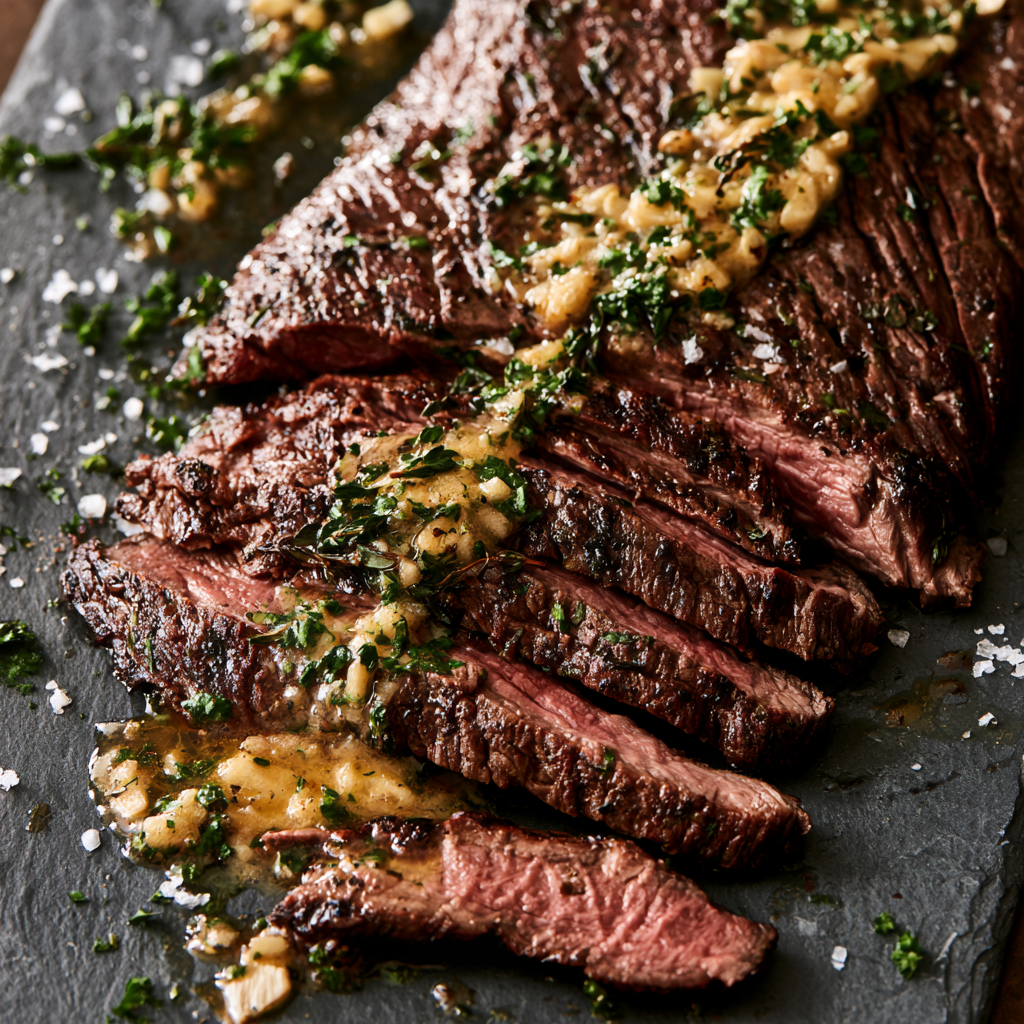
Flank steak is thin, so it cooks fast. In under 10 minutes in a hot skillet, you can go from raw to medium-rare. This is one of the fastest steak dinners you can make.
Cast iron gives you a hard sear. A screaming hot cast iron skillet creates a deep brown crust in 3–4 minutes per side. That crust holds most of the flavor.
Garlic butter basting is the steakhouse trick. Melted butter, smashed garlic, and fresh thyme spooned over the steak during the last minute of cooking add richness and aroma that a plain sear can’t match.
It’s high in protein. Flank steak is lean and protein-dense. A 5-ounce serving delivers about 38g of protein — enough to make this a real, filling dinner.
Slicing against the grain is the whole secret—the single most important step. Flank steak has long muscle fibers, and slicing perpendicular to them shortens each bite. Get this right and even a medium steak eats tender.
It’s naturally gluten-free and dairy-free (without the butter). No flour, no soy sauce, no breadcrumbs. Just beef, salt, pepper, butter, garlic, and herbs.
It works with almost any sauce: garlic butter, chimichurri, balsamic reduction, or a simple pan sauce. See the variations below.
This dinner party dish takes 15 minutes. Sear, rest, slice, serve. It looks impressive, and it’s genuinely easy.
Garlic Butter Flank Steak
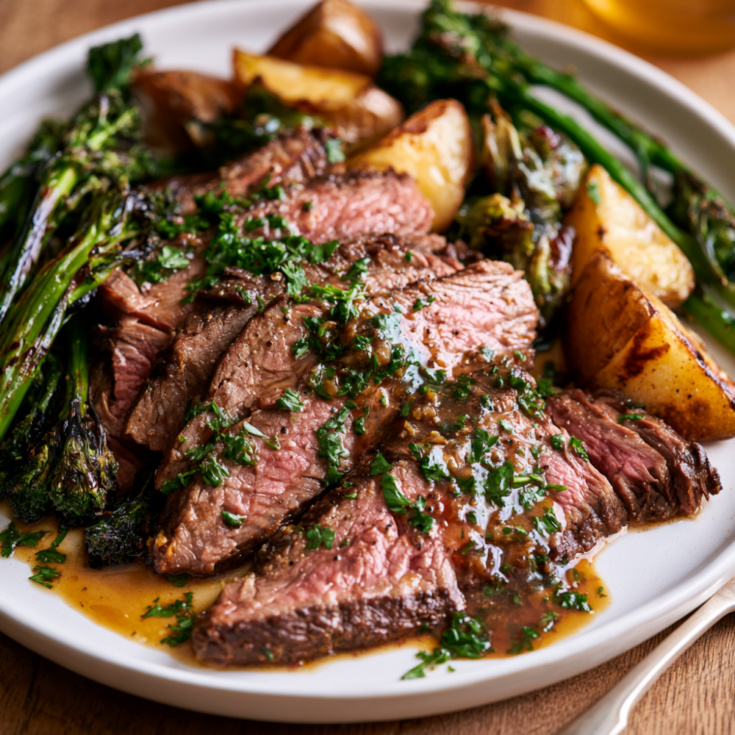
Sear flank steak hard in a cast-iron skillet, baste with garlic butter, thyme, and rosemary, then slice thin against the grain. Ready in about 15 minutes.
Ingredients
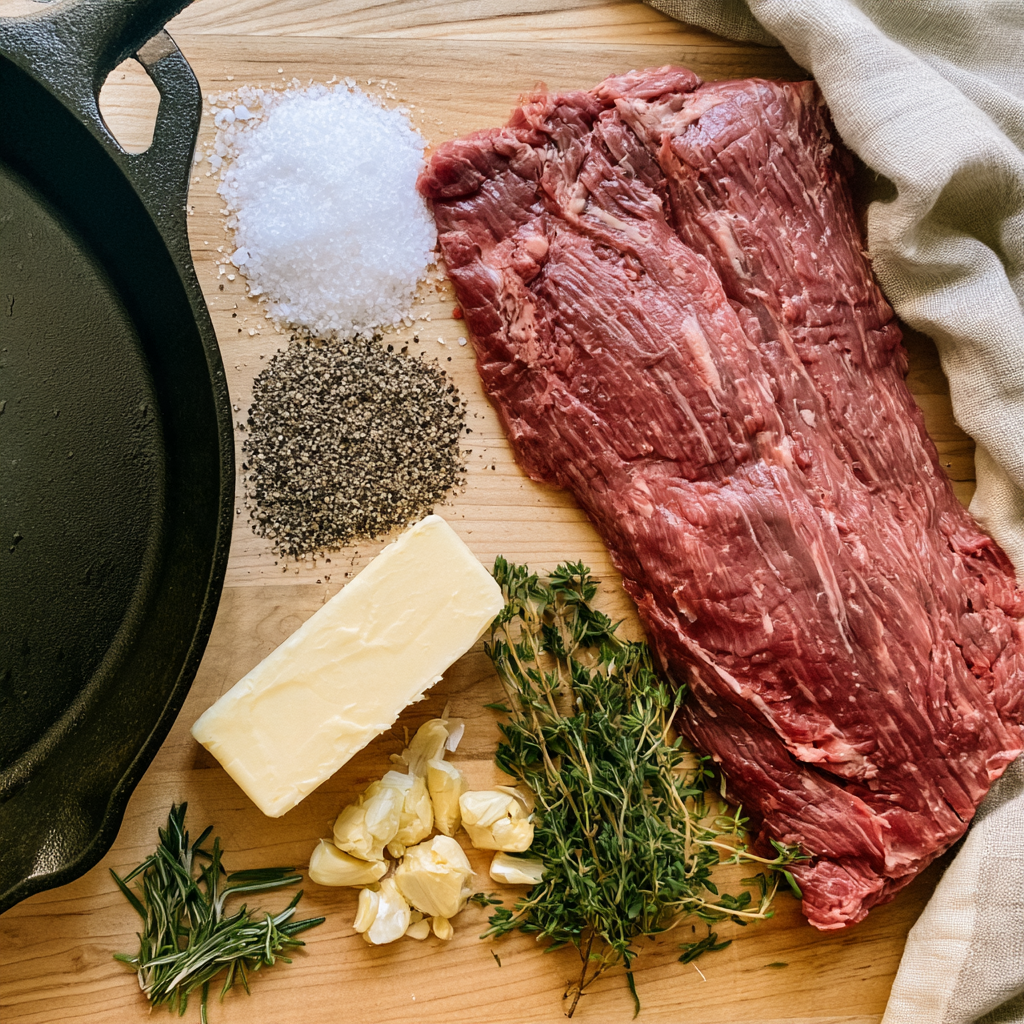
- 1½–2 lbs flank steak, trimmed of any silver skin
- 1½ tsp kosher salt (or 1 tsp fine sea salt)
- 1 tsp freshly ground black pepper
- 1 tbsp neutral oil (avocado, canola, or grapeseed — something with a high smoke point)
- 3 tbsp unsalted butter
- 4 cloves garlic, smashed and peeled
- 3–4 sprigs fresh thyme
- 1 sprig fresh rosemary (optional)
- Flaky sea salt, for finishing
- Fresh parsley, chopped, for garnish
Optional sauce:
- Chimichurri (see variation below)
- Balsamic reduction
- Simple pan sauce made from the drippings
Instructions
- Take the steak out of the fridge early. Let the flank steak sit at room temperature for 20–30 minutes before cooking. A cold steak cooks unevenly and won't sear as well. Pat it completely dry with paper towels — moisture is the enemy of a good crust.
- Season generously. Season both sides of the steak with the kosher salt and black pepper. Use more than feels comfortable — flank steak is thick and lean, and the seasoning needs to penetrate.
- Heat the cast iron skillet. Place a 12-inch cast iron skillet over medium-high heat and let it preheat for 4–5 minutes. It should be hot enough that a drop of water sizzles and evaporates immediately. Add the neutral oil and swirl to coat the bottom.
- Sear the first side. Carefully lay the steak in the skillet away from you. Press it down gently with a spatula for 10 seconds to ensure full contact with the pan. Sear undisturbed for 3–4 minutes, until a deep brown crust forms.
- Flip and sear the second side. Flip the steak with tongs and sear the second side for 3–4 minutes. For medium-rare, the internal temperature should read 130–135°F on an instant-read thermometer. For medium, 140–145°F.
- Add the butter, garlic, and herbs. Reduce the heat to medium-low. Add the butter, smashed garlic cloves, thyme, and rosemary to the skillet. As the butter melts, tilt the pan slightly and spoon the foaming butter over the steak repeatedly for 60–90 seconds. This bastes the steak and infuses it with garlic and herb flavor.
- Rest the steak. Transfer the steak to a cutting board and let it rest for 10 minutes. This is non-negotiable — resting allows the juices to redistribute. If you slice it immediately, the juices run out onto the board, and the steak dries out.
- Slice against the grain. Look for the lines running through the meat — those are the muscle fibers. Slice perpendicular to them, at a slight angle, into ¼-inch thick slices. This is the single most important step for tender flank steak.
- Finish and serve. Arrange the slices on a platter, spoon any accumulated juices and garlic butter over the top, and finish with flaky sea salt and fresh parsley.
Notes
Protein per Serving: About 38g (based on 5 servings)
Nutrition note: Protein per serving depends on portion size and the exact weight of your flank steak. A 5-ounce cooked serving contains roughly 38g of protein. Calculate with your specific steak for accurate numbers.
Tips for the Best Flank Steak
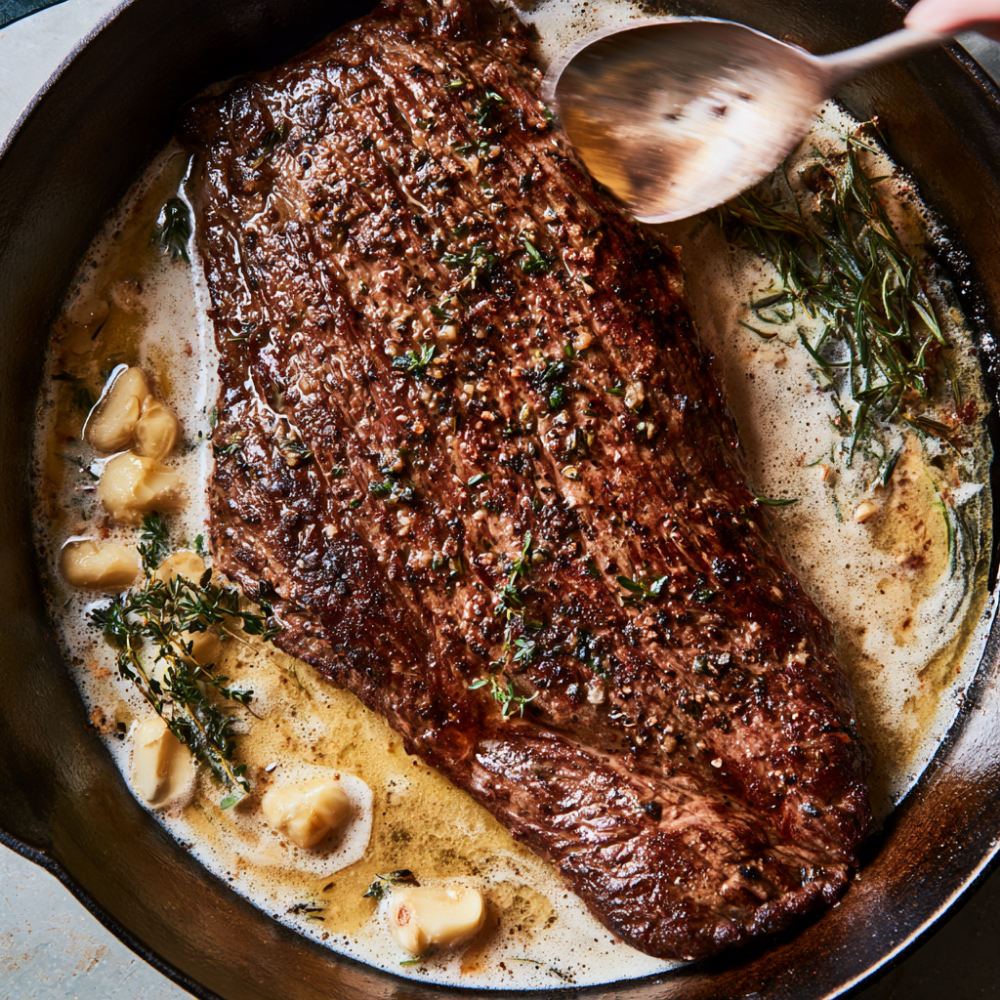
Slice against the grain. Every time. This is the single most important step. Flank steak has long, tough muscle fibers. Slicing perpendicular to them shortens each bite and makes the steak tender. Slicing with the grain gives you chewy, stringy steak no matter how perfectly you cooked it. Look for the lines and cut across them.
Use a cast iron skillet if you have one. Cast iron holds heat better than stainless steel and gives you a deeper, more even crust. A heavy stainless skillet works too — preheat it longer.
Get the pan screaming hot. Flank steak is thin and cooks fast. You want a hard sear in a short time, not a slow cook. A properly preheated pan is the difference between a browned crust and a gray steak.
Pat the steak dry. Surface moisture steams instead of searing. Pat the steak dry with paper towels right before it goes in the pan.
Don’t crowd the pan. If your flank steak is too big for your skillet, cut it in half and cook it in two batches. Crowding the pan lowers the temperature and steams the meat.
Use an instant-read thermometer. 130–135°F for medium-rare, 140–145°F for medium. Flank steak gets tough past medium, so pull it early. Carryover cooking will raise the temperature another 5°F while it rests.
Rest for 10 minutes. This is not optional. Resting lets the juices redistribute through the meat instead of running out when you slice it.
Baste with butter at the end, not the beginning. Butter burns at high heat. Sear the steak in oil first, then reduce the heat and add the butter for the last 60–90 seconds. You get the garlic butter flavor without a burnt, bitter pan.
Add the garlic at the end too. Minced or smashed garlic burns quickly in a hot pan. Adding it with the butter at the end gives you sweet, mellow garlic flavor without bitterness.
Slice at a slight angle. A 45-degree angle gives you wider, more attractive slices and shortens the muscle fibers even more.
Finish with flaky salt. Maldon or fleur de sel added after slicing gives you little bursts of salinity and a bit of crunch. It’s a small touch that makes a big difference.
Easy Variations
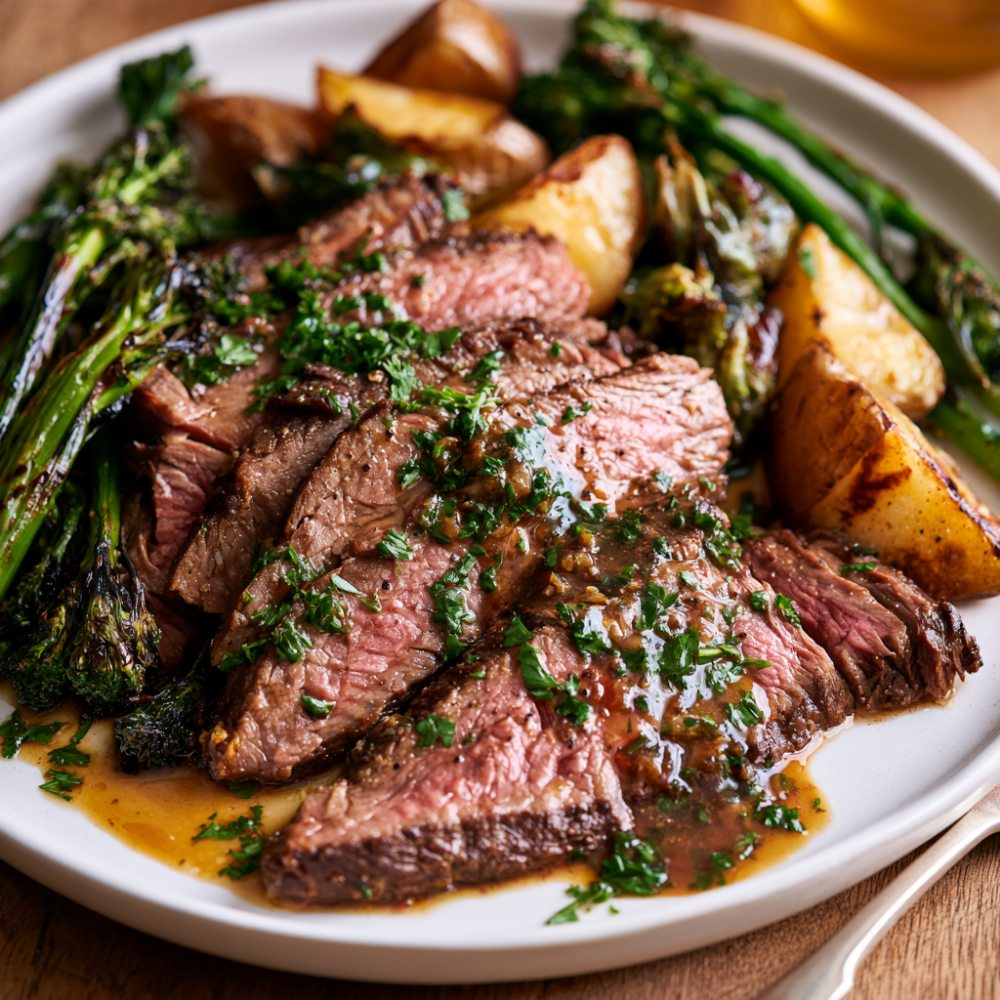
Flank Steak With Chimichurri Sauce
Skip the garlic butter and make a chimichurri instead. Combine 1 cup chopped fresh parsley, ½ cup chopped cilantro, 3 cloves minced garlic, ¼ cup olive oil, 2 tbsp red wine vinegar, 1 tsp dried oregano, ¼ tsp red pepper flakes, and salt to taste. Spoon it over the sliced steak. It’s bright, herby, and one of the best ways to serve flank steak.
Balsamic Marinated Flank Steak
Whisk together ⅓ cup balsamic vinegar, ¼ cup olive oil, 2 tbsp soy sauce or tamari, 2 tbsp honey, 3 cloves minced garlic, 1 tsp Dijon, salt, and pepper. Marinate the steak for 2–8 hours (no longer — the acid will break down the meat). Pat dry, sear as directed, and finish with a balsamic reduction.
Flank Steak Oven Version
If you don’t have a cast iron skillet or want to cook indoors without the smoke, sear the steak in an oven-safe skillet for 2 minutes per side on the stovetop, then transfer the whole pan to a 425°F oven for 4–6 minutes, until it reaches 130–135°F; rest and slice.
Flank Steak Griddle or Blackstone
Preheat your griddle to high heat (about 450–500°F). Sear the steak 3–4 minutes per side, basting with garlic butter in the last minute. The flat surface gives you a great crust and easy cleanup.
Flank Steak Cast Iron Skillet (With Charred Scallions)
Add a bunch of scallions to the skillet alongside the steak during the last 2 minutes of cooking. They char beautifully and make a great side. Serve the steak sliced over the charred scallions.
Stuffed Flank Steak (Pinwheels)
Butterfly the flank steak, pound it thin, and stuff it with spinach, roasted red peppers, and provolone or feta. Roll it tightly, tie with kitchen twine, and sear on all sides. Transfer to a 400°F oven for 15–20 minutes, until the internal temperature reaches 130°F. Rest, then slice into pinwheels. This is the stuffed flank steak version, and it’s stunning for a dinner party.
Chimichurri Steak Pinwheels
Use the stuffed flank technique above, but skip the cheese and spinach and spread chimichurri inside before rolling. Slice into pinwheels and spoon more chimichurri over the top.
Shredded Steak Recipes (Slow Cooker Version)
Flank steak isn’t the best cut for shredding — it’s too lean. For shredded steak, use chuck roast or skirt steak instead. Cook in the slow cooker with broth, garlic, and Mexican spices for 8 hours on low, then shred for tacos or burrito bowls.
Flank Steak With Balsamic Glaze
After searing the steak, deglaze the pan with ½ cup balsamic vinegar and 1 tbsp honey. Simmer until reduced and syrupy, then spoon over the sliced steak. It’s a restaurant-quality finish.
Grilled Flank Steak
Preheat the grill to high (450–500°F). Grill the steak 3–4 minutes per side, until it reaches 130–135°F; rest and slice. Brush with garlic butter right after it comes off the grill.
What to Serve With Flank Steak
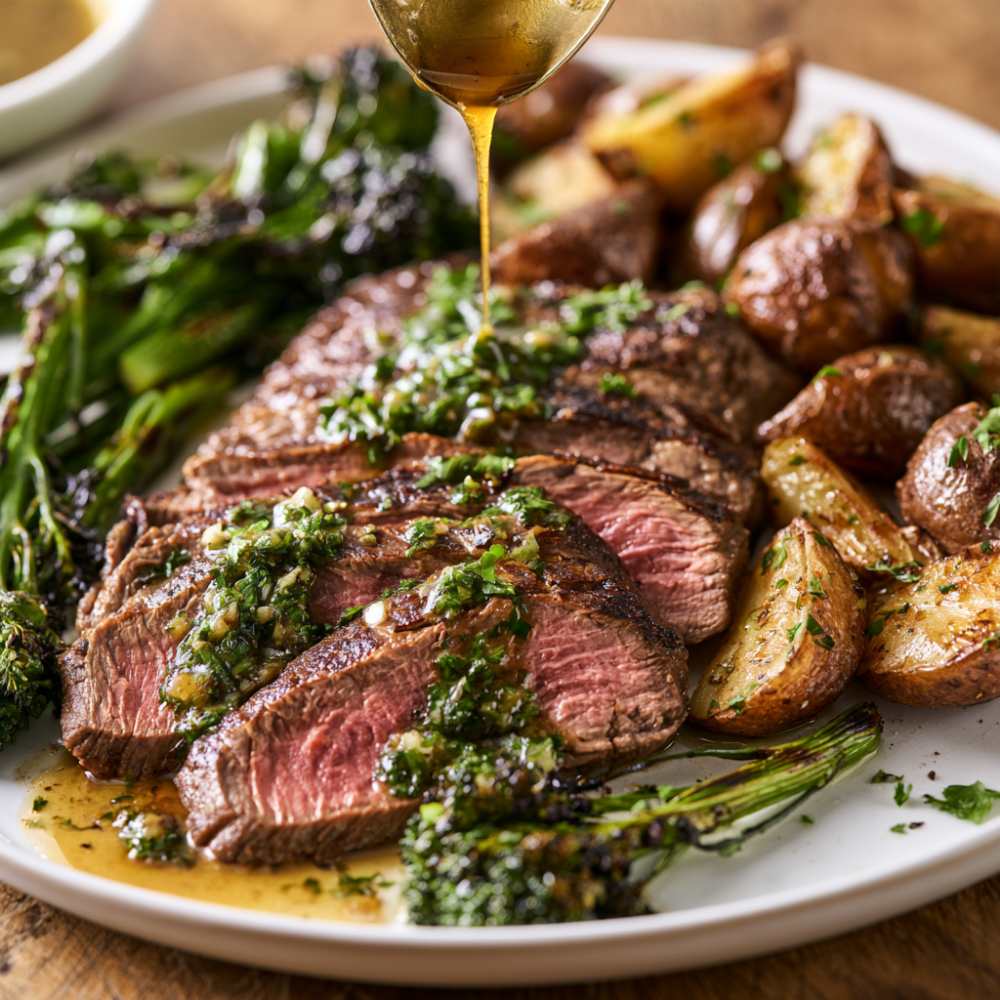
- Chimichurri — the classic pairing
- Roasted potatoes or crispy smashed potatoes.
- Grilled or roasted vegetables — asparagus, broccolini, or zucchini
- A simple green salad with a bright vinaigrette
- Rice or cauliflower rice to soak up the juices
- Warm tortillas if you’re turning it into tacos
- Crusty bread to mop up the garlic butter
Storage, Reheating, and Food Safety
Refrigerator: Store leftover flank steak in an airtight container for up to 4 days. Store it whole if possible — sliced steak dries out faster.
Reheating: Reheat flank steak gently. The microwave makes it tough and rubbery. Reheat in a 300°F oven for 8–10 minutes, or in a covered skillet over low heat with a splash of broth. It’s also excellent cold, sliced thin over a salad or in a sandwich.
Freezer: Not recommended. Flank steak loses texture when frozen and reheated—it becomes mealy. If you must freeze it, freeze it sliced and use it in soups, stews, or tacos where the texture matters less.
Food safety: Ground beef and whole cuts have different temperature guidelines. Whole cuts of beef are safe at 145°F with a 3-minute rest, but flank steak is best at 130–135°F for medium-rare. Use an instant-read thermometer and refrigerate leftovers within 2 hours.
Frequently Asked Questions
How do I cook flank steak so it’s tender?
Three things: don’t overcook it (pull at 130–135°F for medium-rare), let it rest for 10 minutes, and slice it thinly against the grain. Slicing against the grain is the most important step — if you slice with the grain, even a perfectly cooked steak will be chewy.
What does “slice against the grain” mean?
Look at the steak and find the lines running through the meat — those are the muscle fibers. Slice perpendicular to those lines, not parallel to them. This shortens the fibers and makes each bite tender.
What’s the best temperature for flank steak?
130–135°F for medium-rare, 140–145°F for medium. Flank steak gets tough past medium, so pull it early. Carryover cooking will raise the temperature another 5°F while it rests.
How long do you cook flank steak in a cast iron skillet?
3–4 minutes per side over medium-high heat for medium-rare, depending on the steak’s thickness. A 1-inch-thick flank steak takes about 6–8 minutes total. Use a thermometer — time alone isn’t reliable.
Should I marinate flank steak?
You don’t have to. This recipe uses a dry seasoning and a butter baste, and it works beautifully. If you want to marinate, keep it to 2–8 hours — any longer, and the acid will break down the meat and make it mushy.
Can I cook flank steak in the oven?
Yes. Sear it in an oven-safe skillet for 2 minutes per side on the stovetop, then transfer the pan to a 425°F oven for 4–6 minutes, until it reaches 130–135°F.
Can I grill flank steak?
Yes. Preheat the grill to high (450–500°F) and grill 3–4 minutes per side. Brush with garlic butter right after it comes off the grill.
Why is my flank steak tough?
Almost always one of three things: it was overcooked, it wasn’t rested, or it was sliced with the grain instead of against it. Fix the slicing first — it’s the most common cause.
How much protein is in flank steak?
About 38g per 5-ounce cooked serving. Flank steak is very lean — about 21g of protein per 100g raw.
Can I use a different cut of steak?
Yes. Skirt steak, flap meat, hanger steak, and flat iron steak all work with this method. Adjust the cooking time based on thickness — skirt steak cooks in about 2–3 minutes per side. Chuck steak and New York strip work too but take longer and benefit from a longer rest.
Is flank steak expensive?
It’s moderate — usually cheaper than ribeye or filet, but more expensive than chuck or round. It’s one of the best values in the steak case because it’s so flavorful.
How many people does a flank steak serve?
A 1½–2 lb flank steak serves 4–5 people as a main course. Flank steak shrinks significantly during cooking, so plan on 6–8 oz raw per person.
Can I make this dairy-free?
Yes. Skip the butter and use olive oil or a dairy-free butter alternative. The steak will still taste great, just slightly less rich.
Is flank steak gluten-free?
Yes, the steak itself is naturally gluten-free. This recipe is gluten-free as written. If you use a marinade, check the labels on soy sauce, Worcestershire, and any other packaged ingredients.
More High-Protein Dinner Recipes You’ll Love
- Crockpot Pepper Steak
- Crockpot Meatball Subs
- Crockpot Buffalo Chicken
- Italian Pasta Salad (High-Protein & Meal Prep Friendly)
- Mandarin Orange Salad with Cottage Cheese
Conclusion
This garlic butter flank steak is the 10-minute steak dinner that tastes like a steakhouse. Seared hard in a cast iron skillet, basted with garlic, thyme, and butter, rested, and sliced thin against the grain — it’s tender, juicy, deeply beefy, and genuinely easy.
The keys are simple: dry the steak, get the pan screaming hot, sear hard on both sides, baste with garlic butter at the end (not the beginning), rest for 10 minutes, and slice against the grain. That last step is the most important one — it’s the difference between a chewy steak and a tender one
Serve it with chimichurri, roasted potatoes, or a simple green salad. Make it for a weeknight dinner or a dinner party — it works for both. This is one of the best flank steak recipes you can keep in rotation.