Some soups make a whole pot of dinner out of whatever vegetables are in the refrigerator. It is the soup that shows up in Italian kitchens in every season, built from whatever the garden is giving that week, and it always tastes like more than the sum of its parts.
That is minestrone.
It is also the soup that most slow cooker versions get wrong in the same way. Everything goes in at once — vegetables, beans, broth, pasta — and four hours later the pasta has absorbed every drop of liquid and turned to paste.
You eat one good bowl on Monday, and the leftovers on Tuesday are a stew. That is a small problem with a small fix, and it changes the whole recipe.
This version makes three upgrades over the standard crockpot method. The tomato paste and dried herbs get bloomed in a skillet first, which deepens the broth before it ever hits the slow cooker.
A Parmesan rind goes in with the broth and dissolves into something nutty and savory.
And the pasta is cooked separately on the stove and stirred in at serving, so the soup stays soup and the pasta stays al dente.
The base recipe is a vegetable minestrone with beans, and it delivers about sixteen grams of protein per bowl.
If you want more, Italian sausage takes it to about 24 grams, and it is a great upgrade. Either version works, and both are honest.
Start it in the morning. Come home to a pot of soup that tastes like it simmered all day.
Why This Recipe Works
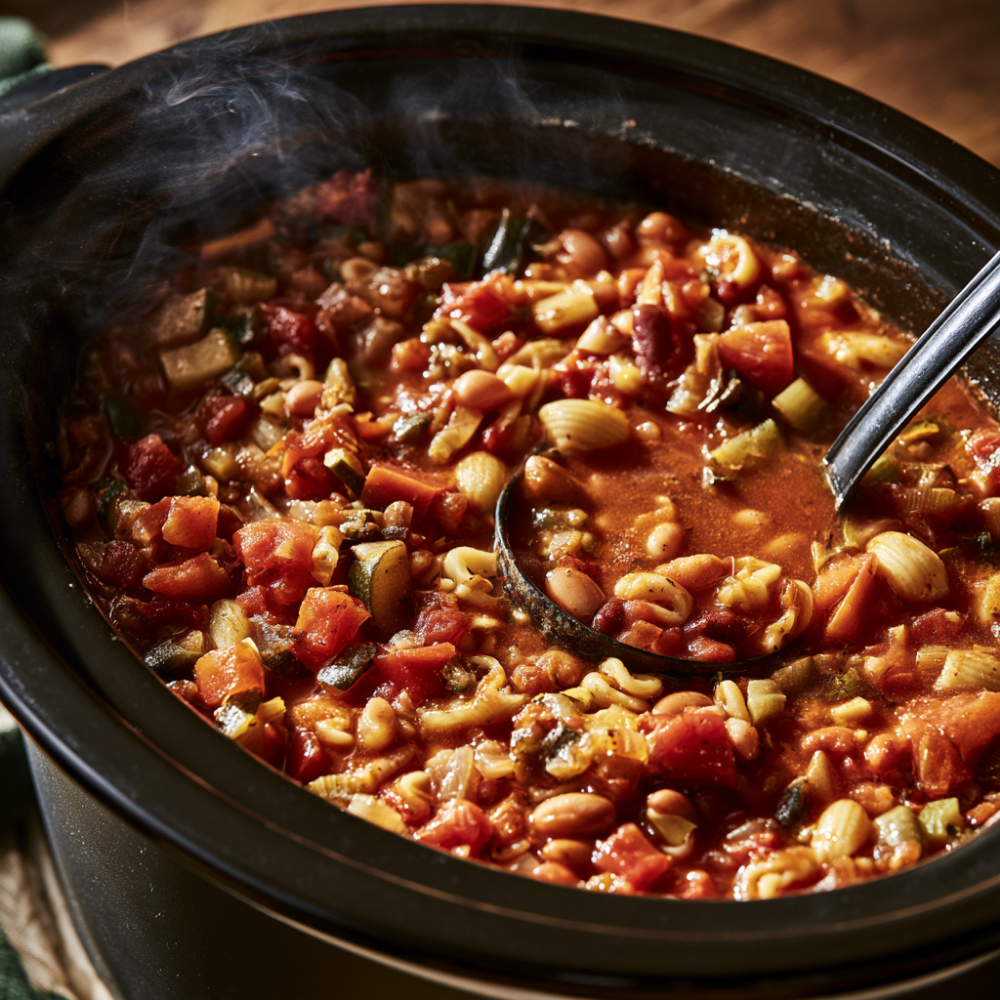
- Blooming the tomato paste and dried herbs in a skillet first builds flavor the crockpot cannot. Three minutes in hot oil darkens the paste and wakes up the oregano and basil, which deepens the entire pot of soup.
- A Parmesan rind is the quiet upgrade. Drop it into the broth and fish it out at the end; it adds a nutty, savory salinity that nothing else replicates. It is free flavor if you save your rinds.
- Cooking the pasta separately is the single biggest reliability fix. Pasta cooked in the slow cooker keeps absorbing broth for hours, even after the pot is off. Cooked separately and added at serving, it stays al dente, and leftovers stay soup.
- Add the beans at the start so they absorb the broth. Canned beans are already cooked, but a few hours in the pot lets them soften further and take on the tomato and herb flavors.
- Add the zucchini at the 30-minute mark. Any earlier and it dissolves. Thirty minutes is the window where it turns tender but still holds its shape.
- Add the spinach at the very end, off the heat. It wilts in the pot’s residual heat and stays bright green instead of turning olive.
- A splash of red wine vinegar at the end is what makes the soup taste finished. Tomato-based soups need acid. Without it, the whole pot tastes flat and heavy.
- Fresh basil or parsley at serving adds a bright note that dried herbs cannot. A handful stirred in at the end lifts the whole bowl.
- If you add Italian sausage, brown it first. Browning builds a crust and renders the fat, so the sausage tastes like sausage instead of boiled meat.
- The soup tastes better the next day. The broth deepens overnight, and the beans absorb more flavor. It is a make-ahead recipe by nature.
- The protein math is honest. Beans, Parmesan, and pasta deliver about 16g per bowl, and adding a pound of Italian sausage brings it to about 24g.
Crockpot Minestrone Soup
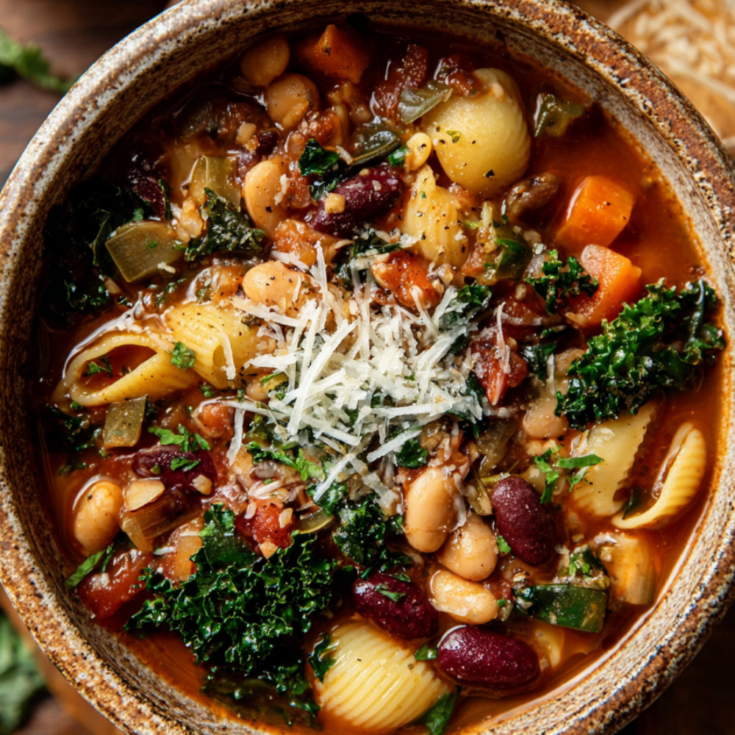
Slow-cooker minestrone with carrots, celery, green beans, potatoes, zucchini, spinach, and three kinds of beans in a tomato-and-Parmesan-rind broth. Pasta cooked separately so it stays al dente. Italian sausage optional.
Ingredients
For the Base
- 2 tbsp olive oil
- 1 large yellow onion, diced
- 4 cloves garlic, minced
- 2 tbsp tomato paste
- 1 tbsp dried oregano
- 1 tbsp dried basil
- 1 tsp dried thyme
- ½ tsp red pepper flakes
- 1 cup dry white wine or 1 cup extra broth
For the Slow Cooker
- 2 cups carrots, sliced into ½-inch rounds
- 2 cups celery, sliced
- 2 cups green beans, trimmed and cut into ½-inch pieces
- 1 medium Russet potato, scrubbed and cut into 1-inch chunks
- 2 (15-oz) cans red kidney beans, drained and rinsed
- 2 (15-oz) cans cannellini or great Northern beans, drained and rinsed
- 1 (28-oz) can diced tomatoes, undrained
- 6 cups low-sodium vegetable or chicken broth
- 1 Parmesan rind
- 2 bay leaves
- 1 tsp kosher salt
- ½ tsp black pepper
For the Finish
- 1 medium zucchini, sliced into half-moons
- 1½ cups dry ditalini pasta
- 4 cups baby spinach
- 2 tbsp red wine vinegar
- ½ cup fresh basil or flat-leaf parsley, chopped
- ½ cup freshly grated Parmesan, for serving
Optional Protein
- 1 lb mild or hot Italian sausage, casings removed, browned and crumbled
Instructions
- Bloom the tomato paste and herbs. Heat the olive oil in a large skillet over medium heat. Add the onion and cook for 5 minutes, until softened. Add the garlic and cook for 30 seconds. Add the tomato paste, oregano, basil, thyme, and red pepper flakes. Stir constantly for 2 minutes, until the paste darkens to a deep brick red and the herbs smell toasted.
- Deglaze with wine. Pour in the wine and scrape up every browned bit from the skillet. Simmer 2 minutes, until the wine has reduced by about half.
- Load the slow cooker. Scrape the onion mixture into a 6-quart or larger slow cooker. Add the carrots, celery, green beans, potato, both cans of beans, diced tomatoes with their juices, broth, Parmesan rind, bay leaves, salt, and pepper. Stir to combine.
- Cook. Cover and cook on LOW for 6–8 hours or on HIGH for 4 hours. Do not lift the lid.
- Add the zucchini. Thirty minutes before serving, stir in the sliced zucchini. Cover and continue cooking.
- Cook the pasta separately. While the zucchini cooks, bring a large pot of well-salted water to a boil. Cook the ditalini 1 minute shy of al dente. Drain and set aside. Do not add it to the slow cooker.
- Brown the sausage, if using. While the soup finishes, brown the Italian sausage in a skillet over medium-high heat, breaking it into small pieces, for about 8 minutes. Drain any excess fat.
- Finish the soup. Turn off the slow cooker. Remove the Parmesan rind and the bay leaves. Stir in the spinach, the red wine vinegar, and half the fresh basil. Let it sit 2 minutes so the spinach wilts in the residual heat.
- Add the pasta and sausage at serving. Ladle the soup into bowls, then add a spoonful of the cooked ditalini to each bowl. If using sausage, stir it into the pot now. Adding the pasta per bowl keeps it al dente and stops it from absorbing the broth. If you plan to eat the whole pot in one sitting, you can stir the pasta directly into the slow cooker at this point.
- Serve. Top each bowl with grated Parmesan, the remaining fresh basil, and a crack of black pepper.
Notes
Protein per Serving: 16g without meat, 24g with sausage. Nutrition Note: Base recipe protein comes from 4 (15-oz) cans of beans (≈88g), 1½ cups cooked dry ditalini (≈12g), Parmesan rind and grated Parmesan (≈14g), and vegetables (≈14g), divided by 8 servings—about 16g per bowl. Adding 1 lb Italian sausage adds ≈60g, bringing it to about 24g. About 260 calories per bowl without meat, 400 with sausage. Sodium varies with the broth and beans — use low-sodium broth and rinse the beans well.
Tips for the Best Crockpot Minestrone Soup
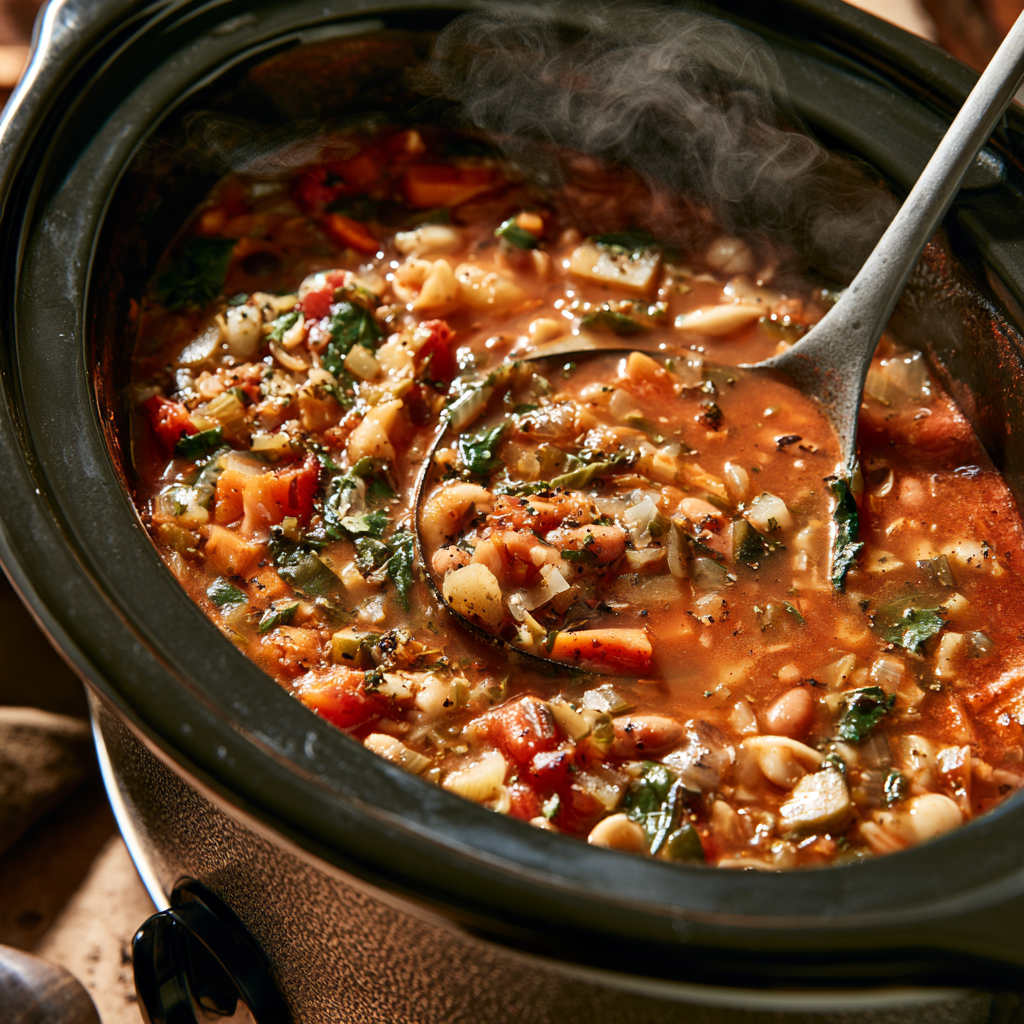
- Bloom the tomato paste and dried herbs before adding them. Two minutes in hot oil is the difference between a broth that tastes simmered and one that tastes thin.
- Use a Parmesan rind. Drop it in with the broth and fish it out at the end. It adds a savory depth that grated cheese cannot replicate.
- Cook the pasta separately, always. It stays al dente, and the leftovers stay soup instead of turning into a stew.
- Add the pasta per bowl if you plan on leftovers. Even cooked pasta will keep absorbing broth as the soup sits.
- Rinse the canned beans thoroughly. The liquid in the can is starchy and salty. Rinsing makes the broth cleaner.
- Use low-sodium broth. Canned beans, tomatoes, and Parmesan are all salty. You can always add more salt at the end.
- Cut the vegetables into even pieces. Uniform cuts cook at the same rate, so nothing turns to mush before the rest is done.
- Leave the potato in 1-inch chunks. Smaller pieces dissolve and thicken the soup into a stew.
- Add zucchini at the 30-minute mark, not earlier. Any longer and it disappears into the broth.
- Add spinach off the heat. Residual heat wilts it and keeps it bright green.
- Finish with red wine vinegar. Tomato soups need acid. One tablespoon wakes up the whole pot.
- Use fresh basil at the end, dried basil at the start. Dried basil builds the base, fresh basil finishes it.
- Brown the sausage first if you are using it. Browning builds flavor and renders the fat so the soup does not turn greasy.
- Make it a day ahead if you can. The broth deepens overnight, and the beans absorb more flavor.
- Serve with crusty bread and Parmesan. The bread is for dipping, and the Parmesan is for the top of the bowl.
Troubleshooting
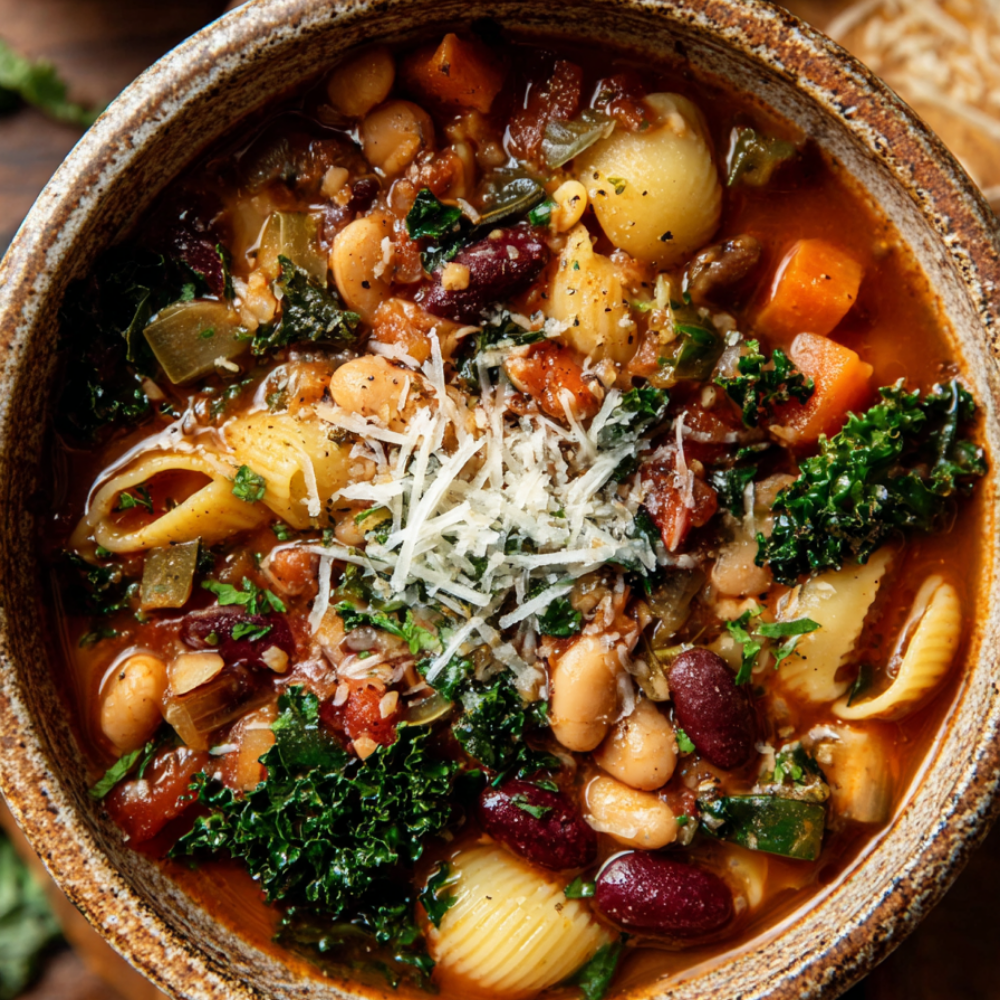
- The soup tastes flat. It needs salt, acid, or both. Add red wine vinegar and salt to taste, and finish with fresh basil.
- The soup is too thick and stewy. Too much pasta absorbed the broth, or the pot was cooked uncovered. Cook pasta separately and add it at serving.
- The vegetables turned to mush. They were cut too small or cooked too long. Cut into ½ to 1-inch pieces and stick to the lower end of the cook time.
- The zucchini disappeared. It went in too early. Add it at the 30-minute mark.
- The spinach turned olive green. It cooked too long. Add it off the heat and let it wilt in the residual warmth.
- The broth tastes watery. You didn’t use enough tomato paste, or the pot was too full. Bloom more paste next time and reduce the broth to 5 cups.
- The beans are mushy. They cooked too long. Canned beans are already done — they only need to heat through and absorb flavor, so keep the cook at 6 hours max on LOW.
- The soup is too salty. The broth, beans, and Parmesan are stacked. Add 2 cups of unsalted broth or water and a squeeze of lemon.
- The pasta is mushy. It was cooked in the slow cooker. Always cook it separately and add at serving.
- The sausage made the soup greasy. It was not drained after browning. Spoon off the fat before adding it to the pot.
- The soup tastes too acidic. Too much tomato or wine. Add 1 tsp of brown sugar or a small piece of potato and simmer for 10 minutes.
- There is not enough broth the next day. The beans absorbed it. Add 1 cup of broth when reheating.
Easy Variations
- Slow Cooker Minestrone with Meat. Add 1 lb browned Italian sausage for 24g protein per bowl.
- Minestrone with Chicken. Add 2 cups of shredded rotisserie chicken at the end for about 23g protein per bowl. Skip the sausage.
- Vegetarian Minestrone. Use vegetable broth and skip the Parmesan rind if you want it fully vegetarian — protein drops to about 15g.
- Vegan Minestrone. Use vegetable broth, skip the Parmesan rind, and top with nutritional yeast instead of Parmesan.
- Gluten-Free Minestrone. Use gluten-free pasta and verify your broth is gluten-free.
- Summer Minestrone. Swap the green beans and potato for fresh peas and yellow squash, and add 1 cup of chopped fresh tomatoes at the end.
- Fall Minestrone. Add 1 cup diced butternut squash with the carrots, and 1 tsp ground cinnamon with the herbs.
- Minestrone with Kale. Swap the spinach for 3 cups of chopped lacinato kale and add it 5 minutes before serving.
- Minestrone with Pesto. Stir in 2 tbsp basil pesto at the end for a deeper herb flavor.
- Spicy Minestrone. Double the red pepper flakes and add 1 diced jalapeño with the onion.
- Minestrone with Farro. Swap the pasta for 1 cup farro and cook it separately.
- Instant Pot Minestrone. Sauté the aromatics using the sauté function, add everything except the zucchini and spinach, and pressure cook on high for 8 minutes. Quick release, then sauté the zucchini for 5 minutes and stir in the spinach off the heat.
Storage and Food Safety
Refrigerator: Store the soup without the pasta in an airtight container for up to 4 days. Keep the cooked pasta separate and add it when reheating. If the pasta is already in the soup, the leftovers will be thicker — add a splash of broth when reheating.
Freezer: Freeze the soup without the pasta for up to 3 months. Thaw overnight in the refrigerator and reheat on the stovetop. The beans and vegetables hold up well. Add fresh pasta when serving.
Make Ahead: You can make the soup up to 3 days ahead and refrigerate it. You can bloom the aromatics up to 2 days ahead. Cook the pasta the day you serve it.
Food Safety: If using sausage or chicken, both must reach an internal temperature of 165°F. Cool leftovers within 2 hours and refrigerate promptly. Reheat leftovers to 165°F. Do not leave the soup at room temperature for more than 2 hours.
Frequently Asked Questions
How much protein is in this minestrone? About 16g per bowl from the beans, Parmesan, and pasta. Adding 1 lb of Italian sausage brings it to about 24g.
Do I have to add meat? No. The base recipe is a vegetable minestrone, and it is complete on its own. The sausage is an optional upgrade.
Why cook the pasta separately? Pasta cooked in the slow cooker keeps absorbing broth and turns mushy, making leftovers thick and stewy. Cooking it separately keeps it al dente.
Can I add the pasta directly to the slow cooker? You can if you are serving the whole pot in one sitting. Do not do it if you want leftovers.
What is a Parmesan rind and where do I get one? It is the hard outer edge of a wedge of Parmigiano-Reggiano. Save them in the freezer whenever you finish a wedge. They add deep savory flavor to soups and stews.
Can I use dried herbs instead of fresh basil? Yes. Add the dried herbs at the start with the tomato paste. Fresh basil is the finish and adds a bright note dried herbs cannot.
Can I use a different bean? Yes. Kidney, cannellini, great Northern, chickpeas, and pinto beans all work.
Can I use frozen green beans? Yes. Add them straight from the freezer with the other vegetables, and they will cook through.
Can I make this vegan? Yes. Use vegetable broth, skip the Parmesan rind, and top with nutritional yeast.
Can I make this gluten-free? Yes. Use gluten-free pasta and verify your broth is gluten-free.
How long does it last in the refrigerator? Up to 4 days without the pasta. Add fresh pasta when reheating.
Can I freeze it? Yes. Freeze without the pasta for up to 3 months.
Can I double the recipe? Yes. Use a 7- or 8-quart slow cooker and increase the broth to 10 cups. Do not increase the pasta.
How do I keep the vegetables from getting mushy? Cut them into uniform ½ to 1-inch pieces, use the lower end of the cook time, and add the zucchini and spinach at the end.
What do I serve with minestrone? Crusty bread, garlic bread, a simple green salad, or a drizzle of olive oil and grated Parmesan on top.
More High-Protein Crockpot Recipes You’ll Love
- French Onion Soup Recipe Crockpot — 22–38g protein, cheesy and hands-off.
- Crockpot Gumbo — 35g protein, real dark roux.
- Hamburger Soup — 32g protein, one-pot, under $2.50 per serving.
- Freezer Chicken Broccoli Rice Casserole — 40g protein, bakes from frozen.
Conclusion
Minestrone is the soup that has everything in it. Vegetables from the garden, beans from the pantry, a little pasta, and a broth that tastes like it simmered all day. It is humble, it is filling, and it is one of the most forgiving things you can make in a slow cooker.
The version that works is the one that keeps the pasta out of the pot. Cook it separately, add it at serving, and the soup stays soup on Monday and soup on Wednesday. Bloom the tomato paste and herbs first, drop in a Parmesan rind, add the zucchini at the end, and finish with red wine vinegar and fresh basil.
Sixteen grams of protein per bowl from the beans, Parmesan, and pasta. Twenty-four if you add Italian sausage. Either way, a pot of soup that feeds eight and tastes even better the next day.
Start it in the morning. Come home to dinner that is already done.