Real carbonara doesn’t have cream in it.
That’s the first thing to know.
The creaminess comes from eggs, cheese, and starchy pasta water whisked together into a silky sauce that clings to every strand. It’s one of the simplest, most luxurious pasta dishes in Italian cooking, and it’s ready in under 20 minutes.
This version is the real thing.
Same technique. Same ingredients. Same silky sauce.
The changes are small and deliberate: swapping regular fettuccine for a high-protein pasta made from lentils or chickpeas, and using a generous hand with the cured meat—guanciale and pancetta together—so the dish carries more protein and more flavor in every bite.
That combination takes a dish that usually lands around 15 grams of protein per serving up to about 30 grams, without changing what carbonara is. Still no cream.
Still no cottage cheese. Still no shortcuts. Just good pasta, deeply crisped cured pork, and a sauce made from eggs and Pecorino Romano.
If you want an authentic carbonara that’s also more filling, this is it.
Let’s get into it.
Why This Recipe Works
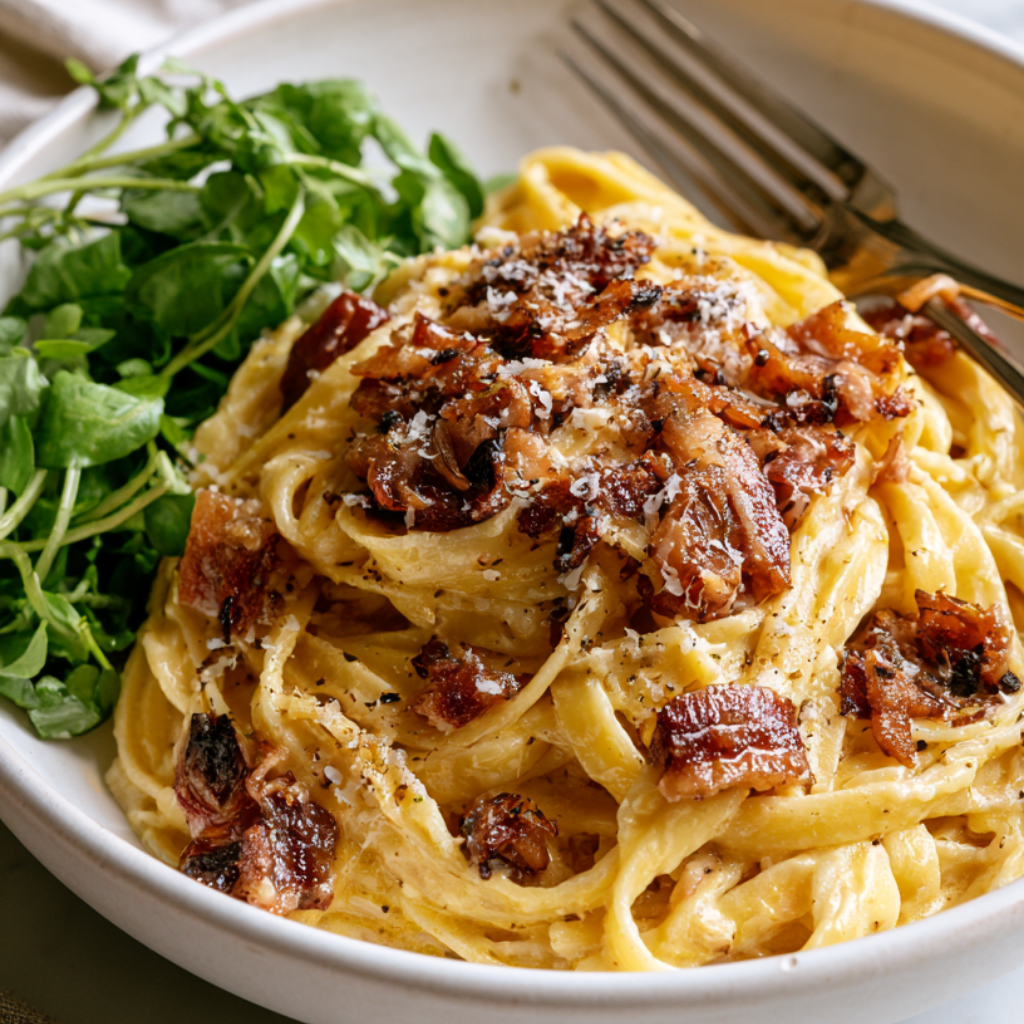
This isn’t a reinvention of carbonara. It’s carbonara with two small adjustments so it works better as a full dinner. Here’s what actually matters:
No Cream, Ever. Carbonara’s creaminess comes from egg yolks, grated Pecorino, and starchy pasta water whisked together off the heat. Adding cream turns it into an Alfredo. This version skips the cream entirely and uses the classic technique to build the sauce.
High-Protein Pasta. Swapping regular fettuccine for a high-protein pasta made from lentils or chickpeas adds 5 to 10 grams of protein per serving. The pasta holds up beautifully in the sauce, cooks to al dente, and tastes like regular pasta. Barilla Protein+, Banza, and lentil pasta all work well.
Guanciale and Pancetta Together. Guanciale is cured pork jowl—fattier than bacon, deeply savory, and the traditional choice for carbonara.
Pancetta is cured pork belly—leaner, slightly sweeter, and a little firmer when crisped. Using both gives you the best of each: the rich, unctuous rendered fat from the guanciale, and the meatier, crisper texture from the pancetta.
It also nudges the protein up modestly. Cured pork is mostly fat, so the protein bump is real but small—call it 2 to 3 grams per serving. The bigger payoff is flavor and texture. Two cured meats, two kinds of crisp, one sauce.
The Cool-Down Step. Remove the skillet from the heat and let it cool for 2 minutes, non-negotiable for carbonara. The temperature drop is the single best way to prevent scrambled eggs.
Toss the Pasta in the Fat First. This is the most foolproof mixing order, and it’s how Roman cooks do it. Add the hot, drained pasta to the warm skillet first, then toss in the rendered fat and crisped meats so every strand is coated. Then the egg and cheese mixture gets poured over the pasta—not onto the bare pan. The pasta acts as a thermal buffer, protecting the eggs from direct contact with hot metal. That’s what keeps the sauce silky instead of speckled with little scrambled bits.
Reserved Pasta Water for the Sauce. The starch in the pasta water is what emulsifies the eggs and cheese into a creamy sauce. Without it, the sauce stays thick and pasty. Add it a splash at a time until the pasta glistens.
Freshly Ground Black Pepper, Lots of It. Carbonara is a pepper-forward dish. The black pepper isn’t a garnish—it’s a main ingredient. Grind it fresh and use more than you think you need.
Watch the Salt. Eleven ounces of cured pork plus a full cup of Pecorino Romano is already a lot of salt. This recipe intentionally uses less salt in the pasta water than you might expect, and skips the finishing flaky salt entirely. Let the guanciale, pancetta, and Pecorino do the seasoning.
This is carbonara that works as a weeknight dinner, with a little more protein and a lot more flavor.
High-Protein Carbonara Pasta Recipe
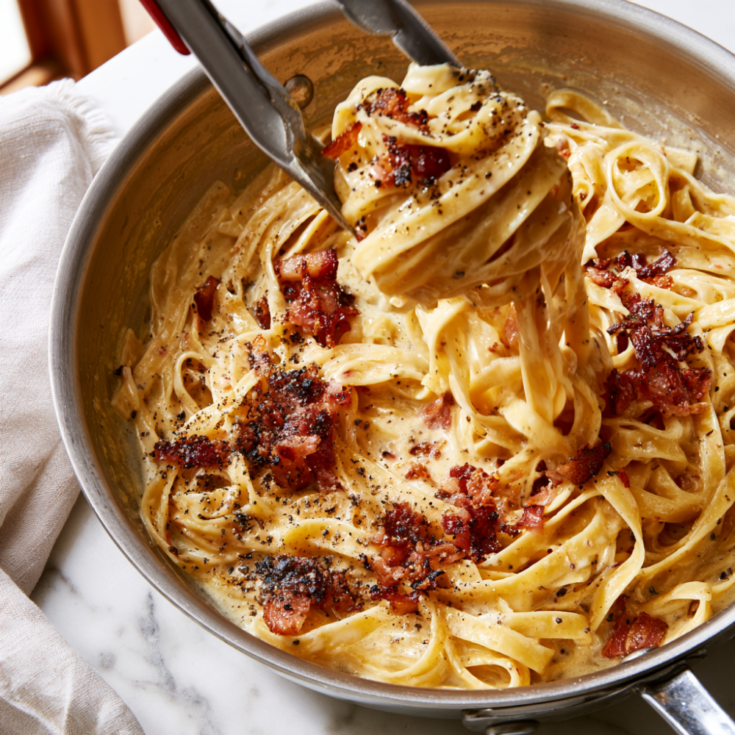
A classic carbonara made with high-protein fettuccine, crispy guanciale and pancetta, and a silky egg and Pecorino sauce. No cream. About 30g protein per serving.
Ingredients
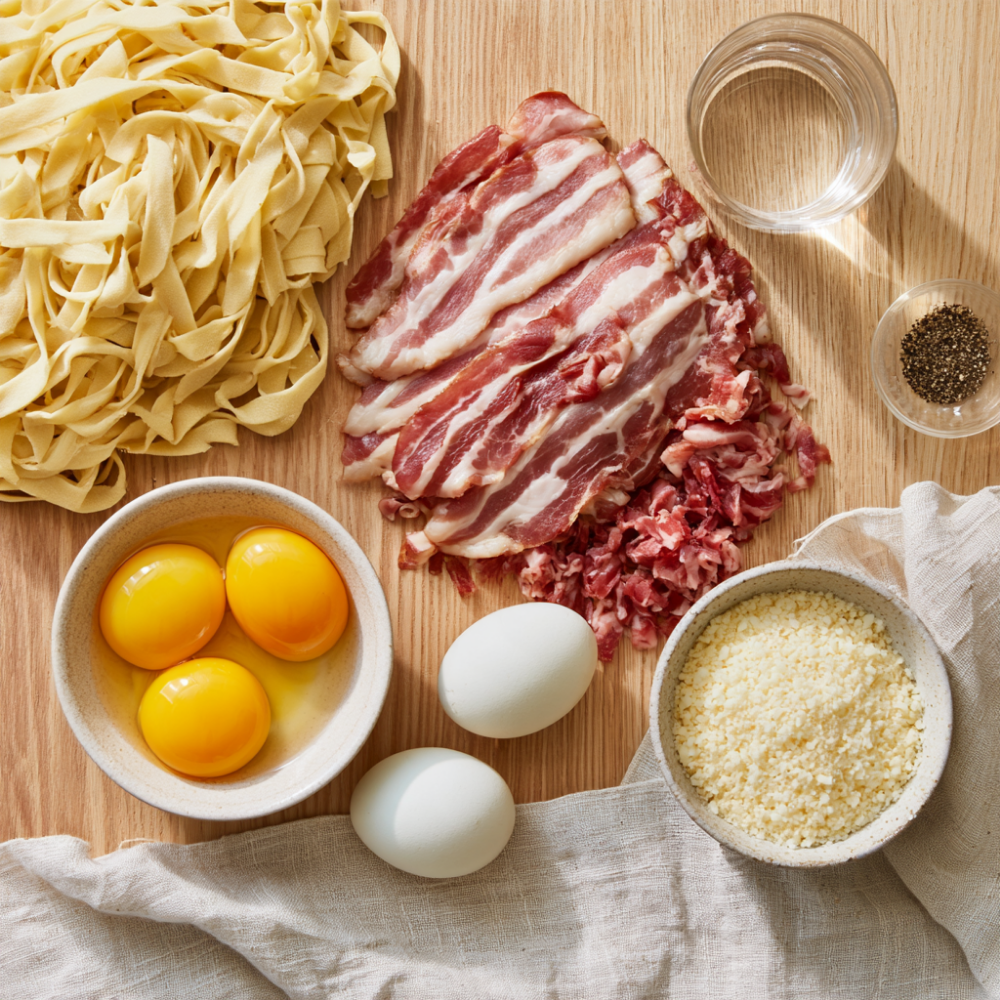
- 1 lb high-protein fettuccine (Barilla Protein+, chickpea, or lentil pasta)
- 1 tbsp coarse kosher salt, for the pasta water
- 6 oz guanciale, cut into ¼-inch pieces
- 3 oz pancetta, cut into ¼-inch pieces
- 4 large egg yolks
- 2 whole eggs
- 1 cup freshly grated Pecorino Romano (or Parmigiano-Reggiano)
- 1 tsp freshly ground black pepper, plus more for serving
- ½ to 1 cup reserved pasta water
- Freshly grated Pecorino for serving
Instructions
- Boil the water. Bring a large pot of water to a rolling boil, then add 1 tablespoon kosher salt. That's less than you'd normally use, and it's intentional—the cured meats and Pecorino carry plenty of salt on their own.
- Cook the pasta. Add the fettuccine and cook until al dente, about 1 minute less than the package directions. Stir occasionally so the noodles don't stick. Before draining, reserve at least 1 cup of pasta water in a measuring cup. Drain the pasta but do not rinse.
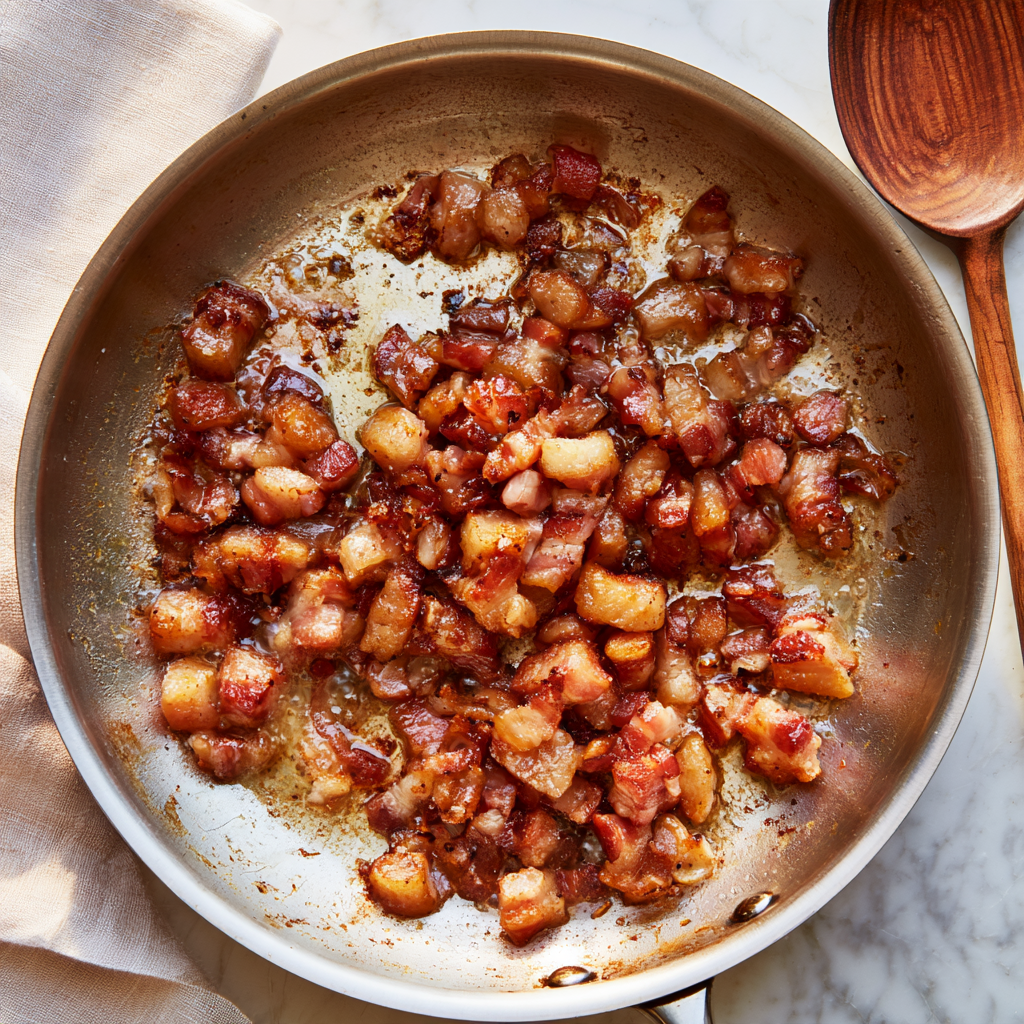
- Crisp the guanciale first. While the pasta cooks, heat a large skillet over medium heat. Add the guanciale and cook for 4 to 5 minutes, stirring often, until the pieces are golden and the fat has rendered out.
- Add the pancetta. Add the pancetta to the skillet with the guanciale. Cook for another 3 to 4 minutes, stirring often, until both meats are crisp and deeply golden. The guanciale will be slightly softer and richer; the pancetta will be firmer and crisper. Leave both in the skillet with the rendered fat. Do not drain.
- Turn off the heat. Remove the skillet from the burner and let it cool for 2 minutes. This step is critical. If the pan is too hot, the eggs will scramble when they hit it.
- Make the egg mixture. In a medium bowl, whisk the egg yolks, whole eggs, grated Pecorino, and black pepper until completely smooth. The mixture should look like a thick, uniform sauce.
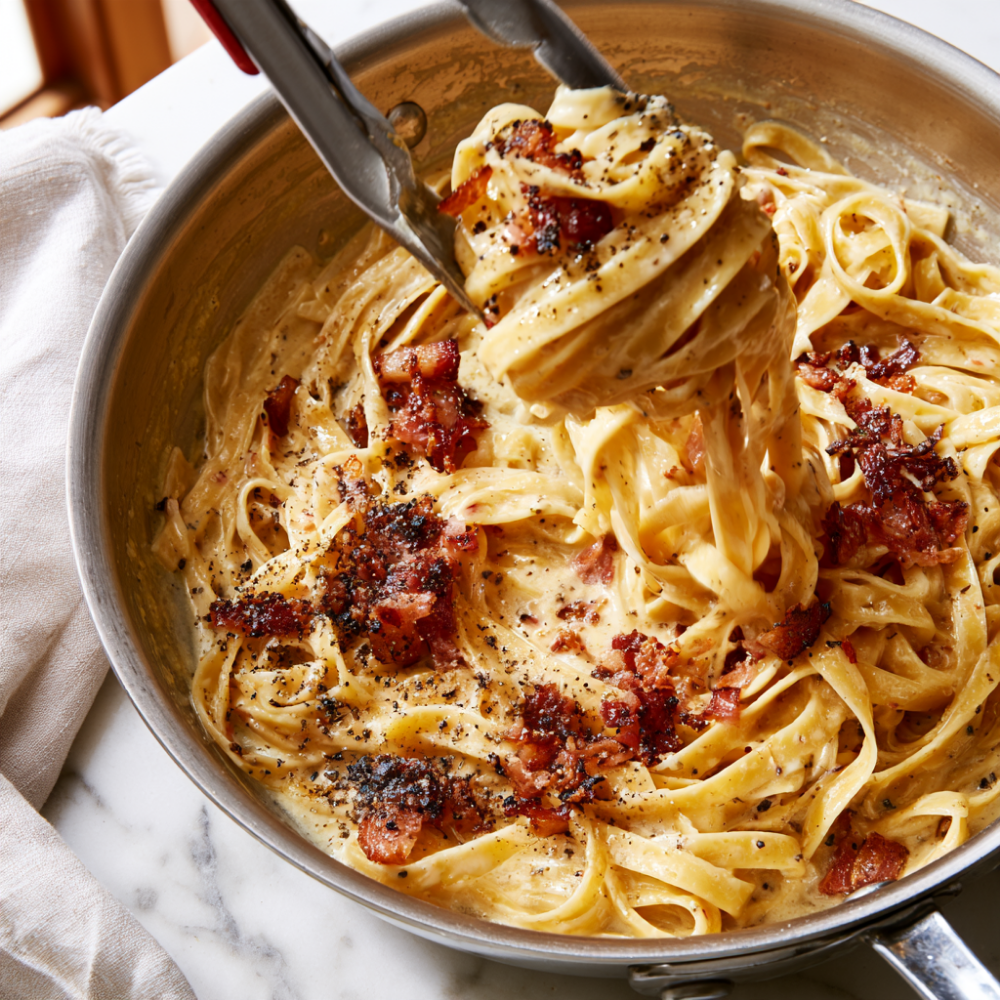
- Toss the pasta in the fat first. Add the drained pasta directly to the warm skillet with the crisped guanciale, pancetta, and rendered fat. Toss with tongs or a wooden spoon until every strand is coated and glistening. This step protects the eggs and builds the sauce base.
- Pour the egg mixture over the pasta. With the skillet still off the heat, pour the egg and Pecorino mixture directly over the pasta—not onto the bare pan. Immediately begin tossing vigorously with tongs, coating every strand. The pasta and fat's residual heat cooks the eggs into a silky sauce.
- Loosen with pasta water. Add the reserved pasta water ¼ cup at a time, tossing constantly, until the sauce turns glossy, silky, and coats the pasta. You may not need the full cup. Stop as soon as the sauce looks creamy and clings to the noodles.
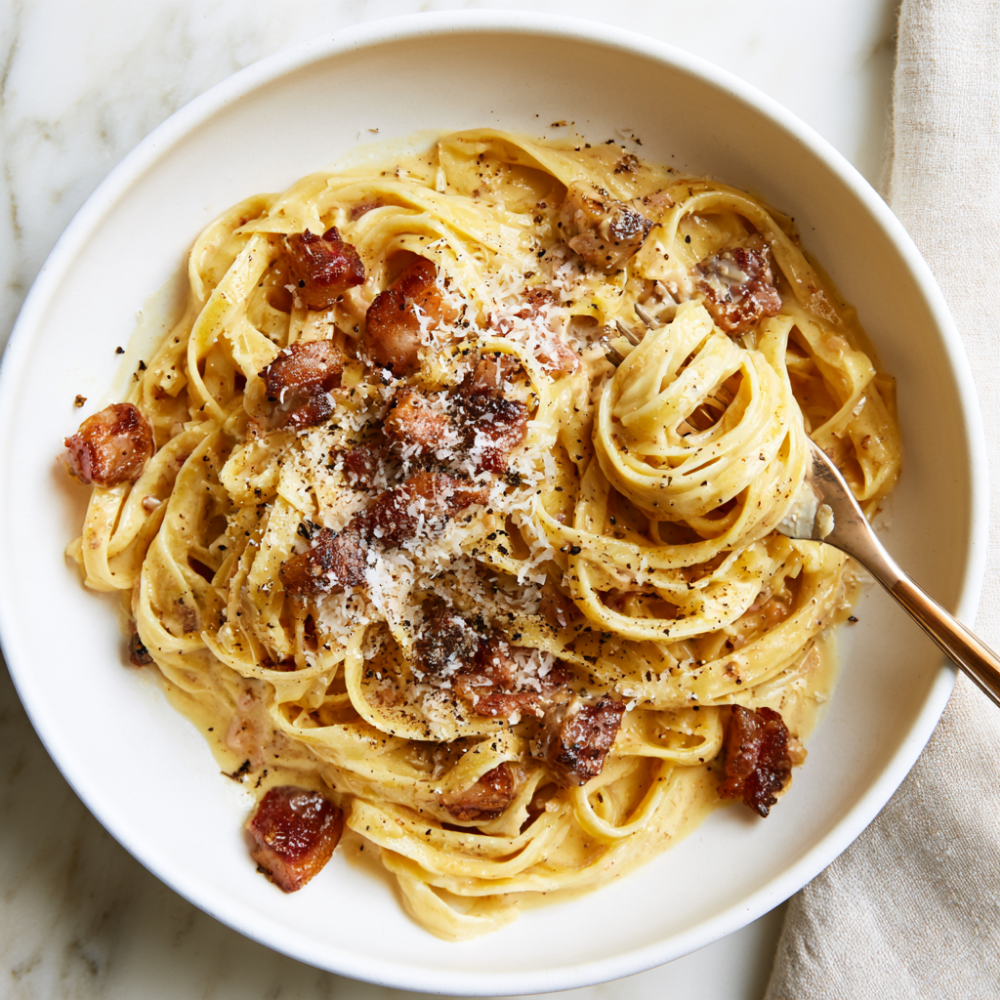
- Finish and serve. Taste first, then adjust pepper. Serve immediately in warm bowls, topped with extra grated Pecorino and a generous grind of black pepper. Skip the finishing salt—the dish has plenty. Carbonara waits for no one, so serve it as soon as you toss it.
Notes
Protein per Serving: About 30g
Nutrition Note: Protein calculated from 1 lb high-protein fettuccine (≈96g), 6 oz guanciale (≈26g), 3 oz pancetta (≈13g), 4 large egg yolks plus 2 whole eggs (≈23g), and 1 cup grated Pecorino Romano (≈24g) — about 182g total across 6 servings, minus roughly 5% loss during cooking — about 30g per serving. About 620 calories per serving. Using regular fettuccine instead drops this to about 22g per serving.
Tips for the Best High-Protein Carbonara
Crisp the guanciale first, then add the pancetta. Guanciale renders more fat and takes a little longer. Giving it a head start means both meats finish crisp at the same time, instead of one burning while the other stays soft.
Take the skillet off the heat before adding anything. This is non-negotiable. Residual heat is enough to cook the eggs into a silky sauce. Direct heat turns them into scrambled eggs.
Toss the pasta in the fat before the eggs go in. The pasta acts as a thermal buffer, protecting the eggs from direct contact with hot metal. Pour the egg mixture over the coated pasta instead of into the bare pan for a foolproof result.
Use less salt in the pasta water. With 9 ounces of cured pork and a full cup of Pecorino, this dish is already salty. Use about 1 tablespoon of kosher salt per gallon of water, and don’t add any salt at the table.
Reserve more pasta water than you think you need. The starchy water is what emulsifies the sauce. If the pasta tightens up as it sits, add another splash.
Use freshly grated Pecorino. Pre-shredded cheese is coated in anti-caking agents that keep it from melting smoothly. Grate it fresh on a Microplane for the best texture.
Serve immediately. Carbonara doesn’t hold. The sauce tightens as it cools, and reheating scrambles the eggs. Toss and serve.
Easy Variations
Guanciale Only Carbonara. Skip the pancetta and use 8 oz of guanciale. This is the most traditional version. Protein drops to about 29g per serving.
Pancetta Only Carbonara. Skip the guanciale and use 10 oz of pancetta. Milder and slightly leaner. Protein stays about the same.
Spaghetti Carbonara. Swap the fettuccine for high-protein spaghetti. The technique is identical. Spaghetti is the more classic shape for this dish.
Keto Carbonara. Swap the fettuccine for zucchini noodles or hearts of palm noodles. Skip the pasta water and use a splash of chicken broth instead. Carbs drop to about 6g per serving.
Bacon and Spaghetti Carbonara. Use 10 slices of thick-cut bacon instead of guanciale and pancetta. It’s not traditional, but it’s the version most people grew up with, and it works.
Storage and Food Safety
Refrigerator: Carbonara is best fresh. If you have leftovers, store them covered in an airtight container for up to 2 days. Reheat very gently in a skillet over low heat with a splash of water, stirring constantly. The sauce will tighten, but the flavor holds.
Freezer: We don’t recommend freezing carbonara. The egg-based sauce separates and turns grainy when thawed.
Make Ahead: You can crisp the guanciale and pancetta and grate the cheese up to 2 days ahead. Store everything separately in the refrigerator. Boil the pasta and toss the sauce fresh when you’re ready to eat.
Food Safety: Cool leftovers within 2 hours and refrigerate promptly. Reheat leftovers to 165°F. Do not leave carbonara at room temperature for more than 2 hours.
Frequently Asked Questions
Is there cream in this carbonara? No. Traditional carbonara never has cream. The creaminess comes from eggs, cheese, and starchy pasta water whisked together off the heat.
How much protein is in this carbonara? About 30g per serving, thanks to the high-protein pasta, guanciale, pancetta, eggs, and Pecorino. A traditional carbonara with regular pasta averages about 22g per serving.
Why use both guanciale and pancetta? Guanciale brings rich, unctuous fat and deep savory flavor. Pancetta brings a firmer, crisper texture and a slightly sweeter note. Together they give you two kinds of crisp and a more complex bite. It also nudges the protein up by about 2 to 3 grams per serving.
Why is there less salt in the pasta water? With 9 ounces of cured pork and a full cup of Pecorino Romano, the dish is already well seasoned. Using less salt in the pasta water and skipping the finishing salt keeps it from tipping into overly salty territory.
Can I use just one cured meat? Yes. Use 8 oz of guanciale alone for the most traditional version, or 10 oz of pancetta alone for a milder, leaner one. Adjust the pasta water salt accordingly—less meat means you can be a little more generous.
Why did my eggs scramble? The skillet was too hot, or the egg mixture went into the bare pan instead of over the coated pasta. Turn off the heat, let the pan cool for 2 minutes, toss the pasta in the fat first, then pour the eggs over the pasta.
Can I make this keto? Yes. Swap the fettuccine for zucchini noodles or hearts of palm noodles, and skip the pasta water; use chicken broth instead. Carbs drop to about 6g per serving.
What do I serve with carbonara? A simple green salad with lemon vinaigrette, roasted broccoli, or crusty bread. Keep it simple—carbonara is rich enough on its own.
More High Protein Pasta Recipes You’ll Love
Easy Healthy Tuscan Shrimp Pasta
One-Pan Lemon Garlic Shrimp Orzo
Baked Chicken Bacon Ranch Pasta
Conclusion
This High-Protein Carbonara Pasta is the real thing—with two small adjustments that make it work better as a full dinner. It keeps every bit of what makes carbonara great: the crispy cured pork, the silky egg and Pecorino sauce, the smoky black pepper.
The changes are the pasta itself, swapped for a high-protein version, and a generous hand with the guanciale and pancetta, so the dish packs more protein and flavor in every bite.
The traditional recipe is delicious, but it’s also lighter on protein.
This one uses high-protein fettuccine and two cured meats, so a single bowl actually fills you up.
No cream. No cottage cheese. No shortcuts on technique. Just a carbonara that works as dinner.
The three things that make it work are these.
Toss the pasta in the rendered fat first, then pour the eggs over the pasta. Take the skillet off the heat before anything goes in. And go easy on the salt.
About 30 grams of protein per serving. Six generous portions. Ready in 25 minutes, one skillet, and endlessly adaptable.
Make it tonight and add it to your weekly rotation. This carbonara earns a permanent spot on the table.