If you grew up in the 80s or 90s, you know the box. That familiar brown-and-orange package with the smiling glove on the front.
The one that promised dinner in 20 minutes with nothing but a pound of beef and a few pantry staples.
And honestly? It delivered. It was cheap, it was fast, and every kid at the table ate it without complaint. It’s been a weeknight staple for decades for a reason.
But here’s the thing about the box version. The sauce comes from a powder packet full of sodium, preservatives, and ingredients you can’t pronounce. The pasta turns mushy if you look at it wrong.
And the cheese flavor is more “cheese-adjacent” than actual cheese.
This homemade version fixes all of that. Real cheddar melted into a scratch sauce built on beef broth, milk, and a handful of pantry spices. Lean ground beef. Pasta cooks right in the sauce so it soaks up all the flavor.
And the whole thing comes together in one skillet in about 30 minutes.
It’s still cheap. It’s still fast. And picky eaters still clean their plates. It’s just better. About 32 grams of protein per serving, no powder packet, and a sauce that actually tastes like cheese.
This hamburger helper earns a permanent spot in your weeknight rotation.
Why This Recipe Works
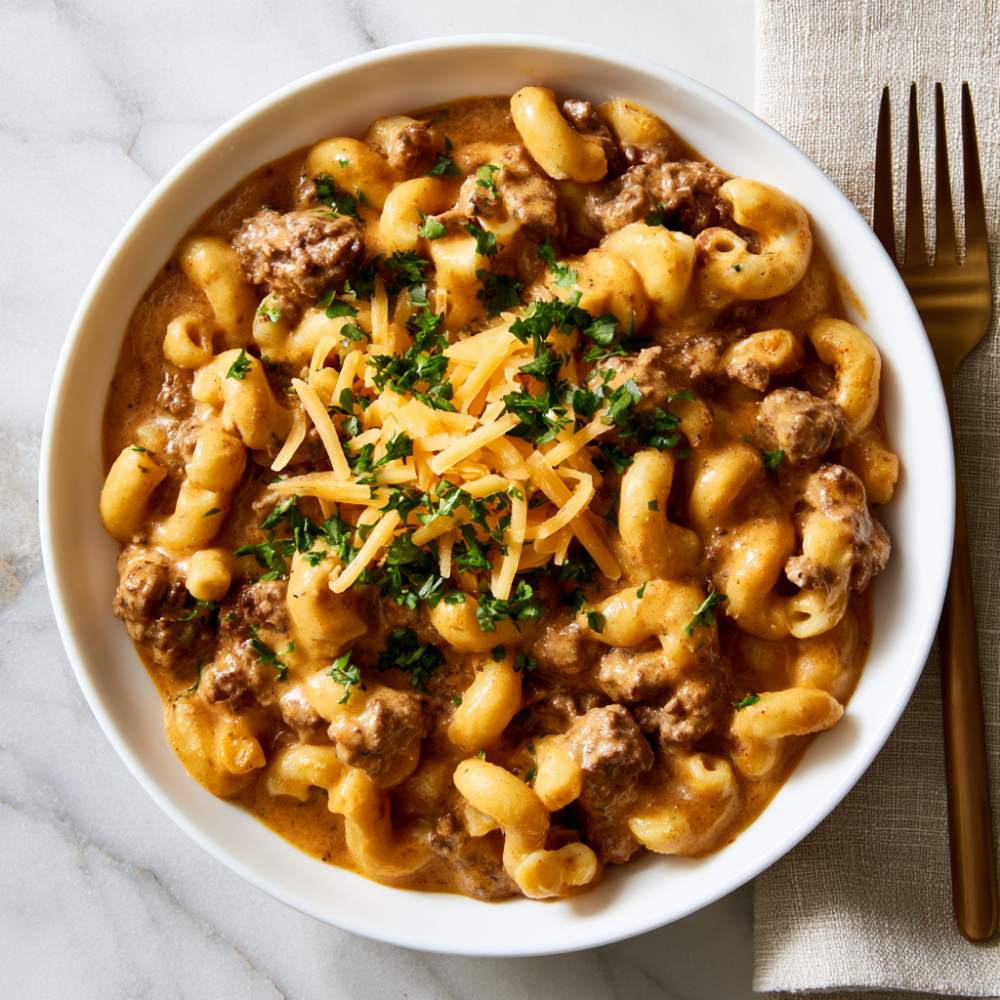
This isn’t a complicated dish, but a few small decisions make it better than the box version and most homemade hamburger helper recipes. Here’s what actually matters:
Real Cheese, Not a Powder Packet. The box cheese sauce comes from a powder made mostly of maltodextrin, salt, and artificial flavoring. This version uses real sharp cheddar melted into a scratch sauce. It tastes like actual cheese because it is actual cheese.
A Scratch Sauce Built on Beef Broth and Milk. The sauce starts with the fat left in the pan after browning the beef, thickened with flour, then loosened with beef broth and milk. That beef fat carries all the flavor from the browned meat into the sauce. It’s the same technique used in a classic pan gravy.
Cook the Pasta Right in the Sauce. This is what makes homemade hamburger helper so easy. Instead of boiling pasta in a separate pot, add the dry pasta directly to the skillet with the sauce. It absorbs the beefy, cheesy liquid as it cooks, so every piece of pasta tastes like the sauce instead of just being coated. One pan, no colander, no extra dishes.
Add the Milk Last to Prevent Curdling. This is the fix that makes the sauce foolproof. Boiling milk alongside acidic canned tomato sauce over medium-high heat can cause the dairy proteins to split and curdle into tiny white specks—even with the flour roux in place. To fix it, add the beef broth and tomato sauce first, bring them to a simmer, then stir in the milk and reduce the heat to medium-low. Keep the skillet at a gentle simmer, never a hard boil, to keep the sauce smooth.
Use Freshly Shredded Block Cheddar, Not Pre-Shredded. Bagged pre-shredded cheese is coated in cellulose and anti-caking powder. Those coatings prevent the cheese from melting smoothly, leaving the sauce with a grainy texture. Shredding a block of sharp cheddar on a box grater takes about 2 minutes and makes a noticeable difference.
Add the Cheese Off the Heat and Wait 60 Seconds. Cheddar seizes and turns grainy when it melts over high heat. Turn off the burner, remove the skillet, and let it sit for 60 seconds before adding the cheese. The residual heat is enough to melt it into a silky, velvety sauce.
Bloom the Spices in the Fat. After browning the beef, add the onion and garlic to the same pan with the rendered fat. Then add the spices and cook for 30 seconds to bloom. That’s what gives the sauce depth instead of that flat, powdery taste.
Use Lean Ground Beef and Drain It. The box version usually calls for regular ground beef, which leaves a pool of grease in the pan. This version uses 90% lean ground beef and drains off the excess fat after browning. You keep the flavor, you lose the grease.
A Splash of Worcestershire and Dijon. These two ingredients are the secret umami boost. Worcestershire adds a deep, savory note. Dijon adds a subtle tang that brightens the whole sauce. Neither one tastes like itself in the finished dish—they just make everything else taste more like itself.
Reserve Some Warm Milk or Broth. If the sauce tightens up before the pasta is tender, a splash of warm milk or broth loosens it without diluting the flavor.
Finish With Fresh Parsley. A handful of chopped parsley at the end adds color and a fresh, grassy note that cuts through the richness. It’s optional, but it makes the dish look and taste more finished.
This is the kind of meal that earns its spot in the weekly rotation. It’s creamy, cheesy, and undeniably delicious.
Homemade Hamburger Helper Recipe
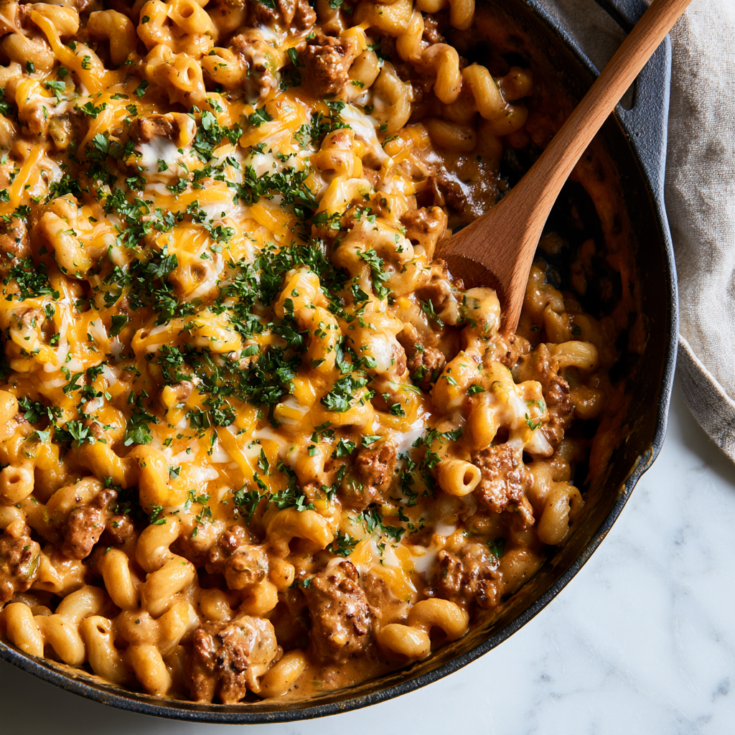
A homemade hamburger helper made in one skillet with lean ground beef, elbow macaroni, real cheddar, and a scratch sauce. Better than the box and ready in 30 minutes.
Ingredients
For the Beef and Pasta
- 1½ lbs 90% lean ground beef
- 1 medium yellow onion, finely diced
- 4 cloves garlic, minced
- 2 tbsp all-purpose flour
- 12 oz dry elbow macaroni (or rotini, shells, or penne)
For the Sauce Base
- 2 cups low-sodium beef broth
- 1 (15 oz) can tomato sauce
- 1 tbsp Worcestershire sauce
- 1 tsp Dijon mustard
- 1 tsp smoked paprika
- 1 tsp garlic powder
- 1 tsp onion powder
- ½ tsp dried oregano
- ½ tsp kosher salt
- ¼ tsp freshly ground black pepper
- ¼ tsp red pepper flakes (optional)
- 2 cups whole milk (or 2% milk)
For the Cheese Finish
- 2 cups sharp cheddar, freshly shredded from a block
- ¼ cup freshly grated Parmesan
- ¼ cup fresh flat-leaf parsley, chopped
- Extra shredded cheddar for serving
Instructions
- Brown the beef and aromatics. Heat a large Dutch oven or deep skillet over medium-high heat. Add the ground beef and diced onion. Cook for 6 to 8 minutes, breaking the meat into small crumbles with a spoon, until the beef is browned and the onion is soft. Drain off all but about 1 tablespoon of the excess fat.
- Bloom the garlic and cook the flour. Reduce the heat to medium. Add the minced garlic and cook for 30 seconds, until fragrant. Sprinkle the 2 tablespoons of flour over the beef mixture and stir continuously for 1 minute, until the flour coats the beef and the raw flour taste cooks out. There should be no dry pockets.
- Simmer the liquids and spices. Stir in the smoked paprika, garlic powder, onion powder, oregano, salt, pepper, red pepper flakes if using, Worcestershire sauce, and Dijon mustard. Cook for 30 seconds, until fragrant. Pour in the beef broth and tomato sauce, scraping up any browned bits from the bottom of the pan. Bring to a gentle simmer over medium heat.
- Add the milk carefully. Reduce the heat to medium-low. Gradually stir in the whole milk. Keep the skillet at a gentle simmer—do not let it come to a hard boil. Boiling milk alongside acidic tomato sauce can cause the dairy proteins to split and curdle.
- Cook the pasta directly in the sauce. Add the dry elbow macaroni and stir to combine. Cover the skillet and cook for 11 to 13 minutes, stirring every 3 minutes so the pasta doesn't stick to the bottom, until the pasta is tender and the sauce has thickened. If the sauce tightens up before the pasta is done, add a splash of warm milk or broth.
- Melt the cheese off the heat. Turn off the heat and remove the skillet from the burner entirely. Let it rest for 60 seconds. Gradually fold in the freshly shredded cheddar and Parmesan in small handfuls, stirring until the cheese melts completely into a silky, glossy sauce. If the sauce gets too thick, splash in 2 tablespoons of warm milk or broth.
- Garnish and serve. Stir in the fresh parsley. Taste and adjust salt and pepper. Serve immediately in deep bowls, topped with extra shredded cheddar.
Notes
Protein per Serving: About 32gNutrition Note: Protein calculated from 1½ lbs 90% lean ground beef yielding about 18 oz cooked (≈102g protein), 12 oz dry elbow macaroni (≈42g), 2 cups freshly shredded sharp cheddar (≈56g), and 2 cups whole milk (≈16g) — about 216g total across 6 servings — about 32g per serving (with about 3g more from the beef broth). About 520 calories per serving. Using 93% lean ground beef drops calories to about 480 per serving, while protein stays about the same. Using whole wheat pasta or chickpea pasta keeps the protein the same but adds fiber.
Make-Ahead and Storage Instructions
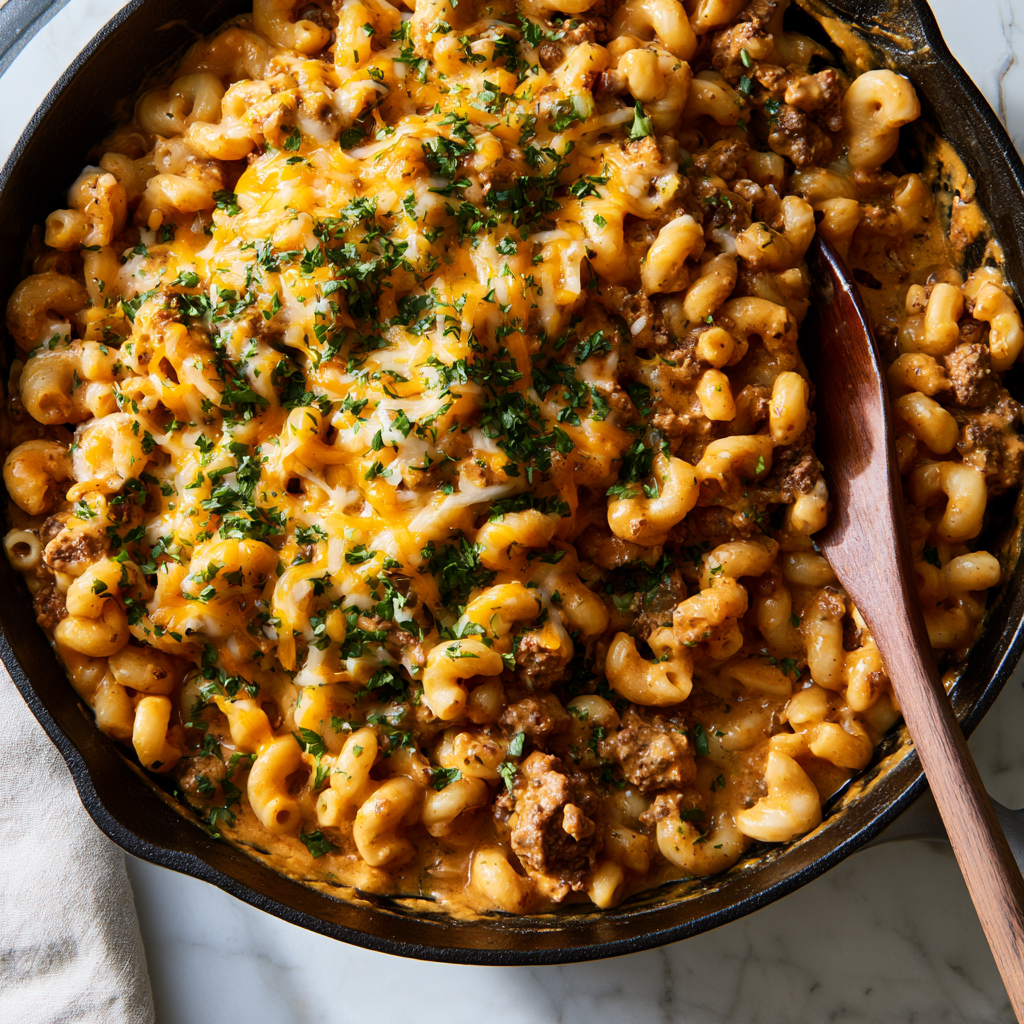
Make Ahead: Brown the beef, soften the onion, and bloom the spices up to 1 day ahead. Store the beef mixture in the refrigerator. When you’re ready to serve, add the liquids and pasta and cook as directed.
Refrigerator: Store leftovers covered in an airtight container for up to 4 days. Reheat gently in a skillet over medium-low heat with a splash of milk or broth to loosen the sauce. The pasta absorbs sauce as it sits, so you may need more liquid than you think.
Freezer: This dish freezes well, though the pasta softens slightly after thawing. Cool completely, then transfer to a freezer-safe container and freeze for up to 3 months. Thaw overnight in the refrigerator and reheat gently on the stovetop with a splash of milk.
Tips for the Best Homemade Hamburger Helper
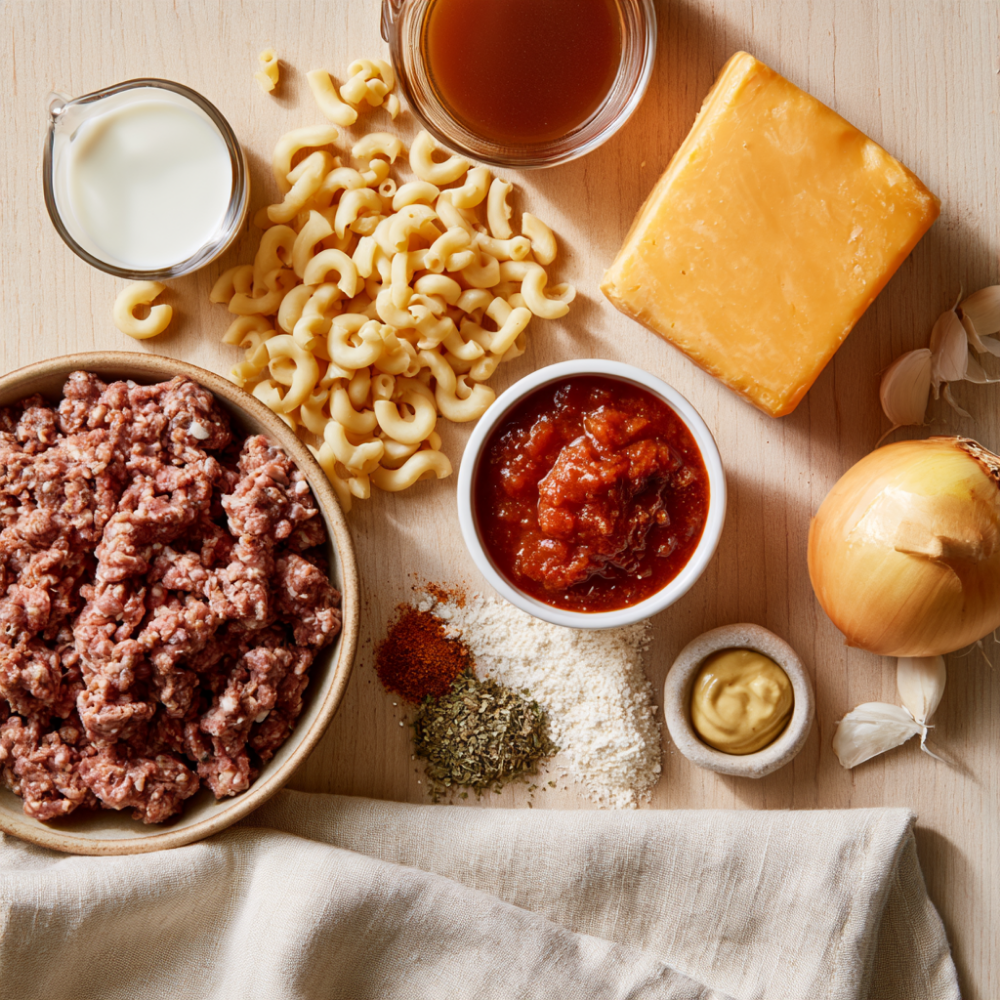
Use 90% lean ground beef and drain it. Regular ground beef leaves a pool of grease in the pan, which makes the sauce oily. Lean beef gives you the same flavor with a cleaner sauce.
Add the milk last and keep it at a gentle simmer. Boiling milk alongside acidic tomato sauce can cause the dairy proteins to split and curdle into tiny white specks. Add the beef broth and tomato sauce first, bring them to a simmer, then stir in the milk and reduce the heat to medium-low.
Use freshly shredded block cheddar, not pre-shredded. Bagged, pre-shredded cheese is coated in cellulose and anti-caking powder that prevents it from melting smoothly. Shredding a block on a box grater takes about 2 minutes and makes a noticeable difference.
Add the cheese off the heat and wait 60 seconds. Cheddar seizes and turns grainy when it melts over high heat. Turn off the burner, remove the skillet, and let it rest for 60 seconds before adding the cheese.
Don’t skip the flour. The flour thickens the sauce as the pasta cooks and stabilizes the milk so it doesn’t curdle. Without it, you’ll end up with a thin, watery sauce.
Cook the pasta directly in the sauce. This is what makes the dish so easy and so flavorful. As it cooks, the pasta absorbs the beefy, cheesy liquid, so every bite tastes like the sauce.
Stir every 3 minutes. Pasta cooked in sauce tends to stick to the bottom of the pan. Stirring every 3 minutes keeps it moving and prevents scorching.
Watch the sauce consistency. The sauce should be creamy and coating but not runny. If it’s too thick, add a splash of warm milk or broth. If it’s too thin, simmer uncovered for another 2 to 3 minutes.
Top with extra cheese at the table. A handful of shredded cheddar on top of each bowl melts into the hot pasta and makes the dish feel a little more special.
Easy Variations
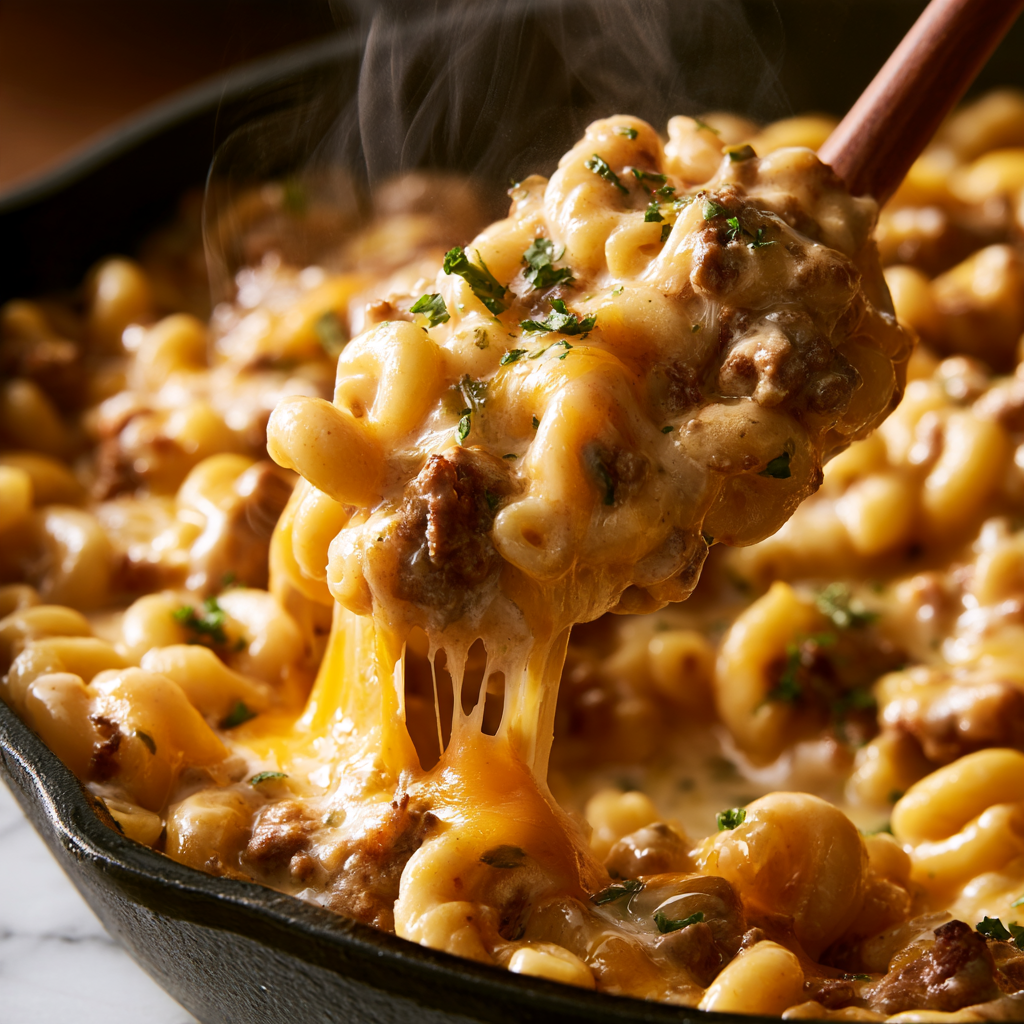
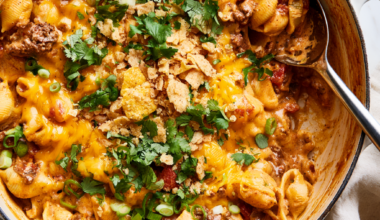
Taco Hamburger Helper. Swap the tomato sauce for 1 cup of salsa and add 1 packet of taco seasoning instead of the spices. Use pepper jack cheese instead of cheddar. Top with diced tomatoes, sliced green onions, and crushed tortilla chips.
Healthy Hamburger Helper. Swap the elbow macaroni for 12 oz of whole wheat or chickpea pasta. Use 93% lean ground beef, 1 cup whole milk, and 1 cup beef broth instead of 2 cups milk. Calories drop to about 460 per serving, and the fiber goes up.
Half Baked Harvest Hamburger Helper. Add 1 tablespoon tomato paste with the spices, then stir in a splash of heavy cream at the end. Use a mix of cheddar and Gruyère for a richer, more complex cheese flavor.
Copycat Hamburger Helper Cheeseburger Macaroni. This recipe already is it. For a closer match to the box, add ½ teaspoon of yellow mustard powder and skip the Dijon. Use American cheese instead of cheddar for that classic boxed flavor.
DIY Hamburger Helper with Noodles. Swap the elbow macaroni for 12 oz of egg noodles. Cook time drops to 10-12 minutes, and the texture is slightly softer.
Storage and Food Safety
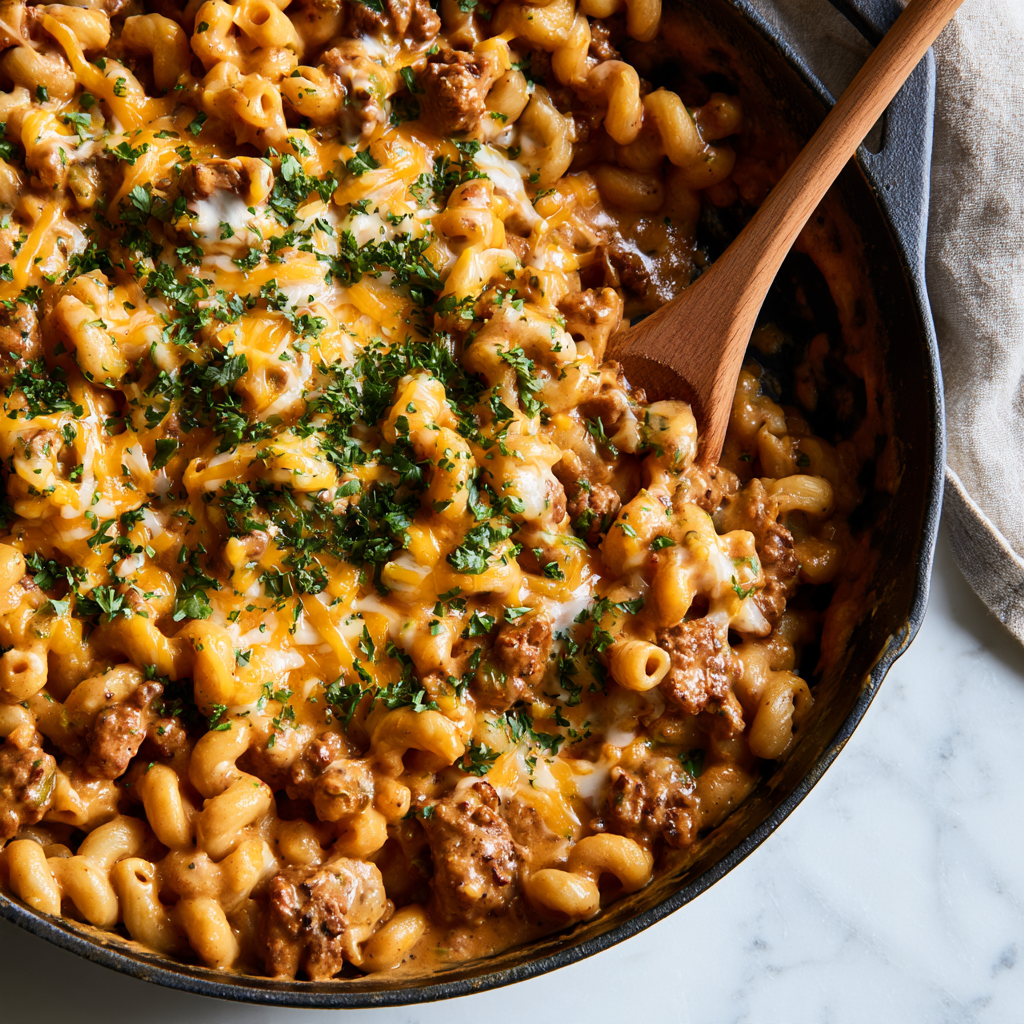
Refrigerator: Store leftovers covered in an airtight container for up to 4 days. Reheat gently in a skillet over medium-low heat with a splash of milk or broth. The pasta absorbs sauce as it sits.
Freezer: Cool completely, then transfer to a freezer-safe container and freeze for up to 3 months. Thaw overnight in the refrigerator and reheat gently on the stovetop with a splash of milk.
Make Ahead: Brown the beef and bloom the spices up to 1 day ahead. Refrigerate the mixture and cook fresh the next day.
Food Safety: Ground beef must reach an internal temperature of 160°F before serving. Cool leftovers within 2 hours and refrigerate promptly. Reheat leftovers to 165°F.
Frequently Asked Questions
How much protein is in homemade hamburger helper? About 32g per serving from the ground beef, pasta, cheddar, and milk across 6 servings. The box version averages about 18g per serving.
Why does my homemade hamburger helper turn out soupy? The sauce didn’t reduce enough, or you didn’t cook the flour into the fat before adding the liquids. Cook the flour for a full minute after it goes in, and simmer uncovered a few extra minutes if the sauce looks thin.
Why did my sauce curdle? I boiled the milk alongside the acidic tomato sauce. Add the beef broth and tomato sauce first, bring them to a simmer, then stir in the milk and reduce the heat to medium-low. Keep the skillet at a gentle simmer, never a hard boil.
Why is my cheese grainy? You used pre-shredded cheese, or you added the cheese over high heat. Use freshly shredded block cheddar and add it off the heat after the skillet has rested for 60 seconds.
Why is my pasta mushy? You cooked the pasta too long, or you didn’t stir the sauce enough. Cook the pasta for the lower end of the time range (11 minutes), stirring every 3 minutes so it cooks evenly.
Can I use a different pasta shape? Yes. Shells, rotini, penne, and cavatappi all work well. Elbow macaroni is the classic choice, but any short pasta with ridges or curves will hold the sauce.
Can I use ground turkey instead of ground beef? Yes. Use 1½ lbs of 93% lean ground turkey. Brown it the same way, and add 1 extra tablespoon of olive oil to help it brown.
Can I make this dairy-free? Yes. Use full-fat coconut milk or oat milk instead of whole milk, and use a dairy-free cheddar alternative. Expect a slightly different flavor and texture.
Can I make this gluten-free? Yes. Use gluten-free elbow macaroni and swap the flour for cornstarch or a gluten-free all-purpose blend. Use gluten-free beef broth.
Can I double the recipe? Yes. Use a larger skillet or Dutch oven (at least 5 quarts) and double everything. Cook time stays the same, but you may need to simmer uncovered for an extra 2 to 3 minutes to thicken the sauce.
What do I serve with homemade hamburger helper? Serve with steamed green beans, roasted broccoli, a simple green salad, or garlic bread. A squeeze of hot sauce on top also works well.
More Ground Beef Recipes You’ll Love
10 High-Protein Crockpot Hamburger Recipes | Easy Dinners Your Family Will Love
Cheeseburger Casserole Recipe — Freezer to Oven, No Thaw Needed
Hamburger Soup — 32g Protein, One-Pot, Budget-Friendly Family Dinner
Conclusion
A Homemade Hamburger Helper earns its spot in the weekly rotation. It’s creamy, cheesy, and undeniably delicious.
And with about 32 grams of protein per serving, it’s a real meal that keeps you full.
The box version is convenient and also loaded with sodium, preservatives, and ingredients you can’t pronounce.
This one keeps every bit of the creamy, cheesy, one-skillet convenience you love, and rebuilds it with real sharp cheddar, lean ground beef, and a scratch sauce built on beef broth and milk.
The pasta cooks right in the sauce, so it soaks up all the flavor. Add the milk last and keep it at a gentle simmer so it doesn’t curdle.
Take it off the heat and let it rest for 60 seconds before adding the cheese, so it melts into a silky sauce instead of turning grainy. Worcestershire and Dijon add depth the powder packet can’t match.
The three things that make it work are these. Add the milk last and keep it at a gentle simmer.
Use freshly shredded block cheddar. And add the cheese off the heat after a 60-second rest.
About 32 grams of protein per serving. Six generous portions. Ready in 30 minutes, one skillet, and endlessly adaptable to taco, healthy, or copycat versions.
Make it tonight and watch the whole family clean their plates. This homemade hamburger helper earns a permanent spot on the table.