This Greek salad dressing is the easiest homemade dressing you can make. Combine olive oil, red wine vinegar, fresh lemon juice, garlic, oregano, and a touch of
Dijon in a mason jar, shake for 20 seconds, and you get a bright, herby vinaigrette that tastes like the version from a Greek restaurant. It takes about five minutes, and it lasts two weeks in the refrigerator.
It’s the kind of dressing that works on more than just Greek salad. Drizzle it over cucumber and tomato salads, marinate chicken or shrimp, spoon it over roasted vegetables, or use it as a quick marinade for feta and olives.
Because it’s made in a mason jar, you can shake, store, and serve it from the same container—no whisking, no bowls, no cleanup.
It’s also a meal prep hero. Make a double or triple batch on Sunday, store it in small mason jars, and use it all week on salads, grain bowls, and roasted vegetables. Once you start making this at home, the bottled version stops making sense.
Why This Recipe Works
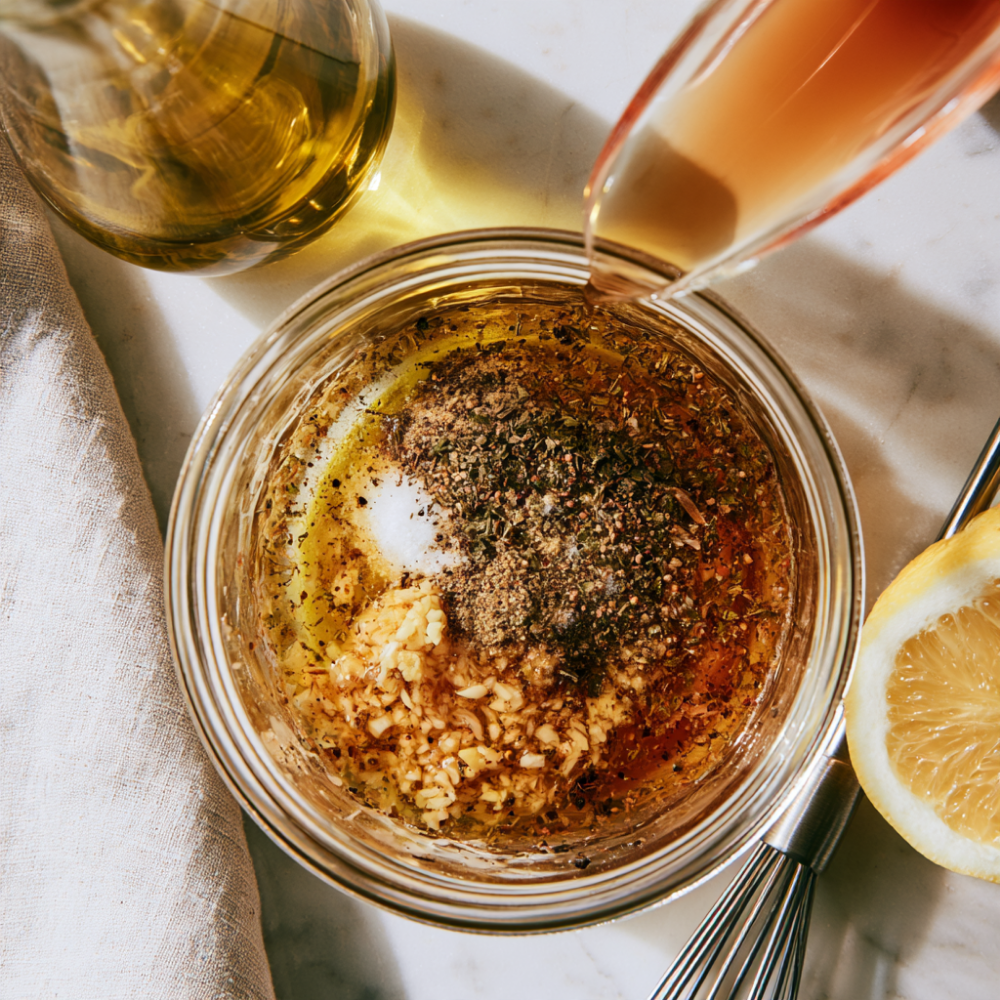
A few small decisions make this dressing taste like the real thing:
Use a 3:1 Oil to Vinegar Ratio. Three parts olive oil to one part red wine vinegar is the classic Greek vinaigrette ratio. It’s balanced enough to dress a salad without overwhelming it, and acidic enough to cut through feta and olives.
Add Lemon Juice for Brightness. Red wine vinegar adds tang, but fresh lemon juice adds brightness. Using both gives the dressing a layered acidity that bottled versions can’t match.
Dijon Mustard Is the Emulsifier. A teaspoon of Dijon doesn’t change the flavor much, but it’s what keeps the oil and vinegar from separating. Without it, the dressing splits within minutes. With it, the vinaigrette stays creamy for hours.
Dried Oregano, Not Fresh. Greek dressing is built on dried oregano. It’s more concentrated, it infuses into the oil over time, and it gives the dressing that unmistakable Greek flavor. Fresh oregano is too mild here.
Fresh Garlic, Minced Fine. One clove of fresh garlic is enough. Mince it as finely as you can, or grate it on a microplane so it distributes evenly instead of leaving chunks.
Shake It in a Mason Jar. This is the whole point of the recipe. Add everything to a jar, screw the lid on, and shake. The jar does the work, and you can store the dressing in the same jar you made it in.
Let It Sit for 30 Minutes. The dressing tastes good right after you shake it. It tastes even better after 30 minutes, once the oregano has infused into the oil and the garlic has mellowed.
Greek Salad Dressing Recipe
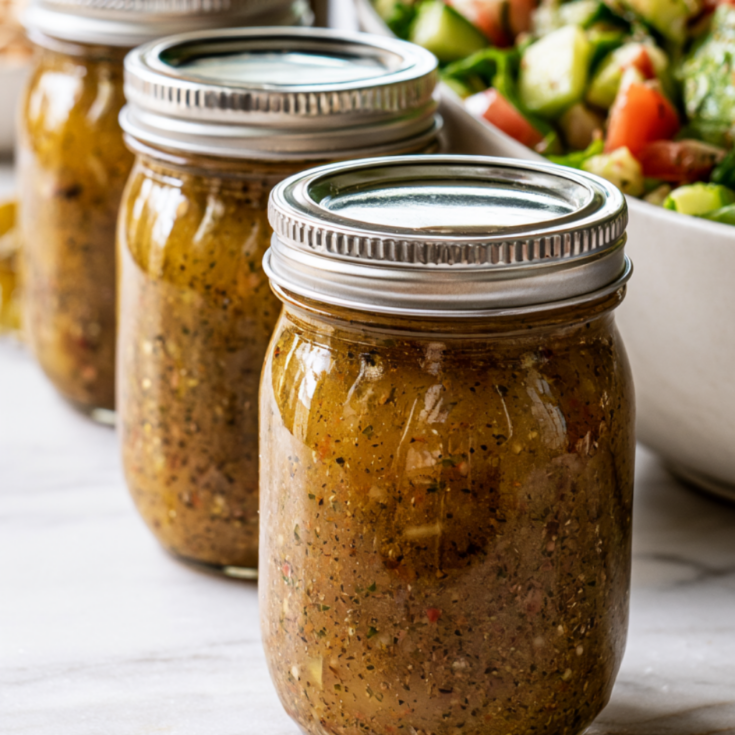
An easy Greek salad dressing made in a mason jar with olive oil, red wine vinegar, lemon juice, garlic, and oregano. Ready in 5 minutes and perfect for meal prep.
Ingredients
For the Greek Salad Dressing
- ¾ cup extra virgin olive oil
- ¼ cup red wine vinegar
- 2 tbsp fresh lemon juice (about 1 lemon)
- 1 tsp Dijon mustard
- 1 clove garlic, finely minced or grated
- 1 tsp dried oregano
- ½ tsp kosher salt
- ¼ tsp freshly ground black pepper
- ¼ tsp red pepper flakes (optional)
- 1 tsp honey or maple syrup (optional, to balance the acidity)
For Serving
- Greek salad with cucumbers, tomatoes, red onion, Kalamata olives, and feta
- Cucumber and tomato salad
- Grain bowls
- Roasted vegetables
- Marinated chicken, shrimp, or feta
Instructions
- Add everything to the mason jar. Add the olive oil, red wine vinegar, lemon juice, Dijon mustard, garlic, oregano, salt, black pepper, red pepper flakes if using, and honey if using to a 12-ounce mason jar.
- Shake. Screw the lid on tightly and shake vigorously for 20 to 30 seconds, until the dressing is completely combined and slightly thickened.
- Rest. Let the dressing sit at room temperature for 30 minutes so the oregano infuses and the garlic mellows. This step is optional but makes a noticeable difference.
- Taste and adjust. Taste the dressing. Add more salt if it tastes flat, more lemon juice if you want it brighter, or a drizzle of honey if it's too sharp.
- Store and serve. Store in the refrigerator for up to 2 weeks. Shake well before each use — the dressing will separate as it sits.
Notes
Each serving has about 120 calories and 0g protein, with roughly 1g carbs, 14g fat, and 150mg sodium. The fat comes entirely from the olive oil, which is why portion size matters — two tablespoons is a full serving. For a lighter version, replace half the olive oil with water and add an extra teaspoon of Dijon.
Tips for the Best Greek Salad Dressing

- Use a 3:1 oil-to-vinegar ratio. It’s the classic Greek vinaigrette balance.
- Add Dijon mustard. It’s the emulsifier that keeps the dressing from separating.
- Use dried oregano, not fresh. It’s more concentrated and infuses into the oil over time.
- Mince the garlic finely or grate it. Garlic chunks overpower a single bite.
- Shake in a mason jar. No whisking, no bowls, no cleanup.
- Let it rest for 30 minutes. The oregano and garlic need time to mellow and infuse.
- Taste before serving. Olive oils vary in bitterness, so adjust the salt and lemon as needed.
- Shake well before each use. The dressing separates as it sits — a quick shake brings it back together.
- Make a double batch. It lasts 2 weeks, so it’s worth making extra.
What to Serve With Greek Salad Dressing
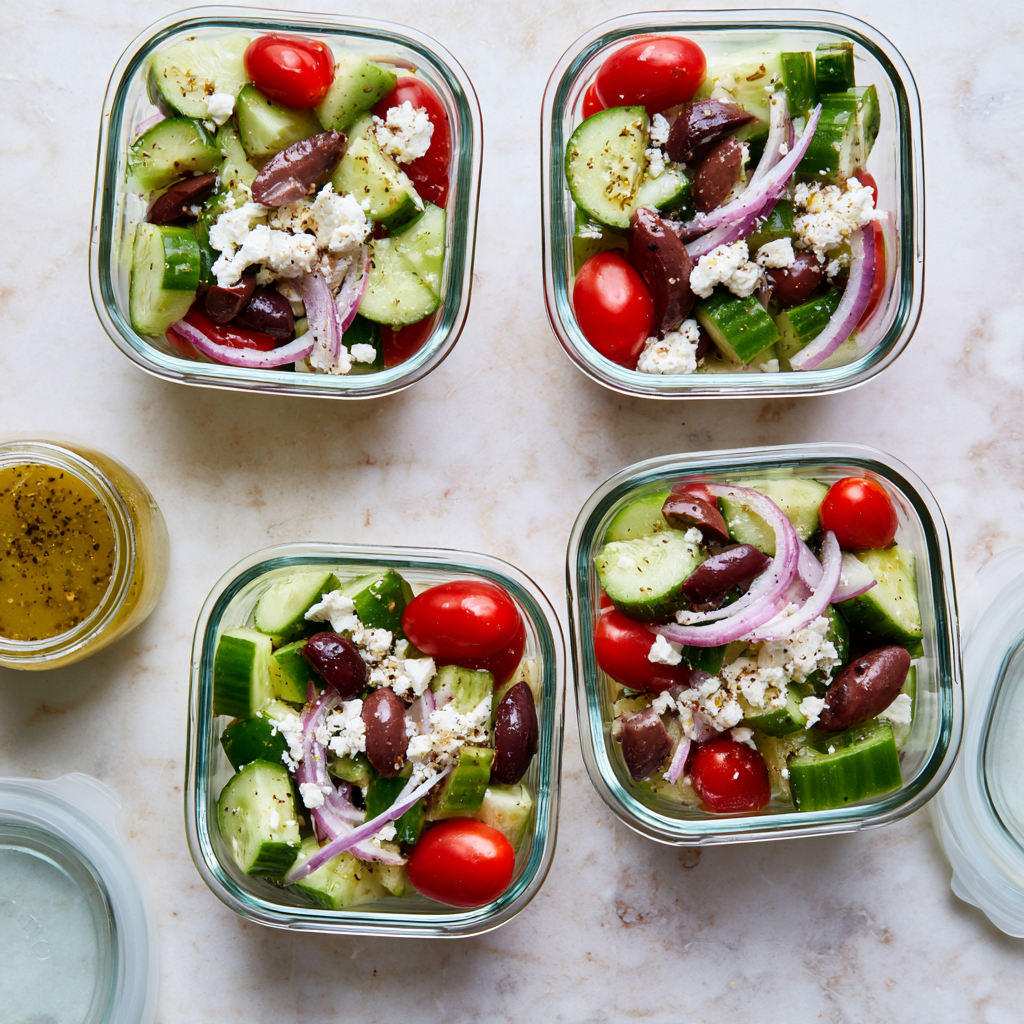
This dressing works on almost anything, but it’s especially good on:
- Classic Greek salad with feta, olives, cucumber, and tomato
- Cucumber and tomato salad with red onion
- Chickpea and quinoa grain bowls
- Roasted vegetables like zucchini, eggplant, and bell peppers
- Grilled chicken, shrimp, or lamb as a marinade
- Marinated feta with olives and herbs
- Pasta salad with cherry tomatoes and fresh mozzarella
Make-Ahead, Storage, and Reheating
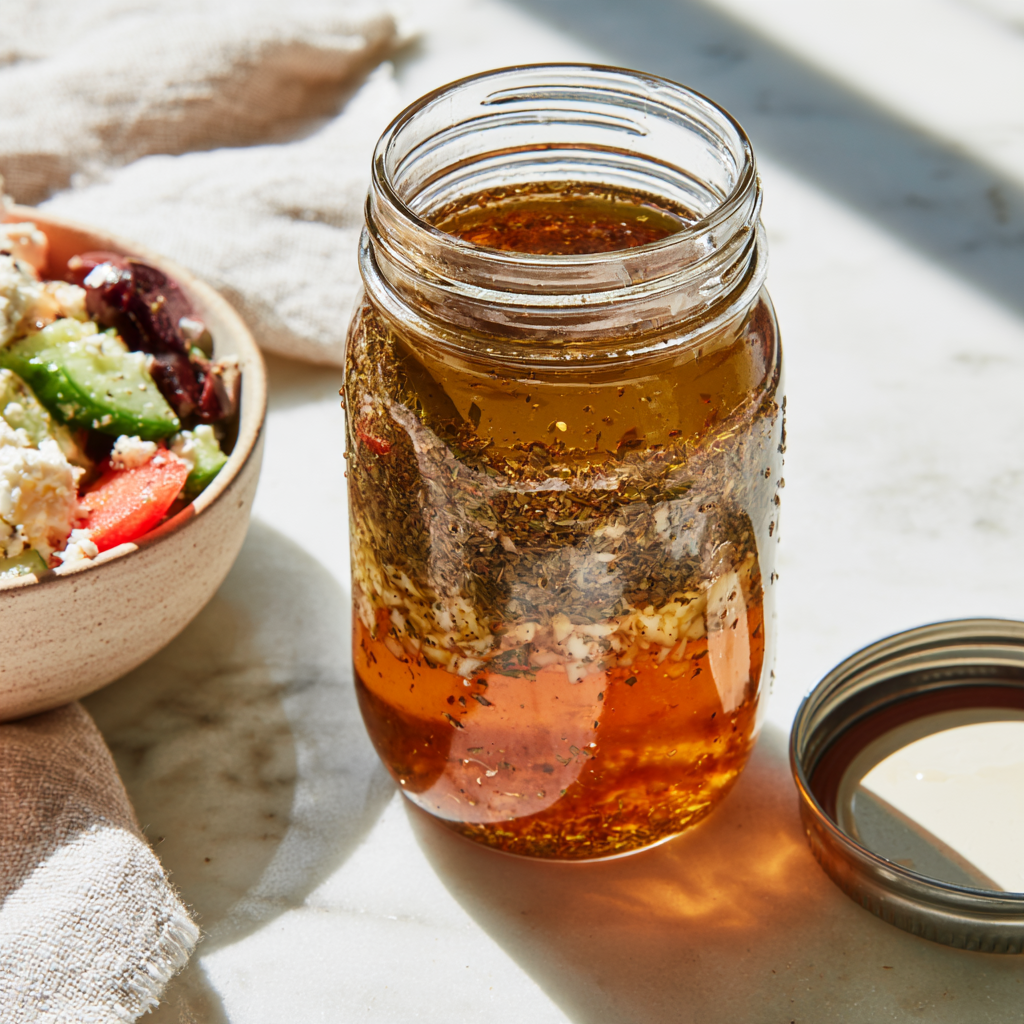
Make Ahead: This dressing is designed to be made ahead. Make it on Sunday and use it all week. The flavor improves after a day in the refrigerator.
Refrigerator: Store in a sealed mason jar for up to 2 weeks. Shake well before each use. The olive oil will solidify in the refrigerator — let the jar sit at room temperature for 5 minutes or run it under warm water before shaking.
Freezer: Do not freeze. The oil and vinegar will separate permanently, and the texture will become grainy.
Meal Prep: Divide the dressing among small mason jars or leakproof containers for grab-and-go lunches. Store the salad greens and toppings separately to keep everything crisp.
Food Safety: Keep the dressing refrigerated at all times. Do not leave it at room temperature for more than 2 hours. Discard if it smells off or develops an unusual color.
Easy Variations
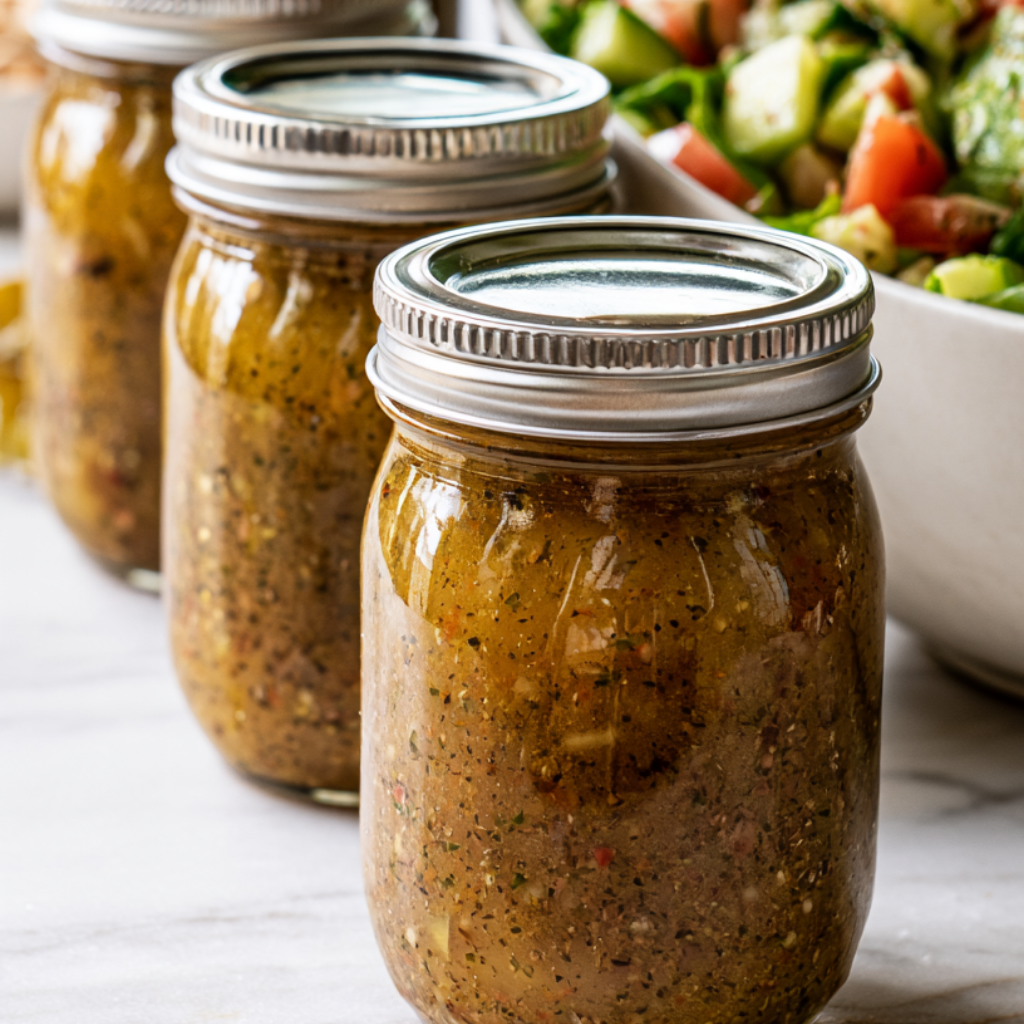
Creamy Greek Dressing. Add ¼ cup plain Greek yogurt and 2 tablespoons mayonnaise to the jar, then shake until smooth. The result is a thicker, creamier dressing that clings to salads and works as a dip for vegetables and pita.
Mediterranean Herb Dressing. Add 1 teaspoon each of dried basil, thyme, and dill to the jar along with the oregano. The dressing becomes more herbaceous and pairs beautifully with roasted vegetables and grilled fish.
Lemon Greek Dressing. Replace the red wine vinegar with an extra ¼ cup of fresh lemon juice. The dressing is brighter and more acidic, and it’s especially good on seafood and grain bowls.
Spicy Greek Dressing. Double the red pepper flakes and add a pinch of cayenne. The dressing gets a warm, lingering heat that’s excellent on chicken, lamb, and roasted potatoes.
Frequently Asked Questions
How long does Greek salad dressing last?
Up to 2 weeks in a sealed mason jar in the refrigerator. Shake well before each use.
What’s the ratio for Greek salad dressing?
The classic ratio is 3 parts olive oil to 1 part red wine vinegar, plus lemon juice, garlic, oregano, Dijon, salt, and pepper.
Why did my Greek dressing separate?
Oil and vinegar naturally separate. The Dijon mustard helps emulsify them, but the dressing will still separate as it sits. A quick shake brings it back together.
Can I make Greek dressing without Dijon?
Yes, but the dressing will separate faster. If you skip the Dijon, shake it right before serving.
Can I use a different vinegar?
Yes. Red wine vinegar is the classic choice, but white wine vinegar, apple cider vinegar, or champagne vinegar all work. Each brings a slightly different flavor.
Can I make this creamy?
Yes. Add ¼ cup Greek yogurt and 2 tablespoons mayonnaise, then shake until smooth. This is the creamy Greek dressing version.
Can I make this dairy-free?
Yes. The base recipe is naturally dairy-free. If you make the creamy version, use dairy-free yogurt and mayonnaise.
Is Greek salad dressing healthy?
Yes, in moderation. Olive oil is a heart-healthy fat, and the dressing has no added sugar or preservatives. Two tablespoons is a full serving at about 120 calories.
Can I use this as a marinade?
Yes. It’s excellent for marinating chicken, shrimp, lamb, and vegetables. Marinate chicken or shrimp for 30 minutes to 2 hours.
Can I make this in a blender?
Yes, but it’s not necessary. A mason jar and a good shake do the same job with less cleanup.
More Meal Prep Recipes You’ll Love
- High Protein Chicken Alfredo Bake — 48g Protein, Creamy Cottage Cheese Alfredo
- Baked Chicken Legs In The Oven Recipe — Crispy, 42g Protein, Budget Friendly
- Chicken Cacciatore Crock Pot Recipe — High Protein, 15 Minutes Prep
- Honey Garlic Shrimp and Broccoli Recipe — High Protein, 38g Protein, 20 Minutes
- Miso Soup Recipe — Authentic Japanese, Ready in 15 Minutes
- Pumpkin Protein Shake Recipe — 32g Protein, Tastes Like Pumpkin Pie
Conclusion
This Greek salad dressing is the kind of recipe that earns a permanent spot in the refrigerator door. It’s bright, herby, and tangy, and it comes together in five minutes with pantry staples and a mason jar.
The three things that make it work are these. Use a 3:1 oil-to-vinegar ratio for balance. Add Dijon mustard so the dressing stays emulsified instead of separating. And let it rest for 30 minutes so the oregano infuses and the garlic mellows.
About 120 calories per serving. 12 servings per batch. Ready in 5 minutes, meal prep friendly, and endlessly adaptable with creamy yogurt, extra herbs, lemon, or spice.
Pin it to your meal prep-for-the-week board and make it your new go-to homemade Greek dressing.