Risotto has always been one of my favorite things to order at a restaurant, but for years I never managed to pull it off at home.
It’s a casual, comforting, flexible dish—and yet it has an element of delicacy that always made it feel tricky to make.
The rice has to be tender without being mushy, the texture has to be creamy without being gluey, and the whole thing has to come together at the right moment. So I ordered it out, admired it, and assumed it was a restaurant dish I’d never quite nail in my own kitchen.
This version finally changed that. It comes together in about 35 minutes on the stovetop: mushrooms browned in batches until their edges caramelize, rice toasted in the same pan, warm broth added one ladle at a time, and a finish of cold butter and Parmesan off the heat that turns the whole pot glossy and silky.
The recipe includes sensory cues at each stage so you know when to move on, and a short troubleshooting section for the two most common problems — underdone rice and a risotto that turns gluey instead of creamy.
Why This Version Works
A few specific decisions make this risotto work on a weeknight.
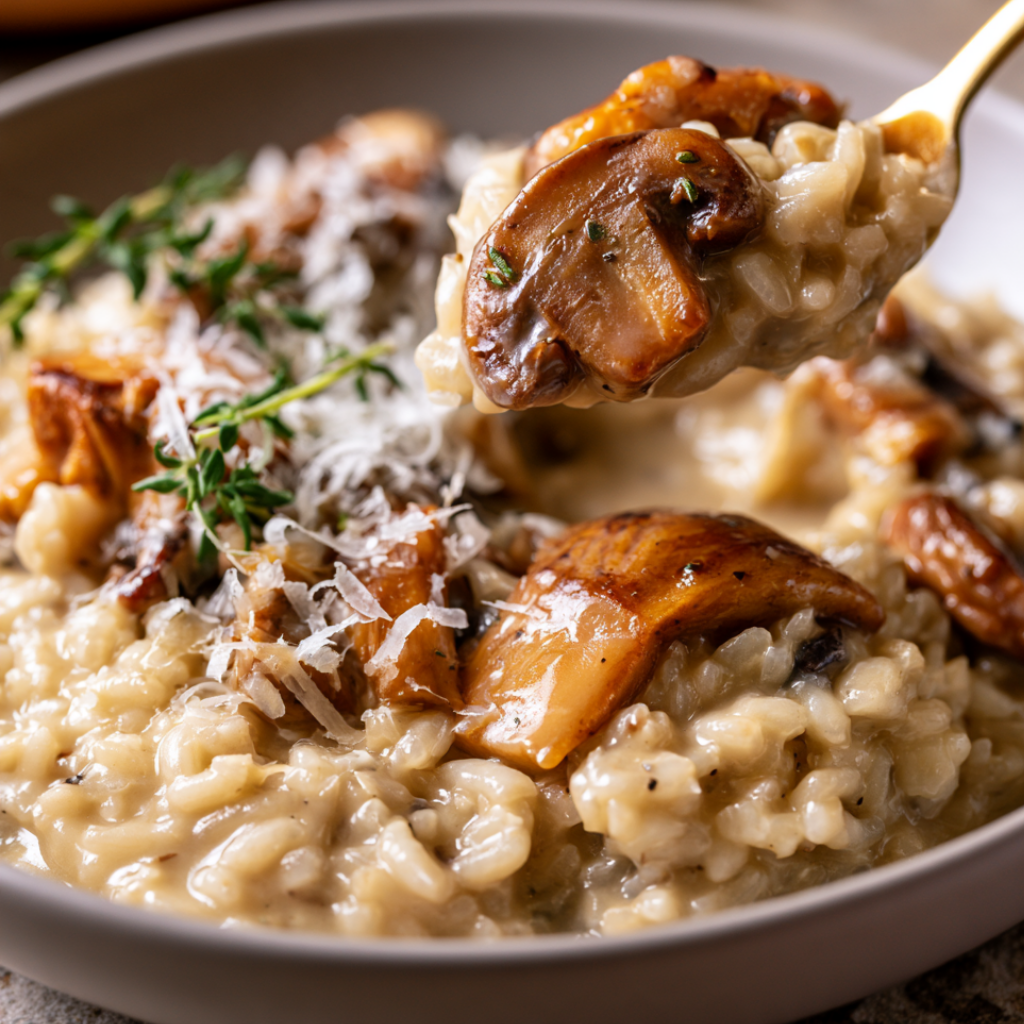
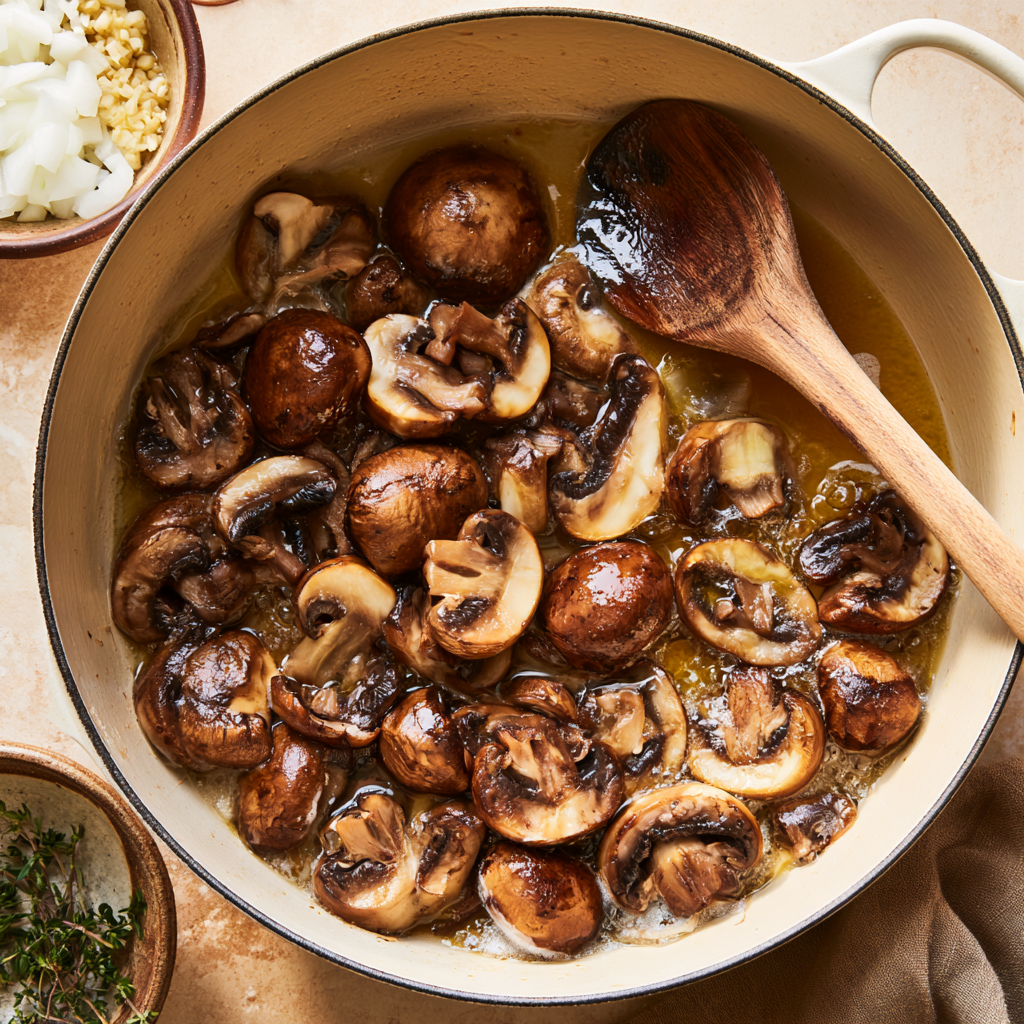
Browning the mushrooms in batches, not all at once, is what gives them a deep golden crust. One pound of sliced cremini mushrooms in a standard skillet will overcrowd the pan and steam instead of sear. Cooking them in two batches — or in a wide Dutch oven if you have one — lets each batch brown properly, which is where the deep, savory mushroom flavor comes from. Reserving a third of the crispest browned mushrooms for the top of the finished bowls adds a textural contrast that makes the dish feel restaurant-quality.
Toasting the rice in the pan before adding liquid adds nutty flavor and helps it hold its shape. Stir the dry arborio rice in the hot pan for one minute, until the grains turn slightly translucent at the edges, to build flavor and help the rice release starch slowly.
Adding warm, not cold, broth keeps the risotto cooking evenly. Cold broth drops the pan temperature each time you add it, slowing cooking and causing the rice to release starch unevenly. Warm broth keeps the pot at a steady simmer.
Finishing with cold butter and Parmesan off the heat is what makes the risotto silky. The final step, called mantecatura in Italian, is the same idea as finishing a pan sauce with cold butter. The cold butter and the Parmesan emulsify into the risotto off the heat, turning it glossy and creamy instead of grainy. Adding them over direct heat causes the cheese to seize and the risotto to turn gluey.
Ingredients That Matter
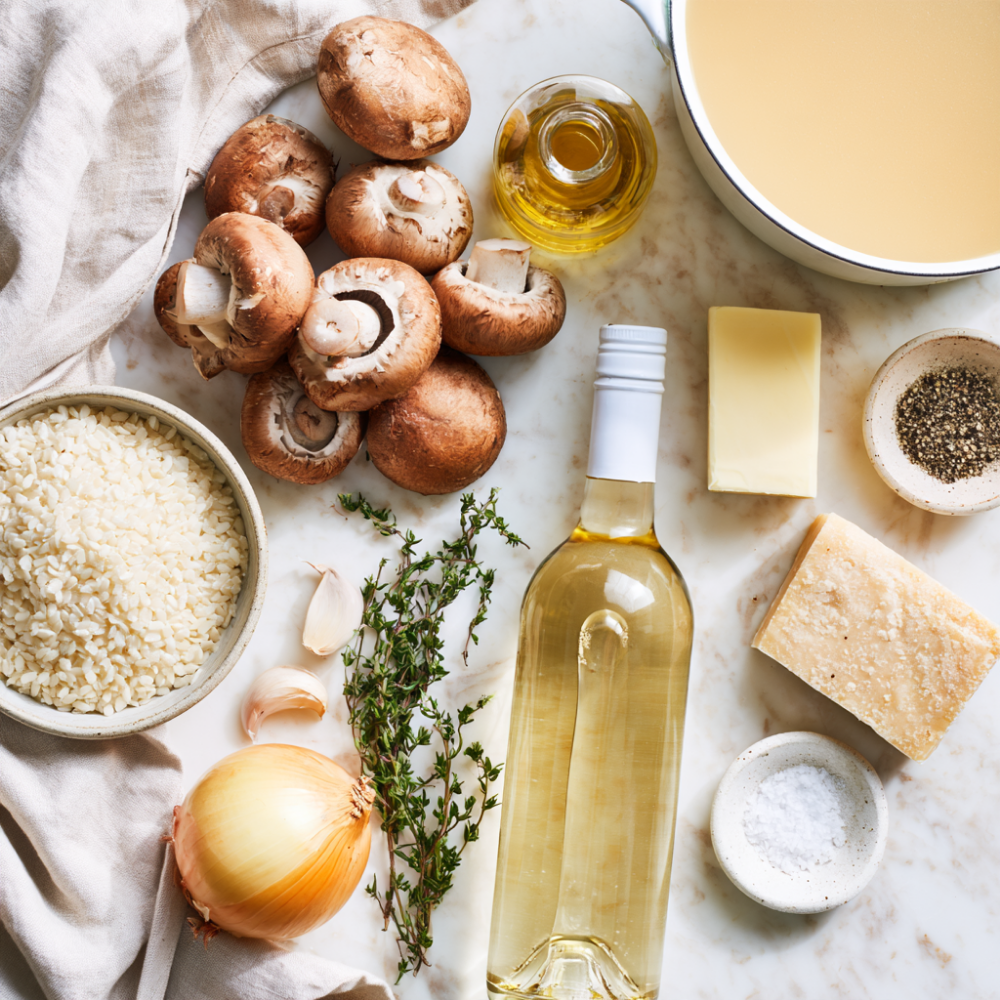
Most of the ingredients in this risotto are straightforward. Three of them are easy to get wrong, so those are the ones worth explaining.
Arborio rice. Arborio is a short-grain Italian rice with high starch content, which gives risotto its creamy texture. Don’t substitute long-grain, jasmine, or basmati rice—they don’t release enough starch, and the risotto will turn out soupy and separate. Carnaroli is a slightly more forgiving alternative if you find it. Don’t rinse the rice — the surface starch is what makes the risotto creamy.
Parmesan, freshly grated. Use a block of Parmigiano-Reggiano and a microplane. Pre-shredded Parmesan contains anti-caking cellulose that prevents it from melting smoothly and makes the risotto taste grainy.
Warm broth, not cold. Keep the broth at a gentle simmer in a saucepan next to the risotto pot while you cook. Cold broth slows the cooking and makes the rice release starch unevenly. Low-sodium broth is best so you can control the final salt level.
How to Make It
Step 1: Warm the broth.
Pour 6 cups of broth into a saucepan and bring it to a gentle simmer over low heat. Keep it warm while you make the risotto.
Step 2: Brown the mushrooms in batches.
Heat 1 tablespoon of olive oil and 1 tablespoon of butter in a large Dutch oven or heavy skillet over medium-high heat. Add half of the sliced cremini mushrooms in a single layer and cook, without stirring, for about 4 minutes, until the undersides are deeply golden. Stir and cook for another 3 minutes, until browned and their moisture has cooked off. Season with a pinch of salt and pepper, then transfer to a plate. Repeat with the remaining mushrooms using 1 more tablespoon of olive oil and the same pan. Reserve a third of the crispest browned mushrooms on a separate plate for garnish.
Step 3: Sauté the aromatics.
Reduce the heat to medium and add the remaining 1 tablespoon of olive oil to the pot. Add 1 small diced onion or shallot and cook for 4 minutes, until softened and translucent. Add 2 minced garlic cloves and the leaves from 3 to 4 sprigs of fresh thyme and cook for 30 seconds, until fragrant.
Step 4: Toast the rice.
Add 1½ cups arborio rice to the pot and stir to coat with the oil. Cook for 1 to 2 minutes, stirring constantly, until the grains turn slightly translucent at the edges and smell nutty.
Step 5: Deglaze with wine.
Pour in ½ cup of dry white wine and stir constantly, scraping up any browned bits from the bottom of the pot. Simmer for 1 to 2 minutes, until the wine has mostly absorbed and the harsh alcohol smell has cooked off.
Step 6: Add the broth, one ladle at a time.
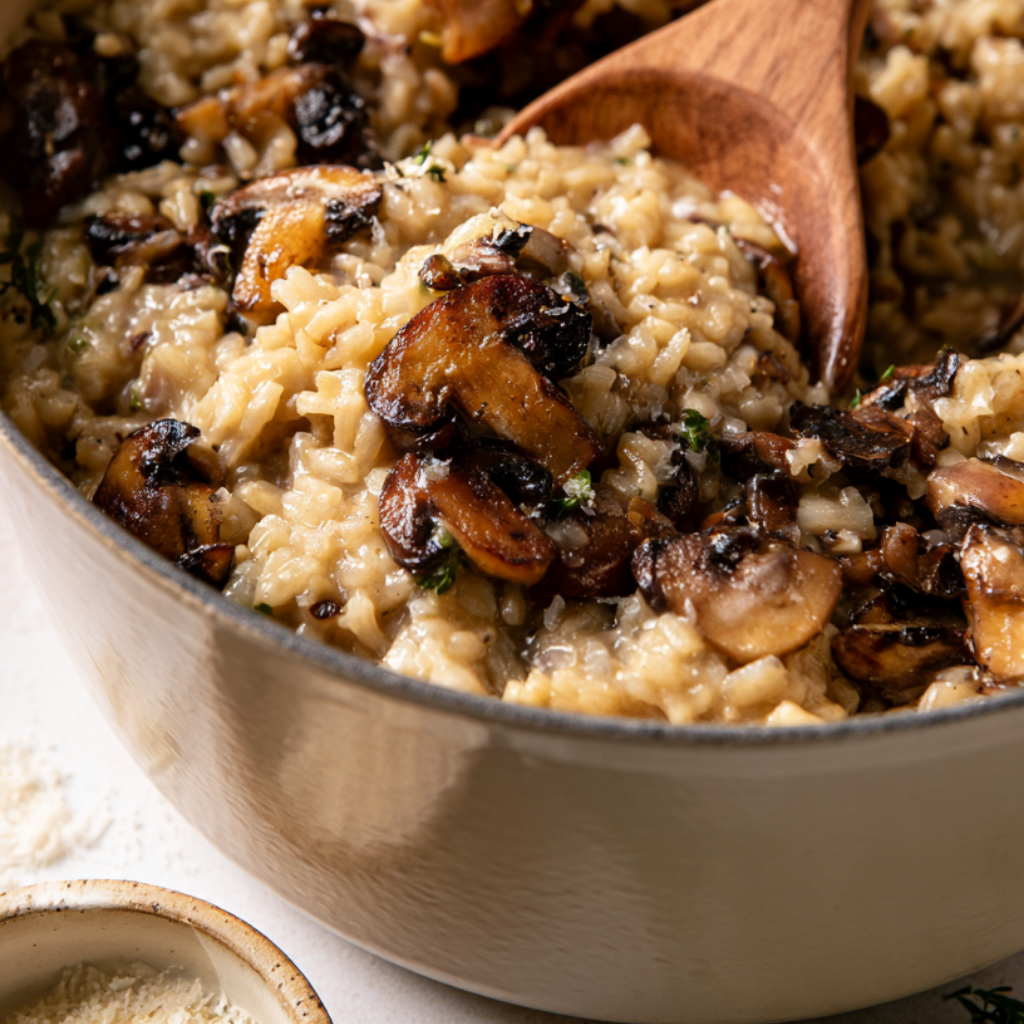
Add one ladle of warm broth (about ½ to ¾ cup) and stir gently. Simmer, stirring every 30 seconds or so, until the broth is almost completely absorbed. Repeat with the remaining broth, one ladle at a time, stirring frequently and adding more broth only when the previous ladle has been absorbed. The rice is done when it’s tender but still has a slight bite in the center and the risotto is creamy but still loose — this takes about 18 to 20 minutes from the first ladle. Taste a grain at the 18-minute mark to check.
Step 7: Add the mushrooms back.
Stir most of the reserved browned mushrooms into the risotto during the last 2 minutes of cooking, along with a final ladle of broth.
Step 8: Finish off the heat.
Remove the pot from the heat. Add 2 tablespoons cold butter and ¾ cup grated Parmesan, then stir vigorously until the butter melts and the cheese fully incorporates. The risotto should look glossy and creamy and flow slowly on the plate instead of sitting in a mound. Taste and adjust the salt and pepper.
Step 9: Rest and serve.
Let the risotto rest covered off the heat for 2 minutes before serving. If it looks too thick, stir in a splash of warm broth to loosen it. Spoon into warm shallow bowls and top with the reserved crispy mushrooms, extra Parmesan, a few fresh thyme leaves, and a crack of black pepper.
Tips and Troubleshooting
The risotto is too thick. Add a splash of warm broth and stir it in until the risotto flows slowly on the plate. Risotto thickens as it sits, so serve it immediately after the rest.
The risotto turned gluey instead of creamy. This usually means you over-stirred the rice, added the broth too quickly, or added the butter and Parmesan over direct heat. Stir gently and frequently, add the broth one ladle at a time, and finish the butter and Parmesan off the heat.
If the rice is still hard in the center after 20 minutes, Different brands of arborio absorb broth differently. Add another half ladle of warm broth and cook for another 2 to 3 minutes, then taste again. Risotto should be tender with a slight bite, not crunchy.
The mushrooms are watery instead of browned. This happens when the pan is crowded, or the mushrooms are wet. Cook them in two batches in a single layer, and clean them with a damp paper towel instead of rinsing them under water.
The risotto tastes flat. It needs more salt or more Parmesan. Season at the end, after you add the Parmesan, and taste before serving. A squeeze of lemon juice at the end also brightens the whole pot if the risotto tastes heavy.
Substitutions and Variations
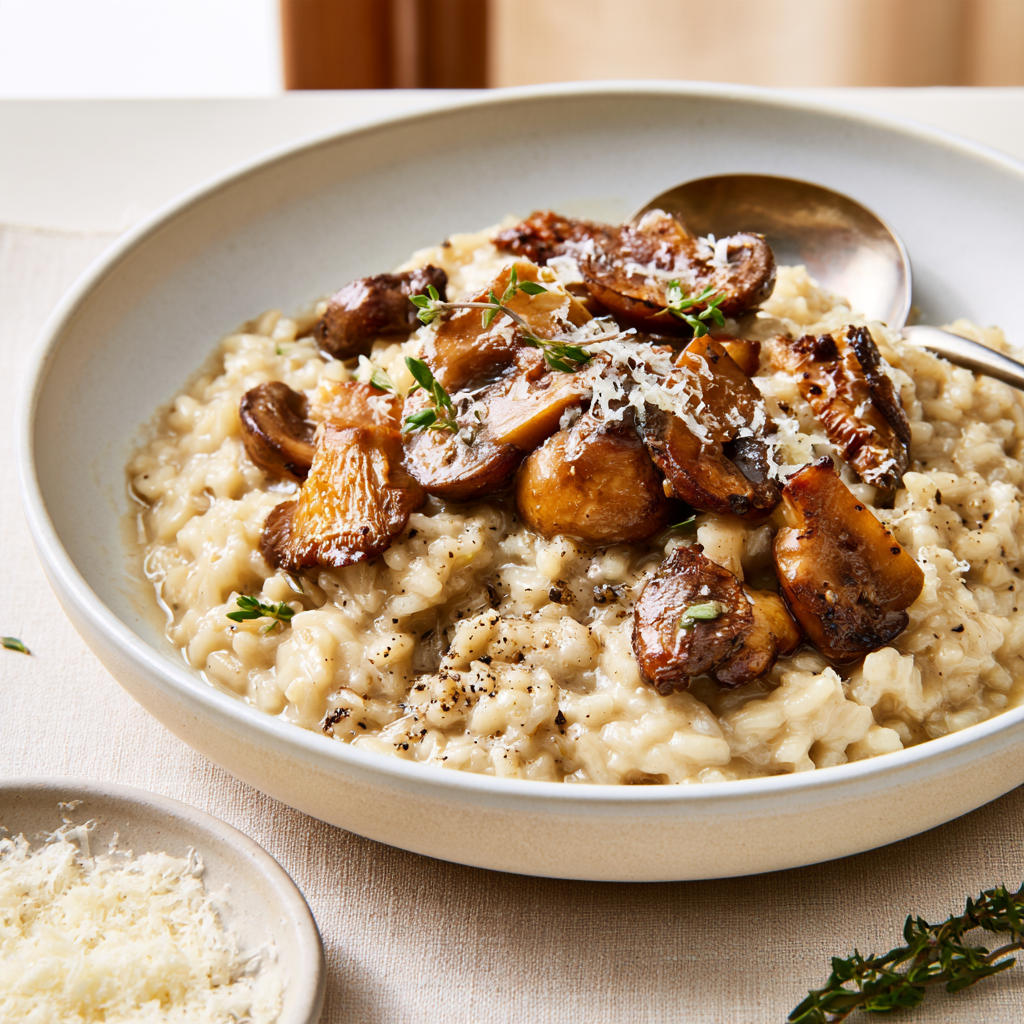
Wild mushroom risotto. Swap half the cremini mushrooms for shiitake, oyster, or a wild mushroom blend. Brown them the same way. Wild mushrooms add a deeper, more complex flavor.
Risotto with peas. Stir in 1 cup frozen peas during the last 2 minutes of cooking, along with the mushrooms.
Risotto with lemon and herbs. Add the zest of one lemon and a handful of chopped fresh parsley at the end, along with the butter and Parmesan.
Vegan mushroom risotto (untested). Use olive oil instead of butter, vegetable broth instead of chicken broth, and skip the Parmesan. Stir in 2 tablespoons of nutritional yeast at the end for a savory note. I haven’t tested this substitution myself, so the texture may vary slightly.
Baked risotto (untested). Combine the toasted rice, mushrooms, wine, and broth in a covered baking dish and bake at 375°F for 35 to 40 minutes, stirring once halfway through. Finish with the butter and Parmesan off the heat. I haven’t tested this method for this specific recipe, and the texture will likely be slightly less creamy than the stovetop version.
Storage and Make-Ahead
Risotto is best served immediately after it’s made because the rice keeps absorbing liquid as it sits and the texture turns starchy. If you need to make it ahead, cook it through Step 7, spread it on a sheet pan to cool quickly, and refrigerate it in a sealed container for up to 2 days. Reheat it gently on the stovetop with a splash of warm broth and a fresh knob of butter, stirring until it loosens back up.
Store leftovers in a sealed container in the refrigerator for up to 3 days. The risotto will thicken and look stiff when cold; that’s normal. Reheat gently on the stovetop with a splash of broth, or in the microwave in 60-second bursts with a splash of water.
Do not freeze risotto — the rice breaks down, and the texture turns grainy when thawed.
Store leftovers in the refrigerator within 2 hours of cooking. Reheat to 165°F before serving. Discard any risotto left at room temperature for more than 2 hours.
FAQ
What kind of rice is best for mushroom risotto?
Arborio is the most widely available short-grain Italian rice for risotto, and carnaroli is a slightly more forgiving alternative. Long-grain, jasmine, and basmati rice don’t release enough starch, and the risotto will turn out soupy.
Can I make mushroom risotto without wine?
Yes. Use an extra ½ cup of warm broth plus 1 tablespoon of fresh lemon juice in place of the wine.
Can I make this risotto vegan?
Yes. Use olive oil instead of butter, vegetable broth instead of chicken broth, and skip the Parmesan. Stir in 2 tablespoons of nutritional yeast at the end. I haven’t tested this substitution, so the texture may vary slightly.
Can I make mushroom risotto ahead of time?
Risotto is best served immediately, but you can cook it through Step 7, spread it on a sheet pan to cool, and refrigerate it for up to 2 days. Reheat gently on the stovetop with a splash of warm broth and a fresh knob of butter.
What do I serve with mushroom risotto?
Serve with a simple green salad with lemon vinaigrette, roasted vegetables, grilled chicken, or pan-seared fish. A glass of the same white wine you used in the risotto pairs naturally.
More Easy Healthy Dinner Recipes You’ll Love
- Chicken Sheet Pan Dinner — Mediterranean Lemon Garlic Chicken + Veggies
- Chicken Saltimbocca with Sage and Prosciutto — 30-Minute Italian Classic
- Creamy Tomato Garlic Parmesan Ground Beef Bowtie Pasta
- The Sweet Potato Bowl You’ll Crave All Fall — Smoky Cinnamon-Maple Chicken, 38g Protein
- Clam Chowder Recipe — Creamy New England Style, Ready in 40 Minutes
Closing
Serve this risotto in shallow bowls with the reserved crispy mushrooms, extra Parmesan, a few fresh thyme leaves, and a crack of black pepper.
Eat it right after it’s made, with a simple green salad or a glass of the same white wine you cooked with.