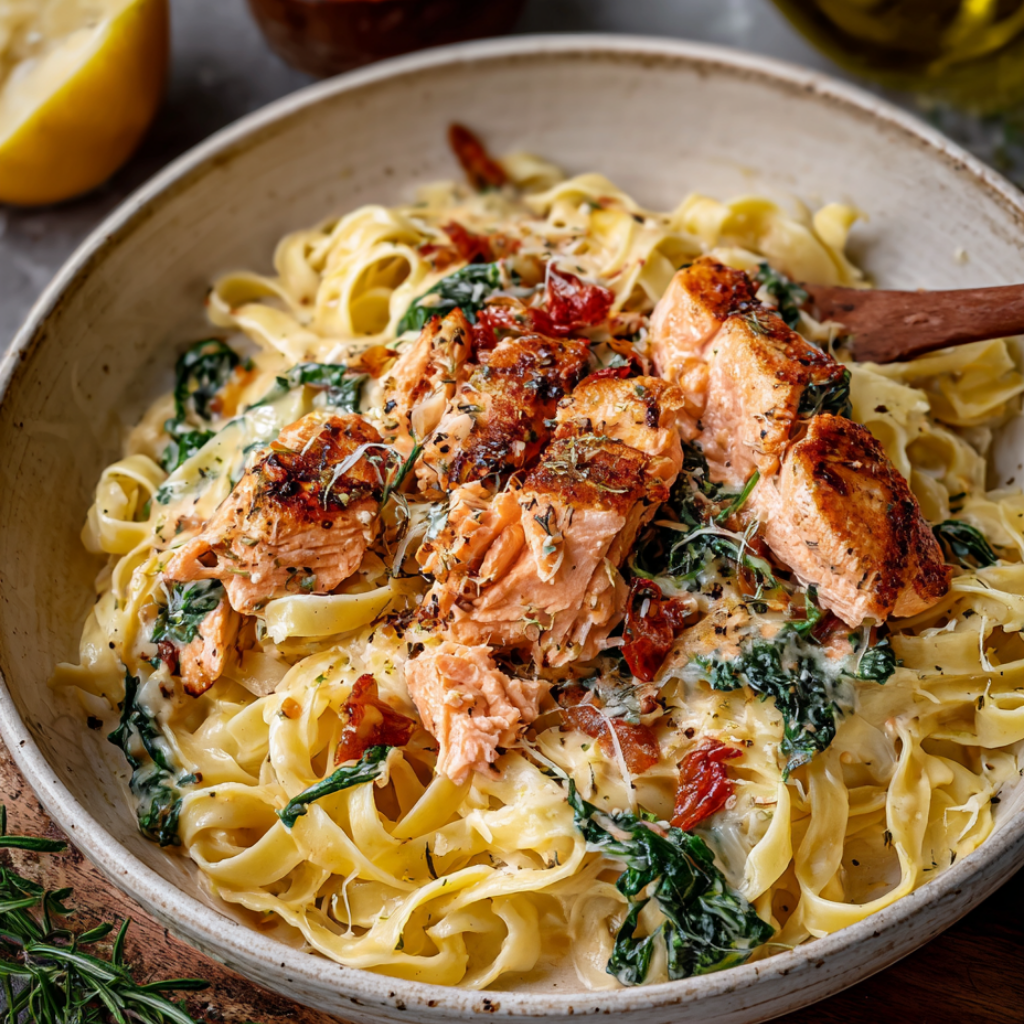

Tuscan salmon pasta is one of those dinners that instantly feels a little more elevated.
It’s the kind of plate that looks like it came out of a restaurant kitchen — golden-seared salmon, creamy garlic butter sauce, sun-dried tomatoes, spinach, all tangled up with fettuccine — and it has a way of making an ordinary evening feel like a special one.
It’s savory, buttery, and rich in all the right ways, but it’s also creamy without feeling heavy, which is why I can eat it and still feel good about it afterward.
This is one pasta my daughter absolutely loves, and she requests it quite a lot on weekends. It’s on constant repeat in our house—sometimes as a cozy family dinner at the kitchen table, sometimes with a glass of wine and a candle after the kids are in bed.
It works both ways, which is why it’s earned a permanent spot in our rotation. Weeknights, date nights, or a weekend dinner with everyone around the table—this is the one that fits.
I’ve been making this recipe for years, and the version below is the one I keep coming back to.
The technique is straightforward: sear the salmon skin-side up for a golden crust, then build the cream sauce in the same pan and toss it with the pasta.
Nestle the salmon on top at the very end so it stays tender and flaky instead of breaking apart into the sauce, and the sauce stays glossy and velvety instead of turning grainy.
Why This Recipe Works
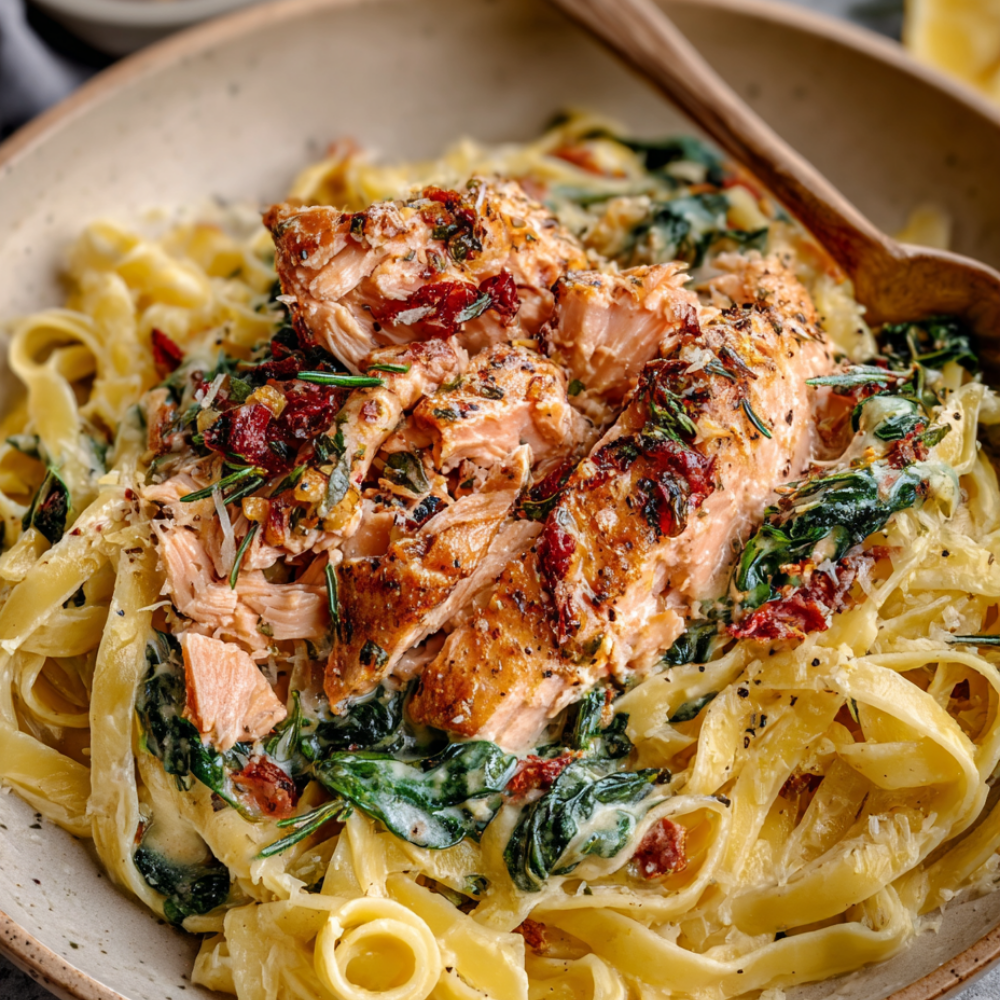
A few specific decisions make this Tuscan salmon pasta work.
Sear the salmon skin-side up first, then flip. Starting with the salmon flesh-side down gives it a golden crust and renders the skin so it releases easily when you flip it. The result is a fillet that’s crisp on both sides and tender in the middle, instead of pale and flaky.
Use a large, deep skillet, and tent the salmon with foil while you build the sauce. Four fillets need room to sear without crowding, and the salmon stays warm while you cook the sauce. Tent it loosely with foil so it doesn’t steam and lose its crisp crust.
Reduce the heat to low before the cream and Parmesan go in. Heavy cream and Parmesan will break or turn grainy if you add them over high heat. Reduce the heat to low, pour in the cream, and whisk in the Parmesan gradually until the sauce is silky and glossy.
Wipe out any heavy char from the pan before the sauce goes in. The salmon leaves browned bits that add flavor, but if the pan has black char from the sear, those bits can scorch in the cream. A quick wipe with a paper towel leaves the flavor and removes the burn risk.
Wilt the spinach in the sauce at the very end, off the heat. Spinach cooks down in about 30 seconds, and it keeps its bright green color if you add it in the last minute and stir it in as it comes off the heat.
Nestle the salmon on top of the pasta; don’t flake it into the sauce. The salmon stays whole and golden, the pasta gets coated in the sauce, and each plate gets a piece of salmon that looks the way it did when it came out of the pan.
Ingredients That Matter
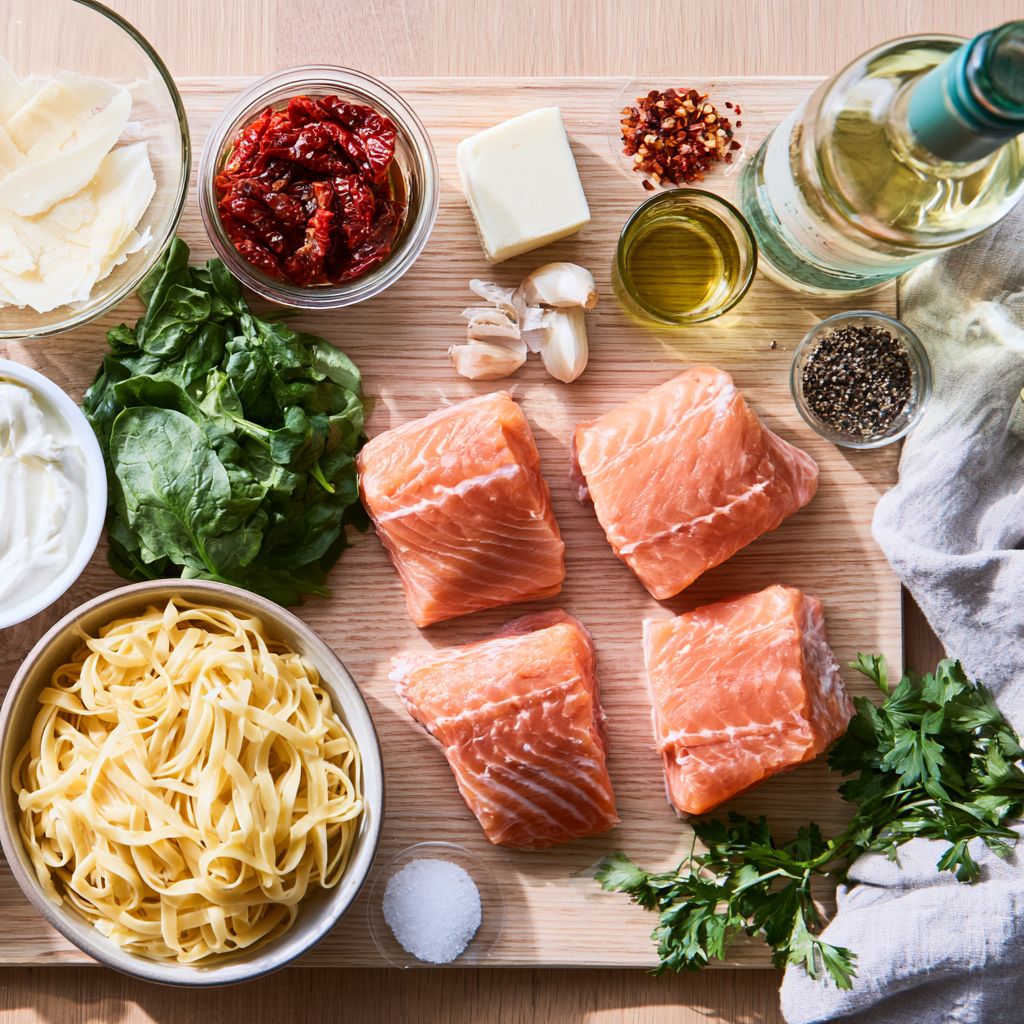
Most of the ingredients in this Tuscan salmon pasta are straightforward. Three of them are easy to get wrong, so those are the ones worth explaining.
Salmon fillets. Use four 5- to 6-ounce skin-on salmon fillets, about 1 inch thick. Skin-on fillets hold together better in the pan and give you a crisper edge. Center-cut fillets cook more evenly than tail-end fillets, which are thinner and cook faster. If you can only find skinless fillets, they work, but the sear won’t be quite as crisp.
Sun-dried tomatoes packed in oil. Oil-packed tomatoes have a softer texture and deeper flavor than dry-packed ones. Reserve a spoonful of the oil from the jar and add it to the pan with the garlic — it’s what gives the sauce its Tuscan flavor. If you only have dry-packed tomatoes, soak them in warm water for 10 minutes before using them, and add an extra tablespoon of olive oil to the pan.
Heavy cream. Use heavy cream, not half-and-half or milk. Heavy cream reduces without breaking and gives the sauce its glossy, velvety texture. Half-and-half works in a pinch, but the sauce will be thinner. Milk curdles when it simmers.
How to Make It
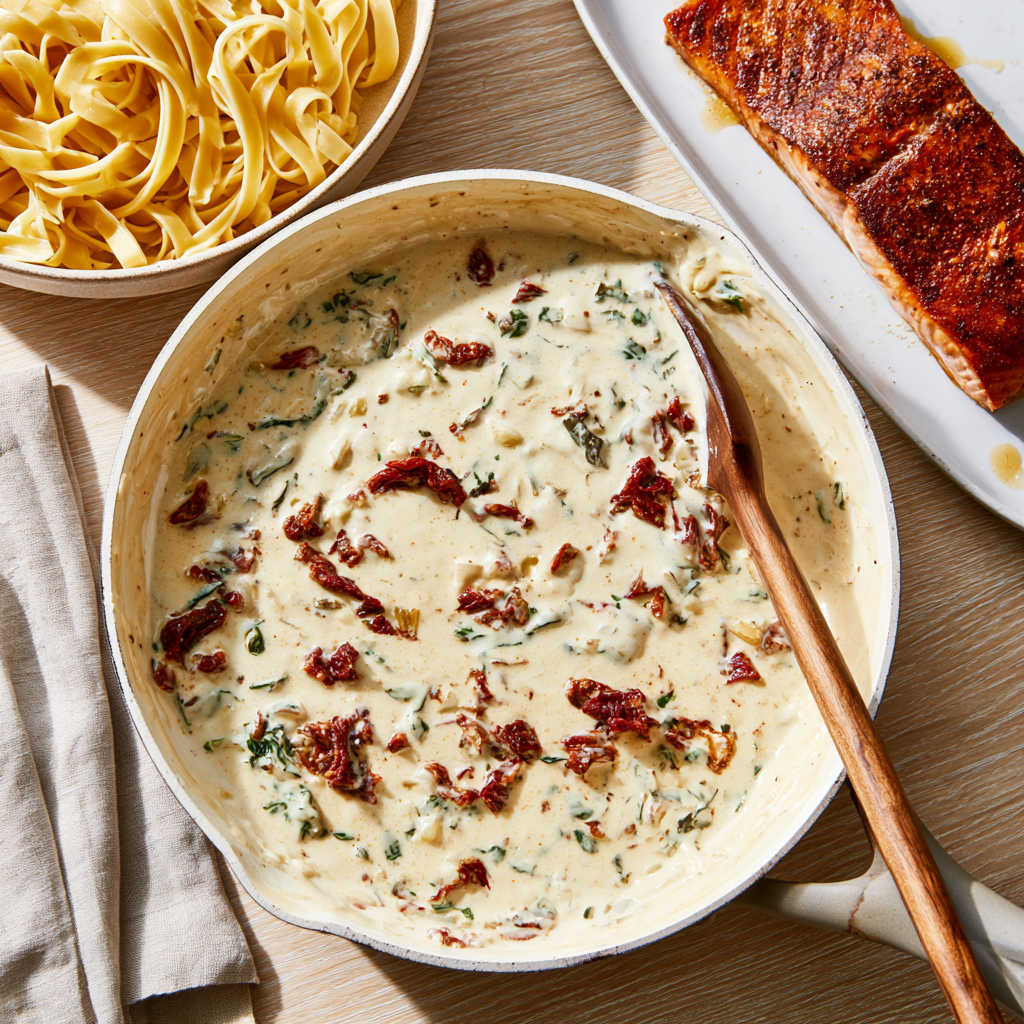
Step 1: Cook the pasta.
Bring a large pot of well-salted water to a boil. Cook 12 ounces of fettuccine according to the package directions, stopping 1 minute before al dente. Reserve 1 cup of pasta water, then drain.
Step 2: Sear the salmon.
Pat the salmon fillets dry with paper towels, then season both sides with kosher salt and black pepper. Heat 1 tablespoon of olive oil in a large, deep skillet or Dutch oven over medium-high heat. Place the fillets skin-side up (flesh-side down) and sear for 4 to 5 minutes, until the flesh is deeply golden. Flip and cook for 3 to 4 minutes more, until the skin is crisp and the salmon is just opaque in the center. Transfer the salmon to a clean plate and tent loosely with foil
Step 3: Build the sauce.
Reduce the heat to medium. If there’s heavy black char in the pan, wipe it out gently with a paper towel, leaving the browned bits behind. Add 2 tablespoons butter and 1 tablespoon reserved sun-dried tomato oil to the skillet. Add 4 minced garlic cloves and ½ teaspoon of red pepper flakes, and cook for 30 seconds, until fragrant. Add ½ cup of sliced sun-dried tomatoes and cook for 1 minute.
Step 4: Deglaze with wine.
Pour in ½ cup of dry white wine and scrape up the browned bits from the bottom of the pan. Simmer for 2 to 3 minutes, until the wine has reduced by half and the alcohol smell has cooked off.
Step 5: Add the cream and Parmesan.
Reduce the heat to low. Pour in 1 cup heavy cream and whisk in ½ cup freshly grated Parmesan gradually until the sauce is smooth, glossy, and slightly thickened, about 2 to 3 minutes. Taste and adjust salt and pepper as needed.
Step 6: Wilt the spinach and toss the pasta.
Add 3 cups of fresh baby spinach to the skillet and stir for 30 seconds, until just wilted. Add the drained pasta and toss to coat, adding pasta water ¼ cup at a time if the sauce needs to loosen up.
Step 7: Plate and serve.
Divide the pasta among four warm shallow bowls. Nestle a seared salmon fillet on top of each portion. Garnish with chopped fresh parsley, extra grated Parmesan, and a crack of black pepper, and serve immediately.
Tips and Troubleshooting
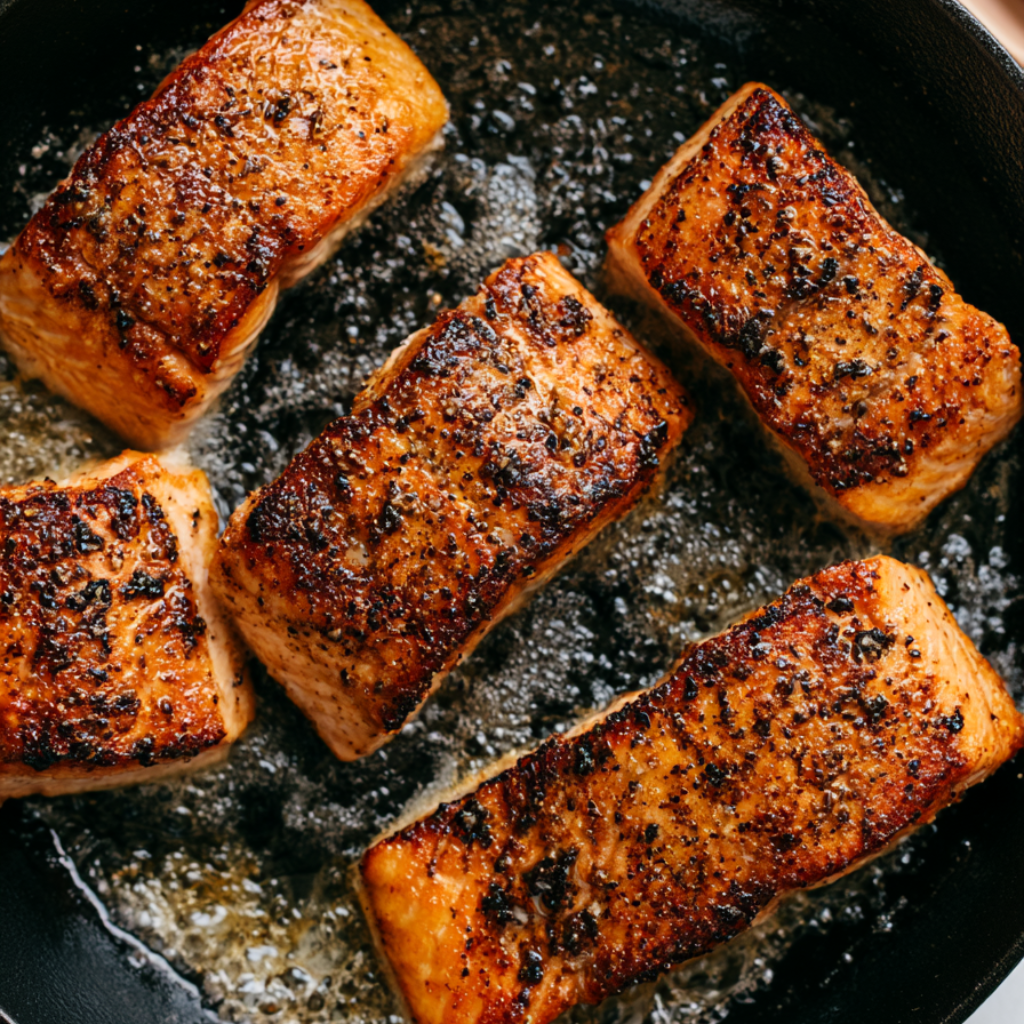
The salmon stuck to the pan. This usually means the pan wasn’t hot enough, or you didn’t pat the salmon dry before adding it. Pat the fillets dry, heat the pan until the oil shimmers, and don’t move the salmon for the first 3 to 4 minutes — it will release on its own when it’s ready to flip.
The salmon turned out dry. Salmon dries out quickly if you overcook it. Pull it off the heat while the center is still slightly translucent, and let it finish cooking from residual heat while the sauce comes together.
The sauce turned out thin. Heavy cream reduces as it simmers, so if the sauce looks thin, simmer it another 2 to 3 minutes before adding the pasta. If it’s still thin, add another 2 tablespoons of Parmesan and stir until it thickens.
The sauce broke or turned grainy. This usually happens when you boil the cream too hard or add the Parmesan over high heat. Reduce the heat to low before adding the cream, and whisk in the Parmesan gradually.
The salmon got lost in the pasta. Nestle the fillets on top of the pasta at the end instead of flaking them into the sauce. It keeps the salmon whole and golden, and the presentation is much more restaurant-like.
A Few Honest Notes
I’ve made this recipe with fettuccine more times than I can count, and I’ve also made it with penne when the fettuccine ran out — both work beautifully, and the fettuccine version is what you see in the photo.
If you’ve made this with a dairy-free cream alternative, I’d love to know how it turned out — I haven’t tried that version myself, and I’d rather point you to someone who has than guess at the result.
Storage and Make-Ahead
You can make the sauce up to 2 days ahead and store it in a sealed container in the refrigerator. Reheat gently on the stovetop over low heat before tossing with the pasta.
Store cooked salmon and pasta in a sealed container in the refrigerator for up to 2 days. The pasta will absorb some sauce as it sits, so reheat it with a splash of pasta water or cream to loosen it up. The salmon will lose some crispness when reheated, so reheat the pasta and sauce separately and add the salmon at the end.
This dish doesn’t freeze well because the cream sauce separates when thawed.
Store leftovers in the refrigerator within 2 hours of cooking. Reheat to 165°F before serving. Discard any pasta left at room temperature for more than 2 hours.
FAQ
What does “Tuscan” mean in a pasta dish?
In American cooking, “Tuscan” usually refers to a creamy sauce with garlic, sun-dried tomatoes, spinach, and Parmesan. It’s inspired by the flavors of Tuscany, but it’s a restaurant-style dish, not a traditional Italian recipe.
Can I use penne instead of fettuccine?
Yes. Penne works beautifully, and it’s what’s shown in the photo. Use the same amount, cook it the same way, and toss it with the sauce at the end. Rigatoni and tagliatelle also work well.
Can I make this with shrimp instead of salmon?
Yes. This is the same sauce used in Tuscan shrimp pasta. Sear 1 pound of large shrimp for 1 to 2 minutes per side, then set them aside and build the sauce the same way. Add the shrimp back at the end and toss gently.
Can I make this without white wine?
Yes. Substitute an extra ½ cup of chicken broth plus 1 tablespoon of lemon juice. The sauce will be slightly less complex, but still delicious.
Can I make this dairy-free?
I haven’t tested a dairy-free version myself, so I can’t vouch for the texture. If you try it with a dairy-free cream and a dairy-free Parmesan alternative, let me know how it turns out — I’d love to add a tested version to the recipe.
More Easy Healthy Dinner Recipes You’ll Love
- Creamy Ground Beef and Bowtie Pasta — One Pan, 38g Protein
- 4 Easy Healthy Shrimp Pasta Recipes — Ready in 30 Minutes
- Creamy Tuscan Shrimp Pasta — Easy 30-Minute Dinner, 40g Protein
- 20 Easy Salmon Recipes Ready in 20 Mins (Healthy & Delicious)
Closing
Serve this Tuscan salmon pasta right after you assemble it, with the salmon nestled on top of the pasta and a little extra Parmesan and parsley on each plate. If you leave it in the sauce for too long, the pasta will start to suck all the sauce. It’s best served right away.
I’ve been making this for years, and the version in the recipe card is the one I keep coming back to—the golden sear on the salmon, the cream sauce that clings to the pasta, and the bright pop of spinach are what make it a dish I make on repeat.
Whether it’s a cozy family dinner at the kitchen table or a date night with a glass of wine after the kids are in bed, this is the one that fits.
If you add other ingredients or make any adaptations, I’d love to hear how it goes.