Sunday afternoons have a way of feeling productive until they don’t. You meant to meal prep. You may have made one thing. And then Monday arrives, and you’re staring into the fridge at 7 a.m. with zero plan for breakfast.
Here’s the thing: chia seed pudding is genuinely one of the easiest make-ahead breakfasts you can add to that Sunday routine.
No cooking. No reheating. Just stir, refrigerate, and grab it on your way out the door. The recipes in this article are built around high-protein chia pudding specifically, because a breakfast that keeps you full until lunch is worth making on repeat.
Whether you’re new to chia pudding or you’ve tried it once and thought the texture was weird, keep reading. There are real fixes for that.
And by the end, you’ll have eight flavor ideas, a simple batch method, and enough variety to get through a full week without eating the same jar twice.
Why Chia Pudding Is One of the Smarter High-Protein Breakfasts
Chia seeds are small but rich in nutrients. Two tablespoons pack around 4–5 grams of protein, 10 grams of fiber, omega-3 fatty acids, and calcium.
On their own, that’s a solid bonus, not a complete protein source — but the real strength of chia pudding is what you add to the base.
When you layer in Greek yogurt, blend in cottage cheese, or stir in a scoop of protein powder, you can push a single jar to 18–25+ grams of protein with little effort. That matters if you’re trying to eat less throughout the morning or if you tend to get hungry again by 10 a.m. after most breakfasts.
Compared to overnight oats, chia pudding has a slight edge in prep simplicity – the ratio is forgiving, the base stays creamy, and it holds up better over several days in the fridge.
If you batch cook on Sundays, chia pudding stays good through Thursday or Friday with no quality drop.
The Base Chia Pudding Recipe: The One You’ll Make on Repeat
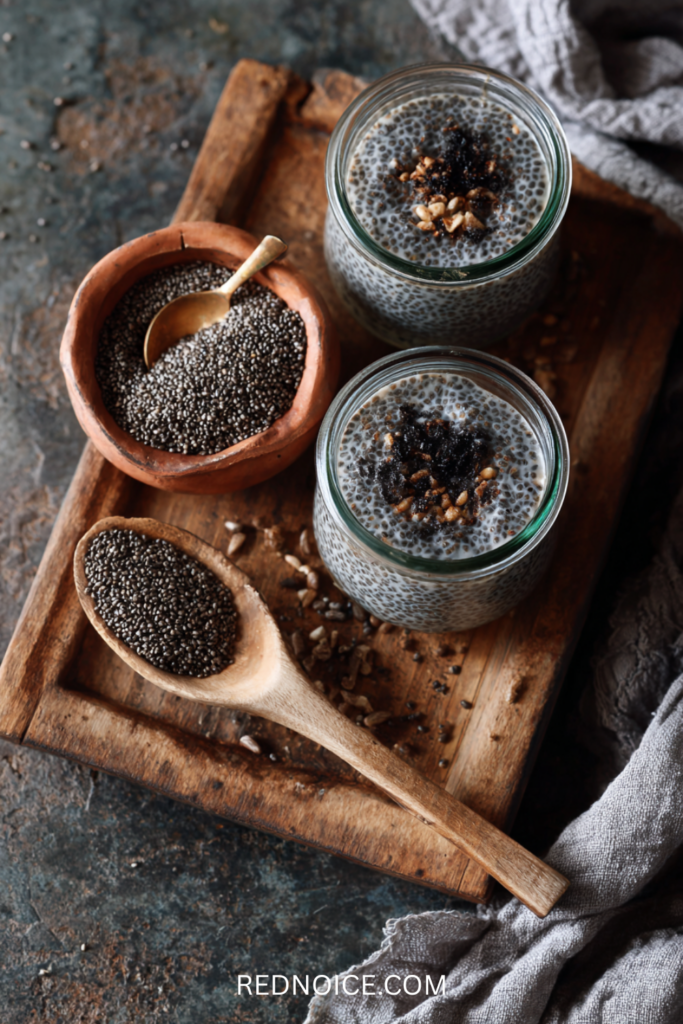
Before you get into flavors, this is the only chia pudding base you need to know. It takes five minutes. Everything else in this article builds on it.
The golden ratio: 2 tbsp chia seeds + ½ cup liquid = perfect pudding texture. Stick to this, and you’ll never get a watery or gluey mess.
Ingredients (1 serving)
- 2 tbsp chia seeds
- ½ cup milk of your choice (whole milk, oat milk, coconut milk, or unsweetened almond milk)
- 1 to 2 tsp maple syrup or honey
- ¼ tsp vanilla extract
- Pinch of salt
Instructions
- Combine all ingredients in a jar or container with a lid.
- Stir well for about 30 seconds, making sure the seeds don’t clump at the bottom.
- Wait five minutes, then stir again. This second stir is the most important step — it breaks up clumps before they set.
- Cover and refrigerate for at least four hours, or overnight.
That second stir is what prevents the clumped, uneven texture that puts people off. Don’t skip it.
Texture Notes and Ratios
If you like a thicker pudding, go up to 2.5 tbsp chia seeds. For a thinner, more drinkable version, use 1.5 tbsp. Coconut milk gives the richest, creamiest result. Oat milk is slightly thinner. Whole dairy milk lands in between.
How milk choice affects protein
The milk you use significantly affects the total protein in each jar. Dairy milk contributes the most, while almond and coconut milk add very little. Here’s what to expect from the base recipe (chia seeds + milk, no add-ins):
| Whole dairy milk | 8–9g |
| Oat milk | 6–7 |
| Almond milk | 5–6g |
| Full-fat coconut milk | 5–6g |
Note: Chia seeds themselves contribute ~4–5g protein per 2 tbsp. The rest comes from the milk.
If you’re using a non-dairy milk and want a meaningful protein number, the add‑ins in the next section become essential rather than optional.
High-Protein Upgrades That Actually Make a Difference
A plain chia pudding base is fine. A high-protein chia pudding is the version that keeps you full and earns a permanent spot in your Sunday batch routine. Here are three approaches that work.
Greek Yogurt Layer
The easiest upgrade. Spoon 2–3 tablespoons of plain Greek yogurt into the jar before the pudding sets, or layer it on top right before eating.
It adds roughly 3–5 grams of protein depending on the brand and fat content, creates a natural tang that brightens any flavor, and makes the whole jar feel more substantial.
Protein Powder
Vanilla whey blends cleanly into the liquid base. Unflavored collagen is completely neutral. Plant-based powders can add a slightly gritty or chalky texture, depending on the brand.
Mix one scoop (typically 20–25g protein) into the liquid before adding chia seeds, and reduce the sweetener since most powders already contain some.
Important: Some protein powders thicken significantly overnight, especially whey and plant-based varieties. If your pudding comes out unusually dense the next morning, stir in a splash of extra milk before eating. It takes ten seconds and fixes it.
Blended Cottage Cheese Base
This is the high-protein hack that sounds strange but works extremely well. Blend ½ cup of cottage cheese with your milk until completely smooth, then use that as the chia pudding liquid.
A half cup of cottage cheese adds roughly 12–14 grams of protein, bringing the total jar to around 17–22 grams, depending on your milk choice.
No detectable cottage cheese flavor remains after blending, and the texture is smoother than traditional pudding, which helps if you find the whole-seed texture off-putting.
Tip: If you’re batch-prepping for the week, pick one protein upgrade method and apply it consistently. Mixing approaches across jars adds complexity to prep day without much benefit.
8 Chia Pudding Flavor Variations to Prep This Sunday
Each recipe starts with the base above: 2 tbsp chia seeds, ½ cup milk, sweetener, vanilla, and salt. Add the listed flavor ingredients, stir, and refrigerate. Keep fresh fruit toppings separate until the morning you eat.
Protein estimates below use whole dairy milk unless noted. Figures will be 2–3g lower with oat milk, and 3–5g lower with almond or coconut milk.
1. Chocolate Peanut Butter
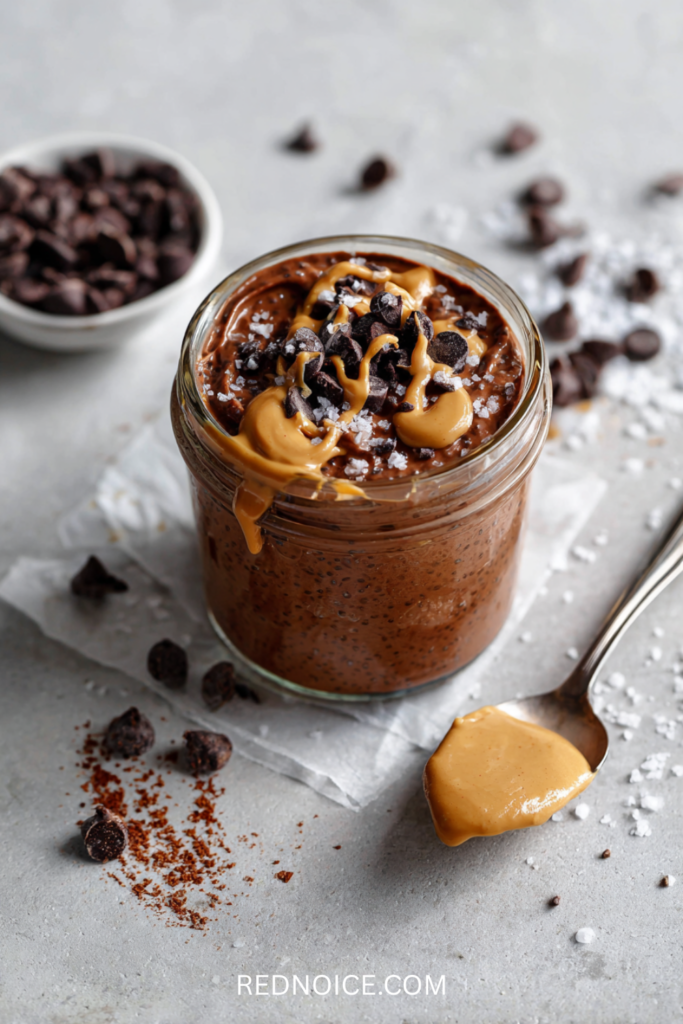
- Add to base: 1 tbsp unsweetened cocoa powder + 1 tbsp peanut butter.
- Stir until the peanut butter is mostly incorporated (it will fully blend during refrigeration)
- Top with a few dark chocolate chips or a drizzle of honey
- Protein: 12–13g with dairy milk (chia + milk + peanut butter). One of the most filling options in this list.
This is the chocolate chia seed pudding that people always ask about after seeing it on someone else’s meal prep. Rich, satisfying, and genuinely tastes like dessert.
2. Strawberry Shortcake
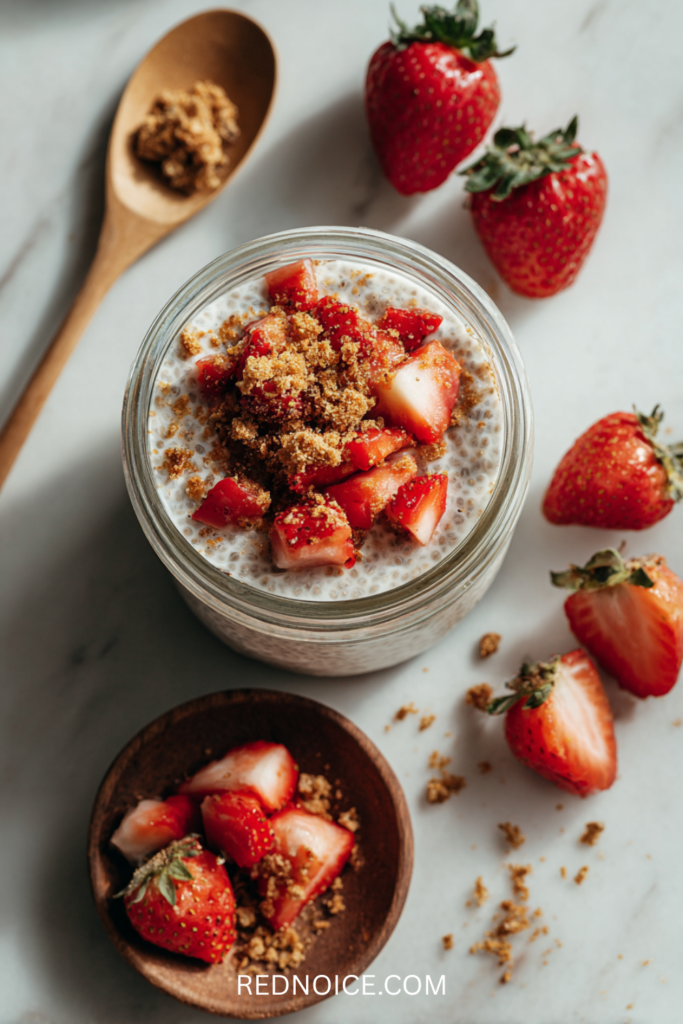
- Add to base: ¼ tsp extra vanilla. Reduce maple syrup slightly (strawberries add sweetness)
- Refrigerate overnight, then top with diced fresh strawberries and a small handful of crushed graham crackers.
- Works especially well in spring and summer when strawberries are at their best
Protein: 6–10g depending on milk used (higher with dairy, lower with almond or coconut milk).
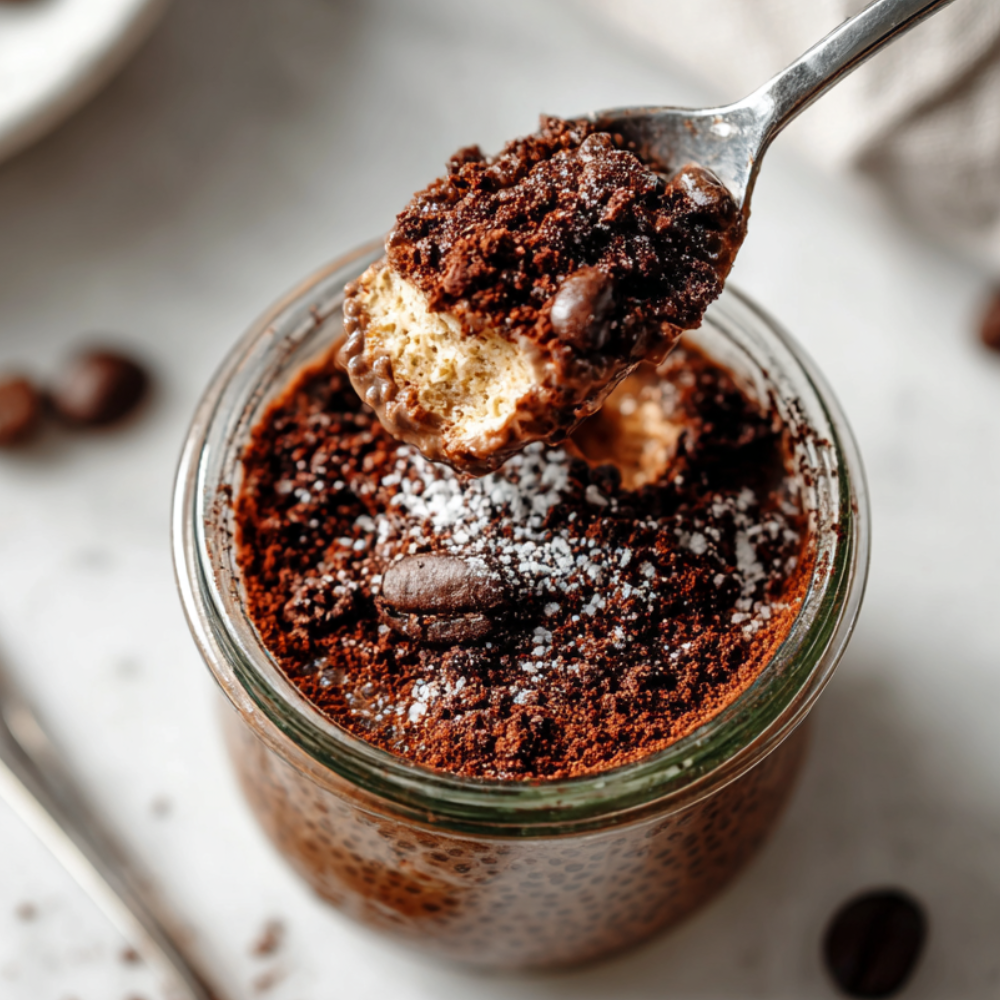
3. Tiramisu Chia Pudding
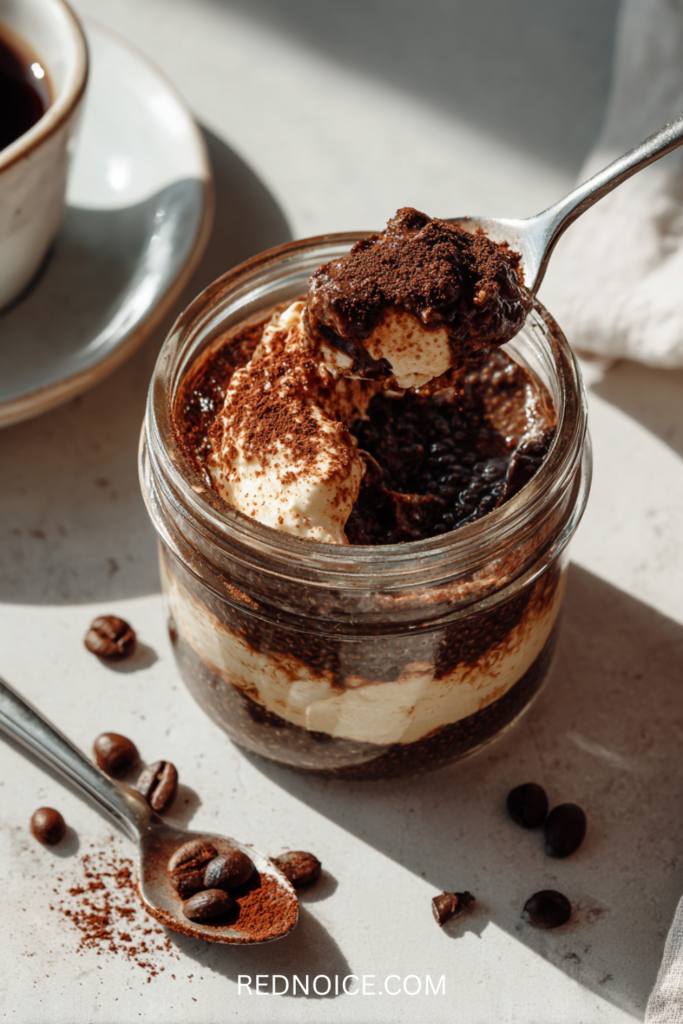
- Add to base: 1–2 tsp instant espresso powder + a splash of extra vanilla.
- Layer or swirl in a spoonful of mascarpone or cream cheese, softened with a little honey.
- Dust the top with unsweetened cocoa powder right before eating.
Protein: 9–10g base with dairy milk (mascarpone adds minimal protein). Add Greek yogurt or a scoop of collagen powder to reach 15g+.
This one has become genuinely popular as a healthy dessert recipe and a high-protein breakfast that feels a little indulgent. It is both.
4. Coconut Mango
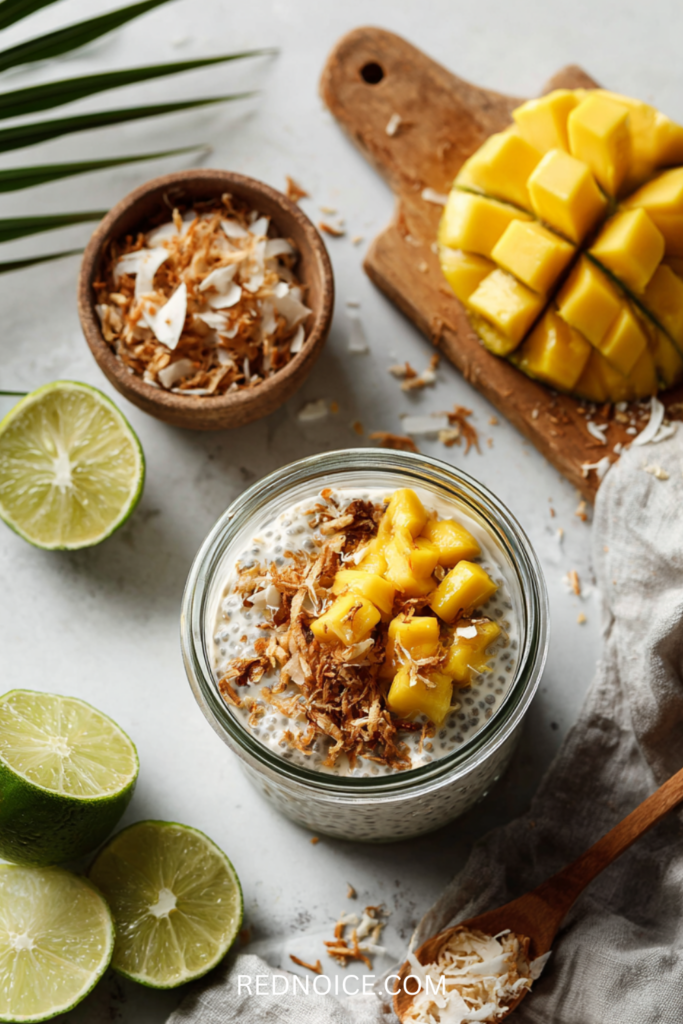
- Use full-fat coconut milk as the base liquid.
- Top with fresh or frozen-and-thawed mango chunks and a sprinkle of toasted coconut flakes
- Add a small squeeze of lime juice for contrast.
Protein: 5–7g (coconut milk is very low in protein). This is the lowest-protein option on the list — add a scoop of collagen powder or a Greek yogurt layer if protein matters to you here.
5. Vanilla Bean with Almond
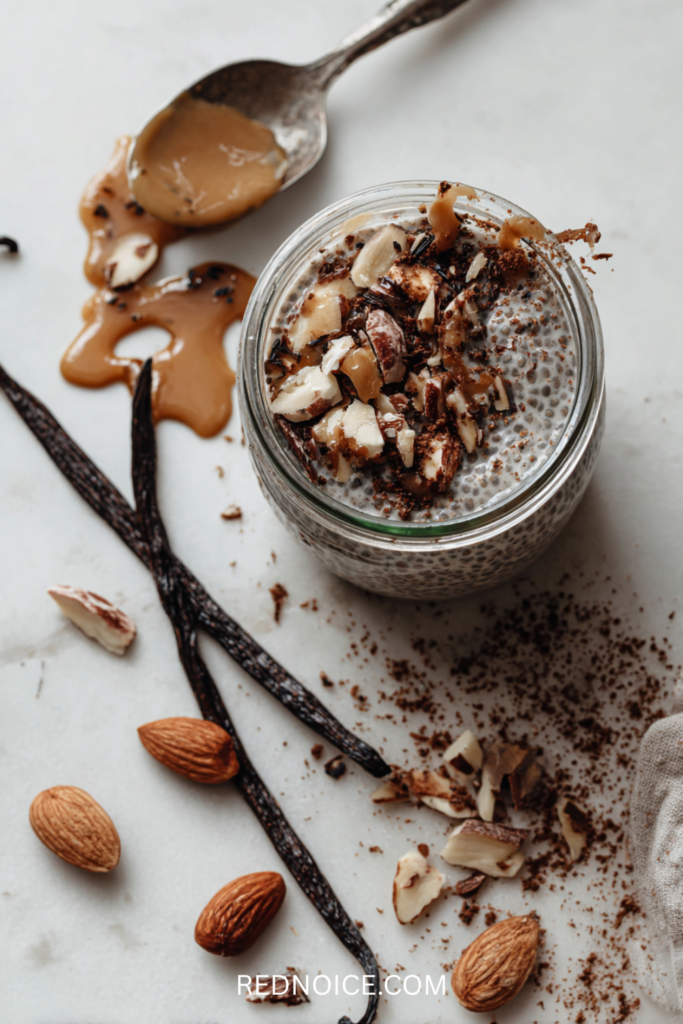
- Add to base: double the vanilla extract (½ tsp) + ¼ tsp almond extract.
- Top with sliced almonds and a drizzle of almond butter
Protein: 8–10g with dairy milk and almonds. The cleanest, most neutral flavor in this group — works well for picky eaters and kids.
6. Blueberry Lemon
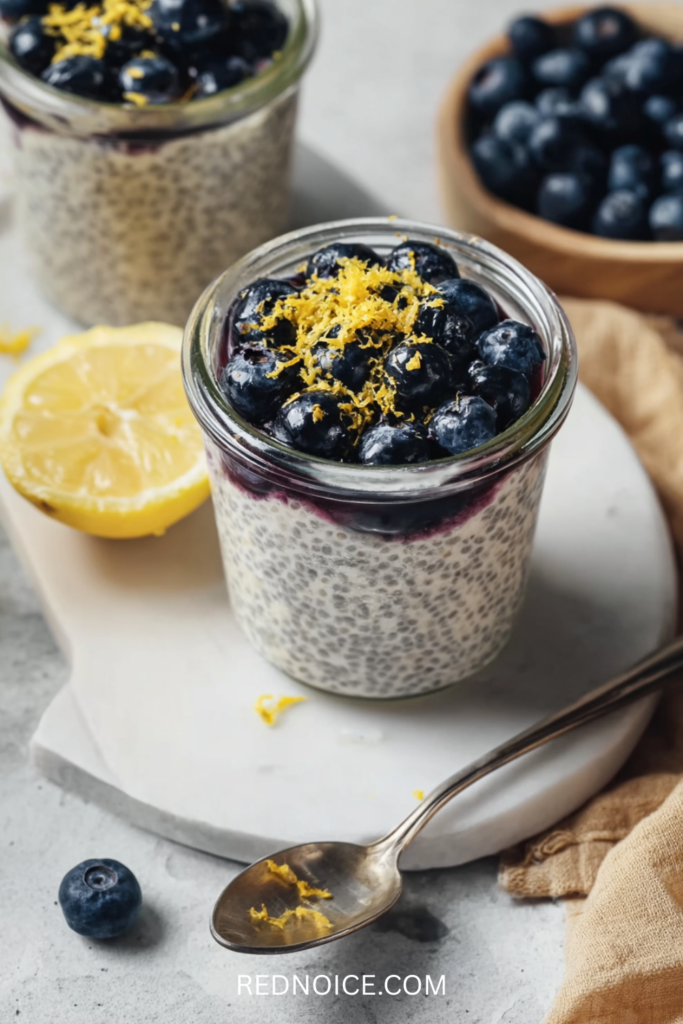
- Add to base: zest of half a lemon.
- Smash a handful of blueberries into a quick compote by heating them with a teaspoon of honey for a few minutes, or use fresh berries on top.
- The lemon zest does more work than you’d expect — it makes the whole jar taste brighter.
Protein: 6–9g, depending on milk used.
7. Apple Cinnamon
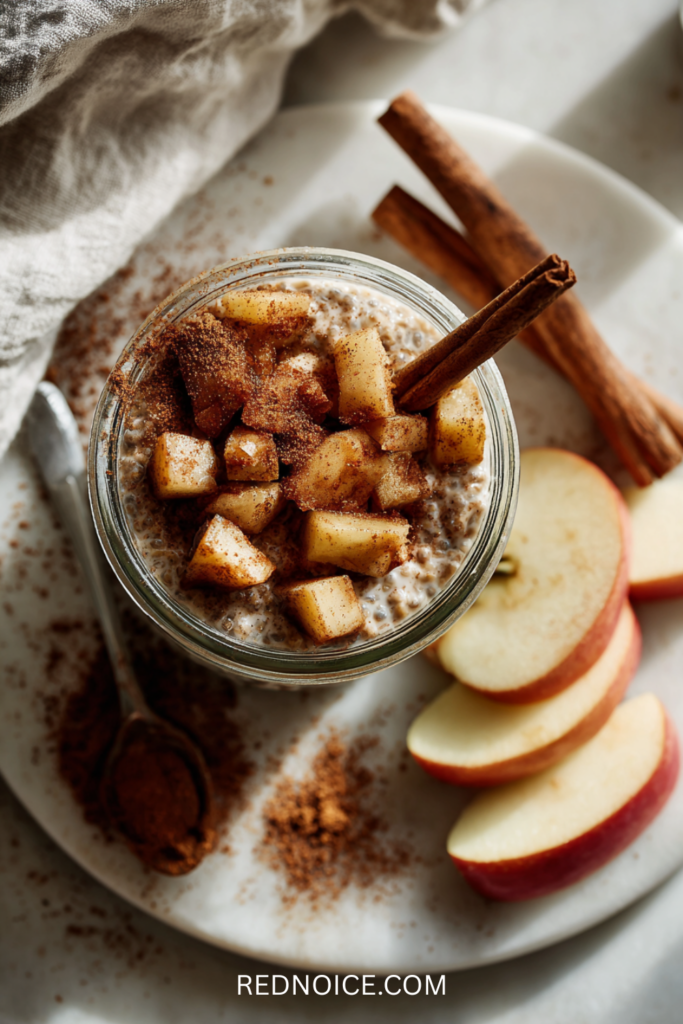
- Add to base: ½ tsp cinnamon + a pinch of cardamom.
- Top with diced sautéed apple (5 minutes in a pan with butter and brown sugar) or raw diced apple if you want zero prep
Protein: 6–9g, depending on the milk used. The fall and winter version of chia pudding — tastes like the beginning of sweater weather.
8. Espresso Banana
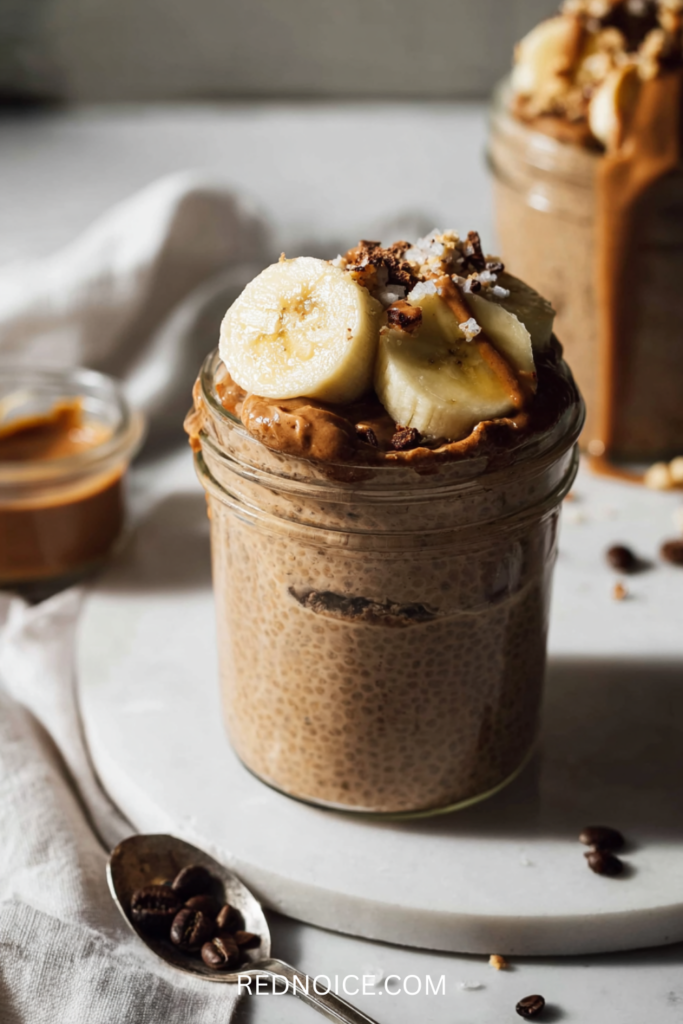
- Add to base: 1 tsp instant espresso powder stirred into the liquid.
- Top with half a sliced banana, a sprinkle of flaky salt, and a drizzle of almond butter
Protein: 8–10g with dairy milk, almond butter, and banana. Works as a pre-workout breakfast or a mid-afternoon snack.
Protein at a Glance
Here’s a consolidated view of estimated protein per jar, using whole dairy milk as the base, with no add‑ins beyond those listed in each recipe. Figures will be 2–3g lower with oat milk, and 3–5g lower with almond or coconut milk.
| Chocolate Peanut Butter | 12–13g |
| Strawberry Shortcake | 6–10g |
| Tiramisu | 9–10g |
| Coconut Mango | 5–7g |
| Vanilla Almond | 8–10g |
| Blueberry Lemon | 6–9g |
| Apple Cinnamon | 6–9g |
| Espresso Banana | 8–10g |
To reach 18–25g per jar, use the protein upgrades (Greek yogurt, cottage cheese, or protein powder) described in the earlier section.
Chia Pudding Toppings That Make It Feel Less Like Health Food
The toppings are where chia pudding goes from “fine” to something you actually look forward to eating. A plain jar from the fridge is forgettable. A jar with texture contrast, something bright, and a drizzle of something rich? That’s a breakfast worth saving.
Crunchy toppings (keep separate until eating): granola, toasted coconut flakes, cacao nibs, chopped toasted nuts, crushed rice cakes.
Fresh fruit combos: sliced strawberries and kiwi, mango and blueberries, banana and a cherry, raspberries and pomegranate seeds.
Nut butter drizzle: thin almond butter with a few drops of water until pourable, then drizzle across the top. Takes 30 seconds. Tahini works too for a slightly more savory finish.
Pro tip: If your pudding tastes bland, add a pinch of salt. It enhances sweetness perception and brings out the other flavors.
How to Meal Prep a Full Week of Chia Pudding Jars
The 10‑Minute Sunday Method
- Set out 4–5 jars on the counter.
- Make your base liquid in a large measuring cup or bowl: multiply ½ cup of milk by the number of jars. Add sweetener, vanilla, and salt to the whole batch at once.
- Divide the liquid equally between jars.
- Add 2 tbsp chia seeds to each jar.
- Add flavor‑specific ingredients to each jar.
- Stir each jar, wait 5 minutes, stir again.
- Lid and refrigerate. Done.
The key is making a large batch of base liquid first, rather than measuring each jar individually. That’s where most people overcomplicate it.
Which flavors hold up best over several days?
Most chia pudding stays good for 4–5 days in the fridge. Anything with fresh fruit already mixed in can get watery by day three — keep fruit separate and add it each morning.
- Best for days 4–5: Chocolate peanut butter, vanilla almond, espresso banana (without banana added), tiramisu.
- Better in the first 3 days: Strawberry shortcake, blueberry lemon, apple cinnamon with fresh apple.
Storage tips: Wide‑mouth mason jars work well. Store in the center of the fridge, not the door. Label jars with tape and a marker if you’re making multiple flavors.
Chia Pudding as Dessert: Not Just a Breakfast Thing
One underused aspect of chia pudding is that it genuinely works as a healthy dessert. The chocolate peanut butter version especially sits in that gray zone between breakfast and dessert without apology.
For a post‑dinner option, blend the fully set pudding in a small blender or with an immersion blender after it has had several hours to thicken.
The result is something closer to chocolate mousse — dense and creamy, with a texture that feels nothing like typical health food.
The tiramisu version also works here. Make a batch at the start of the week, and it functions equally well as a weekday breakfast or a satisfying Friday night dessert when you want something sweet but don’t want to bake.
Chia Pudding for Kids and Picky Eaters
The texture is the main obstacle. Some kids take to chia pudding right away, and some don’t. The blended version is almost always better received because the seedy texture disappears entirely.
Flavor combinations that work for kids:
- Chocolate with banana mashed in for sweetness
- Vanilla with lots of fresh strawberries on top
- Plain with a generous swirl of honey and a sprinkle of rainbow sprinkles
If texture is still an issue after blending, try mixing the chia pudding with yogurt at a 1:1 ratio.
It creates something closer to a thick yogurt bowl that most kids accept more readily — and it also quietly adds protein.
For family meal prep, making a neutral base and letting kids pick their own toppings in the morning tends to significantly increase buy‑in.
Common Chia Pudding Mistakes (And How to Fix Them)
| Too runny | Add a pinch more salt (it enhances sweetness), a little more vanilla, and taste before refrigerating. Adjust the jar before it sets. |
| Too thick | Stir in a splash of milk right before eating. Coconut milk and protein powder bases both thicken significantly overnight — this is common. |
| Clumped seeds | You skipped the second stir. Set a 5‑minute timer after the first stir. If it’s already clumpy, blend it smooth. |
| Bland flavor | Add a pinch more salt (it enhances sweetness), a little more vanilla, and taste before refrigerating. Adjust in the jar before it sets. |
Frequently Asked Questions
How long does chia pudding last in the fridge?
4–5 days in a covered container. Keep fresh fruit toppings separate and add them daily.
Can you freeze chia pudding?
Yes, but the texture changes after thawing — it becomes slightly icy and less creamy. Thawing and blending it into a smoothie gives the best result. Since chia pudding is easy to make weekly, freezing rarely makes sense.
How much protein is actually in chia pudding?
It depends heavily on your milk and add‑ins. A base jar with dairy milk delivers roughly 8–9g.
Add Greek yogurt, and you’re looking at 11–14g. Use a blended cottage cheese base, and you reach 17–22g.
A full scoop of protein powder gets you to 25g or more. Plant‑based milks will yield 2–4g less than dairy across the board.
Can you eat chia pudding warm?
Yes. Warm it gently on the stove or in the microwave for 30 seconds. It takes on a porridge‑like consistency. The apple cinnamon and chocolate peanut butter versions work especially well warm in colder months.
Can I make these recipes without a blender?
Every recipe above uses only a jar and a spoon — no blender required for the seeded versions. For blended smooth pudding, use an immersion blender or a regular blender after chilling.
Do I need to measure chia seeds exactly?
The ratio matters more than precision. If you’re a little over or under, you can fix the texture easily — too thick, add milk; too thin, add a little more chia and wait a couple more hours. After making it once or twice, you’ll stop measuring altogether.
The Simplest System for a Better Week
Chia seed pudding earns its place in a weekly routine for one reason: it removes a decision from the equation. When Monday morning arrives, and you know there are four or five jars in the fridge, breakfast becomes a non-issue. Grab one. Go.
The high‑protein versions in this article — especially the chocolate peanut butter, tiramisu, and cottage cheese base variations — are the ones worth going back to consistently. They’re filling enough to function as real meals, easy enough to make without thinking, and varied enough that the week doesn’t feel repetitive.
Start with the base recipe and one flavor you actually want to eat. Make it on Sunday. See how the week feels. The best high‑protein chia pudding is the one that becomes part of your routine, not the one that looked good in a photo and got forgotten.
Now go make a batch. Your Tuesday morning self will thank you.