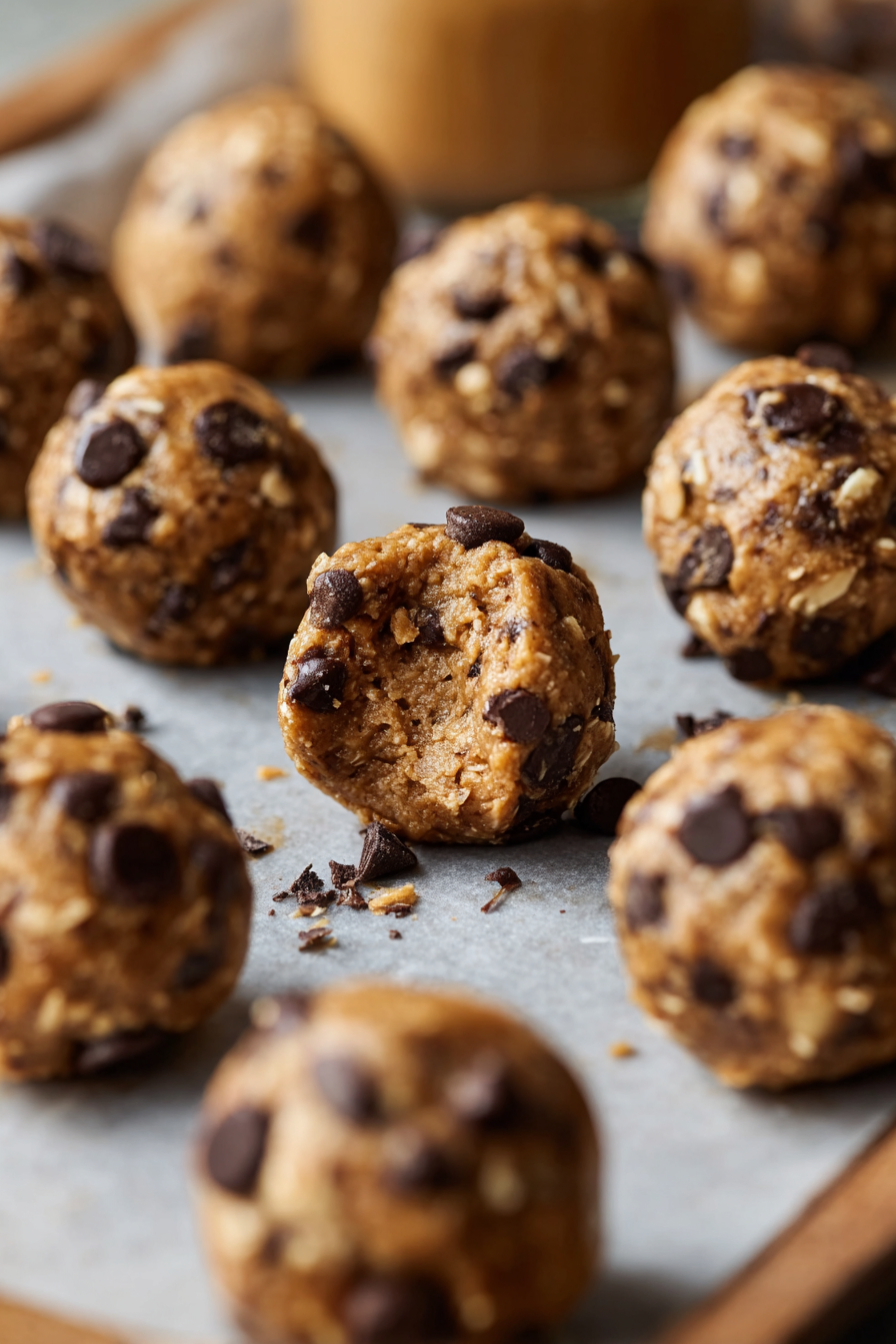

Peanut butter protein balls are the snack I make when I want something that tastes like a treat but actually holds me until dinner. The first batch I ever made fell apart in my hands — dry, crumbly, and nothing like the chewy little bites I’d pictured. The problem wasn’t the recipe. It was that I used whey isolate in a dough built for a different protein powder, and I didn’t add a single drop of liquid to fix it.
The fix is hydration, and it’s the whole game with protein balls. Different protein powders absorb liquid wildly differently. Whey isolate is the thirstiest and needs the least added milk. Plant-based powders are the opposite — they soak up so much that the same dough turns to cement without 2 to 3 extra tablespoons of almond milk. Once you know which powder you’re using, the dough comes together in about five minutes and rolls cleanly every time.
The other thing that matters is the chill. Twenty to thirty minutes in the fridge hydrates the oats, firms up the peanut butter, and turns a sticky dough into one that rolls into neat, uniform balls without sticking to your palms. Skip the chill and you’ll fight the dough the whole way.
These come out at 12 grams of protein per two-ball serving, made with rolled oats, creamy peanut butter, honey, vanilla protein, chia, and mini chocolate chips. They’re no-bake, they take 10 minutes of active work, and they keep for a week in the fridge or three months in the freezer. It’s a high-protein snack that actually tastes like peanut butter and chocolate, not like a protein bar pretending to be one.
Why This Recipe Works
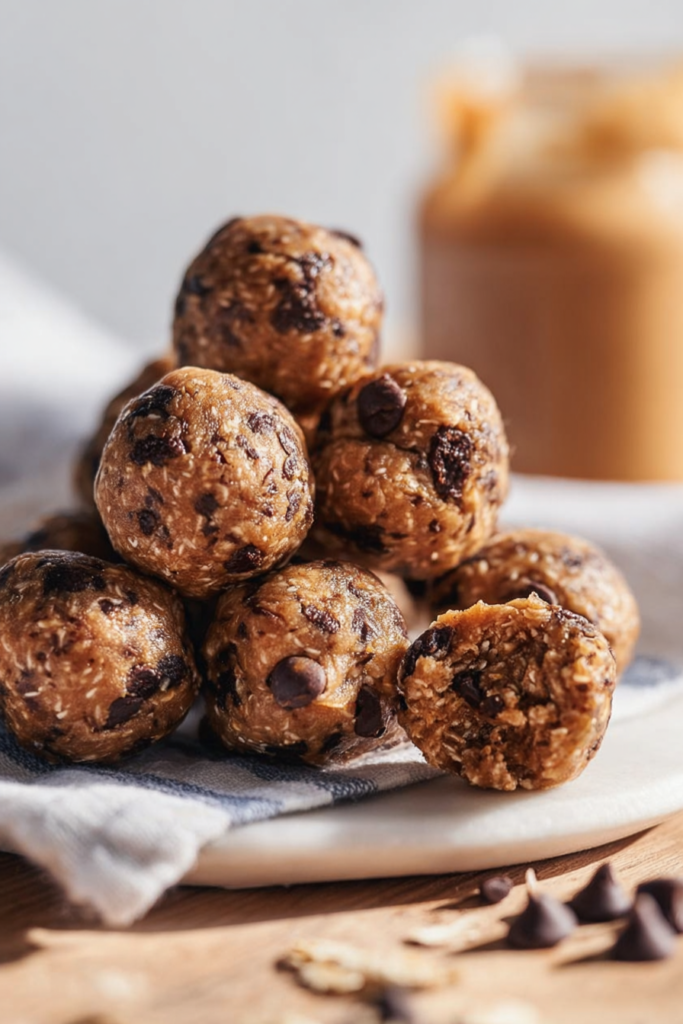
Protein balls go wrong in three specific ways: dry crumbly dough, balls that won’t hold together, and a snack that tastes like chalk. Here’s how this version solves each one.
1. Match the Milk to the Protein Powder
Protein powders absorb liquid at wildly different rates, and this is the single biggest variable in the recipe. Whey isolate is the thirstiest — the dough usually needs 1 to 2 tablespoons of almond milk to come together. Plant-based powders (pea, rice, blends) absorb far more and need 2 to 3 tablespoons. Casein sits in between. The instruction to add milk “1 tablespoon at a time” is deliberate: you want to stop the moment the dough holds together, not the moment it looks wet.
2. Chill Before Rolling, Not After
The 20-to-30-minute chill before rolling is doing two jobs. It hydrates the oats so they soften and bind, and it firms up the peanut butter so the dough stops sticking to your hands. Rolling warm dough gives you uneven, sticky balls that flatten on the plate. Rolling chilled dough gives you clean, uniform 1-inch balls that hold their shape.
3. Two Scoops of Protein, Plus Chia, for Real Protein Density
A single scoop of protein powder in a batch this size lands you around 6 to 7 grams per serving — enough to call it a “protein ball” but not enough to actually do the job. Doubling to 2 scoops (60g) plus 2 tablespoons of chia seeds pushes it to 12 grams per 2-ball serving. That’s a real high-protein snack instead of an energy bite with a protein label.
Ingredients That Matter
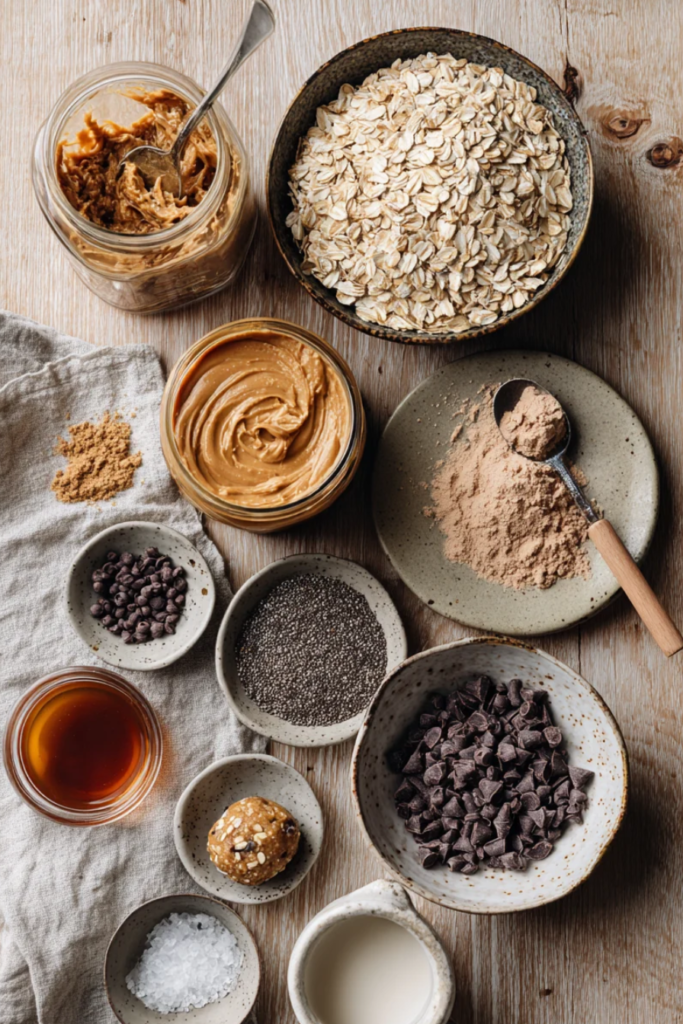
Rolled old-fashioned oats. One cup. Rolled oats hydrate and bind; instant oats turn to mush and steel-cut oats stay hard. Use certified gluten-free oats if you need the recipe to be gluten-free.
Creamy peanut butter. Two-thirds cup. Conventional creamy peanut butter (Skippy, Jif) is thicker and holds the dough together more reliably. Natural peanut butter works too but is runnier — if you use it, you may need 1 extra tablespoon of oats to compensate. Stir natural PB thoroughly before measuring.
Vanilla whey protein powder. Two scoops, about 60 grams. Vanilla whey is the default for flavor and texture. Unflavored works but needs an extra ½ teaspoon of vanilla. Plant-based protein works — see the milk adjustment above.
Pure honey or maple syrup. One-third cup. This is the sweetener and the primary binder. Honey gives a slightly chewier texture; maple syrup is a touch thinner. Don’t reduce it — the sugar is part of what holds the balls together.
Chia seeds or ground flaxseed. Two tablespoons. Chia absorbs liquid and helps bind the dough, and it adds fiber. Ground flax works one-for-one but gives a slightly nuttier flavor.
Mini chocolate chips. Half a cup. Mini chips distribute more evenly than regular chips and don’t overwhelm the bite. Semi-sweet is the right sweetness level; milk chocolate makes the balls taste sweeter than they need to.
A pinch of fine sea salt. Small amount, big difference. Salt rounds out the peanut butter and keeps the balls from tasting flat.
Unsweetened almond milk. One to two tablespoons, as needed. This is the hydration dial. Add it 1 tablespoon at a time and stop the moment the dough holds together.
How to Make Peanut Butter Protein Balls
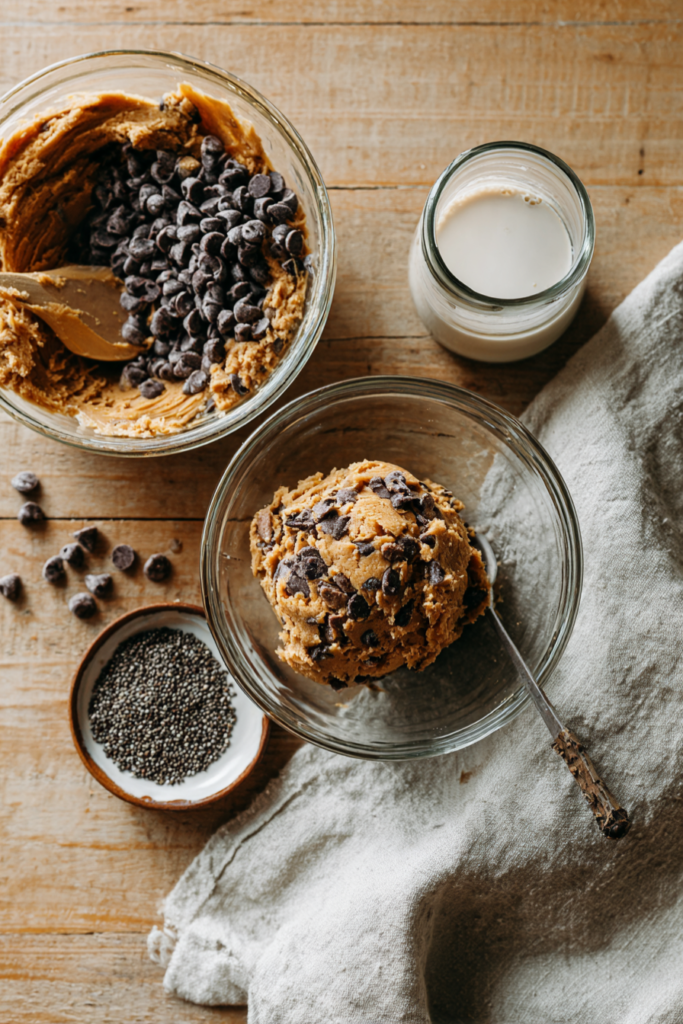
(See the recipe card below — the steps are identical and the card is the single source of truth.)
Tips and Troubleshooting
The dough is dry and crumbly. Not enough liquid for your protein powder. Whey isolate usually needs 1 to 2 tablespoons of almond milk; plant-based powders need 2 to 3. Add 1 tablespoon at a time and stop as soon as the dough holds together.
The dough is too sticky to roll. Too much liquid, or the dough wasn’t chilled. Add 1 tablespoon of oats, chill 10 more minutes, and roll with lightly damp palms.
The balls won’t hold together. The dough wasn’t chilled long enough, or the peanut butter was too runny. Use conventional creamy PB, chill the full 20 to 30 minutes, and press each ball firmly as you roll it.
The balls taste chalky. The protein powder is a strongly flavored brand, or the pinch of salt was left out. Salt rounds out the protein flavor; a milder powder or a half scoop of unflavored plus a half scoop of vanilla also helps.
The balls are too sweet. Milk chocolate chips instead of semi-sweet, or too much honey. Use semi-sweet mini chips and measure the honey level — don’t eyeball it.
The oats are still crunchy the next day. They need more time to hydrate. Chill the dough the full 30 minutes before rolling, and let the finished balls sit overnight in the fridge before eating.
The balls dried out in the fridge. They weren’t stored airtight. Keep them in a sealed glass container — they’ll stay soft for 5 to 7 days.
The chocolate chips are melting into the dough. The dough was too warm when the chips went in. Mix the chips in last, after the dough has come together, and use mini chips straight from the fridge.
Substitutions and Swaps
Whey protein → plant-based protein. Same quantity, but add 2 to 3 tablespoons of almond milk instead of 1 to 2. Plant powders absorb significantly more liquid.
Whey protein → collagen peptides. Collagen doesn’t thicken or bind the way whey does, so the balls will be softer. Add 2 extra tablespoons of oats and chill longer.
Honey → maple syrup. Same quantity, slightly thinner dough. Add 1 extra tablespoon of oats if it feels too wet.
Peanut butter → almond butter or sunflower seed butter. Same quantity. Almond butter is slightly drier (add 1 tablespoon of milk); sunflower butter is slightly runnier (add 1 tablespoon of oats). Sunflower butter makes the recipe nut-free.
Chia → ground flaxseed. One-for-one. Slightly nuttier flavor, same binding job.
Chocolate chips → cacao nibs or chopped dark chocolate. Same quantity. Cacao nibs are less sweet and crunchier; chopped dark chocolate melts more.
For a lower-sugar version: use sugar-free maple syrup and dark chocolate chips. The texture holds; the flavor is less sweet.
For PB2 or powdered peanut butter: reconstitute ⅔ cup of PB2 with water per the package directions before measuring, then proceed. The dough will need slightly less added milk.
Storage and Reheat
Refrigerate the balls in a glass airtight container for up to 7 days. They stay soft and chewy the whole time.
Freeze in a single layer on a baking sheet until firm, then transfer to a freezer-safe silicone bag for up to 3 months. Thaw at room temperature for 5 minutes before eating — they soften quickly.
No reheating needed. These are a no-bake, eat-cold snack. Warming them makes the chocolate chips melt and the dough greasy.
Food safety: these are a no-bake recipe with no raw eggs or meat, so the main concern is storage time. Keep them refrigerated and eat within 7 days.
Classic Peanut Butter Chocolate Chip Protein Balls
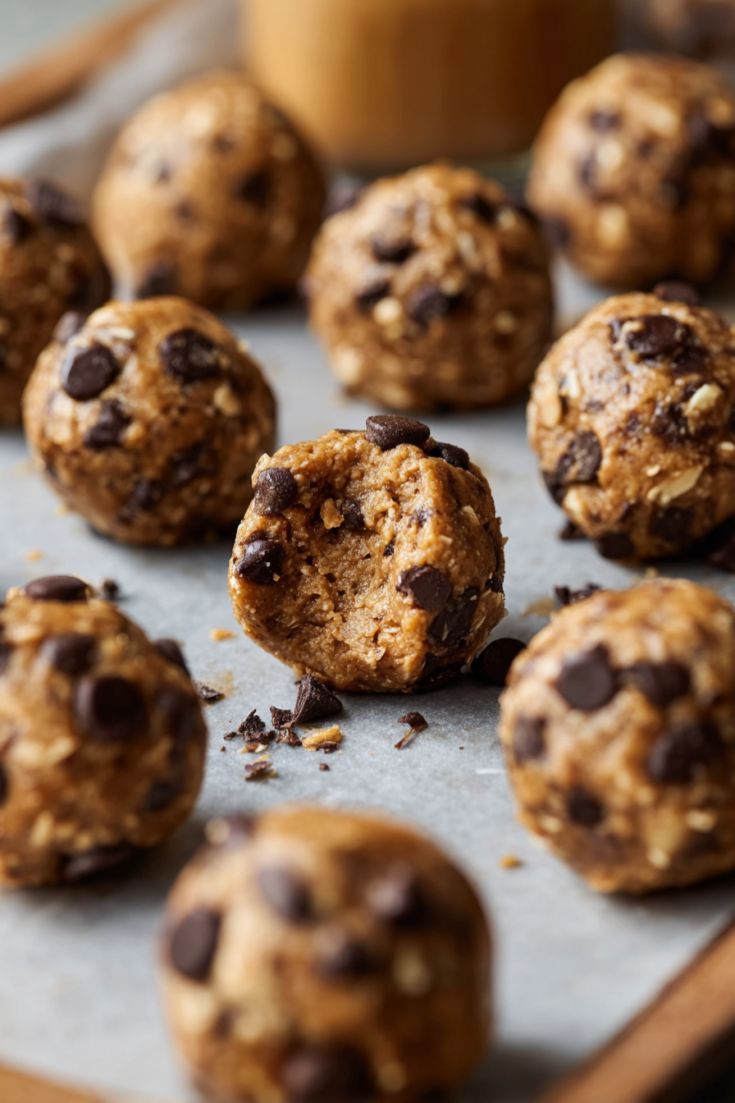
Easy no-bake peanut butter chocolate chip protein balls packed with rolled oats, mini chocolate chips, chia, and vanilla protein — 12g of protein per serving.
Ingredients
Base
- 1 cup rolled old-fashioned oats (certified gluten-free if needed)
- ⅔ cup creamy peanut butter (conventional creamy or well-stirred natural PB)
- ⅓ cup pure honey or maple syrup
- 2 scoops (60g) vanilla whey protein powder (or unflavored)
- 2 tablespoons chia seeds or ground flaxseed
- 1 to 2 tablespoons unsweetened almond milk (as needed if dough is dry)
- Pinch of fine sea salt
Mix-Ins & Flavoring
- ½ cup mini semi-sweet chocolate chips
- 1 teaspoon pure vanilla extract
Instructions
- Combine Dry & Wet: In a large bowl, whisk together the rolled oats, protein powder, chia seeds, and fine sea salt. Add the creamy peanut butter, honey, vanilla extract, and mini chocolate chips.
- Mix & Adjust Hydration: Stir with a sturdy spatula or clean hands until a thick, cohesive dough forms. The mixture should be pliable and slightly sticky. If using whey protein isolate and the dough feels dry or crumbly, stir in 1 tablespoon of almond milk at a time until it holds together smoothly.
- Chill the Dough: Cover the bowl with plastic wrap and refrigerate 20 to 30 minutes. Chilling hydrates the oats and firms up the peanut butter, making rolling clean and effortless.
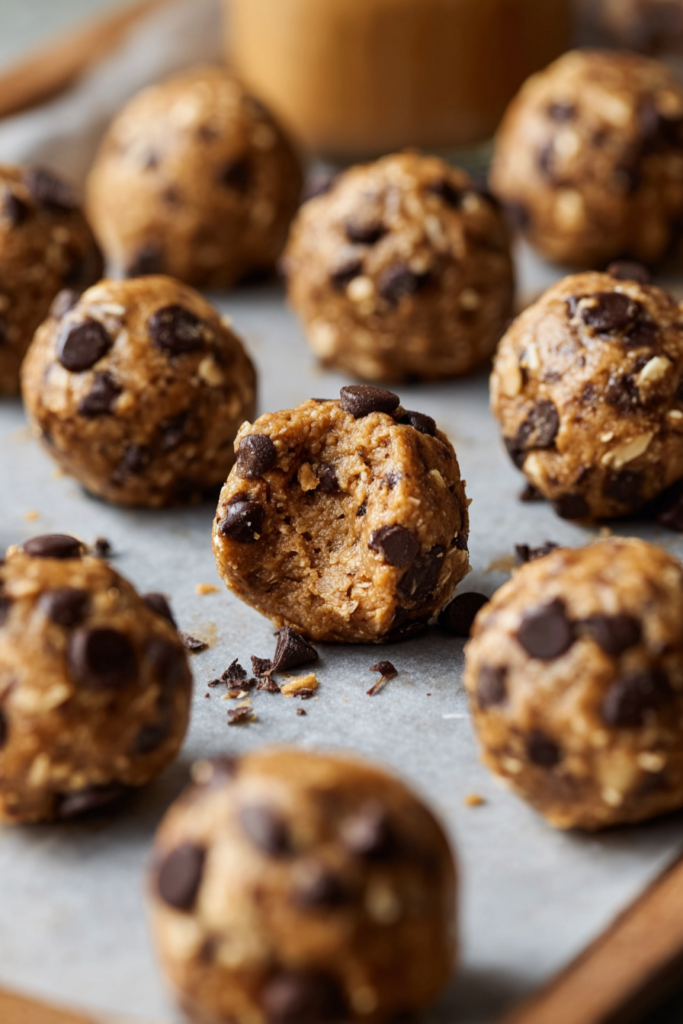
- Roll Into Balls: Scoop out 1-tablespoon portions and roll between lightly damp palms into 12 uniform 1-inch balls.
- Set & Store: Arrange the balls on a parchment-lined plate or baking sheet and chill in the fridge 10 minutes to set. Transfer to an airtight container and store in the refrigerator up to 1 week, or freeze up to 3 months.
Notes
Estimated per serving (2 balls, using whey protein): 210 calories · 12g protein · 22g carbs · 10g fat · 3g fiber · 110mg sodium
FAQs
Why is my dough dry and crumbly?
Not enough liquid for your protein powder. Whey isolate usually needs 1 to 2 tablespoons of almond milk; plant-based powders need 2 to 3. Add 1 tablespoon at a time and stop as soon as the dough holds together.
Why won’t my protein balls hold together?
The dough wasn’t chilled long enough, or the peanut butter was too runny. Use conventional creamy PB, chill the full 20 to 30 minutes, and press each ball firmly as you roll it.
Can I use natural peanut butter?
Yes, but it’s runnier than conventional PB. Stir it thoroughly before measuring, and add 1 extra tablespoon of oats if the dough feels too wet.
Can I make these without protein powder?
You can, but they won’t be protein balls — the protein drops to about 5 grams per serving. Substitute ½ cup of additional oats and 2 tablespoons of almond butter. The texture is still good, but the recipe becomes an energy bite.
Are these gluten-free?
Only if you use certified gluten-free oats. Oats are naturally gluten-free but are often processed on shared equipment with wheat. Check the label.
How long do they last?
Up to 7 days in an airtight container in the fridge, or up to 3 months in the freezer. Thaw at room temperature for 5 minutes before eating.
Can I make them smaller?
Yes — scoop ½-tablespoon portions for 24 smaller balls. Reduce the chill time after rolling to 5 minutes. The macros are the same per gram.
Can I use PB2 or powdered peanut butter?
Yes. Reconstitute ⅔ cup of PB2 with water per the package directions before measuring, then proceed. The dough will need slightly less added milk.
More High-Protein Snack Recipes You’ll Love
Overnight Oats With Protein Powder (38g Protein, 4-Day Prep)
Baked Protein Pancake Bowl — 38g Protein, No Flipping
Protein Iced Coffee — Barista-Style, No Watery Ice
Closing
I’ve made these peanut butter protein balls more times than I can count, and the two things that changed everything for me were matching the milk to the protein powder and chilling the dough before rolling.
The first batch I made, I used whey isolate in a recipe built for plant protein and didn’t add a drop of milk — they crumbled in my hands.
That milk adjustment is the step I’d fight you over now.
If you make them with almond butter or add cacao nibs instead of chocolate chips, let me know how they turn out in the comments.