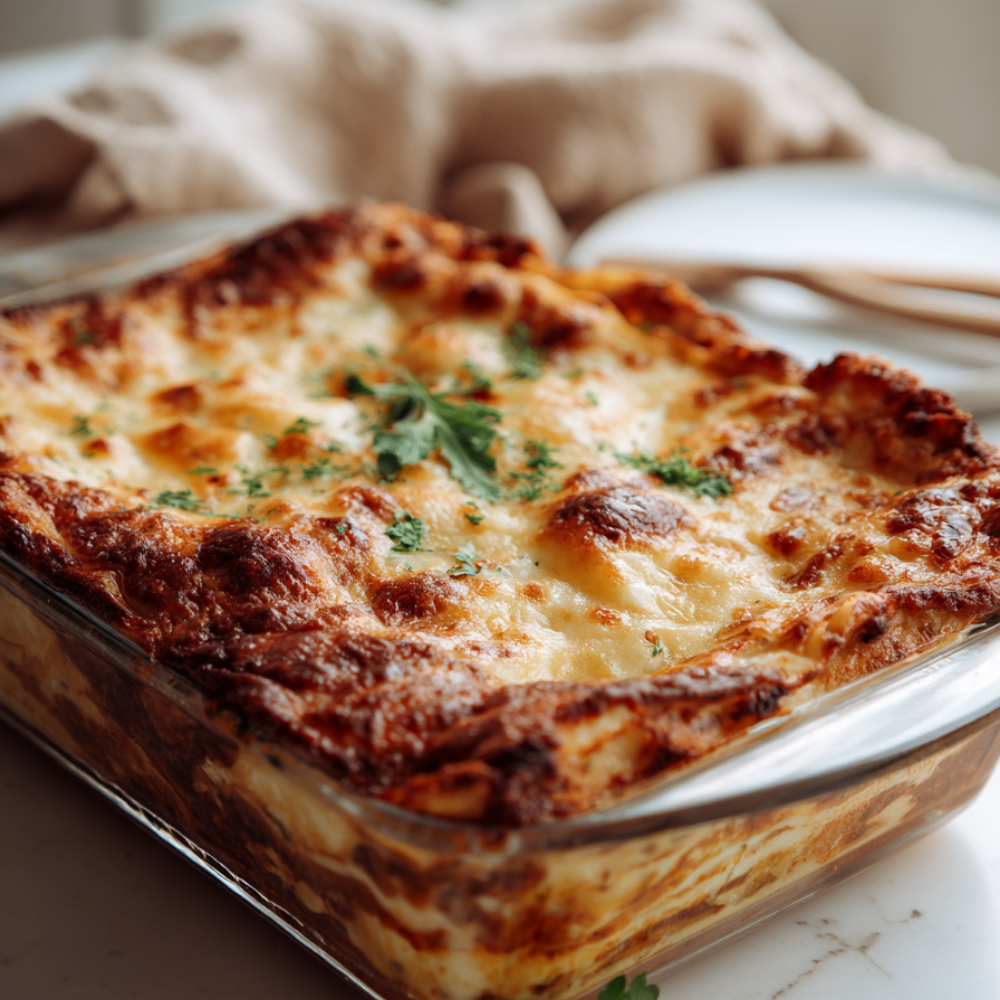

There is a specific kind of relief that comes from opening the freezer on a night when nobody has the energy to cook.
Not a bag of frozen peas.
Not a pint of ice cream.
A real lasagna. Layered, saucy, cheesy, and waiting to go straight into the oven.
That is what a freezer lasagna is for.
It is the meal you make on a Sunday afternoon in October and pull out on a Tuesday in January, when the house is cold and the week has already been long. It is dinner as a favor you did for your future self.
Most lasagna recipes are not built for freezing. They turn watery on thawing, or the noodles go mushy, or the ricotta separates into a grainy layer that ruins the texture. The version that freezes well is the version built around two things — a thick, reduced meat sauce and a ricotta filling that holds its shape. Both are in this recipe.
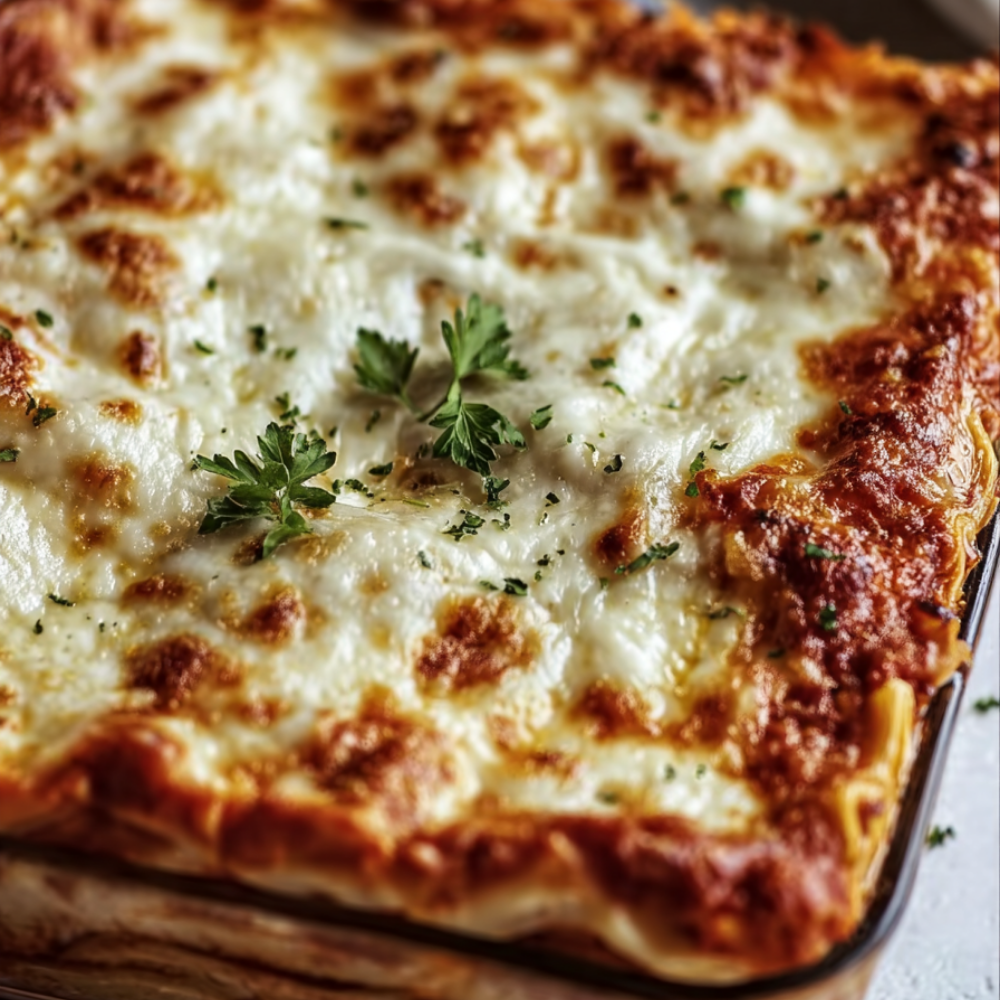
This lasagna has a pound of ground beef and a pound of Italian sausage, a slow-simmered tomato sauce, three cheeses, and fresh pasta noodles. It bakes into something with crisp edges, a bubbling top, and clean layers you can see when you cut into it. And it freezes for three months without losing any of that.
It makes two full 9×13 pans. Bake one tonight. Freeze the other for the next time you need dinner to already be handled.
Why This Recipe Works
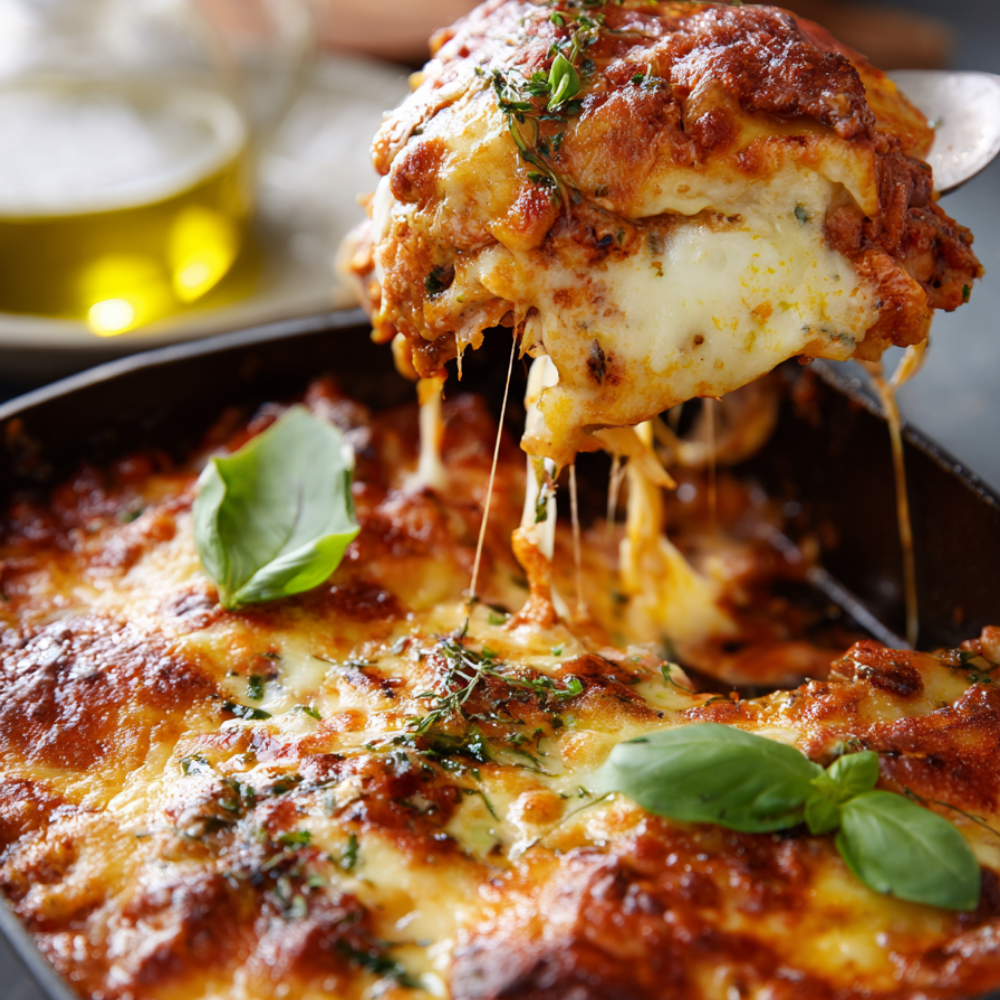
The protein math is honest. Two pounds of meat, ricotta, mozzarella, and Parmesan deliver about 28g per serving across 12 portions, or 42g across 8.
A thick, reduced meat sauce is what makes a lasagna freeze well. Watery sauces turn the noodles to mush on thawing and create a puddle under the first layer. Simmer the sauce until glossy and thick; that is what holds up in the freezer.
The beef and sausage blend is what gives the sauce depth. Ground beef alone tastes flat. Italian sausage brings fennel, garlic, and spices that season the whole pan.
Crushed tomatoes beat diced or whole tomatoes here. They have a finer texture that cooks down into a sauce instead of staying chunky and releasing liquid.
A splash of red wine and a spoonful of tomato paste do the heavy lifting. The wine deglazes the pan and adds acidity. The paste adds a deep, caramelized tomato flavor that canned sauce alone cannot deliver.
Cooking the noodles two minutes shy of al dente is what keeps them from turning to mush in the oven. They finish cooking in the sauce while the lasagna bakes, absorbing flavor instead of disintegrating.
Ricotta mixed with egg and Parmesan is what makes the filling set. Eggs bind the ricotta so it slices cleanly instead of running out when you cut a portion. Parmesan adds salt and structure.
Draining the ricotta matters more than people realize. A cup of water left in the ricotta becomes a layer of liquid in the baked lasagna. Thirty minutes in a strainer solves it.
Layering sauce, noodles, ricotta, and mozzarella in that order creates distinct layers. Sauce on the bottom protects the noodles from scorching. Mozzarella on top of the ricotta melts into it.
Resting the lasagna for 15 minutes before cutting is what gives you clean slices. The filling sets as it cools, and the layers hold instead of sliding apart on the plate.
Cooling completely before wrapping is the single most important freezer step. A warm lasagna steams inside the plastic wrap and forms ice crystals that turn the top layer watery on reheating.
Foil pans freeze flat and bake directly. They stack in the freezer, conduct heat evenly, and leave no dish to wash or retrieve.
Freezer Lasagna
A classic meat lasagna with a thick beef-and-sausage sauce, a ricotta-Parmesan filling, and three layers of pasta and mozzarella. Makes two 9×13 pans — bake one now, freeze one for later.
For the Meat Sauce
- 1 lb ground beef (85% lean)
- 1 lb Italian sausage (casings removed)
- 1 large yellow onion (diced)
- 6 cloves garlic (minced)
- 2 tbsp tomato paste
- ¾ cup dry red wine
- 2 28-oz cans crushed tomatoes
- 1 15-oz can tomato sauce
- 1 tbsp dried oregano
- 2 tsp dried basil
- 1 tsp fennel seed (lightly crushed)
- 1 tsp kosher salt
- ½ tsp black pepper
- 1 tsp red pepper flakes (optional)
For the Ricotta Filling
- 15 oz whole milk ricotta (drained 30 minutes)
- 2 large eggs
- 1 cup freshly grated Parmesan
- ¼ cup fresh flat-leaf parsley (chopped)
- 1 tsp kosher salt
- ½ tsp black pepper
- ¼ tsp ground nutmeg
For Assembly
- 12 lasagna noodles (cooked 2 minutes shy of al dente)
- 3 cups shredded mozzarella (divided)
- 1 cup freshly grated Parmesan (for the top)
- 2 tbsp olive oil or butter (for greasing the pans)
Equipment
- 2 9×13 foil baking pans
- Plastic wrap and heavy-duty foil for wrapping
- Drain the ricotta. Line a fine-mesh strainer with paper towels and place it over a bowl. Add the ricotta and let it drain for 30 minutes while you make the sauce. Discard the liquid.
- Brown the meat. Heat a large Dutch oven over medium-high heat. Add the ground beef and Italian sausage. Cook 8 to 10 minutes, breaking the meat into small crumbles, until well browned. Transfer to a colander set over a bowl and drain the fat.
- Soften the aromatics. Return the pot to medium heat. Add the onion and cook for 5 minutes, until softened. Add the garlic and cook 30 seconds. Add the tomato paste and stir constantly for 2 minutes, until it darkens to a deep brick red.
- Deglaze with wine. Pour in the red wine and scrape up every browned bit from the bottom of the pot. Simmer 3 minutes, until the wine has reduced by about half.
- Build the sauce. Add the crushed tomatoes, tomato sauce, oregano, basil, fennel seed, salt, pepper, and red pepper flakes. Return the drained meat to the pot and stir to combine. Bring to a low simmer and cook uncovered for 45 minutes, stirring occasionally, until the sauce thickens and becomes glossy. It should hold its shape when you drag a spoon through it.
- Cook the noodles. While the sauce simmers, bring a large pot of well-salted water to a boil. Cook the lasagna noodles 2 minutes shy of the package directions — they should still have a firm bite at the center. Drain and lay them flat on a sheet pan, drizzled with olive oil, so they don't stick together.
- Make the ricotta filling. In a medium bowl, combine the drained ricotta, eggs, Parmesan, parsley, salt, pepper, and nutmeg. Whisk until smooth and uniform.
- Preheat and prep. Preheat the oven to 375°F. Grease both foil pans with the olive oil or butter.
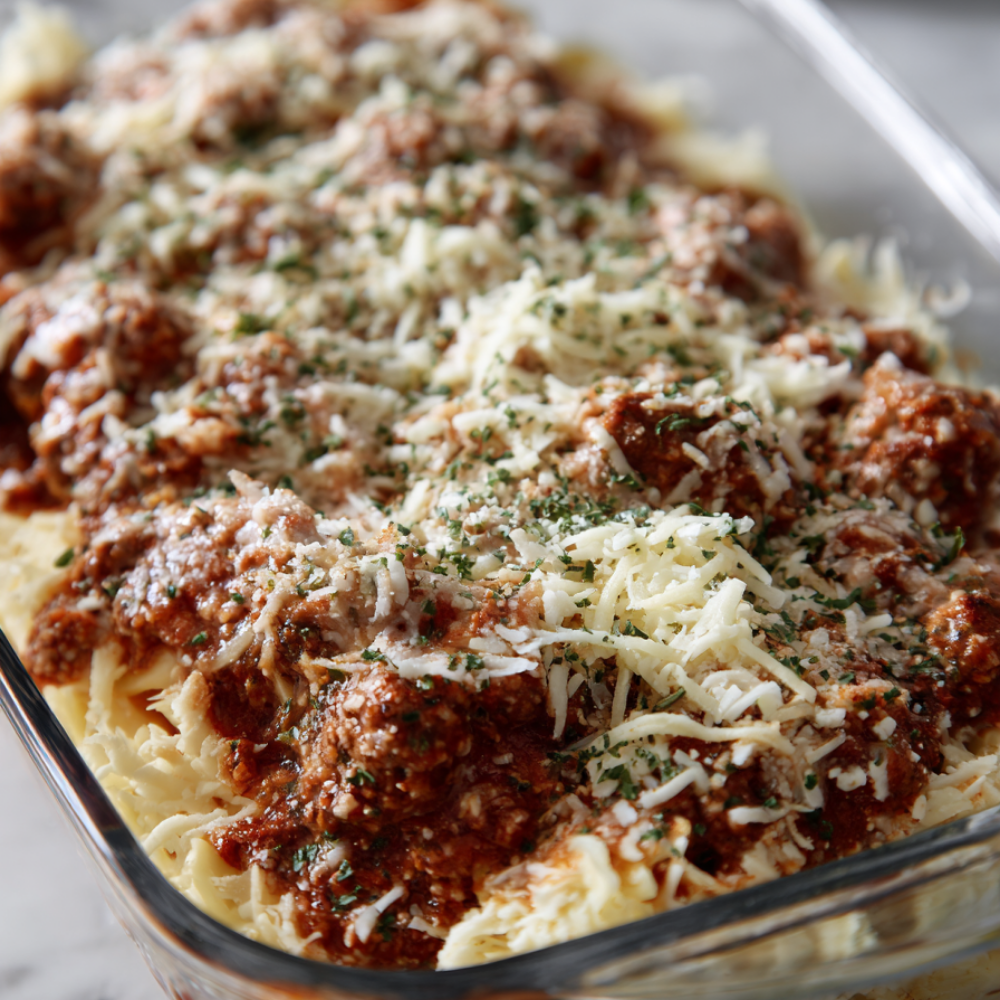
- Assemble the lasagna. In each pan, spread 1 cup of meat sauce across the bottom. Place 3 lasagna noodles on top, slightly overlapping. Spread 1 cup of the ricotta mixture over the noodles. Scatter ¾ cup of mozzarella over the ricotta. Spoon 1½ cups of meat sauce over the mozzarella. Repeat the layers two more times, ending with a final layer of noodles, the remaining sauce, the remaining mozzarella, and the grated Parmesan.
- Bake one pan now. Cover one pan tightly with foil and bake for 45 minutes. Remove the foil and bake 20 to 25 minutes more, until the top is golden and bubbling and the center reaches 165°F. Rest 15 minutes before cutting.
- Cool the second pan completely. Let the second pan sit uncovered at room temperature for 45 minutes, then refrigerate uncovered for 1 hour. It must be cold all the way through before it goes into the freezer. Warm lasagna traps steam, forms ice crystals, and turns watery on reheating.
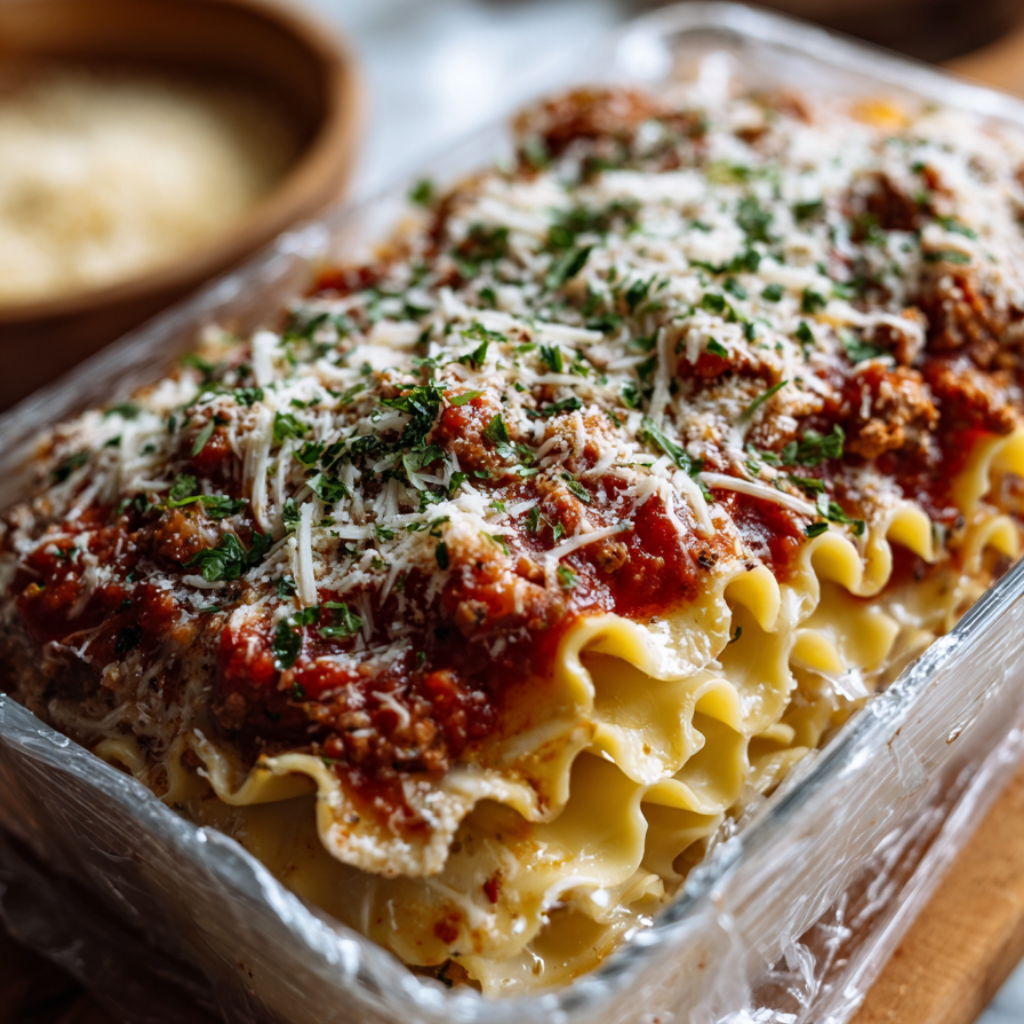
- Wrap and freeze. Cover the cold lasagna with plastic wrap pressed directly against the surface, then a layer of heavy-duty foil. Label with the recipe name, date, and baking instructions. Freeze flat for up to 3 months.
- Bake from frozen. Preheat the oven to 375°F. Remove the plastic wrap and re-cover with foil. Bake covered for 1 hour 30 minutes. Remove the foil and bake 20 to 25 minutes more, until the center reaches 165°F and the top is golden. If the top browns too fast, tent loosely with foil. Rest 15 minutes before cutting.
- Bake from thawed. Thaw overnight in the refrigerator. Bake covered at 375°F for 45 minutes, then uncovered for 20 to 25 minutes, until the center reaches 165°F. Rest 15 minutes before cutting.
Protein per Serving: 28 g.
Nutrition Note: Protein calculated from 1 lb 85% lean ground beef (≈92g), 1 lb Italian sausage (≈70g), 15 oz whole milk ricotta (≈24g), 3 cups shredded mozzarella (≈84g), 1 cup grated Parmesan (≈40g), 2 large eggs (≈12g), and 12 lasagna noodles (≈14g), divided across 12 servings per pan — about 28g per serving. Cut each pan into 8 for about 42g per serving. About 520 calories per serving at 12 portions.
Tips for the Best Freezer Lasagna
- Reduce the sauce until it is genuinely thick. It should hold a spoon track when you drag one through it. A watery sauce is the number one cause of a mushy freezer lasagna.
- Drain the ricotta for a full 30 minutes. A cup of liquid left in the ricotta becomes a puddle in the baked lasagna.
- Cook the noodles 2 minutes shy of al dente. They finish cooking in the oven and absorb sauce instead of turning to mush.
- Let the lasagna cool completely before wrapping. Uncover at room temperature for 45 minutes, then cover in the refrigerator for 1 hour. Warm lasagna steams inside the wrap and turns watery.
- Press plastic wrap directly against the surface before the foil. Air is what causes freezer burn. Pressed plastic wrap is what prevents it.
- Label with the date and the bake instructions. You will not remember in February how long it bakes from frozen.
- Freeze flat, then stack. A flat-frozen lasagna thaws evenly and stacks neatly. A tilted one bakes unevenly.
- If using no-boil noodles, add 1 extra cup of sauce. No-boil noodles absorb more liquid as they cook. Without extra sauce, they stay hard in the center.
Troubleshooting
- The lasagna is watery after thawing. The sauce was not reduced enough, or the pan was wrapped warm. Reduce the sauce until glossy and cool completely before wrapping.
- The noodles turned to mush. They were fully cooked before assembly. Cook 2 minutes shy of al dente, so they finish in the oven.
- The ricotta layer is grainy. The ricotta was not drained, or it was low-fat. Use whole milk ricotta and drain for 30 minutes.
- The layers slid apart when cut. The lasagna was cut too soon after baking. Rest 15 minutes so the ricotta and mozzarella set.
- The top burned before the center was hot. The pan was on the top rack, or you removed the foil too early. Bake on the middle rack and keep it covered until the last 20 minutes.
- The edges dried out in the freezer. The plastic wrap didn’t reach the edges, or the foil wasn’t tight. Press plastic wrap against the surface and wrap tightly with heavy-duty foil.
- The lasagna tastes bland after freezing. Freezing dulls seasoning. Add 1 tsp more salt and ½ tsp more oregano to the sauce if you know you are freezing.
- The center is still cold after baking. The pan was too deep, or the lasagna was not fully thawed. Use a 9×13 pan, and bake from frozen for the full 1 hour 30 minutes covered.
Easy Variations
- Lasagna with No-Boil Noodles. Substitute no-boil lasagna noodles for the regular ones and add 1 cup of extra sauce per pan. Do not boil them. The noodles absorb the extra sauce as they bake.
- Vegetarian Freezer Lasagna. Skip the beef and sausage. Add 2 cups sautéed mushrooms, 2 cups chopped zucchini, and 1 cup cooked lentils to the sauce. Protein drops to about 20g per serving.
- Lasagna with Spinach. Add 10 oz of thawed, squeezed-dry frozen spinach to the ricotta filling.
- Lasagna Bolognese. Replace the Italian sausage with 1 additional pound of ground beef and add ¼ cup of heavy cream to the sauce at the end.
- Individual Freezer Lasagna Portions. Assemble in 8 small foil containers instead of 2 large pans. Bake from frozen at 375°F for 45 minutes covered, then 15 minutes uncovered.
Storage and Food Safety
Refrigerator: Store baked leftovers in an airtight container for up to 4 days. Reheat covered at 325°F for 20 minutes, or in the microwave for 2 minutes per portion.
Freezer: Freeze unbaked for up to 3 months. Freeze baked leftovers for up to 2 months. Always cool completely before freezing — a warm lasagna forms ice crystals and bakes up watery.
Make Ahead: Assemble the entire lasagna up to 24 hours before baking and refrigerate, or freeze up to 3 months before baking. Thaw overnight in the refrigerator for the fastest bake.
Food Safety: Ground beef and sausage must reach an internal temperature of 160°F. The lasagna is fully baked when the center reaches 165°F. Thaw frozen lasagna in the refrigerator, never on the counter. Cool leftovers within 2 hours and refrigerate promptly. Reheat leftovers to 165°F.
Frequently Asked Questions
How long can I freeze lasagna? Up to 3 months unbaked. The sauce, cheese, and noodles all hold well.
Do I thaw it before baking? Not required. Frozen: bake for 1 hour 50 minutes at 375°F. Thawed bakes in about 1 hour 10 minutes. Always bake covered for the first portion and uncovered for the last 20 to 25 minutes.
Can I use no-boil noodles in a freezer lasagna? Yes. Add 1 cup of extra sauce per pan and skip boiling. The noodles absorb the extra sauce as they bake.
Should I freeze lasagna before or after baking? Both work. Unbaked is the better choice—the noodles don’t soften twice, and the cheese doesn’t dry out. Baked leftovers freeze well for up to 2 months.
Why did my lasagna turn watery after freezing? The sauce was too thin, the ricotta was not drained, or the pan was wrapped while warm. All three cause water to pool during reheating.
Can I use a glass baking dish instead of a foil pan? Yes, if it is labeled freezer-safe. Foil pans stack flatter and can go from the freezer to the oven without a temperature-shock risk.
Can I make this in a slow cooker? Not for the freezer version. Slow cooker lasagna does not hold up to freezing because the noodles and cheese set differently.
Can I use cottage cheese instead of ricotta? Yes. Blend 2 cups of cottage cheese until smooth, and drain it for 30 minutes first. The texture will be slightly looser.
How do I keep the top from burning? Bake covered with foil for the first portion, and keep the pan on the middle rack. If the top browns too fast, tent loosely with foil.
Can I halve the recipe? Yes. The recipe makes two pans. Halve everything and make one pan, or make the full batch and freeze both.
Can I freeze individual portions? Yes. Assemble in small foil containers, bake from frozen at 375°F for 45 minutes covered, then 15 minutes uncovered.
What do I serve with lasagna? Serve with a simple green salad with lemon vinaigrette, garlic bread, or roasted broccoli. Something acidic cuts the richness.
More Lasagna Recipes You’ll Love
- Freezer Chicken Broccoli Rice Casserole — 40g protein, bakes from frozen.
- Lasagna Roll Ups Recipe (Make Ahead & Freezer Friendly, 32g Protein!)
- Crockpot Freezer Meals: 5 Healthy Dump-and-Go Dinners (High-Protein Meal Prep)
Conclusion
Freezer lasagna is a specific kind of cooking. It is not about making dinner tonight. It is about making dinner for a night three months from now when you cannot imagine standing in the kitchen. It is a favor you do for your future self, wrapped in foil and labeled with a date.
The version that freezes well is the version built around a thick, reduced meat sauce and a ricotta filling that holds its shape. Cook the noodles 2 minutes shy of al dente so they finish in the oven. Cool completely before wrapping so nothing steams inside the plastic. Press the plastic wrap against the surface, wrap with heavy-duty foil, and freeze flat.
Twenty-eight grams of protein per serving, twelve servings per pan, two pans per batch. Bake one tonight. Freeze the other for the next time you need dinner to already be handled.
Make it once this fall, and the freezer becomes the best thing in your kitchen.