Protein pasta salad has been my meal prep rescue more times than I can count — the one dish I pull together on a Sunday night when I desperately need one more container in the refrigerator before the week starts.
Nobody in my family objects, not even the pickiest eater at the table, and it’s genuinely easy to make and holds up beautifully in the fridge for days. That’s the trifecta I’m always looking for in a meal prep recipe.
Because I’m aiming for a good amount of protein in most of the meals my family eats, I keep a stock of protein pasta in the pantry — usually the chickpea kind. This recipe uses that to keep the salad high in protein even though it’s pasta, which means it doesn’t put you to sleep in the afternoon the way a bowl of regular pasta salad can. It fuels you through the rest of the day instead of sending you into a nap.
The recipe is forgiving and adaptable, which makes it a permanent fixture in the rotation. You can make this with canned tuna, leftover chopped grilled chicken, flaked baked salmon, or even shrimp. I make this most often with shredded rotisserie chicken because it’s the easiest and my family likes it best. This recipe is the base, and you can use whatever protein you have on hand.
Why This Recipe Works
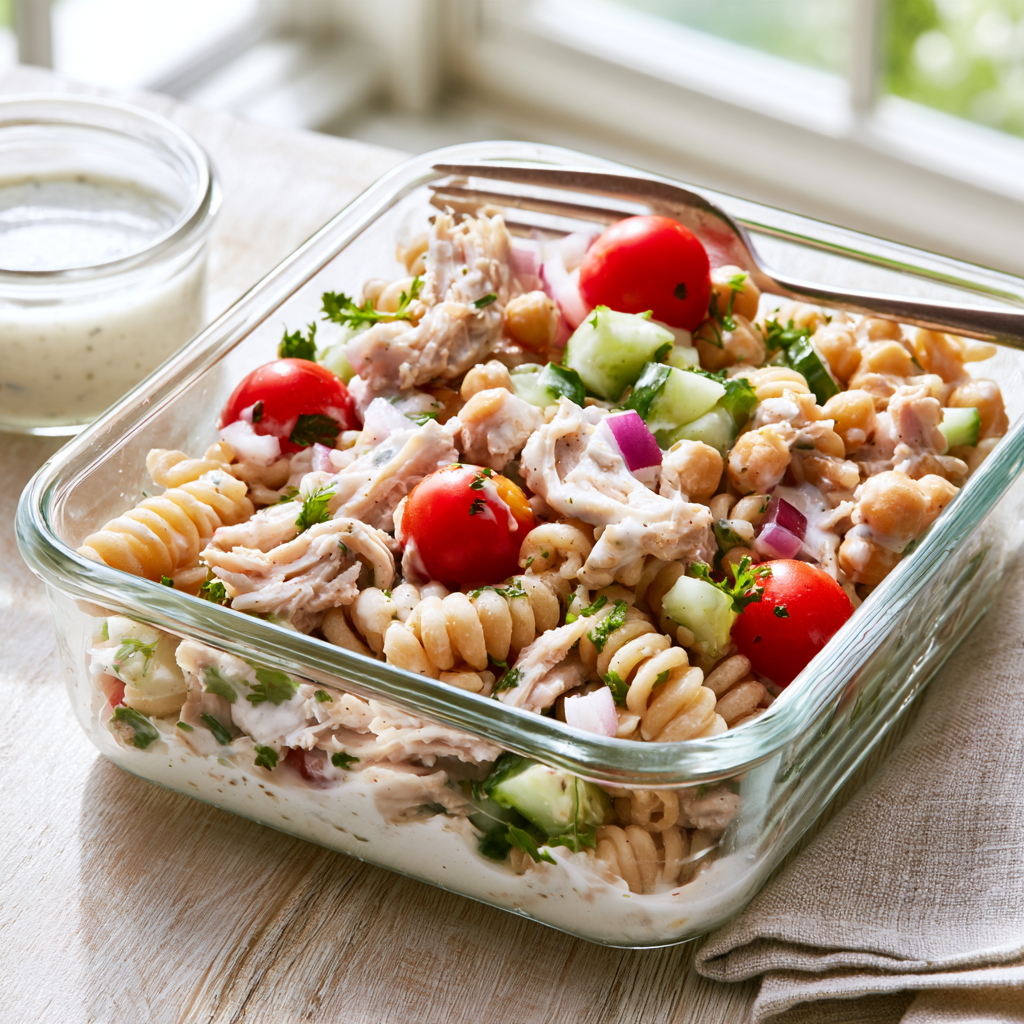
A few specific decisions make this protein pasta salad work.
Use chickpea pasta instead of regular pasta, and cook it in abundant salted water. Chickpea pasta has about 14g of protein per serving, compared to about 7g for regular pasta, and it holds its shape better in the refrigerator. One thing to know: chickpea pasta cooks much faster than regular pasta — about 3 minutes to al dente, not 8 to 10. Check it at the 3-minute mark and every minute after that, pulling it when it’s just tender to your preference. Overcooked chickpea pasta turns mealy and chalky, and it will disintegrate in the salad.
Rinse the cooked pasta thoroughly under cold water, then toss it with olive oil. Chickpea pasta releases a heavy starch slurry while it cooks, and if you don’t rinse it, the surface starch turns the salad gluey. Rinse it under cold running water for 30 seconds to stop the cooking and wash away the starch, then drain it well and toss it with a teaspoon of olive oil to coat each piece so it stays firm and al dente in the refrigerator.
Seed the cucumber before dicing, and pat it dry. English cucumbers release a lot of water when they’re salted in a salad, and as the salad sits in the refrigerator, that water will weep into the Greek yogurt dressing and thin it out. Slice the cucumber in half lengthwise, scrape out the watery center with a spoon, dice it, and pat the pieces dry on a paper towel before they go into the bowl.
Use a Greek yogurt dressing with lemon zest and a splash of vinegar for brightness. Greek yogurt is tangy, thick, and high in protein, making a dressing that’s lighter than mayo but still creamy. A little Dijon mustard, red wine vinegar, lemon juice, lemon zest, garlic, and dried oregano give the dressing the flavor that mayo-based dressings usually get from salt and sugar. The lemon zest and vinegar cut through the heavy Greek yogurt and give it the bright, craveable taste of traditional pasta salad without the extra calories.
Dress the salad with two-thirds of the dressing, and reserve the rest. Cold pasta absorbs dressing like a sponge, and if you add it all at once, the salad can dry out by the next morning. Toss the salad with two-thirds of the dressing, and reserve the remaining third in a small container. Stir it in right before serving or right before you pack it for meal prep, and the salad stays creamy all week.
Pack the dressing separately if you’re meal prepping. The single biggest problem with pasta salad meal prep is soggy pasta. Pack the salad and the extra dressing in separate containers and toss them together at lunchtime, and the salad stays crisp and creamy all week.
Ingredients That Matter
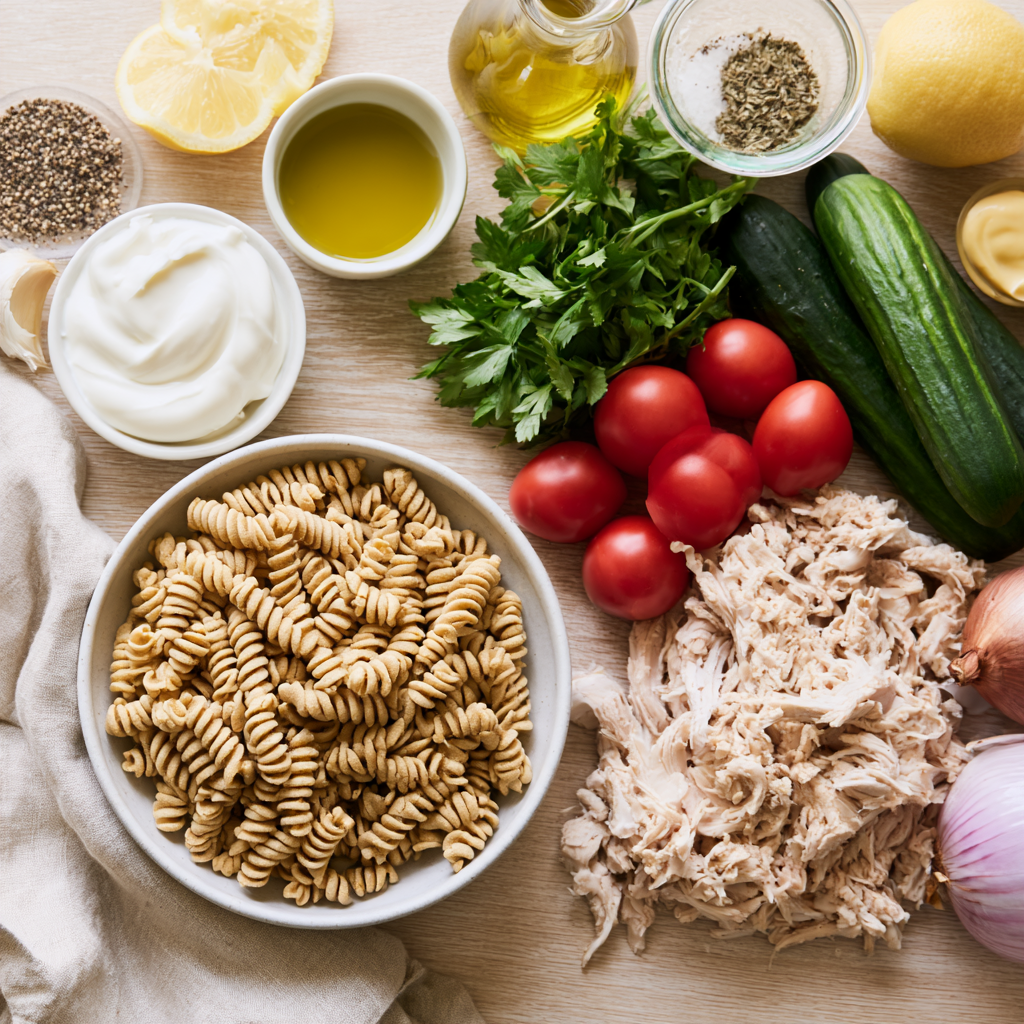
Most of the ingredients in this pasta salad are straightforward. Three of them are easy to get wrong, so those are the ones worth explaining.
Chickpea pasta. Chickpea pasta — Banza is the most widely available brand — has about 14g of protein and 8g of fiber per serving, and it holds up in the refrigerator better than regular pasta. It cooks much faster than regular pasta, so check it at the 3-minute mark and every minute after that. Pull it when it’s just tender to your preference. Regular pasta works in a pinch, but the protein count drops by about 7g per serving.
Shredded chicken. Rotisserie chicken is the easiest option and adds about 15g of protein per serving. If you cook chicken specifically for this salad, poach or roast chicken breasts until they reach 165°F, then cool them completely before shredding. Warm chicken will make the dressing runny.
Greek yogurt. Use full-fat or 2% Greek yogurt, not nonfat. Full-fat or 2% gives the dressing the creamy texture it needs, and the tang balances the richness of the chicken and the pasta. Nonfat Greek yogurt makes a thinner, tarter dressing that doesn’t cling to the pasta as well.
How to Make It
Step 1: Cook and rinse the chickpea pasta.
Bring a large pot of heavily salted water to a rolling boil. Add the chickpea pasta and cook it according to the package directions, but start checking at the 3-minute mark since chickpea pasta cooks much faster than regular pasta. Check every minute after that until it’s just tender to your preference. Drain in a colander and rinse thoroughly under cold running water for 30 seconds to stop the cooking and wash away the excess surface starch. Drain well, transfer to a plate, and toss with 1 teaspoon of olive oil.
Step 2: Prep the vegetables and remove moisture.
Slice the English cucumber in half lengthwise and scrape out the watery center seeds with a spoon. Dice the cucumber and pat the pieces dry on a paper towel. Halve 1 cup of cherry tomatoes, thinly slice ½ small red onion, and chop ¼ cup of fresh parsley.
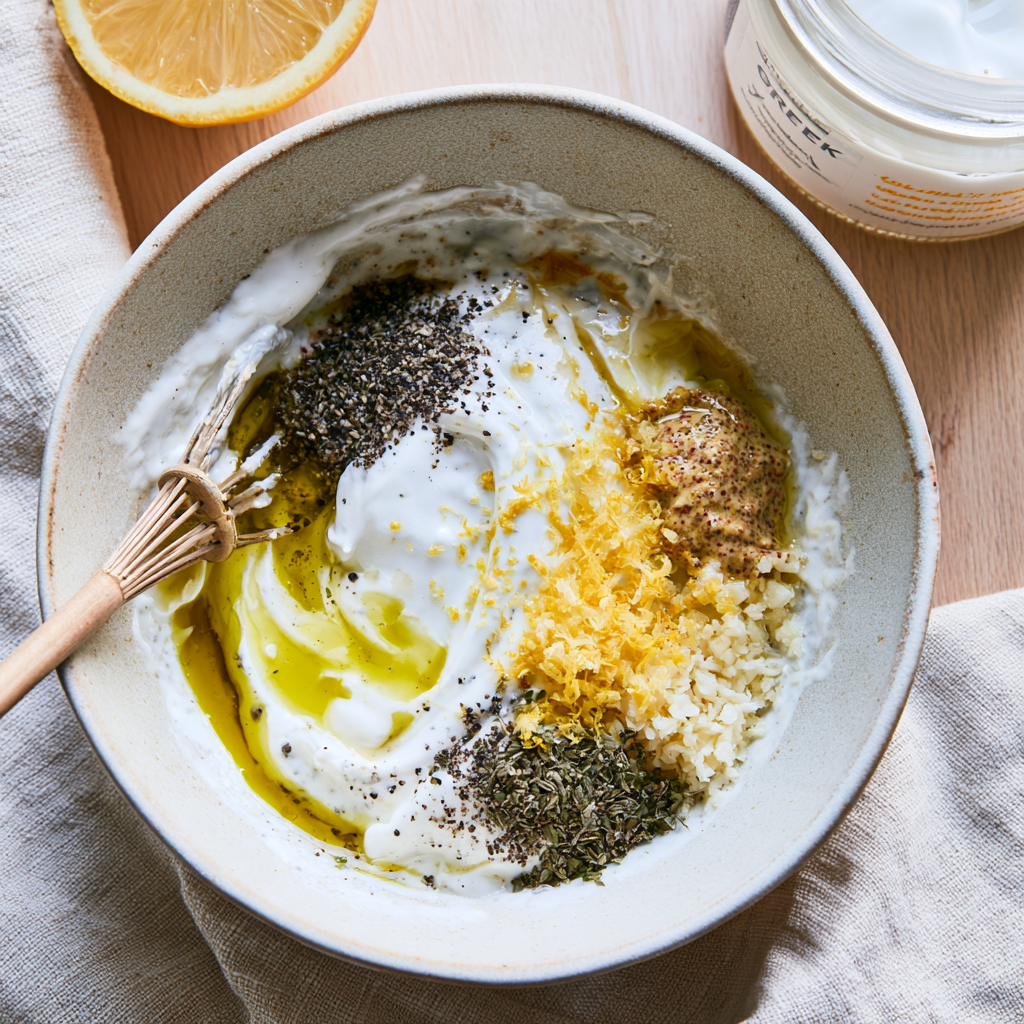
Step 3: Make the Greek yogurt dressing.
In a small bowl, whisk together ¾ cup of plain Greek yogurt, 2 tablespoons of olive oil, 1 tablespoon of fresh lemon juice, ½ teaspoon of lemon zest, 1 tablespoon of red wine vinegar, 1 teaspoon of Dijon mustard, 1 minced garlic clove, 1 teaspoon of dried oregano, ½ teaspoon of kosher salt, and ¼ teaspoon of black pepper. Whisk in 1 to 2 tablespoons of cold water until the dressing is smooth and pourable. Taste and adjust the salt and lemon.
Step 4: Combine the salad.
In a large bowl, combine the cooled chickpea pasta, 2 cups of shredded chicken, the cherry tomatoes, cucumber, red onion, and parsley. Toss gently to combine.
Step 5: Dress the salad.
Pour two-thirds of the dressing over the salad and gently fold to coat every piece. If you’re adding feta or Kalamata olives, fold them in now. Reserve the remaining third of the dressing in a small airtight container.
Step 6: Chill and serve.
Serve immediately, or refrigerate the salad and the reserved dressing in separate containers for up to 4 days. Stir the reserved dressing into the salad just before eating to revive the creamy texture.
Tips and Troubleshooting
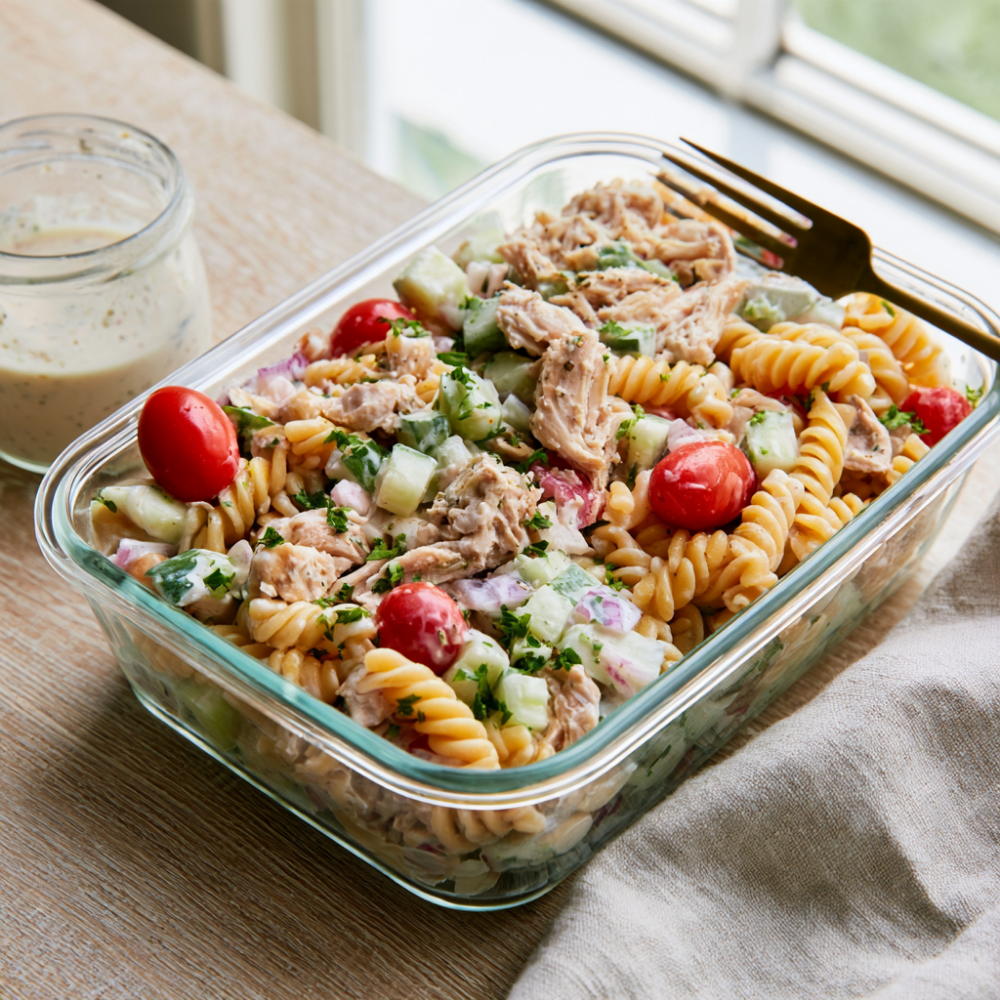
The pasta salad got soggy in the refrigerator. Chickpea pasta absorbs less dressing than regular pasta, but the cucumber can still release water into the salad. Seed and pat the cucumber dry before it goes into the bowl, and pack the reserved dressing separately so the salad stays crisp.
The pasta turned mealy or chalky. Chickpea pasta cooks much faster than regular pasta and turns mealy if it’s overcooked. Check it at the 3-minute mark and every minute after that, and rinse it under cold water as soon as it’s done.
The dressing is too thick or too thin. Greek yogurt brands vary in thickness. If the dressing is too thick, add a splash of cold water or lemon juice. If it’s too thin, add another tablespoon of Greek yogurt.
The salad tastes flat. Taste the dressing before you toss the salad, and adjust the salt, lemon, and Dijon. Pasta salad mutes seasoning once it’s cold, so the dressing should taste slightly more seasoned than you want the finished salad.
The chicken turned the salad watery. Warm chicken releases moisture into the salad as it sits. Make sure the chicken is completely cool before it goes into the bowl, and pat it dry with a paper towel if it looks wet.
Substitutions and Variations
Greek protein pasta salad with feta and olives (tested). Add ½ cup of crumbled feta and ½ cup of Kalamata olives to the salad along with the other vegetables. The feta adds about 4g of protein per serving and makes the salad taste more like a Greek salad. I tested this variation in my kitchen and it was my favorite version.
Tuna protein pasta salad (untested). Swap the shredded chicken for 2 cans of drained tuna. The protein count stays about the same, and the salad becomes a tuna pasta salad. I haven’t tested this version, so the flavor will be different.
Salmon or shrimp protein pasta salad (untested). Swap the shredded chicken for 2 cups of flaked baked salmon or cooked shrimp. Both work beautifully with the Greek yogurt dressing, but the flavor will be different and the protein count will vary. I haven’t tested these versions.
Keto pasta salad (untested). Swap the chickpea pasta for 4 cups of cooked and cooled zucchini noodles or hearts of palm noodles. The salad becomes much lower in carbs, and the dressing works beautifully with the vegetables. I haven’t tested this version, so the texture will be different — the noodles will be softer than pasta.
Low carb pasta salad (untested). Swap half the chickpea pasta for 2 cups of cooked and cooled cauliflower florets. The salad keeps some of the pasta texture while dropping the carbs. I haven’t tested this version, so the texture may vary.
Vegetarian protein pasta salad (untested). Skip the chicken and add 1½ cups of chickpeas and ½ cup of crumbled feta. The protein count drops to about 20g per serving, but the salad is still satisfying and protein-rich. I haven’t tested this version, so the texture may vary.
Storage and Make-Ahead
You can make the dressing up to 3 days ahead and store it in a sealed jar in the refrigerator. Shake or stir it before using, since it will separate as it sits.
You can prep the salad components up to 2 days ahead and store them separately in the refrigerator. Keep the pasta, vegetables, and chicken in separate containers, and toss them together with the dressing just before serving.
You can store the dressed salad in a sealed container in the refrigerator for up to 4 days, but it will get slightly softer each day. If you’re meal prepping for the week, pack the reserved dressing separately so the salad stays crisp.
The salad doesn’t freeze well because the vegetables and the dressing break down when thawed.
Store leftovers in the refrigerator within 2 hours of making the salad. Discard any salad that has been left at room temperature for more than 2 hours.
Protein Pasta Salad
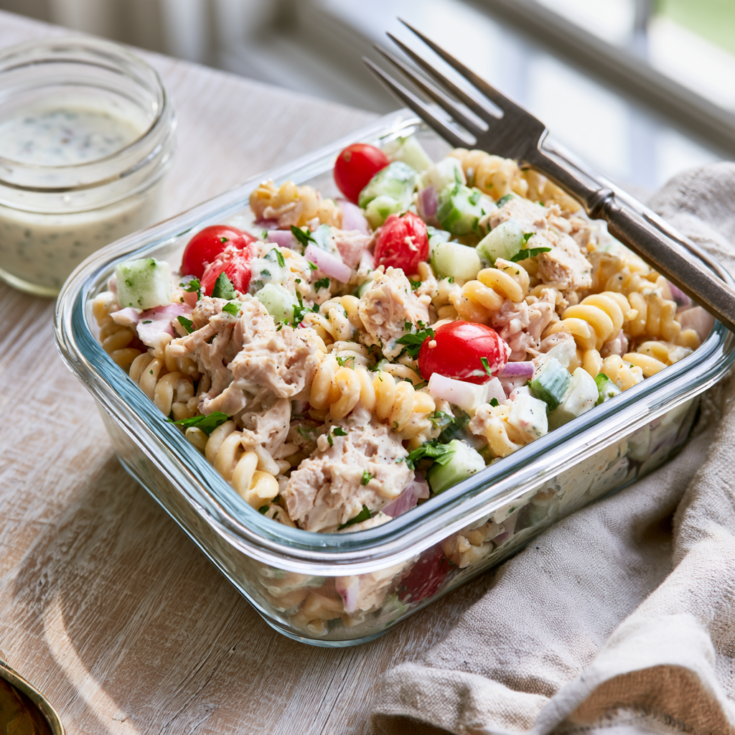
Cold chickpea rotini tossed with shredded chicken, crisp cucumbers, cherry tomatoes, and red onion in a creamy, tangy Greek yogurt dressing. 32g of protein per serving and ready in about 25 minutes.
Ingredients
For the Salad
- 8 oz chickpea pasta (such as Banza rotini or penne)
- 1 tsp extra-virgin olive oil, for tossing the pasta after rinsing
- 2 cups cooked shredded chicken breast (rotisserie chicken works well)
- 1 cup cherry tomatoes, halved
- 1 English cucumber, seeded and diced
- ½ small red onion, thinly sliced
- ¼ cup fresh flat-leaf parsley, finely chopped
- Optional toppings: ½ cup crumbled feta cheese and ¼ cup sliced Kalamata olives
For the Greek Yogurt Dressing
- ¾ cup plain Greek yogurt (2% or full-fat)
- 2 tbsp extra-virgin olive oil
- 1 tbsp fresh lemon juice, plus ½ tsp lemon zest
- 1 tbsp red wine vinegar
- 1 tsp Dijon mustard
- 1 clove garlic, minced
- 1 tsp dried oregano
- ½ tsp kosher salt, plus more to taste
- ¼ tsp freshly ground black pepper
- 1 to 2 tbsp cold water, to thin the dressing
Instructions
- Bring a large pot of heavily salted water to a rolling boil. Add the chickpea pasta and cook according to the package directions, testing at the 3-minute mark and then every minute after, since chickpea pasta cooks much faster than regular pasta. Pull it when it's just tender to your preference.
- Drain the pasta in a colander and rinse thoroughly under cold running water for 30 seconds to stop the cooking and wash away the excess starch. Drain well, transfer to a plate, and toss with 1 teaspoon of olive oil.
- Seed the English cucumber by slicing it in half lengthwise and scraping out the watery center seeds with a spoon. Dice the cucumber and pat the pieces dry on a paper towel.
- In a medium bowl or liquid measuring cup, whisk together the Greek yogurt, olive oil, lemon juice, lemon zest, red wine vinegar, Dijon mustard, garlic, oregano, kosher salt, and black pepper. Whisk in 1 to 2 tablespoons of cold water until the dressing is smooth and pourable.
- In a large bowl, combine the cooled chickpea pasta, shredded chicken, cherry tomatoes, diced cucumber, red onion, and parsley.
- Pour two-thirds of the dressing over the salad and gently fold to coat everything. Fold in the feta and olives if using. Reserve the remaining third of the dressing in a small airtight container.
- Serve immediately, or refrigerate the salad and the reserved dressing in separate containers for up to 4 days. Stir the reserved dressing into the salad just before eating to revive the creamy texture.
Notes
Notes: Store the salad in a sealed container in the refrigerator for up to 4 days, with the reserved dressing in a separate container. Nutrition information is an estimate.
Nutrition (per serving, estimated, without feta or olives): About 440 calories, 32g protein, 38g carbs, 16g fat, 8g fiber, 580mg sodium. With feta and olives, add about 60 calories, 4g protein, and 5g fat per serving.
FAQ
How long does chickpea pasta take to cook?
Chickpea pasta cooks much faster than regular pasta — about 3 minutes to al dente for most brands. Check it at the 3-minute mark and every minute after, pulling it when it’s tender to your preference. Overcooked chickpea pasta turns mealy and chalky.
What kind of pasta is best for a high protein pasta salad?
Chickpea pasta, such as Banza, has about 14g of protein per serving and holds up well in the refrigerator. Regular pasta works in a pinch, but the protein count drops by about 7g per serving.
Can I use regular pasta instead of chickpea pasta?
Yes. Use 8 oz of regular rotini or penne and cook it according to the package directions. The protein count will drop to about 25g per serving, so add an extra half cup of shredded chicken or a half cup of chickpeas to compensate.
How do I keep pasta salad from getting soggy?
Seed and pat the cucumber dry before it goes into the bowl, and pack the reserved dressing separately so the salad stays crisp. The pasta absorbs dressing as it sits, so reserving a third of the dressing and stirring it in just before eating keeps the salad creamy instead of dry.
Can I make this pasta salad without chicken?
Yes. Skip the chicken and add 1½ cups of chickpeas and ½ cup of crumbled feta. The protein count drops to about 20g per serving, but the salad is still satisfying and protein-rich.
More High Protein Salad Recipes You’ll Love
- [Creamy Cilantro Lime Dressing Recipe — Make-Ahead Meal Prep](internal link)
- [Greek Salad Dressing Recipe — Easy Mason Jar Vinaigrette, Meal Prep Ready](internal link)
- [Chicken Salad Sandwich Recipe — The Classic, Creamy, High-Protein Lunch](internal link)
- [High Protein Sweet Potato Bowl with Smoky Cinnamon-Maple Chicken](internal link)
- [Ground Beef Fajita Rice Bowl — 42g Protein, Ready in 30 Minutes](internal link)
- [Falafel Bowl Recipe — Crispy Falafel, Lemon Rice & Tahini Dressing](internal link)
Closing
Serve this protein pasta salad cold, straight from the refrigerator, with a little extra lemon squeezed over the top. It’s best eaten within 2 days of making it, but it holds up beautifully for 4 days if you pack the reserved dressing separately and stir it in just before serving.
I tested this recipe in my kitchen with chickpea rotini, rotisserie chicken, and the Greek yogurt dressing, and the salad held up without getting soggy.
I also tested the Greek variation with feta and olives. The tuna, salmon, shrimp, keto, low-carb, and vegetarian variations in the substitutions section are untested, so the texture and flavor may vary.