Wraps have a reputation problem. They’re supposed to be the ultimate grab-and-go lunch — portable, filling, easy to eat at a desk — but most of them turn into a soggy, sad mess by day two.
The tortilla gets gummy, the lettuce wilts, and the whole thing falls apart in your hands.
These four wraps don’t do that. They’re built with a specific technique that keeps everything crisp and separate: a barrier layer on the tortilla, wet ingredients kept in the center, a tight parchment-and-foil wrap, and real fridge life.
Each wrap delivers between 38 and 53 grams of protein, depending on the tortilla and protein you use. That’s a real lunch — not a snack, not a sad desk salad. And each one has a completely different flavor profile, so you’re not eating the same thing every day.
We have a Turkey Hummus Wrap with crunchy vegetables and Dijon, a Chicken Caesar Wrap with crisp romaine and Parmesan, a Spicy Buffalo Chicken Wrap with shredded rotisserie chicken, and a Greek Chicken Wrap with feta, cucumber, and olives.
One deli-style, one classic, one spicy, one Mediterranean.
Pick two or three to prep on Sunday, and you’ve got lunch handled for the next couple of days.
This is the meal prep wraps formula that actually works — high-protein, make-ahead friendly, and genuinely good on day four.
Why These Meal Prep Wraps Work
The tortilla matters more than anything else. Use a large burrito-size tortilla (10–12 inches) and choose one that’s high in protein and holds up well cold.
Mission Carb Balance, Joseph’s Lavash, and similar high-fiber/high-protein wraps work best. Regular flour tortillas get gummy in the fridge.
A barrier layer keeps the tortilla from getting soggy. Before you add anything wet, put something dry between the tortilla and the filling. A layer of lettuce, a smear of cream cheese, a slice of cheese, or a bed of shredded cabbage all work. This is the single most important technique for a wrap that lasts.
Keep wet ingredients in the center—tomatoes, dressings, sauces, and pickles all release moisture. Keep them in the middle of the wrap, away from the tortilla edges, so the moisture has nowhere to go but into the filling.
The fold matters. A standard “fold the sides in and roll” works, but a tighter burrito fold — folding the sides in first, then rolling tightly while tucking — keeps everything contained. Wrap it tightly enough to hold its shape when you cut it in half.
Parchment paper inside foil is the storage trick. Wrap each finished wrap tightly in parchment paper first, then in foil. The parchment keeps the foil from sticking to the tortilla, and the foil keeps the wrap compressed and protected. Cut in half right before eating.
Make-ahead dressings go on the side. Any sauce that could make the tortilla soggy — Caesar dressing, buffalo sauce, tzatziki — is best stored in a small separate container and added at lunch. If you’re eating the wrap within a few hours, you can dress it directly.
Rotisserie chicken is a meal-prep shortcut. A store-bought rotisserie chicken saves 40 minutes and works beautifully in the buffalo wrap. Shred it, toss it with sauce, and you’re done.
The protein numbers are real. 4–5 oz of protein plus a high-protein tortilla plus cheese or Greek yogurt gets you to 38–53g per wrap. That’s more than most restaurant wraps.
They’re genuinely portable. Wrap them in parchment and foil, stack them in a container, and grab one on the way out the door. No reheating needed, no fork required.
They scale easily. Make 4 wraps for the week, or 12 for a crowd. The assembly is the same either way.
How to Build Any Meal Prep Wrap
Once you understand the formula, you can build endless variations. Here’s how it works.
1. The tortilla. Large burrito-size, high-protein if possible. 10–12 inches gives you room to roll tightly without overstuffing. Warm it for 10 seconds in the microwave before rolling — it makes it more pliable and less likely to tear.
2. The barrier layer. Spread a thin layer of something dry or fatty across the entire tortilla first. Cream cheese, hummus, mashed avocado, a slice of cheese, or a bed of shredded lettuce. This protects the tortilla from moisture.
3. The protein. 4–5 oz per wrap. Shredded chicken, sliced turkey, grilled chicken, or leftover steak. Season it well — the protein is the flavor anchor.
4. The cheese or creamy element. Shredded cheddar, crumbled feta, sliced provolone, or a smear of Greek yogurt. Adds richness and helps hold everything together.
5. The vegetables. Lettuce, spinach, shredded cabbage, cucumber, tomato, red onion, or roasted peppers. Keep wet vegetables (tomatoes, cucumbers) in the center, and use drier vegetables (lettuce, cabbage) as part of the barrier layer.
6. The sauce. Keep dressings in the center, away from the edges. For meal prep, store them separately and add at lunch.
7. The fold. Fold the two short sides in first, then roll tightly from the bottom up, tucking the filling as you go. Wrap in parchment paper, then foil, and refrigerate.
1. Turkey Hummus Wrap (Deli-Style, 38g Protein)
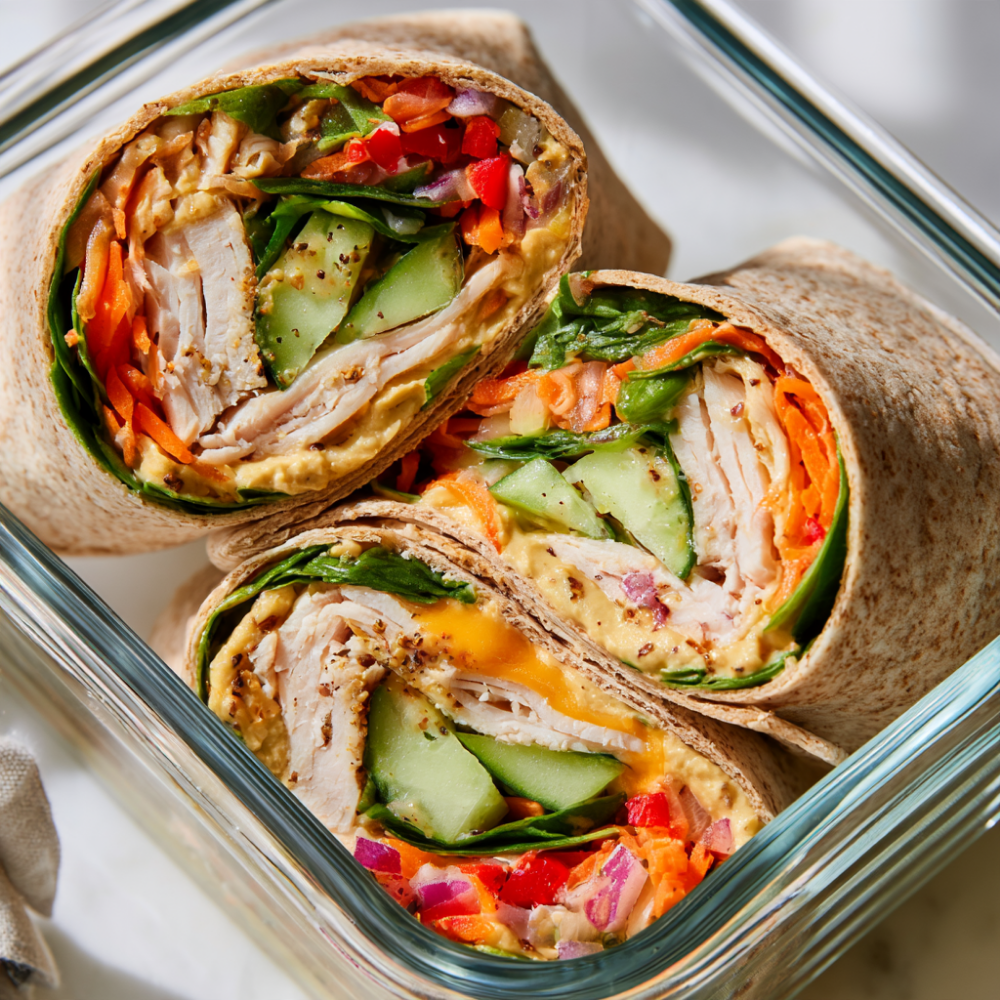
This wrap converts people who think they don’t like healthy meal prep. Roasted turkey breast, creamy hummus, sharp cheddar, and a pile of crunchy vegetables — spinach, cucumber, shredded carrots, red bell pepper, and red onion — all tied together with a swipe of Dijon mustard. It’s a deli sandwich in wrap form, and it’s one of the most satisfying lunches you can make ahead.
The hummus is doing double duty here: it’s the barrier layer, the creamy element, and the flavor anchor all at once. Combined with the Dijon, it keeps the wrap from feeling dry without making the tortilla soggy. The vegetables are chosen specifically for crunch—every bite has texture.
This wrap works for anyone who wants a “real” lunch that happens to be high in protein and packed with vegetables.
Makes: 4 wraps
Prep Time: 20 minutes
Protein per Wrap: About 38g
Ingredients
- 4 large whole wheat or high-protein tortillas (10–12 inch)
- 1 lb sliced roasted turkey breast (low-sodium if possible)
- 1 cup hummus (plain, roasted red pepper, or garlic)
- 4 slices sharp cheddar cheese (or ½ cup shredded)
- 3 cups fresh baby spinach, packed
- 1 English cucumber, thinly sliced
- 1 cup shredded carrots
- 1 red bell pepper, thinly sliced
- ½ red onion, thinly sliced
- 2 tbsp Dijon mustard
- ¼ tsp kosher salt
- ¼ tsp black pepper
Instructions
- Prep the vegetables. Slice the cucumber, bell pepper, and red onion thin. Pat the cucumber slices dry with paper towels — they hold a lot of water. Shred the carrots if using whole carrots.
- Warm the tortillas. Microwave each tortilla for 10 seconds, or warm in a dry skillet for 20 seconds per side. This makes them more pliable and less likely to tear.
- Assemble. Lay each tortilla flat. Spread ¼ cup of hummus across the center of the tortilla, leaving a 1-inch border around the edges. Spread ½ tsp of Dijon over the hummus. Lay down a barrier layer of spinach, then the cheddar slice. Add the turkey, cucumber, carrots, bell pepper, and red onion in the center.
- Season. Sprinkle the filling with a pinch of salt and pepper.
- Roll. Fold the two short sides in first, then roll tightly from the bottom up, tucking the filling as you go. The wrap should feel compact and hold its shape.
- Wrap and store. Wrap each wrap tightly in parchment paper, then foil. Twist the ends like a candy wrapper. Refrigerate for up to 4 days.
Make-ahead note: This wrap holds up exceptionally well because the hummus creates a moisture barrier and the vegetables are sturdy. It’s the best of the four for making 4 days ahead.
Serving suggestion: Serve with a small container of extra hummus or a side salad. The wrap is a complete meal on its own — about 38g of protein, plenty of fiber, and a good mix of carbs, fat, and vegetables.
2. Chicken Caesar Wrap (The Classic)
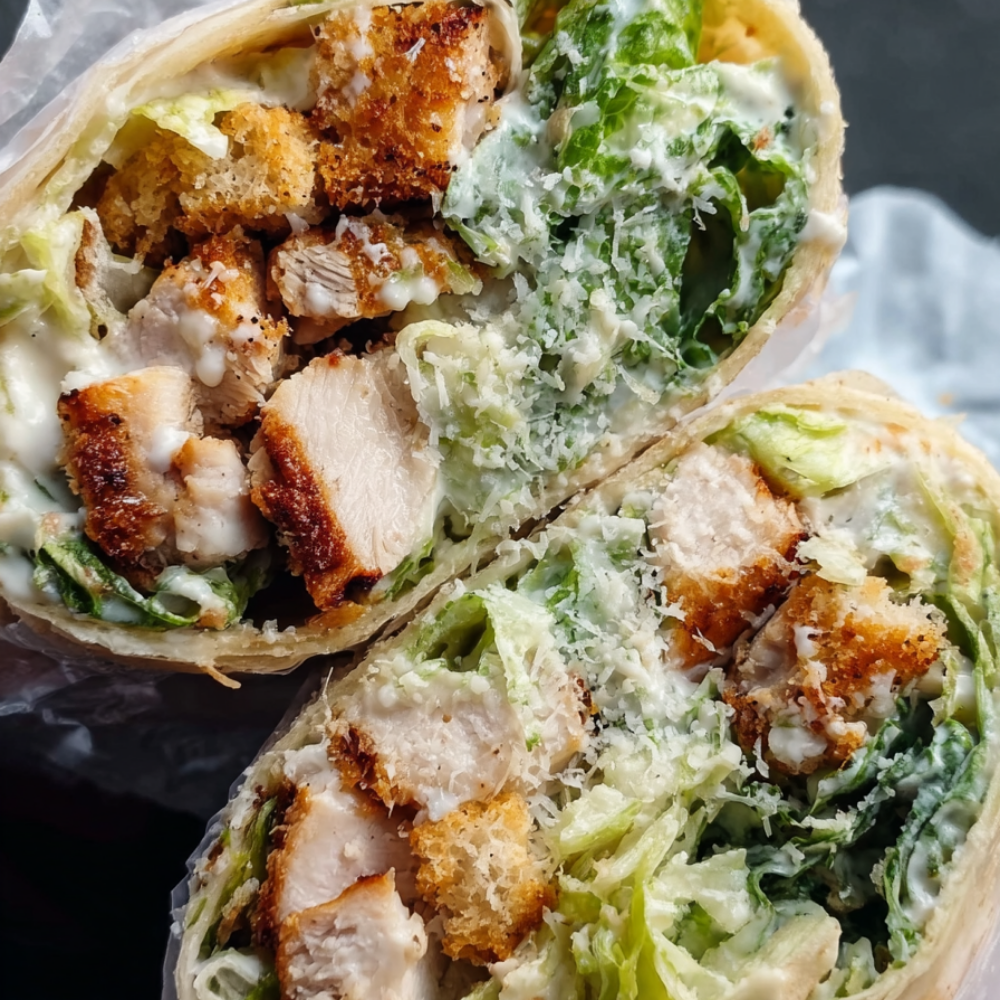
This is the wrap that started the whole category — and honestly, the reason most people search for healthy protein wraps for lunch in the first place.
Grilled or shredded chicken, crisp romaine, shaved Parmesan, and creamy Caesar dressing rolled into a large tortilla. It tastes like a salad and eats like a sandwich, which is exactly the appeal.
The version on this blog uses a simple technique that keeps the tortilla from getting soggy: dress the lettuce lightly, keep it in the center, and eat within a few hours of assembling. It’s one of the best meal prep wraps you can make, and one of the fastest — about 25 minutes, and you’ve got two lunches ready.
The dressing already has the flavor, so you don’t need to add much else. Romaine holds up better than most greens in a wrap and doesn’t wilt quickly; Parmesan adds saltiness and depth, and chicken breast is one of the most reliable high-protein fillings.
Protein per wrap: About 53g
Get the full recipe: Easy Chicken Caesar Wrap That Makes the Perfect High-Protein Lunch →
3. Buffalo Chicken Wrap with Rotisserie Chicken (Bold & Spicy, 40g Protein)
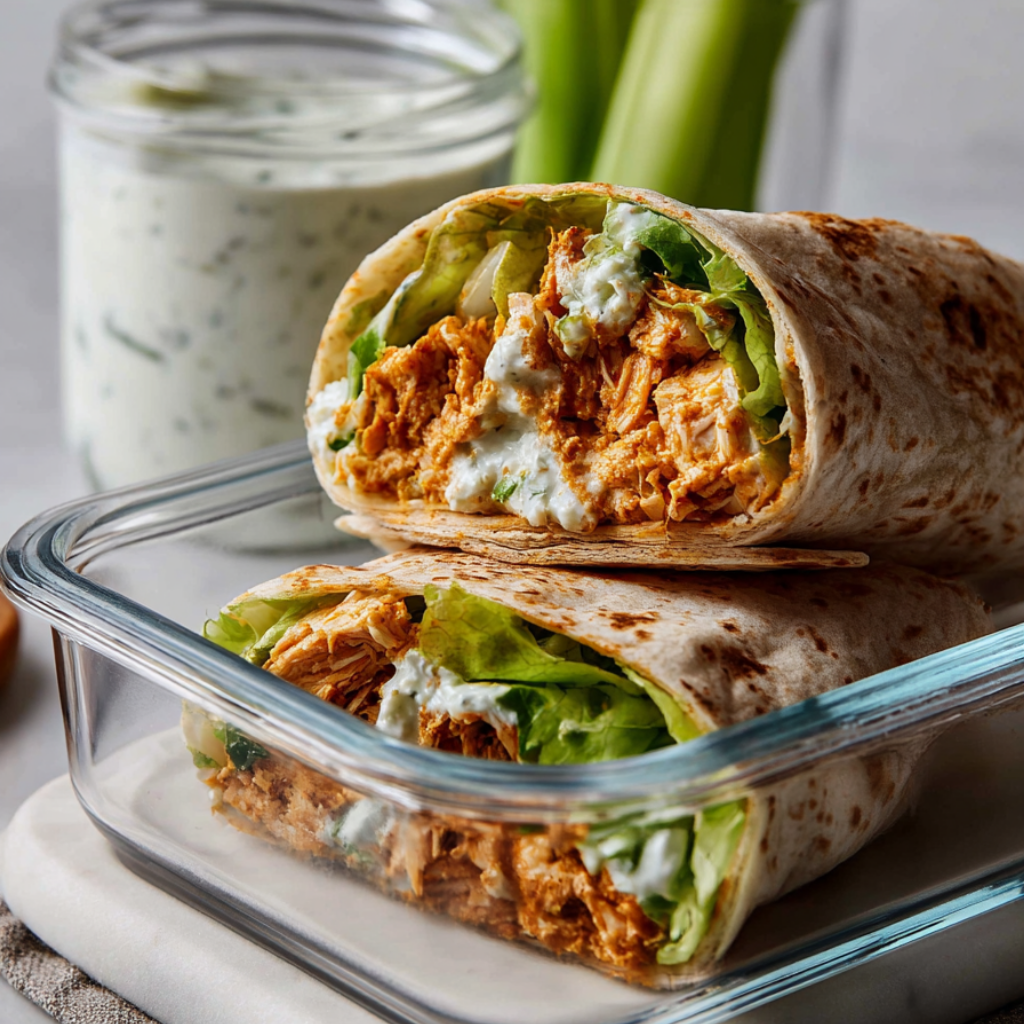
This is for anyone who wants lunch with some punch. Shredded rotisserie chicken tossed in buffalo sauce, crunchy romaine, shredded cheddar, and a cool drizzle of ranch — all rolled into a large flour tortilla.
It’s a buffalo wing in wrap form, and it’s one of the most satisfying meal prep wraps you can make.
Using rotisserie chicken is the shortcut that makes this recipe genuinely weeknight-friendly.
No cooking, no seasoning, no cleanup. Shred the chicken, toss it with buffalo sauce, and you’re ready to assemble. The whole thing comes together in about 15 minutes.
The trick is to keep the buffalo sauce and the ranch from meeting the tortilla. Layer romaine and cheddar on the bottom, add the buffalo chicken in the center, and drizzle ranch on top of the filling—not touching the tortilla— to keep everything crisp through day four.
Makes: 4 wraps
Prep Time: 15 minutes
Protein per Wrap: About 40g
Ingredients
- 4 large flour tortillas or high-protein tortillas (10–12 inch)
- 1 rotisserie chicken, meat shredded (about 4 cups)
- ¾ cup buffalo wing sauce (plus more for serving)
- 2 cups romaine lettuce, shredded
- 1½ cups shredded cheddar cheese
- 2 celery stalks, thinly sliced
- 1 cup shredded carrots
- ½ cup ranch dressing (plus more for serving)
- 2 green onions, sliced
- ½ tsp black pepper
Instructions
- Shred the rotisserie chicken. Remove the meat from the rotisserie chicken and shred it with two forks. You should end up with about 4 cups of shredded chicken. Discard the skin and bones.
- Toss with buffalo sauce. In a large bowl, toss the shredded chicken with the buffalo sauce and black pepper. Taste and add more sauce if you want it spicier.
- Prep the vegetables. Shred the romaine, thinly slice the celery, and slice the green onions.
- Warm the tortillas. Microwave each tortilla for 10 seconds to soften it.
- Assemble. Lay each tortilla flat. Lay down a barrier layer of romaine and half the cheddar cheese across the center. Add the buffalo chicken in the center, then top with celery, carrots, the remaining cheddar, and green onions. Drizzle 2 tbsp of ranch over the filling — keeping it in the center and away from the tortilla edges.
- Roll. Fold in the two short sides, then roll tightly from the bottom up, tucking the filling as you go.
- Wrap and store. Wrap each wrap tightly in parchment, then foil. Refrigerate for up to 4 days.
Make-ahead note: Store extra ranch in a small separate container and drizzle it on top at lunch. You can make the buffalo chicken 3–4 days ahead and store it separately.
Serving suggestion: Serve with extra ranch in a small ramekin for dipping, celery sticks, and carrot sticks on the side.
4. Greek Chicken Wrap (Mediterranean, 40g Protein)
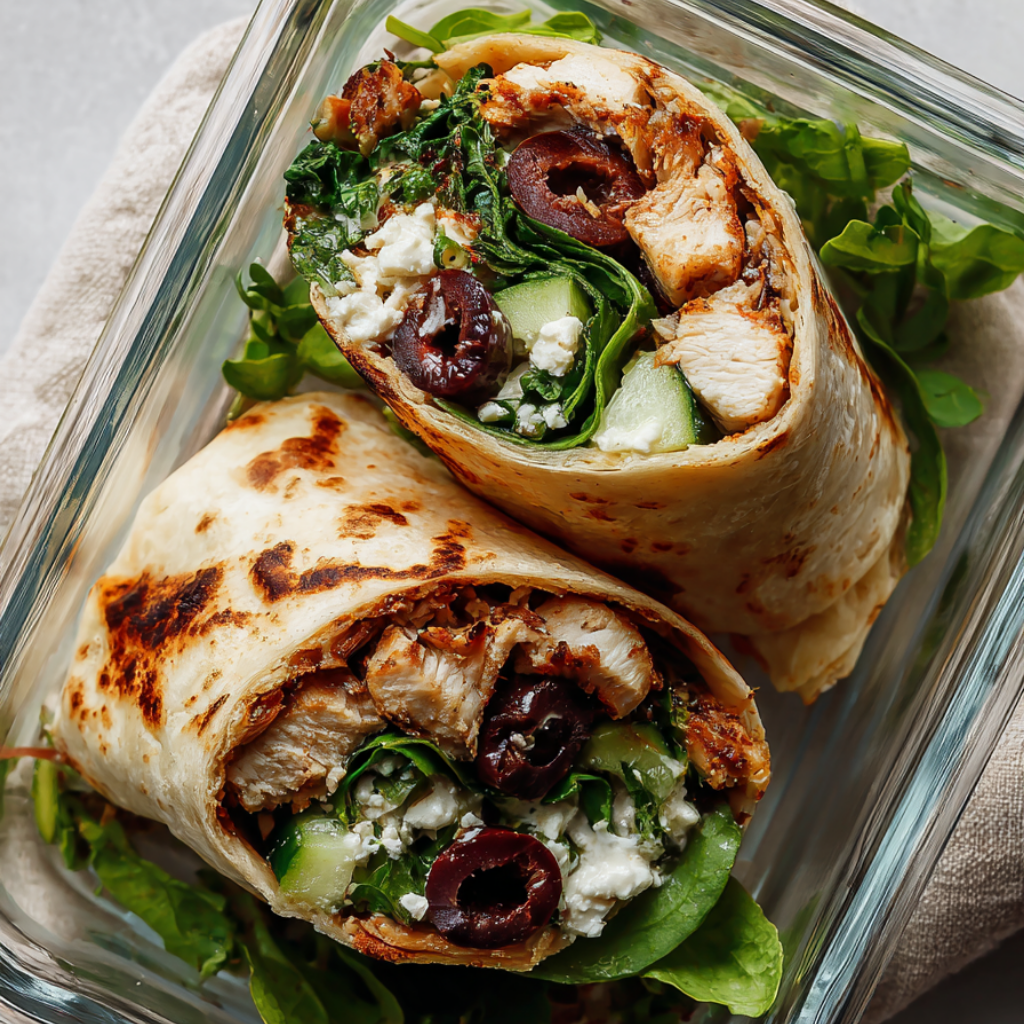
This is the Mediterranean one. Grilled chicken, crumbled feta, cucumber, kalamata olives, and fresh spinach rolled into a flour tortilla with a tangy tzatziki made from Greek yogurt. It’s fresh, bright, and completely different from the buffalo wrap — which is exactly why it belongs in the same rotation.
The tzatziki is what makes it feel finished. Greek yogurt, grated cucumber, garlic, lemon, and dill — creamy, tangy, and high in protein. It doubles as a sauce and a barrier layer, which means it pulls double duty in the wrap.
This wrap works beautifully cold, straight from the fridge. The flavors actually improve after a day as the chicken absorbs the lemon and oregano.
Makes: 4 wraps
Prep Time: 20 minutes (plus chicken cook time)
Protein per Wrap: About 40g
Ingredients
For the chicken:
- 1½ lbs boneless, skinless chicken breast or thighs
- 2 tbsp olive oil
- Juice of 1 lemon
- 3 cloves garlic, minced
- 1 tbsp dried oregano
- 1 tsp kosher salt
- ½ tsp black pepper
For the tzatziki:
- 1 cup plain Greek yogurt (2% or full-fat)
- ½ English cucumber, grated and squeezed very dry
- 2 cloves garlic, grated
- 1 tbsp fresh lemon juice
- 1 tbsp fresh dill, chopped (or 1 tsp dried)
- ¼ tsp kosher salt
For the wraps:
- 4 large flour tortillas or high-protein tortillas (10–12 inch)
- 3 cups fresh baby spinach, packed
- 1 cup cherry tomatoes, halved (optional)
- ½ English cucumber, thinly sliced
- ½ cup kalamata olives, sliced
- ¾ cup crumbled feta cheese
- ¼ red onion, thinly sliced (optional)
Instructions
- Cook the chicken. Toss the chicken with olive oil, lemon juice, garlic, oregano, salt, and pepper. Grill, pan-sear, or bake at 400°F for 20–22 minutes, until it reaches 165°F. Let it rest 10 minutes, then slice thin or shred.
- Make the tzatziki. Squeeze the grated cucumber dry in a clean kitchen towel — this is important, or the tzatziki will be watery. Mix with Greek yogurt, garlic, lemon juice, dill, and salt. Taste and adjust.
- Prep the vegetables. Slice the cucumber, olives, and red onion. Halve the cherry tomatoes and pat them dry.
- Warm the tortillas. Microwave each tortilla for 10 seconds to soften it.
- Assemble. Lay each tortilla flat. Spread 2 tbsp of tzatziki across the center (leaving the edges dry). Lay down a barrier layer of spinach. Add the grilled chicken, cucumber, tomatoes, olives, feta, and red onion in the center.
- Roll. Fold in the two short sides, then roll tightly from the bottom up, tucking the filling as you go.
- Wrap and store. Wrap each wrap tightly in parchment paper, then foil. Refrigerate for up to 4 days.
Make-ahead note: Store the tzatziki in a small separate container and add at lunch if you want the wrap to stay extra crisp. Otherwise, spreading it as a barrier layer works well for up to 3 days. Add the cherry tomatoes only if you’re eating within 2 days — they release moisture.
Serving suggestion: Serve with extra tzatziki on the side for dipping, a small Greek salad, or roasted vegetables.
Tips for Better Meal Prep Wraps
Use large, high-protein tortillas. 10–12-inch burrito-size tortillas give you room to roll without overstuffing. Mission Carb Balance, Joseph’s Lavash, and similar high-fiber options hold up best cold and add 8–12g of protein each.
Warm the tortilla for 10 seconds before rolling. A quick trip to the microwave makes the tortilla more pliable and less likely to tear or crack when you roll it tightly.
Always use a barrier layer. Hummus, lettuce, cheese, cream cheese, or mashed avocado between the tortilla and the wet filling. This is the single most important technique for a wrap that lasts.
Keep wet ingredients in the center—tomatoes, cucumbers, dressings, and sauces all release moisture. Keep them away from the edges so the moisture goes into the filling, not the tortilla.
Squeeze the water out of watery vegetables. Grated cucumber for tzatziki, shredded lettuce, and sliced tomatoes all hold water. Pat them dry or squeeze them in a clean towel before adding them.
Store dressings and sauces separately when you can. Caesar dressing, ranch, buffalo sauce, and tzatziki all soften the tortilla over time. A small separate container added at lunch keeps the wrap crisp.
Roll tightly and tuck as you go. A loose wrap falls apart when you cut it in half. Fold the sides in first, then roll from the bottom, tucking the filling back in with your fingers as you go.
Wrap in parchment first, then foil. The parchment keeps the foil from sticking to the tortilla, and the foil keeps the wrap compressed and protected. Twist the ends like a candy wrapper.
Cut in half right before eating. Cutting releases moisture and starts the softening process. Keep wraps whole in the fridge and cut them at lunch.
Store upright in a container. Stand the wraps upright in a container so they don’t get squished by other items in the fridge. A tall plastic container or a mason jar works well.
Make the proteins ahead and assemble fresh. Cook the chicken on Sunday. Assemble the wraps Sunday night or Monday morning—whichever fits your schedule. Assembled wraps last 3–4 days.
Don’t overstuff. A wrap that’s too full won’t roll tightly and will fall apart. 1½ cups of filling per large tortilla is the sweet spot.
Label and date each wrap. Four similar-looking foil-wrapped cylinders in the fridge are impossible to tell apart. Write the filling and the date on a piece of masking tape on each one.
Storage, Make-Ahead, and Food Safety
Refrigerator: Wrapped tightly in parchment and foil, these wraps keep for 2-3 days. The turkey hummus and Greek wraps hold up best. The buffalo wrap is best within 3 days if you store the ranch separately.
Freezer: Assembled wraps do not freeze well — the tortillas get mushy, and the vegetables release water. If you want to prep ahead for longer than 4 days, freeze the fillings separately and assemble fresh.
Make-ahead proteins: Shredded rotisserie chicken, grilled Greek chicken, and cooked proteins all keep for 4 days in the fridge and freeze well for up to 3 months.
Food safety: Refrigerate assembled wraps within 2 hours of making them. Keep them cold until lunch — use an insulated lunch bag with an ice pack if they’ll be out of the fridge for more than 2 hours.
Frequently Asked Questions
How do I keep meal prep wraps from getting soggy?
Three things: use a barrier layer (hummus, lettuce, cheese, or cream cheese) between the tortilla and the filling, keep wet ingredients in the center, and store dressings separately when possible.
How long do meal prep wraps last in the fridge?
3–4 days wrapped tightly in parchment and foil. The turkey hummus and Greek wraps last the longest. Store dressings separately to extend shelf life.
What’s the best tortilla for meal prep wraps?
Large burrito-size (10–12 inch) high-protein or high-fiber tortillas. Mission Carb Balance, Joseph’s Lavash, and similar options hold up well cold and add 8–12g of protein each.
Can I freeze meal prep wraps?
Not recommended. The tortillas get mushy, and the vegetables release water after thawing. Freeze the fillings separately and assemble fresh instead.
Can I make these wraps ahead on Sunday for the whole week?
Yes — assemble them Sunday night or Monday morning. They’ll keep through Thursday. If you’re making them for longer than 4 days, prep the fillings ahead and assemble fresh.
How much protein is in each wrap?
Between 38 and 53g per wrap, depending on the tortilla and protein you use. The Chicken Caesar Wrap is the highest at about 53g, followed by the Buffalo Chicken and Greek Chicken wraps at about 40g, and the Turkey Hummus at about 38g.
Can I use a low-carb tortilla?
Yes. Low-carb and high-fiber tortillas work well and often have more protein than regular flour tortillas.
Should I heat the wrap before eating?
The Turkey Hummus, Greek Chicken, and Chicken Caesar wraps are best cold. You can eat the Buffalo Chicken wrap cold or warm it for 30–45 seconds in the microwave (unwrap the foil first).
Can I use rotisserie chicken for all the chicken wraps?
Yes. A store-bought rotisserie chicken works in the buffalo, Greek, and Caesar wraps. Season it differently for each recipe — buffalo sauce for one, lemon-oregano for the Greek, and Caesar dressing for the third.
Can I add rice to these wraps?
Yes, but it changes the storage life. Cooked rice in a wrap holds up for 3 days in the fridge and adds carbs and volume. Use ⅓ cup per wrap and keep it in the center.
What’s the best way to wrap them for storage?
Parchment paper first (to keep the foil from sticking), then foil (to compress and protect). Twist the ends like a candy wrapper. Cut in half right before eating.
Can I make these wraps vegetarian?
Yes. Swap the turkey for extra hummus and roasted vegetables in the turkey wrap. Use chickpeas or roasted vegetables in the Greek wrap. Use breaded cauliflower or tofu in the buffalo wrap.
Are these wraps gluten-free?
Only if you use gluten-free tortillas; the fillings themselves are naturally gluten-free (confirm your sauces and deli meat are too).
What do I serve with meal prep wraps?
A side salad, a cup of soup, fresh fruit, or veggie sticks with hummus. A small container of extra sauce on the side is always a good idea.
Can I make these wraps for a crowd?
Yes. Double or triple the recipes and set up an assembly line. Wrap each one individually and store them upright in a large container.
More Meal Prep Lunch Recipes You’ll Love
- Meal Prep for One Person: Crispy Maple-Mustard Chicken
- Italian Pasta Salad (High-Protein & Meal Prep Friendly)
- Tortellini Pasta Salad (High-Protein & Italian-Style)
- High-Protein Crockpot Chicken Breast for Meal Prep
Conclusion
These four meal prep wraps actually hold up in the fridge.
A Turkey Hummus Wrap with crunchy vegetables and Dijon, a Chicken Caesar Wrap with crisp romaine and Parmesan, a Spicy Buffalo Chicken Wrap made with shredded rotisserie chicken, and a Greek Chicken Wrap with feta, cucumber, and olives — 38 to 53 grams of protein each, four completely different flavor profiles, and a technique that keeps them from turning soggy by Tuesday.
The keys are simple: use large high-protein tortillas, always use a barrier layer, keep wet ingredients in the center, wrap tightly in parchment then foil, and store dressings separately when you can.
Do that, and you’ll have a week of lunches that taste like something you’d actually pay for.
Make two or three of these on Sunday, store them upright in the fridge, and grab one on your way out the door: no reheating, no fork, no sad desk salad.
This meal-prep wrap formula earns a permanent spot in the rotation.