
If your morning routine involves rushing around and flipping individual eggs while your toast burns, this is the fix. Sheet pan eggs for breakfast sandwiches are the meal prep hack that changes everything about weekday mornings.
Instead of standing at the stove every day, crack a dozen eggs onto one sheet pan, bake for 10 minutes, then cut them into squares that fit English muffins perfectly. Stack them in the refrigerator or freezer with cheese and bacon, and you’ve got grab-and-go breakfast sandwiches ready to heat and eat all week. About 18–20 grams of protein per sandwich.
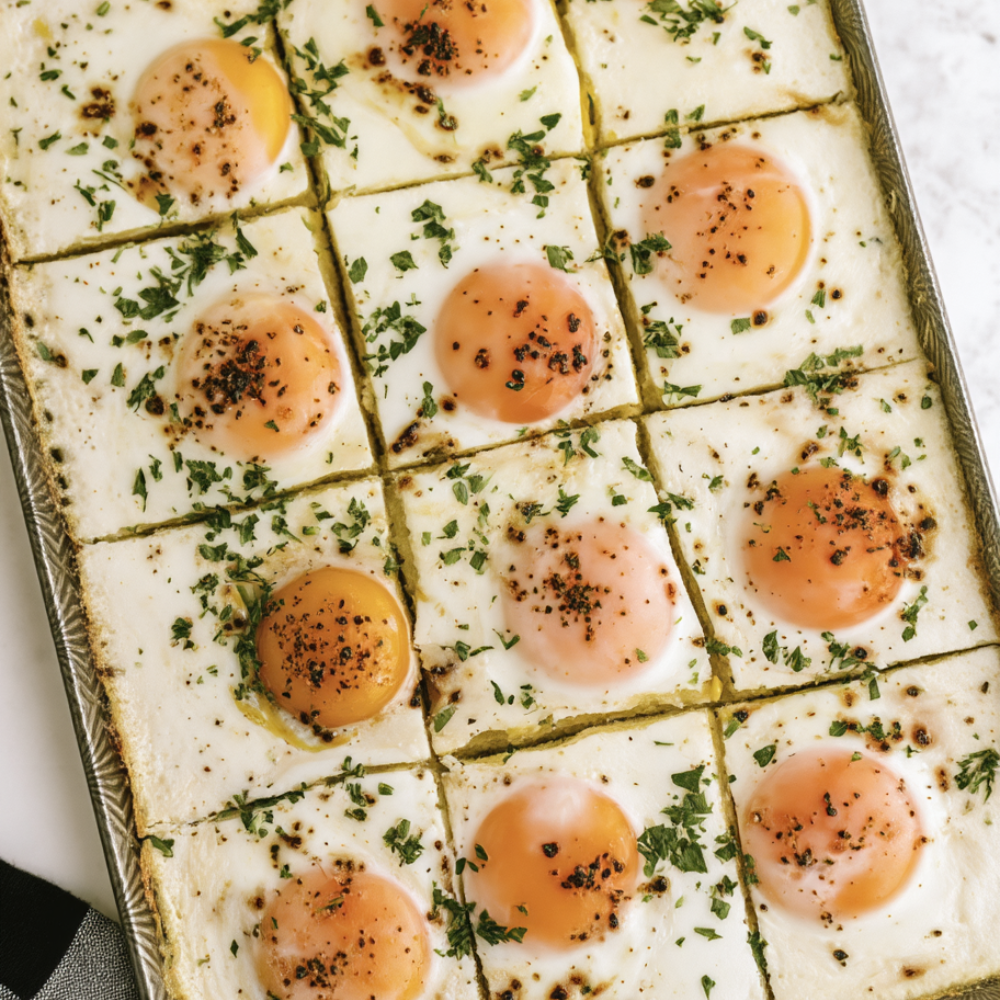
The trick is the technique. Sunny-side-up sheet pan eggs give you golden whites and intact yolks with almost no effort—you just need to space them properly and grease the pan well so they release cleanly. Once you get that right, this becomes the easiest breakfast prep you’ll ever do.
The best part is that it’s a genuine 15-minute recipe. Crack the eggs, bake them, cut them, and assemble. You can make a week’s worth of breakfast sandwiches in the time it would normally take you to make three.
Two things decide whether the eggs release cleanly or stick and tear, and neither is optional.
Grease the pan generously. Butter, oil, or cooking spray — use more than you think you need. Eggs are the single stickiest thing you can bake. A well-greased pan is the difference between clean squares and a torn mess.
Space the eggs evenly. You need room between each egg so the whites don’t merge. For a 13×18 sheet pan, a 3×4 grid of 12 eggs gives each one about 4 inches of space. That’s enough for the whites to spread without touching.
Everything else is forgiving, flexible, and takes about 10 minutes of actual work.
Why This Recipe Works
Sunny-side-up eggs look better than blended egg loaf. When you crack whole eggs onto a sheet pan, you get golden whites and bright yellow yolks that look like a proper fried egg. This is what makes sheet pan eggs look stunning on a breakfast sandwich instead of like a flat yellow square.
Baking gives you perfectly set whites without any flipping—no standing at the stove, no spatula, no splattering oil. The oven does all the work.
Cutting into squares gives you uniform patties. Once the eggs are baked and cooled slightly, you can cut them into squares that fit English muffins, bagels, or biscuits. Each square has one yolk, so every sandwich gets the full sunny-side-up experience.
It’s genuinely meal prep friendly. Assemble the sandwiches, wrap them individually, and refrigerate for up to 4 days or freeze for up to 3 months. Reheat in the microwave or air fryer in minutes.
The protein stacks up fast. Two eggs per sandwich gives you about 12–14 grams of protein from the eggs alone, plus cheese and bacon or sausage. That’s 18–20 grams per sandwich without any protein powder or cottage cheese hacks.
It scales for a crowd. One sheet pan makes 12 egg squares. Use two pans, and you’ve got breakfast sandwiches for a party, a brunch, or a month of meal prep.
It’s customizable—different cheeses, different meats, different breads. Every sandwich can be exactly what you want.
It’s genuinely faster than stovetop eggs for a crowd. Flipping 12 eggs on a stovetop takes 20–25 minutes. Baking them on a sheet pan takes 10.
Sheet Pan Eggs for Breakfast Sandwiches
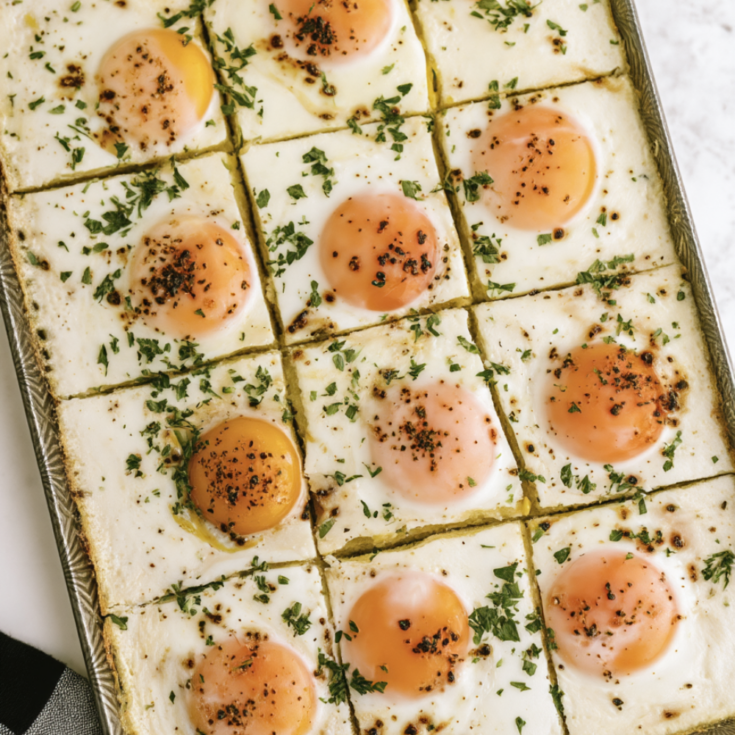
Sunny-side-up baked eggs on a sheet pan, cut into perfect squares and layered onto English muffins with cheese and bacon for make-ahead breakfast sandwiches. About 18–20 grams of protein per sandwich, and they freeze beautifully.
Ingredients
For the Sheet Pan Eggs:
- 12 large eggs
- 2 tbsp unsalted butter, softened (or cooking spray)
- ½ tsp kosher salt
- ¼ tsp black pepper
- ½ tsp garlic powder
- ¼ tsp smoked paprika
- Fresh chives or parsley, chopped, for garnish
- Optional: ½ cup diced bell peppers, spinach, or green onions.
For the Breakfast Sandwiches:
- 6 English muffins (whole wheat or regular), split
- 6 slices cheddar, Swiss, or American cheese
- 6 slices cooked bacon, turkey bacon, Canadian bacon, or sausage patties
- Optional: avocado, tomato, hot sauce
Instructions
1. Preheat the oven. Preheat to 350°F. Position a rack in the middle of the oven.
2. Grease the pan generously. Use a 13x18-inch rimmed sheet pan (or a 10x15 jelly roll pan for thicker eggs). Grease the pan very generously with the softened butter or cooking spray, making sure to coat the corners and edges. This is the single most important step for clean release.
For even cleaner release, line the pan with parchment paper and grease the parchment too. The eggs will slide right out.
3. Crack the eggs into small bowls. Crack each egg into a small bowl or ramekin first, then slide it onto the sheet pan. This prevents broken yolks and lets you position each egg exactly where you want it.
Don't crack directly into the pan. A broken yolk ruins the sunny-side-up look.
4. Space the eggs evenly. Arrange the eggs in a 3x4 grid across the sheet pan, leaving about 1 inch between each egg so the whites don't merge. If your pan is smaller, use a 2x4 or 2x5 grid and work in batches.
5. Season. Sprinkle the kosher salt, black pepper, garlic powder, and smoked paprika evenly over the eggs. If you're adding diced vegetables, scatter them around the eggs — not on top of the yolks.
6. Bake. Bake for 8–12 minutes, until the whites are fully set and no longer translucent. The yolks should still be soft and slightly jiggly. For firmer yolks, bake an additional 2–3 minutes.
Start checking at 8 minutes. Ovens vary, and egg whites go from set to rubbery fast.
7. Cool and cut. Let the eggs cool in the pan for 3–5 minutes. Using a sharp knife or a bench scraper, cut between the eggs to separate them into individual squares. Each square should have one yolk.
For perfectly uniform squares, cut straight down between the eggs and around each yolk. A pizza cutter also works well.
8. Assemble the sandwiches. Toast the English muffins if you like. Layer each egg square onto the bottom half of an English muffin. Top with a slice of cheese and a slice of bacon or sausage. Add the top half of the muffin.
9. Wrap and store. Wrap each sandwich tightly in parchment paper, then foil, or place them in a freezer-safe bag. Refrigerate for up to 4 days or freeze for up to 3 months.
Notes
Protein per Serving: About 18–20 g per sandwich
Nutrition note: Protein varies depending on your bread, cheese, and meat. Estimated per sandwich (English muffin + egg + cheese + bacon): ~380 calories, 18–20g protein, ~30 g carbs, ~18 g fat. Calculate with your specific products for the most accurate numbers.
Make-ahead: These sandwiches are designed to be made ahead. Assemble them all at once, wrap individually, and refrigerate or freeze. In the morning, unwrap and reheat in the microwave or air fryer.
Freezer: Wrap each sandwich tightly in parchment paper, then place in a freezer-safe bag. Freeze for up to 3 months. Reheat from frozen in the microwave for 2–3 minutes, flipping halfway, or in the air fryer at 350°F for 8–10 minutes.
Tips for the Best Sheet Pan Eggs
Grease the pan generously. Eggs are the stickiest thing you can bake. Use more butter or cooking spray than you think you need. A well-greased pan is the difference between clean squares and a torn mess.
Crack each egg into a small bowl first. This prevents broken yolks and lets you position each egg exactly where you want it. It also lets you remove any shell fragments before the egg hits the pan.
Space the eggs evenly. Leave about 1 inch between each egg so the whites don’t merge. For a 13×18 pan, a 3×4 grid works perfectly. For a smaller pan, use fewer eggs per batch.
Season the eggs, not just the pan. Salt, pepper, garlic powder, and smoked paprika go directly on the eggs. This is what gives them flavor.
Don’t overcrowd the pan. If the eggs are touching, the whites will merge and you won’t get clean squares.
Start checking at 8 minutes. Ovens vary. Egg whites go from set to rubbery fast. Pull them when the whites are just set, and the yolks are still soft.
Let the eggs cool for 3–5 minutes before cutting. Hot eggs are fragile and tear easily. A few minutes of cooling makes them much easier to cut cleanly.
Use a sharp knife or bench scraper. A dull knife drags and tears the eggs. A sharp knife or bench scraper cuts cleanly through the whites.
Cut straight down, not at an angle. Angled cuts give you ragged edges. Straight down, then lift.
Toast the English muffins. A toasted muffin holds up better to the egg and doesn’t get soggy when reheated.
Wrap tightly for freezing. Air is the enemy of frozen sandwiches. Wrap in parchment, then foil, then place in a freezer bag. Press out as much air as possible.
Reheat in the air fryer for the best texture. The microwave is faster, but the air fryer gives you a crisper English muffin and a better overall texture—350°F for 8–10 minutes from frozen.
Don’t microwave in foil. Remove the foil before microwaving. Parchment paper is microwave-safe.
Add fresh toppings after reheating. Add avocado, tomato, and hot sauce after the sandwich is hot. They don’t reheat well.
Easy Variations
Sheet Pan Egg Bake (Blended Version). For perfectly uniform squares without yolks, whisk the eggs with ½ cup milk or cottage cheese and pour the mixture onto the greased pan. Bake at 375°F for 12–15 minutes, until set. Cut into 12 squares—about 14–16g protein per square.
Sheet Pan Scrambled Eggs. Same as the blended version above. The eggs come out like a fluffy, baked scramble that’s easy to cut into squares—about 14–16g protein per square.
Bacon Egg and Cheese Sandwich Meal Prep. Use the sunny-side-up squares with bacon and cheddar on English muffins. This is the classic version. About 20–22g protein per sandwich.
Make-Ahead Bacon Egg and Cheese Sandwich. Assemble 12 sandwiches at once and freeze them. Same method, double the batch. About 20–22g protein per sandwich.
Freezer English Muffin Breakfast Sandwiches. Use English muffins specifically — they hold up better in the freezer than bagels or biscuits. About 18–20g protein per sandwich.
Breakfast Sandwiches for a Crowd. Use two sheet pans to make 24 egg squares, then set up a sandwich assembly line with different cheeses, meats, and breads. About 18–20g protein per sandwich.
Sheet Pan Breakfast Burritos. Cut the egg squares into strips, then roll them into flour tortillas with cheese, black beans, and salsa. Wrap tightly and freeze. About 20–24g protein per burrito.
Sheet Pan Breakfast Ideas (Veggie Version). Scatter diced bell peppers, spinach, and green onions around the eggs before baking. About 18–20g protein per sandwich.
Prep Ahead Breakfast (Turkey Version). Use turkey bacon or turkey sausage instead of pork. About 18–20g protein per sandwich.
Egg Muffins: Healthy Make Ahead. Skip the sheet pan entirely. Crack the eggs into a greased muffin tin and bake at 350°F for 15–18 minutes. About 6–7g protein per egg muffin.
Bread and Eggs Breakfast Ideas. Serve sunny-side-up eggs on toasted sourdough with avocado instead of making sandwiches—about 14–16g protein per serving.
Recipes with Scrambled Eggs. Use the blended egg loaf version and serve it with toast instead of making sandwiches—about 14–16g protein per serving.
Sheet Pan Breakfast (No Bread). Serve the egg squares on a bed of greens with avocado and salsa for a lower-carb breakfast—about 14–16g protein per serving.
Storage and Food Safety
Refrigerator: Store assembled sandwiches wrapped in parchment and foil, or in airtight containers, for up to 4 days. Store plain egg squares in an airtight container for up to 4 days.
Freezer: Wrap each sandwich tightly in parchment paper, then place in a freezer-safe bag. Freeze for up to 3 months. For plain egg squares, wrap individually and freeze the same way.
Reheating: Remove foil and any plastic wrap. Wrap loosely in a paper towel and microwave for 60–90 seconds from refrigerated, or 2–3 minutes from frozen, flipping halfway. For the best texture, reheat in an air fryer or toaster oven at 350°F for 8–10 minutes from frozen.
Food safety: Cook eggs until the whites are fully set, and the yolks reach your desired doneness. Refrigerate leftovers within 2 hours. Reheat leftovers to 165°F.
Frequently Asked Questions
How many eggs fit on a sheet pan?
For a 13×18-inch sheet pan, 12 eggs in a 3×4 grid fit comfortably with about 1 inch of space between each. For a 10×15 jelly roll pan, use 8 eggs in a 2×4 grid.
Why did my eggs stick to the pan?
The pan wasn’t greased generously enough. Use more butter or cooking spray than you think you need. Lining the pan with parchment paper and greasing the parchment too also helps.
Can I use a different size pan?
Yes. Just adjust the number of eggs to fit. You want about 1 inch of space between each egg so the whites don’t merge.
Why did my yolks break?
You probably cracked the eggs directly into the pan or cracked them too hard. Crack each egg into a small bowl first, then slide it onto the pan.
Can I make these without yolks?
Yes. Use the blended version — whisk the eggs with milk or cottage cheese and pour the mixture onto the pan. You’ll get uniform squares without distinct yolks.
How long do these last in the refrigerator?
Up to 4 days in an airtight container. Assembled sandwiches last the same.
How long do these last in the freezer?
Up to 3 months wrapped tightly.
Can I reheat these in the microwave?
Yes. Wrap loosely in a paper towel and microwave for 60–90 seconds from refrigerated, or 2–3 minutes from frozen, flipping halfway.
Can I use egg whites only?
Yes. Use 2 cups of liquid egg whites in place of 12 whole eggs. The whites will be thinner and spread more, so use a smaller pan or reduce the quantity. About 10–12 g of protein per square.
Can I add vegetables to the pan?
Yes. Scatter diced bell peppers, spinach, or green onions around the eggs before baking. Don’t pile them on top of the yolks.
What’s the best bread for freezing?
English muffins hold up best. Bagels and biscuits work but can get soggy. Wraps and tortillas also work well.
Can I make these ahead for a crowd?
Yes. Use two sheet pans to make 24 egg squares, then set up an assembly line with different cheeses, meats, and breads. Wrap and refrigerate or freeze.
More High-Protein Breakfast Recipes You’ll Love
- High-Protein Sheet Pan Pancakes
- Gingerbread Protein Pudding Cups
- 5 Cozy Fall High-Protein Breakfast Smoothie Recipes
- High-Protein Cheesy Bacon Cheddar Mini Meatloaves
Conclusion
These sheet pan eggs for breakfast sandwiches are the meal prep hack that changes your mornings. Sunny-side-up baked eggs cut into perfect squares, layered onto English muffins with cheese and bacon, and wrapped for grab-and-go breakfasts all week. About 18–20 grams of protein per sandwich, and they freeze beautifully.
The keys are simple: grease the pan generously, crack each egg into a small bowl first, space them evenly, start checking at 8 minutes, let them cool before cutting, and wrap tightly for freezing. Do that, and you’ll have breakfast sandwiches that reheat in minutes and taste better than anything you’d buy at a drive-through.
Make a batch on Sunday, stack them in the refrigerator and freezer, and you’ve got breakfast handled for the whole week.