It’s 3 PM. The afternoon slump hits, and your brain starts whispering about something sweet.
Or it’s 9 PM, dinner is done, and you want a little something before bed—something warm, satisfying, and not a full baking project.
That’s where the protein powder mug cake earns its place in your rotation.
These aren’t the rubbery, sad microwave experiments you might have tried before. These are fluffy, cake-like, genuinely craveable desserts that happen to pack 28+ grams of protein per mug.
They take 2 minutes in the microwave. They use simple, macro-friendly ingredients you probably already have.
And they come in four flavors that cover every craving: Double Chocolate, Birthday Cake, Peanut Butter Banana, and Pumpkin Spice.
Whether you’re hitting a sweet tooth after a workout, meal prepping high-protein snacks for the week, or just trying to stay on track without feeling deprived, these protein powder mug cakes are the answer.
Let’s build them.
Why This Recipe Works
Greek yogurt is the moisture secret. Protein powder dries out when heated. Greek yogurt adds moisture, tenderness, and an extra 4–6 grams of protein per mug. It’s the single most important ingredient for a non-rubbery texture.
Oat flour gives you real cake structure. Two tablespoons of oat flour (or oats blended into a flour) provide the structure and slightly nutty flavor that makes these taste like actual cake, not a protein sponge.
One scoop of protein powder is the sweet spot. More than one scoop and the cake turns dense and chalky. One scoop adds 20–25 grams of protein and enough sweetness to carry the whole recipe.
The sweetener is non-negotiable. Protein powder alone cannot overcome the tang of Greek yogurt and the blandness of oat flour. One tablespoon of maple syrup, honey, or a zero-calorie sweetener turns these from a “healthy snack” into an “actual dessert.”
The batter should be scoopable, not pourable. This is the single most important texture cue. With a whey-casein blend, a loose batter will bubble up rapidly, overflow the mug, and collapse into a dense, gummy layer at the bottom. The batter should be thick, dense, and drop-from-the-spoon stable—like thick frosting, not pourable pancake batter.
Microwave in intervals and stop early. Mug cakes overcook in seconds. Pull it when the top is matte and just barely set. The center should still look slightly moist—it finishes cooking from residual heat during the rest period.
Every flavor uses the same base. Once you master the base recipe, you can swap the flavorings to create endless variations.
The Base Recipe (Master Formula)
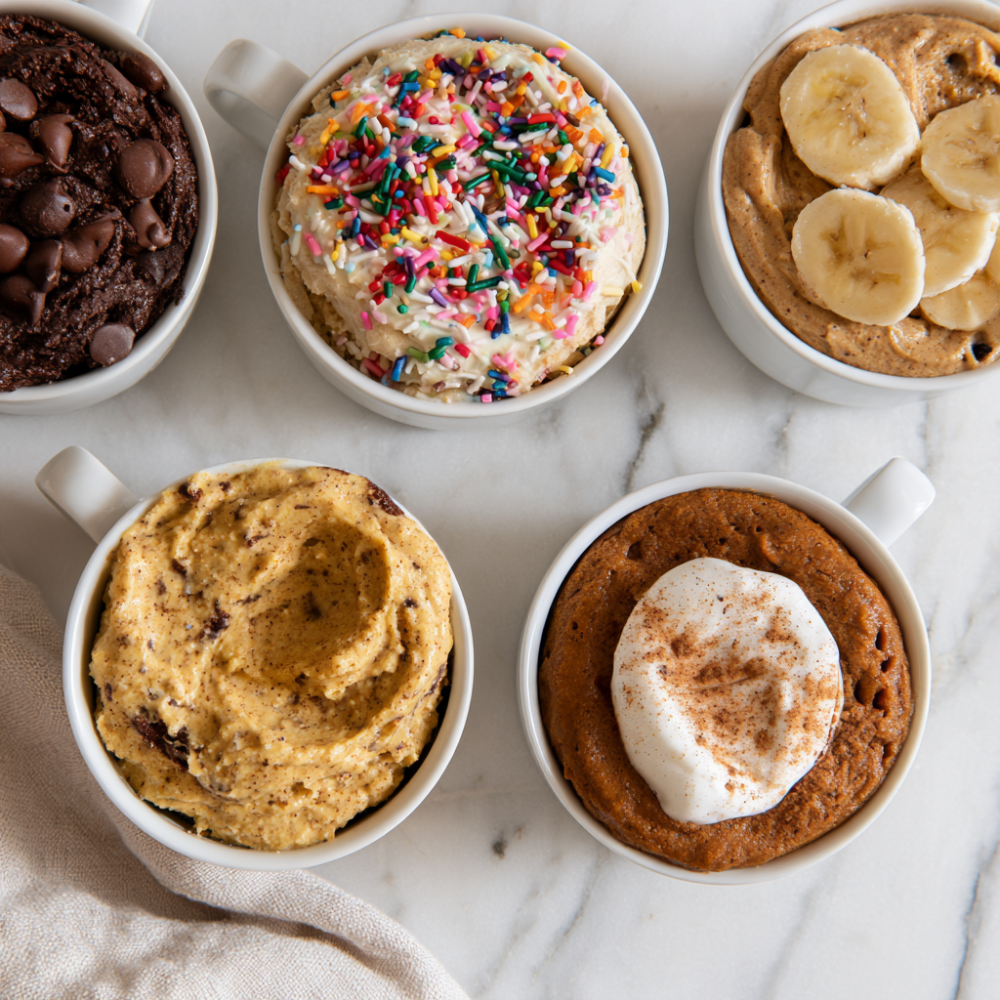
Every mug cake below follows the same base formula. Master this, and you can improvise endlessly.
Servings: 1
Active Prep: 3 minutes
Cook Time: 60–75 seconds
Master Base Nutrition: ~300 calories, 28g protein, 24g carbs, 7g fat
Base Ingredients:
- 1 scoop (about 30g) protein powder (whey-casein blend highly recommended)
- 2 tbsp oat flour (or rolled oats blended into a fine flour)
- 2 tbsp plain non-fat Greek yogurt
- 3 tbsp unsweetened almond milk
- 1 tbsp maple syrup, honey, or zero-calorie granular sweetener
- ¼ tsp baking powder
- Pinch of kosher salt
Liquid Adjustment Note: Reduce the almond milk to 1 tablespoon if you’re adding wet purees like pumpkin or mashed banana. Increase it to 4 tablespoons if you’re adding dry powders like cocoa powder or powdered peanut butter. Those ingredients either release water or absorb it, and the base formula assumes neither.
Base Instructions:
- Whisk the wet foundation. In a 12-ounce microwave-safe mug, vigorously whisk together the Greek yogurt, almond milk, sweetener, and any wet extracts until completely uniform.
- Add the dry ingredients and scrape the corners. Add the protein powder, oat flour, baking powder, and salt. Using a small fork, stir until the batter is uniform. Crucial step: Run the prongs of your fork firmly around the bottom inside edge of the mug to dislodge any trapped pockets of dry flour or protein powder. Those pockets are what turn into chalky clumps after microwaving.
- Check the texture consistency. The batter should be thick, dense, and scoopable—resembling thick frosting or rich brownie batter. It should not be loose or pourable. If the batter is thin enough to pour, it has too much liquid and will overflow.
- If too dry or chalky: Stir in 1 teaspoon of milk at a time.
- If too runny: Stir in 1 teaspoon of oat flour.
- Microwave with precision. Microwave on high for 60 seconds. Look through the glass. If the center is still highly glossy or liquid, microwave in brief 10- to 15-second bursts. Stop cooking the moment the top looks matte and just barely set.
- Let it carryover cook. Let the mug cake rest untouched for 1 full minute. The internal steam finishes cooking the very center, transforming it from gooey to perfectly fluffy.
Mug Geometry Tip: A wide, straight-sided mug or ramekin is easier to mix in than a tall, narrow one, because a fork can actually reach the corners. If your mug is narrow, mix the batter in a small bowl first and transfer it to the mug before microwaving.
Flavor 1: Double Chocolate Fudge Protein Mug Cake

We’ve already published a fan-favorite chocolate mug cake recipe that we believe is the best version out there. It uses an egg for structure, a touch of maple syrup for balance, and a 1-minute batter rest for the most tender, fudgy crumb.
It’s deeply chocolatey, genuinely satisfying, and one of the most popular recipes on this site.
Why we love it:
- It uses a whole egg for structure and an extra 6g of protein.
- A touch of maple syrup balances the cocoa powder’s bitterness.
- The 1-minute batter rest hydrates the oat flour for a more tender crumb.
- Topped with sliced strawberries and flaky sea salt, it tastes like a real dessert.
Get the full Double Chocolate Fudge Protein Mug Cake recipe here.
Nutrition per serving (from the original recipe): ~320 calories, 30g protein, 28g carbs, 10g fat
Flavor 2: Birthday Cake Protein Mug Cake
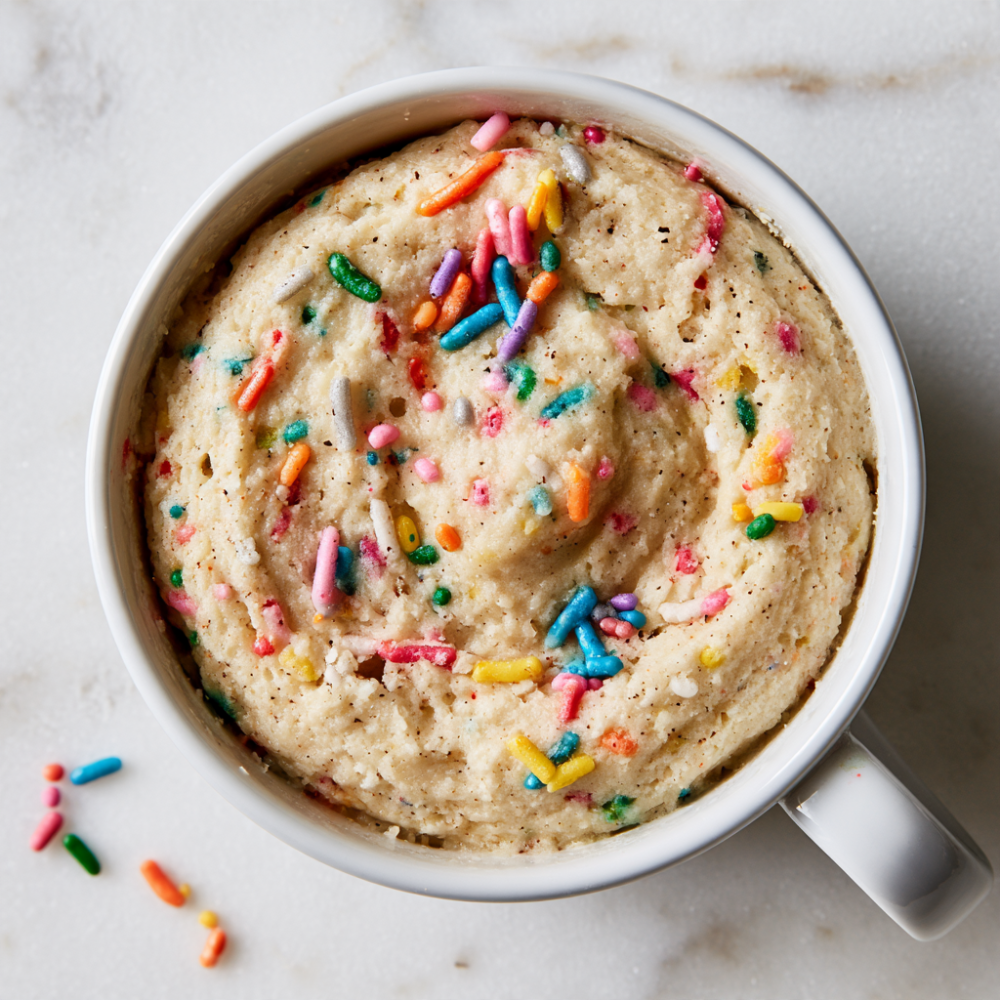
Light, buttery vanilla cake packed with colorful sprinkles that makes every afternoon feel like a celebration.
The almond extract is reduced to just a hint, and a touch of sweetener makes it taste like actual cake batter rather than plain yogurt.
Servings: 1
Cook Time: 60–75 seconds
Estimated Nutrition per Serving: ~320 calories, 28g protein, 29g carbs, 7g fat
Ingredients:
- 1 scoop vanilla protein powder (whey-casein blend recommended)
- 2 tbsp oat flour
- 2 tbsp plain non-fat Greek yogurt
- 3 tbsp unsweetened almond milk
- 1 tbsp erythritol, monk fruit, or stevia blend (or 1 tsp honey/maple syrup)
- ¼ tsp baking powder
- 2–3 drops almond extract
- ½ tsp vanilla extract
- 1 tbsp rainbow sprinkles (plus extra for topping)
- Pinch of kosher salt
Instructions:
- In a 12-ounce microwave-safe mug, vigorously whisk together the Greek yogurt, almond milk, sweetener, vanilla extract, and 2–3 drops of almond extract until completely smooth.
- Add the protein powder, oat flour, baking powder, and a pinch of salt. Whisk with a small fork until you form a smooth, thick cake batter. Run the prongs of your fork firmly around the bottom inside edge of the mug to dislodge any trapped dry pockets.
- The batter should be thick and scoopable, not pourable. If it’s too thin, add a teaspoon of oat flour. If it’s too thick, add a teaspoon of milk.
- Fold in the rainbow sprinkles.
- Microwave on high for 60 seconds. Check the top. If the center still looks wet, microwave in brief 10-second intervals until the edges are firm and the center is just barely set.
- Let it rest for 1 minute. Top with extra sprinkles and enjoy warm.
Protein Boost: Use a vanilla whey-casein blend for the most reliable, cake-like texture.
Flavor 3: Fudgy Peanut Butter Banana Protein Mug Cake
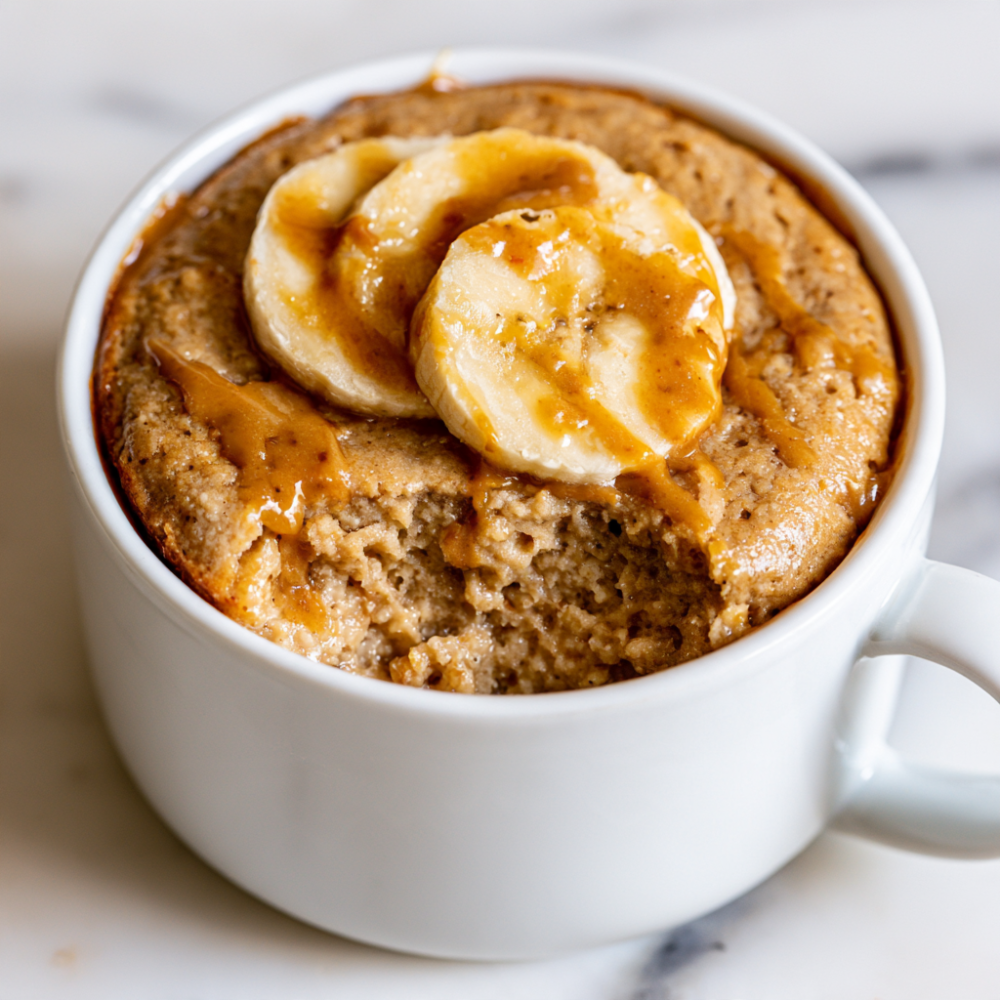
Rich, nutty, and ultra-satisfying—like a warm peanut butter cookie with natural sweetness.
Increase the almond milk to combat the heavy, moisture-wicking properties of powdered peanut butter so the cake stays soft and fudgy instead of turning into a dry brick.
Servings: 1
Cook Time: 60–75 seconds
Estimated Nutrition per Serving: ~340 calories, 29g protein, 30g carbs, 9g fat
Ingredients:
- 1 scoop vanilla or peanut butter protein powder
- 2 tbsp oat flour
- 2 tbsp powdered peanut butter (PB2 or PB Fit)
- ¼ ripe banana, thoroughly mashed
- 2 tbsp plain non-fat Greek yogurt
- 4 tbsp (¼ cup) unsweetened almond milk
- 1 tsp maple syrup, honey, or zero-calorie sweetener
- ¼ tsp baking powder
- Pinch of kosher salt
Instructions:
- Mash the banana in the bottom of your mug until no large lumps remain.
- Whisk in the Greek yogurt, almond milk, and sweetener until smooth.
- Add the protein powder, oat flour, powdered peanut butter, baking powder, and salt. Whisk thoroughly until smooth. Run the prongs of your fork firmly around the bottom inside edge of the mug to dislodge any trapped dry pockets.
- The batter should look like thick, scoopable peanut butter. If it’s too thick to stir, add a teaspoon of milk. If it’s runny, add a teaspoon of oat flour.
- Microwave on high for 60 seconds. If the center is still visibly wet, microwave for another 10–15 seconds. Don’t overbake; it should stay slightly gooey in the center.
- Let it rest for 1 minute. Top with a warm drizzle of real peanut butter or fresh banana slices.
Protein Boost: Use a whey-casein blend protein powder for the best texture.
Flavor 4: Spiced Pumpkin Bread Protein Mug Cake
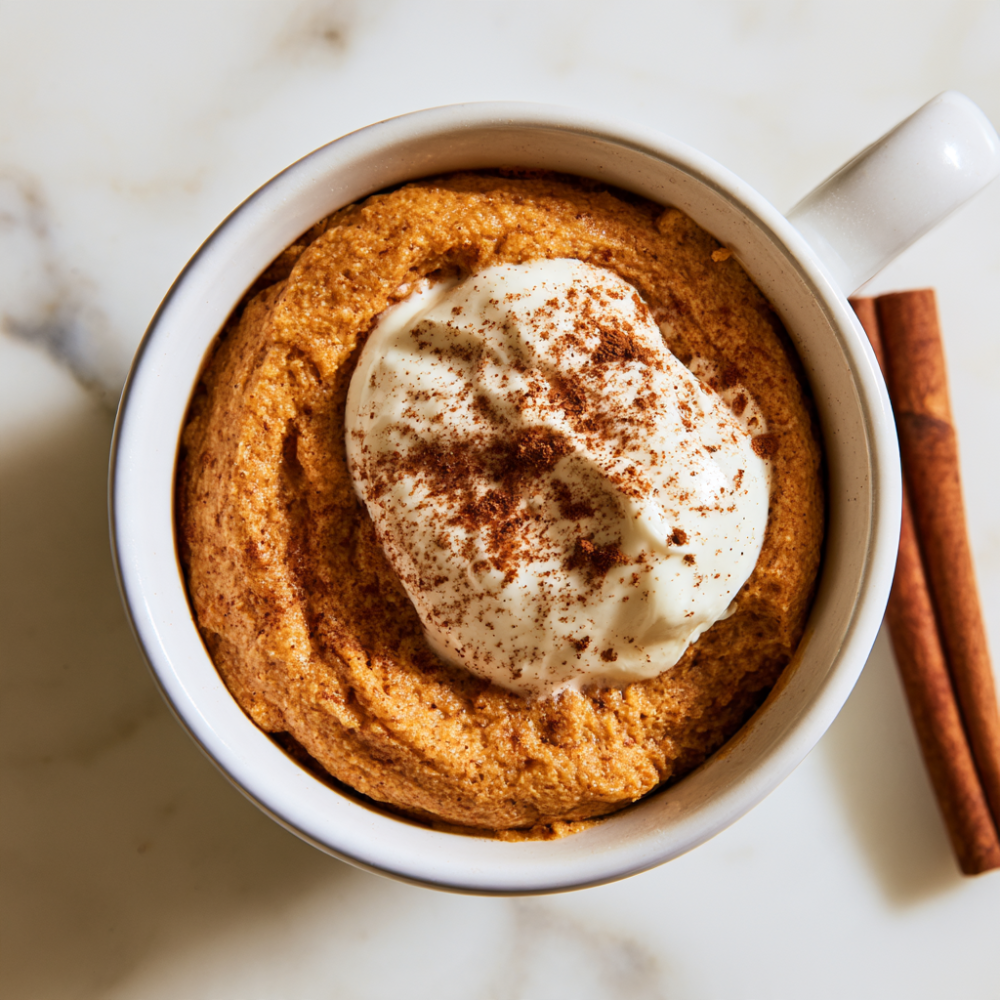
Cozy, spiced coffeehouse pumpkin bread in a single-serve mug.
The almond milk is reduced to compensate for the incredibly high water content of pumpkin puree, preventing the cake from turning into a gummy, muddy mess.
Servings: 1
Cook Time: 60–75 seconds
Estimated Nutrition per Serving: ~305 calories, 28g protein, 27g carbs, 7g fat
Ingredients:
- 1 scoop vanilla protein powder
- 2 tbsp oat flour
- 2 tbsp canned pumpkin puree (not pumpkin pie filling)
- 2 tbsp plain non-fat Greek yogurt
- 1 tbsp unsweetened almond milk
- 1 tbsp brown-sugar-style erythritol or maple syrup
- ½ tsp pumpkin pie spice
- ¼ tsp baking powder
- Pinch of kosher salt
Instructions:
- In a 12-ounce microwave-safe mug, whisk together the pumpkin puree, Greek yogurt, 1 tablespoon almond milk, and sweetener until uniform.
- Add the vanilla protein powder, oat flour, pumpkin pie spice, baking powder, and salt. Whisk until a luxurious, spice-flecked batter forms. Run the prongs of your fork firmly around the bottom inside edge of the mug to dislodge any trapped dry pockets.
- The batter should be thick and scoopable. If it looks wet or loose, add a teaspoon of oat flour.
- Microwave on high for 60 seconds. Pumpkin retains heat heavily; if the top looks mostly dry, stop cooking. If it is liquid, add one 15-second interval.
- Let it sit for 60 seconds to firm up structurally. Top with an extra pinch of pumpkin pie spice or a tiny dollop of Greek yogurt.
Protein Boost: Add a tablespoon of chopped pecans for healthy fat and crunch.
Tips for the Best Protein Powder Mug Cakes
Use a whey-casein blend protein powder. Whey alone dries out in the microwave. Plant-based protein turns gummy. A whey-casein blend produces the most reliable, cake-like texture.
Don’t use more than one scoop of protein powder. More makes the cake dense and chalky. One scoop is the sweet spot.
Always add a sweetener. Protein powder alone cannot overcome the tang of Greek yogurt and the blandness of oat flour. One tablespoon of maple syrup, honey, or a zero-calorie sweetener is essential.
Aim for scoopable, not pourable. If your batter pours, it has too much liquid and will overflow. It should be thick and dense, like frosting.
Scrape the corners of the mug. Standard mugs have hard angles at the bottom that forks can’t easily reach. Dry protein powder hides there and turns into chalky clumps. Run your fork around the bottom inside edge before microwaving.
Adjust the liquid based on your add-ins. Powdered peanut butter absorbs liquid, so the banana recipe needs more milk. Pumpkin puree is water-heavy, so the pumpkin recipe needs less. Follow the recipe as written, then adjust based on your protein powder brand.
Whisk the wet ingredients first, then add the dry. It prevents clumps in the protein powder and ensures a smooth batter.
Use a 12-ounce mug or larger. Smaller mugs will overflow as the cake rises. A wide, straight-sided mug is easier to mix in than a narrow one.
Microwave in intervals. Start with 60 seconds, then check. Add 10- to 15-second intervals until the top is matte and just barely set. Overcooking by 10 seconds can turn a fluffy cake into a rubber puck.
Let it rest for 1 minute before eating. The carryover steam finishes cooking the center and firms up the crumb. This step is not optional.
Add mix-ins to the batter, not on top. Chocolate chips, nuts, and sprinkles distribute more evenly when folded into the batter.
Eat it immediately. Mug cakes are best within 5 minutes of coming out of the microwave.
Troubleshooting
The cake turned out rubbery. You overcooked it, or you used too much protein powder. Pull it when the top is just barely set, and stick to one scoop.
The cake turned out dry. It was overcooked, or the protein powder absorbed too much liquid. Reduce the microwave time and add an extra tablespoon of milk next time.
The cake turned out gummy. You used plant-based protein powder, or your batter was too thin (pourable instead of scoopable). Whey-casein blends and a thicker batter produce the most reliable texture.
The cake overflowed the mug. Your mug was too small, or the batter was too thin. Use a 12-ounce mug or larger and check the batter consistency before microwaving.
The cake tastes chalky. You used too much protein powder, or you didn’t scrape the corners of the mug, leaving dry pockets. Stick to one scoop and always scrape the bottom edge.
The cake tastes bland. You didn’t add enough sweetener. Add another teaspoon of maple syrup or a pinch of zero-calorie sweetener next time.
The center is still gooey after 90 seconds. Every microwave is different. Add 10-second intervals until the top is just set. The center will continue cooking as it rests.
Easy Variations
Paleo Mug Cake. Swap the oat flour for 1 tablespoon of almond flour and 1 tablespoon of coconut flour. Use a paleo-friendly protein powder and skip the Greek yogurt (use 1 egg instead).
Keto Mug Desserts. Use a keto-friendly protein powder, almond flour instead of oat flour, and a sugar-free sweetener. Skip the banana.
Kodiak Mug Cake. Swap the oat flour for 3 tablespoons of Kodiak Cakes Power Cakes mix. Skip the baking powder and salt. Protein is about 18–22g.
Greek Yogurt Mug Cake (Extra Protein). Increase the Greek yogurt to ⅓ cup and reduce the milk to 1 tablespoon. Protein rises to about 34–36g.
Low Carb Mug Cake. Swap the oat flour for 2 tablespoons of almond flour. Skip any added sweetener and use a low-carb protein powder.
Protein Brownie in a Mug. Add 1 tablespoon of cocoa powder to the batter, use chocolate protein powder, and skip the flavor extracts. Increase the milk to 4 tablespoons. Protein is about 32–34g.
Protein Mug Cookie. Skip the oat flour and coconut flour. Use 1 tablespoon of almond flour and 1 tablespoon of oat flour. Reduce the milk to 1 tablespoon. Microwave for 60 seconds for a softer, cookie-like texture.
Storage and Food Safety
Refrigerator: Eat mug cakes immediately. If you have leftovers, refrigerate in an airtight container for up to 2 days and reheat gently in the microwave for 20–30 seconds.
Freezer: Not recommended. Mug cakes don’t freeze well—the texture suffers.
Food Safety: The egg (if using) must be fully cooked. The cake is done when the top is set and no longer glossy. Refrigerate leftovers within 2 hours.
Frequently Asked Questions
How much protein is in a protein powder mug cake?
About 28–30 grams per mug, depending on the protein powder and Greek yogurt brands. The base formula delivers about 28g.
Can I make this without protein powder?
Yes, but you’ll lose about 20 grams of protein. Use ¼ cup oat flour, 1 tablespoon almond flour, and an extra tablespoon of sweetener. Protein drops to about 12–14g.
What protein powder works best?
A vanilla or chocolate whey-casein blend produces the most reliable texture. Whey alone dries out in the microwave. Plant-based protein turns gummy.
Can I make this dairy-free?
Yes. Use dairy-free Greek yogurt and unsweetened almond milk. Use a plant-based protein powder and expect a slightly denser texture.
Why did my mug cake turn out rubbery?
It was overcooked, or you used too much protein powder. Pull it when the top is just barely set and stick to one scoop.
Why did my mug cake overflow?
Your batter was too thin (pourable instead of scoopable) or your mug was too small. Use a 12-ounce mug or larger and aim for a thick, frosting-like consistency.
Can I double this recipe?
Yes, but use two mugs. Doubling in one mug will overflow.
Is this recipe gluten-free?
Yes, if you use certified gluten-free oat flour and a gluten-free protein powder.
What size mug should I use?
A 12-ounce mug or larger. A wide, straight-sided mug is easier to mix in than a tall, narrow one.
More High-Protein Dessert Recipes You’ll Love
- Peanut Butter Chocolate Bars (No-Bake, High-Protein)
- Cranberry Orange Protein Baked Oatmeal Squares
- 4 Dessert-Inspired High-Protein Yogurt Bowls
Conclusion
These four protein powder mug cakes prove you don’t need to choose between your fitness goals and your sweet tooth.
With a simple base formula and four craveable flavors—Double Chocolate, Birthday Cake, Peanut Butter Banana, and Pumpkin Spice—you can have a warm, fluffy, 28g-protein dessert ready in 2 minutes.
The keys are simple: use a whey-casein blend protein powder, stick to one scoop, always add a sweetener, aim for a scoopable batter, scrape the corners of your mug, microwave in intervals, and let it rest for a full minute before eating.
Do that, and you’ll never look at a sad protein bar the same way again.
For the chocolate version, head to our full Double Chocolate Fudge Protein Mug Cake recipe—it’s the one we make most often. For the other three flavors, pick your favorite and grab a mug.
Make it tonight.