There’s a specific moment at a dinner table when the food stops the conversation. A platter gets set down, and everyone leans in—not because it’s complicated, but because it looks like something that took hours.
These skirt steak pinwheels are that dish.
Thin skirt steak, spread with a garlic-herb cream cheese and parmesan filling, rolled into a tight log, and sliced into spirals. Seared hard in a hot skillet for a deep crust, then finished in the oven until the inside is perfectly medium-rare. Sliced open, each pinwheel shows off the swirl of green spinach and melted cheese inside the beef.
It takes about 35 minutes of active work. It uses six ingredients plus salt and pepper. And it works equally well on a Tuesday night and on a holiday table.
Let’s make them.
Why This Recipe Works
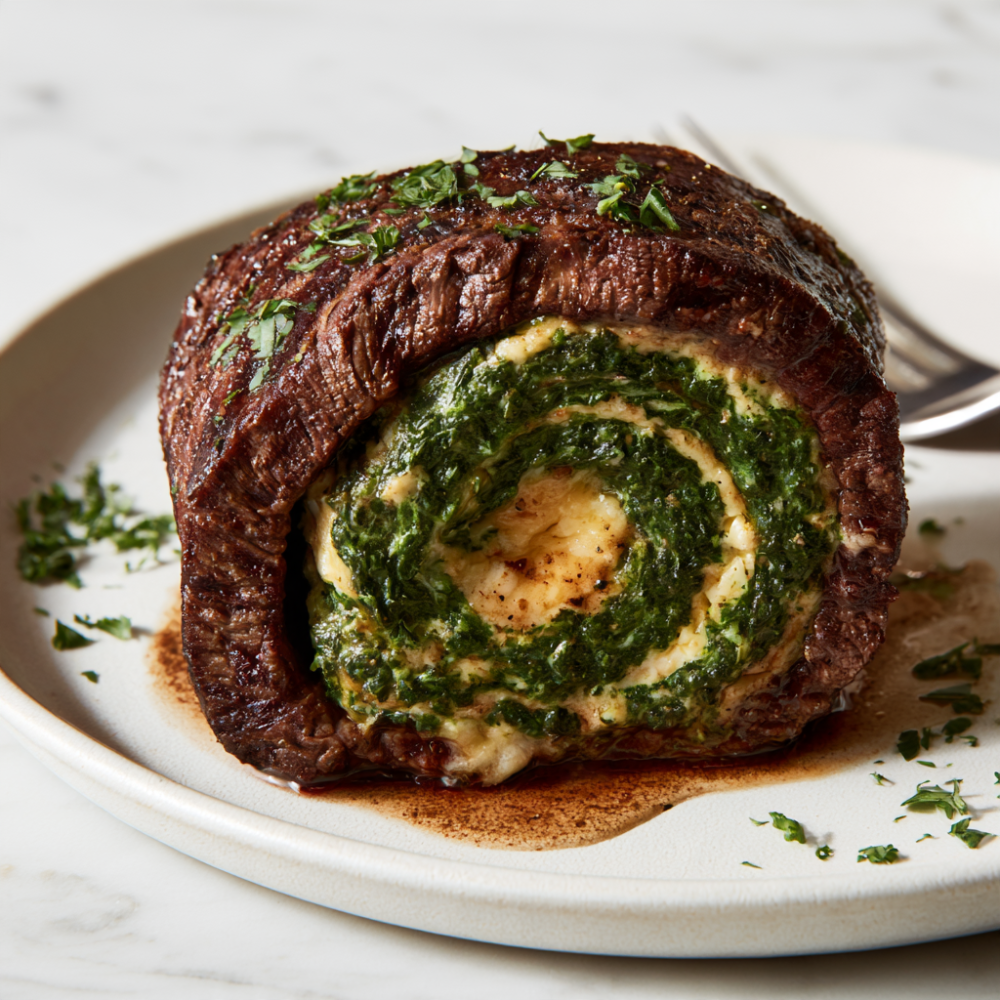
Skirt steak is the right cut. It’s long, flat, and thin—which means it rolls easily and cooks fast. It also has an intense beefy flavor that stands up to the garlic-and-herb filling.
You roll with the grain so you slice against it. Skirt steak has very long, distinct muscle fibers. Rolling the steak with the grain running vertically means that when you slice the finished log into pinwheels, your knife cuts across those fibers. That’s what makes each bite tender instead of stringy. Skip this, and you’ll wonder why your steak is chewy even though it’s perfectly cooked.
The cream cheese is the binder. It holds the spinach and parmesan in place as the steak rolls and sears. Without it, the filling falls out during cooking.
Lemon zest is what makes it taste upscale. Most recipes skip it. It brightens the filling and cuts through the richness of the cheese and beef.
Chilling before slicing is non-negotiable. Warm cream cheese oozes out during searing, and the pinwheels fall apart. Twenty minutes in the fridge firms everything up.
Searing in batches prevents steaming. Crowding the pan drops the temperature, and the meat releases moisture instead of forming a crust.
Pull at 130°F and no higher. Skirt steak gets tough and chewy past medium, and the cream cheese filling starts to break and leak. Medium-rare is the target for both texture and structure.
The pan sauce is optional but worth it. While the pinwheels rest, the fond in the skillet is pure flavor. Two minutes of work elevates the whole plate.
Skirt Steak Pinwheels (Garlic Herb Stuffed)
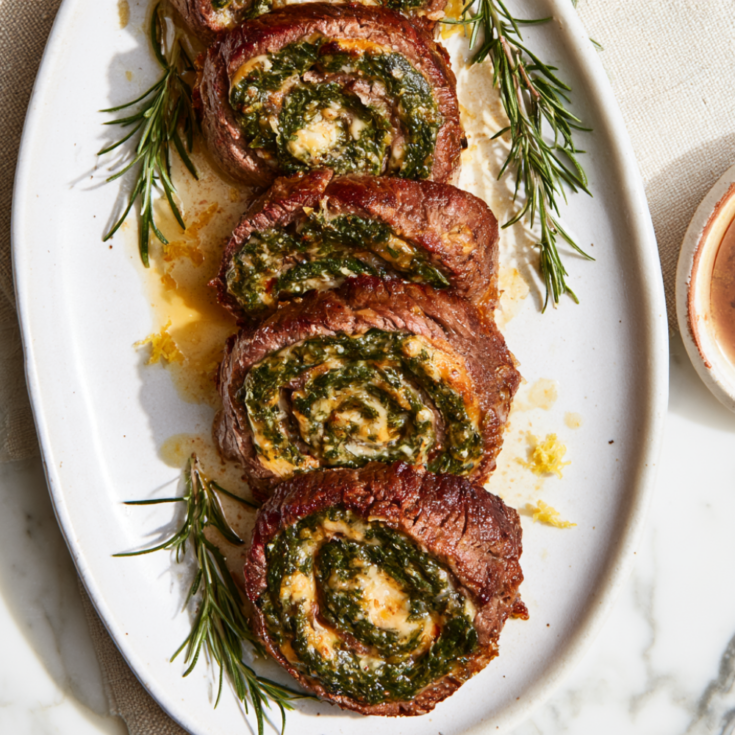
Thin skirt steak rolled with a garlic-herb cream cheese, spinach, and parmesan filling, seared to a deep golden crust, and finished in the oven.
Ingredients
For the Steak:
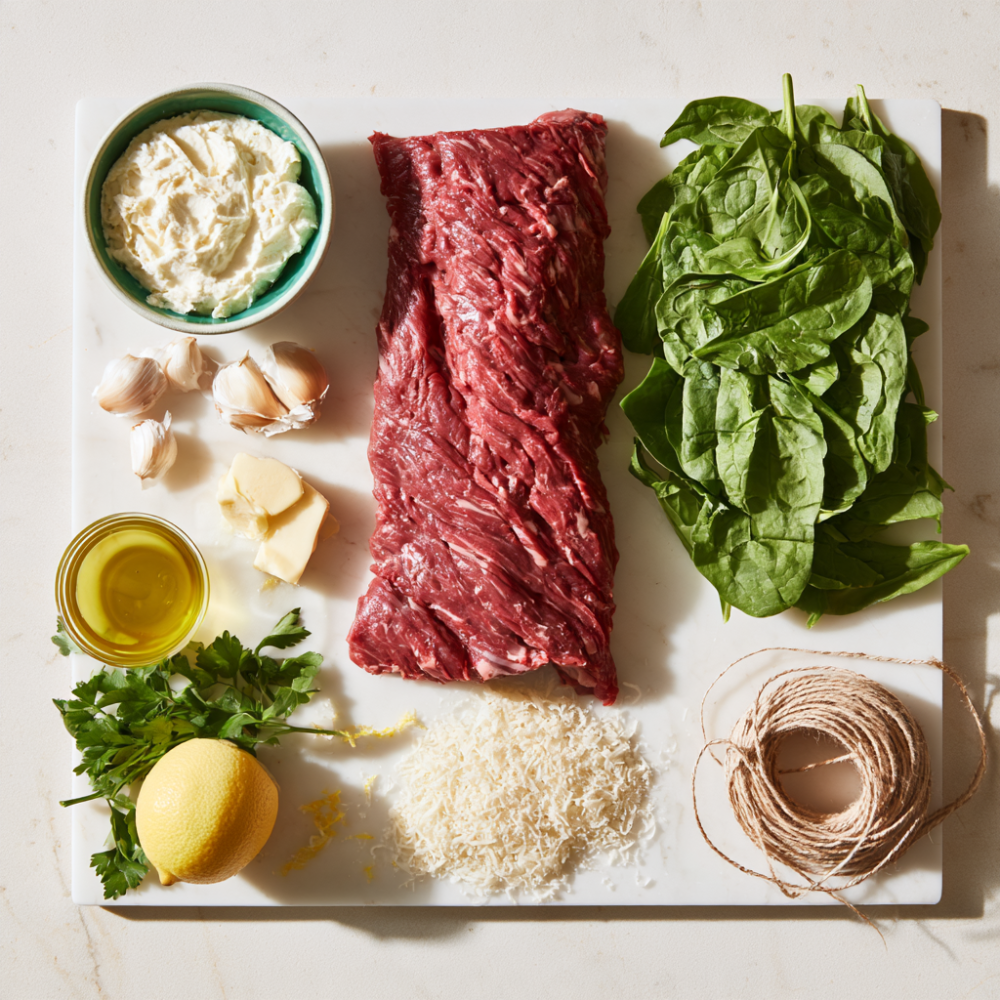
- 2 lbs skirt steak, trimmed of the tough membrane
- 1 tsp kosher salt
- ½ tsp freshly ground black pepper
For the Filling:
- 4 oz light cream cheese, softened to room temperature
- 1½ cups grated Parmesan cheese
- 2 cups fresh baby spinach, torn into small pieces
- 3 cloves garlic, minced
- 1 tbsp fresh parsley, chopped (or 2 tsp dried)
- Zest of 1 lemon
- ¼ tsp kosher salt
- ¼ tsp freshly ground black pepper
For Searing:
- 1 tbsp olive oil
- 1 tbsp unsalted butter
- Kitchen twine (or toothpicks and skewers)
Optional Pan Sauce:
- ½ cup low-sodium beef broth
- 1 tbsp unsalted butter
- 1 tsp Dijon mustard
Instructions
- Trim and dry-brine the steak. Lay the skirt steak on a cutting board. If your butcher hasn't already, remove the tough silverskin membrane from one side by sliding a knife underneath it and pulling it away. Pat the steak dry. Season both sides with kosher salt and black pepper. Let it sit at room temperature for 30 minutes. This dry brine seasons the meat through and improves its texture.
- Pound to an even thickness. Cover the steak with plastic wrap or parchment. Using a meat mallet or the bottom of a heavy skillet, pound gently to an even ⅓ to ½ inch thickness. Don't over-pound. Skirt steak is naturally thin and tears easily. You're evening it out, not flattening it further.
- Make the filling. In a medium bowl, combine the softened cream cheese, Parmesan, torn spinach, minced garlic, parsley, lemon zest, salt, and pepper. Stir until it forms a thick, spreadable paste. Taste and adjust the salt.
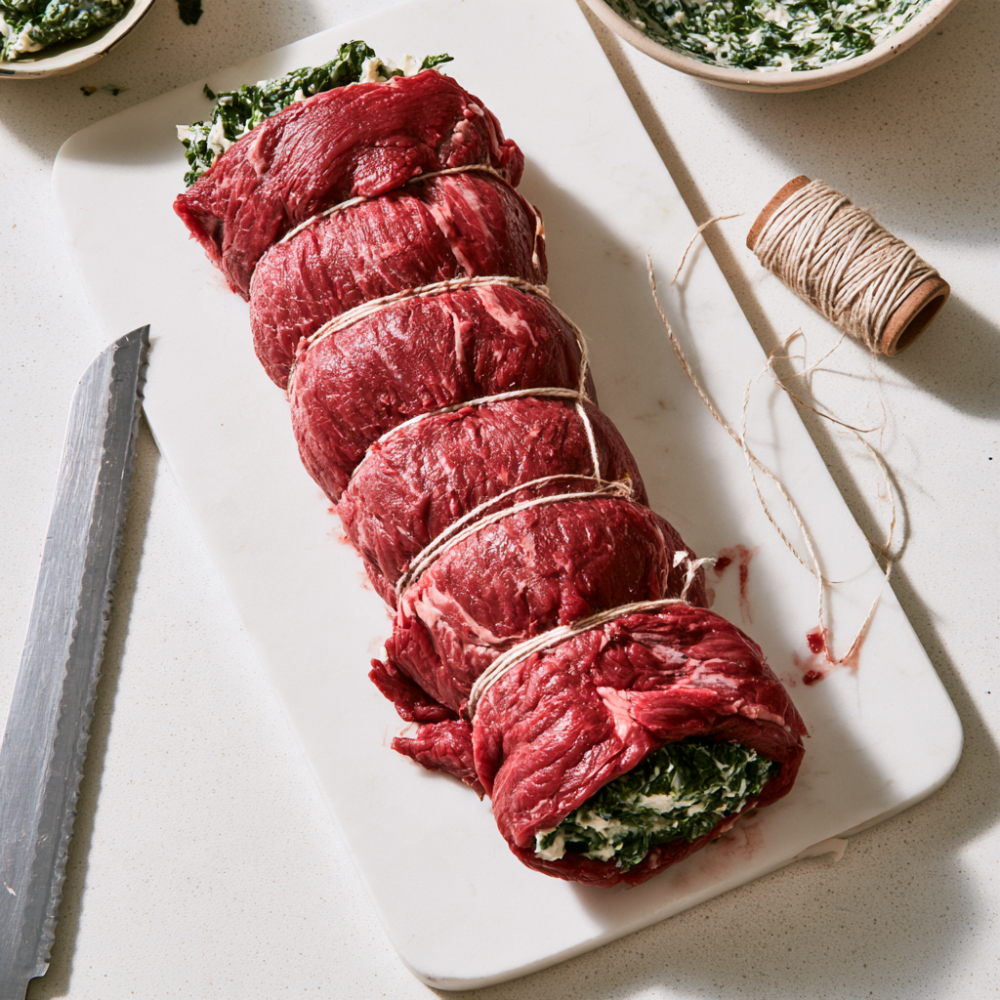
- Spread and roll with the grain running away from you. Lay the pounded steak flat with the grain running vertically, away from your body. This orientation matters—it's what ensures you slice across the grain later. Spread the filling evenly over the entire surface, leaving a 1-inch border along the edge farthest from you. Starting from the edge closest to you, roll the steak tightly into a log. Roll firmly—loose rolls fall apart when sliced.
- Tie and chill. Tie the log with kitchen twine at 1½-inch intervals, or secure with toothpicks and skewers. Place the rolled log on a plate, cover loosely, and refrigerate for at least 20 minutes and up to 24 hours. This step is not optional. Chilling firms the filling so the pinwheels hold their shape.
- Slice across the grain. Using a sharp serrated knife, slice the chilled log between each piece of twine into individual pinwheels, each about 1½ to 2 inches thick. You should get 6 pinwheels. Because the grain runs lengthwise through the log, each slice cuts cleanly across the muscle fibers. That's your tenderness. If any filling crumbles out, press it back in gently.
- Preheat the oven. Preheat to 375°F. Place a large oven-safe skillet (cast iron works best) over medium-high heat.
- Sear in batches. Add the olive oil and butter to the hot skillet. Once the butter melts and foams, add 3 pinwheels, cut-side down, leaving space between them. Sear 2–3 minutes without moving them, until a deep brown crust forms. Flip and sear 2 minutes more. Transfer to a plate and repeat with the remaining 3.
- Finish in the oven. Return all pinwheels to the skillet (or transfer to a baking sheet if crowded). Transfer to the oven and cook 5–7 minutes, until an instant-read thermometer inserted into the center of a pinwheel reads 130°F for medium-rare or 135°F for medium. Start checking at 4 minutes—skirt steak cooks fast and overcooks faster. Pull at 130°F to keep the meat tender and prevent the cream cheese filling from breaking and leaking.
- Rest for 10 minutes. Transfer the pinwheels to a cutting board and tent loosely with foil. Rest a full 10 minutes. This keeps the juices inside the meat instead of on the plate.
- Make the pan sauce (optional). While the pinwheels rest, return the skillet to medium heat. Add the beef broth and scrape up the browned bits. Whisk in the butter and Dijon mustard, then simmer 2 minutes, until slightly reduced.
- Serve. Snip away the twine, transfer to a platter, spoon the pan sauce over, and garnish with fresh parsley.
Notes
Protein per Serving: About 34g
Nutrition note: Estimated per serving with skirt steak, light cream cheese, Parmesan, and olive oil and butter for searing (not counting pan sauce): ~370 calories, 34g protein, 3g carbs, 24g fat.
Tips for the Best Skirt Steak Pinwheels
Remove the membrane. Skirt steak has a tough silverskin on one side that will make the pinwheels chewy if left on. Ask your butcher, or slide a knife underneath and pull it away.
Salt the steak 30 minutes ahead. A quick dry brine seasons the meat through and improves the texture.
Pound gently. Skirt steak is already thin. Over-pounding creates holes that let the filling leak out.
Roll with the grain running away from you. This step guarantees every slice cuts across the muscle fibers. It’s the difference between tender pinwheels and chewy ones.
Soften the cream cheese to room temperature. Cold cream cheese won’t spread evenly and will tear the steak.
Chill the log before slicing. Twenty minutes minimum. Warm filling oozes out during searing, and the pinwheels fall apart.
Use a serrated knife. A straight-edged knife compresses the roll. A serrated knife saws through cleanly.
Sear in batches, cut-side down first. Three at a time in a large skillet. This gives you a beautiful crust on the show side.
Pull at 130°F. Carryover cooking brings the final temperature to about 135°F during the rest. That’s medium-rare for skirt steak. Past 140°F, the meat turns chewy, and the filling starts to break.
Rest for a full 10 minutes. Five minutes isn’t enough for a rolled steak.
Make the pan sauce. The fond in the skillet is the best part of the dish.
Troubleshooting
The filling oozed out during searing. You didn’t chill the log long enough, or the roll was too loose. Chill for 20 minutes and roll more tightly.
The pinwheels fell apart in the pan. Same cause—warm filling and a loose roll.
The steak is chewy. You cooked it past medium, you left the membrane on, or you sliced with the grain instead of across it. Pull at 130°F and check your roll orientation.
The steak is too rare in the center. Your pinwheels are thicker than 2 inches, or your oven runs cool. Flatten the log slightly before slicing.
The steak tastes bland. You skipped the dry brine, or you didn’t season the filling enough. Taste the filling before spreading.
The parmesan didn’t melt. You used pre-grated parmesan from a shaker, which contains anti-caking agents. Grate your own from a block.
Easy Variations
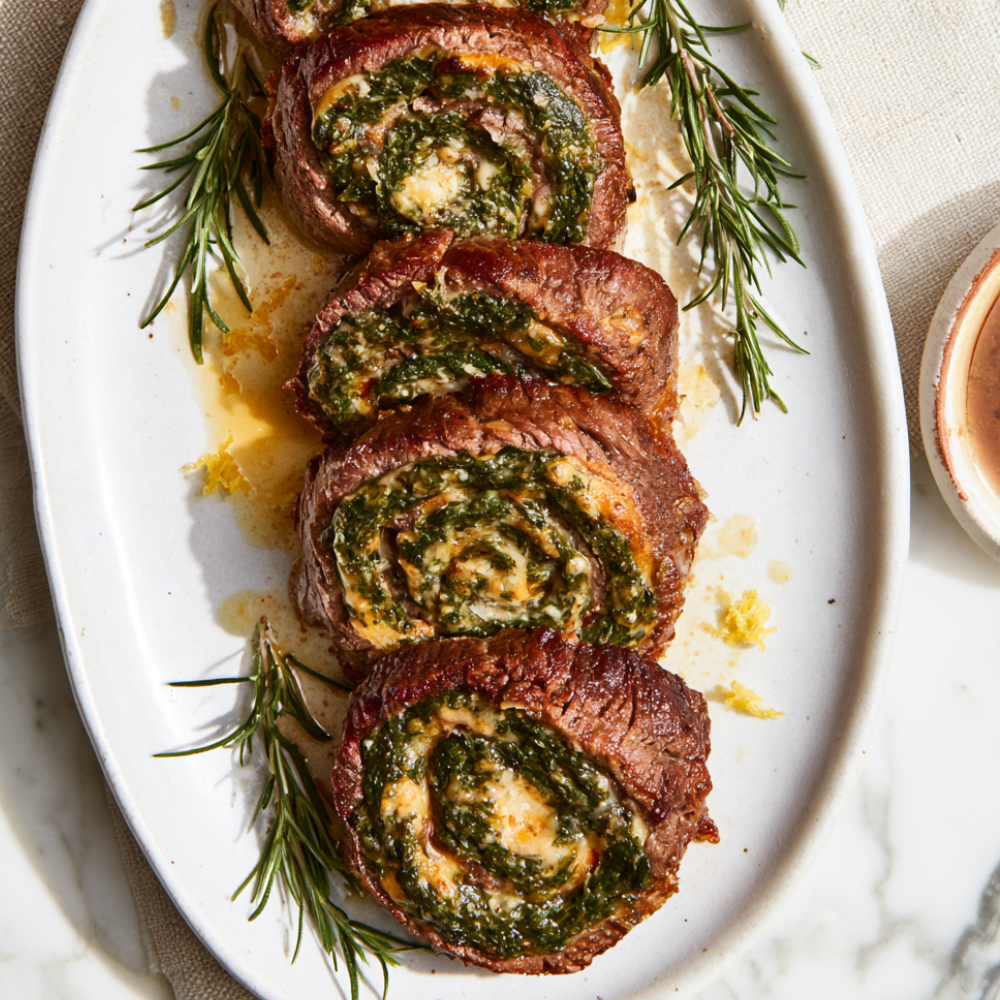
Flank Steak Pinwheels. Flank works the same way. It’s slightly thicker, so pound it to an even ½ inch and add 2 minutes to the oven time.
Sun-Dried Tomato Version. Add ¼ cup chopped sun-dried tomatoes to the filling.
Provolone Version. Swap the parmesan for 1 cup shredded provolone. It melts more dramatically.
Goat Cheese Version. Swap the cream cheese for 4 oz softened goat cheese. Tangier and slightly lighter.
Bacon Version. Lay 4 slices of cooked bacon over the filling before rolling.
Marinated Skirt Steak (No Filling). Skip the pinwheel entirely. Marinate the whole steak in soy sauce, garlic, lime juice, and cumin for 2 hours, then grill 3–4 minutes per side. Slice against the grain.
Storage and Food Safety
Refrigerator: Store leftover pinwheels in an airtight container for up to 3 days. Reheat gently in a 300°F oven for 8–10 minutes. Do not microwave—it will overcook the steak.
Freezer: Freeze cooked pinwheels wrapped tightly in foil for up to 2 months. Thaw overnight in the refrigerator, then reheat at 300°F for 10 minutes.
Make Ahead: Assemble the rolled log up to 24 hours ahead. Wrap tightly and refrigerate. Slice and sear straight from the fridge—no need to come to room temperature.
Food Safety: Whole cuts of beef like skirt steak are safe at medium-rare (130°F) as long as the exterior has been seared. If serving anyone pregnant, immunocompromised, or a young child, cook to 145°F. Refrigerate leftovers within 2 hours.
Frequently Asked Questions
What’s the difference between skirt steak and flank steak? Skirt comes from the diaphragm and has a looser, more visible grain. Flank comes from the abdominal muscles and is slightly thicker and leaner. Both work.
What temperature should I cook skirt steak to? 130°F for medium-rare, 135°F for medium. Past 140°F, the meat turns chewy and the filling breaks.
How do I keep the pinwheels from falling apart? Roll tightly, chill 20 minutes before slicing, and sear in batches without crowding.
Do I need to remove the membrane? Yes. The silverskin is tough and won’t break down during cooking.
Can I make these ahead of time? Yes. Assemble the rolled log up to 24 hours in advance and refrigerate.
Can I cook these on the grill? Yes. Sear over high heat for 2–3 minutes per side, then move to indirect heat and close the lid until the internal temperature hits 130°F.
Can I make these in the air fryer? Yes. Air fry at 400°F for 8–10 minutes, flipping once.
Can I double this recipe? Yes. Two logs fit on a large baking sheet, and you can sear in batches or use two skillets.
More Easy Dinner Recipes You’ll Love
- Crockpot Smothered Chicken (Creamy Gravy, 37g Protein!)
- Creamy Crockpot Corn Chowder Loaded with Bacon (15-Minute Prep!)
- Crockpot Ravioli Lasagna (Lazy 4-Hour Dinner, 32g Protein!)
- High-Protein Chicken Noodle Soup (From Scratch in 35 Minutes)
Conclusion
These skirt steak pinwheels are the dish that makes people think you spent all day in the kitchen—when really you spent 35 minutes and six ingredients.
The keys are simple: remove the membrane, salt the steak 30 minutes ahead, roll with the grain running away from you so every slice cuts across it, chill the log before slicing, sear in batches cut-side down, pull at 130°F, and rest for a full 10 minutes. Do that, and you’ll have a platter that stops conversation.
Make them this week. Watch them disappear.