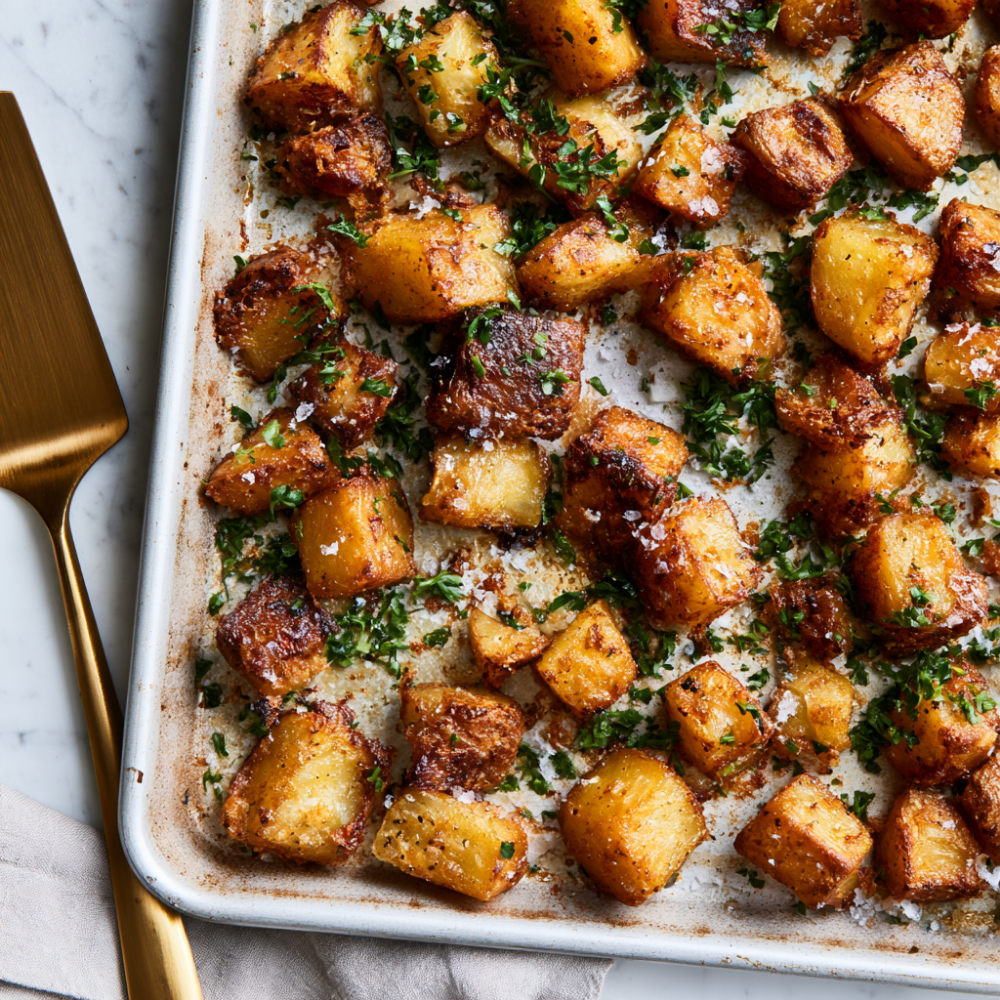

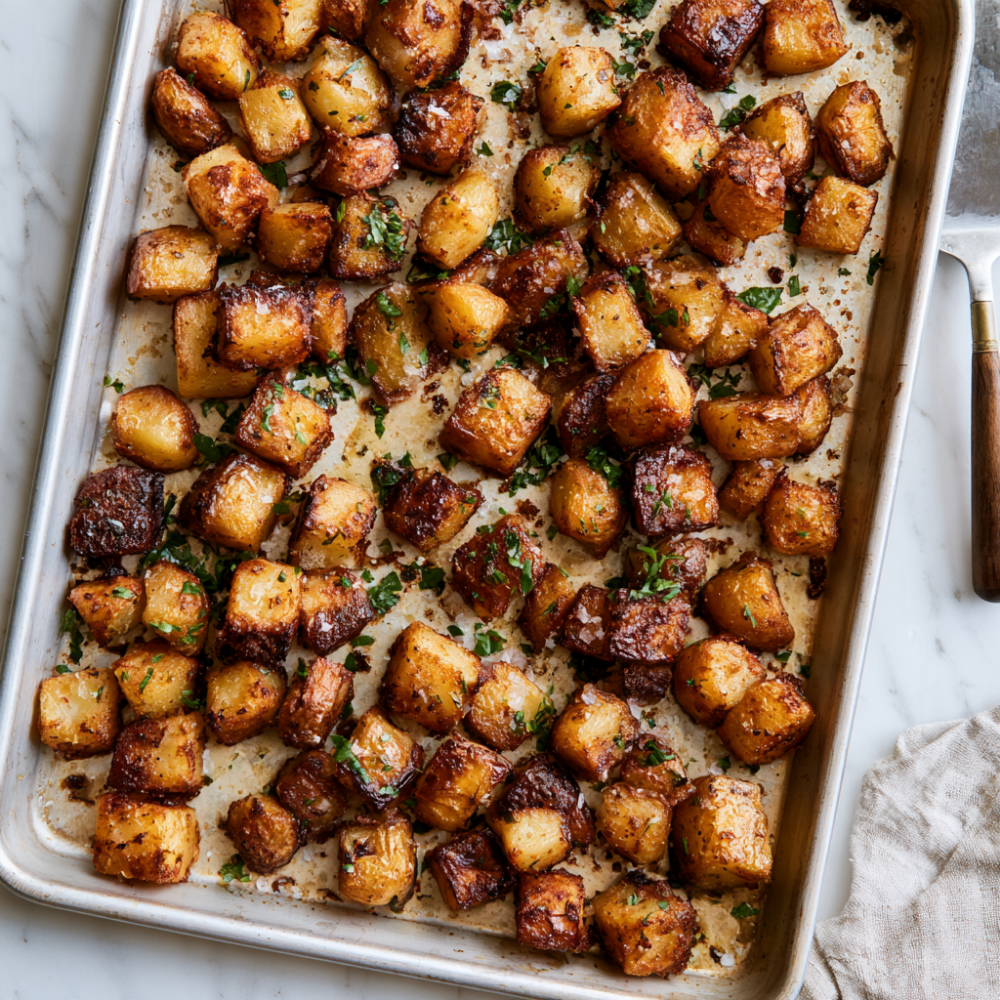
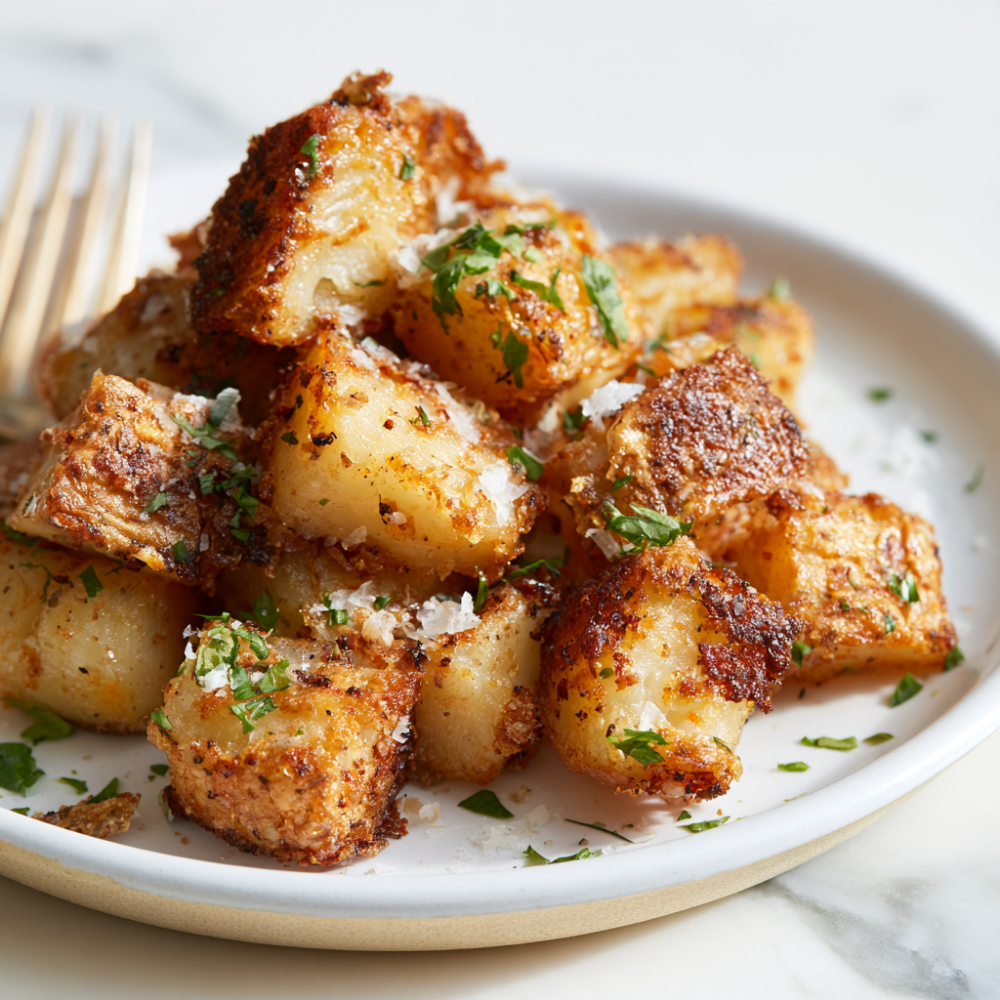
Breakfast potatoes are the first thing to disappear off a diner plate for a reason. Golden, shaggy-edged, deeply seasoned, with a crust that shatters and a center that’s soft and fluffy. They’re the side dish that quietly upstages the eggs.
The problem is that home versions rarely come out like that. They’re pale. They’re soft. They steam instead of crisping. You end up with potato chunks that taste fine but never get that deep golden crust you actually wanted.
The fix is a two-step technique that professional kitchens have used forever, and most home recipes skip: parboil the potatoes in salted water with a pinch of baking soda, drain them, then rough up the edges before they go in the oven. The boiling starts the cooking from the inside. The baking soda raises the water’s pH, which accelerates browning. The roughing up creates hundreds of tiny craggy surfaces that each crisp into a shard.
Forty minutes later, you have breakfast potatoes that actually taste like the ones from your favorite diner.
And because this is a high-protein breakfast board, potatoes aren’t a protein source. They’re the side. Serve them alongside bacon, sausage, fried eggs, or a breakfast casserole, and they do what a great side dish should: make the whole plate better.
Let’s make them.
Why This Recipe Works
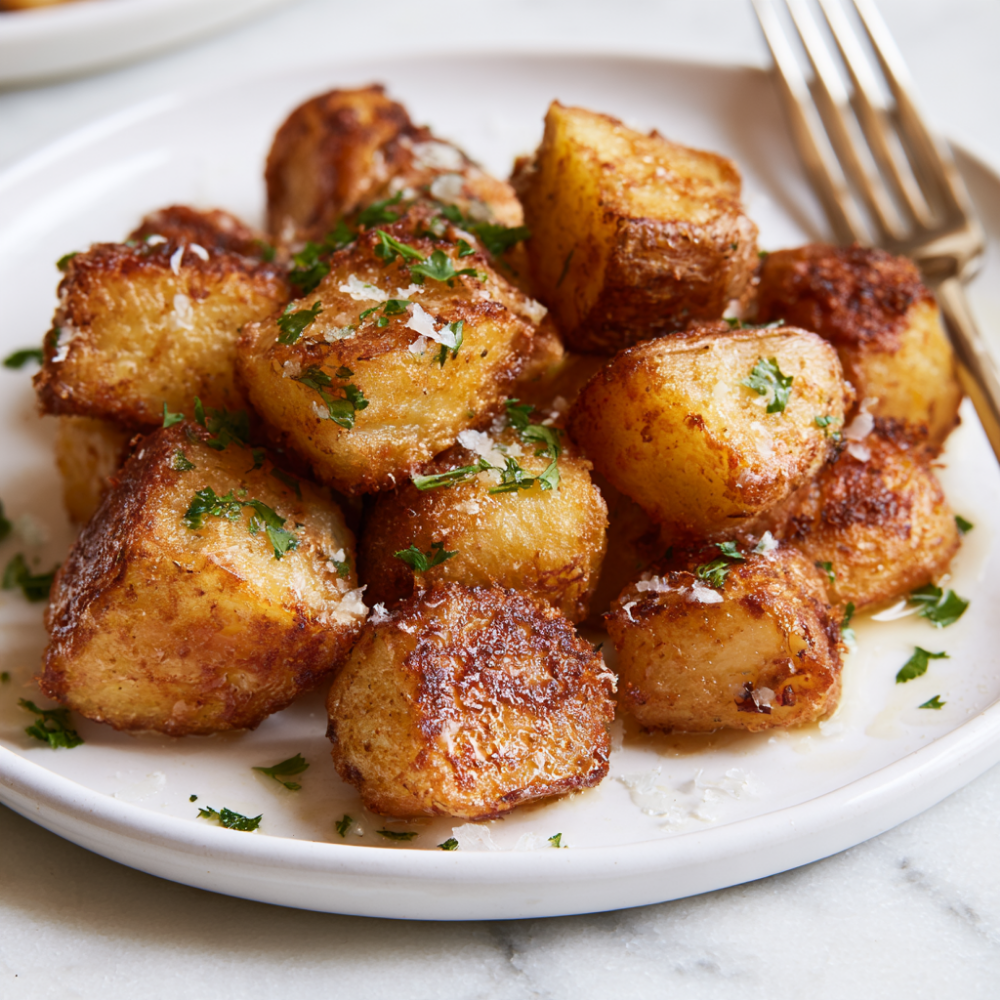
Parboiling the potatoes cooks them from the inside out. Raw potato chunks roasted in the oven dry out on the outside before the inside is tender. Ten minutes in boiling water gets the interior almost fully cooked, so the oven only has to do one job: build the crust.
A pinch of baking soda in the boiling water is the technique that changes everything. Alkalinity raises the water’s pH, breaking down the pectin on the potatoes’ surface and accelerating the Maillard reaction. The result is a rougher surface during boiling and a deeper, faster browning in the oven. This is the same technique used for the crispiest roast potatoes in professional kitchens, and it costs you nothing.
Roughing up the edges after draining creates shaggy surfaces. Every ragged edge and exposed corner crisps into a shard. Smooth potato cubes crisp on the flat sides only. Shake the colander hard or stir them with a fork until the surfaces look battered.
Drying the potatoes thoroughly before they hit the pan is non-negotiable. Surface moisture steams the potatoes and prevents browning. Let them sit in the colander for 5 minutes, then blot them dry with a clean kitchen towel.
A preheated baking sheet with hot oil starts the crust immediately. Put the sheet pan in the oven while it preheats with the oil on it. When the potatoes hit the hot oil, the bottom starts crisping the second they land. This is the difference between crispy-bottomed potatoes and pale, stuck ones.
The seasoning blend is simple but layered—garlic powder, onion powder, smoked paprika, and chili powder. The smoked paprika is what makes them taste like diner potatoes instead of plain roasted potatoes.
Add fresh garlic at the end, not at the start. Granulated garlic in the seasoning blend seasons the potatoes through the roast. Adding fresh minced garlic in the last 5 minutes gives you that punchy, aromatic garlic flavor without burning into bitter black flecks.
Stirring every 20 minutes keeps every side in contact with the hot pan. Potatoes that don’t get moved crisp on one side and stay pale on the other. Two stirs over 40 minutes is all it takes.
Flaky salt and fresh herbs go on after roasting, not before. Flaky salt gives you a textural crunch that table salt can’t, and fresh parsley or cilantro added after the oven keeps its bright color and flavor.
It scales to feed a crowd. Two pounds feeds 4–6. Four pounds feeds 8–10 with the same method on two sheet pans. Perfect for brunch and holiday mornings.
Alternative Cooking Methods
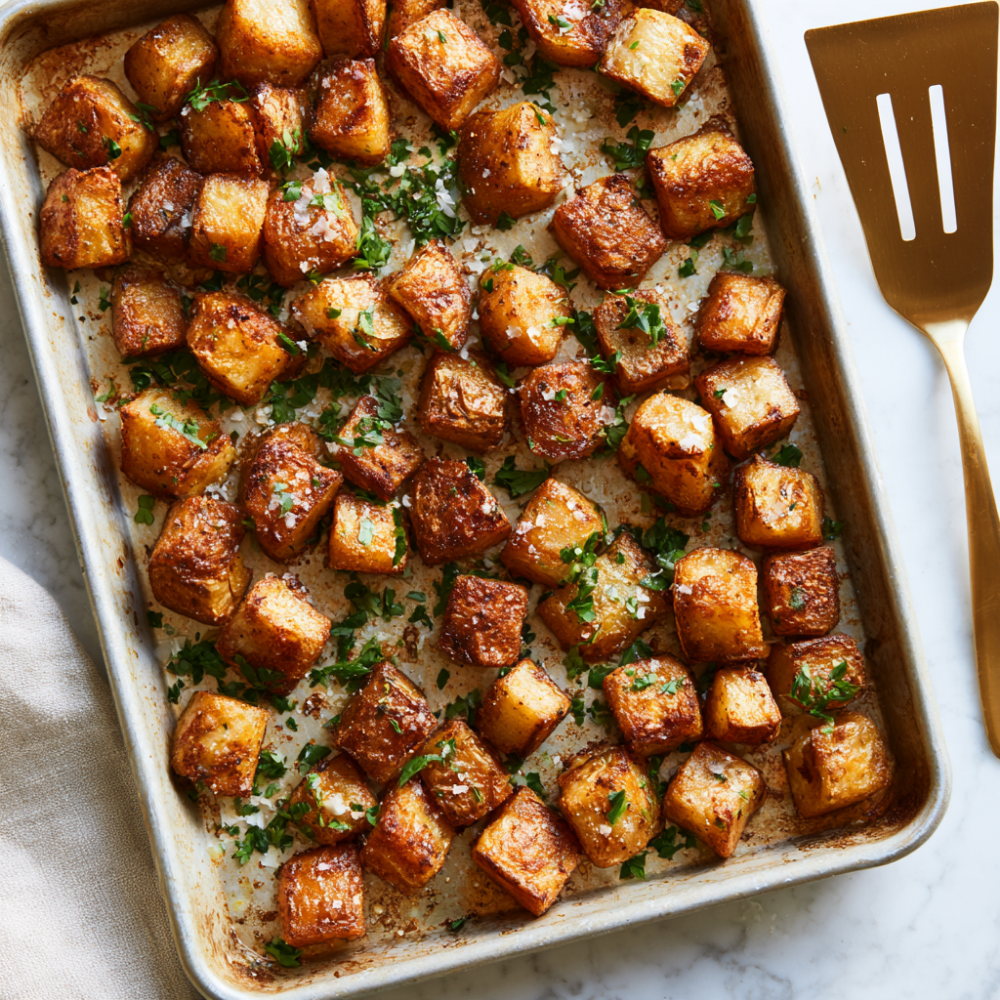
Stovetop Cast Iron Method. Parboil and rough up the potatoes the same way. Heat 3 tablespoons of olive oil or bacon fat in a large cast iron skillet over medium-high heat. Add the potatoes in a single layer and cook for 6–8 minutes without moving them, until a deep crust forms on the bottom. Flip and cook 6–8 more minutes. Add the seasonings and garlic in the last 2 minutes. This method produces the crispiest exterior but requires more attention.
Air Fryer Method. Parboil and rough up the potatoes the same way. Toss with 2 tablespoons of oil and the seasonings. Air fry at 400°F for 18–22 minutes, shaking the basket every 7 minutes, until golden and crisp. Faster and with less oil, but the crust is slightly less shaggy.
Breakfast Potatoes Recipe
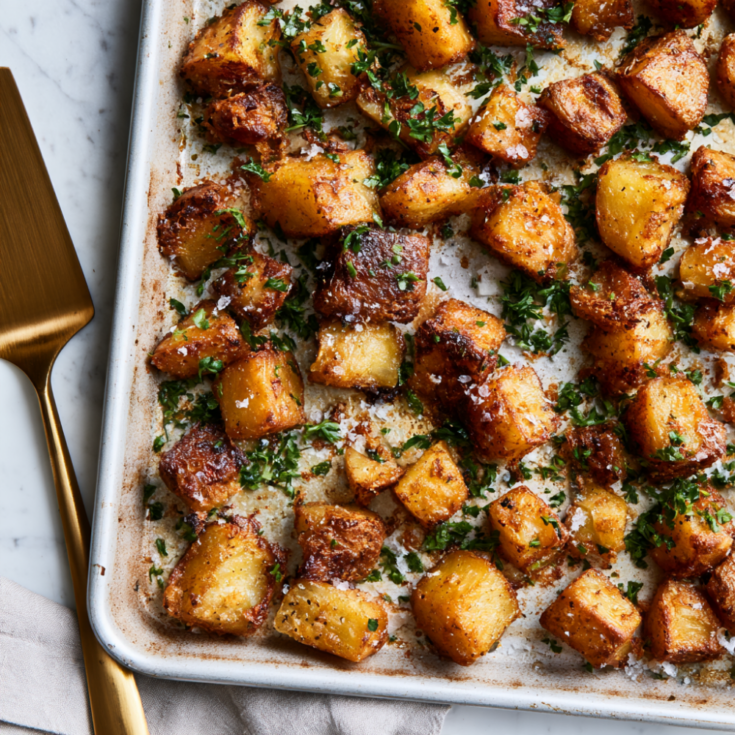
Extra-crispy oven-roasted breakfast potatoes with shaggy golden edges, fluffy centers, and a smoky seasoning blend. The parboil-and-rough-up trick makes them taste as if they came from a diner.
Ingredients
For the Breakfast Potatoes:
- 2 lbs gold potatoes (Yukon Gold), cut into 1½-inch chunks
- 1 tbsp kosher salt (for the boiling water)
- ½ tsp baking soda
- ¼ cup olive oil, melted butter, or bacon fat
- 1 tsp kosher salt
- ½ tsp freshly ground black pepper
- ½ tsp chili powder
- ½ tsp garlic powder
- ½ tsp onion powder
- ½ tsp smoked paprika
- 2 cloves garlic, minced (added at the end)
- 2 tbsp fresh parsley or cilantro, chopped (for garnish)
- Flaky sea salt (for finishing)
Equipment:
- Large saucepan
- Colander
- Rimmed baking sheet
- Clean kitchen towel
Instructions
- Preheat the oven and the pan. Arrange a rack in the middle of the oven and preheat to 425°F. Place a rimmed baking sheet in the oven with ¼ cup olive oil, melted butter, or bacon fat. Let the pan and the fat heat together while the oven comes up to temperature. This is what gives you a head start on the crust.
- Parboil the potatoes. While the oven preheats, place the chopped potatoes in a large saucepan and add enough cold water to cover by about 1 inch. Add 1 tablespoon kosher salt and ½ teaspoon baking soda. Bring to a boil over medium-high heat, then reduce to a simmer and cook for 8–10 minutes, until the potatoes are almost knife-tender but still firm in the center. A knife should slide in with slight resistance, not all the way through.
- Drain and rough up the edges. Pour the potatoes into a colander and let them drain for 2 minutes. Then shake the colander vigorously, or stir the potatoes gently with a fork, until the surfaces look battered and shaggy. Every ragged edge you create becomes a crispy shard in the oven.
- Dry the potatoes. Let the potatoes sit in the colander for 5 more minutes to release steam. Then blot them dry with a clean kitchen towel or paper towels. Surface moisture is the enemy of crisp.
- Season the potatoes. Carefully remove the hot baking sheet from the oven. Add the potatoes to the hot oil in a single layer, leaving space between them. Sprinkle with 1 teaspoon of kosher salt, black pepper, chili powder, garlic powder, onion powder, and smoked paprika. Toss gently with a spatula to coat, then spread them back into a single layer. Don't crowd them—use two pans if needed.
- Roast for 40 minutes, stirring twice. Roast for 20 minutes, then pull the pan out and flip the potatoes with a spatula. Rotate the pan and roast for another 15 minutes. Pull it out and flip again. Roast for a final 5–10 minutes, until the potatoes are deeply golden brown and very crisp on all sides.
- Add the fresh garlic in the last 5 minutes. Scatter the minced garlic over the potatoes during the final 5 minutes of roasting. This gives you punchy garlic flavor without the burnt, bitter taste you get from adding it at the start.
- Finish with flaky salt and herbs. Transfer the potatoes to a serving platter and sprinkle with flaky sea salt and chopped fresh parsley or cilantro. Serve immediately.
Notes
Protein per Serving: About 4g
Nutrition note: Potatoes are a carbohydrate side dish, not a protein source. Estimated per serving with olive oil and seasonings: ~280 calories, 4g protein, 38g carbs, 12g fat. Protein varies based on what you serve alongside. Pair with bacon (12g per 3 slices), sausage (14g per link), or two eggs (12g) for a complete high-protein breakfast plate.
Tips for the Best Breakfast Potatoes
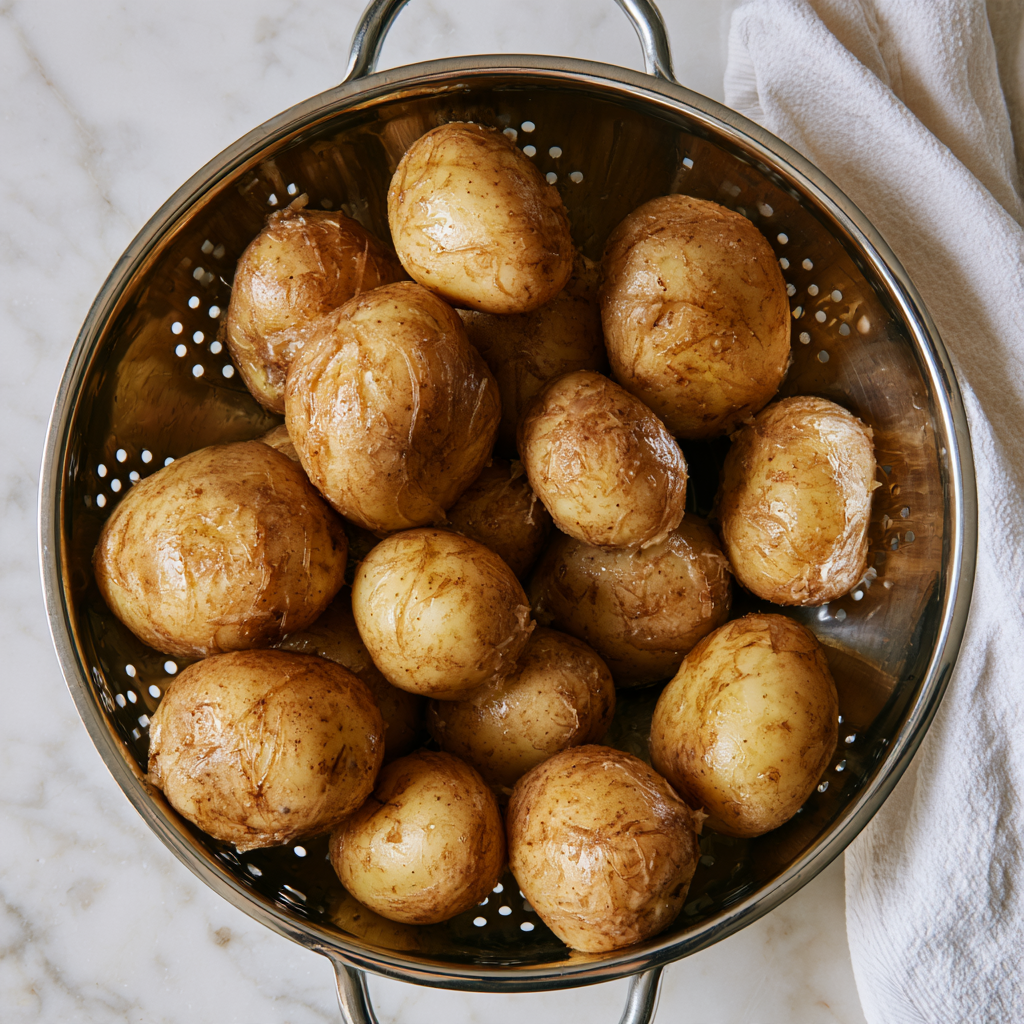
Use gold potatoes, not russets. Yukon Golds are waxy and hold their shape when parboiled and roasted. Russets break down and turn mealy. Red potatoes work too, but they’re slightly denser.
Cut the potatoes into even 1½-inch chunks. Uneven pieces cook at different rates. Small pieces burn before large pieces are tender.
Don’t skip the baking soda. A half teaspoon in the boiling water raises the pH and accelerates browning. It’s the single biggest upgrade in this recipe, and it costs nothing.
Salt the boiling water heavily. A full tablespoon of kosher salt seasons the potatoes from the inside. This is your only chance to season the interior.
Rough up the edges aggressively. Shake the colander hard or stir the potatoes with a fork until the surfaces look damaged. Every shaggy edge crisps into a shard.
Dry the potatoes thoroughly. Leave them in the colander for five minutes, then blot with a towel. Wet potatoes steam instead of crisping.
Preheat the pan and the oil together. Hot oil sears the bottom of the potatoes as soon as they land. Cold oil makes potatoes pale and greasy.
Don’t crowd the pan. Potatoes need space to crisp. If they’re touching, they steam. Use two pans for 4 pounds.
Stir every 20 minutes. Two flips over 40 minutes ensure every side touches the hot pan.
Add fresh garlic in the last 5 minutes. Granulated garlic seasons the whole roast. Fresh garlic at the end punches you without bitterness.
Finish with flaky salt, not table salt. Flaky salt adds textural crunch and a cleaner, brighter salinity.
Serve immediately. Breakfast potatoes are at their crispiest within 10 minutes of coming out of the oven. If you have to hold them, keep them on the sheet pan in a 200°F oven—not on a plate where they’ll steam.
Troubleshooting
The potatoes aren’t crispy. You didn’t dry them thoroughly, you crowded the pan, or you didn’t preheat the pan and oil—all three matter.
The potatoes are pale. Your oven runs cool, you skipped the baking soda, or you didn’t rough up the edges. Use an oven thermometer and don’t skip the parboil.
The potatoes are mushy inside. You overcooked them during the parboil. They should be almost knife-tender but still firm in the center. Pull them at 8 minutes if they’re small.
The potatoes are hard inside. You didn’t parboil long enough, or your chunks were too large. Cut them into even 1½-inch pieces and simmer for the full 10 minutes.
The potatoes stuck to the pan. Your pan wasn’t hot enough when the potatoes went on, or you didn’t use enough oil—both matter.
The garlic tastes burnt and bitter. You added it at the start. Add fresh garlic only during the last 5 minutes.
The potatoes are greasy. Your oil wasn’t hot enough, or you used too much. Two tablespoons per pound is the right ratio.
The potatoes went soggy after 10 minutes. You piled them on a plate or in a bowl where they steamed. Serve on a flat platter or keep them on the sheet pan.
Easy Variations
Breakfast Potato Hash. Add 1 diced bell pepper and 1 diced onion to the pan for the last 20 minutes of roasting. Serve with a fried egg on top.
Bacon Fat Breakfast Potatoes. Use bacon fat instead of olive oil. Cook 6 slices of bacon first, reserve the fat, and crumble the bacon over the finished potatoes.
Camping Breakfast Potatoes. Parboil and rough up the potatoes at home, then pack them in a zip-top bag with the oil and seasonings. Cook in a cast iron skillet over a campfire or camp stove for 15–20 minutes.
Diced Breakfast Potatoes. Cut the potatoes into ½-inch cubes instead of 1½-inch chunks. Reduce the parboil to 5 minutes and the roast to 25–30 minutes. More surface area, more crisp.
Seasoned Breakfast Potatoes. Double the seasoning blend and add ½ teaspoon of cayenne pepper for a spicy version.
Breakfast Baked Potatoes. Skip the chopping entirely. Rub whole gold potatoes with oil and salt, bake at 425°F for 50–60 minutes, then smash them flat with the bottom of a glass and roast for 15 more minutes. Crispy smashed potatoes.
Brunch Potato Recipes With Herbs. Swap the parsley for fresh rosemary and thyme. Add them in the last 5 minutes of roasting.
Easy Breakfast Potatoes For A Crowd. Double everything and use two sheet pans. Rotate the pans halfway through and swap their positions on the racks for even browning.
Quick Breakfast Potato Dish. Use the air fryer method and pre-cut potatoes from the store. Cuts the total time to about 25 minutes.
Breakfast Potato Hash Ideas With Sweet Potato. Swap half the gold potatoes for cubed sweet potato. Add 5 minutes to the parboil and 5 minutes to the roast.
Storage and Food Safety
Refrigerator: Store leftover potatoes in an airtight container for up to 4 days. Reheat on a sheet pan at 400°F for 8–10 minutes, or in an air fryer at 375°F for 5 minutes. Do not microwave—they’ll steam and lose their crisp.
Freezer: Freeze parboiled, roughed-up potatoes on a sheet pan until solid, then transfer to a freezer bag for up to 3 months. Roast from frozen at 425°F, adding 5–10 minutes to the cook time.
Make Ahead: Cut the potatoes and place them in the pot with the water and salt up to 4 hours before cooking. They can sit at room temperature until you’re ready to boil.
Food Safety: Refrigerate cooked potatoes within 2 hours. Discard any potatoes left at room temperature for longer.
Frequently Asked Questions
What are the best potatoes for breakfast potatoes?
Yukon Gold potatoes are the best choice. They’re waxy enough to hold their shape through parboiling but starchy enough to crisp up in the oven. Red potatoes work too, but russets turn mealy.
Do I have to parboil the potatoes first?
You don’t have to, but parboiling is what produces a fully cooked, fluffy interior with a crispy exterior. Skipping it can leave you with hard centers or dry, over-roasted edges.
What does the baking soda do?
It raises the pH of the boiling water, which breaks down the pectin on the potatoes’ surface and accelerates browning in the oven. It’s the same technique used for the crispiest roast potatoes in professional kitchens.
Why rough up the edges?
Every ragged edge and exposed corner crisps into a shard. Smooth potato cubes only crisp on the flat sides. Roughing up the surface multiplies the crispy surface area.
Can I make these in the air fryer?
Yes. Parboil and rough up the potatoes first, then air fry at 400°F for 18–22 minutes, shaking the basket every 7 minutes.
Can I make these in a cast iron skillet?
Yes. Parboil first, then sear in 3 tablespoons of hot oil in a cast iron skillet over medium-high heat for 6–8 minutes per side.
How do I keep breakfast potatoes crispy?
Serve immediately, or hold them on the sheet pan in a 200°F oven. Never pile them on a plate or in a bowl—they’ll steam and go soggy.
Can I make these ahead of time?
You can parboil and rough up the potatoes up to 2 days ahead and store them in the refrigerator. Roast them fresh the morning you want to serve them.
Can I use frozen diced potatoes?
You can, but the texture won’t be the same. Frozen diced potatoes are already cooked and tend to be mushy inside. Fresh Yukon Golds are worth the extra step.
How much protein is in breakfast potatoes?
About 4 grams per serving. Potatoes are a carbohydrate side dish, not a protein source. Pair them with bacon, sausage, or eggs to make a complete, high-protein breakfast.
Are these breakfast potatoes gluten-free?
Yes. All the ingredients are naturally gluten-free. Just confirm the labels on any pre-blended seasoning.
What do I serve with breakfast potatoes?
Bacon, sausage, fried eggs, scrambled eggs, breakfast casseroles, biscuits and gravy, or a big brunch spread. They’re the classic side for anything on a breakfast plate.
More High-Protein Breakfast Recipes You’ll Love
- Crockpot Breakfast Recipes You Set and Forget (25–32g Protein)
- Mason Jar Breakfast (5-Minute Greek Yogurt Parfait, 30g Protein!)
- Overnight Cinnamon Rolls (High-Protein, Plus 1-Hour Version!)
- High-Protein Mini Pancakes (32g Protein, Blender Recipe!)
Conclusion
These breakfast potatoes taste like the ones from a diner. Parboiling with a pinch of baking soda cooks the interior and primes the surface for browning. Roughing up the edges creates shaggy, crispy shards. Hot oil and a preheated pan start the crust the second the potatoes land.
The keys are simple: use Yukon Golds, don’t skip the baking soda, rough up the edges aggressively, dry the potatoes thoroughly, preheat the pan and the oil together, stir every 20 minutes, and add the fresh garlic at the very end. Do that, and you’ll never make pale, soft breakfast potatoes again.
Make them this weekend. Serve them with bacon and eggs. Watch them disappear.