Scrambled eggs have a reputation as the protein-rich breakfast, and for good reason.
Two large eggs deliver about twelve grams of protein; they take five minutes to cook, and they are one of the few breakfasts that genuinely holds you until lunch.
It is the breakfast a lot of people eat every single day.
But if you want to push that number higher without changing what ends up on the plate, one ingredient does it. Cottage cheese.
Blended smooth and stirred into the eggs before they hit the pan, it disappears completely into the curds.
What is left is a scramble creamier than anything you can make with milk or cream alone, and it packs 21 grams of protein per plate—9 more than eggs alone.
There is also a specific kind of scrambled egg that lives in your memory.
Custardy. Glossy.
Piled in soft, loose folds that hold their shape on the fork.
The kind you get at a really good brunch place and then spend years trying to recreate at home.
This is that egg.
It is a five-minute breakfast. Three ingredients, one pan, one bowl. It works on a slow Saturday morning and on a Tuesday when you have ten minutes before you have to be out the door.
It is soft enough that kids will eat it, rich enough that adults will ask what you did differently, and filling enough that you will not be hungry again at ten.
And if you have ever wanted to like cottage cheese but cannot get past the texture, this recipe will change your mind.
Once it is blended into eggs, there is no texture left to object to. There is just a better scramble.
Why This Recipe Works
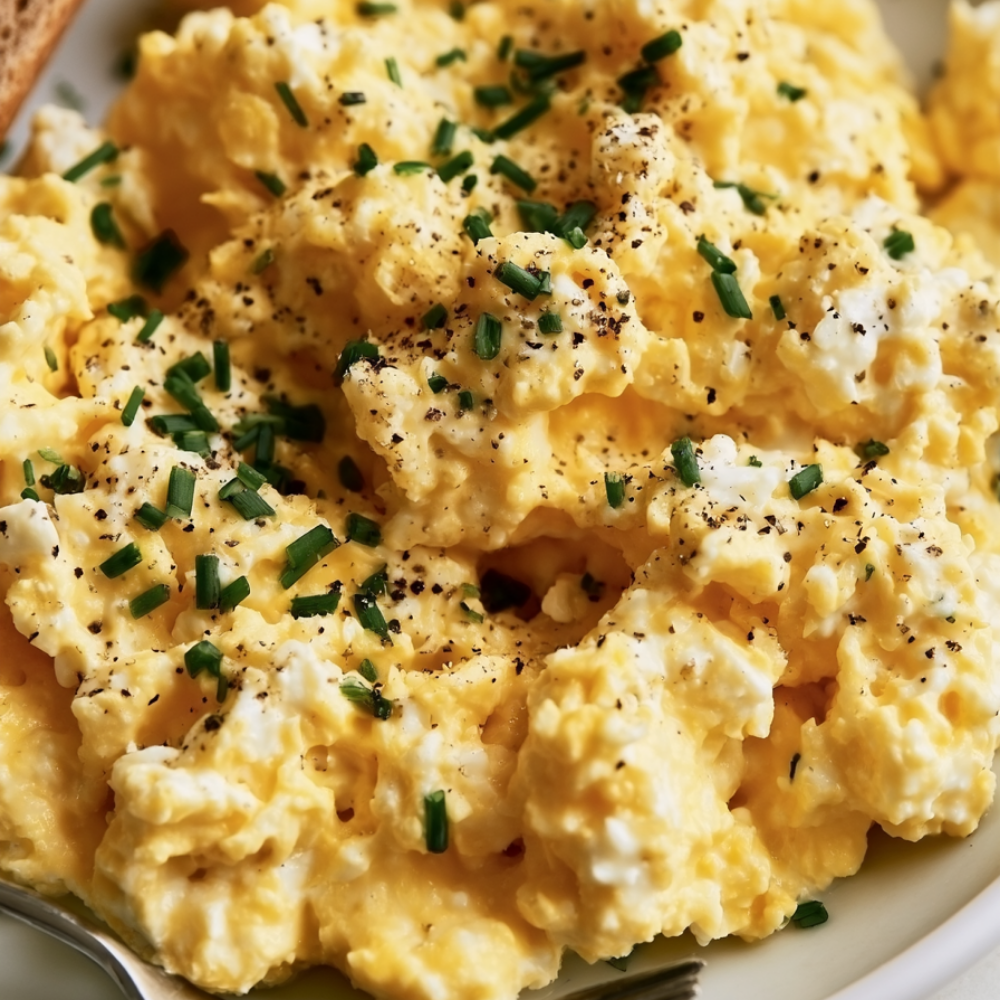
- Blended cottage cheese disappears into the eggs. Blend it for 30 seconds, and it turns silky and smooth. Stirred into beaten eggs, it distributes evenly instead of leaving wet pockets of curd in the pan.
- Cottage cheese makes the curds custardy. It brings fat and moisture that milk cannot. The eggs come out softer, glossier, and creamier than a plain scramble.
- It is the easiest way to add protein to eggs without changing the flavor. Two eggs carry about twelve grams of protein. Adding cottage cheese brings the plate to 21 grams without a single bite tasting like a health-food swap.
- Cooking over low heat is what keeps the curds soft. High heat tightens the proteins and pushes out moisture, which is what turns scrambled eggs rubbery. Low and slow is the whole technique.
- Stirring constantly builds small, even curds. The motion breaks the eggs into fine, pillowy folds instead of one solid mass. Constant stirring over low heat is the difference between soft scrambled eggs and an omelet.
- Pulling the pan off the heat while the eggs still look glossy is what finishes them perfectly. Carryover heat cooks them the rest of the way. If they look fully done in the pan, they are already overcooked.
- Butter brings flavor and prevents sticking. A tablespoon is enough for four eggs. Olive oil works too, but butter tastes better with eggs.
- Add a pinch of salt before cooking, not after. Salt dissolves into the eggs and seasons them evenly. Adding it at the end leaves it on the surface.
- Chives or scallions cut the richness. The eggs are rich from the cottage cheese and butter. A bright herb on top balances the whole plate.
- It works as breakfast, lunch, or dinner. Eggs are not a time of day. This scramble works any time you want something warm, fast, and high-protein.
High-Protein Scrambled Eggs with Cottage Cheese
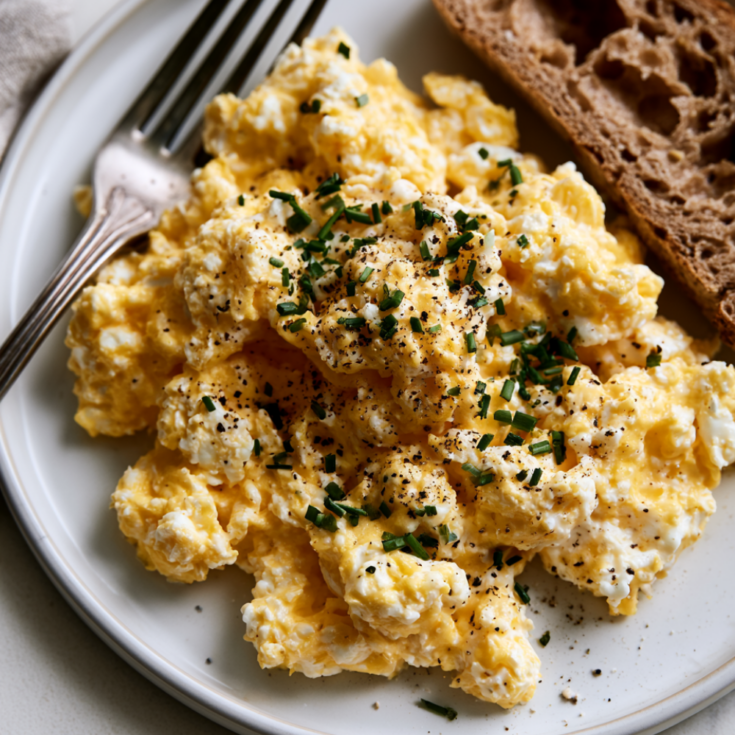
Soft, custardy scrambled eggs with blended cottage cheese stirred in before cooking. Three ingredients, one pan, and twenty-one grams of protein per plate.
Ingredients
- 4 large eggs
- ¾ cup cottage cheese (2% or full-fat)
- 1 tbsp unsalted butter
- ¼ tsp kosher salt
- Pinch of black pepper
- 1 tbsp fresh chives or scallions, finely chopped, for serving
Optional Add-Ins
- 2 tbsp freshly grated Parmesan, stirred in at the end
- Pinch of red pepper flakes
- ¼ avocado, sliced, for serving
- 1 slice of sourdough or whole grain toast
Instructions
- Blend the cottage cheese. Add the cottage cheese to a small blender or food processor and blend 30 seconds on high, until completely smooth with no visible curds. Scrape down the sides once and blend 5 more seconds. This is what makes the cottage cheese disappear into the eggs.
- Whisk the eggs. Crack the eggs into a medium bowl and whisk vigorously for 20 seconds, until the yolks and whites are fully combined and the mixture looks uniform. You want no streaks of white left.
- Combine. Add the blended cottage cheese and the salt to the eggs and whisk until just combined, about 5 seconds. Do not over-whisk — the mixture should be uniform but not frothy.
- Heat the pan. Melt the butter in a nonstick skillet over medium-low heat. Wait until it foams but does not brown. If the butter starts to brown, the pan is too hot — pull it off the heat for 30 seconds.
- Add the eggs and wait 20 seconds. Pour the egg mixture into the pan and let it sit undisturbed for 20 seconds. This gives the bottom layer a chance to set slightly before you start stirring, which builds structure.
- Stir gently and constantly. Using a silicone spatula, pull the eggs from the edges of the pan toward the center. Keep the spatula moving for 3–4 minutes, scraping the bottom and sides. The eggs will form soft, loose curds as they cook.
- Pull them while they still look glossy. When the eggs are about 80% set — still slightly wet and shiny on top, with visible soft folds — take the pan off the heat. Do not wait for them to look fully done. They finish cooking in the residual heat of the pan.
- Season and rest for 30 seconds. Add the black pepper and stir once. Let the eggs sit in the warm pan for 30 seconds so the carryover heat finishes them.
- Serve immediately. Slide the eggs onto plates, top with chives or scallions, and add a slice of toast if you want. Serve right away — soft scrambled eggs are at their best in the first two minutes.
Notes
Protein per Serving: 21 g.
Nutrition Note: Protein calculated from 4 large eggs (≈24g) and ¾ cup 2% cottage cheese (≈18g), divided by 2 servings — about 21g per plate. Without cottage cheese, protein drops to about 12g per serving. About 330 calories per serving, including the butter. Use full-fat cottage cheese for a richer texture or low-fat for a lighter plate.
Tips for the Best Scrambled Eggs with Cottage Cheese
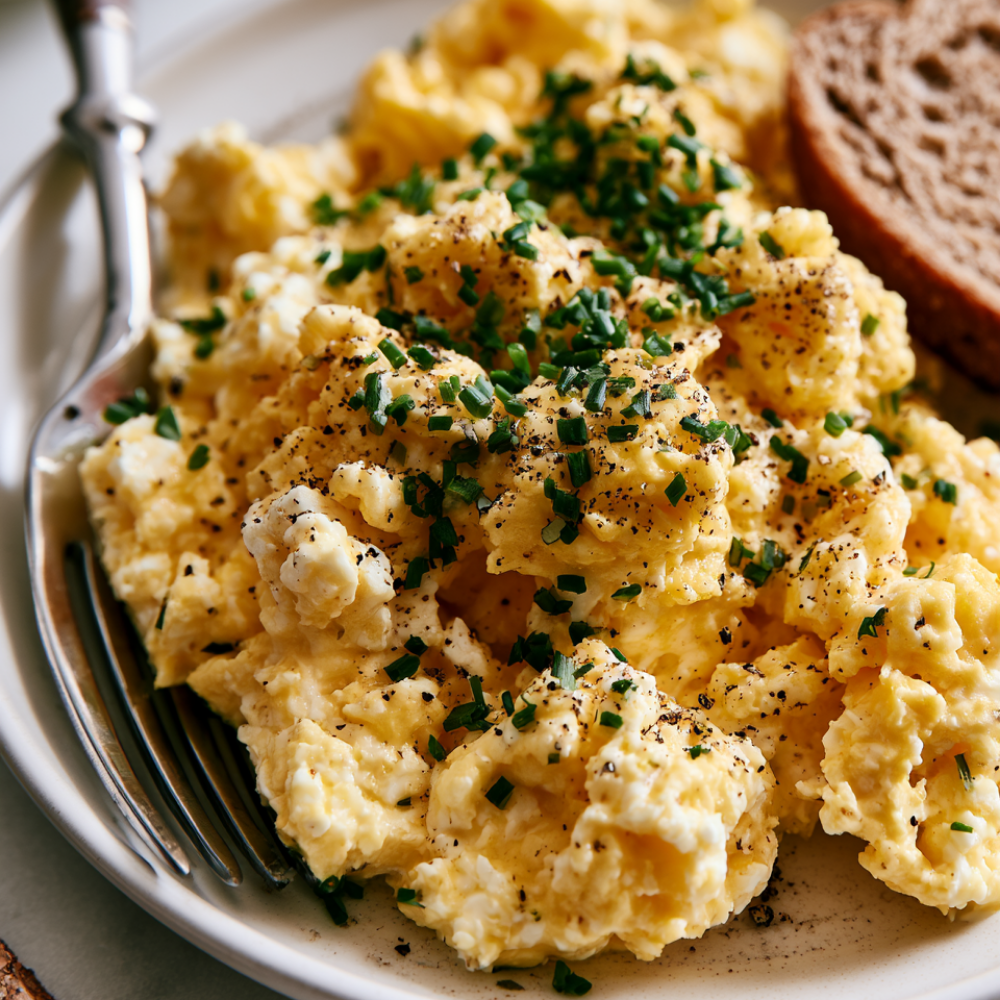
- Blend the cottage cheese for a full 30 seconds. Any curds left whole will show up as wet pockets in the finished scramble. This is the single most important step.
- Use 2% or full-fat cottage cheese. Fat-free cottage cheese is watery and does not melt into the eggs the same way.
- Cook over medium-low heat, not medium-high. High heat is what turns scrambled eggs rubbery. Low and slow is the entire technique.
- Stir constantly with a silicone spatula. Constant motion builds small, even curds. Stirring occasionally gives you large, uneven ones.
- Pull them while they still look glossy. Carryover heat finishes the eggs. If they look fully done in the pan, they are already overcooked.
- Salt the eggs before cooking, not after. Salt dissolves into the mixture and seasons every bite instead of sitting on the surface.
- Top with chives or scallions, always. The bright herb cuts through the richness and makes the plate look finished.
Troubleshooting
- The eggs turned out rubbery. The heat was too high, or they cooked too long. Use medium-low heat and pull them while they still look glossy.
- The eggs are watery. The cottage cheese was not blended smooth, or it was fat-free. Blend for a full 30 seconds and use 2% or full-fat.
- The eggs taste like cottage cheese. The cottage cheese wasn’t blended or fully incorporated. Whisk it in completely before the eggs hit the pan.
- The curds are large and uneven. The eggs were not stirred constantly. Keep the spatula moving from the edges to the center.
- The eggs stuck to the pan. You didn’t use enough butter, or the pan wasn’t nonstick. Use 1 tbsp of butter per 4 eggs.
- The eggs browned on the bottom. The pan was too hot. Pull it off the heat for 30 seconds before adding the eggs.
- The eggs are dry. They overcooked. Pull the pan off the heat while the eggs still look slightly wet and let the residual heat finish them.
- The eggs taste bland. Not enough salt. Use ¼ tsp kosher salt for 4 eggs, and taste before serving.
Easy Variations
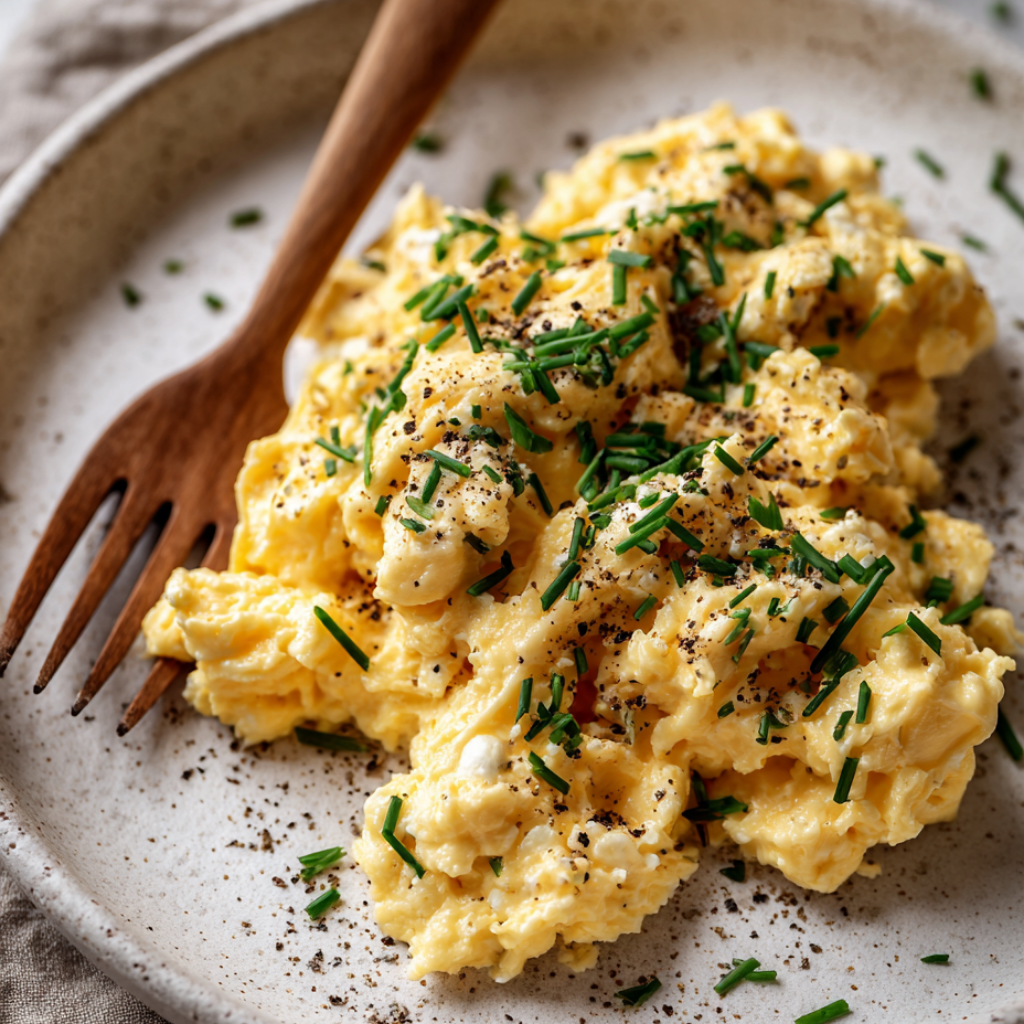
- Egg Whites and Cottage Cheese. Use 8 egg whites instead of 4 whole eggs and increase the cottage cheese to 1 cup. Protein lands at about 25g per serving, and the fat drops significantly.
- Mexican Scramble. Add 2 tbsp salsa, 1 tbsp diced jalapeño, and 2 tbsp crumbled cotija to the eggs before cooking. Serve with warm tortillas.
- Cottage Cheese Toast Breakfast. Skip the scramble and spread the blended cottage cheese on toasted sourdough, then top with a soft-scrambled egg and chives.
- Cottage Cheese Egg Breakfast Bake. Double the recipe, pour into a greased 8×8 dish, and bake at 350°F for 20 minutes for a sliceable version.
- High-Protein Low-Calorie Version. Use 1 cup of fat-free cottage cheese and skip the butter, using cooking spray instead. About 24g protein and roughly 220 calories per serving.
Storage and Food Safety
Refrigerator: Eat soft scrambled eggs immediately. If you have leftovers, store them in an airtight container for up to 2 days. Reheat gently in a covered skillet over low heat with a splash of water, or in the microwave at 50% power for 45 seconds. They will never be as soft as fresh.
Freezer: Not recommended. Scrambled eggs turn watery and rubbery after freezing.
Make Ahead: You can blend the egg and cottage cheese mixture and refrigerate it up to 12 hours ahead. Whisk again before cooking. Do not cook the eggs ahead unless you are using them in a bake or breakfast sandwich.
Food Safety: Cook eggs until the whites and yolks are fully set and reach 160°F. Cook scrambled eggs within 2 hours of mixing the raw egg and cottage cheese. Cool any leftovers within 2 hours and refrigerate promptly. Reheat leftovers to 165°F. Do not leave cooked eggs at room temperature for more than 2 hours.
Frequently Asked Questions
How much protein is in scrambled eggs with cottage cheese? About 21g per serving from 4 eggs and ¾ cup of cottage cheese, divided across two plates. Plain scrambled eggs without the cottage cheese deliver about 12g per serving.
Does the cottage cheese taste strong? No. Blended smooth and mixed into the eggs, it disappears completely. The scramble tastes like a really good soft scrambled egg, not like eggs with cottage cheese in them.
Can I use fat-free cottage cheese? You can, but it is thinner and less creamy. Use 2% or full-fat for the best texture.
Do I have to blend the cottage cheese? For the smoothest result, yes. If you skip blending, small curds will melt into the eggs as they cook, but the texture will be less uniform.
Can I use egg whites instead of whole eggs? Yes. Use 8 egg whites and increase the cottage cheese to 1 cup. Protein rises to about 25g per serving.
Why are my scrambled eggs rubbery? The heat was too high, or they cooked too long. Use medium-low heat and pull them off the pan while they still look glossy.
Can I add milk or cream? No need. The cottage cheese already brings the dairy. Adding more liquid makes the eggs wet instead of creamy.
Can I make this in a cast iron skillet? Yes, if it is well seasoned. Otherwise, the eggs will stick. Nonstick is the safest choice.
Can I make this ahead of time? The blended egg and cottage cheese mixture keeps for 12 hours in the refrigerator. Do not cook the eggs ahead.
Are these eggs low-carb? Yes, they are very low in carbs. The protein and fat come from the eggs, cottage cheese, and butter.
Can I make this dairy-free? Yes. Use a dairy-free cottage cheese alternative and olive oil instead of butter. The texture will be slightly less creamy.
How do I reheat leftovers? Gently in a covered skillet over low heat with a splash of water, or in the microwave at 50% power for 45 seconds.
Can kids eat this? Yes. It is soft, mild, and easy for kids to eat. The cottage cheese blends in completely.
Can I double the recipe? Yes, but use a larger skillet. Crowding the pan steams the eggs instead of scrambling them.
What do I serve with this? Sourdough toast, sliced avocado, a green salad, roasted potatoes, or a few strips of bacon.
More High-Protein Breakfast Recipes You’ll Love
- Baked Feta Eggs — 34g protein, one skillet, 15 minutes.
- Apple Cinnamon Cottage Cheese Breakfast Muffins — 11g protein, fall meal prep.
- Breakfast Pizza Recipe (Cheese Sauce, Not Tomato—18g Protein Per Square!)
- Sausage, Spinach & Potato Frittata (High-Protein Breakfast Meal Prep)
Conclusion
Scrambled eggs are one of the simplest things you can make, which is exactly why they are so easy to get wrong.
High heat, a rushed stir, and a pan that is too hot turn them into rubber. Low heat, constant motion, and pulling them while they still look glossy turn them into something worth remembering.
The cottage cheese is the quiet upgrade. It disappears into the eggs, brings a custardy texture you cannot get from milk or cream, and adds nine grams of protein per plate without changing the flavor.
Three ingredients. One pan. Five minutes.
Make it once on a slow Saturday. Make it again on a Tuesday. It becomes the breakfast you keep coming back to, not because it is impressive, but because it is genuinely good.