
It is a slow Saturday morning. The coffee is already going. The house is quiet, the way it is before anyone else is awake. And you want something bold in flavor but easy on the cooking — a satisfying meal that sits somewhere between breakfast and lunch, warm and savory and worth sitting down for.
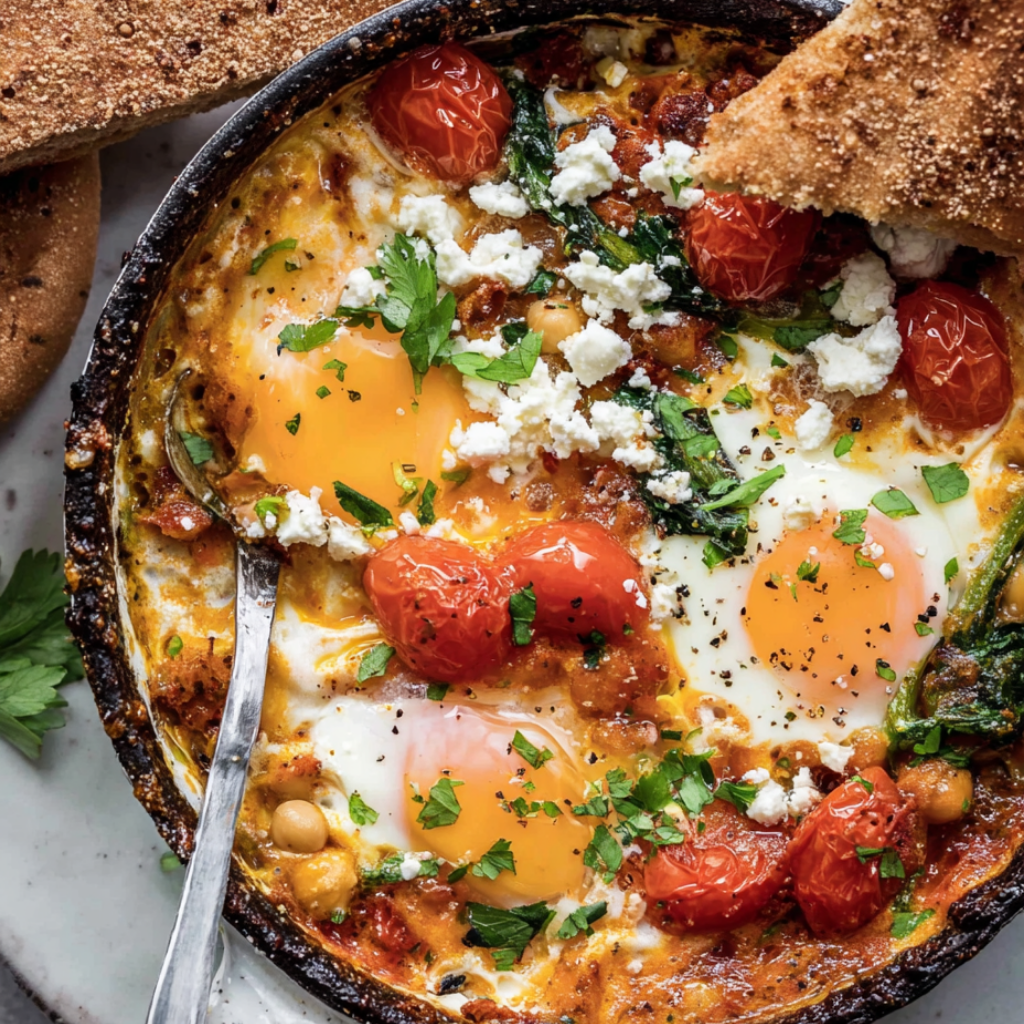
That is the moment baked feta eggs were made for. A small cast-iron skillet comes out of the oven with three eggs nestled into a jammy sauce of burst cherry tomatoes and chickpeas, salty feta crumbled over the top, fresh parsley scattered across it, and a piece of warm pita on the side for dragging through the yolk.
It looks like something you would order at a Mediterranean brunch spot. It is one skillet, about fifteen minutes, and almost nothing to clean up.
The secret is in the sauce. Cook the cherry tomatoes down until they burst and turn jammy. Pat the chickpeas dry so they crisp instead of steam.
Reduce the whole base until it holds a spoon track before the eggs go in. Then the eggs go into wells, and they bake in a thick, savory bed instead of floating in a pool.
Three eggs, chickpeas, and feta deliver thirty-four grams of protein in a single skillet. Add a whole-grain pita, and you are closer to forty.
It is a Mediterranean breakfast that actually holds you until lunch, and it is the kind of thing you will start making on repeat once you realize how little work it is.
Why This Recipe Works
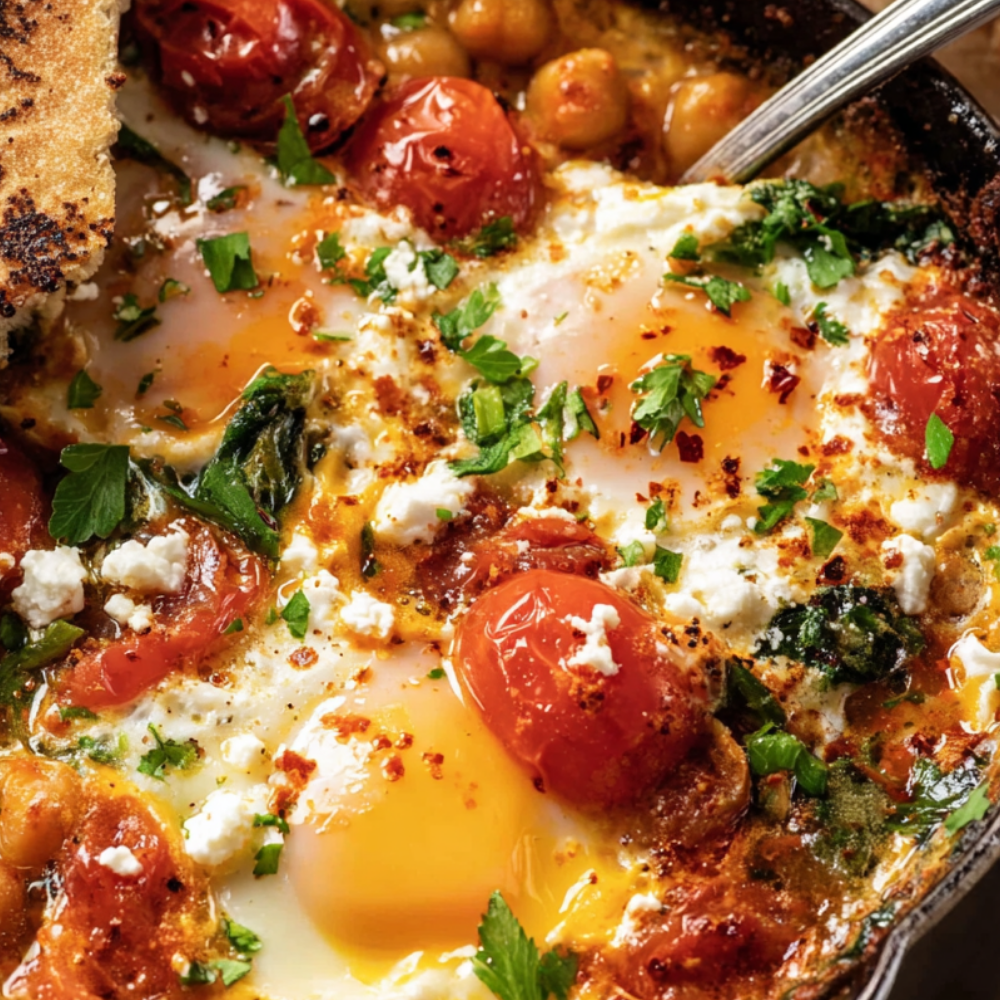
The protein math is honest. Three eggs, chickpeas, and feta deliver about 34g per skillet, with the pita adding another 5g.
Cherry tomatoes are the right tomato here. They are sweeter and lower in water than diced tomatoes, and they break down into a jammy sauce instead of a thin liquid.
Cooking the sauce down before the eggs go in is the entire technique. If the base is watery when the eggs go in, the eggs poach, and the whites turn rubbery. Reduce until it holds a spoon track.
Patting the chickpeas dry lets them crisp instead of steam. Canned chickpeas carry a lot of surface moisture. Drying them and giving them a head start in the pan gives you texture instead of mush.
Smoked paprika and cumin make it taste as if it cooked longer than it did. These two spices turn tomatoes and chickpeas into something that tastes North African and Mediterranean rather than plain.
Making wells with a spoon keeps the eggs where you put them. Eggs slide in a loose sauce. A well holds them in place so the whites set evenly.
Feta goes on top, never stirred in. Crumbled feta keeps its salty bite and its texture. Stirred into a hot sauce, it melts into the background and disappears.
Baking at 400°F sets the whites without overcooking the yolks. Higher heat turns the whites rubbery before the yolks are warm. Lower heat takes too long and dries them out.
Pull them when the whites are just set, and the yolks still jiggle; that’s the whole game. Residual heat finishes the eggs in the minute they sit before serving.
Lemon zest and a squeeze of lemon juice at the end are what make it taste finished. Acid cuts through the richness of the eggs and the saltiness of the feta.
A drizzle of good olive oil at the end is not optional. It is the difference between a dish that tastes healthy and one that tastes good.
Warm pita is the delivery system. Toast it in the same oven for the last three minutes and use it to scoop the sauce and yolk.
Troubleshooting
- The eggs turned out rubbery. The whites were overcooked. Pull the skillet while the yolks still jiggle and let residual heat finish them.
- The sauce is watery, and the eggs are poached. The tomatoes were not reduced enough before the eggs went in. Cook until the sauce holds a spoon track.
- The yolks set solid. The skillet baked too long. Start checking at 8 minutes, not 12.
- The pan overflowed, or the eggs touched each other. The skillet was 6 inches instead of 8 inches. Use an 8-inch cast-iron skillet, or reduce the eggs to two for a 6-inch pan.
- The eggs stuck to the pan. Not enough oil, or the pan was not well seasoned. Use a well-seasoned cast-iron skillet or a nonstick, oven-safe skillet.
- The garlic tastes bitter. It browned before the tomatoes went in. Add it and stir for 30 seconds only.
- The dish tastes bland. Not enough salt or acid. Add flaky salt and the lemon juice at the end, and taste the sauce before the eggs go in.
- The feta turned rubbery. You scattered it directly on the yolks. Keep it on the sauce around the eggs.
- The chickpeas are mushy. They were not dried, or they cooked too long before the tomatoes went in. Pat them dry and give them 3 minutes, not 8.
- The tomatoes never broke down. They were not ripe, or the heat was too low. Press them with a spoon and raise the heat slightly.
- The skillet is too big, and everything dried out. Use an 8-inch pan. A 10-inch pan spreads the sauce too thin unless you increase the tomatoes and chickpeas.
- The whites are set, but the yolks are cold. The oven ran cool. Raise to 425°F and check at 7 minutes.
- The dish is too salty. Your feta is very salty. Rinse it briefly, then reduce the added salt in the sauce to a pinch.
Easy Variations
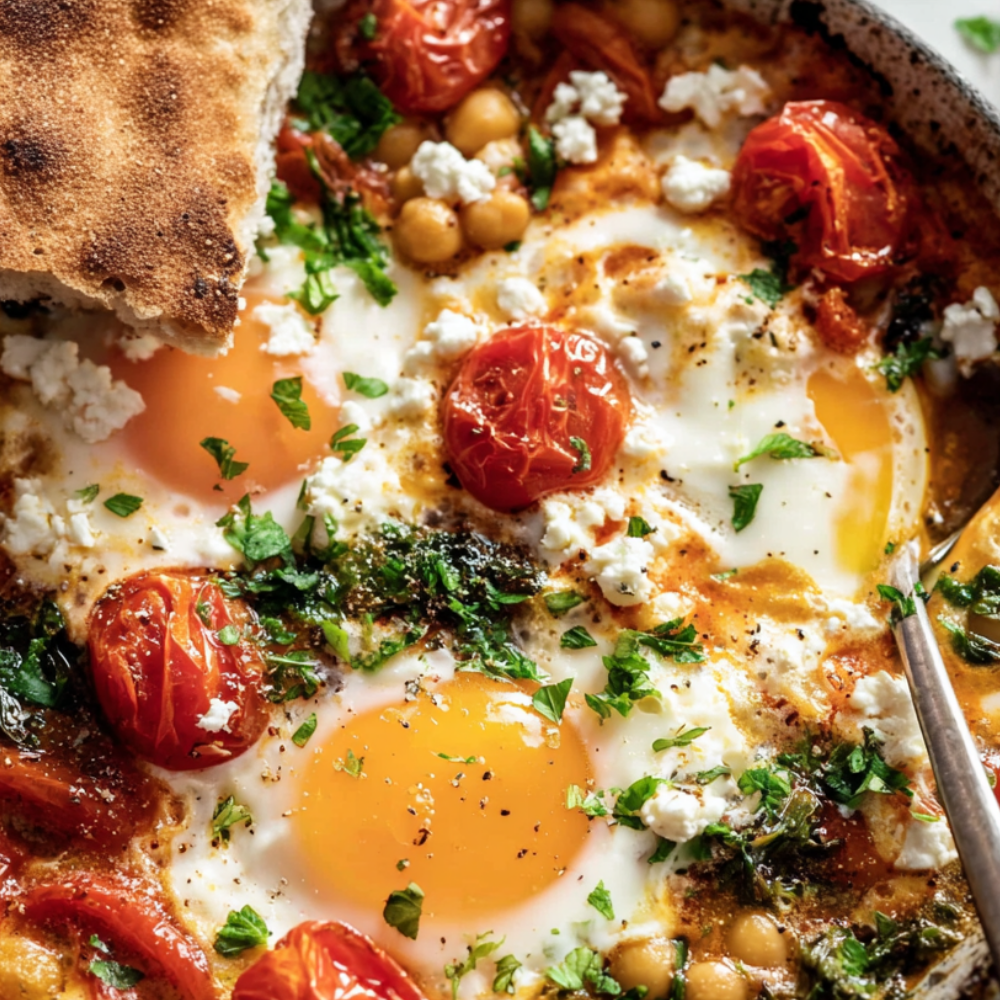
- Mediterranean Egg Bake for Four. Double the sauce in a 10-inch skillet, make six wells, use 6 eggs and 4 oz feta, and bake 12–14 minutes.
- Feta Omelet. Skip the oven. Pour three beaten eggs over the finished sauce and fold once the edges set.
- Baked Feta with Honey. Skip the eggs. Bake a block of feta in the sauce for 15 minutes, then drizzle with honey and serve with pita.
- Feta Egg Bake with Spinach. Wilt 2 cups of spinach into the sauce before making the wells.
- Healthy Zucchini Egg Dish. Add 1 cup of diced zucchini with the chickpeas and cook until it softens.
- Cauliflower Egg Breakfast. Swap the chickpeas for ½ cup of riced cauliflower, cooked until the moisture evaporates.
- Feta Toast. Skip the skillet eggs. Spread whipped feta on toasted sourdough, top with the tomato-chickpea sauce, and add a fried egg.
- Feta Fried Egg. Skip the oven entirely. Make the wells in the sauce and cook covered on the stovetop for 6 minutes.
- Basted Eggs Version. Add 2 tbsp of water to the skillet, cover, and steam on the stovetop for 5 minutes instead of baking.
- Spicy Harissa Baked Feta Eggs. Add 1 tsp of harissa to the sauce with the spices.
- Feta Egg Bake with Olives. Scatter ¼ cup of chopped Kalamata olives over the sauce before baking.
- Greek Baked Eggs. Add ¼ cup of chopped roasted red peppers to the sauce and top with extra oregano.
Storage and Food Safety
Refrigerator: Eat baked eggs straight from the oven. If you have leftovers, store them in an airtight container for up to 2 days. Reheat covered at 325°F for 8 minutes. The yolks will firm up, and the whites will never be as good as fresh.
Freezer: Not recommended. Eggs do not freeze well once baked, and the sauce separates on thawing.
Make Ahead: You can make the tomato-chickpea sauce up to 3 days ahead and refrigerate it. Reheat it in the skillet over medium heat until it holds a spoon track, then proceed with the eggs. This makes the recipe a true 8-minute weekday breakfast.
Food Safety: Cook eggs until the whites are fully set and reach 160°F. If you are cooking for anyone who is pregnant, elderly, or immunocompromised, bake until the yolks are fully set. Cool leftovers within 2 hours and refrigerate promptly.
Frequently Asked Questions
What size skillet should I use? An 8-inch cast-iron skillet. A 6-inch pan is too small for three eggs, the chickpeas, and the tomatoes, and it will crowd or overflow.
Can I use a 10-inch skillet instead? Yes, but the sauce spreads thinner and the eggs bake faster. Increase the tomatoes to 1½ cups and the chickpeas to ¾ cup to keep the layer thick.
How much protein is in baked feta eggs? About 34g per skillet from three eggs, chickpeas, and feta. A whole grain pita adds about 5g more.
Can I make this for more than one person? Yes. Double the sauce in a 10-inch skillet, make six wells, use six eggs and 4 oz of feta, and bake 12–14 minutes.
Why did my eggs turn out rubbery? The whites were overcooked. Pull the skillet when the whites are just set, and the yolks still jiggle.
Can I use canned diced tomatoes instead of cherry tomatoes? You can, but the sauce will be much more watery and take longer to reduce. Drain them well and cook longer.
Can I use a different cheese? Yes. Goat cheese, halloumi, or grated Parmesan all work. Feta is the most traditional.
Can I skip the chickpeas? Yes. Replace them with white beans, or leave them out and add 2 cups of spinach instead.
Can I make this in a regular skillet? Only if it is oven-safe. If not, transfer the sauce to a small baking dish before adding the eggs.
How do I make the sauce ahead of time? Cook the tomato-chickpea base, cool it, and refrigerate it for up to 3 days. Reheat in the skillet before adding the eggs.
Is this gluten-free? Yes, the skillet itself is gluten-free. Serve it with gluten-free pita or skip the bread.
Is this dairy-free? No, feta is dairy. Use a dairy-free feta alternative, or skip the cheese and add 2 tbsp of nutritional yeast.
What do I serve with it? Serve with warm whole-grain pita, crusty sourdough, or a simple cucumber and tomato salad.
Can I make this in an air fryer? Not recommended for a cast-iron skillet. The oven is the right tool.
What if my feta is very salty? Briefly rinse the block under cold water, then reduce the salt in the sauce to a pinch.
Can I add meat? Yes. Brown 2 oz of crumbled chorizo or lamb sausage in the pan before the chickpeas.
How long do leftovers last? Up to 2 days in the refrigerator. The dish is best fresh.
More High-Protein Breakfast Recipes You’ll Love
- Apple Cinnamon Cottage Cheese Breakfast Muffins — 11g protein, fall meal prep.
- Freezer Breakfast Sandwiches (5 Kinds, One Sunday Prep Session!)
- Breakfast Pizza Recipe (Cheese Sauce, Not Tomato—18g Protein Per Square!)
Conclusion
Mediterranean Baked feta eggs fail when you treat the sauce as background instead of the foundation. Watery tomatoes and wet chickpeas turn the skillet into a poaching liquid, and the eggs come out with rubbery whites floating in a pink puddle.
Reduce the sauce until it holds a spoon track. Dry the chickpeas so they crisp. Toast the spices in the oil.
Use an 8-inch skillet so the eggs have room to sit in their wells without touching. Scatter the feta around the yolks instead of on top. Pull the skillet while the yolks still jiggle.
Thirty-four grams of protein in one pan, in about fifteen minutes, with a piece of warm pita on the side. It looks like a brunch plate, and it cleans up like a Tuesday.
Make it once on a slow Saturday morning, and you will start making it on weekday mornings too. The sauce can be made three days ahead, which turns the whole thing into an eight-minute breakfast — and that is the version that actually changes your routine.