Every family has a dish that shows up when the weather turns. For mine, and for many families with Eastern European roots, it is cabbage rolls — a pot on the stove for a holiday, a tray in the oven for a Sunday, a plate set in front of you before you even sit down.
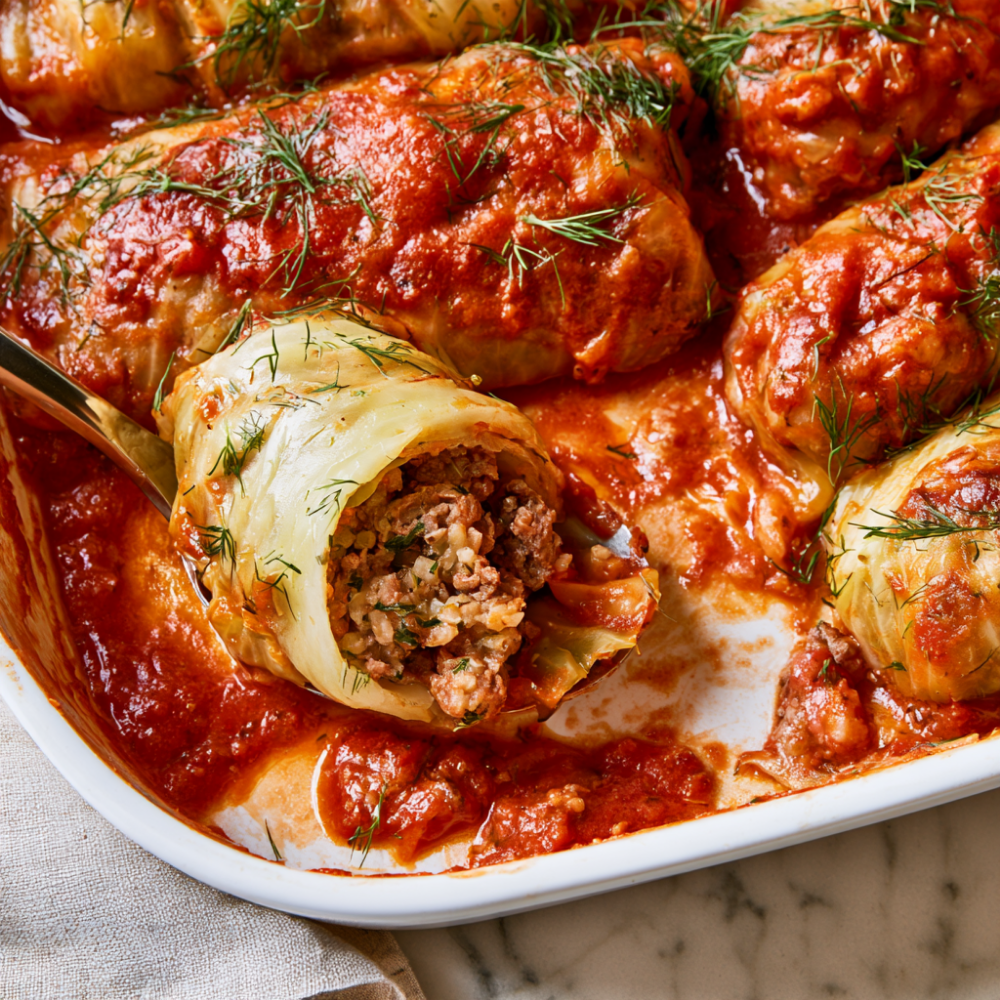
They are humble food. Cabbage, ground beef, rice, and tomato sauce. Almost nothing costs more than a few dollars, and yet they arrive at the table looking like something you worked on all afternoon. They fill a house with the smell of tomato, onion, and cooked cabbage, and they have everyone standing in the kitchen asking how long.
The problem is that most people try to make them once, struggle with torn leaves and bland filling, and never make them again. The cabbage head is impossible to peel. The leaves split. The filling is dry and underseasoned. The rolls collapse in the oven or come out swimming in a watery pink liquid.
Almost every one of those problems comes from three small mistakes: boiling the whole head instead of freezing it, cutting the rib out instead of shaving it flat, and using raw onion in the filling instead of sautéing it first.
Fix those three things and cabbage rolls stop being a project and start being a Sunday dinner. Fix the sauce — real canned tomatoes, simmered with Worcestershire, dill, and a splash of vinegar — and they stop tasting like a memory and start tasting like something you want to make every few weeks.
Thirty-two grams of protein per serving, under three dollars a plate, and they freeze better than almost anything else you can make with ground beef. This is the version that earns a permanent spot in the fall and winter rotation, and the one worth making a double batch of.
Why This Recipe Works
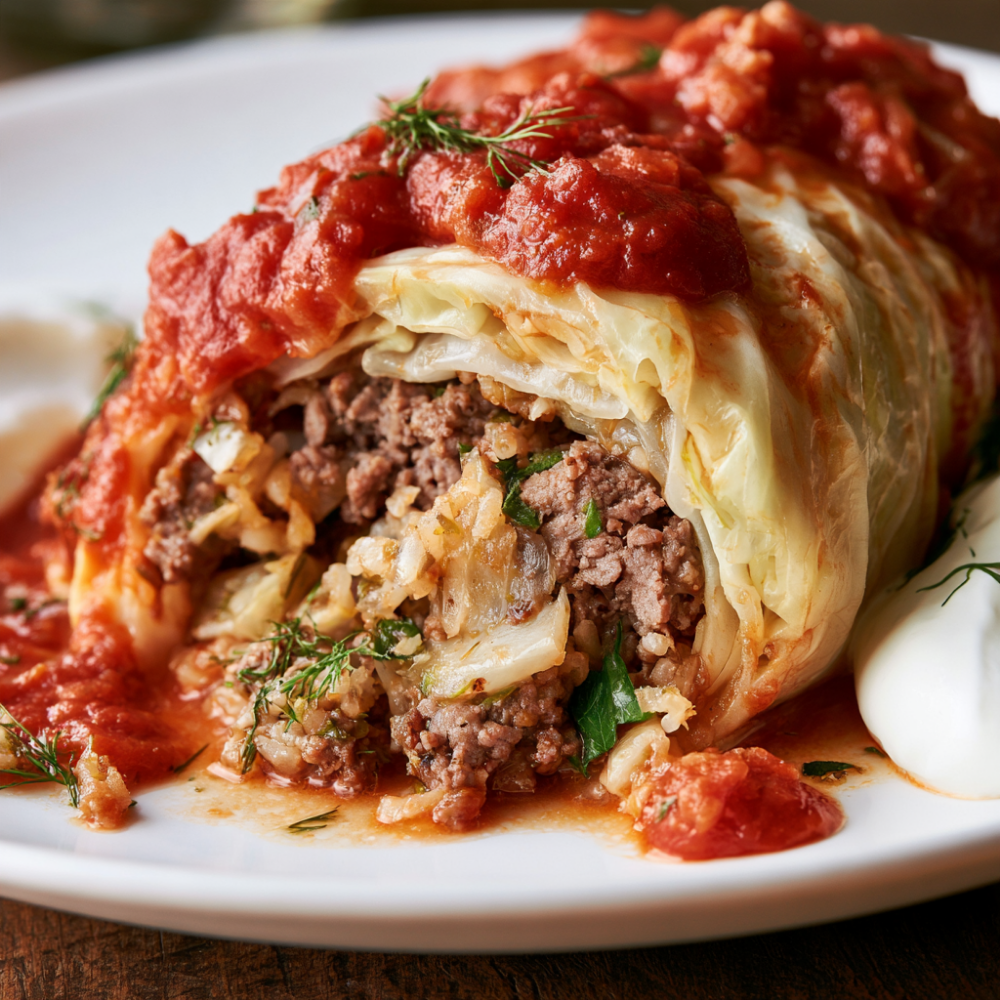
- Freezing the cabbage head is the fix nobody talks about. A night in the freezer ruptures the cell walls so the leaves peel away whole and pliable, with no boiling water and no torn leaves.
- Shaving the rib flat beats cutting a V-notch. A V-cut leaves a hole where filling escapes. A shaved rib lies flat and rolls evenly without splitting.
- Sautéing the onion and garlic first keeps the filling tender. Raw onion releases water and stays crunchy inside the roll. Cooked onion melts into the meat and sweetens it.
- Mixing a little sauce into the filling keeps the beef moist. A quarter cup of the tomato sauce gives the filling moisture and seasoning from the inside.
- Two eggs hold the filling together through a long bake. One egg is not enough for two pounds of beef and a cup and a half of rice.
- Dried dill is the flavor that makes cabbage rolls taste like cabbage rolls. It is the traditional herb, and it pairs with both the cabbage and the tomato.
- Worcestershire adds the umami depth that plain beef and tomato cannot. It is the quiet ingredient that makes the sauce taste simmered longer than it was.
- A small amount of brown sugar balances the canned tomatoes. Without it, the sauce tastes sharp and tinny.
- A splash of vinegar at the end keeps the sauce from tasting flat. Acid is what makes tomato sauce taste finished.
- Thinning the bottom layer of sauce with broth keeps it from burning. The layer under the rolls cooks the longest and needs extra liquid.
- Sauce goes under and over the rolls, not just under. The top layer keeps the leaves tender and glazes the rolls as they bake.
- Roll tightly and place seam-side down to keep them intact. A tight roll does not fall apart when you lift it out of the dish.
- Covered baking first, uncovered at the end, gives you tender leaves and a thick sauce. Leaving it uncovered the whole time dries the cabbage. Covered the whole time leaves the sauce watery.
- The protein math is honest. Two pounds of 85% lean beef plus rice and eggs delivers about 32g per serving across six plates.
Cabbage Rolls with Ground Beef
Ground beef and rice rolled in tender cabbage leaves and baked in a slow-simmered tomato sauce with Worcestershire, dill, and a touch of brown sugar. Traditional, budget-friendly, and freezer-ready.
For the Cabbage
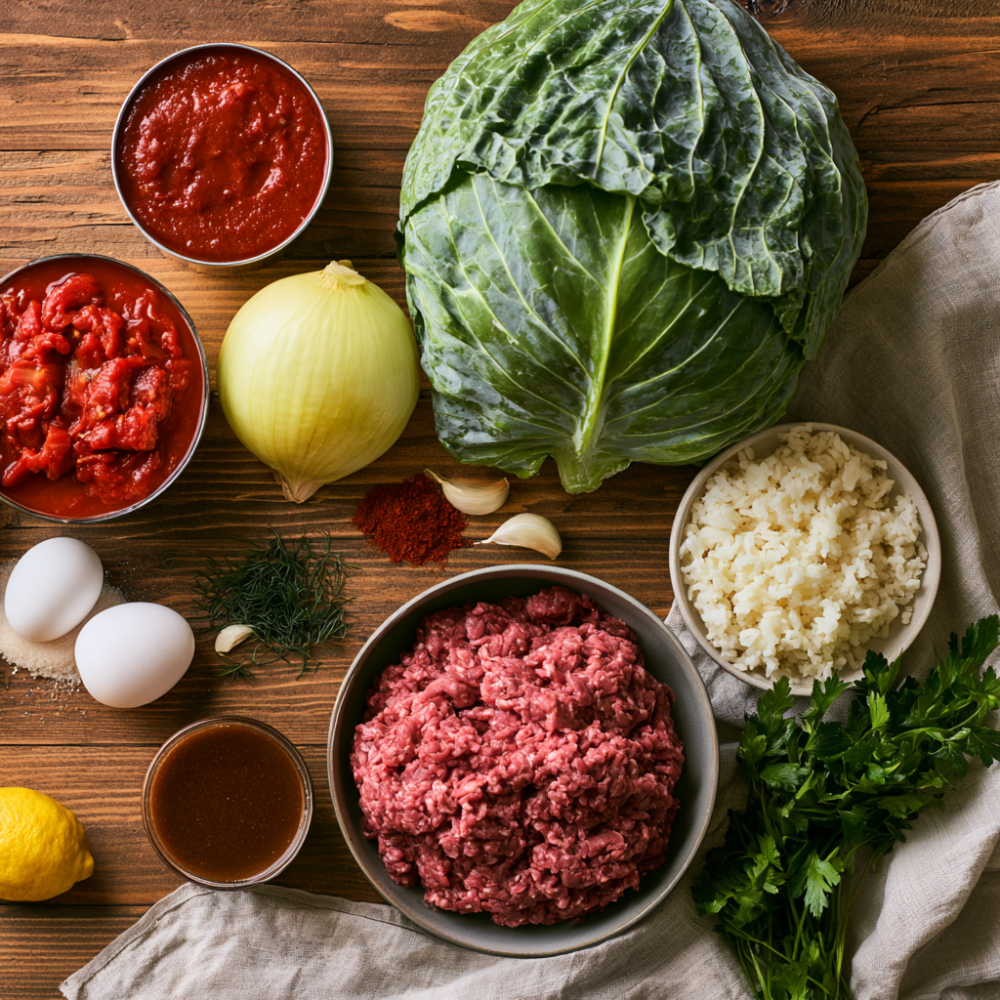
- 1 large head green cabbage (about 3 lbs)
For the Tomato Sauce
- 2 tbsp olive oil
- 1 cup yellow onion (finely diced)
- 4 cloves garlic (minced)
- 1 15-oz can tomato sauce
- 1 28-oz can crushed tomatoes
- 1 tbsp Worcestershire sauce
- 1 tbsp brown sugar
- 1 tsp kosher salt
- ½ tsp black pepper
- 1 tsp dried oregano
- 1 tbsp apple cider vinegar
- ½ cup low-sodium beef broth or water (for the bottom of the dish)
For the Filling
- 2 lbs ground beef (85% lean)
- 1 cup yellow onion (finely diced)
- 4 cloves garlic (minced)
- 1½ cups cooked white rice
- 2 large eggs
- ¼ cup of the prepared tomato sauce
- 1 tbsp Worcestershire sauce
- 3 tbsp fresh parsley (chopped)
- 2 tsp kosher salt
- ½ tsp black pepper
- 1 tsp smoked paprika
- ½ tsp dried dill
- ⅛ tsp cayenne (optional)
For Serving
- Sour cream
- Fresh dill or parsley
- Crusty bread
- Freeze the cabbage the night before. Place the whole head of cabbage in the freezer overnight. In the morning, move it to the refrigerator or counter to thaw completely, about 6 hours. The leaves will peel away whole and be pliable with no boiling.
- Preheat and prep. Preheat the oven to 350°F. Grease a 9×13 baking dish.
- Start the sauce. Heat the olive oil in a large skillet over medium heat. Add the 1 cup of diced onion and cook for 4 minutes, until softened. Add the garlic and cook for 30 seconds. Add the tomato sauce, crushed tomatoes, Worcestershire, brown sugar, salt, pepper, and oregano. Bring to a boil, reduce to low, and simmer uncovered 12–15 minutes, until slightly thickened. Stir in the cider vinegar off the heat.
- Cook the filling aromatics. In a separate skillet, cook the remaining 1 cup of diced onion in a dry pan over medium heat for 4 minutes, until softened and lightly golden. Add the garlic and cook for 30 seconds. Set aside to cool slightly.
- Make the filling. In a large bowl, combine the ground beef, cooked onion and garlic, rice, eggs, ¼ cup tomato sauce, Worcestershire, parsley, salt, pepper, smoked paprika, dill, and cayenne. Mix with your hands just until combined — about 20 seconds. Do not overwork it.
- Prep the leaves. Peel 18 large outer leaves from the cabbage. Lay each leaf rib-side up on a cutting board and shave the thick central rib with a paring knife until it lies flat. Do not cut it out. Set the smaller inner leaves aside to line the dish or add to the sauce.
- Roll. Place about ⅓ cup of filling at the base of each leaf. Fold the right side in, then the left, then roll from the base up, keeping it tight. Repeat with the remaining leaves.
- Build the dish. Spread the broth across the bottom of the baking dish. Spoon half the sauce over the broth. Arrange the rolls seam-side down in a single layer, packing them snugly. Spoon the remaining sauce over the top.
- Bake covered. Cover tightly with foil and bake 60 minutes at 350°F.
- Uncover and finish. Remove the foil and bake 15 minutes more, until the sauce bubbles and thickens slightly and the rolls reach 165°F internally.
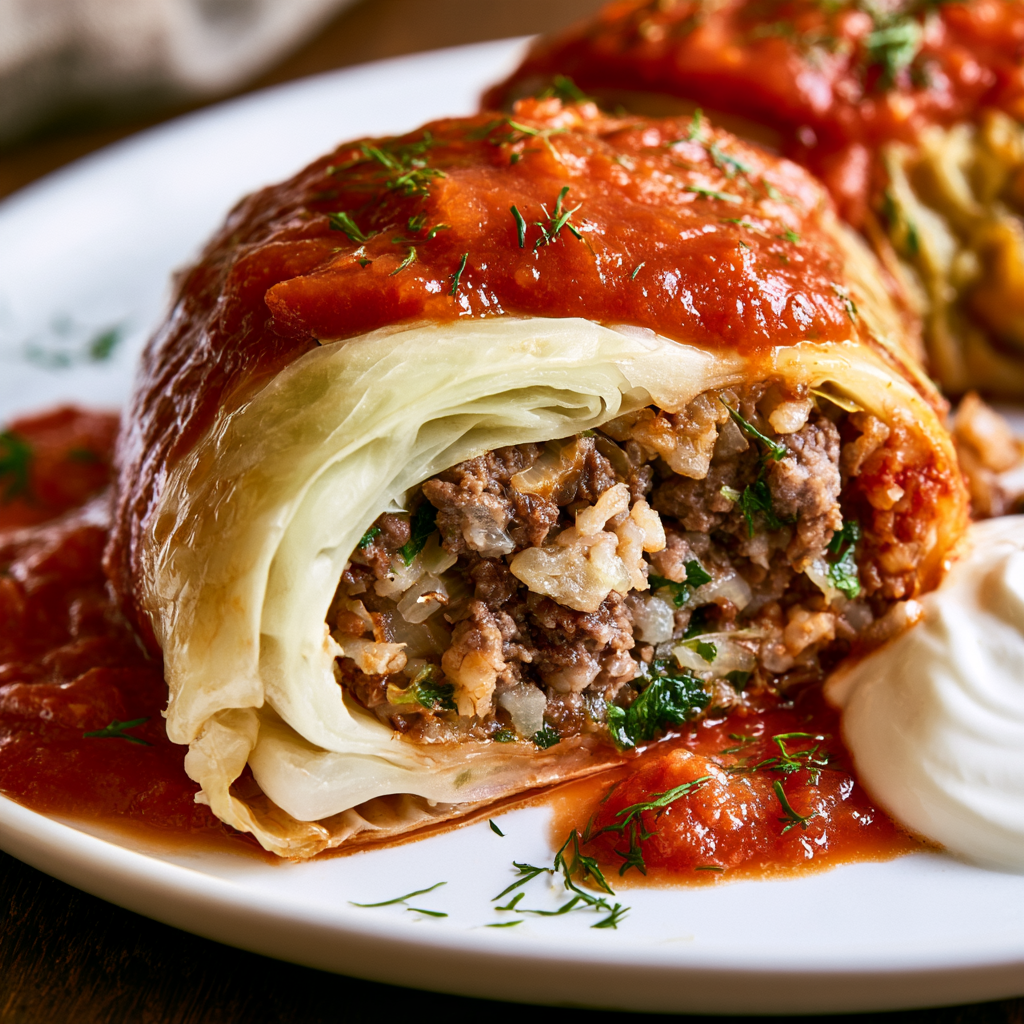
- Rest and serve. Rest 10 minutes before serving. Spoon the pan sauce over each roll and top with sour cream and fresh dill.
Protein per Serving: 32 g.
Nutrition Note: Protein calculated from 2 lbs of 85% lean ground beef (≈182g), 1½ cups cooked white rice (≈6g), and 2 eggs (≈12g), divided across 18 rolls and served 3 per person. About 480 calories per serving. Roughly $2.80 per serving at national average grocery prices.
Tips for the Best Cabbage Rolls
- Freeze the cabbage overnight. It is the easiest way to get whole, pliable leaves without a pot of boiling water. Thaw fully before peeling.
- Shave the rib; do not cut it out. A shaved rib lies flat and rolls evenly. A V-notch leaves a hole for filling to escape.
- Use the outer leaves for rolling, the inner leaves for lining. Small inner leaves protect the bottom of the dish from scorching.
- Sauté the onion before adding it to the filling. Raw onion stays crunchy and releases water inside the roll.
- Mix the filling by hand, not with a spoon. Hands combine without compressing. Stop after about 20 seconds.
- Do not overwork the meat. Overmixing makes the filling dense and springy.
- Use cooked, cooled rice. Warm rice steams the filling and makes it wet.
- Add ¼ cup of sauce to the filling. It keeps the beef moist and seasons it from the inside.
- Thin the bottom layer with broth. The sauce under the rolls bakes the longest and will scorch without extra liquid.
- Pack the rolls snugly seam-side down. They hold each other in place and do not unroll.
- Cover for the first hour, uncovered for the last 15 minutes. This gives you tender leaves and a sauce that thickens.
- Check the internal temperature. 165°F means the filling is fully cooked, not just the sauce bubbling.
- Rest 10 minutes before serving. It lets the filling set so the rolls hold together on the plate.
- Serve with sour cream. It cuts the tomato’s acidity and is traditional for a reason.
- Make a double batch and freeze half. These reheat better than almost any ground beef dish.
Troubleshooting
- The leaves tore while peeling. The cabbage was not fully thawed, or it was boiled too long. Thaw completely in the refrigerator and peel from the base.
- The rolls fell apart in the dish. They were rolled too loose, or they were not placed seam-side down. Roll tight and pack them snugly.
- The filling is dry and crumbly. Too lean beef, not enough egg, or overmixing. Use 85% lean, keep both eggs, and mix gently.
- The filling tastes bland. Not enough salt or seasoning. Add ½ tsp more salt and 1 tsp Worcestershire to the filling.
- The sauce is watery. It was not simmered long enough before assembly, or the cabbage released water. Simmer 15 minutes and bake uncovered the last 15.
- The sauce tastes tinny or sharp. Not enough sugar or acid balance. Add 1 tsp brown sugar and 1 tsp cider vinegar.
- The bottom of the dish burned. No broth under the sauce. Always thin the bottom layer with ½ cup broth or water.
- The cabbage is still crunchy. You didn’t bake long enough, or the rolls were too large. Bake the full 60 minutes covered and use ⅓ cup filling per roll.
- The rolls are soggy. They were baked covered the entire time. Uncover for the last 15 minutes.
- The filling spilled out during baking. The leaf had a hole from cutting out the rib. Shave the rib flat instead.
- The dish tastes flat overall. It needs salt, acid, or both. Add cider vinegar to the sauce and salt at the table.
- The rolls stick to the pan. The dish wasn’t greased, or the inner leaves weren’t used to line it. Grease the dish and line it with cabbage leaves.
Easy Variations
- Lazy Cabbage Rolls. Skip the rolling. Layer chopped cabbage, the raw filling mixture, and sauce in the dish, then bake covered for 75 minutes.
- Unstuffed Cabbage Rolls Crockpot. Brown the beef, then layer cabbage, filling, and sauce in a slow cooker. Cook on LOW for 6 hours.
- Cabbage Rolls Casserole. Chop the leaves, combine everything in a 9×13, top with 1 cup of shredded cheddar, and bake for 60 minutes.
- Crockpot Cabbage Rolls. Roll as directed, then cook in a slow cooker on LOW for 6–8 hours with extra sauce. Skip the oven.
- Ukrainian Cabbage Rolls. Add 1 cup of sauerkraut between the layers of rolls and use a 50/50 beef and pork blend.
- Vegetarian Cabbage Rolls. Replace the beef with 3 cups of cooked lentils and 1 cup of cooked barley. Add 1 tsp smoked paprika.
- Low Carb Cabbage Rolls. Replace the rice with 1½ cups of riced cauliflower, squeezed dry in a towel.
- Sausage Cabbage Rolls. Swap 1 lb of the beef for 1 lb of hot Italian sausage, casings removed.
Storage and Food Safety
Refrigerator: Store rolls and sauce together in an airtight container for up to 4 days. Reheat covered at 325°F for 25 minutes, or in the microwave for 2 minutes with a spoonful of sauce.
Freezer: Freeze baked or unbaked rolls in a freezer-safe container with sauce for up to 3 months. Thaw overnight in the refrigerator and reheat covered at 325°F for 30 minutes. Bake from frozen covered at 350°F for 1 hour 30 minutes, then uncovered for 15 minutes.
Make Ahead: Assemble the entire dish up to 24 hours ahead and refrigerate unbaked. Add 10 minutes to the covered bake time. The sauce can be made up to 3 days ahead and refrigerated separately.
Food Safety: Ground beef must reach an internal temperature of 160°F. These rolls are baked to 165°F as a margin. Cool leftovers within 2 hours and refrigerate promptly. Reheat leftovers to 165°F.
Frequently Asked Questions
How do I peel cabbage leaves without tearing them? Freeze the whole head overnight, thaw it fully, then peel from the base. The leaves come away whole and pliable with no boiling.
Can I boil the cabbage instead of freezing it? Yes. Core the head, boil it 4–5 minutes, and peel as it cools. It works, but the leaves tear more easily.
Can I use ground turkey instead of beef? Yes. Use 93% lean turkey and add 1 tbsp olive oil when cooking the filling aromatics.
Why are my cabbage rolls bland? You may not be using enough salt or seasoning in the filling. Use 2 tsp kosher salt, plus Worcestershire and dill.
Can I make these in a slow cooker? Yes. Roll them, pack them into a slow cooker with extra sauce, and cook on LOW for 6–8 hours.
What do I serve with cabbage rolls? Sour cream, mashed potatoes, crusty bread, or a simple cucumber salad.
Can I freeze cabbage rolls? Yes. Freeze baked or unbaked with sauce for up to 3 months.
How much protein is in each serving? About 32g per serving of three rolls, driven mostly by the two pounds of ground beef.
How much do these cost per serving? About $2.80 at national average prices, which is why the cost is listed as under $3.
Can I use brown rice? Yes. Cook it fully first, and add 2 tbsp of extra sauce to the filling.
Do I have to use a 9×13 dish? Any 3-quart baking dish works. Pack the rolls in snugly in a single layer.
How long do leftovers last? Up to 4 days in the refrigerator or 3 months in the freezer.
Can I make these without rice? Yes. Use 1½ cups of riced cauliflower, squeezed dry, for a lower-carb version.
Why did the sauce turn pink? Water released from the cabbage thinned the tomato. Uncover for the last 15 minutes and use less broth in the bottom layer.
What is the traditional herb for cabbage rolls? Dill. It gives them an Eastern European taste rather than plain stuffed cabbage.
More Ground Beef Recipes You’ll Love
- Hamburger Soup — 32g protein, one-pot, under $2.50 per serving.
- Copycat Cracker Barrel Meatloaf — 30g protein, brown sugar glaze.
- Cornbread Casserole with Ground Beef — 30g protein, honey butter crust.
Conclusion
Cabbage rolls have a reputation for being a project, and it mostly comes from three avoidable problems: a cabbage head that will not peel, leaves that split when you roll them, and a filling that tastes like nothing. None of those are about skill. They are about method.
Freeze the cabbage. Shave the rib flat. Sauté the onion. Mix a little sauce into the beef, season it with dill and smoked paprika, and roll tightly seam-side down. Bake covered, uncover for the last fifteen minutes, and rest before serving.
Thirty-two grams of protein per serving. Under three dollars a plate. A tray that feeds six people and freezes for three months.
This is the kind of dinner that shows up when the weather turns — the one that fills the house with tomato and onion and cooked cabbage and has everyone standing in the kitchen asking how long. Make it once, and it becomes the dish you make all winter.