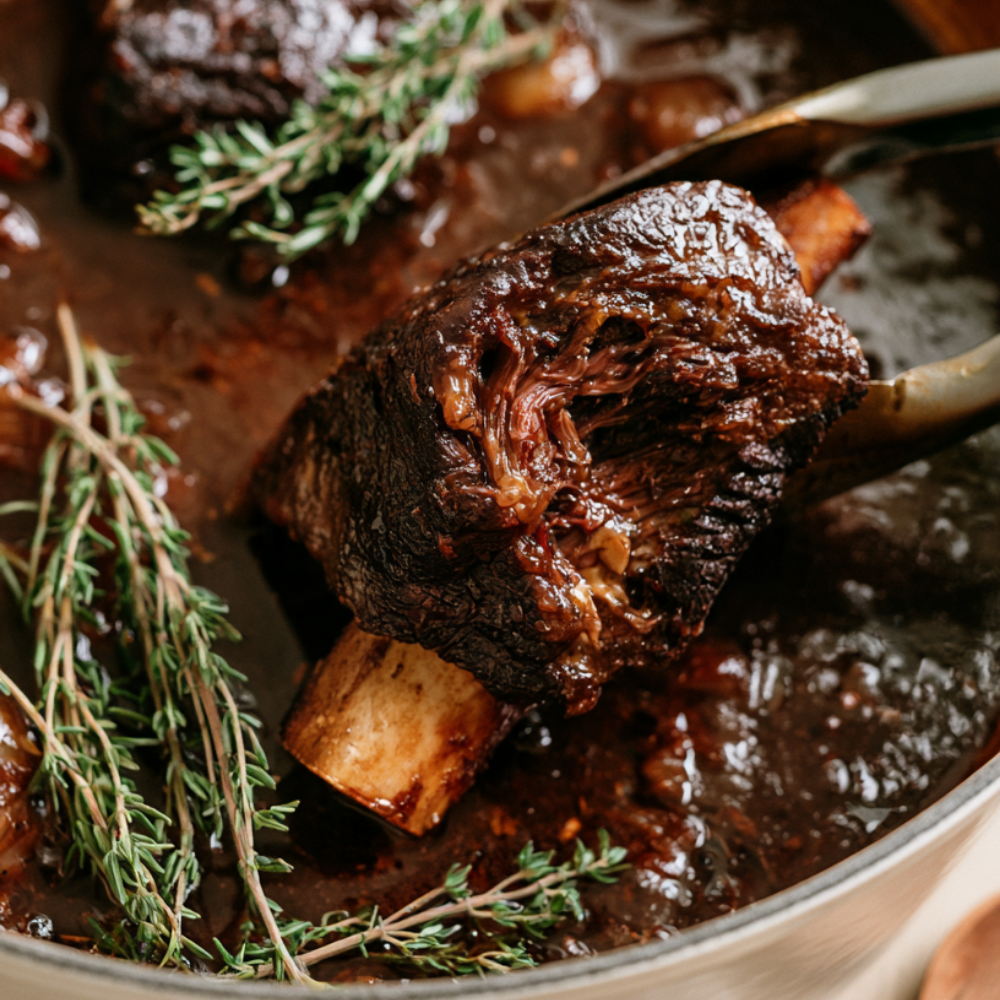

A moment on a holiday afternoon makes all the work worth it. The house is warm. The table is set with the good dishes.
And from the oven comes a smell that stops conversation—red wine, thyme, and beef braised for hours, filling every room with something that feels like home.
Braised short ribs are that dish. They are the centerpiece that looks like you spent all day in the kitchen, the one that arrives at the table glossy and dark and falling off the bone, the one everybody photographs before they touch it.
They feel like a restaurant plate. They feel like a holiday. And they are one of the most hands-off, forgiving things you can make.
Here is the secret most people do not know. Short ribs are not difficult. They are patient. Sear them, braise them, walk away for two and a half hours, and the oven does the work.
What decides whether the dish is good or unforgettable is what happens to the sauce afterward.
That’s where most recipes stop. They sear the ribs, add onion and garlic, pour in three cups of liquid, braise, and serve. What comes out is tender meat sitting in a thin, greasy broth that tastes like watered-down wine. The meat is fine. The plate is not.
This version fixes the sauce and the fat. Reduce the braising liquid after the meat is done, mount it with cold butter, and brighten it with red wine vinegar. The ribs rest overnight in the sauce so the fat solidifies and can be lifted off in one piece.
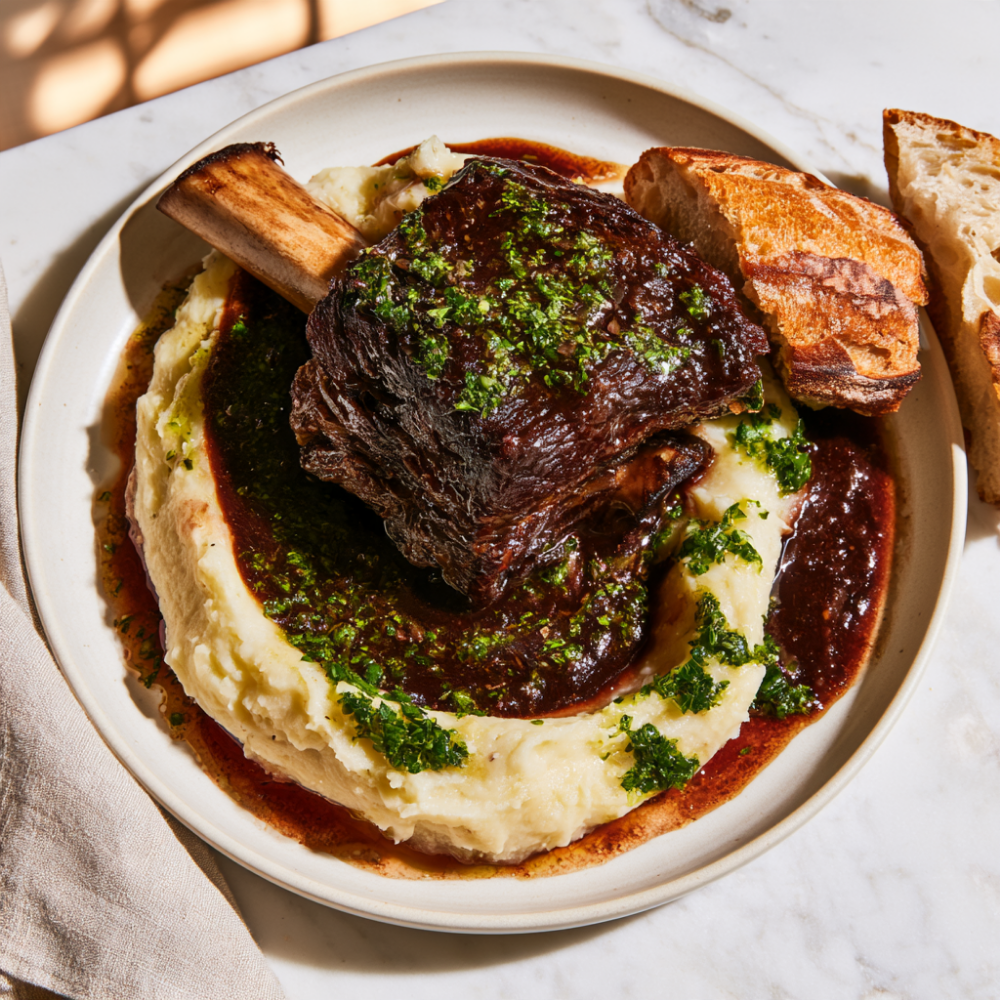
Finish with a gremolata — parsley, lemon zest, and raw garlic — that cuts through the richness and makes the plate taste alive.
38 grams of protein per serving. Fall-apart tender. A sauce worth spooning over mashed potatoes. It is the dish that makes a holiday table feel complete and the one you gather everyone around — without spending the entire day chained to the stove.
Why This Recipe Works
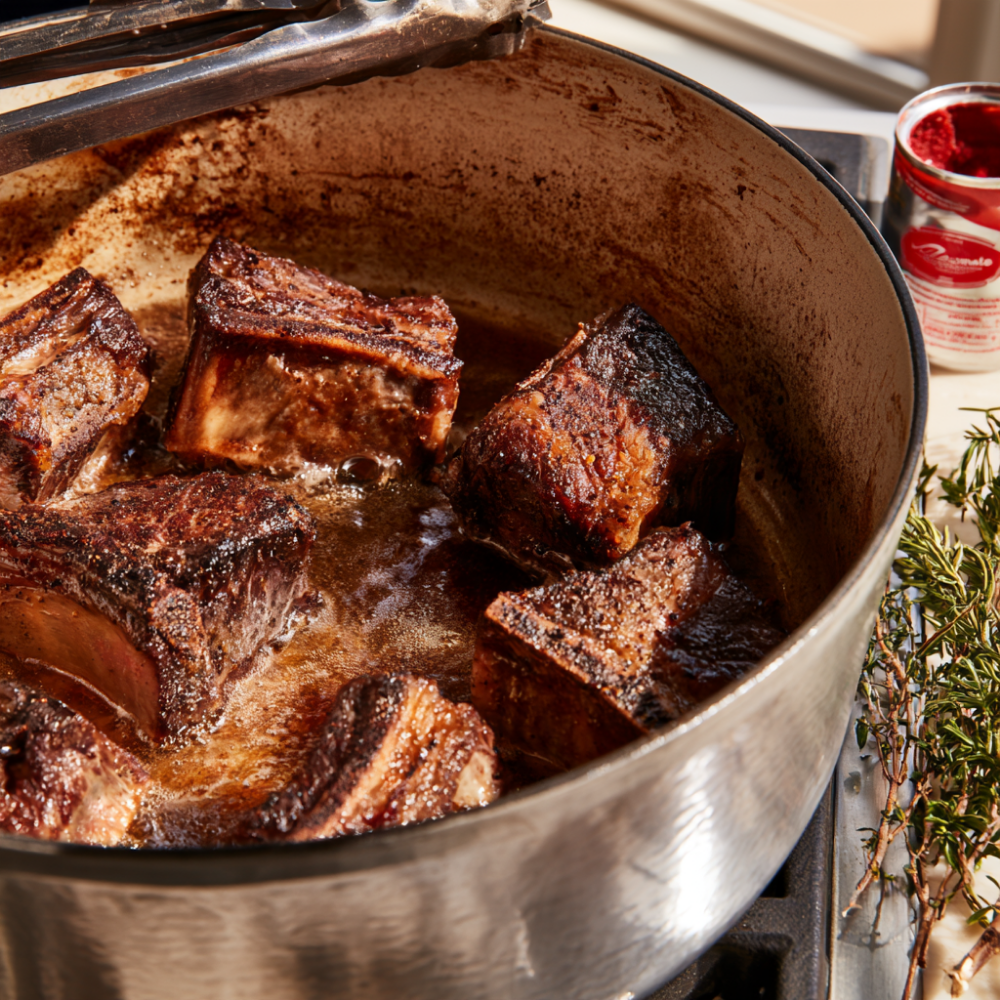
- Searing the ribs hard on all sides builds the flavor base. Short ribs are a tough, collagen-heavy cut. A deep brown crust is the difference between a rich braise and one that tastes like boiled beef.
- Searing takes 15 minutes and cannot be rushed. Crowd the pan and the ribs steam. Sear in batches and give each side real contact time.
- Cooking the tomato paste until it darkens adds depth. Straight from the can, it tastes raw and acidic. Cooked in the rendered fat for 2 minutes, it caramelizes and becomes the backbone of the sauce.
- Flour tossed with the tomato paste thickens the braising liquid into a sauce. This classic French technique eliminates the need for a cornstarch slurry at the end.
- Red wine does two jobs: it deglazes the pan, and it becomes the sauce. Scraping up the fond with wine dissolves the browned bits into the liquid, and reducing the wine first concentrates its flavor.
- Braising at 325°F breaks down collagen without drying the meat. Higher heat tightens the muscle fibers and pushes out moisture. Low and slow is what makes short ribs fork-tender.
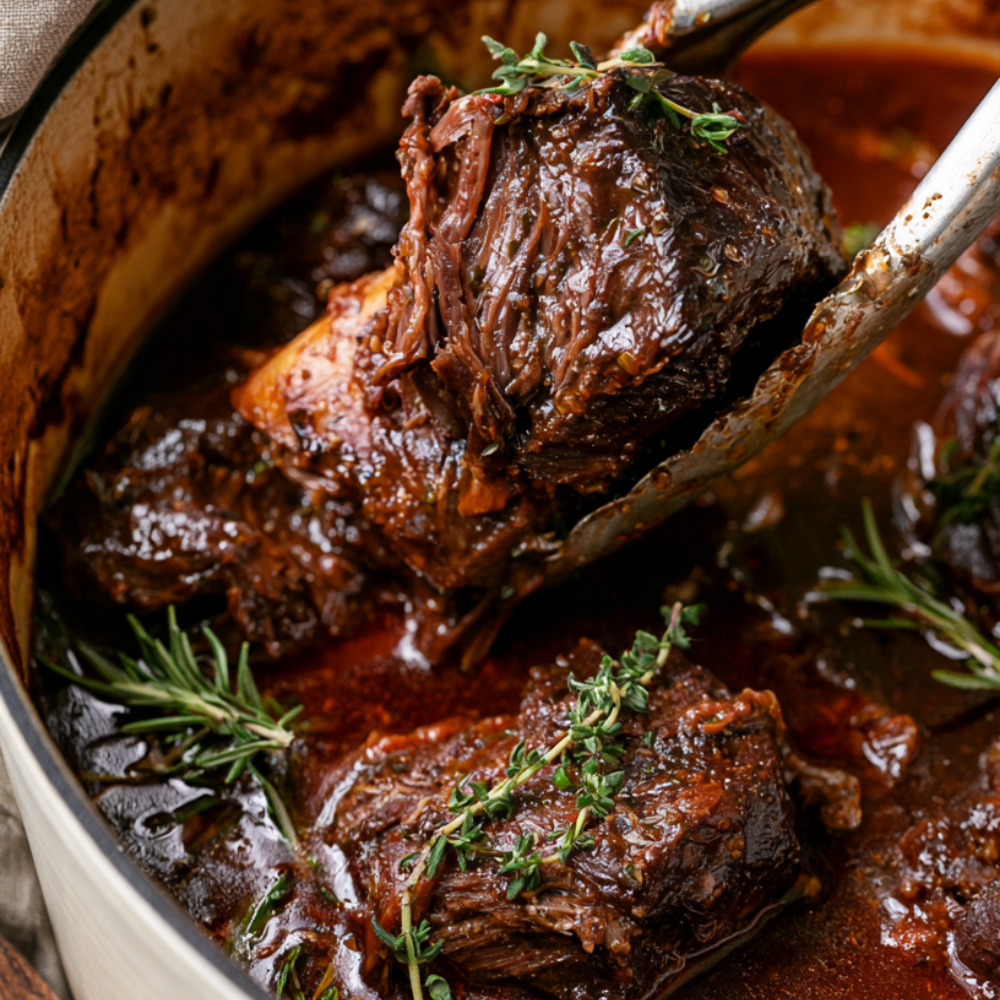
- The meat is done when it pulls away from the bone with no resistance. Not when the timer goes off. Check at 2 hours and again every 20 minutes.
- Resting overnight in the sauce is the single biggest upgrade. Short ribs are a very fatty cut. Chilling them overnight solidifies the fat so it lifts off in one piece, and the meat absorbs more sauce as it sits.
- Reducing the strained braising liquid concentrates it into a glossy sauce. The liquid that comes out of the pot is thin and watery. Boiled down by half, it becomes something you would pay for in a restaurant.
- Cold butter mounted into the reduced sauce gives it body and shine. It is the same technique used in French restaurants, and it takes 30 seconds.
- Red wine vinegar at the end wakes up the whole dish. Without acid, a rich braise tastes heavy and flat.
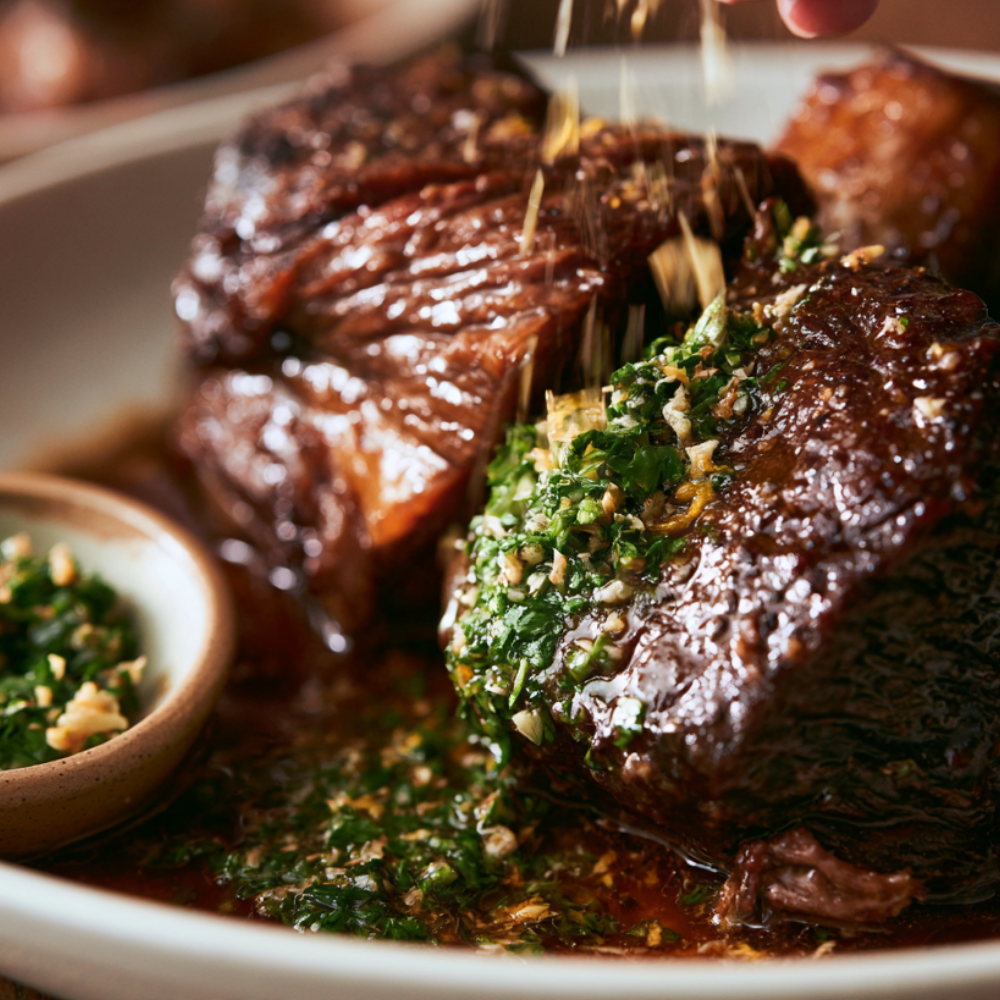
- Gremolata is not optional. Parsley, lemon zest, and raw garlic cut through the fat and add a bright, fresh note that makes the dish feel finished.
- The protein math is honest. 3 lbs of bone-in short ribs yield about 2 lbs of edible meat and roughly 38 g of protein per serving across 4 generous portions.
Braised Short Ribs
Bone-in beef short ribs, seared hard and braised low and slow in red wine with onion, garlic, tomato paste, and fresh thyme. Finished with a red wine reduction, cold butter, and a bright gremolata.
For the Short Ribs
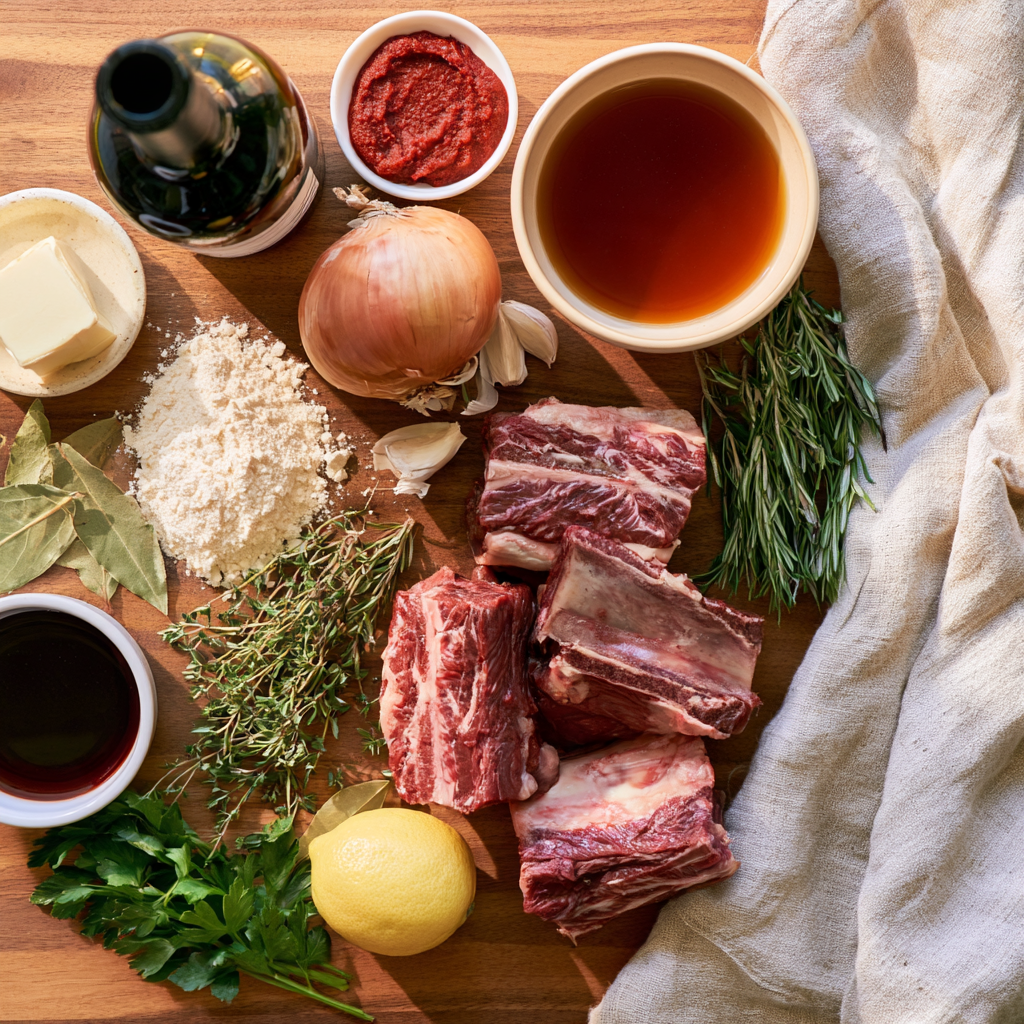
- 3 lbs bone-in beef short ribs (English cut)
- 2 tbsp vegetable or grapeseed oil
- 2 tsp kosher salt
- 1 tsp black pepper
For the Braise
- 1 large yellow onion (sliced)
- 4 cloves garlic (minced)
- 2 tbsp tomato paste
- 2 tbsp all-purpose flour
- 2 cups dry red wine (Cabernet, Merlot, or Côtes du Rhône)
- 1 cup low-sodium beef broth
- 1 tbsp Worcestershire sauce
- 1 tbsp soy sauce
- 4 sprigs fresh thyme
- 2 sprigs fresh rosemary
- 2 bay leaves
For the Sauce Finish
- 1 tbsp red wine vinegar
- 2 tbsp cold unsalted butter (cubed)
- Salt and pepper to taste
For the Gremolata
- ¼ cup fresh flat-leaf parsley (finely chopped)
- 1 tbsp lemon zest
- 1 clove garlic (finely grated)
- Pinch of flaky salt
For Serving
- Creamy mashed potatoes or polenta
- Crusty bread
- Preheat and season. Arrange a rack in the lower third of the oven and preheat to 325°F. Pat the short ribs dry with paper towels. Season generously on all sides with kosher salt and black pepper.
- Sear the ribs. Heat the oil in a large Dutch oven over medium-high heat until it shimmers. Add the short ribs in a single layer, working in batches if needed. Sear without moving for 4–5 minutes per side, until deeply browned on all sides, about 15 minutes total. Transfer to a plate.
- Soften the aromatics. Reduce the heat to medium. Pour off all but 1 tablespoon of the rendered fat. Add the onion and cook for 5 minutes, until softened and lightly golden. Add the garlic and cook for 30 seconds.
- Bloom the tomato paste and flour. Add the tomato paste and stir constantly for 2 minutes, until it darkens to a deep brick red. Sprinkle the flour over the top and stir for 1 minute to coat the vegetables and toast the flour.
- Deglaze with wine. Pour in the red wine and scrape up every browned bit from the bottom of the pot. Bring to a simmer and cook 5 minutes, until the wine has reduced by about a third and no longer smells sharp.
- Build the braise. Add the beef broth, Worcestershire, soy sauce, thyme, rosemary, and bay leaves. Stir to combine. Return the short ribs to the pot, bone-side down. The liquid should come about two-thirds of the way up the sides of the meat, not cover it completely.
- Braise. Cover the pot and transfer to the oven. Braise for 2 to 2½ hours, until the meat is very tender and pulling away from the bone. Check at 2 hours, then every 20 minutes. Do not overcook — meat that falls completely apart loses its texture.
- Rest overnight. Transfer the ribs to a container and strain the braising liquid over them. Cool to room temperature, then cover and refrigerate overnight. If serving same-day, rest covered for 20 minutes before proceeding.
- Skim the fat. The next day, lift the solid layer of fat off the top of the braising liquid and discard. The gelatinous liquid underneath is what becomes the sauce.
- Reduce the sauce. Transfer the ribs and liquid to a wide skillet or Dutch oven. Bring to a low simmer and cook uncovered 15–20 minutes, until the liquid has reduced by about half and coats the back of a spoon. Spoon the sauce over the ribs as it reduces.
- Finish the sauce. Off the heat, whisk in the red wine vinegar and the cold butter one cube at a time, until the sauce is glossy and slightly thickened. Taste and adjust salt and pepper.
- Make the gremolata. Combine the parsley, lemon zest, grated garlic, and flaky salt in a small bowl. Stir to combine.
- Serve. Spoon the ribs and sauce over mashed potatoes or polenta. Scatter the gremolata over the top and serve with crusty bread.
Protein per Serving: 38 g.
Nutrition Note: Protein calculated from 3 lbs bone-in short ribs yielding about 2 lbs edible meat (≈152g protein), divided by 4 servings. Short ribs are a fatty cut — about 40g fat and 640 calories per serving. The overnight rest and fat skimming reduce the fat significantly compared to serving the same day.
Tips for the Best Braised Short Ribs
- Dry the ribs before searing. Surface moisture steams the meat instead of browning it. Pat them dry and season right before they hit the pan.
- Sear in batches. Crowding the pot drops the temperature and the ribs steam. Give each piece real contact time.
- Sear all sides, not just the top and bottom. The sides have fat and collagen that render and brown. Use tongs to hold them upright if needed.
- Cook the tomato paste until it darkens. This takes 2 minutes and is the difference between a flat sauce and a rich one.
- Do not skip the flour. It thickens the braising liquid into a sauce as it cooks, eliminating the need for a final slurry.
- Reduce the wine before adding broth. Raw wine tastes sharp and alcoholic. Five minutes of simmering burns off the alcohol and concentrates the fruit.
- Use a wine you would drink. Cooking wine is salted and tastes like chemicals. A $12 bottle of Cabernet or Côtes du Rhône is perfect.
- The liquid should not cover the meat. Two-thirds up the sides is correct. Fully submerged short ribs come out boiled.
- Braise at 325°F, not 350°F or 400°F. Low heat breaks down collagen slowly without tightening the muscle fibers.
- Check for doneness with a fork, not a timer. The meat should pull away from the bone with almost no resistance. If it resists, give it another 20 minutes.
- Rest overnight if you can. The fat solidifies and lifts off in one piece, and the meat absorbs more sauce. This is the single biggest upgrade.
- Reduce the sauce by half after skimming. The liquid that comes out of the pot is thin. Boiled down, it becomes glossy and spoon-coating.
- Mount the sauce with cold butter off the heat. Butter added over heat separates. Off the heat, it emulsifies into a silky finish.
- Finish with red wine vinegar. A rich braise needs acid. One tablespoon transforms the sauce.
- Gremolata is not optional. Parsley, lemon, and raw garlic cut through the fat and make the dish taste finished.
Troubleshooting
- The meat is tough after 2½ hours. The ribs were not braised long enough, or the oven ran cool. Continue braising in 20-minute increments until fork-tender.
- The meat is falling apart and dry. It was overcooked. Short ribs should pull away from the bone but still hold their shape.
- The sauce is thin and watery. It was not reduced enough. Simmer uncovered until it coats the back of a spoon.
- The sauce is greasy. The fat was not skimmed, or the ribs were served the same day. Refrigerate overnight and lift off the solid fat.
- The sauce tastes flat. Not enough acid or salt. Add red wine vinegar and salt to taste.
- The sauce tastes bitter. The wine was not reduced enough, or the tomato paste burned. Reduce the wine fully next time and stir the paste constantly.
- The ribs stuck to the pot. The pot wasn’t hot enough when the ribs went in, or they weren’t seared long enough. Use a heavy Dutch oven and sear hard.
- The gremolata tastes too sharp. Too much raw garlic. Use a microplane and start with half a clove.
- The ribs are dry after reheating. They were reheated too fast or at too high a temperature. Reheat covered at 300°F with a splash of broth.
- The sauce did not thicken. The flour was omitted, or the liquid was not reduced enough. Reduce longer, or whisk in a cornstarch slurry.
- The dish tastes one-dimensional. It needs the gremolata, the vinegar, or both. These bright notes balance the fat.
- The bone fell out during braising. The ribs were overcooked. Pull them at fork-tender and no later.
Easy Variations
- Crockpot Short Ribs: Slow Cooker. Sear the ribs and build the braise on the stovetop, then transfer everything to a slow cooker and cook on LOW for 8 hours. Reduce the sauce on the stovetop afterward.
- Boneless Short Ribs. Use 2½ lbs boneless short ribs and reduce the braise time to 2 hours. The sauce will be slightly less rich without the bones.
- Braised Beef Short Ribs Slow Cooker. Same as the crockpot version, but add 1 cup broth to compensate for slower evaporation.
- Korean Beef Short Ribs. Swap the red wine for ½ cup soy sauce, ¼ cup brown sugar, 2 tbsp rice vinegar, and 1 tbsp sesame oil. Finish with scallions and sesame seeds.
- BBQ Short Ribs. Use 2 cups of beef broth instead of wine and add ½ cup of your favorite BBQ sauce in the last 30 minutes of braising.
- Pork Short Ribs. Use 3 lbs of pork short ribs and reduce the braise time to 1½ hours. Add 1 tbsp of apple cider vinegar to the sauce.
- Country Style Pork Ribs. Same as above, but use 3 lbs country-style ribs and braise for 2 hours.
- Short Rib Roast. Use a 4 lb bone-in short rib roast and increase the braise time to 3 to 3½ hours.
- Braised Short Ribs Stovetop. Keep the pot on the stovetop over the lowest possible heat, covered, for 2½ to 3 hours, checking every 30 minutes.
- Dutch Oven Short Ribs with Root Vegetables. Add 2 cups of chopped carrots, parsnips, and turnips to the pot in the last 45 minutes of braising.
- Beef Short Ribs Marinade. Marinate the ribs overnight in the red wine, garlic, and herbs before searing. Pat dry before searing.
- French Braised Short Ribs in Red Wine Sauce. Add 2 tbsp of Cognac to the pan after deglazing with wine, and finish with a splash of truffle oil.
Storage and Food Safety
Refrigerator: Store the ribs and sauce together in an airtight container for up to 4 days. The fat will solidify on top and can be lifted off before reheating. Reheat covered at 300°F for 25 minutes, or on the stovetop over low heat.
Freezer: Freeze the ribs and sauce together for up to 3 months. Thaw overnight in the refrigerator and reheat covered at 300°F for 30 minutes. The sauce may separate slightly after freezing; whisk it back together over low heat.
Make Ahead: This dish can be made ahead. Braise the ribs, cool, and refrigerate up to 3 days before serving. The flavor improves each day.
Food Safety: Beef short ribs must reach an internal temperature of 145°F for safety, though braised short ribs reach 200°F+ during the braise, which makes them tender. Cool leftovers within 2 hours and refrigerate promptly. Reheat leftovers to 165°F.
Frequently Asked Questions
How long do short ribs take to braise? 2 to 2½ hours at 325°F for bone-in English-cut short ribs. Boneless short ribs take about 2 hours.
What temperature should I braise short ribs at? 325°F. Higher heat tightens the muscle fibers and dries out the meat.
Should I braise covered or uncovered? Covered. Uncovered braising evaporates the liquid and dries out the meat.
Can I make short ribs in a slow cooker? Yes. Sear the ribs and build the braise on the stovetop, then transfer to a slow cooker and cook on LOW for 8 hours. Reduce the sauce on the stovetop afterward.
What is the best wine for braised short ribs? A dry red you would drink: Cabernet Sauvignon, Merlot, Côtes du Rhône, or a red blend. Avoid cooking wine, which is salted.
Can I use beef broth instead of wine? Yes. Use 3 cups of beef broth plus 2 tbsp of red wine vinegar for acidity.
Why are my short ribs tough? They were not braised long enough, or the oven ran cool. Continue braising in 20-minute increments until fork-tender.
Why is my braising liquid greasy? Short ribs are a fatty cut. Refrigerate overnight and lift off the solid fat before reheating.
Do I have to rest them overnight? No, but it is the single biggest upgrade. It solidifies the fat and deepens the flavor.
Can I use boneless short ribs? Yes. Use 2½ lbs and reduce the braise time to 2 hours.
What do I serve with short ribs? Mashed potatoes, polenta, egg noodles, crusty bread, or roasted root vegetables.
Are short ribs high in protein? Yes. About 38g per serving. They are also high in fat — about 40g per serving.
Can I freeze braised short ribs? Yes. Freeze the ribs and sauce together for up to 3 months.
Can I make short ribs on the stovetop? Yes. Keep the pot covered over the lowest heat for 2½ to 3 hours, checking every 30 minutes.
What is gremolata and do I need it? Gremolata is parsley, lemon zest, and raw garlic. It cuts through the richness of the braise and is the finishing note that makes the dish taste complete.
More High-Protein Recipes You’ll Love
- Prime Rib Roast in the Oven — 50g protein, herb butter, reverse seared.
- Fall-Off-the-Bone Crockpot Ribs (The Easiest BBQ Dinner)
- Country-Style Boneless Pork Ribs In The Crockpot (Fall-Off-The-Fork Tender!
Conclusion
Holiday dinners have a strange way of separating the dishes that impress from the dishes that are worth the effort. Turkey and prime rib are the classics, but they demand attention, timing, and a cook who cannot sit down. Braised short ribs are the rare exception—the dish that looks like a centerpiece and behaves like a slow-cooker meal.
They fail when you treat the sauce as an afterthought. The meat gets tender, but the liquid that comes out of the pot is thin, greasy, and tastes like watered-down wine. You spend three hours and a lot of money on a dish that never quite comes together in front of the people you wanted to impress.
Fix the sauce, and everything changes. Sear the ribs hard. Cook the tomato paste until it darkens. Reduce the wine before you add the broth. Braise low and slow. Then rest overnight, skim the fat, reduce the liquid by half, and mount it with cold butter. Finish with red wine vinegar and a gremolata.
Thirty-eight grams of protein per serving. Fall-apart tender. A sauce worth spooning over mashed potatoes.
It is the dish that makes a holiday table feel complete. It is the one that gathers everyone around without asking you to miss the gathering. Make it once this holiday season, and it becomes the braise you make every year.