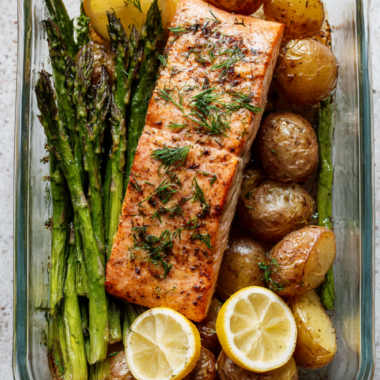
Seafood has a reputation for being the hardest thing to meal prep.
Fish dries out in the fridge, shrimp turns rubbery the second you reheat it, and a sauce that looked perfect on day one can turn into a watery mess by day three. It’s enough to send most people straight back to chicken breast and rice every single week.
This pescatarian meal prep lineup fixes that, recipe by recipe.
Five high-protein dinners, each one engineered around the specific thing that normally goes wrong with reheated seafood: staggered roasting so delicate fish doesn’t overcook alongside slower vegetables, sauces and cremas packed separately so they stay glossy instead of breaking, a quick salt-draw step so tomatoes and cucumbers don’t pool water into the container, and a macro-hacked cream sauce built on blended cottage cheese instead of heavy cream.
Whether you’re easing into a pescatarian diet for beginners or you’ve been doing fish meal prep for years and want a better system, this lineup covers a real range: glazed salmon, garlic-butter shrimp, crispy baked cod, a no-cook Mediterranean tuna salad, and a creamy Tuscan white fish skillet. Pick two or three for the week, or make all five and never eat the same lunch twice.
What Makes This Pescatarian Meal Prep Lineup Work
- Fish and vegetables are staggered, not roasted together. Salmon cooks much faster than broccoli; roasting them side by side for the same amount of time dries the fish out. Giving the vegetables a head start keeps both right.
- Pull delicate proteins the second they’re done. Shrimp and cod go from perfect to rubbery in under a minute of extra oven time, so every recipe gives an exact visual cue (opaque, flakes with a fork) instead of a loose time range.
- Sauces and cremas are packed separately. Adding a crema or pan sauce straight to hot rice on day one can break it or make it watery by day three. Packing it in a small container and adding it after reheating keeps it glossy.
- Watery vegetables get a quick salt-draw first. Diced cucumber and tomato release a surprising amount of liquid in a sealed container. Ten minutes in a colander with a pinch of salt heads that off before it ever becomes a soggy lunch.
- One sauce swaps heavy cream for blended cottage cheese. Blended completely smooth, cottage cheese creates a rich, Alfredo-style texture with far more protein per serving than a traditional cream sauce, without tasting like cottage cheese.
- Every recipe builds on a sturdy base. Quinoa, wild rice, brown rice, and white beans all hold up over 3-4 days far better than anything leafy, which is why none of these five recipes rely on lettuce.
- The protein math is honest. Each recipe lists protein per serving based on the actual cuts and quantities used, ranging from about 32g to 38g, so you know exactly what you’re building the week’s meals around.
1. Honey Garlic Glazed Salmon & Quinoa Meal Prep Bowls
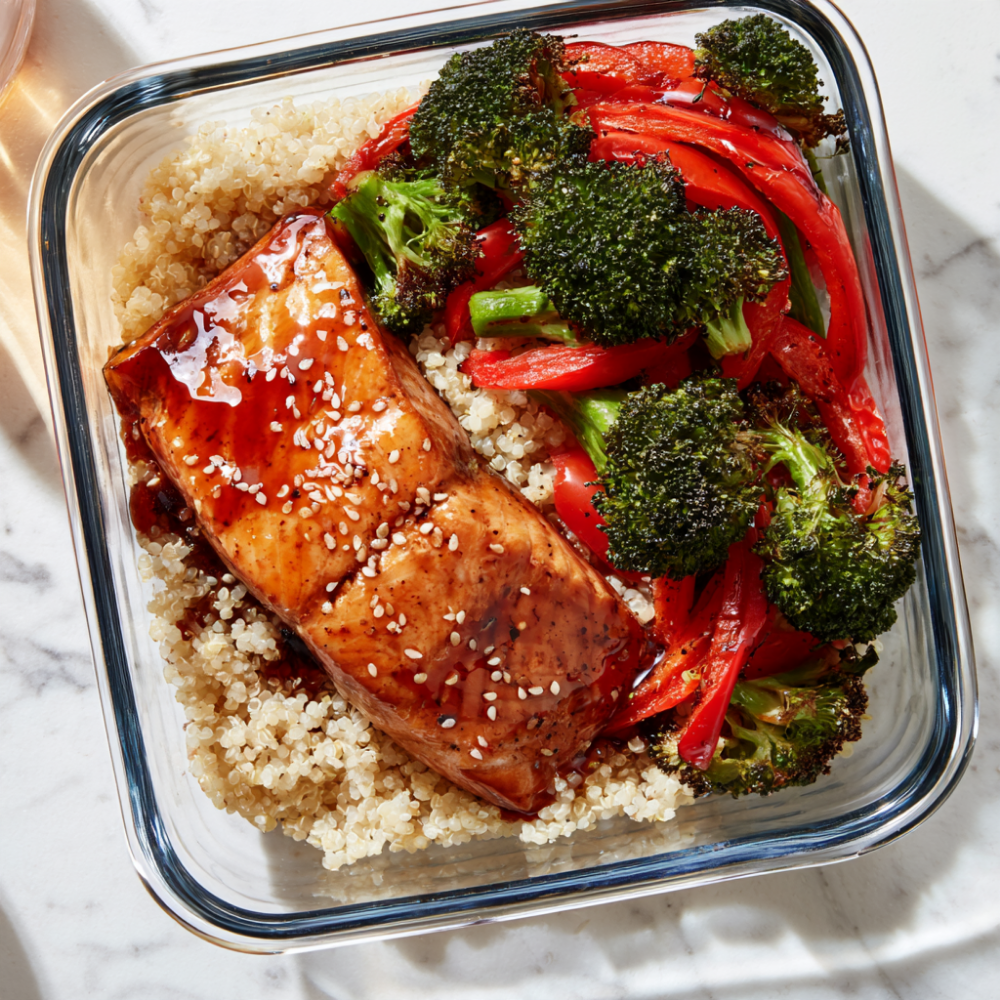
Tender, flaky salmon glazed with a sticky honey-soy-garlic sauce, served over lime-fluffed quinoa with roasted broccoli and bell pepper. Salmon is naturally rich in healthy fats and stays moist when roasted correctly, and the quinoa base absorbs the extra glaze without turning mushy, making this one of the most forgiving recipes in the lineup for fish meal prep beginners.
Prep Time: 15 minutes
Cook Time: 15 minutes
Servings: 4
Protein per Serving: ~38g
Ingredients
- 4 salmon fillets (about 5-6 oz each), skin-on
- 1.5 cups cooked quinoa (fluffed with a squeeze of lime juice)
- 4 cups broccoli florets, cut into uniform bite-sized pieces
- 1 red bell pepper, sliced thin
- For the glaze: 3 tbsp low-sodium tamari or soy sauce, 2 tbsp raw honey, 1 tbsp rice vinegar, 2 cloves minced garlic, 1 tsp grated fresh ginger, 1 tsp toasted sesame oil, 1 tsp cornstarch mixed with 1 tbsp cold water
- Olive oil spray, kosher salt, and black pepper
- Optional garnish: toasted sesame seeds and sliced green onions
Instructions
- Preheat oven to 400°F (200°C). Toss broccoli and bell pepper with olive oil, salt, and pepper on a baking sheet. Roast for 8 minutes alone so they start getting tender-crisp.
- While the vegetables roast, whisk tamari, honey, rice vinegar, garlic, ginger, and sesame oil in a small saucepan. Simmer over medium heat for 2 minutes, stir in the cornstarch slurry, and cook 1 more minute until thick, glossy, and coating the back of a spoon.
- Pull the baking sheet out. Push the vegetables aside, lay parchment paper in the center, and place the salmon fillets skin-side down. Season lightly with salt and pepper, then brush half the glaze generously over each fillet.
- Return to the oven for 8-10 minutes. The salmon will cook through while staying tender and flaky, and the glaze will caramelize without burning.
- Divide the quinoa across 4 containers. Add the roasted broccoli, bell peppers, and glazed salmon. Drizzle the remaining glaze over the top, cool, then seal and refrigerate for up to 4 days.
2. Sheet Pan Lemon-Herb Garlic Butter Shrimp & Asparagus with Wild Rice
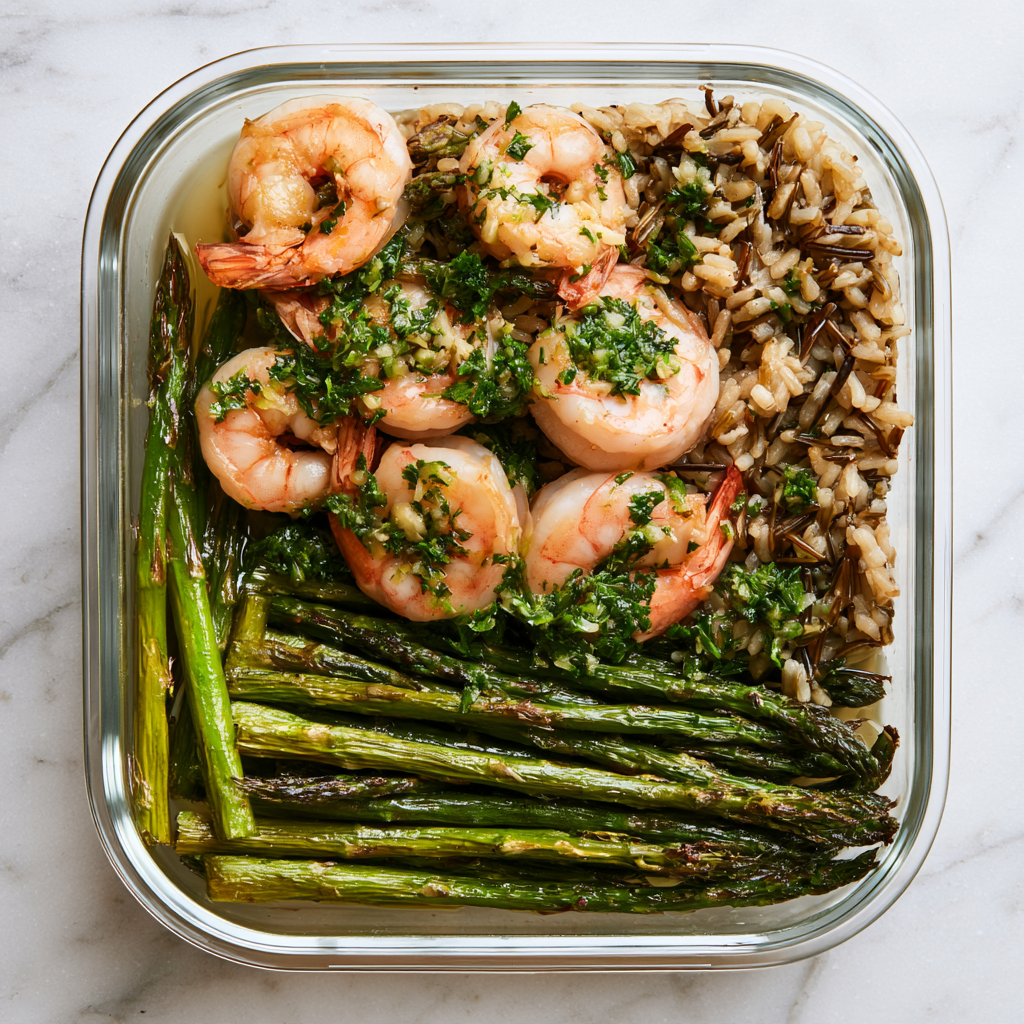
Juicy, garlic-butter shrimp and crisp asparagus roasted together on a single sheet pan, served over a wild and brown rice blend and finished with a bright parsley-lemon gremolata. This is one of the fastest recipes in the lineup and a good entry point if you’re trying easy pescatarian recipes for the first time.
Prep Time: 10 minutes
Cook Time: 10 minutes
Servings: 4
Protein per Serving: ~32g
Ingredients
- 1.5 lbs large shrimp, peeled, deveined, and patted completely dry
- 1 bunch thick asparagus, woody ends snapped, cut into 2-inch pieces
- 2 cups cooked wild and brown rice blend
- For the sauce: 3 tbsp ghee or unsalted butter (melted), 3 minced garlic cloves, juice and zest of 1 large lemon, 1 tsp dried oregano, 1/2 tsp smoked paprika, 3/4 tsp kosher salt, 1/4 tsp black pepper
- For the gremolata: 2 tbsp chopped fresh parsley, 1 minced garlic clove, lemon zest
Instructions
- Preheat oven to 400°F (200°C). Arrange the asparagus on one side of a large rimmed baking sheet and the thoroughly patted-dry shrimp on the other.
- Whisk together the melted ghee or butter, garlic, lemon juice and zest, oregano, smoked paprika, salt, and pepper.
- Pour two-thirds of the mixture over the shrimp and asparagus, tossing to coat evenly. Keep the remaining sauce in reserve.
- Roast for strictly 8 to 10 minutes. Remove the shrimp as soon as they turn pink and opaque, and the asparagus is tender-crisp.
- Divide the wild rice blend into 4 containers. Top with the roasted asparagus and shrimp. Drizzle the reserved pan juices and sauce over the top, sprinkle with the gremolata, and cool completely before sealing.
3. Crispy Baked Cod “Fish Taco” Bowls with Cilantro-Lime Crema
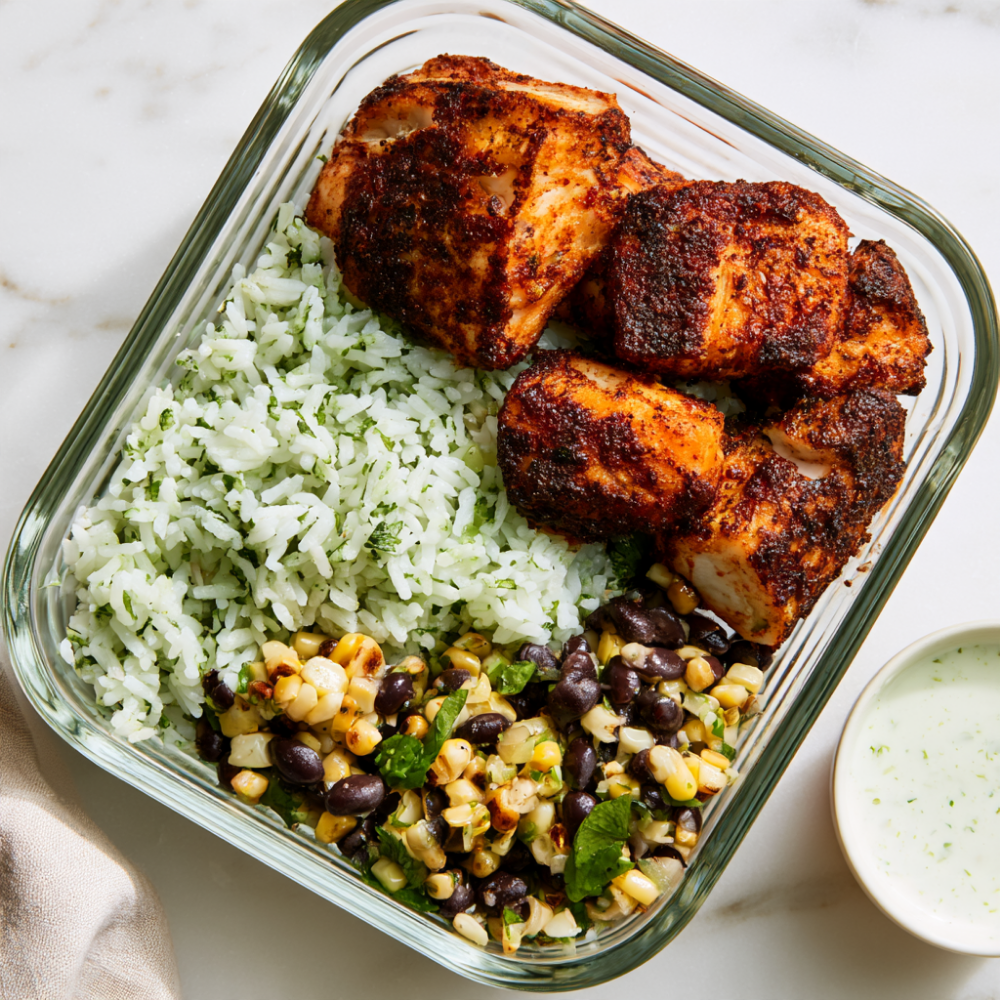
Flaky cod dusted with smoked paprika and cumin, baked until crisp, layered over cilantro-lime rice with a black bean and corn salad, and finished with a high-protein Greek yogurt crema.
Cod is an ultra-lean white fish that doesn’t turn fishy as it sits, making it one of the most reliable options in the lineup for healthy pescatarian meals you’ll actually want to eat on day four.
Prep Time: 15 minutes
Cook Time: 15 minutes
Servings: 4
Protein per Serving: ~34g
Ingredients
- 4 thick cod or mahi-mahi fillets (about 5 oz each)
- 1.5 cups cooked brown rice or cilantro-lime cauliflower rice mix
- 1 can (15 oz) black beans, rinsed and thoroughly drained
- 1 cup corn kernels (fresh or fire-roasted frozen)
- 1/2 red onion, finely diced
- For the spice rub: 1 tsp smoked paprika, 1 tsp ground cumin, 1 tsp garlic powder, 1 tsp onion powder, 1 tsp kosher salt, 1/2 tsp black pepper, 1 tbsp olive oil
- For the crema: 1/2 cup plain non-fat Greek yogurt, 2 tbsp fresh lime juice, 2 tbsp chopped cilantro, a pinch of salt and garlic powder
- Optional: diced avocado or pickled jalapeños, packed in separate mini cups
Instructions
- Preheat oven to 400°F (200°C) and line a baking sheet with parchment paper. Mix the smoked paprika, cumin, garlic powder, onion powder, salt, and pepper. Rub the cod fillets with olive oil, then coat evenly with the spice blend.
- Bake the fish for 12-15 minutes, until opaque and easily flaked with a fork. Let it rest for 3 minutes, then break into large, rustic chunks.
- In a bowl, toss the drained black beans, corn kernels, and diced red onion with a squeeze of lime juice and a pinch of salt.
- Whisk the Greek yogurt, lime juice, cilantro, salt, and garlic powder until smooth.
- Layer the rice, then the black bean and corn salad, into your 4 containers. Top with the spiced cod chunks. Spoon the lime crema into 4 small condiment cups and tuck them inside the containers to keep them cold and glossy until you’re ready to eat.
4. Mediterranean Tuna & White Bean Meal Prep Salads

High-protein flaked tuna (or roasted salmon chunks) tossed with cannellini beans, cucumbers, cherry tomatoes, kalamata olives, red onion, and a zesty lemon-oregano vinaigrette.
Because the base is beans and grains instead of lettuce, nothing needs to wilt, making this a strong pick for Mediterranean diet meal prep and anyone just starting a pescatarian diet.
Prep Time: 15 minutes
Cook Time: 0 minutes
Servings: 4
Protein per Serving: ~36g
Ingredients
- 3 cans (5 oz each) solid white albacore tuna in water, drained well (or 3 cups flaked cooked wild salmon)
- 2 cans (15 oz each) cannellini beans, rinsed and drained
- 1 cup cherry tomatoes, quartered
- 1 English cucumber, diced into 1/2-inch cubes
- 1/2 cup kalamata olives, pitted and halved
- 1/4 red onion, finely diced (soaked in cold water for 5 minutes to remove harsh bite)
- 1/3 cup crumbled feta cheese (packed separately so it doesn’t melt into the beans)
- For the dressing: 1/3 cup extra virgin olive oil, 3 tbsp fresh lemon juice, 1 tbsp red wine vinegar, 1.5 tbsp dried oregano, 1 tsp Dijon mustard, salt and black pepper to taste
Instructions
- Toss the diced cucumbers and quartered tomatoes with a small pinch of salt in a colander. Let sit for 10 minutes to draw out excess water, then pat dry. This step is what keeps the salad crisp for days instead of watery.
- In a small jar, vigorously shake the olive oil, lemon juice, red wine vinegar, oregano, Dijon mustard, salt, and pepper until emulsified.
- In a large mixing bowl, gently fold together the drained tuna, white beans, de-watered tomatoes, cucumbers, Kalamata olives, and rinsed red onion.
- Pour the dressing over the mixture and toss carefully to coat without breaking down the beans.
- Divide evenly into 4 containers. Scatter the feta into a small compartment or mini cup on top of each container. Seal and refrigerate; this salad tastes even better on day three, as the beans marinate in the dressing.
5. High-Protein Creamy Tuscan White Fish Skillet
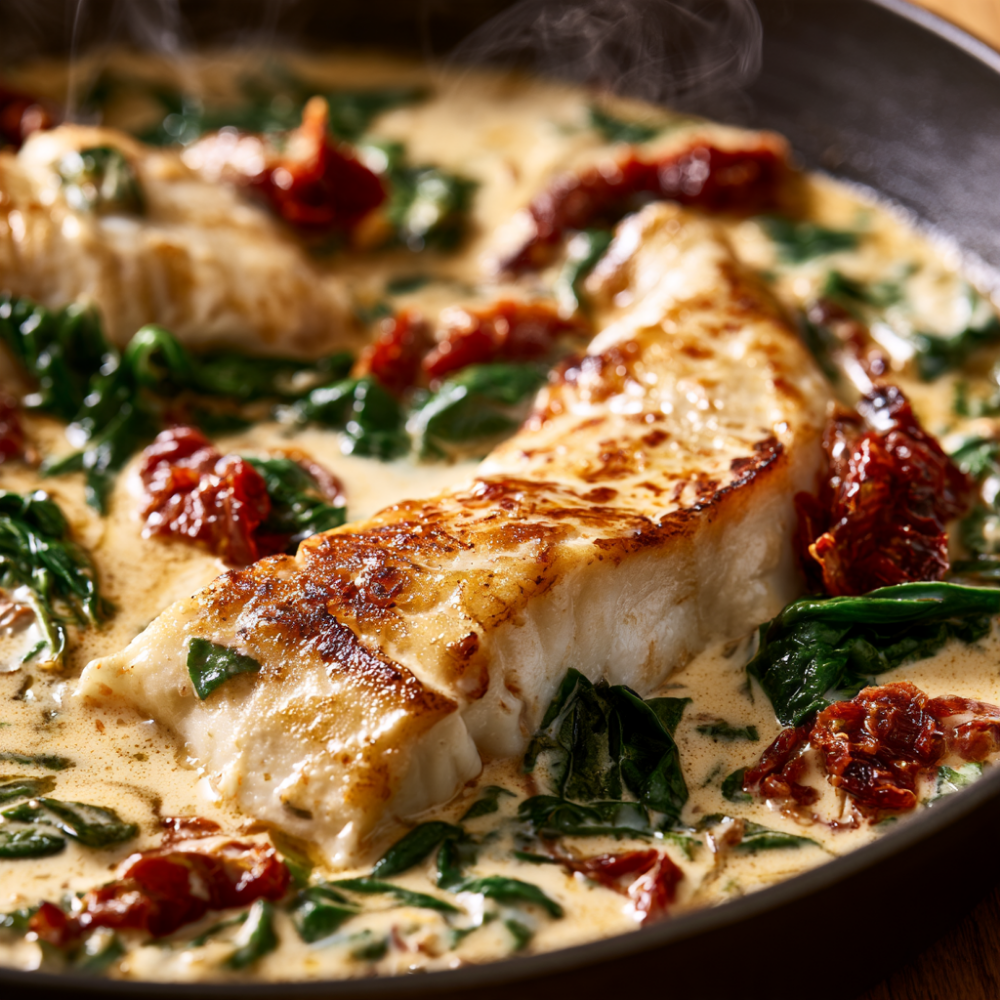
Firm white fish fillets pan-seared and nestled into a velvety Tuscan-style sauce made from blended cottage cheese, sun-dried tomatoes, and baby spinach, instead of heavy cream.
The sauce keeps the fish insulated and juicy through reheating, which makes this the richest-tasting option in the lineup while still landing near the top of the protein range, a good fit if you’re searching for keto pescatarian recipes and want something low-carb when paired with cauliflower mash.
Prep Time: 10 minutes
Cook Time: 20 minutes
Servings: 4
Protein per Serving: ~38g
Ingredients
- 4 firm white fish fillets (cod, halibut, or swai; avoid delicate tilapia, which breaks apart easily)
- 3 cups baby spinach, roughly chopped
- 2/3 cup sun-dried tomatoes (oil-packed, drained and sliced)
- For the sauce: 1.25 cups low-fat (1%) cottage cheese, blended completely smooth in a food processor; 3/4 cup chicken bone broth; 3 minced garlic cloves; 1 tbsp cornstarch mixed with 1 tbsp cold water; 1 tsp Italian seasoning; 1/2 tsp onion powder; salt and black pepper to taste
- Olive oil spray
Instructions
- Season the white fish fillets with salt, pepper, and Italian seasoning. Heat a large skillet over medium-high heat with olive oil spray. Pan-sear the fish for 3 minutes per side until golden brown and crisp on the edges. Remove the fish to a clean plate; it will finish cooking later.
- In the same skillet, leaving the browned bits behind, add the minced garlic and sliced sun-dried tomatoes. Sauté for 45 seconds until fragrant.
- Pour in the chicken bone broth and the blended cottage cheese, whisking immediately. Stir in the cornstarch slurry, Italian seasoning, salt, and pepper. Bring to a gentle simmer; the sauce will thicken into a rich, creamy texture within 2 minutes.
- Stir in the chopped baby spinach until it wilts into the sauce. Gently nestle the seared fish back into the skillet, spooning the sauce over the top. Simmer for just 1 minute until warmed through; do not overcook the fish.
- Serve over roasted garlic baby potatoes, brown rice, or cauliflower mash in your 4 containers. Spoon extra sauce over each portion so the base absorbs the flavor. Cool, then seal and store for up to 4 days.
Tips for Meal Prepping Fish and Seafood
- Cool everything completely before sealing containers. Trapped steam from hot fish or rice is what turns a crisp topping soggy and speeds up spoilage.
- Pack sauces, cremas, and dressings separately when you can. Anything creamy or citrus-based holds its texture much better when added fresh after reheating than when simmered in the container from day one.
- Reheat gently. A covered container in the microwave at 50-70% power keeps fish from turning rubbery the way full-power reheating does.
- Don’t skip the salt-draw step on watery vegetables. It takes 10 minutes, and it’s the difference between a crisp salad on day four and a soupy one.
- Undercook delicate proteins very slightly on the first pass if you know you’ll reheat. Shrimp and thin fish fillets keep cooking slightly from residual heat even after you pull them, so err toward just-opaque.
Storage and Food Safety
- Refrigerator: All five recipes keep well in airtight containers for 2 to 3 days. The Mediterranean tuna salad is the exception, improving with time since the beans keep absorbing the dressing.
- Freezer: The salmon, shrimp, and cod recipes freeze reasonably well for up to 2 months, though texture is best fresh. The Tuscan cottage cheese sauce and the tuna salad are not recommended for freezing, since both can separate or turn watery on thaw.
- Food Safety: Fish and shrimp should reach an internal temperature of 145°F. Cool all components within 2 hours of cooking before sealing, and reheat leftovers to 165°F.
Frequently Asked Questions
- What is a pescatarian diet, exactly? A pescatarian diet includes fish and seafood but excludes other meat and poultry, while still including plant foods, dairy, and eggs. It’s one of the easier diets for beginners to adopt since it doesn’t eliminate as many familiar proteins as a fully plant-based diet.
- Is this lineup suitable for a keto pescatarian plan? The shrimp and asparagus recipe and the Tuscan white fish skillet (served over cauliflower mash instead of rice or potatoes) are the two lowest-carb options here and work well for a keto pescatarian approach.
- Can I make any of these fully plant-based? The quinoa, rice, beans, and vegetable components in every recipe are already plant-based meal prep staples on their own; swapping in a plant-based protein for the fish is the only change needed if you want a vegetarian version for part of the week.
- How do I build a pescatarian meal plan around this lineup? A simple pescatarian meal plan for the week might use two or three of these recipes on rotation, since each makes 4 servings; pairing the Mediterranean tuna salad with one hot dinner recipe covers both lunches and dinners without repeating a meal twice in the same week.
- Which recipe is best for pescatarian meal prep beginners? The sheet pan shrimp and honey garlic salmon are both forgiving and fast, making them a good place to start if you’re new to easy pescatarian recipes.
- Can I swap the fish in any of these recipes? Yes, most of these are flexible: cod and mahi-mahi are interchangeable, tilapia can sub for cod or halibut as long as you handle it gently, and salmon can replace tuna in the Mediterranean salad.
- Do any of these work for a Mediterranean diet meal prep plan? The tuna and white bean salad is the most directly Mediterranean of the five, but the salmon and shrimp recipes both fit easily into a Mediterranean-style week with their olive oil, lemon, and herb-forward flavors.
Conclusion
Good pescatarian meal prep comes down to respecting how fast seafood cooks and how differently it behaves in a sealed container for four days compared to a plate eaten right away.
Stagger the roasting, pull delicate proteins the second they’re done, pack sauces separately, and let watery vegetables drain for a few minutes before they go anywhere near a lid.
Five recipes, five different textures and flavor profiles, all landing between 32 and 38 grams of protein per serving.
Make one for the week or make all five on a Sunday afternoon, and this is the pescatarian meal prep lineup that still tastes like the first day by the time you get to the last container.