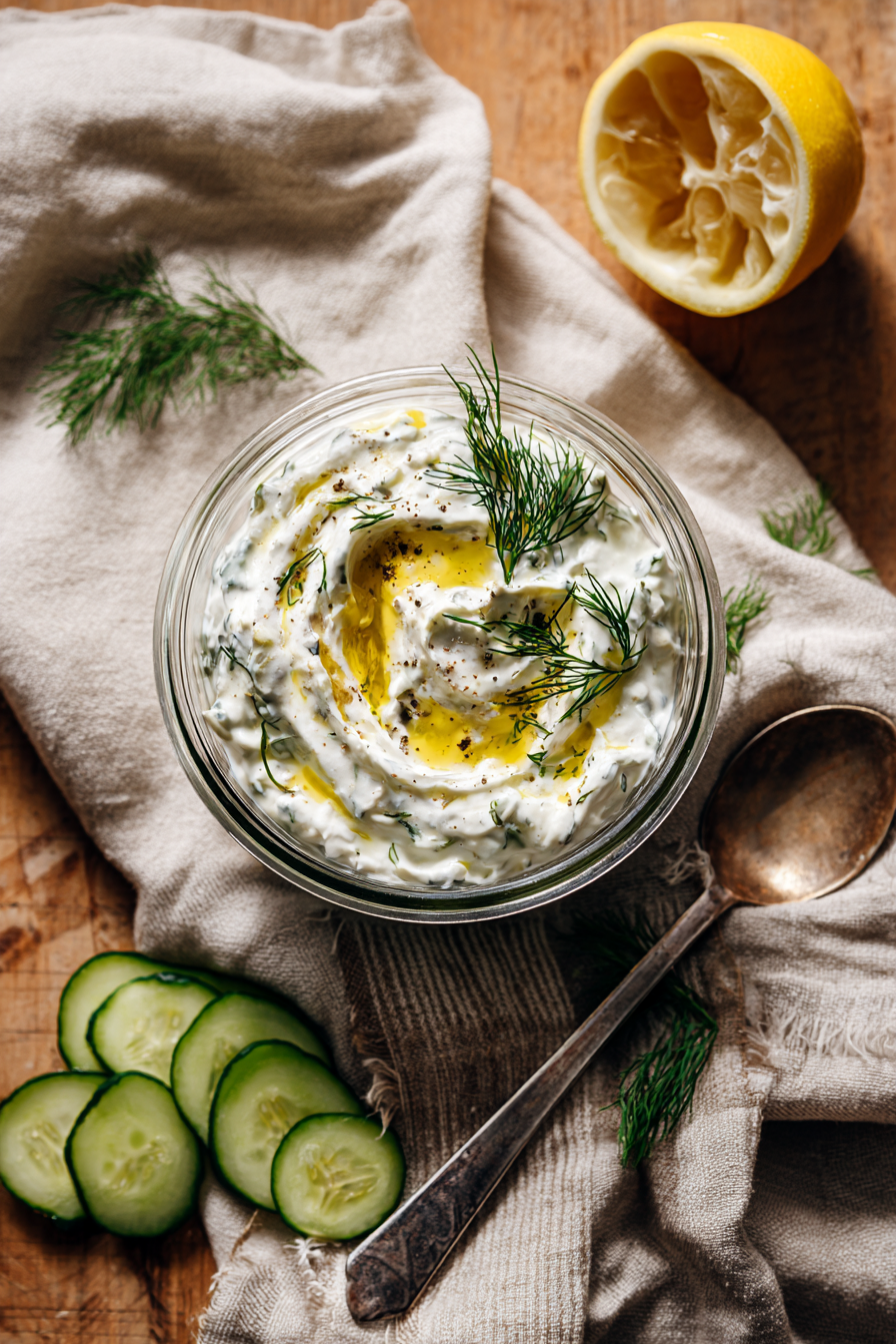

If your tzatziki sauce has been coming out thin and pooling on the plate, the cucumber is almost certainly the reason.
Tzatziki is built on three things: grated cucumber with its water drawn out and squeezed hard, thick Greek yogurt with enough fat to hold body, and a slow drizzle of olive oil that emulsifies into the yogurt instead of sitting on top.
Get those three right and the sauce stays thick on a spoon and on a plate, and it holds in the refrigerator for four days without turning into soup.
The cucumber is where most versions fail.
Grated cucumber is roughly 95 percent water, and if it goes into the yogurt without being salted and squeezed, that water seeps out over the next few hours and thins the whole batch.
Salting it for fifteen minutes pulls a surprising amount of liquid to the surface, and then a hard squeeze in a clean kitchen towel — until it stops dripping, not just until it feels dry — is what keeps the tzatziki thick.
The yogurt has to be Greek, and it has to be at least 2 percent. Regular yogurt is too loose to hold the sauce, and fat-free Greek yogurt turns chalky and separates.
Two percent is the floor, whole milk is better, and either way the olive oil goes in as a slow drizzle while you stir, which is what makes it emulsify into the yogurt rather than slick the top.
The sauce comes in at about 6 grams of protein per quarter cup, which makes it a genuine meal-prep component rather than a condiment.
Make a jar on Sunday and it carries you through the week — spoon it over grilled chicken or lamb, spread it under a wrap, or set it out with raw cucumber, peppers, and warm pita.
One serving is about 6 grams of protein, and it holds four days in the refrigerator.
Why This Recipe Works
Salting the cucumber for 15 minutes draws out the water that would otherwise thin the sauce. Grated cucumber releases water slowly, and without the salt draw that water appears in the yogurt over a day or two. Fifteen minutes is enough to see visible pooling.
The hard squeeze is what actually decides the texture. Salt draws the water to the surface, but it has to be physically removed. Squeezing in a clean towel until it stops dripping — not just until it feels dry — is the single step that separates thick tzatziki from watery tzatziki.
The olive oil goes in as a slow drizzle while stirring. Dumped in at once, oil sits on top of the yogurt and never combines. Drizzled in a thin stream with constant stirring, it emulsifies and gives the sauce its gloss and silkiness.
Greek yogurt at 2 percent or higher holds the body the sauce needs. Regular yogurt is too thin to support the cucumber and oil, and fat-free Greek yogurt separates and turns grainy. The fat is structural here, not just flavor.
The garlic gets steeped in lemon juice before it goes in. Raw garlic straight into the yogurt keeps sharpening over the four days it sits in the fridge. Ten minutes in the lemon juice mellows it so the flavor stays consistent from day one to day four.
Salt is held back until the end. The cucumber salt mostly leaves with the water, but the yogurt carries its own, and brands vary. Taste the finished sauce and add only what it needs.
Ingredients That Matter
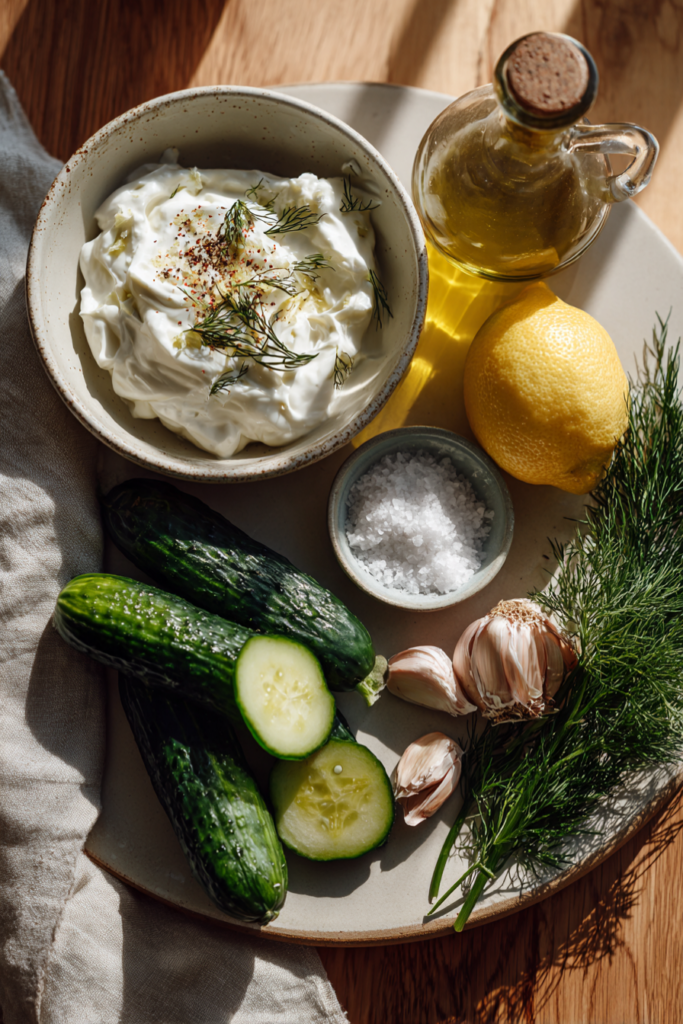
English cucumber, peeled and coarsely grated, then salted and hard-squeezed. English cucumbers have thinner skin and fewer seeds than garden cucumbers, which means less water to begin with. If you use a garden cucumber, halve it and scrape the seeds before grating.
Plain Greek yogurt, 2 percent or whole milk. This is the body of the sauce and the protein source. Fat-free Greek yogurt separates within a day, and regular yogurt is too loose regardless of how well you squeeze the cucumber.
Extra virgin olive oil, drizzled in slowly. A good olive oil is most of the flavor in tzatziki, so use one you’d eat on its own. It goes in as a thin stream with constant stirring — dumped in, it slicks the surface and never combines.
How to Make Tzatziki Sauce
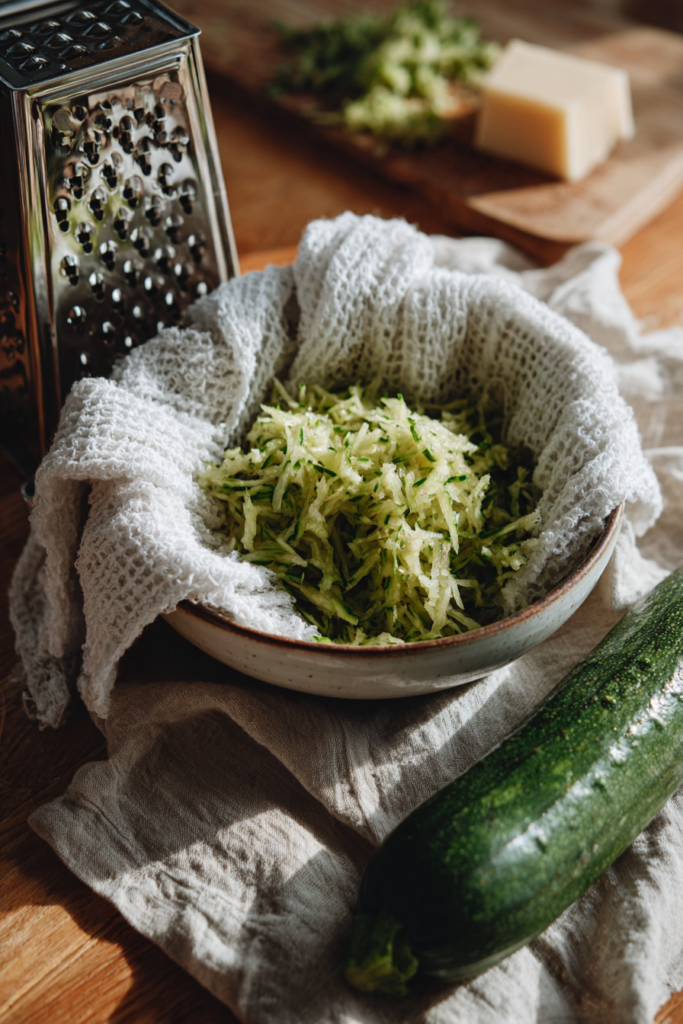
- Grate and salt the cucumber. Peel 1 large English cucumber and grate it coarsely on a box grater. Toss with ½ teaspoon fine sea salt in a colander and let it sit 15 minutes over the sink. Cue: visible water pooling in the bottom of the colander.
- Squeeze it hard. Wrap the grated cucumber in a clean kitchen towel or a double layer of cheesecloth and squeeze firmly until it stops dripping. Cue: the towel stops releasing water and the cucumber feels dry and clumpy, roughly half its original volume.
- Steep the garlic in lemon. Mince 2 cloves of garlic and combine with the juice of ½ lemon (about 1½ tablespoons) in a small bowl. Let it sit 10 minutes. Cue: the lemon smells strongly of garlic.
- Start the yogurt base. In a medium bowl, stir 2 cups plain Greek yogurt with the garlic-lemon mixture, 2 tablespoons chopped fresh dill, ¼ teaspoon kosher salt, and ⅛ teaspoon black pepper. Cue: uniform, with no pockets of dry dill.
- Drizzle in the olive oil. While stirring constantly, add 1½ tablespoons extra virgin olive oil in a thin stream. Cue: the oil disappears into the yogurt rather than pooling on top.
- Fold in the cucumber. Add the squeezed cucumber and stir gently until evenly distributed. Cue: the sauce thickens slightly as the cucumber goes in — if it loosens, the cucumber wasn’t squeezed enough.
- Taste and correct. Taste before adding anything. Add salt only if it needs it, and a squeeze more lemon if it tastes flat. Cue: bright, garlicky, and thick enough to hold a spoon track.
- Chill. Cover and refrigerate at least 2 hours, or overnight. Cue: it firms up further and the flavors settle.
Tips and Troubleshooting
The tzatziki is watery. The cucumber wasn’t squeezed hard enough, or it was a garden cucumber with seeds. Squeeze until the towel stops dripping, and scrape the seeds out of garden cucumbers before grating.
It tastes too sharp or bitter. Too much raw garlic, or the garlic wasn’t steeped. Ten minutes in lemon juice mellows it; more than two cloves overwhelms the yogurt.
The olive oil pooled on top. It was added too fast. Drizzle it in a thin stream while stirring constantly, and let the sauce chill before judging it.
It’s grainy or separated. Fat-free Greek yogurt. Use 2 percent or whole milk yogurt — the fat is what holds the emulsion together.
It tastes flat. Not enough lemon, or too little salt. Taste at the end and correct with acid first, then salt.
It got thinner on day three. Some water always releases over time. Stir it back in, or pour off the small amount that rises — a well-squeezed batch releases very little.
The dill turned dark and lost its flavor. It was dried dill, or the sauce sat too long. Fresh dill is the requirement here; add it the day you make the sauce.
Substitutions and Swaps
- Yogurt: whole milk Greek yogurt makes a richer, thicker sauce. A dairy-free Greek-style yogurt works but needs an extra 15 minutes of chilling to set.
- Cucumber: garden cucumbers work if you halve, seed, and salt them longer — 20 minutes instead of 15.
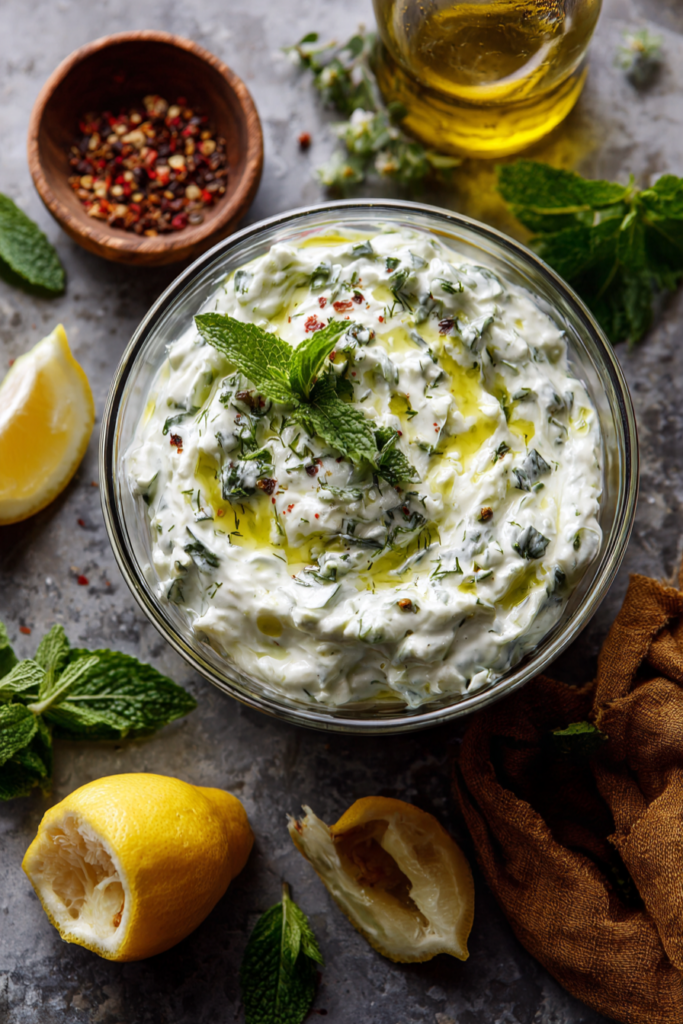
- Dill: 1 teaspoon dried dill in a pinch, though the flavor is flatter. Mint substitutes for half the dill for a different, more Persian-leaning version.
- Sour cream version: replace half the Greek yogurt with sour cream for a richer, tangier sauce — this is the version many Greek-American restaurants serve.
- Lower fat: use 2 percent yogurt and reduce the olive oil to 1 tablespoon. Do not use fat-free yogurt.
- Garlic-free: omit the garlic entirely for a milder sauce; increase the dill slightly to compensate.
Storage and Reheat
Refrigerate in an airtight container up to 4 days. The sauce thickens slightly on day two and may release a small amount of water by day four — stir it back in before serving.
Do not freeze. The yogurt and cucumber both break down on thaw and the texture turns grainy and watery.
Serve cold. There is no reheating step, and warming it causes the yogurt to split.
For meal prep, portion into small jars or containers so you’re not dipping into the main batch all week. A quarter cup per portion is the serving size the macros are built on.
Tzatziki Sauce
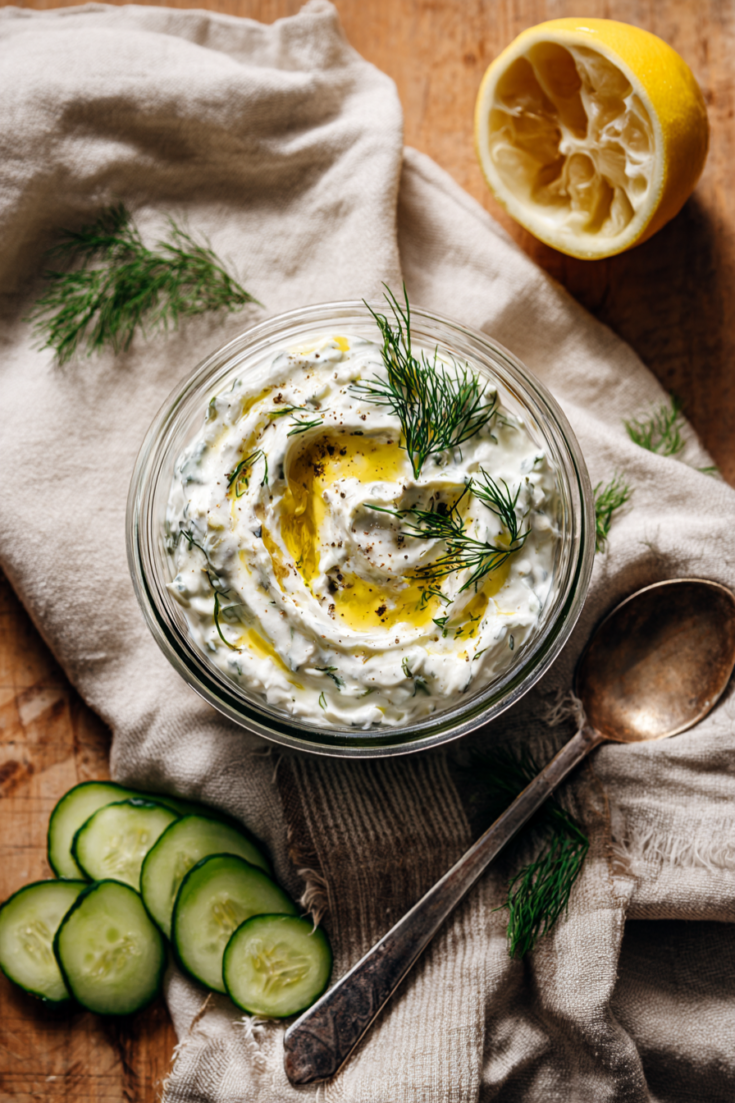
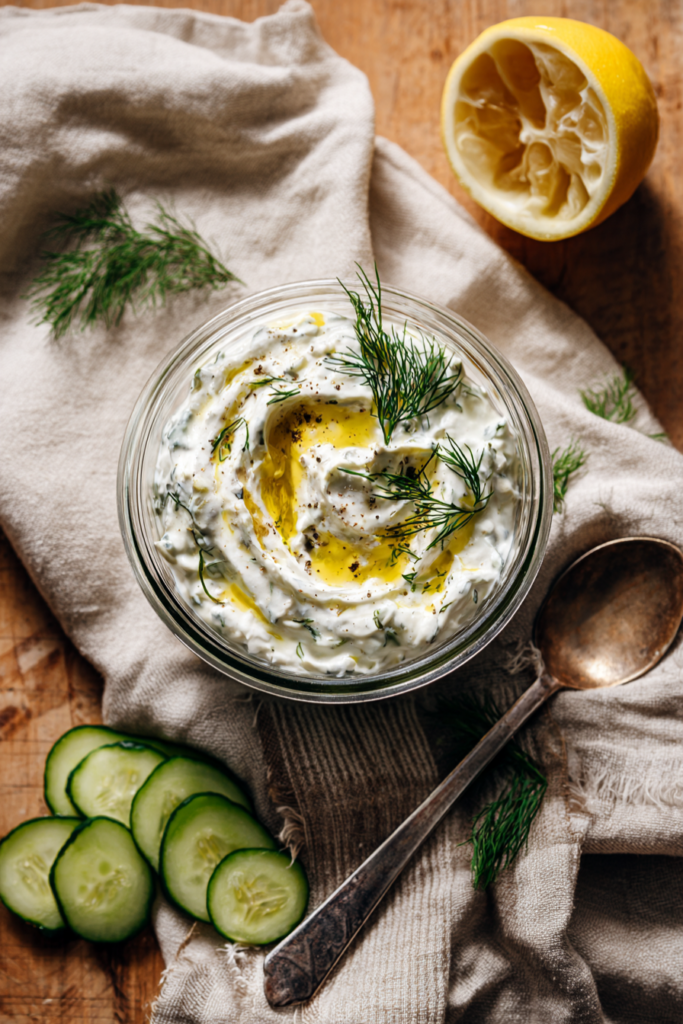
A thick, velvety Greek yogurt dip with salted and squeezed cucumber, lemon-steeped garlic, fresh dill, and a slow-drizzled olive oil emulsion.
Ingredients
Cucumber
- 1 large English cucumber, peeled and coarsely grated
- ½ tsp fine sea salt, for the salt draw
Yogurt base
- 2 cups plain Greek yogurt, 2% or whole milk
- 2 cloves garlic, minced
- Juice of ½ lemon (about 1½ tbsp)
- 2 tbsp fresh dill, chopped
- ¼ tsp kosher salt
- ⅛ tsp black pepper
- 1½ tbsp extra virgin olive oil
Instructions
- Grate the cucumber coarsely, toss with the ½ teaspoon salt, and let sit in a colander 15 minutes.
- Wrap the cucumber in a clean towel and squeeze hard until it stops dripping, about half its original volume.
- Combine the minced garlic and lemon juice in a small bowl and let sit 10 minutes.
- Stir the Greek yogurt, garlic-lemon mixture, dill, kosher salt, and pepper together until uniform.
- Drizzle in the olive oil in a thin stream while stirring constantly, until it disappears into the yogurt.
- Fold in the squeezed cucumber. Taste and add salt or lemon only if needed.
- Cover and refrigerate at least 2 hours, or overnight, before serving.
Notes
Frequently Asked Questions
How do I keep tzatziki from getting watery? Salt the grated cucumber 15 minutes, then squeeze it in a towel until it stops dripping. That single step does more than anything else in the recipe.
Can I use regular yogurt instead of Greek? You can, but the sauce will be noticeably thinner. Strain regular yogurt through cheesecloth for 2 hours first if that’s what you have.
How long does homemade tzatziki last? Four days in the refrigerator in an airtight container. It’s best on days one and two, and the garlic gets stronger as it sits.
Can I make it with dried dill? Yes, 1 teaspoon of dried dill replaces 2 tablespoons of fresh, but the flavor is flatter and the color duller. Fresh is worth it here.
Is tzatziki healthy? It’s a Greek yogurt-based sauce with about 6 grams of protein per quarter cup, and the fat comes mostly from olive oil. That’s a factual description, not a health claim — portion size is what matters.
What do I serve tzatziki with? Grilled chicken or lamb, warm pita, raw cucumber and pepper strips, roasted vegetables, or as a spread in wraps. It’s a sauce, so what it sits against matters as much as the sauce itself.
More Recipes You’ll Love
- Creamy Cilantro Lime Dressing Recipe — Make-Ahead Meal Prep
- Greek Salad Dressing Recipe — Easy Mason Jar Vinaigrette, Meal Prep Ready
- Homemade Ranch Dressing Recipe — Better Than Bottled, Mason Jar Meal Prep
Closing
The three things that make this sauce work are the salt draw, the hard squeeze, and the slow-drizzled oil — one pulls the water out, one removes it, one gives the sauce its gloss.
None takes more than a few minutes, and all three are where tzatziki usually goes wrong.
Make a jar on Sunday and see how it holds through the week. If it stays thick, tell me — and if it thins out by day three, tell me how hard you squeezed the cucumber, because that’s the detail that decides it.