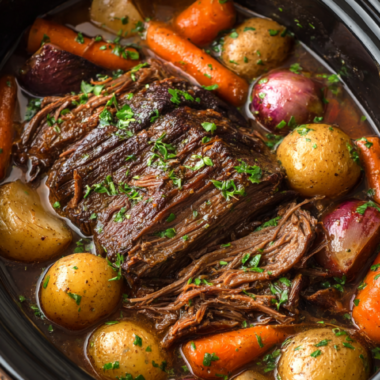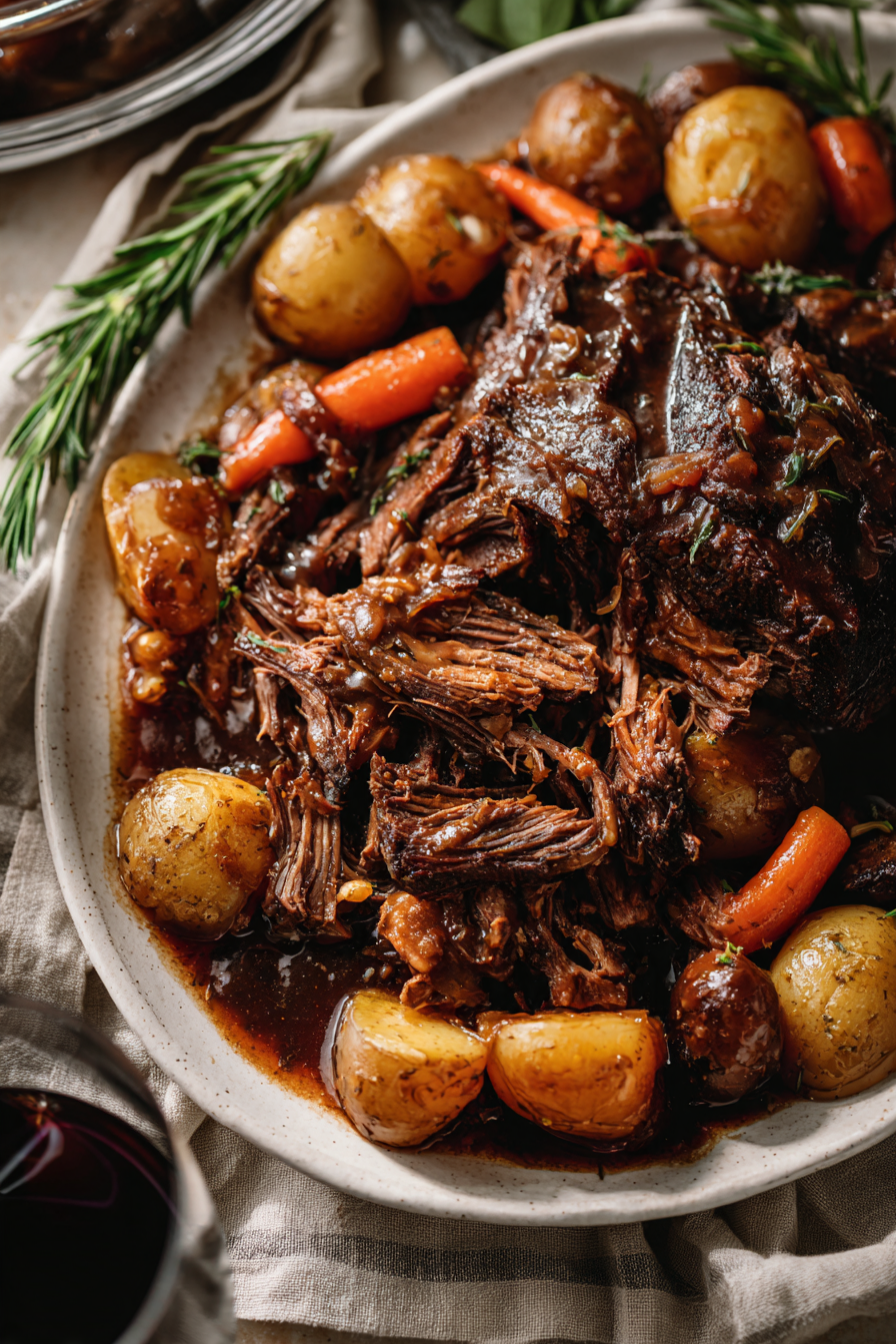

Chuck roast is the cut that taught me what a slow cooker is actually for.
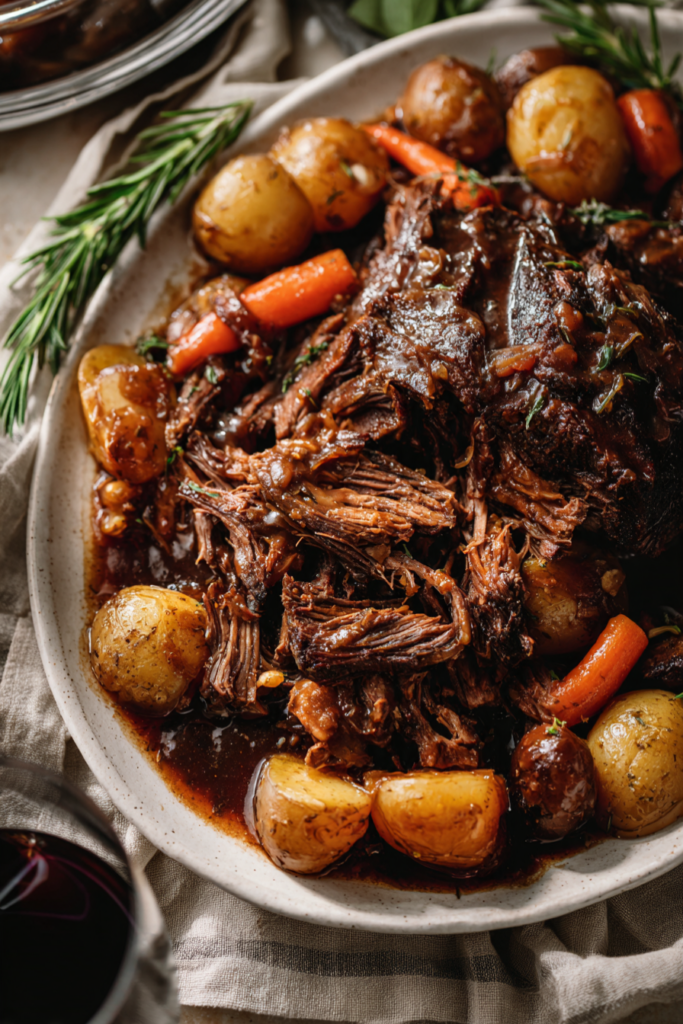
It’s cheap, it’s tough, and it has exactly the right amount of fat and collagen to braise into something that falls apart under a fork — and when you give it nine hours in a pot with red wine, garlic, and rosemary, it comes out tasting like a bistro plate instead of a Sunday staple.
The gravy is the part I’d fight you over.
It’s deep and glossy and reduced from the braising liquid, and it’s the reason this roast has become my go-to for Christmas dinner, for a date night in, and for any holiday table where I want something that looks like a centerpiece and takes about fifteen minutes of actual work.
The technique that makes it work is the deglaze.
The roast gets seared hard in a skillet first, and then the red wine goes into that hot pan and bubbles for two minutes, scraping up all the browned bits from the bottom.
That step does two things: it dissolves the fond into the wine, which is where the deep flavor comes from, and it boils off the harsh alcohol that would otherwise be trapped under the slow cooker lid for nine hours.
Pouring raw wine straight into the crockpot is the mistake most recipes make, and it’s why their gravy tastes raw.
The other thing that makes it work is the vegetables.
Carrots cut into big two-inch chunks and whole baby potatoes can handle nine hours of cooking without collapsing, where smaller pieces would turn to mush.
They come out tender but intact, and they soak up the wine gravy.
It comes in at about 42 grams of protein per serving, and it’s the version I’d hand you first if you told me crockpot roast always tastes dry.
Why This Recipe Works
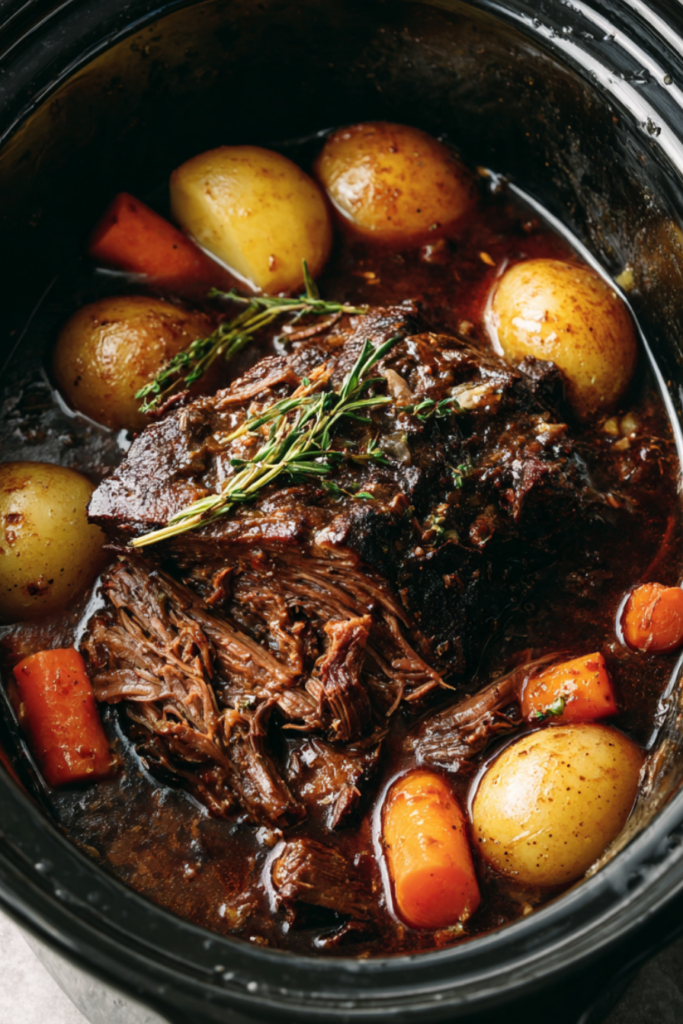
Deglazing the pan with red wine is what gives the gravy its depth. The browned bits left in the skillet after searing are concentrated flavor, and the wine dissolves them into the sauce. Boiling the wine for two minutes in the hot pan also drives off the harsh alcohol that a sealed slow cooker can’t vent, which is what keeps the gravy from tasting raw or sour.
Searing the roast first is what builds the crust and the fond. A chuck roast that goes into the slow cooker raw comes out gray and one-note. Three to four minutes per side in a hot skillet gives it a deep golden crust, and the fond that forms in the pan is where the wine gravy gets its flavor.
Cutting the carrots into two-inch chunks keeps them from turning to mush. Small carrot pieces disintegrate over nine hours of cooking. Large chunks stay tender but intact, and they hold their shape on the platter.
Whole baby potatoes are what hold up in a long braise. Halved baby potatoes work, but whole ones stay firm and creamy inside instead of waterlogged. If your potatoes are large, halve them — but baby potatoes left whole are the best choice.
Straining and reducing the braising liquid separately is what makes it a gravy instead of a broth. The liquid in the pot is thin and full of vegetable matter. Straining it into a saucepan and thickening it with a cornstarch slurry turns it into a glossy gravy that coats the meat.
Ingredients That Matter
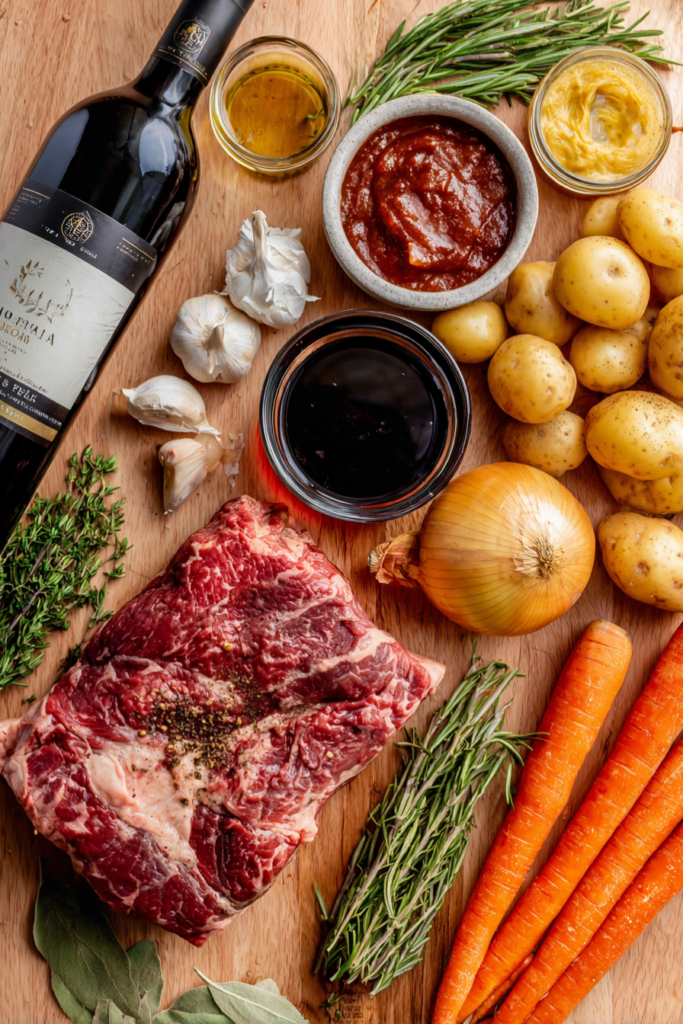
A 3½ to 4 lb boneless beef chuck roast. Chuck has the right ratio of fat to collagen for a long braise. Lean cuts like round or sirloin turn dry, and fattier cuts leave too much grease in the gravy.
A dry red wine you’d actually drink. Cabernet Sauvignon, Merlot, or Pinot Noir all work. Don’t use cooking wine — it’s salty and tastes like it. The wine is the differentiator, so use one you’d be happy to pour a glass of.
Cornstarch, whisked into cold water. The slurry is what thickens the strained braising liquid into a glossy gravy. Whisk it into cold water first, then into the simmering liquid, or it clumps.
How to Make It
- Heat the olive oil in a heavy skillet over medium-high. Season the roast generously on all sides with the salt and pepper. Sear 3 to 4 minutes per side, until a deep golden crust forms. Transfer the roast to a plate.
- Turn the heat to medium. Pour the red wine into the hot skillet and let it actively bubble for 2 minutes, scraping up all the browned bits from the bottom of the pan. The bubbling is what drives off the harsh alcohol.
- Whisk the broth, tomato paste, Worcestershire, and thyme into the simmering wine until smooth.
- Place the sliced onion and garlic at the bottom of a 6-quart slow cooker. Lay the seared roast on top. Arrange the carrot chunks and whole baby potatoes around the sides.
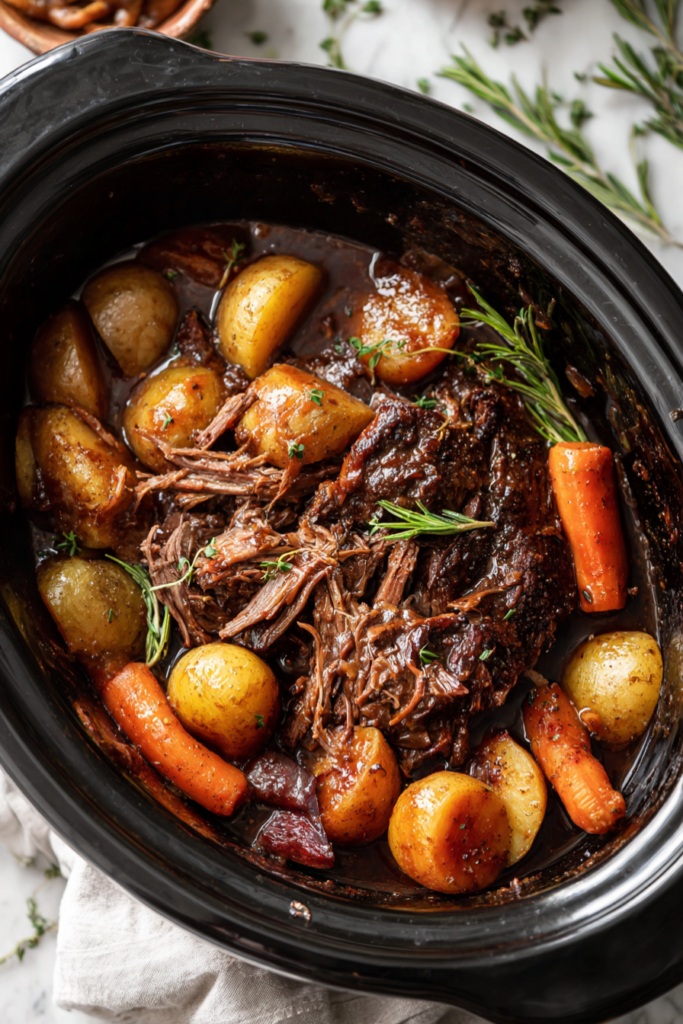
- Pour the warm wine sauce over the roast and vegetables. Tuck the rosemary sprig and bay leaf into the liquid. Cover and cook on LOW 9 to 10 hours, until the beef is pull-apart tender.
- Transfer the roast and vegetables to a warm platter and tent with foil. Strain the braising liquid through a mesh sieve into a small saucepan over medium heat. Discard the bay leaf and rosemary stem. Whisk in the cornstarch slurry and boil 2 to 3 minutes, until thickened into a glossy gravy. Taste and adjust salt.
- Shred or slice the roast, pile the carrots and potatoes alongside, and spoon the gravy over the top. Garnish with parsley and serve with crusty bread or a crisp green salad.
Tips and Troubleshooting
The gravy tastes sour or wine-heavy. The wine wasn’t boiled off before it went into the slow cooker. Pour it into the hot skillet and let it actively bubble for the full 2 minutes.
The meat came out dry. The roast was too lean, or it cooked too long. Use chuck, and check it at 9 hours — it should shred easily but still be moist.
The vegetables turned to mush. The carrots were cut too small, or the potatoes were halved and cooked the full time. Cut carrots into 2-inch chunks and keep baby potatoes whole.
The gravy is thin. The slurry didn’t get hot enough, or there wasn’t enough cornstarch. Whisk the slurry into cold water, bring the liquid to a boil, and simmer 2 to 3 minutes.
It tastes too salty. Broth, Worcestershire, and tomato paste all carry salt. Use low-sodium broth, taste the gravy before adding any salt, and adjust at the end.
The wine flavor is too strong. The wine was a bold Cabernet and the sauce wasn’t reduced enough. Use a Merlot or Pinot Noir next time, and reduce the sauce for the full 2 to 3 minutes.
There’s too much liquid. The slow cooker trapped more moisture than expected. Simmer the strained liquid uncovered for 5 to 10 minutes before adding the slurry.
Substitutions and Swaps
The roast: A beef arm roast or a bottom blade roast works with the same method and the same cook time. Chuck is the most forgiving.
The wine: A non-alcoholic version works — replace the wine with 1 cup of additional beef broth plus 1 tablespoon of balsamic vinegar. It won’t be quite as deep, but it works.
The vegetables: Parsnips, turnips, and celery root all work and hold up to a long braise. Add mushrooms in the last hour.
Pot roast with stew meat: Cubed chuck works and cooks faster — about 6 to 7 hours on LOW. It becomes a pot roast with stew meat rather than a whole roast.
Make it a holiday centerpiece: Serve the whole roast on a platter surrounded by the vegetables with the gravy in a pitcher on the side. It’s the presentation that makes it feel like Christmas dinner.
Make it dairy-free: The recipe is already dairy-free.
Storage and Reheat
Refrigerate in an airtight container for up to 4 days.
The gravy thickens as it chills and the meat absorbs liquid, so reheat covered with a splash of broth for 90 seconds.
Freeze for up to 3 months; the meat freezes well, and the gravy can be frozen separately and re-thickened with a fresh slurry on reheating.
Slow-Cooker Chuck Roast with Red Wine Gravy
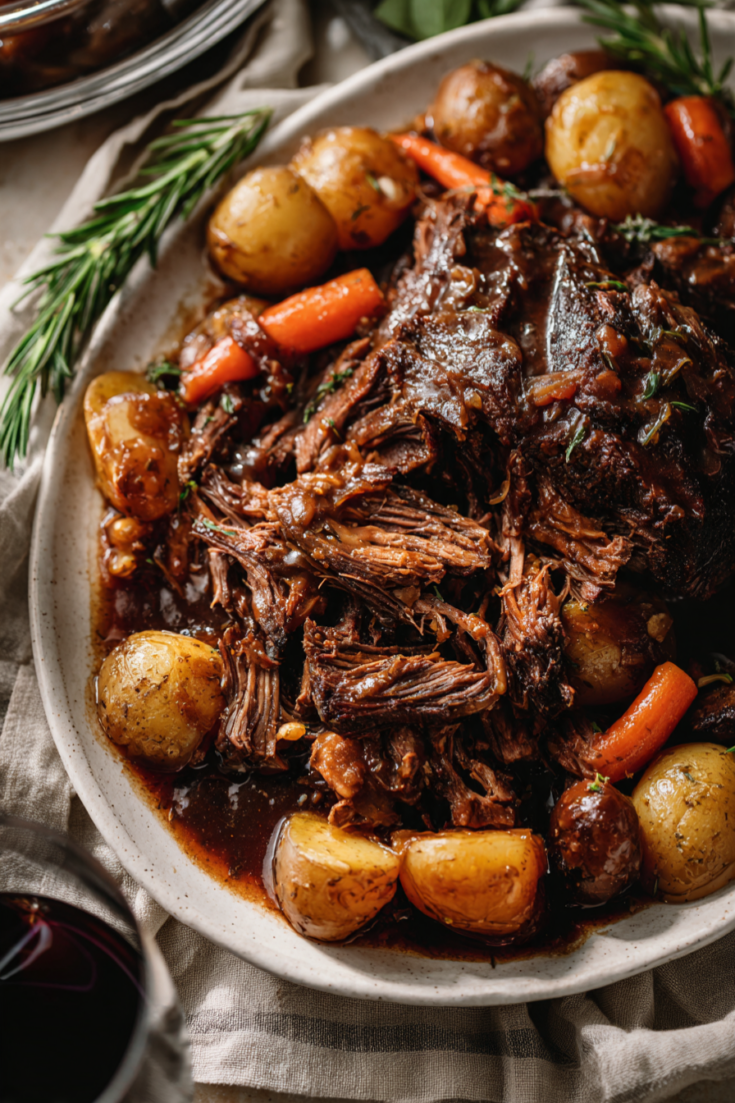
Melt-in-your-mouth tender chuck roast slow-simmered with thick-cut carrots and baby potatoes in a rich garlic, herb, and red wine reduction gravy — about 42g of protein per serving and made for a holiday table.
Ingredients
Roast
- 3½ to 4 lb boneless beef chuck roast, trimmed of surface fat
- 1 tbsp olive oil
- 1½ tsp kosher salt
- 1 tsp black pepper
Aromatics & Vegetables
- 1 medium yellow onion, thick-sliced
- 4 cloves garlic, minced
- 4 large carrots, peeled and cut into 2-inch chunks
- 1 lb baby yellow or red potatoes, whole (halved if large)
Red Wine Braising Liquid
- 1 cup dry red wine (Cabernet Sauvignon, Merlot, or Pinot Noir)
- 1 cup low-sodium beef broth
- 2 tbsp tomato paste
- 1 tbsp Worcestershire sauce
- 1 tsp dried thyme
- 1 sprig fresh rosemary (or 1 tsp dried)
- 1 bay leaf
Gravy
- 2 tbsp cornstarch mixed with 2 tbsp cold water
To Serve
- Fresh parsley, chopped
- Crusty bread or a crisp green salad
Instructions
- Heat the olive oil in a heavy skillet over medium-high. Season the roast generously on all sides with the salt and pepper. Sear 3 to 4 minutes per side, until a deep golden crust forms. Transfer the roast to a plate.
- Turn the heat to medium. Pour the red wine into the hot skillet and let it actively bubble for 2 minutes, scraping up all the browned bits from the bottom of the pan. The bubbling is what drives off the harsh alcohol.
- Whisk the broth, tomato paste, Worcestershire, and thyme into the simmering wine until smooth.
- Place the sliced onion and garlic at the bottom of a 6-quart slow cooker. Lay the seared roast on top. Arrange the carrot chunks and whole baby potatoes around the sides.
- Pour the warm wine sauce over the roast and vegetables. Tuck the rosemary sprig and bay leaf into the liquid. Cover and cook on LOW 9 to 10 hours, until the beef is pull-apart tender.
- Transfer the roast and vegetables to a warm platter and tent with foil. Strain the braising liquid through a mesh sieve into a small saucepan over medium heat. Discard the bay leaf and rosemary stem. Whisk in the cornstarch slurry and boil 2 to 3 minutes, until thickened into a glossy gravy. Taste and adjust salt.
- Shred or slice the roast, pile the carrots and potatoes alongside, and spoon the gravy over the top. Garnish with parsley and serve with crusty bread or a crisp green salad.
Notes
Notes: Refrigerate up to 4 days; the gravy thickens cold and the meat absorbs liquid, so reheat covered with a splash of broth for 90 seconds. Freezes up to 3 months. Nutrition is an estimate.
Nutrition (per serving, estimated): ~490 calories, 42g protein, 22g carbs, 24g fat, 3g fiber, 720mg sodium.
FAQ
Can I use a different cut of beef? Yes. An arm roast or bottom blade roast works with the same method and the same cook time. Chuck is the most forgiving because of its fat-to-collagen ratio.
Can I make this without wine? Yes. Replace the wine with 1 cup of additional beef broth plus 1 tablespoon of balsamic vinegar. It won’t be quite as deep, but it works.
Why does the gravy taste sour? The wine wasn’t boiled off before it went into the slow cooker. Pour it into the hot skillet and let it actively bubble for the full 2 minutes.
Can I add potatoes at the end instead of the start? Yes, if you’re worried about them breaking down. Add whole baby potatoes at the 4- to 5-hour mark instead of at the start.
Can I make this ahead? Yes. Make it up to 4 days ahead and reheat gently with a splash of broth. The gravy can be made separately and re-thickened on the day.
Can I freeze this? Yes, up to 3 months. Freeze the meat and gravy separately, and re-thicken the gravy with a fresh slurry on reheating.
More Recipes You’ll Love
- Prime Rib Roast in the Oven
- Crockpot Turkey Breast with Cranberry-Cider Gravy
- Crockpot Green Bean Casserole
Closing
The wine deglaze and the separate gravy reduction are the two things that make this roast taste like a bistro plate — everything else is chuck and carrots.
It’s the one I’d hand you first when you want a holiday dinner that feels like an occasion and takes fifteen minutes of work.
Make it once, and tell me whether you served it for Christmas or a date night in.