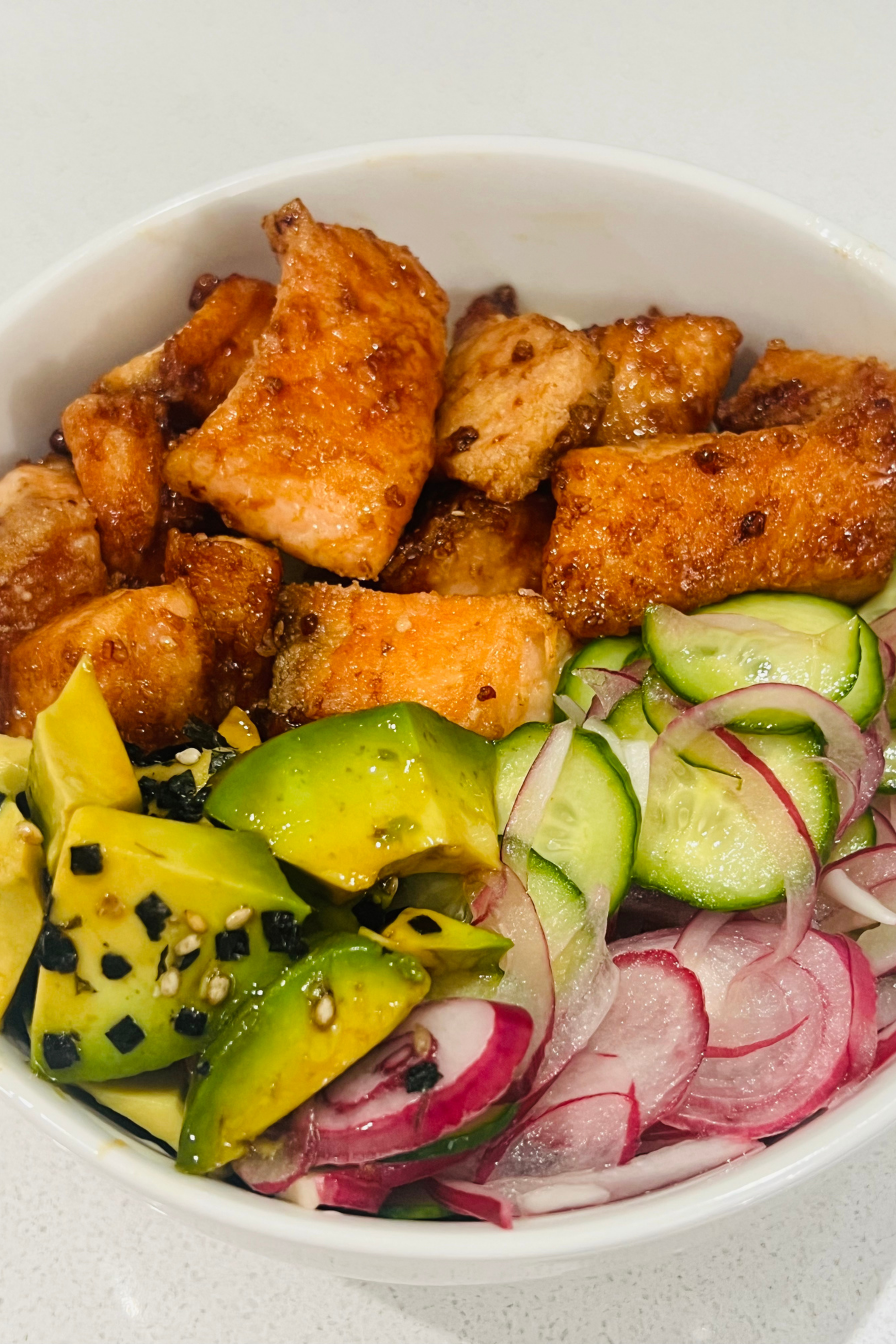

If you love a salmon bowl that’s addicting and easy to prep, this is the one. Crunchy, sticky, and glazed in honey soy — it’s the bowl my family asks for almost weekly, and some weeks I make it more than once because it’s genuinely that good. The salmon bites get a thin rice flour coat and a quick sear so they come out golden and crisp on the outside, then they’re tossed in a sweet-savory honey soy glaze that clings to every piece. The rice, cucumber, and avocado underneath are the cool, fresh contrast that keeps the whole bowl from feeling heavy.
The technique is mostly about two things: keeping the salmon dry before it hits the pan, and not letting the glaze cook too long. Salmon is wet, and wet salmon steams instead of searing. Patting the cubes thoroughly dry and giving them a light rice flour coat is what gives them that golden crust. The glaze is a quick simmer of soy sauce, brown sugar, honey, rice vinegar, and garlic — just 1 to 2 minutes on low heat until it’s slightly syrupy, not thick. It thickens more as it cools, so pulling it off the heat early is the difference between a glossy glaze and a sticky paste.
One honest note: once the salmon goes into the glaze, it’s no longer completely crispy. That’s the trade-off of a sticky glaze — you get the flavor and the cling, and you lose a little of the crunch. The fix is to toss gently and briefly, just until the salmon is coated, and serve immediately. The rice flour coating underneath still gives you some texture, and the contrast between the sticky salmon and the cool cucumber and avocado is what makes the bowl work.
The bowl comes out at about 40 grams of protein per serving, and it takes about 15 minutes of prep and 10 to 12 minutes of cooking. It’s the kind of dinner that feels like a restaurant bowl but comes together on a weeknight, and it’s a meal prep favorite because the components hold up well when stored separately.
Why This Recipe Works
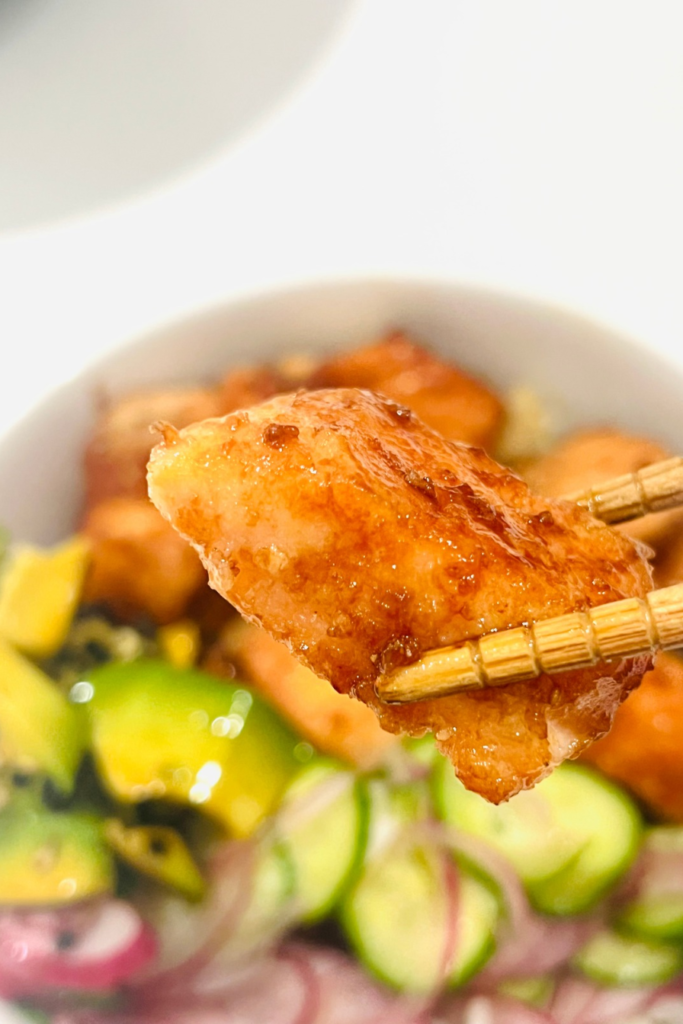
Salmon rice bowls go wrong in three specific ways: soggy salmon, a glaze that’s too thick or too sweet, and a bowl that turns mushy by the time you eat it. Here’s how this version solves each one.
1. Pat the Salmon Dry and Coat It Lightly in Rice Flour
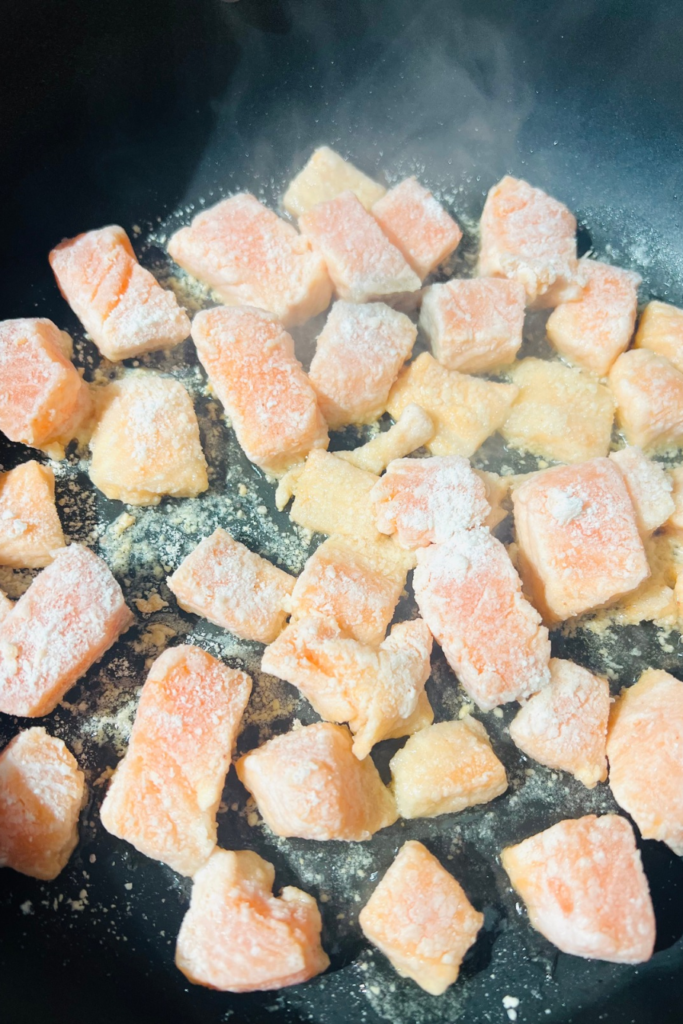
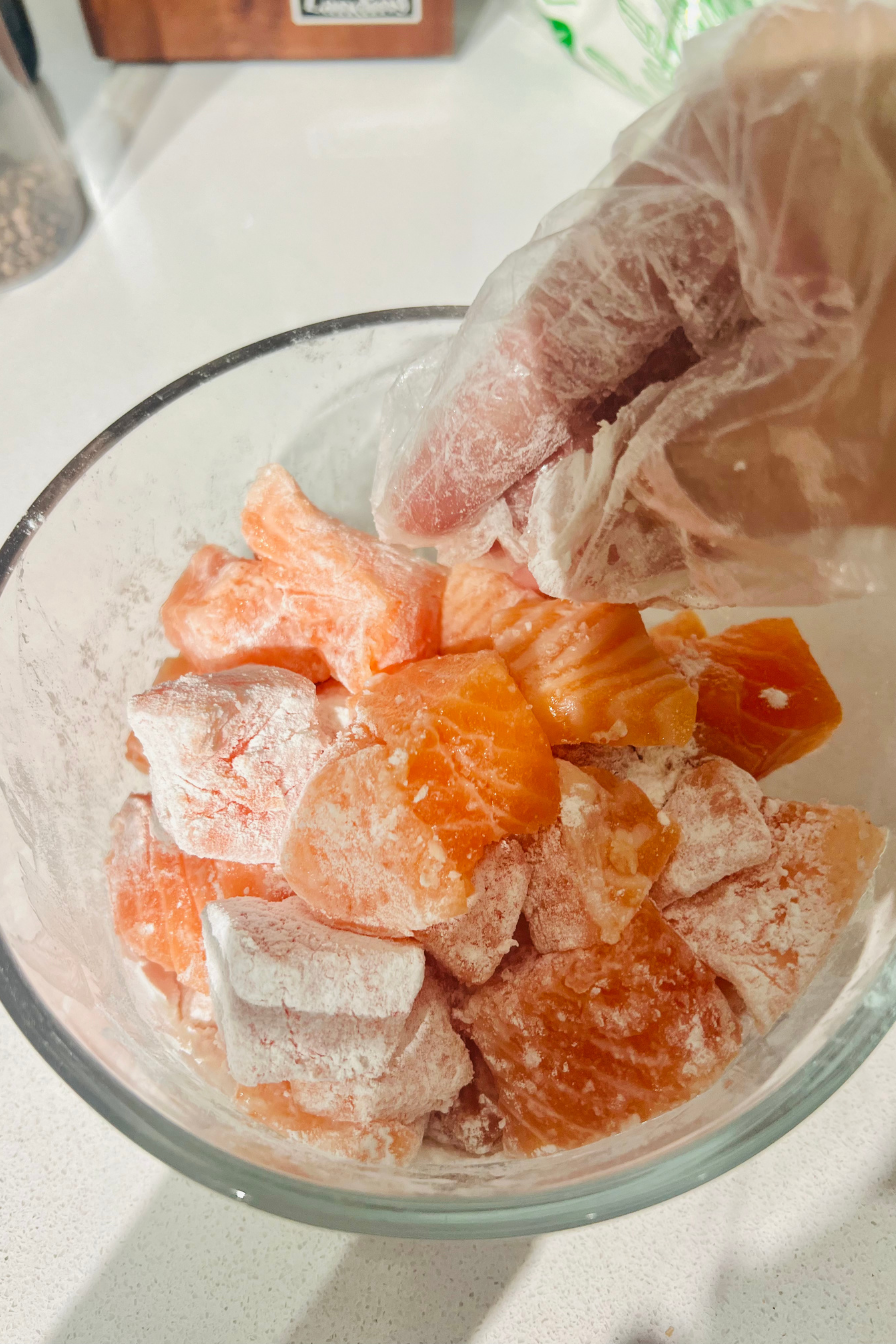
Salmon holds a lot of moisture, and wet salmon steams instead of sears. Patting the cubes thoroughly dry with paper towels is the first step to a golden crust. A light coat of rice flour adds a thin, delicate layer that crisps up in the hot pan — but it has to be light. Too much rice flour and the salmon gets pasty instead of crisp. Toss the cubes in the flour until each piece has a thin coating, then shake off the excess before they go into the pan.
2. Sear Hot and Fast, and Check for Doneness With a Thermometer
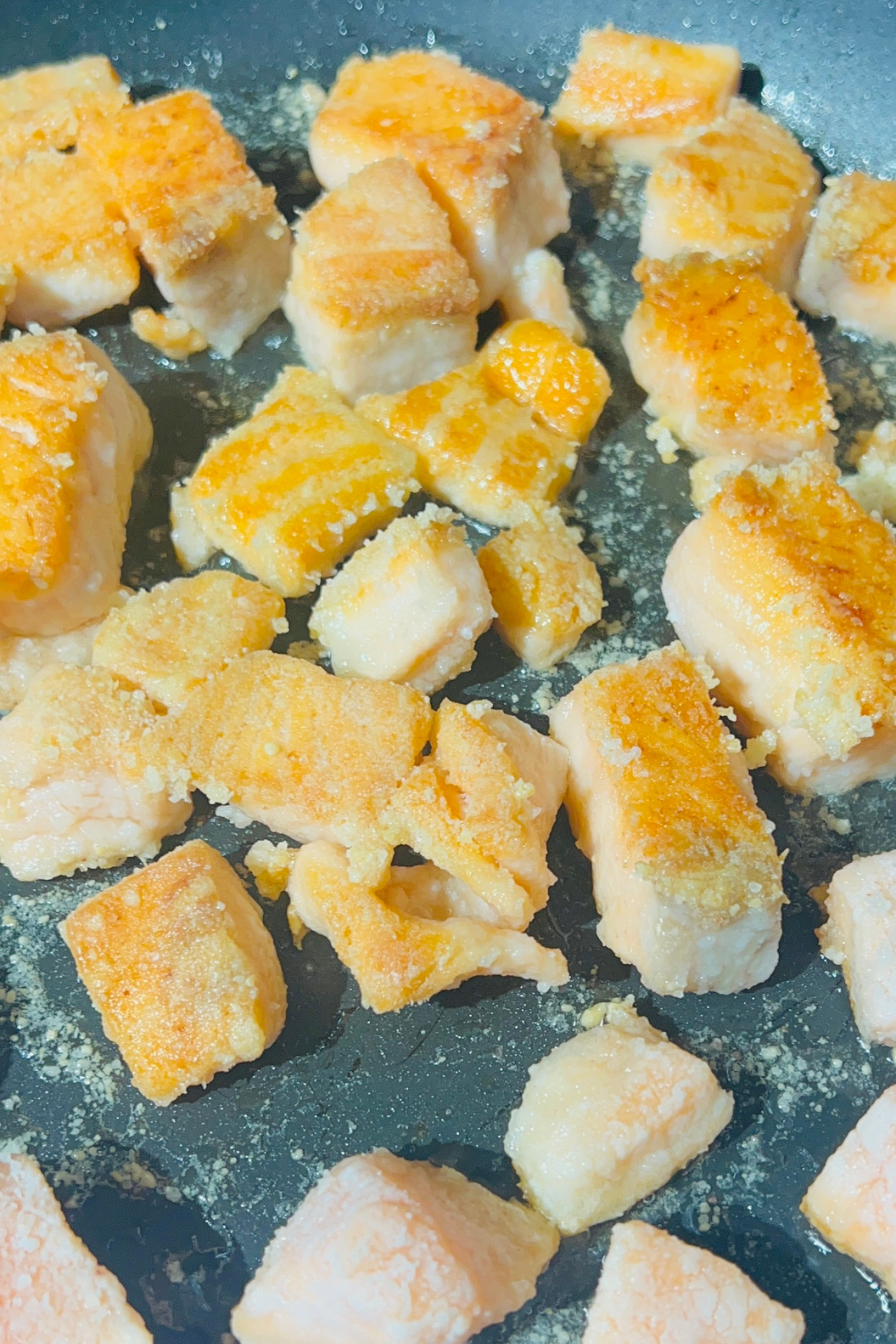
One-inch salmon cubes cook fast — 2 minutes on the first side and 1 to 2 minutes on the second is usually enough. The exterior can look golden before the inside is done, so the thermometer is the only reliable test. Salmon should reach 145°F in the thickest part. Pull it at 140°F if you want it slightly more tender — carry-over cooking will bring it to 145°F as it rests.
3. Simmer the Glaze Briefly, Not to a Paste
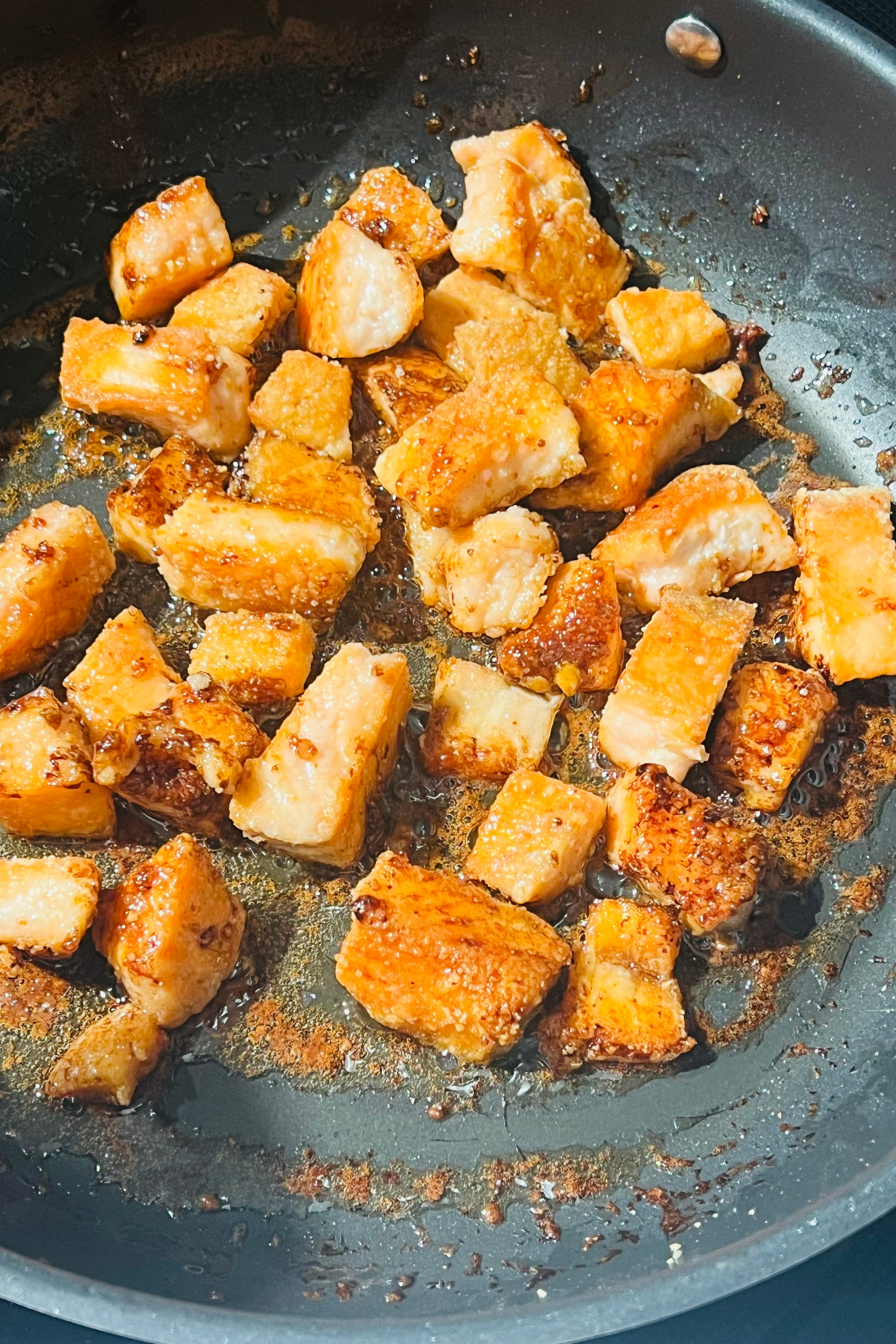
The glaze is soy sauce, brown sugar, honey, rice vinegar, and garlic, simmered on low heat for 1 to 2 minutes until the sugar dissolves and the sauce thickens slightly. It should be syrupy, not thick — it will continue thickening off the heat. If it gets too thick, add a teaspoon of water. The rice vinegar is what balances the sweetness; without it, the brown sugar and honey make the glaze cloying.
Ingredients That Matter
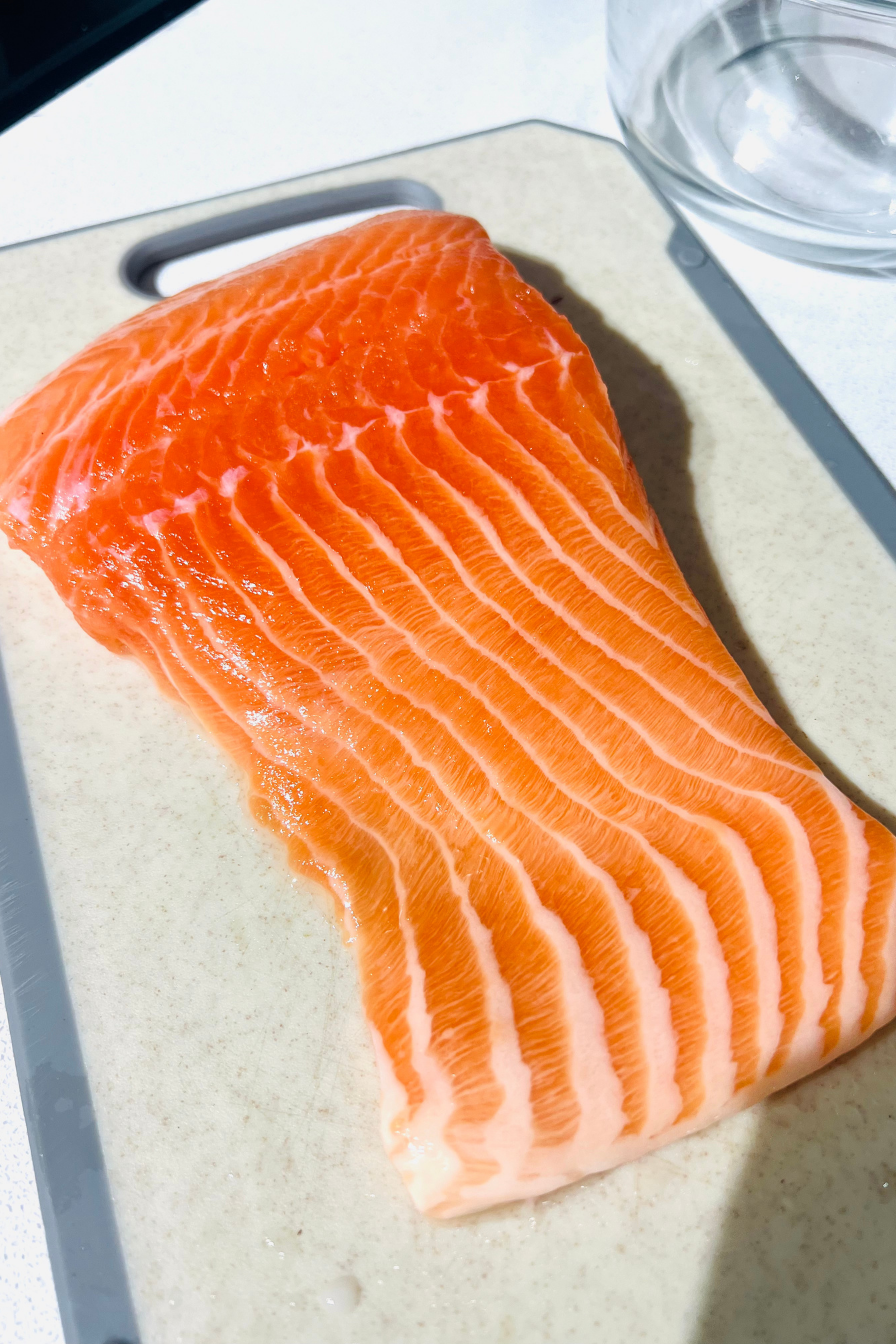
Fresh salmon fillets. One and a half pounds, skin removed and cut into uniform 1-inch cubes. Fresh salmon has the best texture and flavor; frozen works but needs to be fully thawed and patted very dry. Cut the cubes uniform so they cook at the same rate.
Fine sea salt and black pepper. For seasoning the salmon before it’s coated. Season generously — the rice flour and the glaze add flavor, but the salmon itself needs salt.
Rice flour. Three tablespoons. The coating that gives the salmon its light, crispy exterior. Rice flour forms a delicate crust that doesn’t get heavy or pasty the way wheat flour can. Cornstarch works as a substitute.
Avocado oil. Two tablespoons. The high-heat oil for the sear. Avocado oil has a high smoke point and a neutral flavor that lets the salmon and glaze shine.
Low-sodium soy sauce. Three tablespoons, for the glaze. The salt and umami base. Low-sodium lets you control the final salt level.
Brown sugar and honey. Two tablespoons of brown sugar and one and a half tablespoons of honey. The sweetness that caramelizes into the glaze. The combination gives you both the deeper molasses note of brown sugar and the floral sweetness of honey.
Rice vinegar. Two teaspoons (increased from one teaspoon per your fix). The acidity that balances the sweetness of the brown sugar and honey. Without it, the glaze tastes flat and cloying.
Garlic. One clove, finely minced. The aromatic that makes the glaze taste like more than just sweet soy sauce.
Cooked white or brown rice. Three cups. The base of the bowl. White rice is the classic pairing; brown rice adds a nuttier note and more fiber.
Cucumber and avocado. One large cucumber, thinly sliced or diced, and one ripe avocado, sliced. The cool, fresh contrast to the sticky salmon and the warm rice.
Toasted sesame seeds and green onions. Optional, for garnish. They add texture and color and a little extra flavor.
How to Make Salmon Rice Bowls
(See the recipe card below — the steps are identical and the card is the single source of truth.)
Tips and Troubleshooting
The salmon turned out soggy. It wasn’t dry enough before it went into the pan, or the pan wasn’t hot enough. Pat the cubes thoroughly dry with paper towels, and get the pan shimmering before the salmon goes in.
The salmon is dry. It cooked too long, or the cubes were too small. Cook 2 minutes on the first side and 1 to 2 minutes on the second, and check the thickest piece with a thermometer — pull at 140–145°F.
The rice flour coating is pasty. Too much rice flour was used, or it wasn’t shaken off. Use the full 3 tablespoons but toss lightly and shake off the excess before the salmon goes into the pan.
The glaze is too thick or too sweet. It simmered too long, or the rice vinegar was skipped. Pull it off the heat after 1 to 2 minutes, and use the full 2 teaspoons of rice vinegar to balance the sweetness.
The glaze is too thin. It didn’t simmer long enough, or too much water was added. Simmer 1 to 2 minutes longer on low heat, and add water only if it gets too thick.
The salmon lost its crunch after glazing. That’s expected — the sticky glaze softens the crust. Toss briefly and serve immediately. The contrast between the sticky salmon and the cool cucumber and avocado is what makes the bowl work.
The bowl is mushy the next day. The components weren’t stored separately. Store the salmon, rice, and vegetables in separate containers, and assemble just before eating.
The avocado turned brown. It was sliced too far in advance. Slice it fresh when you’re ready to eat, or toss the slices in lemon or lime juice before storing.
Substitutions and Swaps
Salmon → arctic char, trout, or firm white fish. Same quantity. Arctic char and trout are the closest substitutes; cod or halibut work but need a slightly longer cook time.
Rice flour → cornstarch or potato starch. Same quantity. Cornstarch produces a slightly lighter crust; potato starch slightly denser.
White rice → brown rice, jasmine rice, or cauliflower rice. Same quantity cooked. Jasmine is the classic pairing; cauliflower rice is a lower-carb option.
Honey → maple syrup. Same quantity. The glaze is slightly less floral but works the same way.
Cucumber → thinly sliced radishes or bell pepper. Same quantity. Radishes add peppery bite; bell pepper is sweeter.
For a spicy version: add ½ teaspoon of red pepper flakes or a teaspoon of chili garlic sauce to the glaze.
For a salmon noodle bowl version: swap the rice for cooked rice noodles and add a splash of the glaze to the noodles before topping with the salmon. This captures the “salmon noodle bowl” keyword.
For a salmon salad bowl version: serve the salmon over a bed of mixed greens with the cucumber, avocado, and a drizzle of the glaze as dressing. This captures the “salmon salad bowl” keyword.
Storage and Reheat
Refrigerate the cooked salmon and rice in airtight containers for up to 3 days. Keep the cucumber and avocado separate.
Reheat the salmon gently in an air fryer at 325–350°F or in a skillet over medium-low heat until heated through. Avoid prolonged reheating — it dries out the fish.
Add fresh cucumber and avocado after reheating, and assemble the bowls just before eating for the best texture.
Food safety: store leftovers within 2 hours of cooking. Reheat to 145°F before serving. Discard anything left at room temperature longer than 2 hours.
Crispy Sticky Salmon Rice Bowls (Honey Soy Glazed Salmon)
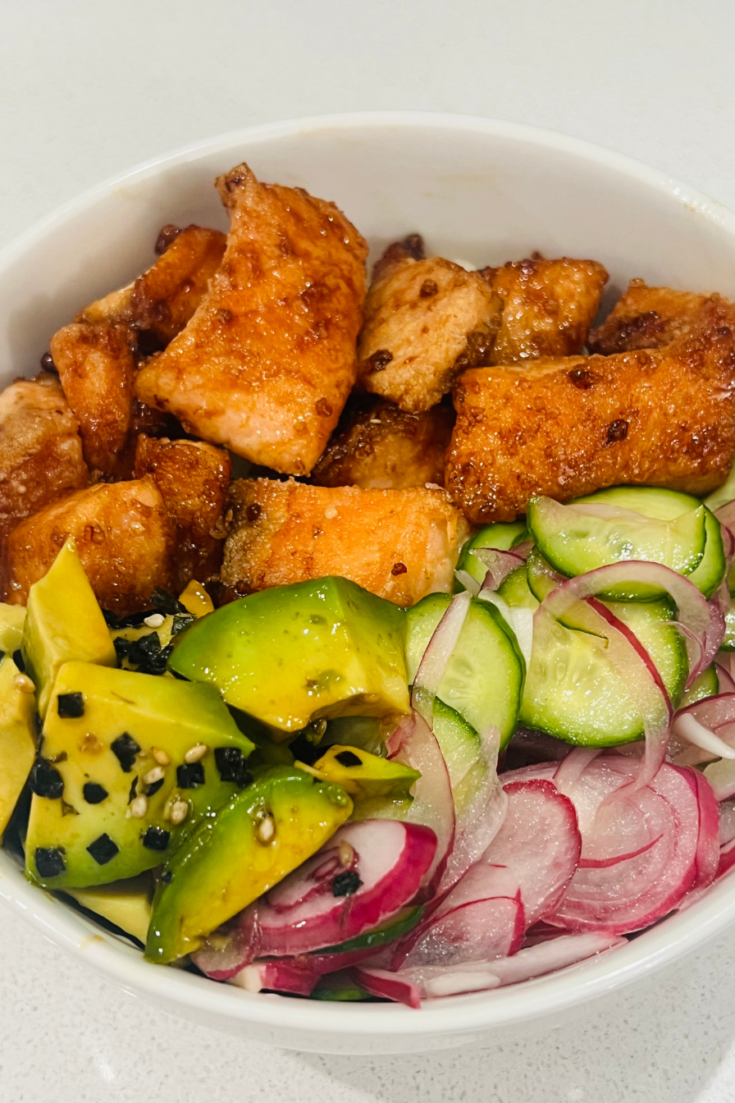
Golden, lightly crispy salmon bites tossed in a sweet-and-savory honey soy glaze, served over fluffy rice with refreshing cucumber and creamy avocado — about 40g of protein per serving.
Ingredients
For the Crispy Salmon
- 1½ lbs fresh salmon fillets, skin removed and cut into uniform 1-inch cubes
- ½ teaspoon fine sea salt
- ¼ teaspoon black pepper
- 3 tablespoons rice flour (or cornstarch)
- 2 tablespoons avocado oil
For the Sticky Honey Soy Glaze
- 3 tablespoons low-sodium soy sauce
- 2 tablespoons brown sugar
- 1½ tablespoons honey
- 2 teaspoons rice vinegar
- 1 clove garlic, finely minced
- 1 teaspoon water, if needed to loosen the glaze
For the Bowls
- 3 cups cooked white or brown rice
- 1 large cucumber, thinly sliced or diced
- 1 ripe avocado, sliced
- 1 tablespoon toasted sesame seeds (optional)
- 2 green onions, thinly sliced (optional)
Instructions
- Prepare the Salmon: Pat the salmon cubes thoroughly dry with paper towels. Removing excess moisture is important for getting a golden exterior. Season with salt and black pepper.
- Coat With Rice Flour: Place the salmon cubes in a mixing bowl. Sprinkle the rice flour over the salmon and toss gently until each piece has a thin, even coating. Shake off any excess flour.
- Pan-Sear the Salmon: Heat the avocado oil in a large nonstick or cast-iron skillet over medium-high heat until shimmering. Arrange the salmon in a single layer, leaving space between the pieces. Work in two batches if necessary to prevent overcrowding. Sear 2 minutes on the first side, then turn the pieces and cook 1 to 2 minutes more, rotating as needed to brown the remaining sides. The salmon should be golden outside and cooked through. Check the thickest pieces with a food thermometer — the safe internal temperature is 145°F. Transfer the cooked salmon to a clean plate.
- Prepare the Sticky Glaze: Reduce the skillet heat to low. If there is excessive oil remaining, carefully remove some, leaving about 1 teaspoon in the pan. Add the soy sauce, brown sugar, honey, rice vinegar, and minced garlic. Stir continuously 1 to 2 minutes, until the sugar dissolves and the sauce becomes slightly syrupy. If the glaze becomes too thick, add 1 teaspoon of water and stir.
- Coat the Salmon: Turn off the heat. Return the salmon bites to the skillet and gently toss with the glaze until lightly coated. Avoid prolonged tossing or simmering, which can soften the crispy exterior.
- Assemble the Rice Bowls: Divide the warm cooked rice among four serving bowls. Add the glazed salmon bites, cucumber, and sliced avocado. Finish with toasted sesame seeds and sliced green onions if desired. Serve immediately for the best contrast between the lightly crisp salmon, sticky glaze, and fresh vegetables.
Notes
Estimated per serving: 610 calories · 40g protein · 52g carbs · 22g fat · 5g fiber · 780mg sodium
Nutrition varies by salmon, rice, and glaze portion. Verify against your labels.
Frequently Asked Questions
Can I use frozen salmon?
Yes, but thaw it completely in the refrigerator overnight first. Frozen salmon releases a lot of water when it thaws, and wet salmon steams instead of searing. Pat it very dry before cubing.
How do I know when the salmon is done?
Use a food thermometer. Salmon should reach 145°F in the thickest part. Pull it at 140°F if you want it slightly more tender — carry-over cooking will bring it to 145°F as it rests.
Why did my salmon turn out soggy?
It wasn’t dry enough before it went into the pan, or the pan wasn’t hot enough. Pat the cubes thoroughly dry with paper towels, and get the pan shimmering before the salmon goes in.
Can I make this ahead for meal prep?
Yes. Store the cooked salmon and rice in airtight containers for up to 3 days, and keep the cucumber and avocado separate. Assemble the bowls just before eating.
Why isn’t the salmon crispy after the glaze goes on?
The sticky glaze softens the crust — that’s the trade-off of a sticky glaze. Toss briefly and serve immediately. The contrast between the sticky salmon and the cool cucumber and avocado is what makes the bowl work.
Can I use a different protein?
Yes. Arctic char, trout, or firm white fish like cod or halibut all work. Chicken breast cut into cubes also works — sear 3 to 4 minutes per side.
Is this gluten-free?
Only if you use gluten-free soy sauce (tamari) and gluten-free rice flour. Both are available at most grocery stores.
What do you serve with salmon rice bowls?
The bowl is a complete meal. If you want to add more, a side of steamed broccoli, edamame, or a simple miso soup works well.
More Rice Bowl Recipes You’ll Love
Crispy Air Fryer Salmon Bites — Ready in 10 Minutes, 30g Protein
Baked Tofu – Crispy Rice Flour Coating, 30 Minutes
20 Easy Salmon Recipes Ready in 20 Mins – Healthy & Delicious
Closing
I’ve made these salmon rice bowls more times than I can count, and the two things that changed everything for me were patting the salmon completely dry before it hit the pan and pulling the glaze off the heat early so it stayed glossy instead of turning into a paste.
The first batch I made had soggy salmon and a glaze that was too thick — the dry pat and the shorter simmer fixed that completely.
If you make the spicy version or swap the rice for noodles, let me know how it turns out in the comments.