
No flavor combination is better than shrimp and garlic butter.
It is the kind of pairing that never fails — plump, sweet shrimp seared in foaming butter with garlic softening into the pan, a squeeze of lemon at the end, and the whole kitchen smelling like something worth sitting down for.
It is a restaurant plate through and through.
The kind you order with a glass of white wine on a date night, or the kind you make on a Wednesday when you need dinner to feel like a small occasion.
But here is the thing about shrimp scampi and every buttery garlic shrimp dish like it. It is rich. It is indulgent.
And while there is absolutely a time and a place for that, it is not what you want to eat on a Tuesday when you still have to get through the rest of the week.
So I made it into a bowl.
Same seared shrimp. Same garlic butter. Same bright lemon finish. But everything around it changed.
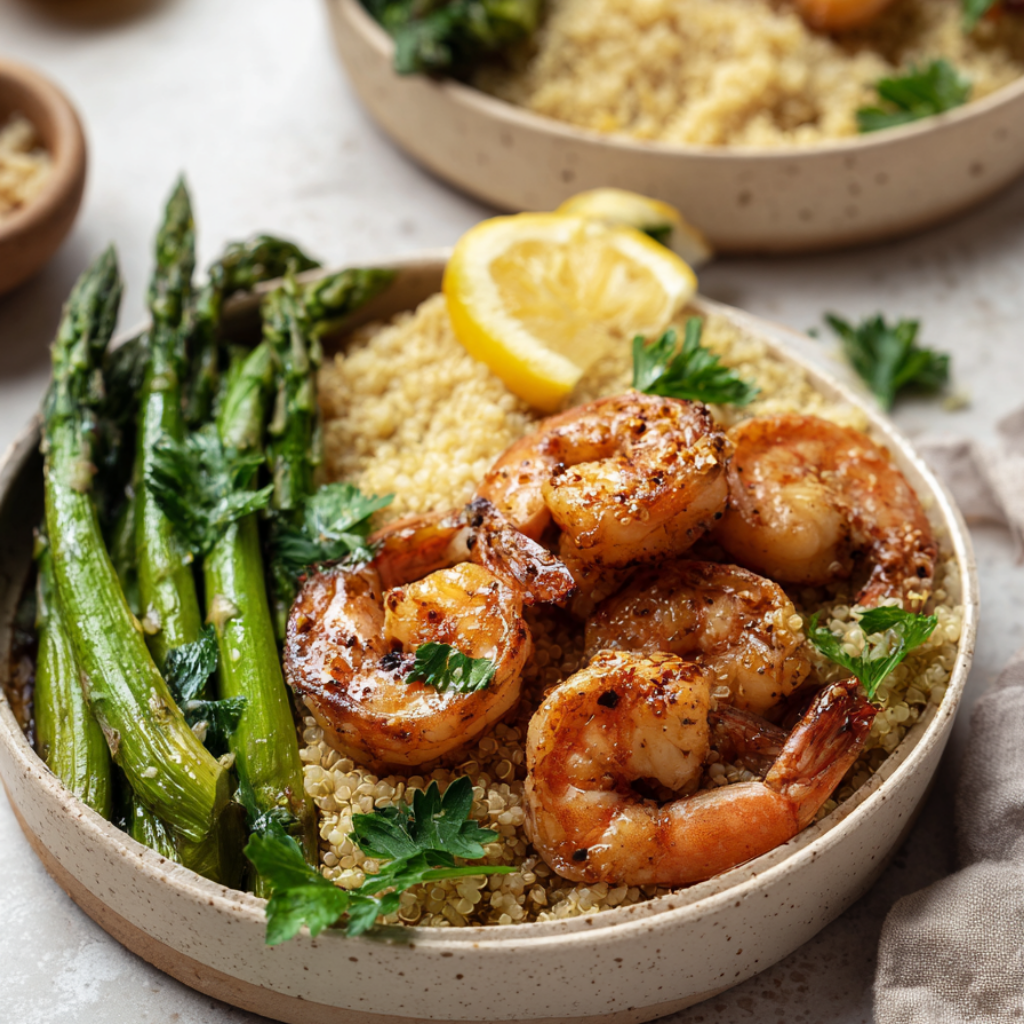
Instead of pasta or a pool of butter sauce, this version lands on a bed of fluffy quinoa, with roasted asparagus on the side and a light butter sauce that ties everything together without weighing it down.
It is clean eating at its finest — healthy, filling, and genuinely satisfying without the heavy feeling that follows a bowl of buttered noodles.
And it happens to carry thirty-six grams of protein per bowl. That’s what makes it more than just a nice dinner.
It is a bowl that is macro-maxed, that you feel genuinely good about eating, and that works whether you are pairing it with a glass of Pinot on a Friday night or packing it into a container for lunch on Monday.
Twenty-five minutes. One pan, one pot, one sheet pan. A bowl that eats like a restaurant plate and treats your body like it matters.
Why This Recipe Works
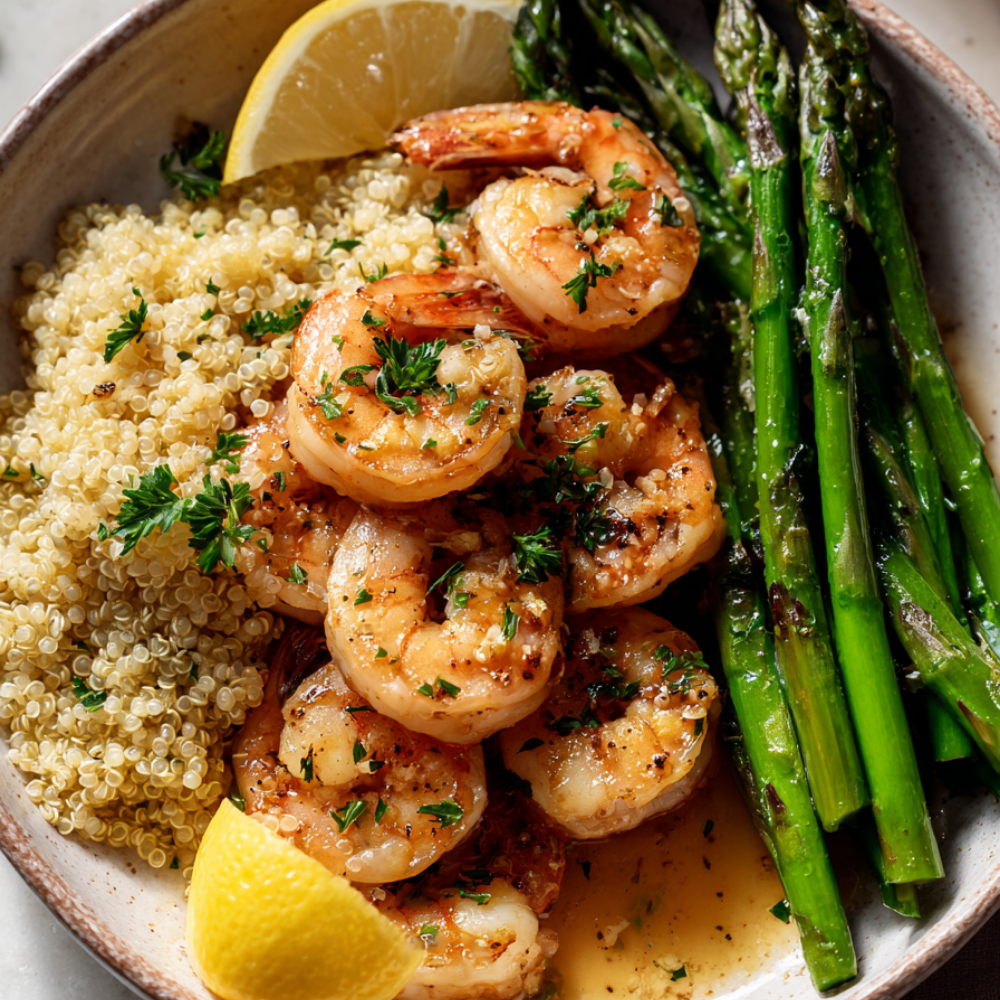
- Searing the shrimp in butter and olive oil together is the right fat combination. Butter brings flavor. Olive oil raises the smoke point so the butter does not burn. Together they give you a golden crust and a buttery finish.
- Remove the shrimp from the pan before building the sauce. Shrimp cook in about two minutes per side. Cooking them first, then building the lemon-garlic butter in the same pan, keeps the shrimp plump and lets the sauce pick up all their flavor.
- Garlic goes in off the direct heat so it does not burn. Burnt garlic turns the entire sauce bitter. Sixty seconds of gentle heat is all it needs to soften and sweeten.
- Add fresh lemon juice and zest at the end, off the heat. Boiled lemon juice turns bitter and flat. Added at the end, it stays bright and cuts through the butter.
- A splash of white wine or broth deglazes the pan. It picks up the browned bits from the shrimp and turns them into the sauce base. The alcohol cooks off in a minute and leaves behind acidity and depth.
- Swirling in cold butter at the very end is what makes the sauce glossy. Butter added over direct heat separates. Off the heat, it emulsifies into a silky, spoon-coating sauce.
- Cooking the quinoa in broth instead of water seasons it from the inside out. The base is not just a vehicle for the shrimp — it should taste good on its own.
- Roasting the asparagus at high heat concentrates its flavor. Roasting asparagus at 425°F gives crisp tips and a sweet, nutty flavor. Steamed asparagus is fine but flat by comparison.
- Trim asparagus at the natural break point. Bend each stalk until it snaps. That is where the woody end meets the tender part. Cutting it with a knife leaves tough pieces.
- Add fresh parsley at the end, not into the pan. It is a finishing herb. Cooked, it disappears. Sprinkled raw over the top, it adds color and a bright, grassy note.
- The protein math is honest. Shrimp and quinoa deliver about 36g per serving across four bowls, with no protein powder and no inflated numbers.
Lemon Garlic Shrimp Quinoa Bowl
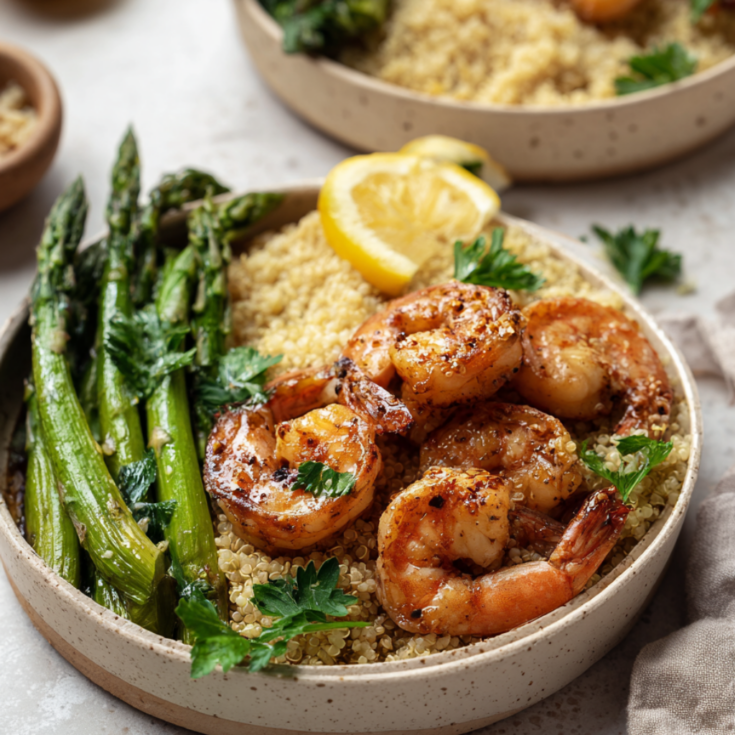
Shrimp seared in butter, finished with lemon and garlic, served over a bed of fluffy quinoa with roasted asparagus. Bright, buttery, and ready in 25 minutes.
Ingredients
For the Quinoa
- 1 cup dry quinoa, rinsed
- 2 cups low-sodium chicken or vegetable broth
- ½ tsp kosher salt
For the Asparagus
- 1 lb fresh asparagus, woody ends snapped off
- 1 tbsp olive oil
- ½ tsp kosher salt
- ¼ tsp black pepper
- ¼ tsp red pepper flakes
For the Shrimp
- 1½ lbs large shrimp, peeled and deveined, tails on or off
- 1 tsp kosher salt
- ½ tsp black pepper
- 1 tsp garlic powder
- ½ tsp smoked paprika
- 1 tbsp olive oil
- 2 tbsp unsalted butter, divided
For the Lemon Garlic Butter Sauce
- 4 cloves garlic, thinly sliced
- ¼ cup dry white wine or chicken broth
- 2 tbsp fresh lemon juice
- 1 tsp lemon zest
- 2 tbsp cold unsalted butter, cut into cubes
- 2 tbsp fresh flat-leaf parsley, chopped
- Flaky salt and black pepper to taste
For Serving
- Lemon wedges
- Shaved Parmesan
- Extra parsley
Instructions
- Cook the quinoa. Rinse the quinoa under cold water for 30 seconds. Combine it with the broth and ½ tsp of kosher salt in a medium saucepan. Bring to a boil, reduce to a low simmer, cover, and cook for 15 minutes. Turn off the heat and let it sit covered for 5 minutes. Fluff with a fork.
- Preheat and prep the asparagus. Preheat the oven to 425°F. Snap the woody ends off the asparagus by bending each stalk until it breaks naturally. Spread the asparagus on a rimmed sheet pan in a single layer. Drizzle with olive oil and season with kosher salt, black pepper, and red pepper flakes.
- Roast the asparagus. Roast for 10 to 12 minutes, until the tips are just crisping and the stalks are bright green and tender. Remove and set aside.
- Season the shrimp. Pat the shrimp completely dry with paper towels. Toss with the kosher salt, black pepper, garlic powder, and smoked paprika.
- Sear the shrimp. Heat the olive oil and 1 tbsp of the butter in a large skillet over medium-high heat until the butter foams. Add the shrimp in a single layer and cook 1½ to 2 minutes per side, until just opaque and pink with golden edges. Do not crowd the pan — work in batches if needed. Transfer the shrimp to a plate. They will not be fully cooked through.
- Build the sauce. Reduce the heat to medium. Add the remaining 1 tbsp of butter and the sliced garlic to the same pan. Cook for 60 seconds, until the garlic is fragrant and just beginning to turn pale gold. Do not let it brown.
- Deglaze. Pour in the white wine or broth and scrape up every browned bit from the bottom of the pan. Simmer for 2 minutes, until the liquid has reduced by about half.
- Finish the sauce. Turn off the heat. Add the lemon juice, lemon zest, and the cold butter cubes one at a time, swirling the pan constantly, until each piece melts before adding the next. The sauce should turn glossy and coat the back of a spoon. Stir in half the parsley.
- Return the shrimp. Add the shrimp back to the pan and toss to coat in the sauce. Taste and adjust salt and pepper.
- Assemble the bowls. Divide the quinoa between four shallow bowls. Add the roasted asparagus alongside. Top with the shrimp and sauce. Finish with shaved Parmesan, the remaining parsley, and a lemon wedge on the side.
Notes
Protein per Serving: 36 g.
Nutrition Note: Protein calculated from 1½ lbs raw large shrimp (≈125g cooked), 2 cups cooked quinoa (≈16g), 1 lb asparagus (≈6g), and Parmesan (≈8g), divided by 4 servings — about 36g per bowl. About 480 calories per serving. Sodium comes mostly from the butter and Parmesan — use unsalted butter and adjust at the end.
Tips for the Best Quinoa Bowl
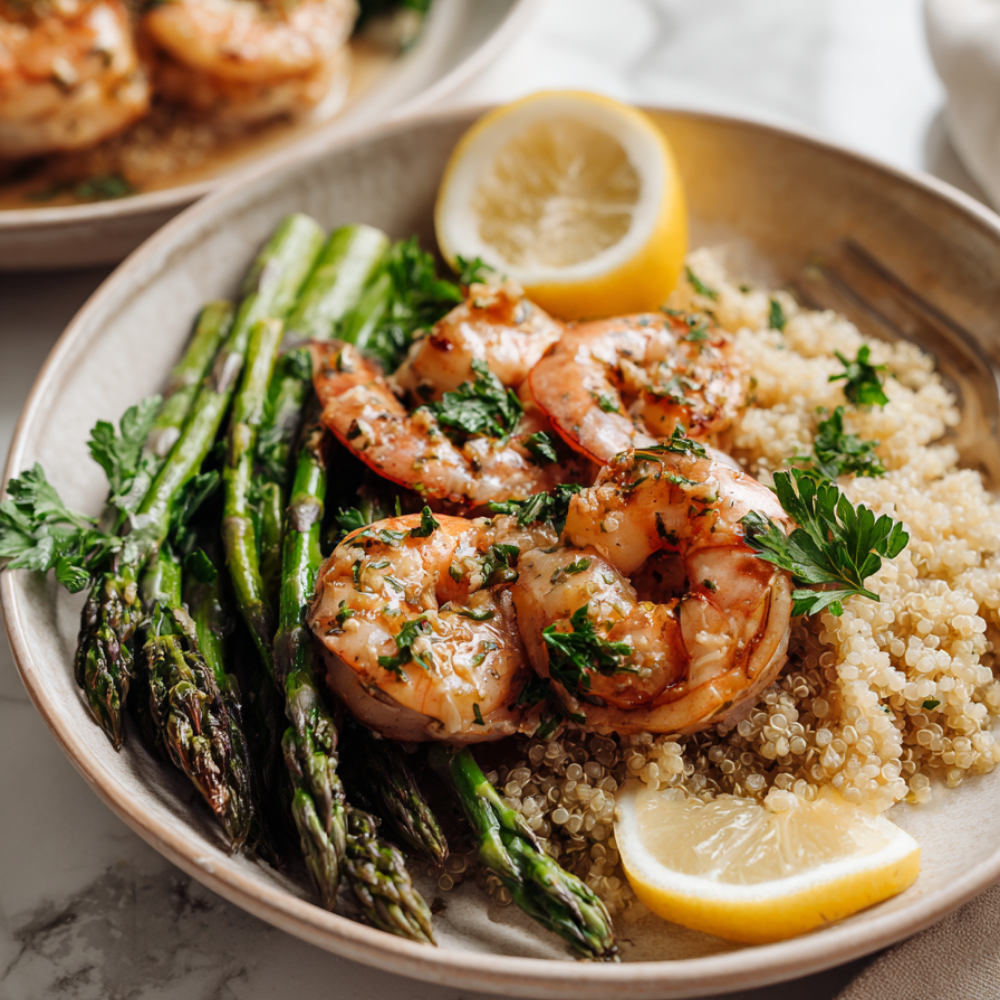
- Rinse the quinoa before cooking. Quinoa is coated in saponin, a natural compound that tastes soapy. Thirty seconds under cold water removes it.
- Cook the quinoa in broth, not water. The base should taste seasoned on its own, not just carry the shrimp.
- Dry the shrimp completely before seasoning. Wet shrimp steam instead of searing. Pat them dry and let them sit on a paper towel for 5 minutes if you have time.
- Sear the shrimp in batches. Crowding the pan drops the temperature, and the shrimp turn rubbery. Two batches beat one crowded pan.
- Pull the shrimp at 1½ minutes per side. They finish in the sauce. Waiting for them to be fully cooked in the pan means they will be overcooked by the time they hit the bowl.
- Snap the asparagus; do not cut it. Bend each stalk until it breaks naturally, where the woody end meets the tender part. Cutting with a knife leaves tough pieces.
- Add the finishing butter off the heat, one cube at a time. This is the emulsification step. Butter added over direct heat separates. Off the heat, it turns the sauce glossy.
- Add the lemon off the heat. Boiling lemon juice makes it bitter and flat.
Troubleshooting
- The shrimp are rubbery. They overcooked. Pull them at 1½ minutes per side and let the sauce finish them.
- The sauce is greasy and separated. You added the cold butter over direct heat. Turn the heat off and swirl the pan constantly while adding one cube at a time.
- The sauce is too thin. The wine didn’t reduce enough, or the butter didn’t emulsify. Simmer 1 more minute before adding the butter, and swirl harder.
- The garlic tastes bitter. It browned before you added the wine. Keep the heat at medium and pull it at pale gold.
- The lemon flavor disappeared. You added it too early or boiled it. Add it off the heat, right before serving.
- The quinoa is mushy. Too much liquid or too long on the heat. Use 2 cups of broth for 1 cup of dry quinoa and pull at 15 minutes.
- The asparagus is soggy. It was steamed or overcooked. Roast at 425°F for 10 to 12 minutes and pull when the tips are just crisping.
- The bowls are dry. Not enough sauce, or the quinoa absorbed it all. Add 1 more tbsp of butter to the sauce next time, or drizzle the bowls with 1 tsp of olive oil before serving.
Easy Variations
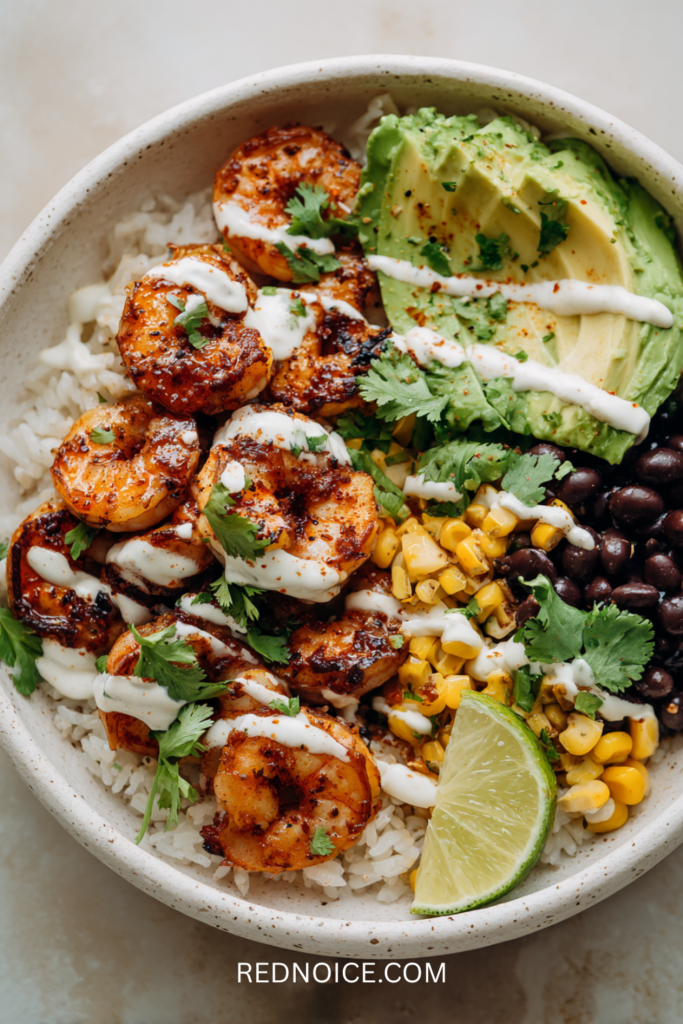
- Mediterranean Shrimp Quinoa Bowl. Skip the butter sauce. Toss the shrimp in olive oil, lemon, and oregano, and add cucumber, cherry tomatoes, Kalamata olives, and crumbled feta.
- Honey Garlic Shrimp Quinoa Bowl. Swap the lemon garlic sauce for a honey garlic glaze — ⅓ cup honey, 3 tbsp soy sauce, 1 tbsp rice vinegar, 4 cloves garlic, 1 tsp ginger, and a cornstarch slurry.
- Spicy Lemon Shrimp Quinoa Bowl. Double the red pepper flakes and add 1 tbsp of sriracha to the sauce. Top with sliced jalapeños.
- Vegan Quinoa Bowl. Skip the shrimp and asparagus. Add 1 cup of roasted chickpeas, 2 cups of roasted vegetables, and a lemon tahini dressing. Protein drops to about 18g per bowl.
- Quinoa Breakfast Bowl. Skip the shrimp and asparagus. Top the quinoa with a soft-boiled egg, avocado, and a drizzle of chili oil.
Storage and Food Safety
Refrigerator: Store the components separately in airtight containers for up to 3 days. Keep the shrimp, quinoa, and asparagus in separate containers so the quinoa does not absorb all the sauce. Reheat the shrimp gently in a skillet over medium-low heat for 3 minutes, or in the microwave at 50% power for 45 seconds.
Freezer: Freeze the shrimp and quinoa separately for up to 2 months. Thaw overnight in the refrigerator. Reheat the shrimp in a skillet over medium-low heat and the quinoa in the microwave with a splash of broth. Asparagus is best fresh.
Make Ahead: Cook the quinoa and roast the asparagus up to 3 days ahead. Sear the shrimp fresh the day you serve — they lose texture after a day in the refrigerator.
Food Safety: Cook shrimp until opaque and reach an internal temperature of 145°F. Cool leftovers within 2 hours and refrigerate promptly. Do not refreeze shrimp that has been thawed. Reheat leftovers to 145°F.
Frequently Asked Questions
How much protein is in this quinoa bowl? About 36g per bowl from the shrimp, quinoa, asparagus, and Parmesan.
Can I use frozen shrimp? Yes. Thaw completely in the refrigerator, then pat bone dry before seasoning. Wet shrimp will not sear.
What size shrimp should I use? Large or jumbo — 21/25 or 16/20 count per pound. Smaller shrimp cook too fast and get lost in the sauce.
Can I use a different vegetable? Yes. Broccolini, green beans, or snap peas all work. Roast them at 425°F for 10 to 12 minutes.
Can I make this dairy-free? Yes. Use olive oil in place of the butter and skip the Parmesan. The sauce will be thinner but still bright and lemony.
Can I make this gluten-free? Yes. Use gluten-free broth and skip the wine if it is not certified gluten-free. Everything else is naturally gluten-free.
Can I meal prep this? Yes. Store the components separately and assemble the day you eat. It holds for 3 days.
How do I keep the shrimp from getting rubbery when reheating? Reheat gently in a skillet over medium-low heat for 3 minutes, or in the microwave at 50% power for 45 seconds. Never on high.
Can I add more protein? Yes. Add a soft-boiled egg or a scoop of shelled edamame. Both raise the number without changing the flavor.
What do I serve with this bowl? It is a complete meal on its own. A side of crusty bread works if you want something to soak up the sauce.
Is asparagus in season in October? No, it is a spring vegetable. It is available year-round (imported from Mexico and Peru), but it costs more in the fall. If you want a cheaper fall vegetable, swap in broccolini or green beans and roast them the same way.
More High-Protein Bowl Recipes You’ll Love
- Kale Quinoa Salad — 20g protein, cranberry walnut, maple vinaigrette.
- Farro Salad with Roasted Vegetables — 22g protein, pesto dressing.
- Eggplant Parmesan Recipe (No Frying, 22g Protein, Cozy Fall Dinner!)
Conclusion
A good quinoa bowl is a complete dinner in one dish.
Grains on the bottom, protein in the center, vegetables around the edges, and a sauce that ties everything together.
It is one of the most satisfying formats in home cooking because it works with whatever you have and it always looks like more than it is.
This version is built on lemon garlic shrimp—seared in butter and olive oil, then finished with a bright sauce of fresh lemon juice, sliced garlic, and cold butter swirled in off the heat.
Fluffy quinoa underneath, roasted asparagus alongside, and shaved Parmesan and fresh parsley on top. Thirty-six grams of protein per bowl.
Twenty-five minutes start to finish.
One pan, one pot, one sheet pan.
Three things make it work. Dry the shrimp and sear them hard so they get a crust instead of steaming.
Build the sauce in the same pan after the shrimp comes out, deglaze with wine, and swirl in cold butter off the heat so it emulsifies into something glossy.
And cook the quinoa in broth so the base tastes seasoned on its own.
It is the kind of bowl that feels like a restaurant plate on a date night and still works as a packed lunch on a Monday.
Make it once this week. Make it again next. It becomes the thing you keep coming back to.