Chicken breast is the protein most of us cook more than anything else, and for good reason. It is lean, cheap, almost impossible to ruin if you know a few things, and it takes on basically any flavor you throw at it.
Per four ounces, you are looking at roughly thirty-five grams of protein and about four grams of fat. Very few foods give you that ratio for that price.
It is also the protein that most often gets cooked the same way over and over. Salt, pepper, olive oil, into the oven, out of the oven, onto the plate. It works. It is fine.
It is also why chicken breast gets a reputation for being boring, when the truth is that chicken breast isn’t boring. The way we cook it is.
Here is what changed everything for me. Baking. Not pan-searing, not grilling, not standing at the stove with a thermometer in one hand and a spatula in the other.
Baking is the version of chicken breast that actually fits a weeknight. You pound it even, season it, put it in a dish or on a sheet pan, and walk away.
No flipping, no splatter, no hovering.
Twenty minutes later, it is done, and you spent those twenty minutes making a side, helping with homework, or sitting down for the first time all day.
For anyone cooking for a family on a Tuesday, that matters more than any technique.
The other thing that changed is realizing how much range one cut of meat actually has.
The same four chicken breasts can become a Caprese dinner with pesto and melted mozzarella, a Cordon Bleu roll-up with ham and Swiss, a sticky, caramelized BBQ sheet pan, a creamy mushroom bake that tastes like a Sunday dinner, or a bright lemon-herb tray with roasted lemon slices.
Same protein, same oven, five completely different plates.
If you are tired of your default chicken breast recipe, this is the fix.
Five baked chicken breast dinners, each with thirty-eight to sixty-one grams of protein, and each on the table in under forty minutes.
Why Baked Chicken Breast Works
- Baking is the most hands-off way to cook chicken. Once the pan goes in the oven, you can make a side, set the table, or pour a glass of wine. Nothing needs flipping or watching.
- An instant-read thermometer is the only reliable way to know when chicken is done. Pull it at 160°F and let carryover heat bring it to 165°F. That is the difference between juicy chicken and dry chicken.
- Pounding the breasts to an even thickness helps them cook evenly. A breast with a thick center and thin edges will dry out at the edges before the center is done.
- Patting the chicken dry before it goes in the oven is what gives you a golden exterior. Surface moisture steams the chicken instead of roasting it.
- A 400 to 425°F oven is the right temperature for boneless breasts. High heat browns the outside before the inside overcooks.
- Resting for 5 minutes before slicing keeps the juices in the meat. Cutting immediately lets them run out onto the board.
- Every recipe here is a full meal or one step away from one. Serve with rice, pasta, roasted vegetables, or a simple salad and dinner is done.
Recipe 1: Baked Caprese Chicken with Pesto
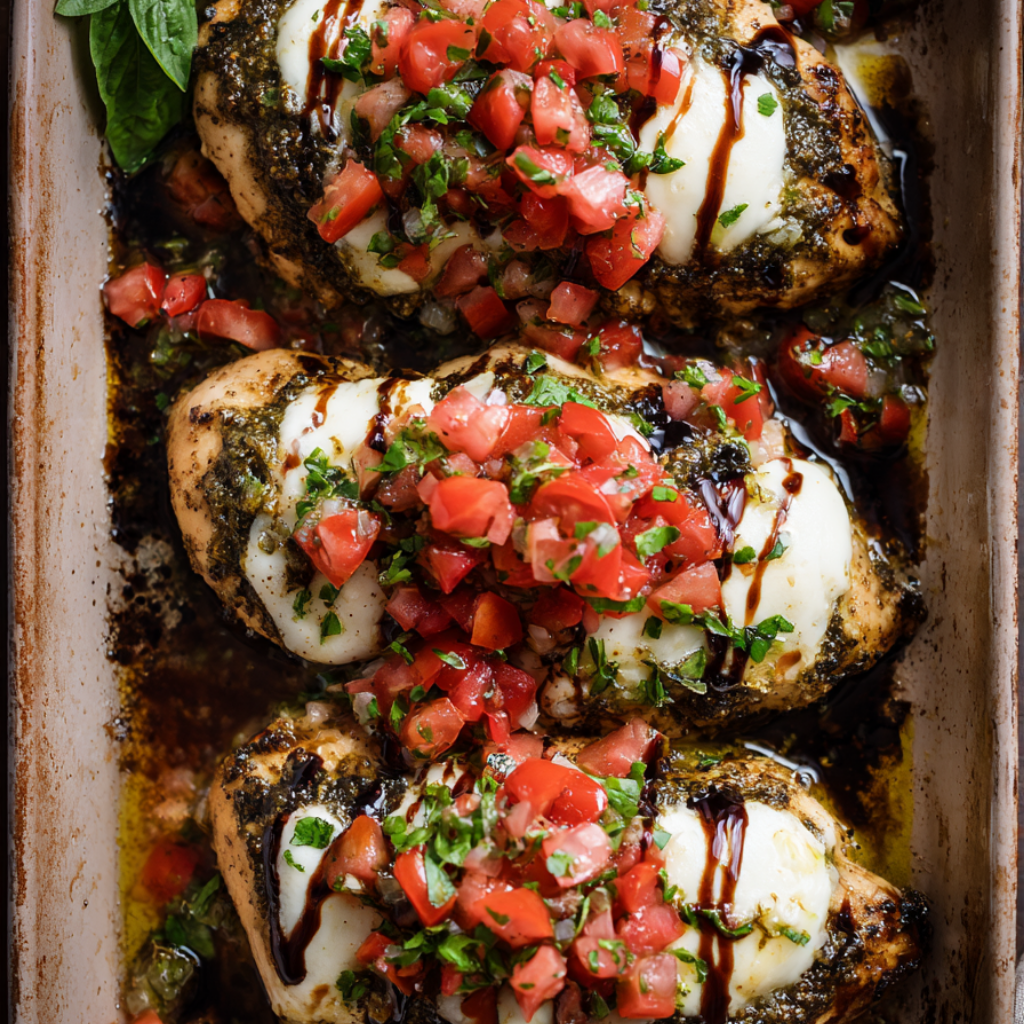
This turns a classic Italian salad into a full dinner.
Golden baked chicken breasts get spread with basil pesto, topped with fresh mozzarella that melts and bubbles in the oven, and finished with a spoonful of fresh tomato bruschetta and a drizzle of balsamic glaze.
It looks like something you would order at a restaurant and comes together in thirty minutes.
Forty-nine grams of protein per serving, mostly from the chicken and the mozzarella, with the pesto adding Parmesan on top. Serve it with crusty bread and a simple green salad, and dinner is handled.
Baking notes: The original version of this recipe is skillet-based — seared on the stovetop with the mozzarella melted under a lid. This baked version is different and worth knowing about before you start.
- Bake at 425°F, not on the stovetop. High heat browns the chicken and sets the pesto in one step.
- Pound the breasts to an even ½ to ¾ inch thick. Even thickness is what keeps the edges from drying out before the center reaches 160°F.
- Bake for 15 to 18 minutes before adding the mozzarella. Adding cheese at the start makes it dry out and slide off. Adding it in the last 3 to 4 minutes gives you a bubbling, glossy melt.
- The bruschetta goes on raw, after baking, never in the oven. Fresh tomatoes and basil turn to mush under heat. Spoon it over the hot chicken on the plate.
- The balsamic glaze goes on last. Drizzle it at the table so the plate stays glossy and the chicken stays crisp.
- Do not skip the rest. Five minutes off the heat lets the juices redistribute and the cheese set slightly, which is what keeps the slices clean.
Get the full recipe → Chicken Caprese
Recipe 2: Healthy Chicken Cordon Bleu
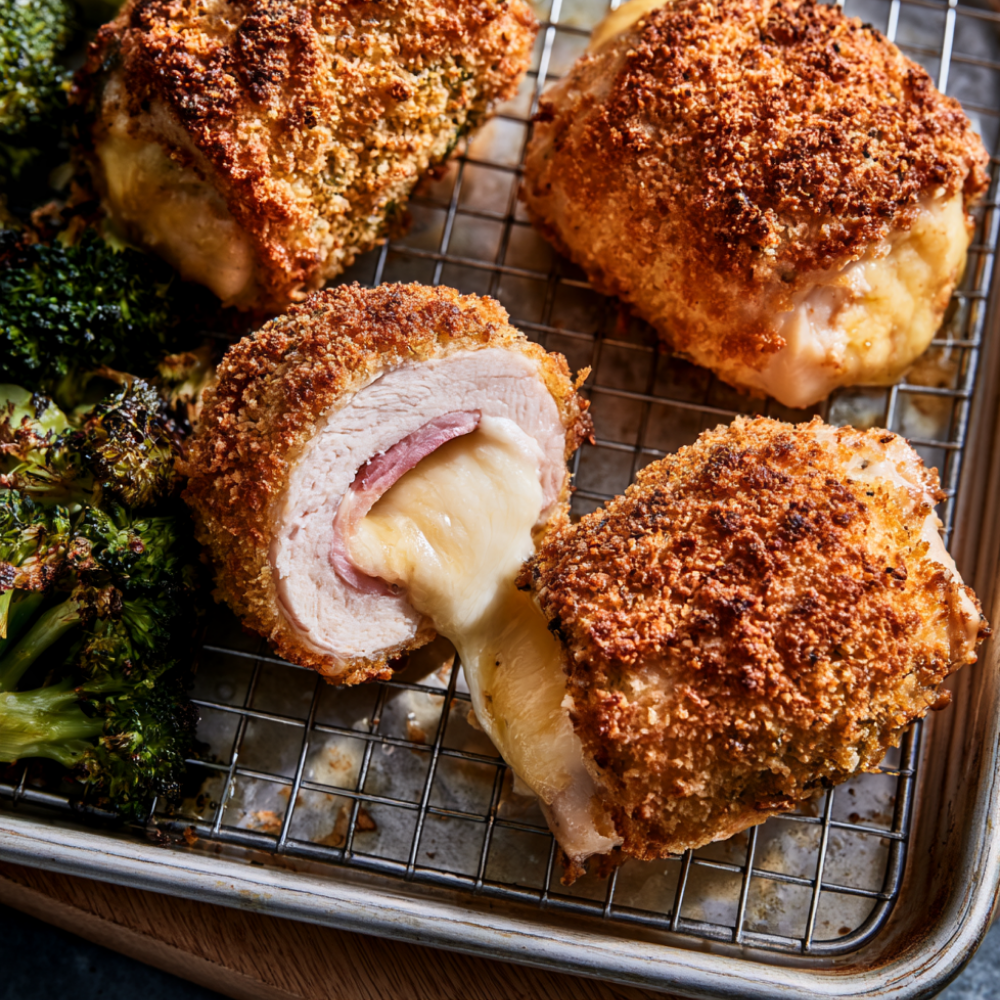
This recipe answers whether a Cordon Bleu can be lighter without losing anything.
Chicken breasts get pounded thin, rolled around deli ham and Swiss cheese, coated in a Parmesan panko crust, and baked on a wire rack so the bottom crisps instead of steaming against the pan.
Spoon a creamy Dijon Greek yogurt sauce over the top at the end; it adds tang and body without the heavy cream that usually comes with a dish like this.
Fifty-five to sixty-two grams of protein per serving, depending on your chicken size. It looks like a restaurant plate and comes out of the oven in about thirty-five minutes.
Get the full recipe → Healthy Chicken Cordon Bleu
Recipe 3: BBQ Sheet Pan Chicken
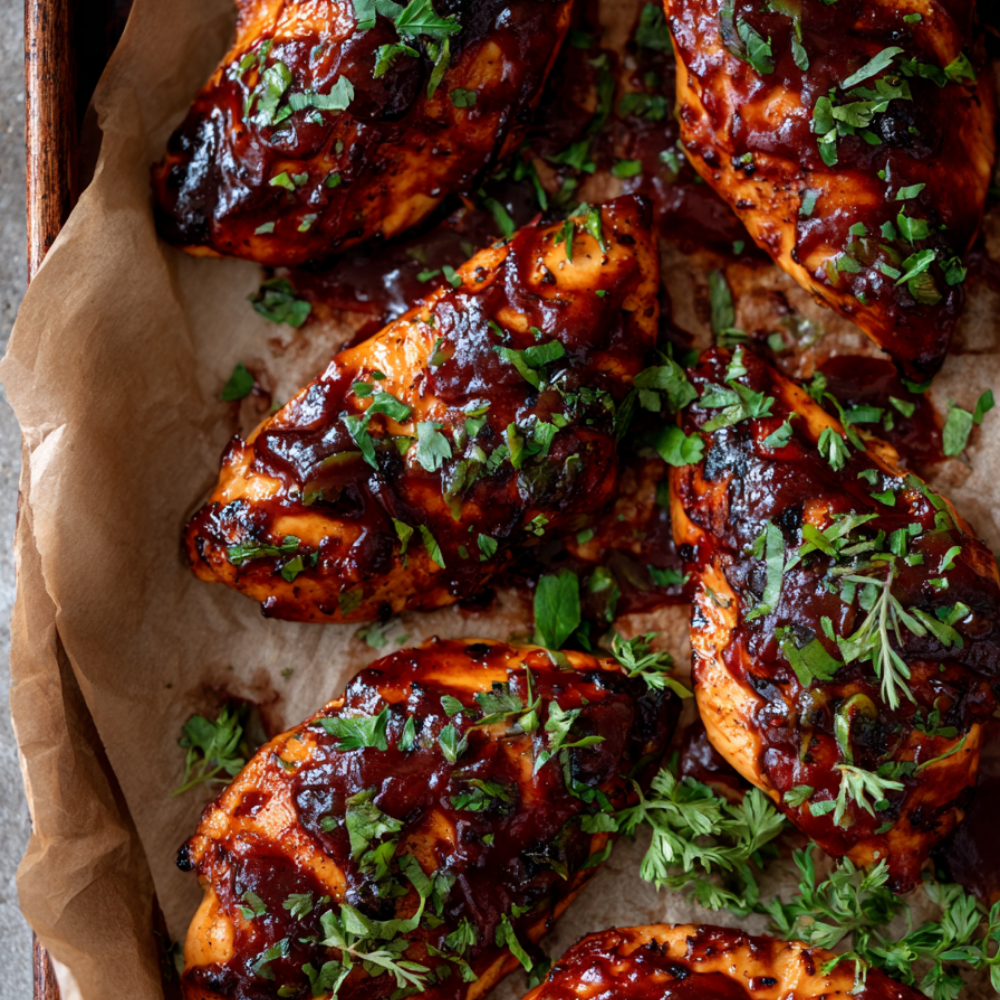
Baked BBQ chicken breasts with a caramelized glaze on a single sheet pan. Sweet, smoky, and finished with fresh herbs. It is the kind of dinner that works on a Tuesday and tastes like a summer cookout.
Servings: 4
Prep Time: 8 minutes
Cook Time: 20 minutes
Total Time: 28 minutes
Protein per Serving: 38g
Nutrition Note: Protein calculated from 1½ lbs raw boneless skinless chicken breast (≈152g) divided by 4 servings — about 38g per serving, with negligible protein from the BBQ sauce. About 340 calories per serving. Sodium comes mostly from the BBQ sauce and dry rub — use a low-sugar BBQ sauce if you are watching it.
Ingredients
- 4 boneless, skinless chicken breasts, about 1½ lbs total
- 1 tbsp olive oil
- 1 tsp kosher salt
- ½ tsp black pepper
- 1 tsp smoked paprika
- 1 tsp garlic powder
- 1 tsp onion powder
- 1 tsp chili powder
- 1 tsp brown sugar
- ½ cup BBQ sauce
- Fresh parsley or chives, chopped, for garnish
Instructions
- Preheat and prep. Preheat the oven to 425°F. Line a rimmed sheet pan with parchment paper.
- Pound and dry. Pound the chicken to an even ½ to ¾ inch thick. A uniform breast cooks evenly from edge to center, which prevents the thin tail from drying out. Pat completely dry.
- Season. In a small bowl, mix the kosher salt, black pepper, smoked paprika, garlic powder, onion powder, chili powder, and brown sugar. The brown sugar helps the surface caramelize. Rub the mixture over both sides of the chicken. Drizzle with the olive oil.
- Arrange on the pan. Place the breasts in a single layer with space between them. Crowding steams the chicken instead of roasting it.
- Bake the first stage — no sauce yet. Bake 12 minutes, uncovered, without any sauce on the chicken. This step matters most. BBQ sauce is high in sugar, and sugar burns at oven temperatures. If you coat the chicken at the start, the sauce chars black before the meat is cooked through.
- Brush and glaze. Pull the pan out and brush the tops generously with BBQ sauce. Return to the oven and bake 5 to 6 minutes more, until the sauce is glossy and caramelized at the edges and the chicken reaches an internal temperature of 165°F. Brushing it on in the final few minutes is what gives you a sticky, caramelized finish instead of a burnt one.
- Rest and serve. Rest 5 minutes, scatter with fresh parsley or chives, and serve with rice, roasted potatoes, or coleslaw.
Why the two-stage method works: BBQ sauce is roughly half sugar by weight. Sugar begins to burn at 350°F. Chicken needs about 18 to 20 minutes at 425°F to reach 165°F. If you add the sauce at the start, it spends ten minutes past its burning point. Adding it in the last five to six minutes lets the sauce caramelize and thicken without crossing into burnt territory. The result is a glossy, sticky glaze with no charred edges.
Recipe 4: Creamy Mushroom Baked Chicken
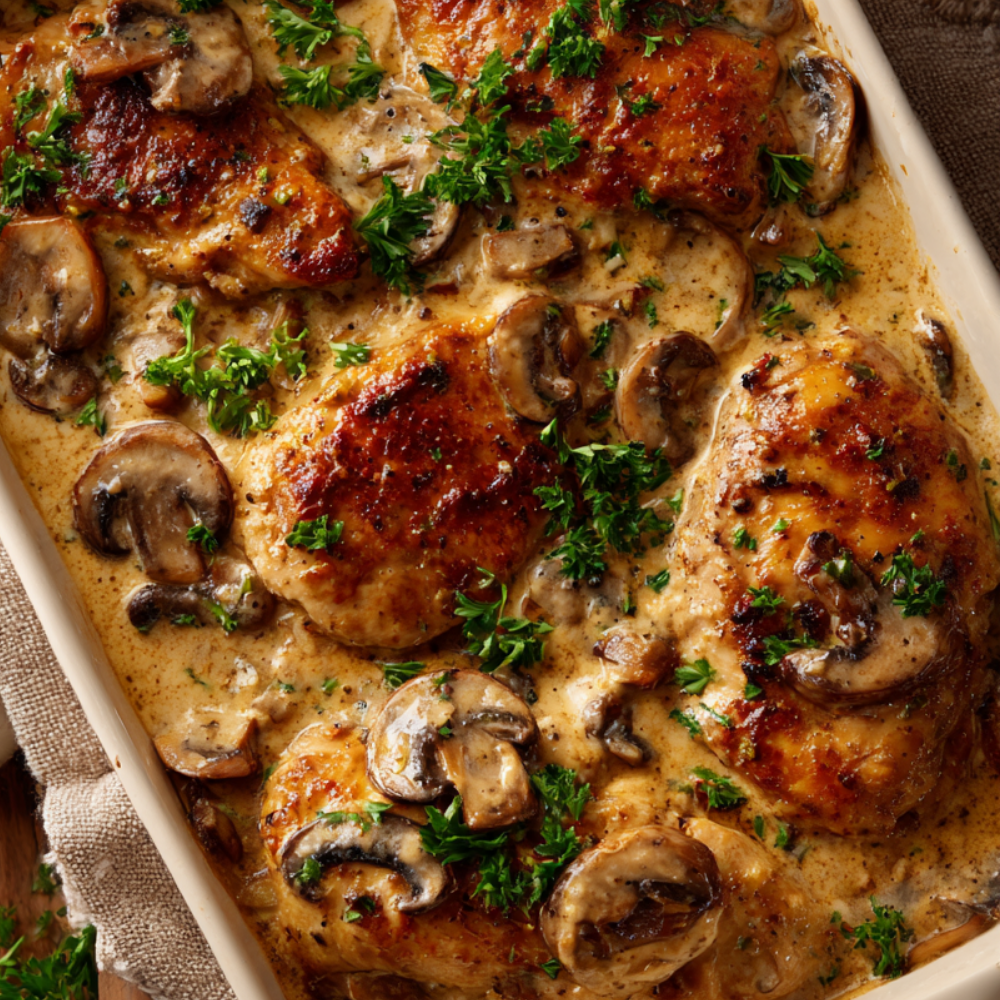
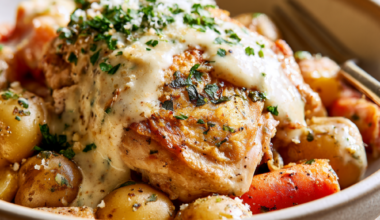
Bake chicken breasts in a rich, creamy mushroom sauce with Parmesan and shallot, then finish in a 9×13 dish until the edges bubble. It tastes like a homestyle Sunday dinner and comes together in half an hour.
Servings: 4
Prep Time: 12 minutes
Cook Time: 22 minutes
Total Time: 34 minutes
Protein per Serving: 44g
Nutrition Note: Protein calculated from 1½ lbs raw boneless skinless chicken breast (≈152g), ½ cup grated Parmesan (≈20g), and ¼ cup Greek yogurt (≈6g), divided by 4 servings — about 44g per serving. About 510 calories per serving. Sodium comes mostly from the Parmesan and broth — use low-sodium broth and adjust at the end.
Ingredients
- 4 boneless, skinless chicken breasts, about 1½ lbs total
- 1 tsp kosher salt
- ½ tsp black pepper
- 1 tsp garlic powder
- 1 tsp Italian seasoning
- 2 tbsp olive oil
- 1 shallot, finely diced
- 8 oz cremini mushrooms, sliced
- 3 cloves garlic, minced
- 1 tbsp all-purpose flour
- 1 cup low-sodium chicken broth
- ½ cup grated Parmesan
- ¼ cup plain Greek yogurt or heavy cream
- 2 tbsp fresh parsley, chopped
- Flaky salt and black pepper to taste
Instructions
- Preheat and prep. Preheat the oven to 400°F. Lightly grease a 9×13 baking dish.
- Pound and season. Pound the chicken to an even ½ to ¾ inch thick. Pat dry and season both sides with the kosher salt, black pepper, garlic powder, and Italian seasoning.
- Sear the chicken. Heat the olive oil in a large skillet over medium-high heat. Sear the chicken 3 minutes per side, until golden. The sear does two things at once: it locks in surface moisture and builds a savory layer of browned fond on the bottom of the skillet. That fond is the base of the sauce. Transfer the chicken to the baking dish and do not wipe the pan.
- Sauté the mushrooms. Reduce the heat to medium. Add the shallot and mushrooms to the same skillet and cook for 5 minutes, until softened and browned at the edges. Add the garlic and cook for 30 seconds. As the mushrooms release their moisture, it deglazes the pan and picks up every bit of the fond the chicken left behind.
- Build the sauce. Sprinkle the flour over the mushrooms and stir for 1 minute. Pour in the broth and simmer for 2 minutes, until slightly thickened. Stir in the Parmesan.
- Finish with yogurt off the heat. Turn off the heat completely before adding the Greek yogurt. This is not optional. Yogurt is acidic, and when acid hits a hot pan, the dairy proteins tighten and separate into a grainy, curdled sauce. Off the heat, stir in the yogurt until smooth and velvety. Taste and adjust salt and pepper.
- Bake. Pour the sauce over the chicken in the baking dish. Bake 15 to 18 minutes, until the sauce is bubbling at the edges and the chicken reaches 165°F.
- Rest and serve. Rest 5 minutes, scatter with parsley, and serve over egg noodles, mashed potatoes, or rice.
Why the sear-to-bake bridge works: Searing is not just for color. The browned bits left in the skillet (called fond) are concentrated flavor — caramelized proteins and sugars from the chicken. Building the sauce in the same pan means every bit of that flavor dissolves into the mushrooms, shallots, and broth. If you sear the chicken in one pan and make the sauce in another, you throw away the single best ingredient in the dish. The other benefit is texture: searing the chicken before it goes into the oven creates a moisture-locking crust that keeps the cutlets juicy through the second cook.
Recipe 5: Lemon Herb Baked Chicken
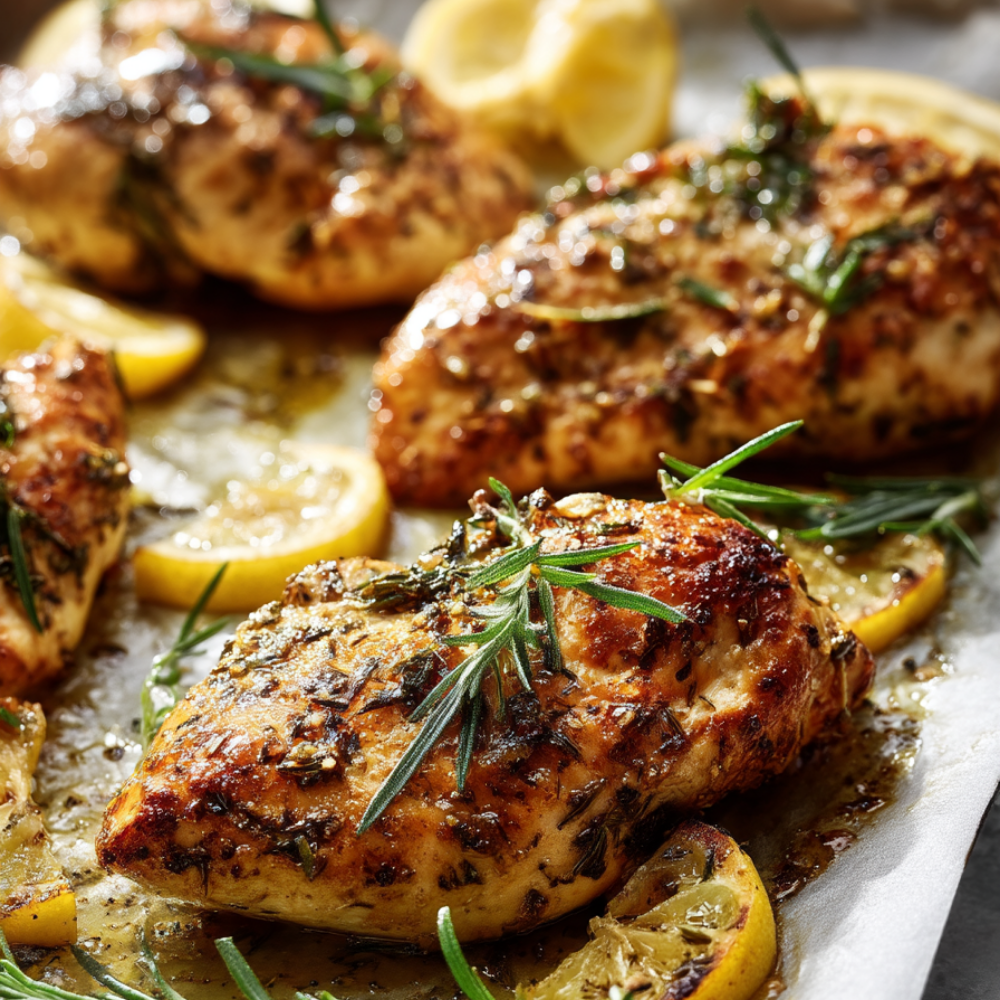
Boneless chicken breasts coated in olive oil, lemon, garlic, oregano, and fresh herbs, roasted on a parchment-lined sheet pan with lemon slices. Bright, clean, and endlessly versatile.
Servings: 4
Prep Time: 10 minutes
Cook Time: 20 minutes
Total Time: 30 minutes
Protein per Serving: 38g
Nutrition Note: Protein calculated from 1½ lbs raw boneless skinless chicken breast (≈152g) divided by 4 servings — about 38g per serving. About 290 calories per serving. Sodium comes mostly from the kosher salt — no additional salt is added after roasting.
Ingredients
- 4 boneless, skinless chicken breasts, about 1½ lbs total
- 3 tbsp olive oil
- 3 tbsp fresh lemon juice
- Zest of 1 lemon
- 4 cloves garlic, minced
- 1 tsp dried oregano
- 1 tsp dried thyme
- 1 tsp kosher salt
- ½ tsp black pepper
- 1 lemon, sliced into thin rounds
- 2 tbsp fresh flat-leaf parsley, chopped
- Flaky salt, for finishing
Instructions
- Preheat and prep. Preheat the oven to 425°F. Line a rimmed sheet pan with parchment paper.
- Pound and dry. Pound the chicken to an even ½ to ¾ inch thick. Pat completely dry so the marinade clings instead of sliding off.
- Make the marinade. In a small bowl, whisk the olive oil, lemon juice, lemon zest, garlic, oregano, thyme, kosher salt, and black pepper. The lemon juice is doing more than adding flavor. Its acid gently breaks down the surface proteins of the chicken, which is what makes the meat more tender and lets the garlic and herbs penetrate deeper.
- Coat the chicken. Place the chicken in a shallow dish or zip-top bag and pour the marinade over the top. Turn to coat. Marinate at room temperature 10 minutes, or refrigerate up to 4 hours. Even ten minutes makes a difference — the acid starts working on contact.
- Arrange on the pan. Place the chicken on the sheet pan in a single layer. Scatter the lemon slices under and around the breasts. As the lemon rounds roast at 425°F, their sugars caramelize and their oils release into the pan, mixing with the chicken juices to create a bright, aromatic pan sauce.
- Bake. Bake 18 to 20 minutes, until the internal temperature reaches 165°F and the edges are golden and lightly caramelized.
- Rest and serve. Rest 5 minutes. Squeeze the roasted lemon slices over the chicken to release the caramelized juices back over the meat, scatter with parsley, and finish with flaky salt.
Why roasting the lemon slices matters: A raw lemon wedge squeezed over the finished plate is bright but one-dimensional. A lemon slice roasted at 425°F for 20 minutes goes through two changes. First, the heat softens the pith and mellows the sharp acidity. Second, the natural sugars in the fruit caramelize, giving you a deeper, slightly sweet citrus flavor. When you squeeze the roasted slice over the chicken, the released juice also carries the oils and drippings from the pan with it. It is the same lemon, doing three jobs at once.
Tips for Baking Chicken Breast
- Pound the breasts to even thickness. A breast with a thick center and thin edges cooks unevenly and dries out at the edges before the center is done.
- Pat the chicken dry before it goes in the oven. Surface moisture steams the chicken instead of roasting it, which means no browning.
- Use an instant-read thermometer. Pull the chicken at 160°F and let carryover heat bring it to 165°F during the rest. That is the difference between juicy chicken and dry chicken.
- Bake at 400 to 425°F, not lower. High heat browns the outside before the inside overcooks. Lower heat takes longer and produces drier meat.
- Rest the chicken 5 minutes before slicing. The juices redistribute and stay in the meat instead of running onto the plate.
- Season the chicken before it goes in the pan, not after. Salt and spices need time and heat to penetrate.
- Use a wire rack when you want a crispy bottom. It works especially well for anything breaded, like the Cordon Bleu.
- Never coat chicken in BBQ sauce before baking. Sugar burns before the chicken cooks through. Brush it on during the final 5 to 6 minutes.
- Sear first, then bake, when you want a rich pan sauce. The browned bits left in the skillet become the base of the sauce.
- Add Greek yogurt or cream to sauces off the heat. Direct heat causes dairy proteins to curdle.
- Roast lemon slices with the chicken instead of squeezing a raw wedge at the end. The heat caramelizes the sugars and releases the oils into the pan.
Troubleshooting
- The chicken turned out dry. It was overcooked. Pull it at 160°F and let the carryover heat finish it. A 5°F difference matters more than most people realize.
- The chicken is unevenly cooked. The breasts were not pounded to even thickness. Place them between plastic wrap and pound from the center outward.
- The chicken stuck to the pan. The pan was not greased, or the chicken was not patted dry. Grease the pan and dry the surface.
- The breading on the Cordon Bleu fell off. The roll-ups were not chilled before baking, or the panko was not pressed on firmly. Chill 15 minutes and press hard.
- The cheese leaked out of the Cordon Bleu. The cheese was touching the seam, or the roll was not sealed tightly. Keep the cheese inside the border and secure the seam with toothpicks.
- The BBQ sauce burned. It was applied at the start of baking. Brush it on during the final 5 to 6 minutes only. Sugar caramelizes beautifully but burns quickly.
- The creamy mushroom sauce curdled. The Greek yogurt was added over direct heat. Turn the heat off completely before it goes in.
- The lemon herb chicken turned out bland. Not enough salt or lemon. Season generously before baking and finish with flaky salt and a squeeze of roasted lemon at the table.
Easy Variations
- Baked Chicken Parmesan. Use the Caprese recipe as a base. Skip the pesto and mozzarella, bread the chicken in panko and Parmesan, bake 20 minutes, then top with marinara and mozzarella and bake 5 minutes more.
- Honey Mustard Baked Chicken. Replace the BBQ sauce with ⅓ cup honey, 3 tbsp Dijon mustard, 1 tbsp apple cider vinegar, and 1 tsp garlic powder. Apply during the final 5 to 6 minutes, the same way as the BBQ glaze.
- Baked Chicken with Sun-Dried Tomato Cream Sauce. Use the creamy mushroom recipe as a base and swap the mushrooms for ⅓ cup of chopped oil-packed sun-dried tomatoes.
- Greek Baked Chicken. Marinate the chicken in olive oil, lemon, garlic, oregano, and Greek yogurt for 4 hours. Bake at 425°F for 20 minutes and serve with tzatziki.
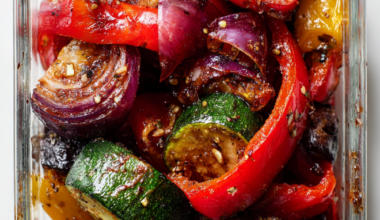
- Sheet Pan Chicken and Vegetables. Use the lemon herb recipe as a base and add 4 cups of chopped vegetables — broccoli, bell peppers, red onion, zucchini — to the pan in the last 12 minutes of baking.
Storage and Food Safety
Refrigerator: Store baked chicken in an airtight container for up to 4 days. Reheat covered at 325°F for 15 minutes, or in the microwave for 90 seconds with a splash of broth. The Caprese is best served fresh — the bruschetta topping softens after a day.
Freezer: Baked chicken freezes for up to 3 months. Freeze in a single layer on a sheet pan, then transfer to a freezer bag. Thaw overnight in the refrigerator. Reheat covered at 325°F for 20 minutes. The Cordon Bleu and BBQ versions freeze best. The creamy mushroom sauce may separate slightly on thawing — whisk it back together over low heat.
Make Ahead: The dry rubs, marinades, and sauces can all be made 3 days ahead. The Cordon Bleu roll-ups can be assembled and refrigerated up to 24 hours before baking.
Food Safety: Chicken must reach an internal temperature of 165°F before serving. This is not negotiable — use an instant-read thermometer inserted into the thickest part of the breast. Cool leftovers within 2 hours and refrigerate promptly. Reheat leftovers to 165°F.
Frequently Asked Questions
How long do you bake chicken breast at 400°F? About 20 to 25 minutes for a 6-ounce breast pounded to even thickness. Pull at 160°F and rest 5 minutes.
How long do you bake chicken breast at 425°F? About 18 to 20 minutes. Higher heat browns the outside faster, so start checking at 16 minutes.
What temperature should chicken breast be when it is done? 165°F in the thickest part, per the USDA. This recipe pulls at 160°F and lets carryover heat finish the job during the rest.
Should I cover chicken when baking? No, not for boneless breasts. Covering traps steam and prevents browning. The creamy mushroom chicken is the exception — the sauce does the work.
How do I keep chicken breast from drying out? Pound it to even thickness, pat it dry, bake at high heat, pull it at 160°F, and rest 5 minutes before slicing.
Why did my BBQ chicken burn? The sauce was applied at the start of baking. BBQ sauce is high in sugar and burns before the chicken cooks through. Brush it on during the final 5 to 6 minutes only.
Why did my mushroom sauce turn grainy? The Greek yogurt was added over direct heat. Turn the heat off completely before it goes in.
Why does searing before baking make a difference? The browned bits left in the skillet become the base of the sauce, so nothing is wasted. It also builds a moisture-locking crust on the chicken.
Can I use bone-in chicken breasts? Yes, but they take longer — about 35 to 40 minutes at 400°F. The recipes here are written for boneless.
Can I use chicken thighs instead? Yes. Boneless skinless thighs work in every recipe here. Bake at 425°F for 20 to 25 minutes, until they reach 175°F.
Can I marinate the chicken overnight? Yes for the lemon herb recipe. Do not marinate the others overnight — the dry rubs and pesto are best applied shortly before baking.
Can I make these recipes dairy-free? The lemon herb and BBQ versions are dairy-free as written. The Caprese, Cordon Bleu, and creamy mushroom versions can be adapted with dairy-free cheese and yogurt.
How long do leftovers last? Up to 4 days in the refrigerator or 3 months in the freezer.
Can I meal prep these? Yes. Portion the chicken into containers with a grain and a vegetable. The BBQ and lemon herb versions are the easiest to meal prep. The creamy mushroom sauce holds well.
Can I double the recipes? Yes. Use two baking dishes or two sheet pans. Do not crowd the pan — crowding steams the chicken instead of roasting it.
Do I need to flip the chicken during baking? No. Boneless breasts at even thickness do not need flipping. The hot air circulates and browns the top.
Can I bake frozen chicken breasts? Not for these recipes. Frozen chicken takes much longer and cooks unevenly. Always thaw first.
More Chicken Breast Recipes You’ll Love
- Italian Chicken Cutlets — 43g protein, shatter-crisp panko, pan-fried or air fried.
- Chicken and Broccoli Recipes — six easy dinners, all under an hour.
- Baked Chicken Bacon Ranch Pasta — 42g protein, 30-minute prep.
- Freezer Chicken Broccoli Rice Casserole — 40g protein, bakes from frozen.
Conclusion
Baked chicken breast is the most useful thing you can make on a weeknight. It is lean, it is cheap, it is hands-off, and it does not argue with whatever you put on top of it. The trick is knowing what to do with it.
These five recipes cover the whole range. Caprese with pesto, melted mozzarella, and fresh tomato bruschetta. Cordon Bleu roll-ups with ham, Swiss, and a Dijon yogurt sauce. BBQ sheet pan chicken with a two-stage glaze that caramelizes without burning. Creamy mushroom chicken built on the fond from a hard sear, finished with an off-heat yogurt emulsion that stays velvety. And lemon herb chicken with roasted lemon slices that release caramelized citrus oils back over the meat.
Every one lands between thirty-eight and sixty-one grams of protein per serving. Every one is ready in under forty minutes. And every one uses boneless, skinless chicken breasts, which means one grocery trip covers the whole lineup.
Pick one for tonight. Pick a different one for next week. This is the rotation that makes baked chicken breast the most reliable dinner in the kitchen.