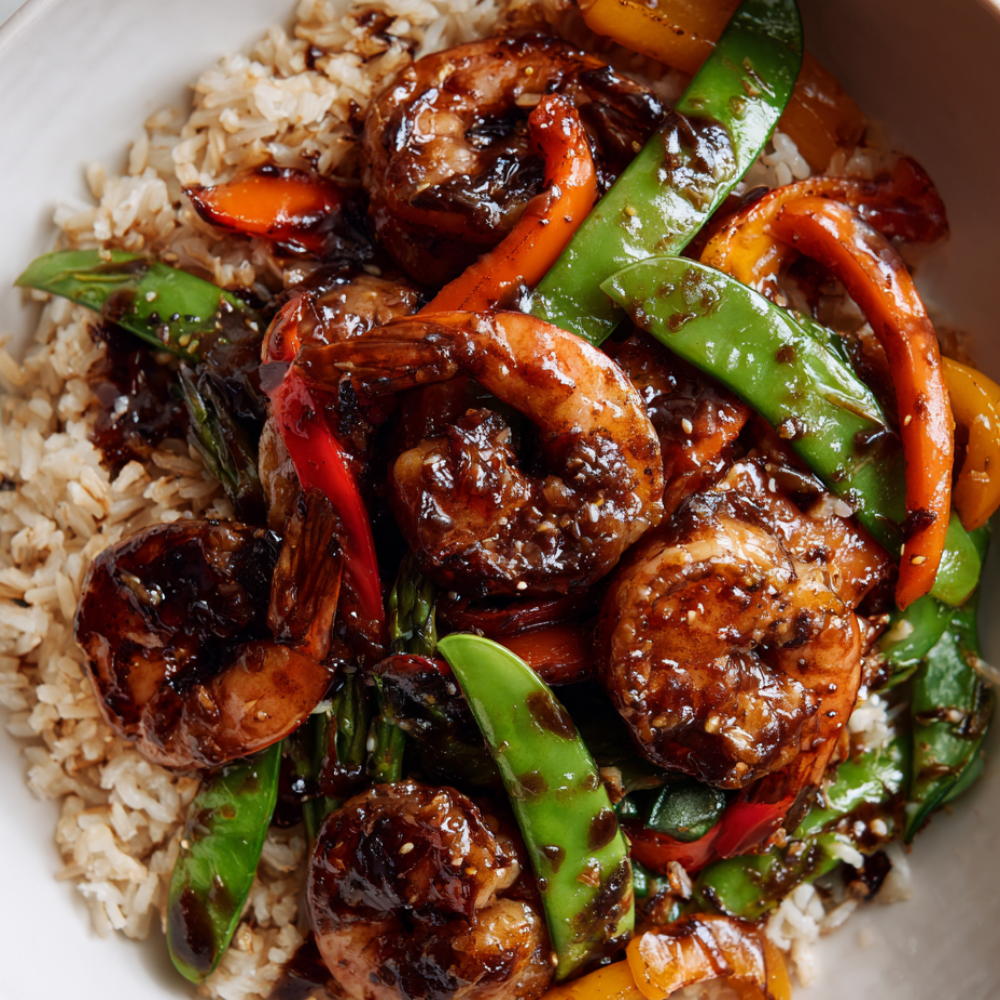
Bold, protein-rich, and anything but heavy, this teriyaki shrimp bowl earns a permanent spot in the weeknight rotation the first time you make it.
Plump shrimp seared hard and tossed in a sticky homemade teriyaki glaze.
Snap peas, carrots, and red bell pepper stir-fried in the same pan, still crisp and a little charred at the edges.
Pile everything over brown rice, topped with sesame seeds and scallions.
The stir-fry itself takes twenty minutes.
That is the whole promise — a twenty-minute stir-fry that tastes like a takeout order and delivers thirty-eight grams of protein per bowl.
One skillet, one pot of rice, and real food on the table before anyone can open a bag of chips.
One note on the rice, because I don’t want to promise something the timing doesn’t deliver.
Brown rice takes about forty minutes to cook plus ten to rest. That is longer than the stir-fry.
If you are making this on a weeknight, cook the rice ahead—on Sunday, in a rice cooker, or from a batch you already have in the refrigerator.
The stir-fry is the twenty-minute part. The rice is something you handle in the background.
With that said, the whole thing comes together fast.
The shrimp sear in three minutes.
The vegetables stir-fry in three. The sauce thickens in one.
And the bowl eats like a plate you would pay eighteen dollars for at a restaurant that specializes in bowls.
This is the dinner that makes a Tuesday feel like a Friday.
Why This Recipe Works
The protein math is honest. Shrimp, brown rice, and vegetables deliver about thirty-eight grams per bowl across four generous portions.
Drying the shrimp completely before they hit the pan is what makes them sear instead of steam. Shrimp are mostly water. Pat them bone dry with paper towels, and they will develop a golden crust in the pan instead of releasing a puddle of liquid.
Searing the shrimp in a single layer and pulling them early is what keeps them plump. Shrimp cook in about three minutes. If they stay in the pan until they are fully done, they overcook by the time the sauce goes on. Pull them at just-pink and let the sauce finish them.
Build the sauce in the same pan the shrimp cooked in. All the browned bits and shrimp flavor left on the bottom of the skillet dissolve into the sauce when you add the liquid. That is where the depth comes from.
A cornstarch slurry is what turns the sauce glossy instead of thin. Without it, the sauce stays watery and pools at the bottom of the bowl. With it, it thickens into a glaze that clings to the shrimp and the vegetables.
Add the vegetables after the shrimp comes out so they stay crisp. Three minutes of high heat gives you snap peas that stay bright and snappy, and peppers that still have bite. Cook them longer, and they turn soft.
Add sesame oil at the very end, off the heat. Toasted sesame oil loses its fragrance when it cooks. Stirred in at the end, it perfumes the whole pan.
Cooking the rice in broth instead of water seasons it from the inside out. The base should taste good on its own, not just carry the sauce.
The sauce should be thick enough to coat a spoon and every grain of rice. If it looks thin when you finish, simmer it thirty seconds more. It thickens quickly.
The stir-fry is genuinely fast because everything cooks hot and quick. Shrimp sear in three minutes, vegetables in three, sauce in one. Twenty minutes from start to finish for the stir-fry component.
Teriyaki Shrimp Bowl
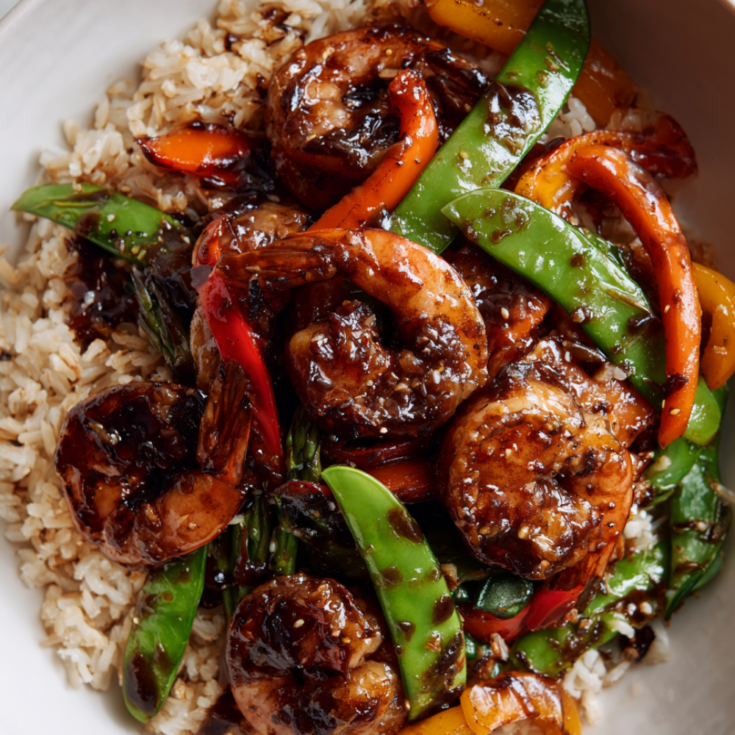
Plump shrimp seared in a hot skillet, tossed in a sticky homemade teriyaki glaze, served over brown rice with snap peas, carrots, and red bell pepper.
Ingredients
For the Shrimp
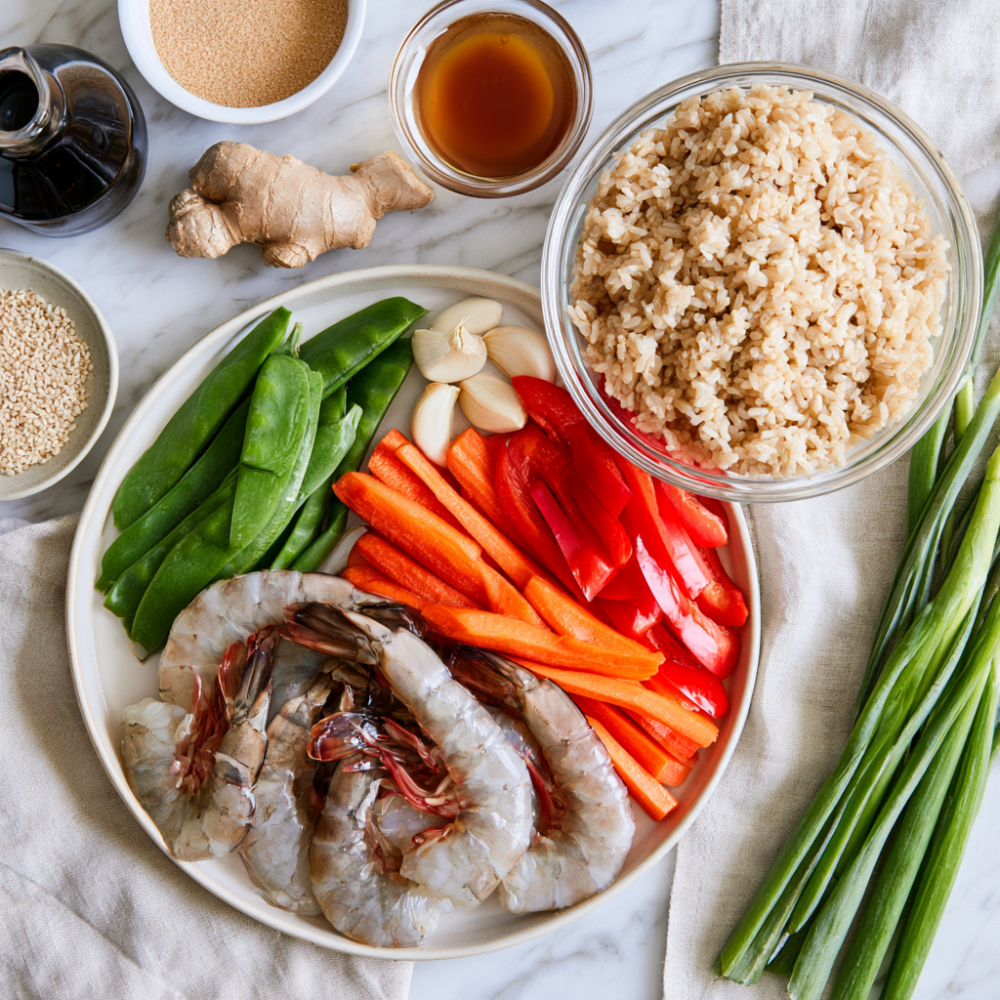
- 1½ lbs large shrimp, peeled and deveined, tails on or off
- 1 tbsp olive oil or avocado oil
- ½ tsp kosher salt
- ¼ tsp black pepper
- 1 tsp garlic powder
- ½ tsp smoked paprika
For the Teriyaki Sauce
- ⅓ cup low-sodium soy sauce or tamari
- 3 tbsp mirin
- 2 tbsp brown sugar
- 1 tbsp rice vinegar
- 1 tsp grated fresh ginger
- 2 cloves garlic, minced
- 1 tsp cornstarch
- 2 tbsp cold water
- 1 tsp toasted sesame oil
For the Vegetables
- 2 cups snap peas, trimmed
- 2 medium carrots, peeled and cut into thin matchsticks
- 1 red bell pepper, sliced thin
- 1 tbsp olive oil or avocado oil
For the Bowls
- 4 cups cooked brown rice
- 2 scallions, thinly sliced
- 2 tsp toasted sesame seeds
- Lime wedges, optional
Instructions
- Cook the rice ahead. If you use brown rice, cook it earlier in the day or on Sunday, so it is ready when you start the stir-fry. Combine 2 cups of brown rice with 4 cups of low-sodium chicken broth or water in a medium saucepan. Bring to a boil, reduce to a low simmer, cover, and cook for 40 minutes. Let it sit covered for 10 minutes, then fluff with a fork.
- Make the teriyaki sauce. In a small bowl, whisk the soy sauce, mirin, brown sugar, rice vinegar, ginger, and garlic until the sugar is mostly dissolved. In a separate small bowl, whisk the cornstarch into the cold water until smooth. Set both aside.
- Dry and season the shrimp. Pat the shrimp completely dry with paper towels. Toss with the salt, pepper, garlic powder, and smoked paprika. Let them sit for 5 minutes while you prep the vegetables.
- Sear the shrimp. Heat the olive oil in a large skillet over medium-high heat until it shimmers. Add the shrimp in a single layer, leaving space between them. Cook 1½ minutes per side, until just pink and lightly golden at the edges. They will not be fully cooked through. Transfer to a plate.
- Stir-fry the vegetables. Add another tablespoon of oil to the same skillet. Add the snap peas, carrots, and bell pepper. Stir-fry for 3 minutes, until crisp-tender and lightly charred at the edges.
- Build the sauce. Pour the teriyaki mixture into the skillet with the vegetables. Bring to a low simmer and cook 1 minute. Quickly stir the cornstarch slurry to reincorporate, then pour it into the skillet. Whisk constantly for 1 minute, until the sauce thickens and turns glossy.
- Return the shrimp. Add the shrimp back to the skillet along with any juices that collected on the plate. Toss to coat everything in the sauce. Cook 30 seconds to 1 minute more, until the shrimp are fully pink and the glaze clings.
- Finish with sesame oil. Turn off the heat and stir in the toasted sesame oil. Taste and adjust — add a splash more soy sauce for salt, or a few drops of rice vinegar for brightness.
- Build the bowls. Add 1 cup of brown rice to each bowl. Top with the teriyaki shrimp and vegetables, spooning extra sauce over each bowl.
- Garnish and serve. Scatter with sliced scallions and sesame seeds. Add a lime wedge on the side if you want a little brightness. Serve immediately.
Notes
Rice note: Brown rice takes about 40 minutes to cook plus 10 minutes to rest. Cook it ahead on a weeknight, or cook it in a rice cooker while you prep the stir-fry.
For a faster total time, jasmine white rice cooks in 15 minutes plus 5 minutes of rest, so the whole bowl comes together in about 25 minutes with rice cooked in parallel.
Protein per Serving: 38 g.
Nutrition Note: Protein calculated from 1½ lbs raw large shrimp yielding about 18 oz cooked (≈120g protein), 4 cups cooked brown rice (≈22g), 3 cups mixed vegetables (≈6g), and teriyaki sauce (≈2g), divided across 4 servings — about 38g per serving. About 520 calories. Use low-sodium soy sauce or tamari to control the sodium.
Tips for the Best Teriyaki Shrimp Bowl
- Cook the rice ahead. Brown rice takes 40 minutes. The stir-fry takes 20 minutes. Cook the rice on Sunday or in the morning, refrigerate, and reheat in the microwave with a splash of water while the stir-fry cooks.
- Pat the shrimp completely dry before seasoning. Steam wet shrimp instead of searing. A dry surface makes all the difference between plump, golden shrimp and pale, rubbery ones.
- Sear the shrimp in a single layer. Crowding the pan drops the temperature and the shrimp release water. Cook in two batches if your skillet is small.
- Pull the shrimp at just-pink. They finish cooking in the sauce. Waiting until they are fully done in the pan means they will be overcooked by the time they hit the bowl.
- Use a large high-sided skillet, not a small nonstick. A wide surface area lets the vegetables char instead of steam, and high sides keep the sauce from splattering.
- Make the slurry fresh and stir it before adding it. Cornstarch settles fast. Whisk it into the cold water right before it goes in the pan.
- Reduce the sauce before the shrimp goes back in. Don’t let the shrimp sit in the sauce while it thickens. Build the sauce first, then add the shrimp for the final thirty seconds.
- Add the sesame oil off the heat. Toasted sesame oil is a finishing oil. Cooked, it loses its fragrance and turns the whole dish bitter.
- Cut the carrots into thin matchsticks. Thick coins stay crunchy while thin matchsticks soften in three minutes. Uniform pieces cook evenly.
- Serve immediately. The stir-fry is at its best in the first ten minutes after cooking. The shrimp and vegetables hold their texture, and the sauce is at its glossiest.
Troubleshooting
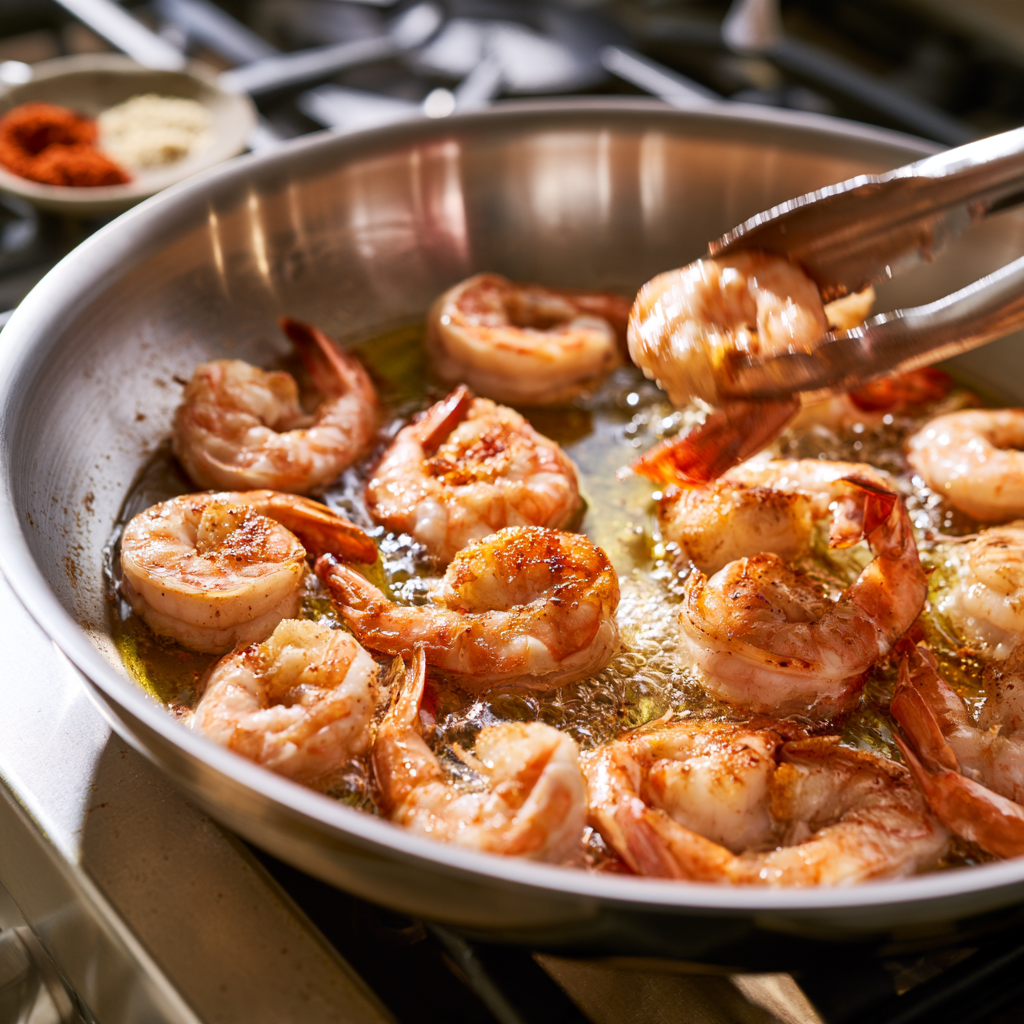
- The shrimp turned out rubbery. They overcooked. Pull them at 1½ minutes per side and let the sauce finish them for the last 30 seconds.
- The shrimp released water and steamed. They weren’t dried thoroughly, or the pan wasn’t hot enough. Pat them bone dry and wait for the oil to shimmer before they go in.
- The sauce is too thin. You skipped the cornstarch, or you didn’t simmer the sauce long enough. Simmer 1 minute more, or add another ½ tsp cornstarch whisked into 1 tbsp cold water.
- The sauce is too thick and gluey. Too much cornstarch, or it cooked too long. Whisk in 2 tbsp of warm chicken broth or water until it loosens.
- The sauce is too salty. Too much soy sauce. Add 1 tbsp brown sugar, 1 tsp rice vinegar, and 2 tbsp water to balance.
- The vegetables are mushy. They were cooked too long, or the pan was too crowded. Three minutes on high heat is the window. Use a larger skillet next time.
- The vegetables are still crunchy. They were cut too thick, or the heat was too low. Cut the carrots into thin matchsticks and keep the pan at medium-high.
- The bowl tastes bland. It needs more salt, acid, or sauce. Add a squeeze of lime, a pinch of flaky salt, and a spoonful of extra sauce.
- The rice was cold when the stir-fry finished. Microwave it with a splash of water for 90 seconds before you build the bowls. Warm rice soaks up the sauce better than cold rice.
Easy Variations
- Shrimp Teriyaki Bowls with Broccoli. Swap the snap peas and peppers for 5 cups of broccoli florets. Steam 3 minutes, then toss in the sauce.
- Teriyaki Shrimp Bowls with Brussels Sprouts. Roast 1 lb of halved Brussels sprouts at 425°F for 20 minutes. Add them to the bowl instead of the stir-fried vegetables.
- Teriyaki Shrimp Sushi Bowl. Swap the brown rice for sushi rice. Season with rice vinegar, sugar, and salt, then top with the shrimp, cucumber, and avocado.
- Spicy Teriyaki Shrimp Bowl. Add 1 tbsp of sriracha to the teriyaki sauce before it simmers. Drizzle with sriracha mayo at the table.
- Teriyaki Shrimp and Rice Bowls with Noodles. Swap the rice for 12 oz of cooked lo mein noodles. Toss them directly with the shrimp and vegetables in the sauce.
- Healthy Teriyaki Chicken Bowl. Swap the shrimp for 1¼ lbs of chicken breast, cut into 1-inch pieces. Cook 3 minutes per side, then add the sauce.
- Teriyaki Tofu Bowl. Swap the shrimp for 2 blocks of pressed, cubed extra-firm tofu. Coat in cornstarch and air fry at 400°F for 12 minutes before tossing in the sauce.
Storage and Food Safety
Refrigerator: Store the rice, shrimp, and vegetables, and cold garnishes in separate airtight containers. The rice and shrimp mixture holds for 3 days. Scallions and sesame seeds hold 4 days. Reheat the rice and shrimp together in a covered skillet over medium-low heat for 4 minutes with a splash of broth, or in the microwave for 90 seconds at 50% power. Do not microwave on high — the shrimp toughens.
Freezer: Not recommended. Shrimp turns rubbery after freezing and thawing, and the sauce separates.
Make Ahead: Cook the brown rice up to 4 days ahead and refrigerate. You can whisk the teriyaki sauce and store it in a jar for up to 1 week. Sear the shrimp fresh the day you serve — it takes 3 minutes and loses texture overnight. Cook the rice ahead, and the stir-fry becomes a 20-minute weeknight dinner.
Food Safety: Cook shrimp until opaque and it reaches an internal temperature of 145°F. Cool leftovers within 2 hours and refrigerate promptly. Do not refreeze shrimp that has been thawed. Reheat leftovers to 145°F.
Frequently Asked Questions
How much protein is in a teriyaki shrimp bowl? About 38g per bowl from the shrimp, brown rice, and vegetables, divided across four generous portions.
How long does this take to make? The stir-fry takes about 20 minutes. Brown rice takes 40 minutes to cook plus 10 minutes to rest, so the total time is about 60 minutes from scratch or 20 minutes if you cook the rice ahead.
Can I use white rice instead of brown? Yes. Jasmine or long-grain white rice cooks in 15 minutes plus 5 minutes of rest, so the whole bowl comes together in about 25 minutes if you cook the rice at the same time.
Can I use frozen shrimp? Yes. Thaw completely in the refrigerator, then pat bone dry before seasoning. Wet shrimp will not sear.
What size shrimp should I use? Large or jumbo — 21/25 or 16/20 count per pound. Smaller shrimp cook too fast and get lost in the sauce.
How do I keep the shrimp from getting rubbery? Sear them 1½ minutes per side and pull them while they still look slightly translucent in the center. They finish cooking in the sauce.
Can I make this with chicken instead? Yes. See the Healthy Teriyaki Chicken Bowl variation. Use 1¼ lbs of chicken breast, cut into 1-inch pieces, and sear 3 minutes per side.
Can I use cauliflower rice instead of brown rice? Yes. Sauté 4 cups of riced cauliflower in 1 tbsp of sesame oil for 5 minutes. The bowl becomes much lower in carbs and only slightly lower in protein.
Can I make this gluten-free? Yes. Use tamari instead of soy sauce, and make sure your mirin is gluten-free.
Can I make this ahead for meal prep? Yes. Store the rice and shrimp mixture separately, then combine the day you eat. The bowls hold 3 days. Add sesame seeds and scallions fresh.
What do I serve with the teriyaki shrimp bowl? It is a complete meal on its own. A side of miso soup or a simple cucumber salad works if you want something extra.
Can I use a different vegetable? Yes. Broccoli, green beans, broccolini, or snow peas all work. Stir-fry them for 3 minutes on high heat.
Can I double the recipe? Yes. Sear the shrimp in two batches so the pan stays hot, and use a larger skillet for the vegetables.
Is this bowl good for fat loss? Yes. It is 38g of protein, real vegetables, and a controlled portion of rice per bowl. About 520 calories for a full dinner.
More Easy Healthy Dinner Recipes You’ll Love
- 6 Healthy Asian Protein Bowls — teriyaki, shrimp, salmon, and tofu, 34–42g protein each
- 10 Healthy Chicken Rice Bowls — 36–45g protein, meal prep friendly
- Sheet Pan Steak Fajitas — 38g protein, 25-minute dinner
- Creamy Smothered Chicken and Rice — 36g protein, one pan
Conclusion
A teriyaki shrimp bowl solves a weeknight with a twenty-minute stir-fry.
Plump shrimp seared hard in a hot skillet and tossed in a sticky homemade teriyaki glaze. Snap peas, carrots, and red bell pepper stir-fried in the same pan, still crisp and a little charred at the edges.
Pile everything over brown rice, topped with sesame seeds and scallions.
These three things make it work.
Dry the shrimp completely so they sear instead of steam. Pull them at just-pink and let the sauce finish them. And build the sauce in the same pan, thickened with a cornstarch slurry, so it turns glossy and clings to every piece of shrimp and every grain of rice.
Thirty-eight grams of protein per bowl. A twenty-minute stir-fry. One skillet, one pot of rice, and a bowl that tastes like your favorite takeout order.
Cook the rice ahead. Make the stir-fry fresh. This rotation makes a Tuesday feel like a Friday.