The holidays are coming, and that means one thing in my kitchen: a roast chicken on the table. Whether it’s Thanksgiving, Christmas, or a quiet winter Sunday when you want something special without cooking a whole turkey, a beautifully roasted chicken brings everyone to the table.
I’ve been making some version of this roast chicken for years, and it’s inspired by Ina Garten’s Perfect Roast Chicken—the recipe that taught a generation of home cooks that the secret to a great roast is simple: good butter, fresh herbs, plenty of salt, and a hot oven. This version takes those lessons and adapts them for the holiday table.
Instead of a whole bird, I use bone-in, skin-on chicken breasts and thighs. They roast faster, carve easier, and deliver about 42 grams of protein per serving. The garlic-herb butter goes under the skin, where it melts into the meat and keeps every bite juicy. The fennel and carrots roast in the same pan and caramelize in the chicken drippings. Finish with a bright, zesty gremolata scattered over the top to cut through the richness and make the whole platter look festive.
It’s the kind of dinner that feels worthy of a holiday table but is easy enough to make on any winter night.
This roast chicken earns a permanent spot on your holiday menu.
Why This Recipe Works
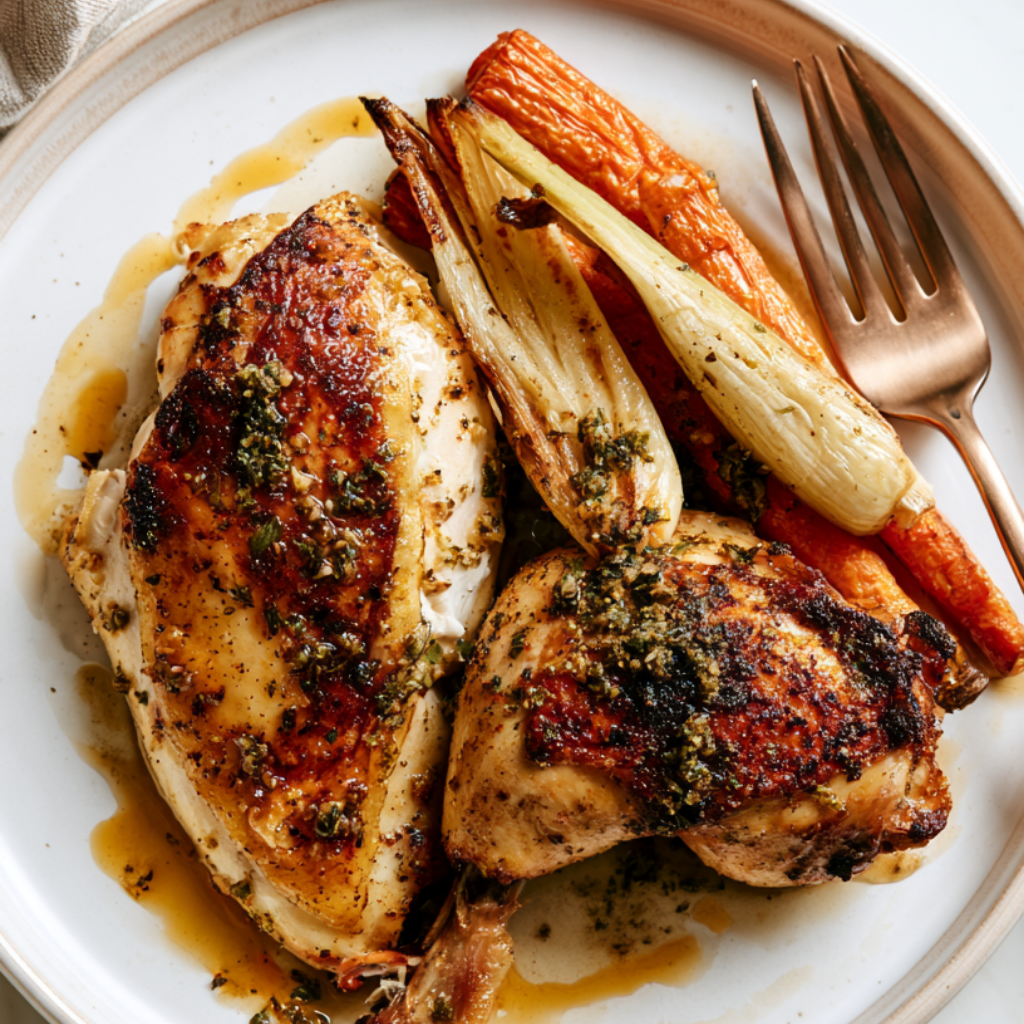
This isn’t a complicated dish, but a few small decisions make it work better than most roast chicken recipes. Here’s what actually matters:
Dry-Brine the Chicken Ahead. If you have time, salt the chicken pieces and arrange them on a wire rack set over a sheet pan. Refrigerate uncovered for 30 minutes up to 24 hours. The salt draws out moisture, dissolves, and reabsorbs into the meat, seasoning it through and helping it stay juicy. Meanwhile, the refrigerator’s dry air dries out the skin so it crisps up shatteringly in the oven. This is the single biggest upgrade you can make for a holiday roast chicken.
Bone-In, Skin-On Chicken Breasts and Thighs Instead of a Whole Bird. A whole chicken takes 1½ hours to roast and requires carving at the table. Bone-in, skin-on chicken pieces cook in about 45 minutes, are easier to serve, and deliver about 42 grams of protein per serving. The skin crisps beautifully, and the bone keeps the meat juicy.
Garlic-Herb Butter Under the Skin. This is the technique that changes everything. Softened butter mixed with garlic, thyme, rosemary, and lemon zest gets rubbed directly under the skin, where it melts into the meat as the chicken roasts. The skin crisps up golden, and the meat stays moist and deeply seasoned. It’s the same trick Ina Garten has been teaching for decades—butter against the meat, not just on top.
Roast the Vegetables on the Dry Pan, Not in Broth. This fix keeps the vegetables and the bottom of the chicken from turning soggy. Pouring chicken broth into the pan before roasting creates steam, which prevents the fennel and carrots from caramelizing properly. Instead, let the chicken fat and vegetable juices render naturally into the pan. If you want a pan sauce, deglaze the hot pan with a splash of broth after you remove the chicken.
A Parmesan Rind for Umami. Tuck a Parmesan rind into the vegetables instead of pouring broth over them. As it roasts, it slowly melts into the pan drippings, adding a deep, savory umami note that takes the roasted vegetables from good to great.
High Heat First, Then Lower. Start the chicken at 425°F for 20 minutes. This gives the skin a head start on crisping while the high heat renders the fat underneath. Then reduce the temperature to 375°F for the rest of the roast so the meat cooks through evenly without burning the skin. It’s the same technique used for duck and prime rib.
Pull the Breasts Before the Thighs. This is the fix that keeps everyone happy. Cook bone-in chicken breasts at 160°F to 165°F. Bone-in thighs taste best at 175°F to 180°F, where the collagen breaks down, and the meat turns silky. The breasts come out of the oven 5 to 8 minutes before the thighs. This single adjustment is the difference between dry white meat and perfectly cooked chicken on every plate.
A Fresh Gremolata at the End. Gremolata is a traditional Italian condiment made from lemon zest, garlic, and parsley. It’s bright, zippy, and slightly sharp—exactly what you want over rich roast chicken and sweet roasted vegetables. It takes 2 minutes to make, and it’s what makes this feel like a holiday dish instead of just a chicken dinner.
Serve With Something to Soak Up the Juices. Crusty bread, mashed potatoes, or polenta are all perfect underneath a roast chicken. The pan juices are the best part—you want something to soak them up.
This is the kind of meal that earns its spot on the holiday table. It’s golden, savory, and undeniably delicious.
Roast Chicken Recipe with Garlic-Herb Butter
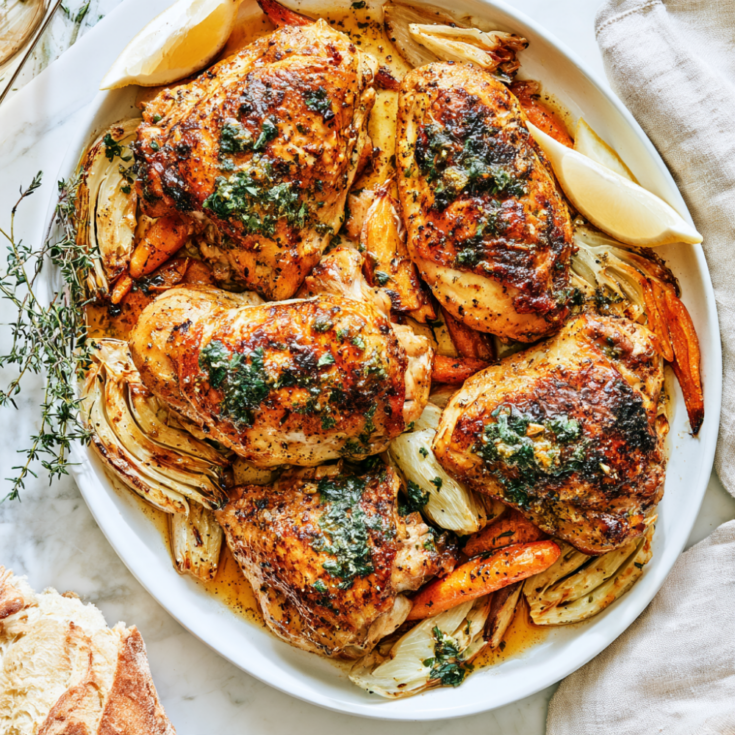
A holiday-worthy roast chicken with garlic-herb butter, fennel, carrots, and fresh gremolata. Ready in about 1 hour, with 42 g of protein per serving.
Ingredients
For the Chicken
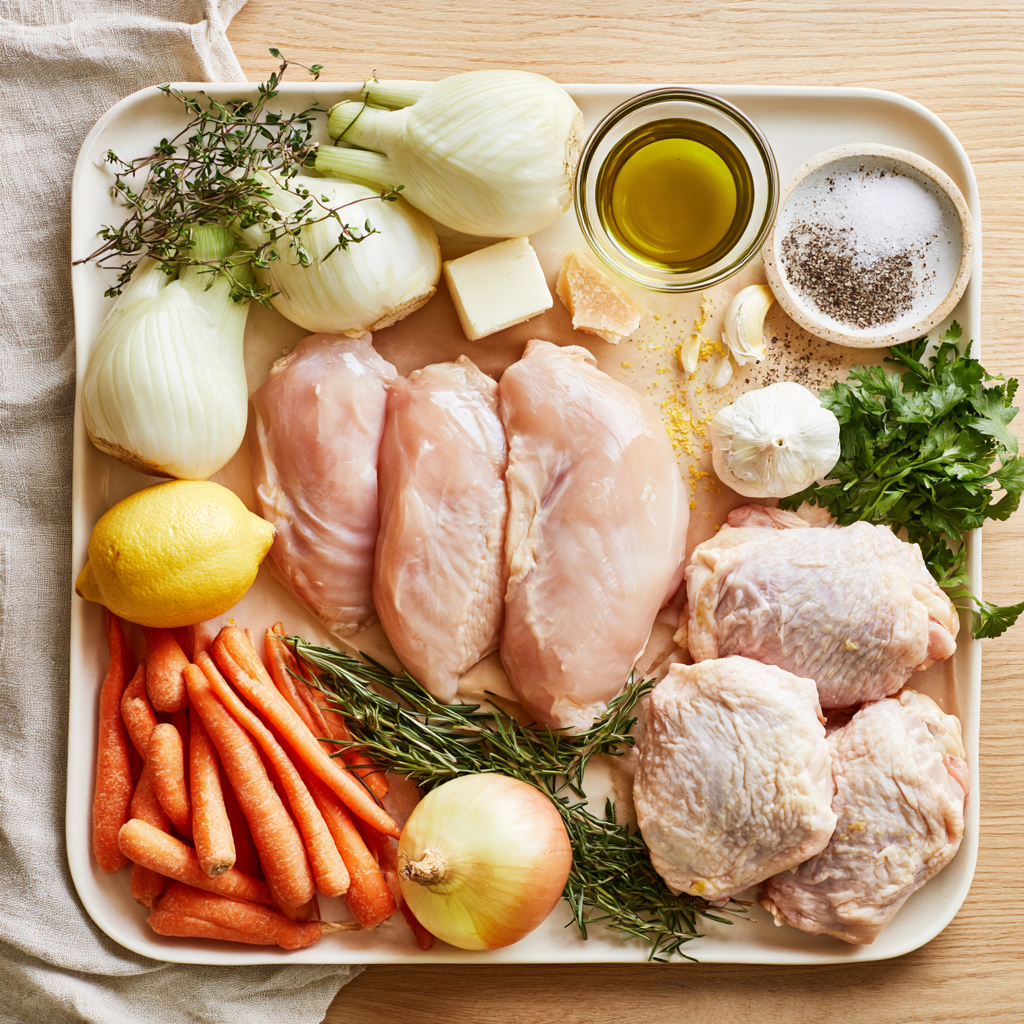
- 3 lbs bone-in, skin-on chicken breasts (about 4 pieces)
- 2 lbs bone-in, skin-on chicken thighs (about 4 pieces)
- 1 tbsp kosher salt
- ½ tsp freshly ground black pepper
- 6 tbsp unsalted butter, softened to room temperature
- 6 cloves garlic, minced
- 2 tbsp fresh thyme leaves, chopped
- 1 tbsp fresh rosemary leaves, chopped
- 1 tsp fresh lemon zest
- 1 tsp kosher salt
For the Roasted Vegetables
- 2 large fennel bulbs, tops removed, cut into 1-inch wedges
- 4 large carrots, peeled and cut into 2-inch chunks
- 1 large yellow onion, thickly sliced
- 2 tbsp extra virgin olive oil
- 1 tsp kosher salt
- ½ tsp freshly ground black pepper
- 15 to 20 sprigs fresh thyme
- 1 Parmesan rind (tucked under the vegetables for umami)
For the Fresh Gremolata
- 1 cup fresh flat-leaf parsley, finely chopped
- 2 cloves garlic, finely minced
- 2 tsp fresh lemon zest
- Pinch of flaky sea salt
For Serving
- Crusty bread, mashed potatoes, or polenta
- Lemon wedges
- Flaky sea salt
- ¼ cup chicken broth, for deglazing the pan (optional)
Instructions
- Dry-brine the chicken. Pat the chicken pieces dry with paper towels and season all sides with 1 tablespoon of kosher salt and ½ teaspoon of black pepper. For the crispiest skin, arrange the chicken on a wire rack set over a sheet pan and refrigerate uncovered for 30 minutes up to 24 hours. This dries the skin and seasons the meat through and through.
- Preheat and make the herb butter. Arrange a rack in the middle of the oven and preheat to 425°F. In a small bowl, mash the softened butter with the minced garlic, thyme, rosemary, lemon zest, and 1 teaspoon kosher salt until smooth.
- Rub the butter under the skin. Using your fingers, gently loosen the skin from the meat on each chicken piece, being careful not to tear it. Spread a generous spoonful of the garlic-herb butter directly onto the meat under the skin and press the skin back down. Rub any remaining butter over the outside of the skin.
- Build the vegetable bed. Scatter the fennel wedges, carrots, and onion in a single layer on a large rimmed sheet pan or roasting pan. Toss with the olive oil, kosher salt, pepper, and fresh thyme sprigs. Tuck the Parmesan rind into the center. Do not pour broth into the pan—steam prevents the vegetables from caramelizing.
- Arrange the chicken on top. Place the chicken pieces skin-side up directly on the vegetables. Leave space between the pieces so heat circulates freely and the skin crisps.
- Roast at high heat for 20 minutes. This high heat gives the skin a head start on crisping and renders the fat underneath.
- Reduce the heat and finish cooking. Reduce the oven temperature to 375°F and continue roasting for another 20 to 25 minutes. Start checking the chicken breasts at the 40-minute mark—pull them from the oven when they reach 160°F to 165°F. Leave the thighs in for another 5 to 8 minutes, until they reach 175°F to 180°F. Dark meat is best at a slightly higher temperature where the collagen breaks down into silky tenderness.
- Make the gremolata. While the chicken roasts, combine the chopped parsley, minced garlic, lemon zest, and a pinch of flaky salt in a small bowl. Set aside.
- Rest the chicken. Transfer the roasted chicken to a serving platter, tent loosely with foil, and let it rest for 10 minutes. Spoon the roasted fennel and carrots around the chicken on the platter.
- Deglaze the pan for a quick sauce (optional). Place the hot roasting pan on the stovetop over medium heat. Pour in ¼ cup of chicken broth and scrape up the browned bits with a wooden spoon. Simmer for 1 minute and pour the pan sauce over the chicken and vegetables.
- Finish and serve. Scatter the gremolata over the chicken and vegetables. Serve immediately with crusty bread, mashed potatoes, or polenta, and lemon wedges on the side.
Notes
Protein per Serving: About 42gNutrition Note:
Make-Ahead and Storage Instructions
Make Ahead: Make the garlic-herb butter up to 3 days ahead and store it in the refrigerator. Make the gremolata up to 1 day ahead and store it covered in the refrigerator. Salt (dry-brine) the chicken up to 24 hours ahead.
Refrigerator: Store leftover chicken and vegetables covered in an airtight container for up to 4 days. Reheat gently in a skillet over medium-low heat or in the oven at 350°F for 15 minutes. The skin will soften, but the flavor holds.
Freezer: The cooked chicken and vegetables freeze well for up to 3 months. Cool completely, then transfer to freezer-safe containers. Thaw overnight in the refrigerator and reheat covered in the oven at 350°F.
Tips for the Best Roast Chicken
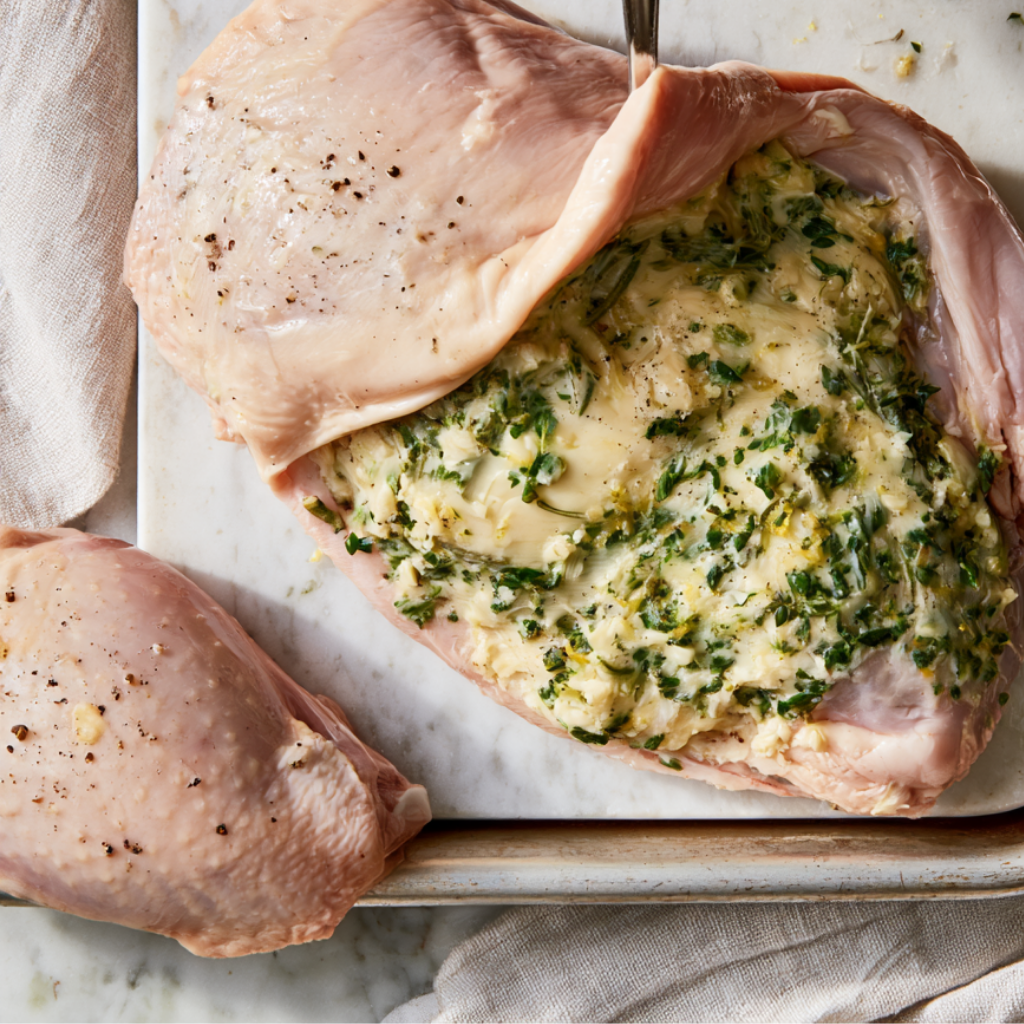
Dry-brine the chicken ahead. Salt 30 minutes to 24 hours before roasting, then refrigerate uncovered to dry the skin and season the meat all the way through. This is the single biggest upgrade for shatteringly crisp skin.
Rub the butter under the skin, not just on top. The meat absorbs the garlic-herb flavor from the inside while the skin crisps up golden on the outside.
Don’t pour broth into the pan before roasting. Broth creates steam that prevents the vegetables and the bottom of the chicken from crisping. Tuck a Parmesan rind into the vegetables for umami instead. If you want a pan sauce, deglaze the hot pan with ¼ cup broth after the chicken comes out.
Pull the breasts before the thighs. Bone-in chicken breasts are done at 160°F to 165°F. Bone-in thighs taste best at 175°F to 180°F, where the collagen breaks down. Pull the breasts out 5 to 8 minutes before the thighs.
Start at 425°F, then drop to 375°F. High heat gives the skin a head start on crisping. Lower heat finishes cooking the meat without burning the skin.
Use bone-in, skin-on chicken pieces. The bone keeps the meat juicy, and the skin crisps up beautifully. Boneless, skinless chicken breasts work but won’t have the same flavor.
Don’t crowd the pan. Leave space between the chicken pieces and the vegetables so they roast instead of steam.
Rest for 10 minutes before slicing. This lets the juices redistribute back into the meat instead of running out onto the cutting board.
Make the gremolata fresh. It’s best within a few hours of chopping. The lemon zest and garlic lose their punch as they sit.
Serve with something to soak up the juices. Crusty bread, mashed potatoes, or polenta are all perfect underneath a roast chicken.
Easy Variations
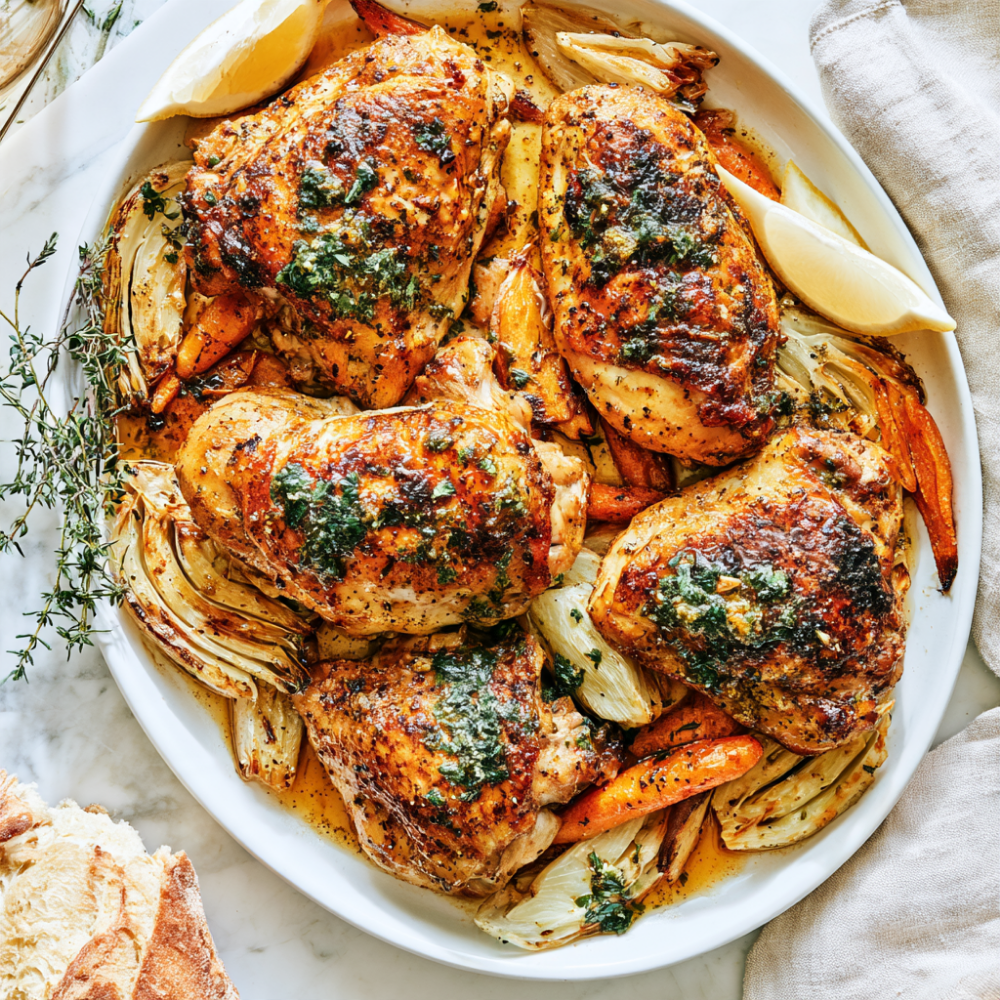
Whole Roast Chicken for the Holidays. Use a 5- to 6-pound whole roasting chicken instead of the pieces. Rub the garlic-herb butter under the skin of the breast and thighs. Stuff the cavity with lemon halves, garlic, and thyme. Roast at 425°F for 20 minutes, then reduce to 375°F and roast for 1 hour more, until the internal temperature reaches 165°F in the thigh.
Pot Roast Chicken. Use the same ingredients but cook everything in a Dutch oven with 2 cups of chicken broth. Cover and braise at 325°F for 1½ to 2 hours, until the chicken is falling off the bone. The vegetables soften, and the sauce becomes rich.
Roasted Chicken and Vegetables (One Pan). Add cubed Yukon Gold potatoes to the vegetables. They roast in the same pan and soak up all the chicken drippings.
Chicken Thigh Recipes (Thighs Only). Use 4 lbs of bone-in, skin-on chicken thighs. Roast at 425°F for 20 minutes, then reduce to 375°F and roast for 25 to 30 minutes more, until the internal temperature reaches 175°F to 180°F.
Herb Butter for Chicken Breasts (Boneless). Use boneless, skinless chicken breasts and reduce the cook time. Roast at 425°F for 20 to 25 minutes, until the internal temperature reaches 165°F. Brush with the garlic-herb butter halfway through.
Storage and Food Safety
Refrigerator: Store leftover chicken and vegetables covered in an airtight container for up to 4 days. Reheat gently in a skillet over medium-low heat or in the oven at 350°F for 15 minutes.
Freezer: Cool completely, then transfer to freezer-safe containers and freeze for up to 3 months. Thaw overnight in the refrigerator and reheat covered in the oven at 350°F.
Make Ahead: Make the garlic-herb butter up to 3 days ahead. Make the gremolata up to 1 day ahead. Dry-brine the chicken up to 24 hours ahead.
Food Safety: Chicken must reach an internal temperature of 165°F before serving. Cool leftovers within 2 hours and refrigerate promptly. Reheat leftovers to 165°F. Do not leave the chicken at room temperature for more than 2 hours.
Frequently Asked Questions
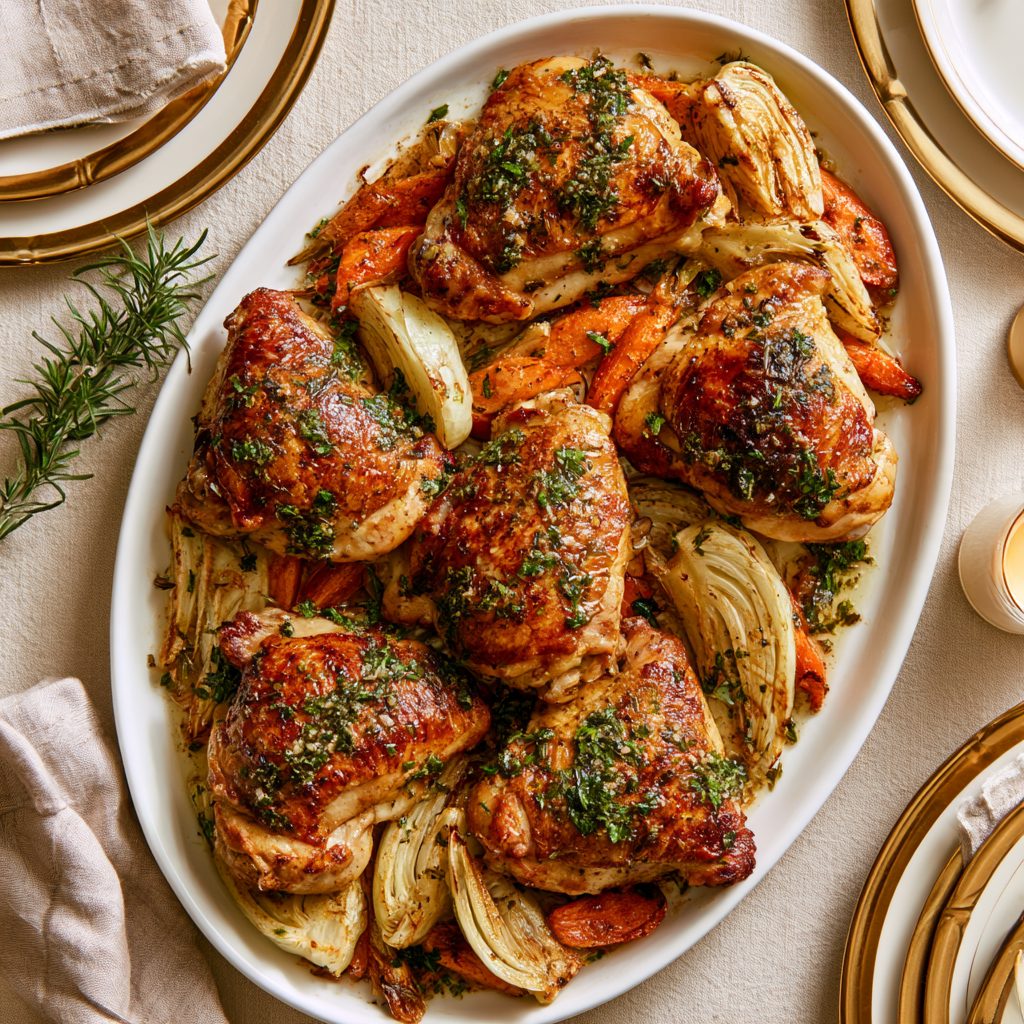
How much protein is in roast chicken? About 42g per serving from the bone-in chicken breasts and thighs across 6 servings. Using boneless, skinless chicken breasts keeps the protein about the same but drops the fat by about 12g per serving.
How do I keep roast chicken from drying out? Use bone-in, skin-on chicken pieces, dry-brine ahead, rub garlic-herb butter under the skin, and rest for 10 minutes before slicing. These steps help the meat stay juicy.
Should I rinse the chicken before roasting? No. Rinsing chicken splashes bacteria around the kitchen and doesn’t make it safer. Pat it dry with paper towels instead.
Why do I pull the chicken breasts before the thighs? Bone-in chicken breasts are done at 160°F to 165°F. Bone-in thighs taste best at 175°F to 180°F, where the collagen breaks down into silky tenderness. Pulling the breasts 5 to 8 minutes before the thighs keeps both cuts perfectly cooked.
Why shouldn’t I pour broth into the pan before roasting? Broth creates steam, which prevents the vegetables from caramelizing and stops the bottom of the chicken from crisping. Let the chicken fat and vegetable juices render naturally into the pan. If you want a pan sauce, deglaze the hot pan with ¼ cup broth after you remove the chicken.
What vegetables go best with roast chicken? Fennel, carrots, and onions are the classic holiday pairing. Potatoes, parsnips, and Brussels sprouts also work beautifully.
Can I use a whole chicken instead of pieces? Yes. Use a 5- to 6-pound whole roasting chicken. Roast at 425°F for 20 minutes, then reduce to 375°F and roast for 1 hour more, until the internal temperature reaches 165°F in the thigh.
What is gremolata? Gremolata is an Italian condiment made from lemon zest, garlic, and parsley. It’s bright, zippy, and slightly sharp, and it’s the perfect finish for rich roast chicken and sweet roasted vegetables.
Can I make this dairy-free? Yes. Use olive oil instead of butter for the herb rub. Skip the Parmesan rind or use a dairy-free alternative.
Can I make this gluten-free? Yes. Everything in the recipe is naturally gluten-free. Use gluten-free chicken broth if using.
What do I serve with roast chicken for the holidays? Serve with mashed potatoes, crusty bread, polenta, rice, a simple green salad, or roasted Brussels sprouts. The pan juices are the best part—serve with something to soak them up.
More Chicken Recipes You’ll Love
Creamy Garlic Parmesan Chicken
Honey Garlic Chicken Breast
Marry Me Chicken Pasta
Mediterranean Greek Lemon Chicken
Coconut Curry Chicken
Conclusion
A Roast Chicken recipe is the kind of dinner that earns its spot on the holiday table. It’s golden, savory, and undeniably delicious. And with about 42 grams of protein per serving, it’s a real meal that keeps you full.
This version is inspired by Ina Garten’s Perfect Roast Chicken and keeps every bit of the golden skin, the herb butter, and the roasted vegetables you love, and rebuilds it with bone-in chicken pieces for more protein, a garlic-herb butter under the skin for juicy meat, a Parmesan rind tucked into the vegetables for umami, and a fresh gremolata on top for brightness. The chicken breasts come out of the oven 5 to 8 minutes before the thighs so every piece is perfectly cooked.
The three things that make it work are these. Dry-brine the chicken ahead so the skin crisps and the meat stays juicy. Rub the garlic-herb butter under the skin, not just on top. And pull the breasts before the thighs so both cuts are perfectly cooked.
About 42 grams of protein per serving. Six generous portions. Ready in about 1 hour 10 minutes, one pan, and worthy of any holiday table.
Make it for Thanksgiving, Christmas, or a quiet winter Sunday. This roast chicken earns a permanent spot on the menu.