Clam chowder is one of the first recipes I ever learned to make.
It’s the soup that taught me how a roux works, how potatoes can thicken a broth just by simmering, and how a few simple ingredients can turn into something that tastes like a memory.
My original version was all roux, no cream — a classic, traditional New England style that relied entirely on flour, butter, and clam juice to build its body.
Over the years, I’ve adapted it into the version I make now: a little bacon for depth and umami, a little heavy cream for a silkier, more velvety texture, and a few small technique upgrades that make every spoonful taste as it came from a seaside restaurant.
This is that version. It uses canned clams — real clams, already shucked and packed in their own juice — so there’s no shucking, no shells, and no intimidation.
The base is built from smoky bacon, sweet onions, celery, and garlic cooked in bacon fat, then thickened with flour and simmered with clam juice and Yukon Gold potatoes until the potatoes are fork-tender and the broth tastes like the ocean.
Whole milk and heavy cream go in at the end for that creamy, silky finish, and the clams fold in off the heat so they stay tender instead of turning rubbery.
A squeeze of lemon and a handful of fresh parsley wake up the whole pot, and a topping of crispy bacon and oyster crackers makes it feel like the kind of chowder you’d wait in line for on a cold New England afternoon.
It takes about 40 minutes from start to bowl, and it tastes like the kind of soup you’d get at a seaside restaurant. No shucking, no shells, no stress.
What Makes This Recipe Work
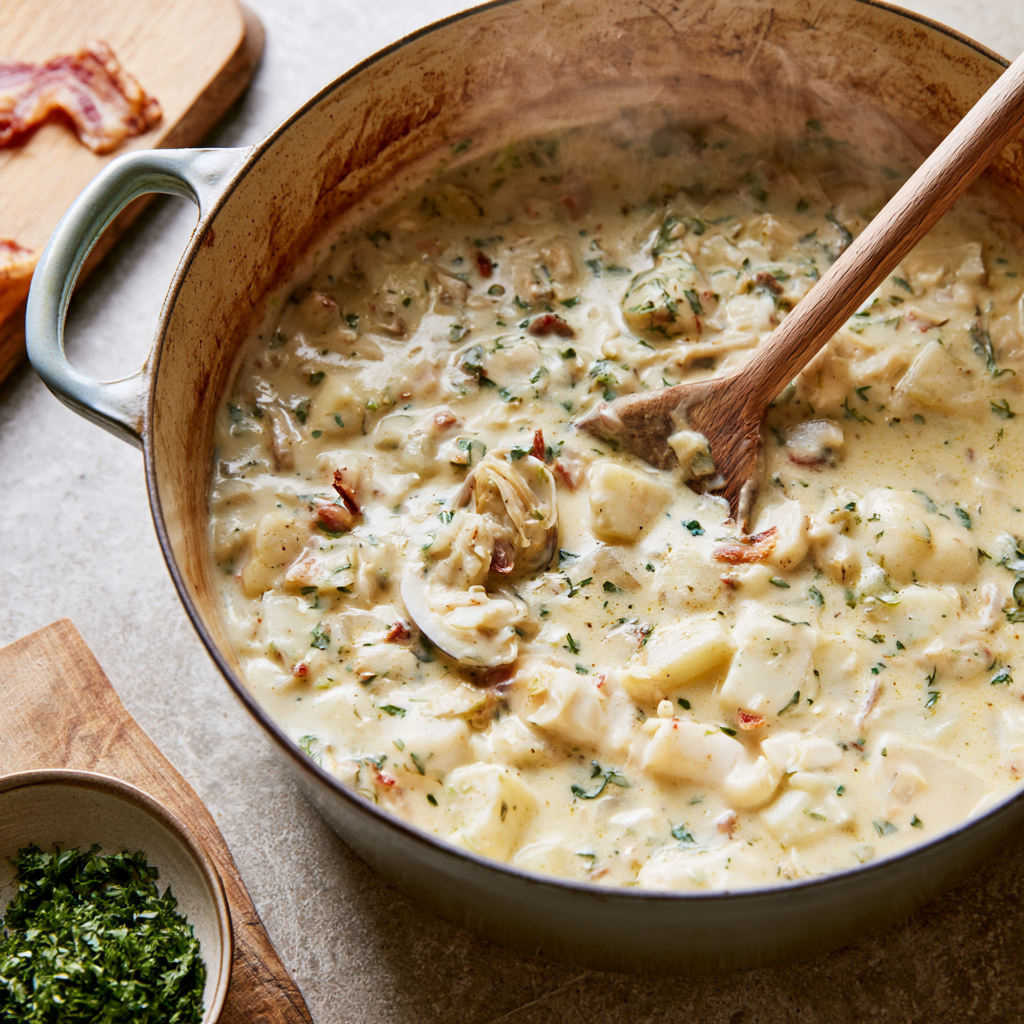
A few small decisions make this clam chowder taste like the real thing, not a thin, floury soup.
Use the clam juice from the cans, not just the clams. Canned clams come packed in their own juice, and that juice is liquid gold. It’s briny, savory, and it’s the entire reason the chowder tastes like the sea instead of like cream. Drain the clams and reserve the juice, then add both to the pot at the right moment.
Cook the flour into the vegetables, not into the liquid. The biggest mistake in homemade chowder is adding flour directly to the broth, which creates lumps and a raw flour taste. Instead, sprinkle the flour over the sautéed onions and celery, then stir for a full minute before adding the broth. The flour coats the vegetables, cooks off its raw taste, and smoothly thickens the chowder.
Mash a third of the potatoes against the side of the pot before the dairy goes in. This is the trick that makes the chowder thick and velvety without needing extra flour. Once the potatoes are fork-tender, use a potato masher or the back of a wooden spoon to crush about a third of them against the side of the pot. The Yukon Golds release natural starches into the broth, thickening the chowder into something that feels like a chowder-house bowl instead of a thin soup.
Add the clams and cream at the very end, off the heat. Canned clams are already fully cooked, and simmering them in hot chowder makes them rubbery. Cream can curdle if you boil it. Fold both in off the active burner and let the residual heat warm them through gently. That’s the difference between tender clams and chewy ones, and between silky cream and a grainy, broken broth.
Add the lemon juice at the very end, or serve lemon wedges on the side. Adding lemon juice directly to hot milk and cream can curdle the dairy if the pot is too warm. Stir it in after you take the pot off the heat, or serve lemon wedges at the table so everyone can brighten their own bowl. It’s the same effect, but safer.
Season with thyme, bay leaf, and a little Worcestershire. These three ingredients are what give the chowder its depth. Thyme and bay leaf add an herby, savory note, and Worcestershire brings a subtle umami that makes the whole pot taste richer without tasting like beef.
Finish with fresh parsley and crispy bacon on top. A handful of fresh parsley adds bright green contrast to the pale, creamy soup, and the reserved crispy bacon adds texture and a smoky note that makes the bowl feel finished.
What You’ll Need (and Why Each Ingredient Matters)
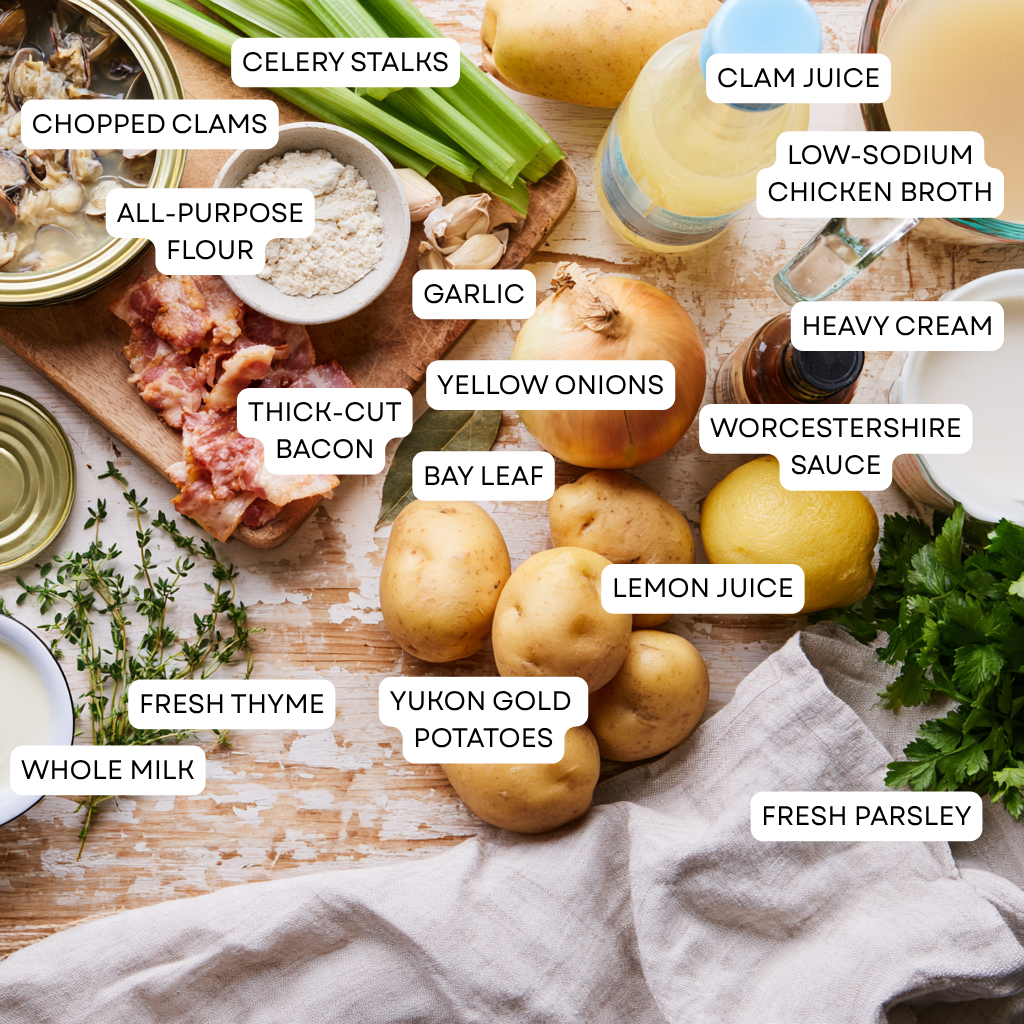
Canned clams, 3 cans (6.5 oz each), chopped or minced. Canned clams are the whole point of this recipe. They’re already shucked, cooked, and packed in their own juice, which is what gives the chowder its briny depth. Chopped or minced both work — chopped gives you bigger pieces of clam in every bite, and minced gives you a smoother, more uniform texture. Don’t drain them until you’re ready to use them, because the juice goes into the chowder.
Bacon, 4 slices, thick-cut. Bacon adds a smoky, savory note that makes the chowder taste as if it came from a real New England kitchen, and you cook the onions and celery in the rendered fat. If you skip the bacon, add an extra tablespoon of butter.
Yellow onion and celery. These are the base of the chowder, so dice them small to soften evenly. Cook them in the bacon fat until translucent and slightly soft.
Peel and dice Yukon Gold potatoes. Yukon Gold potatoes have a creamy texture and hold their shape, which is exactly what you want in clam chowder. Cut them into ½-inch cubes, so they cook evenly and mash easily.
All-purpose flour. This is the thickener. Cook it with the vegetables before adding the broth, which makes the chowder creamy without being gluey. Use 3 tablespoons for a classic chowder consistency.
Whole milk and heavy cream. A combination of whole milk and heavy cream gives you the classic New England texture — creamy and rich, but not so heavy that the chowder feels like a dessert. For a lighter version, use all whole milk and add an extra tablespoon of flour to compensate. If you want a richer version, use all heavy cream.
Clam juice (from the cans) plus a bottle of clam juice. The canned clam juice is the broth base, and a small bottle of store-bought clam juice (usually found near the canned fish) adds another layer of briny depth. If you can’t find bottled clam juice, use an extra cup of chicken broth and add a splash more Worcestershire.
Fresh thyme, a bay leaf, and Worcestershire sauce. These three ingredients add depth to the chowder. Thyme and bay leaf add an herby, savory note, and Worcestershire brings a subtle umami.
Serve with oyster crackers or crusty bread. Clam chowder is best eaten with something crunchy. Oyster crackers are the classic pairing, but a thick slice of crusty sourdough is even better for dipping.
How to Make It (Step-by-Step)
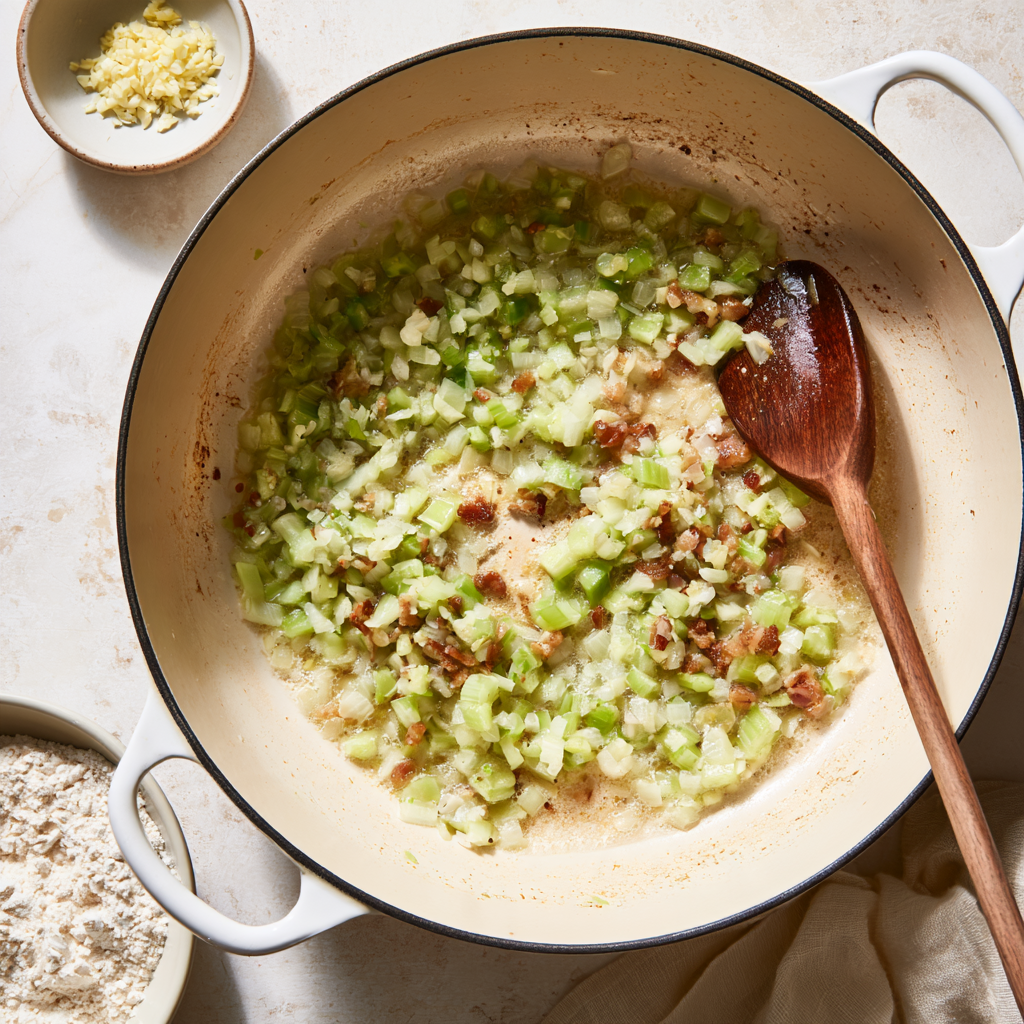
Step 1: Crisp the bacon.
Cook the diced bacon in a large Dutch oven or heavy pot over medium heat for 6 to 8 minutes, until crisp and golden. Transfer to a paper-towel-lined plate to drain, leaving about 2 tablespoons of bacon fat in the pot.
Step 2: Sauté the onion and celery.
Add the diced onion and celery to the bacon fat and cook for 5 to 6 minutes, until softened and the onion is translucent. Season with a pinch of kosher salt and black pepper. Add the minced garlic and cook for 30 seconds, until fragrant.
Step 3: Build the roux.
Sprinkle the flour over the vegetables and stir constantly for 1 minute, until the flour is absorbed and the raw flour taste cooks off. This step is what makes the chowder creamy without lumps.
Step 4: Simmer the potatoes in clam liquor.
Gradually add the reserved clam juice, bottled clam juice, and chicken broth, whisking constantly to prevent lumps. Add the diced potatoes, fresh thyme, and bay leaf. Bring to a gentle boil, then reduce the heat to medium-low. Cover and simmer for 12 to 15 minutes, until the potatoes are fork-tender.
Step 5: Mash a third of the potatoes for body.
Remove the bay leaf and thyme stems. Use a potato masher or the back of a wooden spoon to crush about a third of the potatoes against the side of the pot. This releases starch and naturally thickens the chowder without making it pasty.
Step 6: Add the dairy.
Reduce the heat to low and stir in the whole milk, heavy cream, and Worcestershire sauce. Warm gently for 3 to 4 minutes, until heated through. Don’t let the chowder come to a hard boil once the dairy goes in — a gentle simmer is what keeps the cream from curdling.
Step 7: Fold in the clams off the heat.
Remove the pot from the heat. Fold in the drained clams, half of the reserved crispy bacon, and 1 tablespoon of fresh lemon juice. Let it sit off the heat for 1 to 2 minutes so the residual warmth of the chowder heats the clams through without toughening them. Taste and adjust the salt and pepper.
Step 8: Serve.
Ladle the chowder into warm bowls and top with the remaining crispy bacon, fresh parsley, and a pinch of black pepper. Serve with oyster crackers or a thick slice of crusty bread, and lemon wedges on the side for extra brightness.
How to Make It Look Like This!
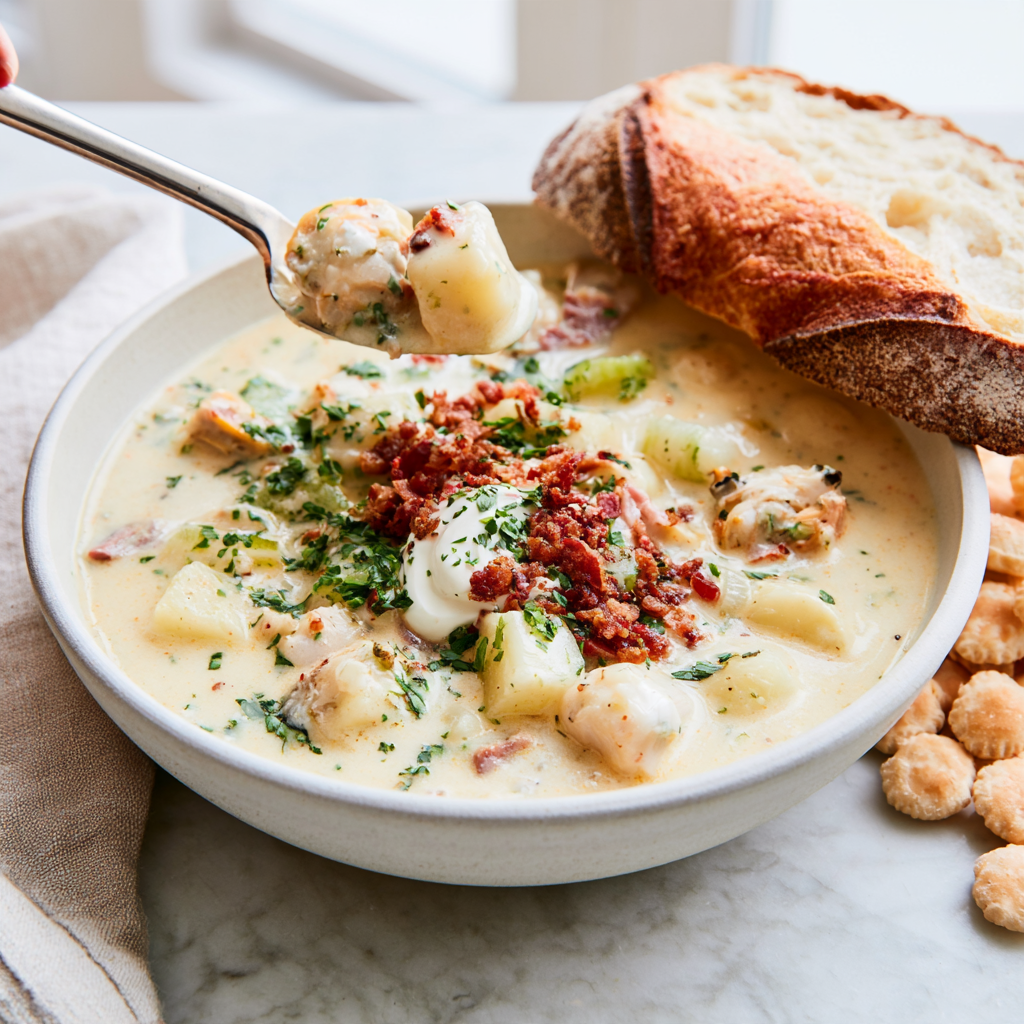
Clam chowder is one of the most photogenic soups you can make, and a few small styling choices make it look like something from a seaside restaurant.
Use a wide, shallow bowl. A wide bowl shows off the chowder’s texture — the potatoes, the clams, the bits of bacon — and makes the soup look more abundant than a narrow, deep bowl.
Add a swirl of cream on top. A small drizzle of heavy cream swirled into the center creates that classic chowder look and gives the photo a natural focal point.
Top with fresh parsley and bacon crumbles. The parsley’s green and the bacon’s red-brown add color and texture to an otherwise pale, creamy soup. These small details make the bowl look finished.
Add oyster crackers or a piece of crusty bread on the side. The crackers or bread show how the chowder should be eaten and make the photo feel like a complete meal, not just a bowl.
Angle the shot at 45 degrees and get close. A tight shot of the chowder with a spoon lifting a piece of clam and a potato is the single most appetizing image you can make with this soup. Steam rising from the bowl is a bonus if you can catch it.
Clam Chowder Recipe
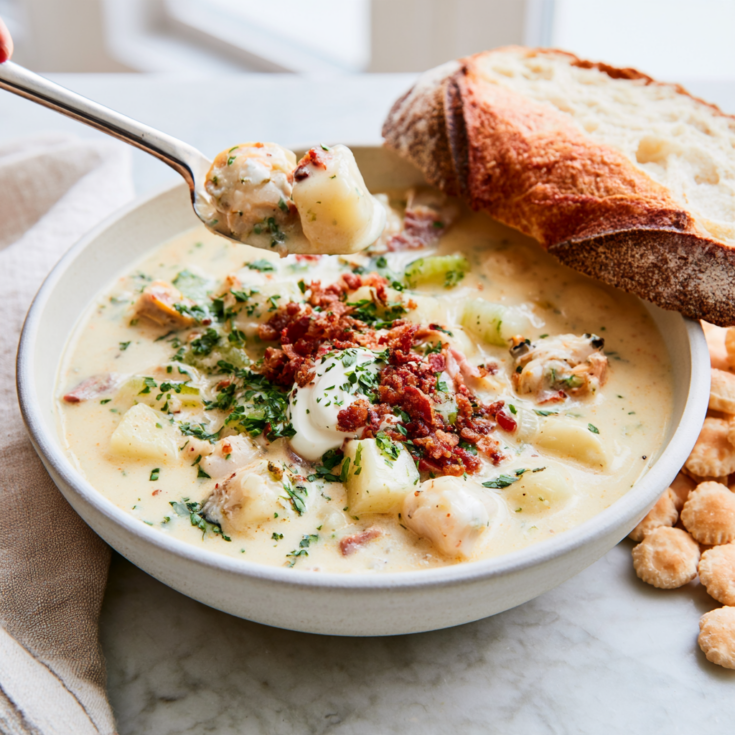
A rich, velvety coastal classic made with tender potatoes, smoky bacon, sweet clams, and a creamy broth. Ready in 40 minutes and no shucking required.
Ingredients
For the Chowder Base
- 4 slices thick-cut bacon, diced
- 1 medium yellow onion, finely diced
- 2 celery stalks, finely diced
- 3 cloves garlic, minced
- 3 tbsp all-purpose flour
- 3 cans (6.5 oz each) chopped clams, drained with juice reserved
- 1 bottle (8 oz) clam juice
- 1 cup low-sodium chicken broth
- 1½ lbs Yukon Gold potatoes, peeled and cut into ½-inch cubes
- 2 sprigs fresh thyme, or ½ tsp dried thyme
- 1 bay leaf
- 1 tsp Worcestershire sauce
For the Creamy Finish and Serving
- 1 cup whole milk
- 1 cup heavy cream
- 1 tbsp fresh lemon juice, or lemon wedges for serving
- Kosher salt and freshly ground black pepper, to taste
- Fresh parsley, chopped
- Oyster crackers or crusty bread, for serving
Instructions
- Crisp the bacon. Cook the diced bacon in a large Dutch oven or heavy pot over medium heat for 6 to 8 minutes, until crisp and golden. Transfer to a paper-towel-lined plate to drain, leaving about 2 tablespoons of bacon fat in the pot.
- Sauté the aromatics. Add the diced onion and celery to the bacon fat and cook for 5 to 6 minutes, until softened and the onion is translucent. Season with kosher salt and black pepper. Add the minced garlic and cook for 30 seconds, until fragrant.
- Build the roux. Sprinkle the flour over the vegetables and stir constantly for 1 minute, until the flour is absorbed and the raw flour taste cooks off.
- Simmer the potatoes in clam liquor. Gradually add the reserved clam juice, bottled clam juice, and chicken broth, whisking constantly to prevent lumps. Add the diced potatoes, fresh thyme, and bay leaf. Bring to a gentle boil, then reduce the heat to medium-low. Cover and simmer for 12 to 15 minutes, until the potatoes are fork-tender.
- Mash a third of the potatoes for body. Remove the bay leaf and thyme stems. Use a potato masher or the back of a wooden spoon to crush about a third of the potatoes against the side of the pot. This releases starch and naturally thickens the chowder.
- Add the dairy. Reduce the heat to low and stir in the whole milk, heavy cream, and Worcestershire sauce. Warm gently for 3 to 4 minutes, until heated through. Don't let the chowder come to a hard boil once the dairy goes in.
- Fold in the clams off the heat. Remove the pot from the heat. Fold in the drained clams, half of the reserved crispy bacon, and 1 tablespoon of fresh lemon juice. Let it sit off the heat for 1 to 2 minutes so the residual warmth heats the clams through without toughening them. Taste and adjust the salt and pepper.
- Serve. Ladle the chowder into warm bowls and top with the remaining crispy bacon, fresh parsley, and a pinch of black pepper. Serve with oyster crackers or a thick slice of crusty bread, and lemon wedges on the side.
Notes
Each serving has about 380 calories, with roughly 18g protein, 24g carbs, 22g fat, 2g fiber, and 780mg sodium. The protein comes from the clams and the bacon. This isn't a high-protein soup — it's a cozy, creamy, satisfying soup that earns its spot in the rotation because it's easy and delicious, not because it's macro-optimized. Serve it with a side salad or a piece of crusty bread to round it out.
Notes: Store leftovers in a sealed container in the refrigerator for up to 3 days. Reheat gently on the stovetop over low heat, stirring occasionally, and don't let it boil. The chowder thickens as it sits, so add a splash of milk or broth when reheating. Freeze the chowder without the dairy for up to 2 months, then add the milk and cream when reheating. To make it gluten-free, use cornstarch instead of flour (mix 1½ tablespoons with 2 tablespoons cold water and add at the end).
Easy Variations
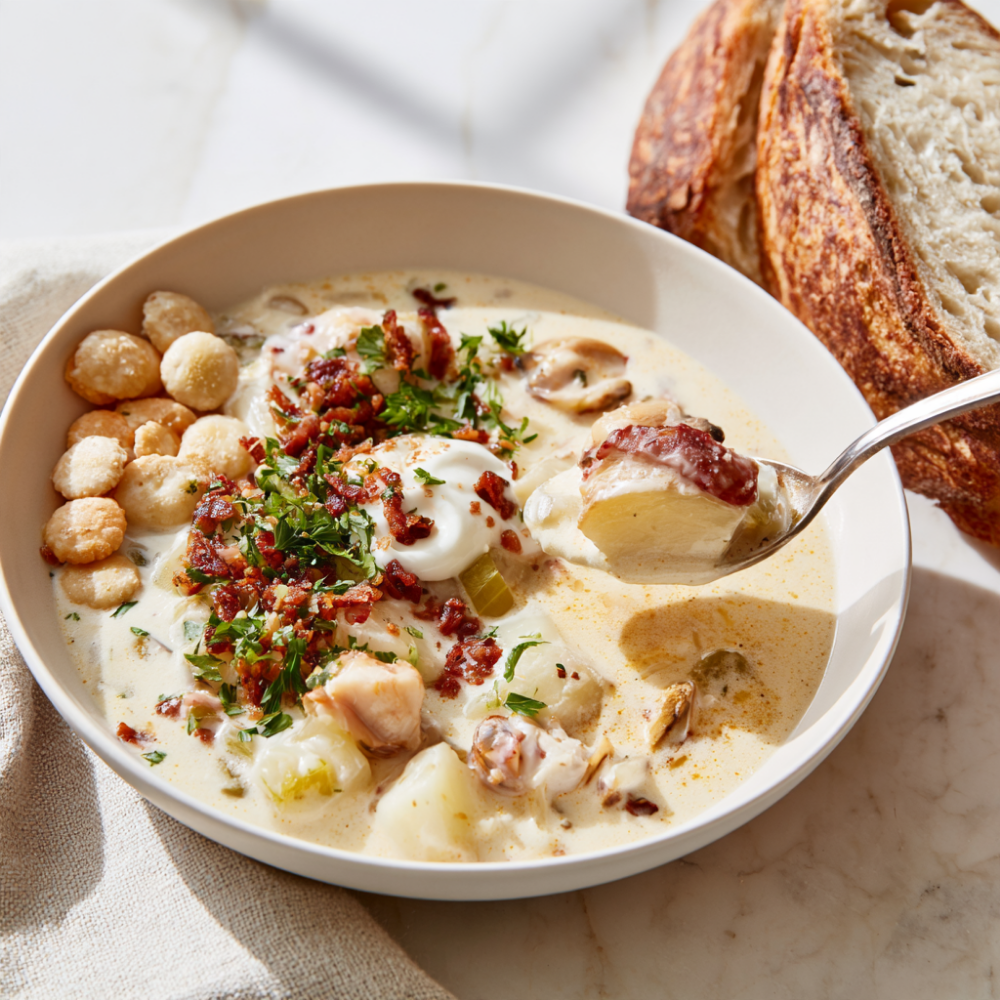
New England Clam Chowder With Fresh Clams. If you have access to fresh clams, use 2 lbs of littleneck or cherrystone clams. Steam them open in a covered pot with a splash of white wine, then remove the meat from the shells and strain the broth. Use the broth instead of the bottled clam juice, and add the clams at the end. The result is the classic version, but it takes about 20 extra minutes.
Manhattan Clam Chowder. Skip the milk and cream, use an extra cup of chicken broth, and add a 28-oz can of diced tomatoes, 1 diced green bell pepper, and 1 teaspoon of dried oregano. The chowder becomes a lighter, more acidic tomato-based version, a completely different soup.
Creamy Seafood Chowder. Add ½ lb of peeled shrimp and ½ lb of cubed salmon in the last 5 minutes of cooking, along with the clams. The chowder becomes a full seafood chowder with a mix of shellfish and fish.
Clam Chowder With Corn. Add 1 cup of frozen corn kernels in the last 5 minutes of cooking. The chowder becomes slightly sweeter and more summery, and it works beautifully with a little extra bacon on top.
Lighter Clam Chowder. Use all whole milk instead of the milk-and-cream combination, and add an extra tablespoon of flour to compensate. The chowder is lighter and less rich, but it still tastes like clam chowder.
Frequently Asked Questions
What are the best canned clams for clam chowder?
Chopped or minced clams in their own juice are best. Chopped gives you bigger pieces of clam in every bite, and minced gives you a smoother texture. Look for cans packed in clam juice, not water, because the juice gives the chowder its briny depth.
Can I use fresh clams instead of canned?
Yes. Use 2 lbs of littleneck or cherrystone clams, steam them open, remove the meat, and strain the broth to replace the bottled clam juice. Add the clams at the end. The recipe takes about 20 extra minutes but tastes a little more authentic.
Why did my clam chowder turn out thin?
The most common reasons are not cooking the flour into the vegetables, using too much broth, or not mashing some of the potatoes. This recipe thickens the chowder with a flour-and-butter base, then mashes a third of the potatoes against the side of the pot to release starch, giving the chowder a thick, velvety body. If the chowder is still thin after that, whisk 1 tablespoon of cornstarch with 2 tablespoons of cold water and stir it in, then cook for another 5 minutes.
Why did my clam chowder turn out gluey?
Gluey chowder is almost always from too much flour or from adding flour directly to the hot broth. This recipe cooks the flour into the vegetables first, which prevents lumps and gives a smooth, creamy texture. If the chowder is too thick, stir in a splash of milk or broth.
Why did my clams turn out rubbery?
Canned clams are already fully cooked, so simmering them makes them tough. This recipe folds the clams in off the heat and lets the chowder’s residual warmth warm them through, keeping them tender.
Can I make this dairy-free?
Yes. Use full-fat coconut milk or unsweetened oat milk instead of whole milk and heavy cream. The chowder will be slightly less rich, but it still tastes creamy and comforting.
Can I make this gluten-free?
Yes. Use cornstarch instead of flour. Mix 1½ tablespoons cornstarch with 2 tablespoons cold water, stir it in at the end, then cook for another 5 minutes, until the chowder thickens. Check that your broth and Worcestershire are gluten-free.
Can I freeze clam chowder?
Yes, but freeze the chowder without the dairy. Make the chowder up to the point where you add the milk and cream, freeze it in a sealed container for up to 2 months, then thaw overnight in the refrigerator and add the milk, cream, and clams when reheating. Dairy can separate when frozen, which is why you add it fresh.
How long does clam chowder last in the fridge?
Up to 3 days in a sealed container. Reheat gently over low heat and don’t let it boil.
Can I make this in a slow cooker?
Yes. Cook the bacon, sauté the vegetables, and add the flour in a skillet, then transfer everything to a slow cooker with the clam juice, broth, potatoes, thyme, and bay leaf. Cook on low for 4 to 5 hours, then add the milk, cream, clams, bacon, and Worcestershire in the last 30 minutes.
What do I serve with clam chowder?
Serve with oyster crackers, crusty sourdough bread, a simple green salad, or steamed vegetables. A glass of dry white wine or a light beer also works well.
Is clam chowder healthy?
It’s a creamy comfort food, not a health food, but it’s not as heavy as it looks. This version uses a mix of milk and cream instead of all cream, which keeps it lighter than most restaurant versions. The clams add protein and the potatoes add fiber and carbs. Serve it with a salad for a balanced meal.
Can I double the recipe?
Yes. Use a large Dutch oven or stockpot and double all the ingredients. The cook time stays the same, but it will take longer to come to a simmer.
More Easy Healthy Dinner Recipes You’ll Love
- Crockpot French Onion & Gruyère Cube Steak — Elevated Comfort Food
- Creamy Crockpot Chicken Corn Chowder — 20g Protein Per Bowl
- Creamy Crockpot Corn Chowder Loaded with Bacon (15-Minute Prep!)
- This Crockpot Cube Steak Is Fall-Apart Tender and Loaded with Protein
Conclusion
This clam chowder recipe is the creamy, cozy New England version I’ve been making since I first learned to cook. It started as an all-roux recipe that relied on flour, butter, and clam juice for its body, and it’s been slowly adapted over the years — a little bacon for depth and umami, a little heavy cream for a silkier, more velvety texture, and a few small technique upgrades that make every spoonful taste as it came from a seaside restaurant. No shucking, no shells, no stress.
The three things that make it work are these. Reserve the clam juice from the cans, because that’s what gives the chowder its briny, sea-forward flavor.
Mash a third of the potatoes against the side of the pot before the dairy goes in, which thickens the chowder naturally without making it pasty. Fold in the clams and cream off the heat so the clams stay tender and the cream doesn’t curdle.
About 380 calories per serving. Six servings. Ready in about 40 minutes, freezer-friendly (without the dairy), and endlessly adaptable as a Manhattan clam chowder, a creamy seafood chowder, a clam chowder with corn, or a lighter version.