Every host knows that moment during the holidays. You’ve invited people over for dinner, the table is set, the candles are lit, and there’s a bottle of wine breathing on the counter.
And then you look at the kitchen and think: I want something that feels special enough for tonight, but I don’t actually want to spend the next three hours in front of the stove.
You want a dish that looks like a restaurant plate and tastes like one, but doesn’t require restaurant-level effort or a restaurant-level grocery bill.
That’s exactly what chicken saltimbocca is built for. It’s an Italian classic — thin chicken cutlets topped with fresh sage and crispy prosciutto, seared golden in a skillet, and finished with a bright lemon white wine pan sauce that gets spooned over the top.
It looks like the kind of thing you’d order at a candlelit trattoria. It tastes like it too. But it takes about 30 minutes from start to plate, comes together in a single skillet, and uses ingredients you can find at any grocery store without a special trip.
The name saltimbocca literally means “jumps in the mouth” in Italian, and you’ll understand why the moment you take a bite.
There’s the salty, crispy prosciutto crust on top, the fragrant sage underneath, the tender chicken, and that silky lemon sauce that clings to everything.
It’s festive enough for a holiday dinner with family, and fast enough for a Tuesday night when you want something a little more elevated than the usual rotation. It’s the kind of dish that makes people at the table ask for the recipe—without anyone needing to know it only took half an hour.
What Makes This Recipe Work
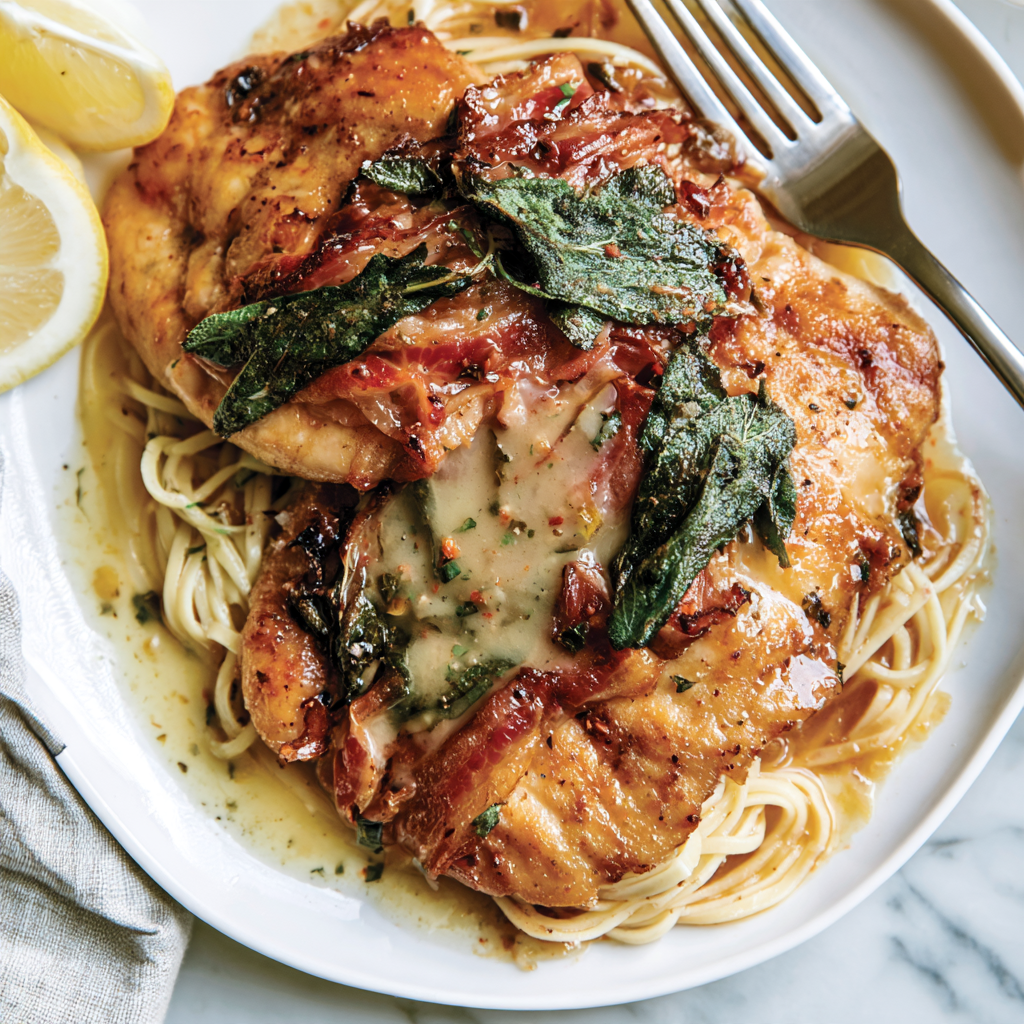
A few small decisions make this chicken saltimbocca taste like the version from a Roman trattoria.
Start the chicken prosciutto-side down in the hot pan. This is the single most important technique in the recipe. Starting with the ham flat against the hot surface ensures even contact from the first second, helping the prosciutto adhere to the chicken and crisp uniformly before the meat begins to contract and curl. If you start chicken-side down, the prosciutto never gets that deep golden, shatteringly crisp crust that makes saltimbocca recognizable.
Secure the prosciutto with a toothpick, and remove it before serving. Pressing the prosciutto onto the chicken works most of the time, but it’s not foolproof — prosciutto can curl, peel away, or separate during searing. Weaving a toothpick horizontally through the prosciutto, sage, and chicken keeps everything together through the sear, and removing the toothpicks before serving is a one-second step that means no one at the table has to hunt for one. If you prefer to skip the toothpicks, press the prosciutto firmly onto the floured chicken and don’t move the cutlets in the pan until the prosciutto side is fully seared.
Fry extra sage leaves in the pan for a crispy garnish. Place some sage under the prosciutto to infuse the chicken with a piney, peppery aroma. The rest gets fried briefly in olive oil until crisp and translucent — almost like stained glass — and scattered over the finished dish as an aromatic, crunchy garnish that contrasts the soft chicken and the silky sauce. It takes 30 seconds and makes the plate look restaurant-quality.
Use cold butter and whisk it in off the heat. The sauce is a simple combination of white wine, chicken stock, and lemon juice reduced in the pan, but the magic happens when you whisk in cold, cubed butter off the heat. The cold butter emulsifies into the sauce, making it glossy, rich, and velvety—the same technique used in French pan sauces. Room-temperature butter won’t emulsify the same way, and butter added over direct heat will break into an oily puddle instead of a silky sauce.
Add a little flour to the sauce to help it cling. Dredging the chicken in flour creates starchy, browned bits on the bottom of the pan, and those bits dissolve into the sauce as it simmers. If the sauce still looks thin after you whisk in the butter, whisk in a half teaspoon of flour to the cold butter to thicken it just enough to coat the back of a spoon. That’s the difference between a sauce that slides off the chicken and one that clings to it.
Season the chicken lightly, not heavily. Prosciutto is salty. If you season the chicken aggressively with salt before adding the prosciutto, the finished dish will be overwhelming. Season only the bare chicken side, use low-sodium chicken stock, and let the prosciutto do most of the seasoning work.
Serve with something that soaks up the sauce. The pan sauce is too good to waste. Buttered noodles, mashed potatoes, crusty bread, or creamy polenta are all perfect for catching every drop.
What You’ll Need (and Why Each Ingredient Matters)
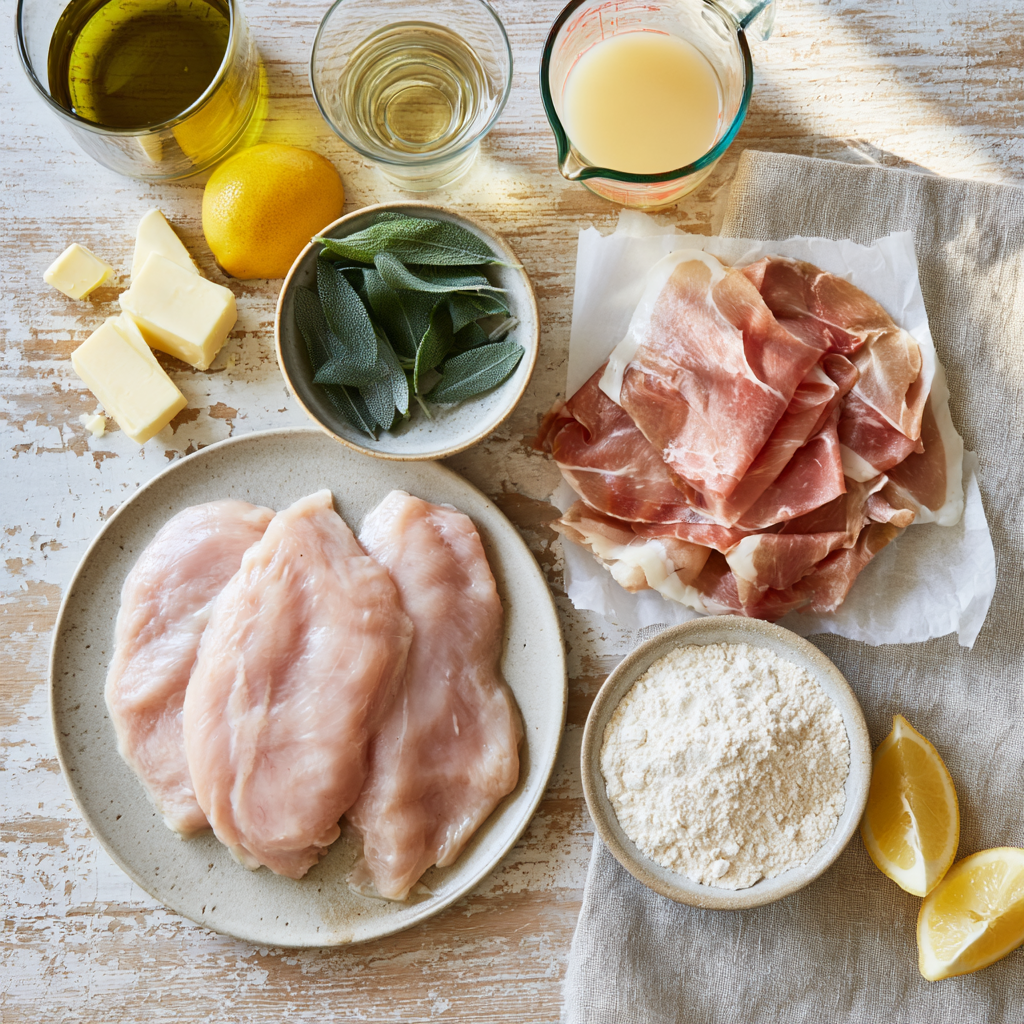
Chicken breast cutlets, 4 pieces (about 1¼ lbs total). Buy pre-sliced cutlets at the meat counter, or buy two large boneless, skinless chicken breasts and slice them horizontally into thin cutlets yourself. Pound them to an even ¼-inch thickness so they cook quickly and evenly. If they’re uneven, the thin edges will dry out before the thick center is cooked through.
Thinly sliced prosciutto, 4 slices. Prosciutto is the heart of saltimbocca. It brings salt, umami, and that crispy, savory crust. Look for thin slices from the deli counter — they should be almost translucent. Jamón serrano is a good substitute if you can’t find prosciutto.
Fresh sage leaves, about 16 total. Fresh sage is non-negotiable. Dried sage won’t give you the same piney, peppery flavor, and it definitely won’t fry into a crispy garnish. You’ll use some leaves under the prosciutto and fry the rest for the top.
All-purpose flour, about ½ cup. For dredging the chicken. This helps the chicken brown and slightly thickens the sauce.
Dry white wine, ⅓ cup. Pinot Grigio, Sauvignon Blanc, or Chardonnay all work. The wine deglazes the pan and forms the sauce base. If you don’t cook with wine, use an extra ⅓ cup of chicken stock plus a squeeze of lemon.
Chicken stock, 1 cup, low-sodium. Low-sodium is best so you can control the salt level. The stock adds depth and balances the wine’s acidity with the lemon.
Fresh lemon juice, 1 tablespoon. Just enough to brighten the sauce and cut through the richness of the butter and prosciutto. Serve extra lemon wedges at the table.
Cold unsalted butter, 3 tablespoons, cubed. For finishing the sauce. Cold butter emulsifies into the reduced wine and stock, turning it glossy and rich.
Olive oil, 3 tablespoons. For searing the chicken and frying the sage.
How to Make It (Step-by-Step)
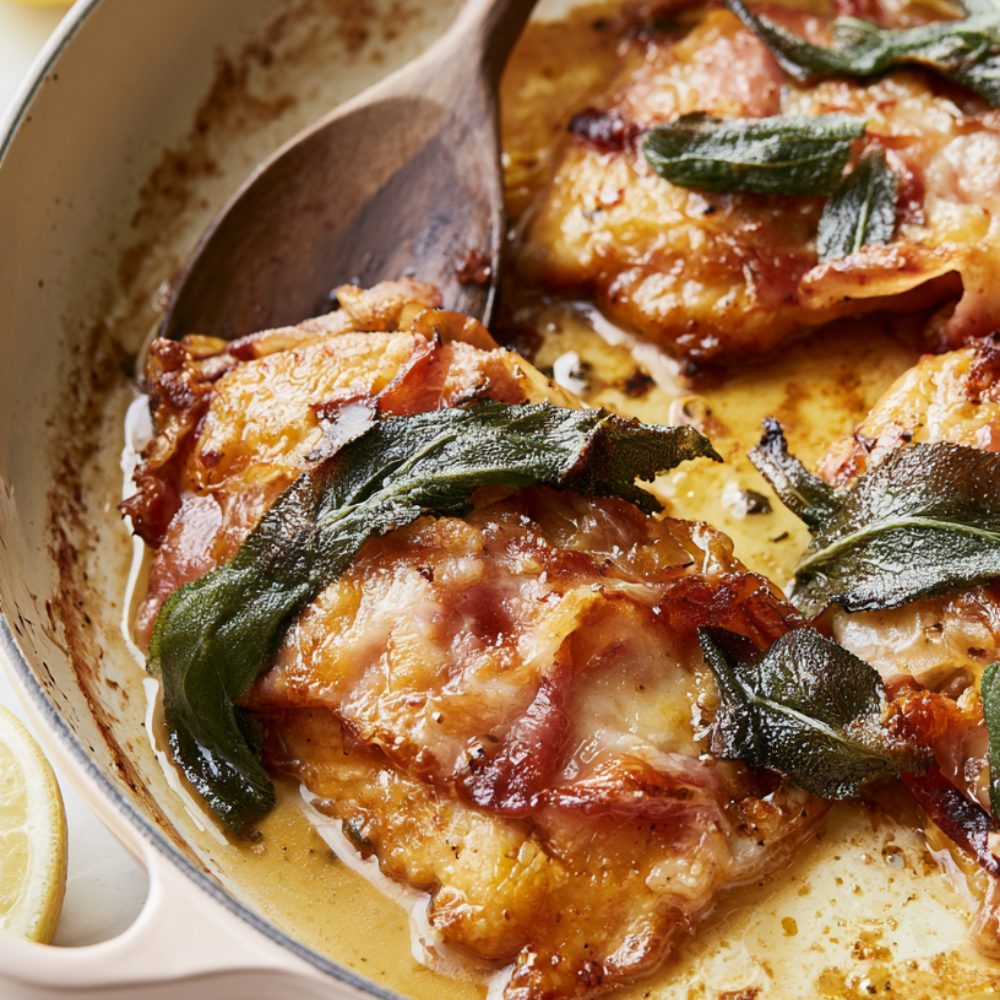
Step 1: Prep the chicken.
Working with one chicken breast at a time, place it flat on a cutting board. Hold your hand flat on top and carefully slice it horizontally to create two thin cutlets. If you bought pre-sliced cutlets, skip this step. Place the cutlets between two pieces of plastic wrap and lightly pound them with a meat mallet or the flat side of a heavy skillet until they’re an even ¼-inch thickness. Pat them dry and season only the bare chicken side lightly with kosher salt and black pepper.
Step 2: Assemble the saltimbocca.
Place 2 sage leaves on top of each chicken cutlet, pressing them gently so they adhere. Drape a slice of prosciutto over the sage, covering the chicken as evenly as possible. The prosciutto should overhang the edges slightly — it will shrink as it cooks. Press the prosciutto firmly onto the chicken, then secure with 1 or 2 toothpicks woven horizontally through the prosciutto, sage, and chicken. These will keep the prosciutto in place during searing.
Step 3: Dredge lightly in flour.
Season the flour with a pinch of black pepper. Dredge each assembled cutlet lightly in the flour, coating both sides, then shake off all excess. The flour helps the chicken brown and thickens the pan sauce as it cooks.
Step 4: Fry the sage garnish.
Heat 2 tablespoons of olive oil in a large 12-inch skillet over medium heat. When the oil shimmers, add the remaining 8 sage leaves and fry for 20 to 30 seconds, until crisp and translucent. Use tongs to transfer them to a paper-towel-lined plate. Set aside for garnish.
Step 5: Sear the chicken prosciutto-side down.
Add the remaining 1 tablespoon of olive oil to the skillet and increase the heat to medium-high. Place the chicken cutlets in the pan prosciutto-side down, working in batches if needed so you don’t crowd the pan. Cook for 3 minutes without moving them, until the prosciutto is deeply golden and crispy.
Step 6: Flip and finish cooking.
Carefully flip the cutlets and cook for another 2 to 3 minutes, until the chicken is cooked through and reaches an internal temperature of 165°F. Transfer the chicken to a warm plate, carefully remove and discard the toothpicks, and tent loosely with foil to keep warm.
Step 7: Build the pan sauce.
Pour the white wine into the hot skillet and scrape up all the browned bits from the bottom with a wooden spoon. Simmer for 2 minutes, until the wine reduces by half. Add the chicken stock and simmer for another 3 minutes, until the liquid reduces slightly and thickens.
Step 8: Emulsify the sauce off the heat.
Remove the skillet completely from the heat. Whisk in the cold, cubed butter one piece at a time, stirring constantly in a circular motion until the sauce turns glossy, silky, and opaque. If the sauce still looks thin, whisk ½ teaspoon of flour into the remaining butter before adding it. Stir in the fresh lemon juice and taste.
Step 9: Serve.
Spoon the pan sauce over the chicken cutlets and scatter the fried sage leaves on top. Serve immediately with lemon wedges, buttered noodles, mashed potatoes, or sautéed spinach.
How to Plate It
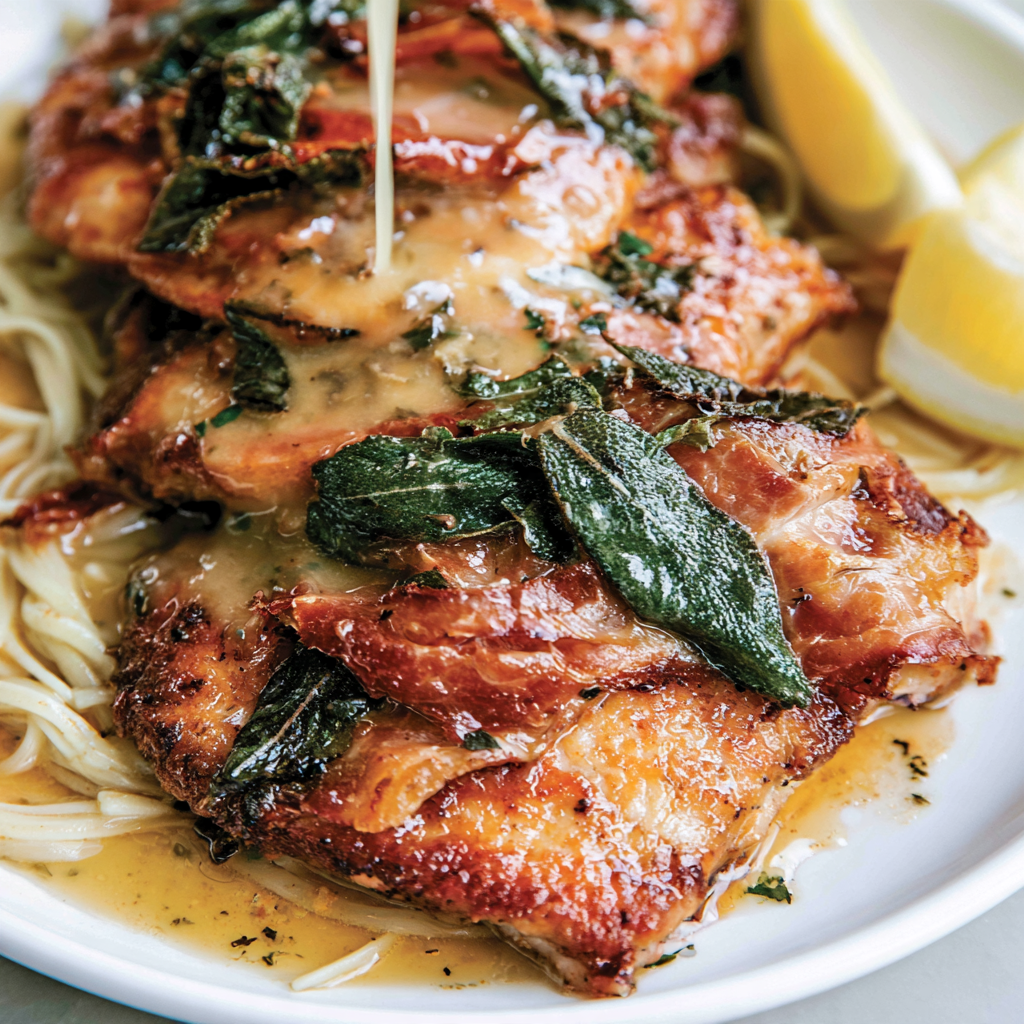
Saltimbocca is naturally photogenic because of the crispy prosciutto crust and the glossy sauce, but a few styling choices make it look like a restaurant plate.
Serve it on a bed of something that catches the sauce. Buttered noodles, creamy polenta, or mashed potatoes create a base that soaks up the pan sauce and makes the plate look abundant. A plain white plate with just the chicken looks sparse.
Spoon the sauce over the chicken right before the photo. The glossy, buttery sauce clinging to the crispy prosciutto is the money shot. Don’t let the sauce pool on the plate — spoon it directly over the meat.
Scatter the fried sage leaves on top. The crispy, translucent sage leaves add height, texture, and a pop of green against the golden prosciutto and the pale sauce.
Angle the shot at 45 degrees and get close. A tight shot of a fork cutting into the chicken through the crispy prosciutto, with the sauce running onto the plate, is the single most appetizing image you can make with this dish.
Chicken Saltimbocca with Sage and Prosciutto Recipe
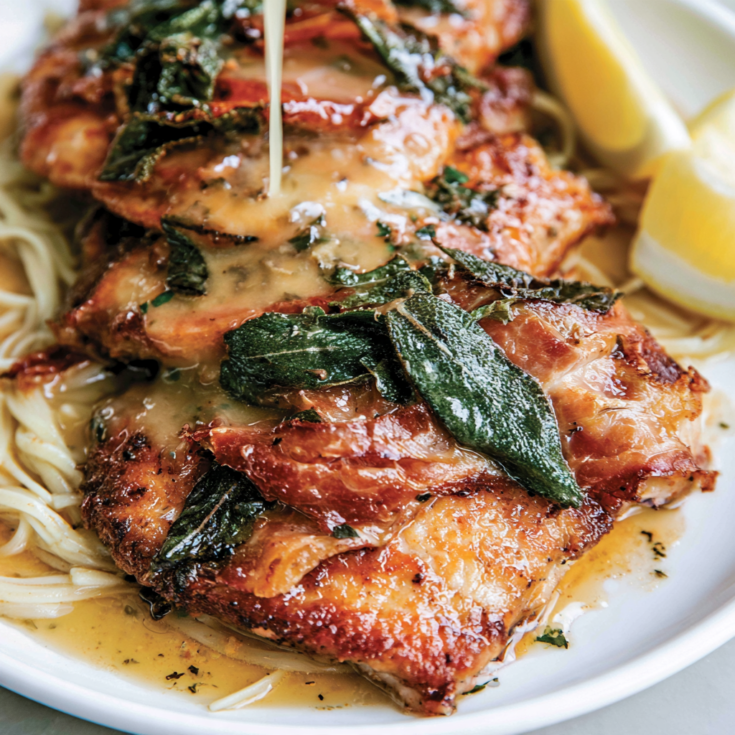
Thin chicken cutlets topped with fresh sage and crispy prosciutto, seared golden, and finished with a bright lemon white wine pan sauce. An elegant Italian classic ready in about 30 minutes.
Ingredients
For the Chicken Saltimbocca
- 4 chicken breast cutlets (about 1¼ lbs total), pounded to ¼-inch thickness
- 16 fresh sage leaves, divided (8 for assembling, 8 for frying)
- 4 thin slices prosciutto di Parma
- ½ cup all-purpose flour
- ½ tsp freshly ground black pepper
- ¼ tsp kosher salt, for the bare chicken side only
- 3 tbsp extra-virgin olive oil, divided
For the Lemon White Wine Pan Sauce
- ⅓ cup dry white wine (Pinot Grigio, Sauvignon Blanc, or crisp Chardonnay)
- 1 cup low-sodium chicken stock
- 3 tbsp cold unsalted butter, cubed
- 1 tbsp fresh lemon juice, plus extra lemon wedges for serving
- Fresh flat-leaf parsley, finely chopped, for garnish
Instructions
- Prep and pound the cutlets. Place the chicken cutlets between two sheets of plastic wrap and pound lightly with a meat mallet to an even ¼-inch thickness. Pat completely dry and season only the bare chicken side lightly with kosher salt and black pepper.
- Assemble the saltimbocca. Lay 2 fresh sage leaves flat on top of each cutlet. Drape 1 slice of prosciutto over the sage to cover the chicken's top surface. Press firmly, then secure with 1 or 2 toothpicks woven horizontally through the prosciutto, sage, and chicken.
- Dredge lightly. Mix the flour and black pepper in a shallow dish. Dredge each assembled cutlet lightly in the flour, shaking off all excess.
- Fry the sage garnish. Heat 2 tablespoons of olive oil in a large 12-inch skillet over medium heat. Add the remaining 8 sage leaves and fry for 20 to 30 seconds until crisp and fragrant. Transfer to a paper-towel-lined plate with tongs.
- Sear prosciutto-side down. Add the remaining 1 tablespoon of olive oil to the pan and turn the heat up to medium-high. Lay the cutlets in the skillet prosciutto-side down. Cook undisturbed for 3 minutes, until the prosciutto is crispy and golden brown.
- Flip and finish. Carefully flip the cutlets and cook for 2 to 3 minutes on the second side, until the internal temperature reaches 165°F. Transfer to a warm plate, carefully remove and discard the toothpicks, and tent loosely with foil.
- Deglaze and reduce the pan sauce. Pour the white wine into the hot skillet, scraping up the browned bits from the bottom with a wooden spoon. Simmer over medium-high heat for 2 minutes, until reduced by half. Pour in the chicken stock and simmer for another 3 minutes, until slightly thickened.
- Emulsify the sauce off the heat. Remove the skillet completely from the heat. Whisk in the cold cubed butter one piece at a time, stirring constantly in a circular motion until the sauce turns glossy, silky, and opaque. Stir in the fresh lemon juice.
- Serve. Spoon the velvety lemon wine sauce over the chicken cutlets. Top each piece with fried crisp sage leaves, garnish with fresh parsley, and serve immediately with lemon wedges.
Notes
Each serving has about 380 calories and 42g of protein, with roughly 8g of carbs, 20g of fat, 1g of fiber, and 720mg of sodium. The protein comes from the chicken and the prosciutto. Serve it over buttered noodles, mashed potatoes, or sautéed spinach to round out the plate.
Notes: Store leftovers in a sealed container in the refrigerator for up to 3 days. Reheat gently in a skillet over low heat with a splash of broth. The fried sage leaves will lose their crispness, so add fresh ones if you have them. To make it gluten-free, use gluten-free all-purpose flour for the dredge. To make it dairy-free, skip the butter and use an extra tablespoon of olive oil in the sauce.
Easy Variations
Chicken Saltimbocca with Fontina. Add a slice of fontina or provolone on top of the chicken before adding the prosciutto. The cheese melts under the crispy prosciutto, making the dish even richer. This is a popular variation in American kitchens.
Chicken Saltimbocca with Capers. Add 1 tablespoon of drained capers to the pan sauce with the chicken stock. The capers add a briny, tangy note that brightens the whole dish, closer to a piccata-saltimbocca hybrid.
Chicken Saltimbocca with Spinach. Layer a handful of fresh spinach between the chicken and the prosciutto before searing. The spinach wilts under the prosciutto and adds a healthy green element.
Chicken Saltimbocca Pasta. Serve the chicken and sauce over buttered spaghetti or angel hair pasta. The pasta catches the pan sauce, turning the dish into a complete meal.
Frequently Asked Questions
What is chicken saltimbocca?
Chicken saltimbocca is an Italian dish made with thin chicken cutlets topped with fresh sage and prosciutto, seared until the prosciutto crisps, then finished with a white wine and lemon pan sauce. It’s a chicken version of the traditional Roman veal saltimbocca.
What does saltimbocca mean?
Saltimbocca literally translates to “jumps in the mouth” in Italian, referring to how flavorful and delicious the dish is.
Can I use veal instead of chicken?
Yes. Traditional saltimbocca uses thin veal cutlets. Use the same method — pound the veal thin, top with sage and prosciutto, sear, and finish with the pan sauce. Veal cooks faster than chicken, so reduce the cooking time slightly.
Do I need toothpicks to hold the prosciutto on?
Toothpicks are the most reliable way to keep the prosciutto from curling or separating during searing. Weave 1 or 2 toothpicks horizontally through the prosciutto, sage, and chicken before the cutlets go into the pan, and remove them before serving. If you skip the toothpicks, press the prosciutto firmly onto the floured chicken and don’t move the cutlets in the pan until the prosciutto side is fully seared.
Why did my prosciutto fall off?
The most common reasons are starting the chicken chicken-side down instead of prosciutto-side down, not pressing the prosciutto firmly enough before searing, or moving the cutlets in the pan too soon. Start prosciutto-side down in a hot pan, press the prosciutto firmly onto the chicken, and leave the cutlets undisturbed for the first 3 minutes.
Why did my chicken turn out dry?
Chicken breast dries out quickly if it’s overcooked or if the cutlets are uneven. Pound them to an even ¼-inch thickness so they cook evenly, and pull them from the pan as soon as they reach 165°F.
Why did my pan sauce turn out thin?
The sauce thickens as the wine and stock reduce, and the cold butter emulsifies it into a silky, glossy sauce. If it still looks thin after you whisk in the butter, whisk in ½ teaspoon flour into the remaining butter before adding it. That thickens the sauce just enough to coat the back of a spoon.
Can I make this dairy-free?
Yes. Skip the butter in the pan sauce and use an extra tablespoon of olive oil instead. The sauce will be slightly less rich, but still bright and flavorful.
Can I make this gluten-free?
Yes. Use gluten-free all-purpose flour for the dredge. Check that your prosciutto, stock, and wine are gluten-free.
What do I serve with chicken saltimbocca?
Buttered noodles, mashed potatoes, creamy polenta, crusty bread, sautéed spinach, or roasted vegetables. Something that soaks up the pan sauce is ideal.
Can I make this ahead of time?
You can assemble the chicken with the sage and prosciutto up to a day ahead and refrigerate it, covered. Sear it just before serving. Make the pan sauce fresh.
How long does chicken saltimbocca last in the fridge?
Up to 3 days in a sealed container. Reheat gently in a skillet with a splash of broth.
Can I double the recipe?
Yes. Sear the chicken in batches so you don’t crowd the pan, and double the sauce ingredients. Use a larger skillet or a Dutch oven.
More Chicken Breast Recipes You’ll Love
- Honey Mustard Chicken Recipe — Sticky, Golden, 15-Minute Marinade
- High Protein Chicken Alfredo Bake Recipe — 48g Protein, Creamy Cottage Cheese Alfredo
- What to Make With Chicken Breast — 6 High-Protein Dinners for Cozy Nights
Conclusion
This chicken saltimbocca with sage and prosciutto is the Italian classic that earns a permanent spot in the rotation. It’s festive enough for a holiday dinner with family, elegant enough to feel like a restaurant plate, but fast enough for a Tuesday night.
Crispy prosciutto, fragrant sage, and a bright lemon white wine pan sauce that ties the whole plate together. About 42g of protein per serving, and it comes together in a single skillet in about 30 minutes.
The three things that make it work are these. Start the chicken prosciutto-side down in the hot pan so the ham crisps into a savory crust that adheres to the chicken.
Secure the prosciutto with a toothpick before searing and remove it before serving so nothing curls or separates. And finish the pan sauce with cold butter off the heat so it emulsifies into a glossy, velvety sauce instead of a broken, oily one.
About 380 calories per serving. 42g of protein. Four servings. Ready in 30 minutes, endlessly adaptable with fontina, capers, spinach, or pasta, and elegant enough for a holiday dinner but fast enough for a weeknight.