I have a lot of love for Asian cuisine, especially savory dishes. So many recipes are genuinely easy to put together and quick to make, but on those lazy nights—the extra-extra-lazy nights when I still have to put together a meal everyone in my family likes and set the table for dinner—this is the dish I rely on most.
It’s the reason I grab a giant bag of frozen potstickers at Costco on almost every run.
The dish is really four parts: frozen potstickers of your choice, rice noodles, fresh shredded vegetables, and a homemade sauce. Practically speaking, the only part that feels like real cooking is putting together the sauce — the rest is assembly.
You can use a bag of pre-shredded coleslaw mix instead of shredding cabbage yourself, and you can reheat the potstickers in the air fryer, though I recommend pan-frying them if you want the crispy edges that make the bowl feel special.
The sauce is three ingredients—soy sauce, rice vinegar, and chili garlic sauce—and takes about 30 seconds to stir together.
The rice noodles soak in hot water while you pan-fry the potstickers, and you toss the cabbage slaw in the time it takes the water to boil.
The whole bowl comes together in about 25 minutes, and it tastes like something you’d order from a good Asian restaurant, not something you threw together on a Tuesday night.
Why This Version Works
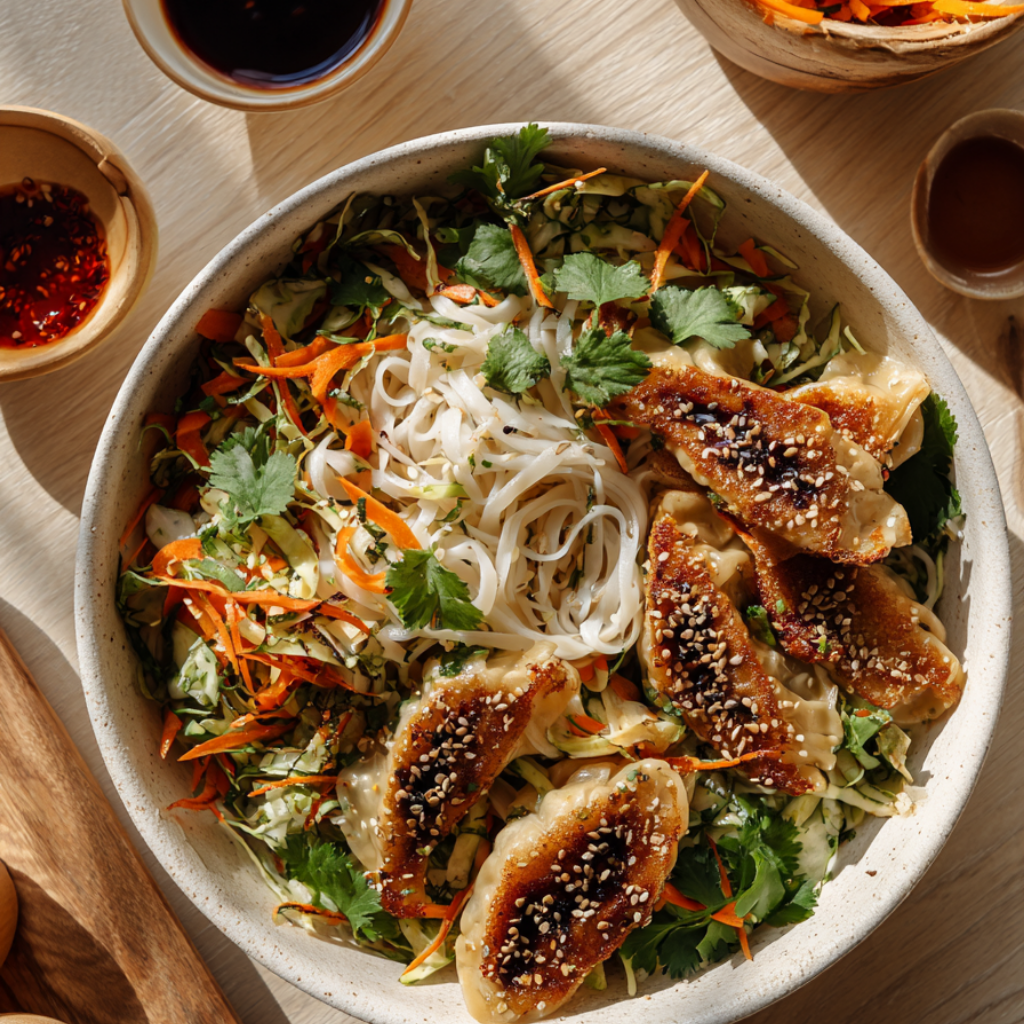
A few specific decisions make this potsticker noodle bowl work.
Use frozen gyoza, not homemade. This is the whole point of the recipe. Frozen gyoza are already assembled and seasoned, and they crisp up beautifully straight from frozen in a hot skillet. Making dumplings from scratch is a great weekend project, but it’s not the right choice for a weeknight bowl. Focus your effort on the noodles, slaw, and sauce, and let the freezer aisle do the heavy lifting.
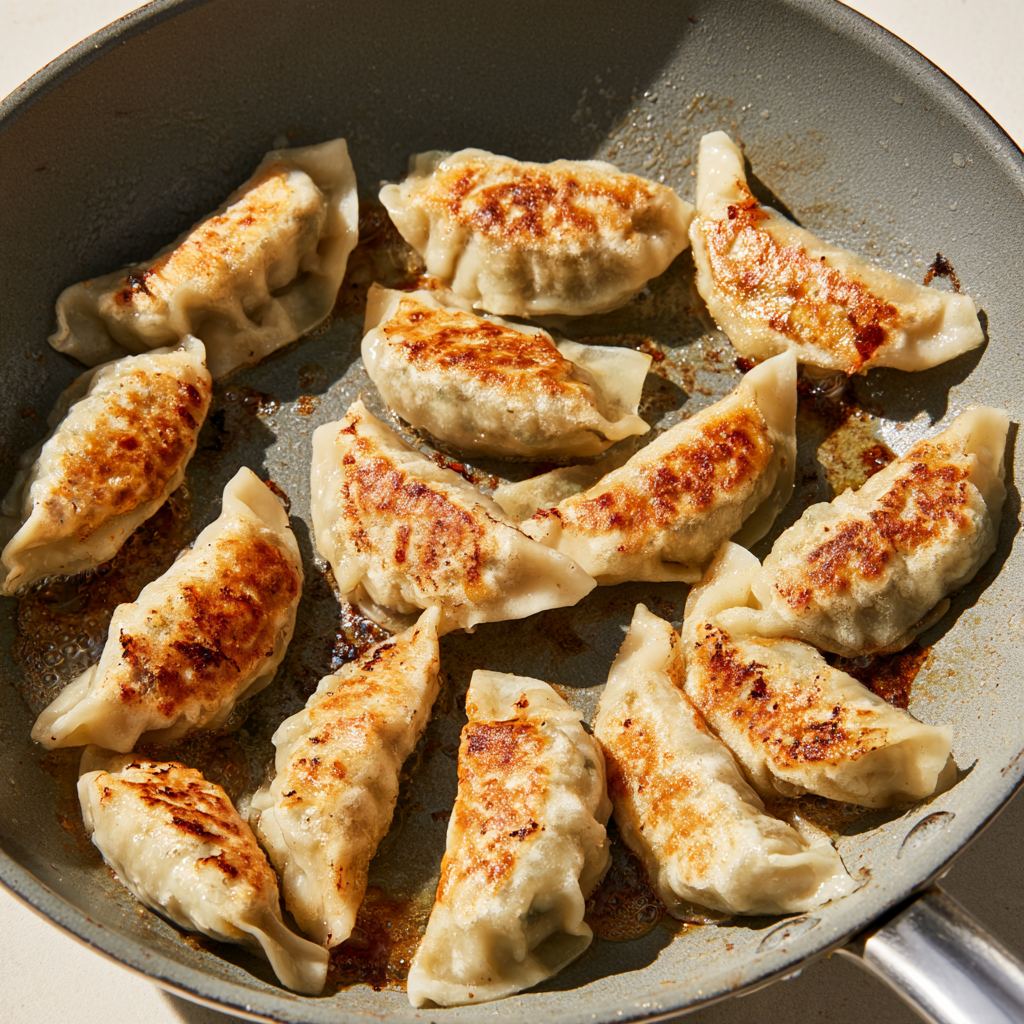
Pan-fry the gyoza using the steam-and-crisp method. This is how potstickers get their signature texture — crispy on the bottom, tender on the top. Heat a little oil in a skillet, add the frozen gyoza in a single layer, and let them sear for 2 minutes. Then add a splash of water, cover the pan, and steam for 4-5 minutes. Uncover and let the water cook off so the bottoms crisp back up. The result is a gyoza that’s deeply golden on the bottom and soft and pillowy on top.
Soak the rice noodles; don’t boil them like pasta. Rice noodles are more delicate than wheat pasta, and boiling them hard turns them mushy and clumpy. Instead, soak them in hot water following the package directions — different thicknesses of rice noodles require different soaking times, so check the package rather than guessing. This is the biggest upgrade for noodle-bowl texture.
Toss the cabbage slaw with a well-emulsified sauce. The slaw is raw cabbage, shredded carrots, and sliced green onions. Whisk the sauce until fully combined before drizzling it over the slaw, so it coats the cabbage evenly instead of pooling at the bottom of the bowl. A spoonful of the sauce is enough to season the slaw; save the rest for drizzling over the bowls.
Use a three-ingredient sauce, and taste before serving. Soy sauce, rice vinegar, and chili garlic sauce are enough to finish the whole bowl. Start with equal parts soy and vinegar, add chili garlic sauce to taste, and adjust with a splash more soy or a pinch of sugar if the sauce tastes too sharp. Taste the sauce before it goes on the bowl — it’s easier to adjust a small bowl of sauce than a whole assembled bowl.
Assemble the bowls with the gyoza on top, leaning against the noodles and slaw. Don’t bury the gyoza in the noodles — place them leaning against the noodle and slaw mound so the crispy bottoms stay visible and crisp. That plating move makes the bowl look like a café bowl instead of a pile of food, and it keeps the gyoza from getting soggy.
Ingredients That Matter
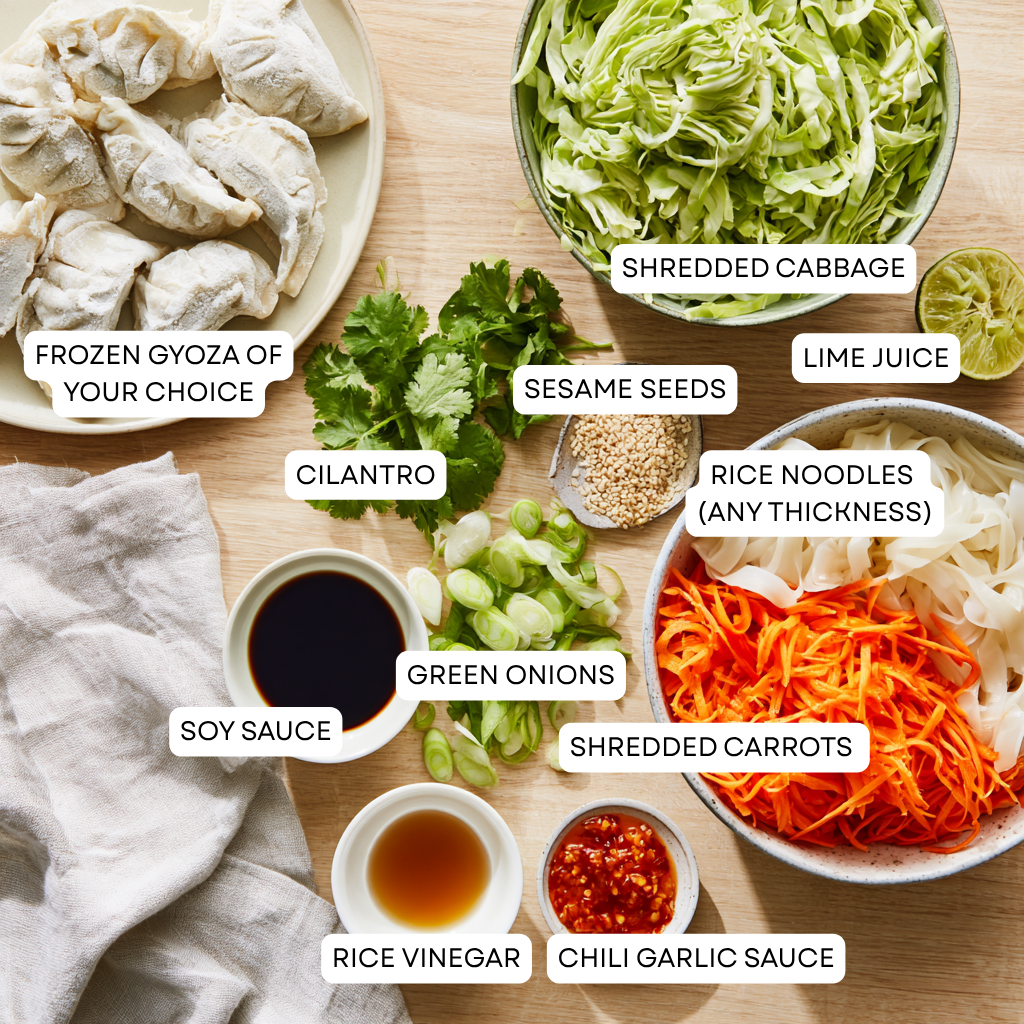
Most of the ingredients in this bowl are straightforward. Three of them are easy to get wrong, so those are the ones worth explaining.
Frozen gyoza (potstickers). Look for a bag in the freezer aisle — pork, chicken, and vegetable gyoza all work. Use the pan-fry instructions on the bag as a starting point, and expect to add a splash of water and cover the pan for the steam step. Don’t boil them — boiled gyoza lose the crispy bottom that makes the bowl work. If you’re making this gluten-free, look for gluten-free gyoza, which are increasingly available at larger grocery stores and Asian markets.
Wide rice noodles. Wide rice noodles — sometimes labeled “Pad Thai” rice noodles or “rice stick” noodles — have a slightly chewy, silky texture that holds up in a bowl. Thin rice vermicelli works in a pinch, but the wider noodles hold the sauce better. Soak them in hot water following the package directions rather than boiling them, since rice noodles turn mushy and clumpy when boiled like pasta.
Chili garlic sauce. This is what gives the bowl its heat, and spice levels vary widely by brand. Start with 1 teaspoon, taste, and add more if you want it spicier. Sambal oelek or Sriracha can substitute if you can’t find chili garlic sauce.
How to Make It
Step 1: Make the sauce.
In a small bowl, whisk together 3 tablespoons soy sauce, 3 tablespoons rice vinegar, and 1 to 2 teaspoons chili garlic sauce until fully combined and evenly colored. Taste and adjust — add a pinch of sugar if the sauce tastes too sharp, or more chili garlic sauce if you want more heat. Set aside.
Step 2: Soak the rice noodles.
Bring a kettle or a pot of water to a boil, then pour the hot water over the rice noodles in a large heatproof bowl, following the soaking time on the package. Different rice noodle thicknesses need different soaking times, so check the package rather than guessing. When the noodles are tender but still slightly chewy, drain them and rinse under cold water to stop the cooking. Drain well and set aside.
Step 3: Make the cabbage slaw.
While the noodles soak, combine 4 cups of shredded green cabbage, 1 cup of shredded carrots, and 3 sliced green onions in a large bowl. Whisk the sauce again until fully emulsified, then drizzle 1 tablespoon over the slaw and toss to coat evenly. Set aside.
Step 4: Pan-fry the gyoza.
Heat 1 tablespoon of neutral oil in a large skillet over medium-high heat. Add the frozen gyoza in a single layer and cook, without stirring, for 2 minutes, until the bottoms are deeply golden. Add ¼ cup water to the pan, cover, and steam for 4 to 5 minutes. Uncover and let the water cook off for about 1 minute to crisp the bottoms back up. Transfer the gyoza to a plate.
Step 5: Assemble the bowls.
Divide the noodles among four shallow bowls. Add a generous pile of cabbage slaw to each bowl, then drizzle with the remaining sauce. Arrange the gyoza on top of each bowl, leaning them against the noodle-and-slaw mound with the crispy side facing up.
Step 6: Finish and serve.
Sprinkle the bowls with toasted sesame seeds, fresh cilantro, and sliced green onions. Serve immediately with extra chili garlic sauce and a squeeze of lime on the side.
Tips and Troubleshooting
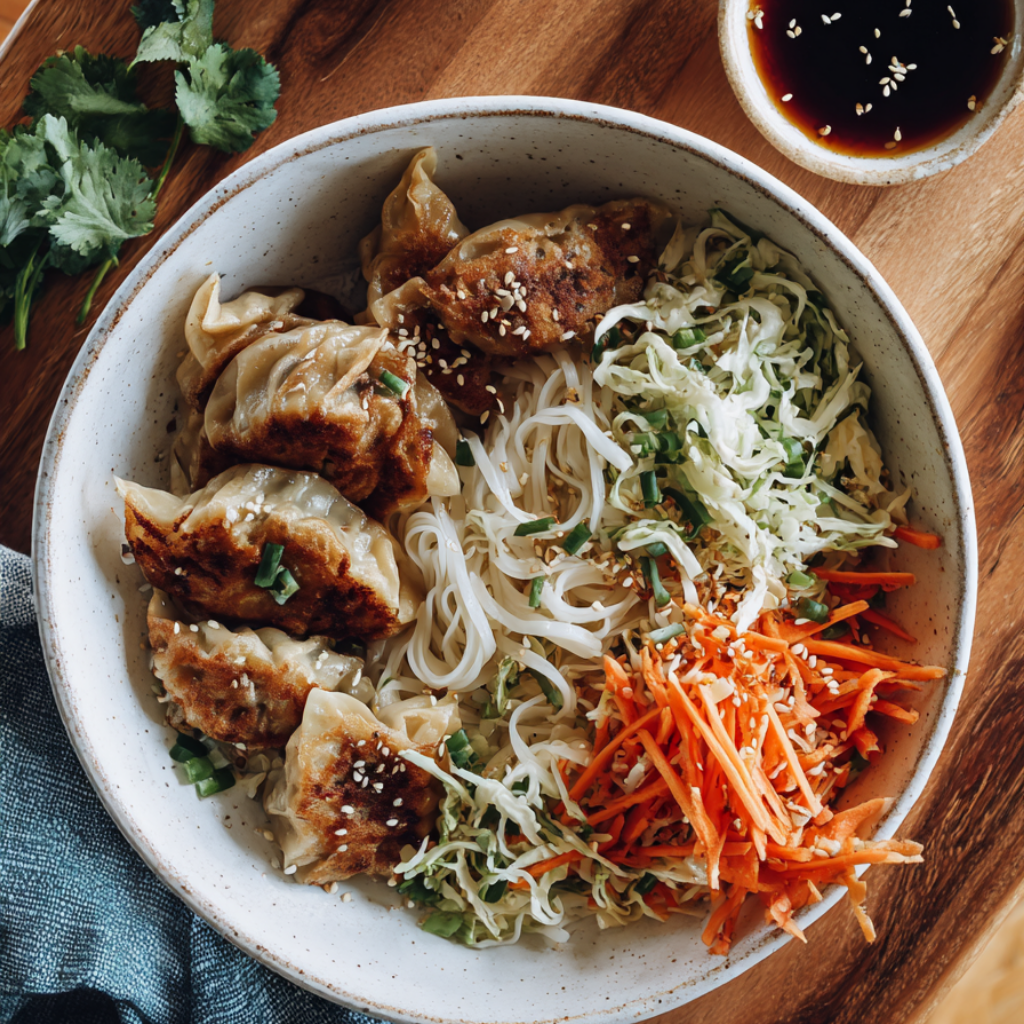
The gyoza came out soggy instead of crispy. This usually means you added too much water during the steam step, or the pan wasn’t hot enough when you added the gyoza. Use ¼ cup of water, no more, and let it cook off completely before removing the lid. Place the gyoza on top of the bowl, crispy side up, so they stay crisp.
The noodles clumped together. Rice noodles clump when they’re overcooked or under-rinsed. Soak them as directed on the package, rinse under cold water to remove surface starch, and drain them really well before adding them to the bowl.
If the slaw tastes flat or the sauce pools at the bottom, whisk the sauce until it’s fully emulsified before drizzling it over the slaw. A quick re-whisk right before you use it keeps the sauce from separating, and it coats the cabbage more evenly.
The bowl tastes flat. Taste the sauce before you use it. Soy sauce brands vary in saltiness, and chili garlic sauce brands vary in heat. If the sauce tastes too sharp, add a splash more soy or vinegar, and a pinch of sugar if it tastes too sharp.
The crispy gyoza went soft in a meal prep container. If you’re meal prepping this bowl, keep the gyoza in a separate container and re-crisp them in a skillet or the air fryer for 2 to 3 minutes before adding them to the bowl. The noodles and slaw hold up beautifully for a day or two, but the gyoza need a quick refresh.
Substitutions and Variations
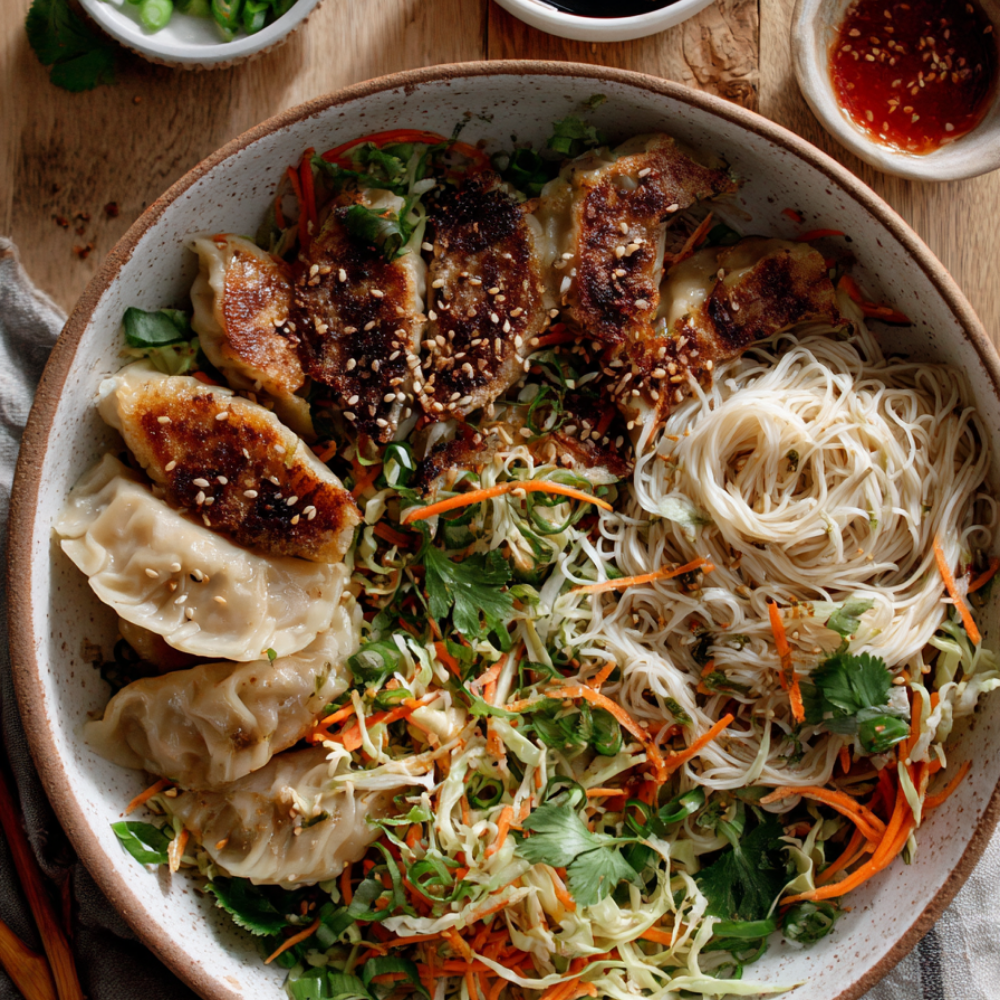
Potsticker noodle bowl with ground beef. Brown 1 pound of ground beef with 2 cloves of minced garlic and 1 tablespoon of grated ginger, then add it to the bowls along with the gyoza. I haven’t tested this variation for this specific recipe, so the seasoning and timing will vary.
Potsticker noodle bowl chicken. Swap the pork gyoza for chicken gyoza, or add 1 cup of shredded rotisserie chicken to the bowls along with the gyoza. I haven’t tested the shredded chicken version, so the protein count and balance will vary.
Potsticker noodle bowl with pork and cabbage slaw. This is the version in the recipe above — pork gyoza and a fresh cabbage slaw. It’s the most balanced and the easiest to assemble.
Potsticker noodle bowl gluten-free. Use gluten-free gyoza and tamari instead of soy sauce. Check that your rice vinegar and chili garlic sauce are gluten-free. I haven’t tested this version myself, so I’d recommend tasting the sauce carefully before serving.
Shrimp potsticker noodle bowl. Swap the pork gyoza for shrimp gyoza, or add 1 cup of cooked shrimp to the bowls along with the gyoza. I haven’t tested this variation, so the timing and protein count will vary.
Storage and Make-Ahead
You can make the sauce up to 1 week ahead and store it in a sealed jar in the refrigerator. Whisk it again before using so it’s fully emulsified. The cabbage slaw is best within 2 days, and the noodles are best within 1 day. Store them in separate containers so the noodles don’t get soggy, and the slaw stays crisp.
Store cooked gyoza in a sealed container in the refrigerator for up to 3 days. Re-crisp them in a skillet over medium-high heat for 2 to 3 minutes, or in the air fryer at 375°F for 3 to 4 minutes, before adding them to the bowl.
Assemble the bowls just before serving to keep the gyoza crispy. If you’re meal prepping, store the noodles, slaw, gyoza, and sauce in separate containers and assemble the bowl in the morning or at lunchtime.
Store leftovers in the refrigerator within 2 hours of cooking. Reheat the noodles and gyoza to 165°F before serving. Discard any bowl that has been left at room temperature for more than 2 hours.
Crispy Potsticker Noodle Bowl
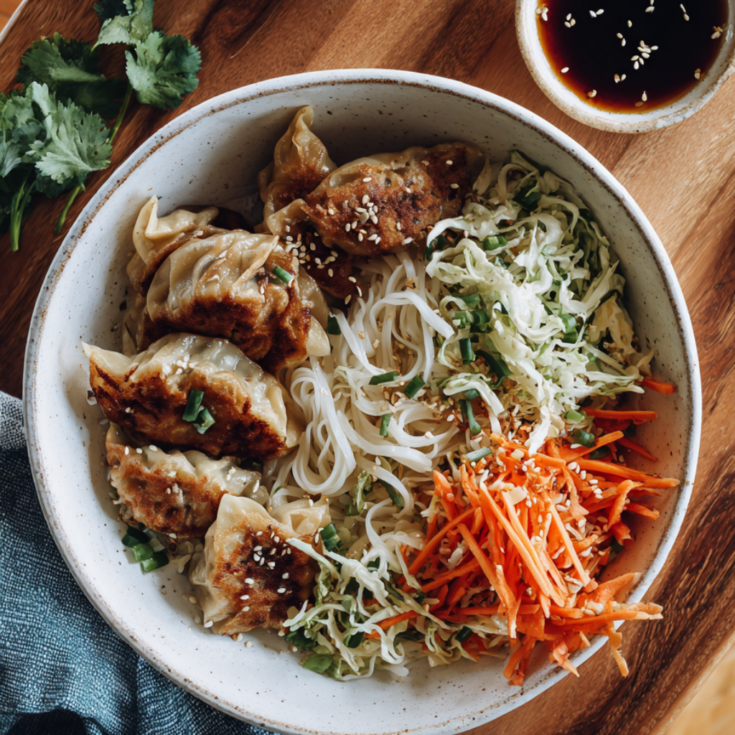
Crispy, pan-fried frozen gyoza over silky rice noodles and fresh cabbage slaw, drizzled with a 3-ingredient chili-garlic sauce. Ready in 25 minutes.
Ingredients
For the Sauce
- 3 tbsp soy sauce (or tamari for gluten free)
- 3 tbsp rice vinegar
- 1 to 2 tsp chili garlic sauce, plus more for serving
- Pinch of sugar, optional
For the Bowl
- 8 oz wide rice noodles
- 4 cups shredded green cabbage
- 1 cup shredded carrots
- 3 green onions, sliced, plus more for garnish
- 1 tbsp neutral oil, for the gyoza
- 20 frozen pork gyoza (about 1 lb)
- ¼ cup water, for steaming the gyoza
- 2 tbsp toasted sesame seeds
- ¼ cup fresh cilantro, chopped
- Lime wedges, for serving
Instructions
- Make the sauce. In a small bowl, whisk together the soy sauce, rice vinegar, chili garlic sauce, and sugar (if using) until fully combined and evenly colored. Taste and adjust the heat and seasoning. Set aside.
- Soak the rice noodles in hot water for the time listed on the package. Different rice noodle thicknesses require different soaking times, so check the package rather than guessing. When the noodles are tender but still slightly chewy, drain and rinse under cold water, then drain well and set aside.
- Make the slaw. In a large bowl, combine the shredded cabbage, shredded carrots, and sliced green onions. Re-whisk the sauce until fully emulsified, then drizzle 1 tablespoon over the slaw and toss to coat evenly.
- Pan-fry the gyoza. Heat the oil in a large skillet over medium-high heat. Add the frozen gyoza in a single layer and cook for 2 minutes without stirring, until the bottoms are golden. Add the water, cover, and steam for 4-5 minutes. Uncover and cook 1 minute more, until the water has cooked off and the bottoms are crisp.
- Assemble the bowls. Divide the noodles among four shallow bowls. Add a generous pile of slaw to each bowl and drizzle with the remaining sauce. Arrange the gyoza on top, leaning them against the noodle and slaw mound with the crispy side facing up.
- Finish and serve. Sprinkle with sesame seeds, cilantro, and extra green onions. Serve with lime wedges and extra chili garlic sauce on the side.
Notes
Notes: Store the noodles, slaw, gyoza, and sauce in separate containers in the refrigerator for up to 3 days. Re-crisp the gyoza in a skillet or air fryer before serving. Nutrition information is an estimate.
Nutrition (per bowl, estimated): About 490 calories, 18g protein, 68g carbs, 15g fat, 4g fiber, 1,180mg sodium.
FAQ
Can I use homemade gyoza for this bowl?
Yes. Pan-fry homemade gyoza the same way, but reduce the steaming time to 2 to 3 minutes since homemade dumplings are usually smaller and cook faster.
What kind of frozen gyoza is best for this bowl?
Pork, chicken, and vegetable gyoza all work. Look for a brand you already like, and make sure the gyoza are pan-fry style rather than soup style, which are usually smaller and thinner-skinned.
Can I make this bowl ahead of time?
You can prep the components up to 2 days ahead and store them separately. Store the noodles, slaw, gyoza, and sauce in separate containers so nothing gets soggy. Assemble the bowls just before serving.
Can I make this bowl gluten-free?
Yes. Use gluten-free gyoza and tamari instead of soy sauce. Check that your rice vinegar and chili garlic sauce are gluten-free.
What do I serve with a potsticker noodle bowl?
A simple cucumber salad, edamame with sea salt, or a small bowl of miso soup. A squeeze of lime and extra chili garlic sauce on the side are the most natural pairings.
More Easy Healthy Dinner Recipes You’ll Love
- 6 Budget-Friendly Asian Beef Bowl Recipes — 27–36g Protein, 25-Minute Family Dinners
- Budget-Friendly Asian Ground Chicken Stir Fry — 29g Protein, 20 Minutes
- Drunken Noodles with Chicken Recipe — 38g Protein, Better Than Takeout
- Homemade Stir Fry Sauce Recipe — 5 Minutes, Better Than Takeout
Closing
Serve this potsticker noodle bowl right after assembling it, with the gyoza leaning against the noodles and the slaw crispy-side up, a squeeze of lime, and extra chili garlic sauce on the side.
I tested this recipe in my kitchen with frozen pork gyoza, wide rice noodles, and pre-shredded cabbage, and I put the whole bowl together in 25 minutes, start to finish.
The ground beef, chicken, gluten-free, and shrimp variations in the substitutions section are untested, so the timing and protein counts will vary. If you try one and it works, I’d love to hear about it.