The long-awaited holiday season is here, and this cozy stretch of the year calls for the family traditions that make it feel like the holidays.
For me, that tradition is beef pot pie — the savory, hearty, fresh-out-of-the-oven dish that brings back my childhood every year. No winter goes by without me making it at least once.
The original version I grew up with is already pretty budget-friendly —it uses stew meat, one of the cheaper cuts of beef. But this year, I’m making it with ground beef instead.
Grocery budgets don’t magically expand just because I crave a childhood dish, and if I’m being honest, I find myself craving those dishes even more when things feel tight.
Maybe it’s the part of me that wants to remember the good old days, or the part that wants a stronger sense of normalcy. I don’t know exactly what it is, but I know I’m making this dish again this year, and this year it’s getting a ground-beef tweak.
I’m not going to pretend the ground beef version tastes better than the original. It doesn’t.
What it is, is more affordable, faster, and something I can pull together on a weeknight with a pound of ground beef from the freezer and a box of refrigerated pie crust.
It still tastes like the dish I remember — the savory beef, the tender carrots and potatoes, the rich brown gravy, the golden crust on top — and it’s still the kind of dinner that makes the house smell like a holiday and the table feel a little warmer. That’s the whole point.
Why This Version Works
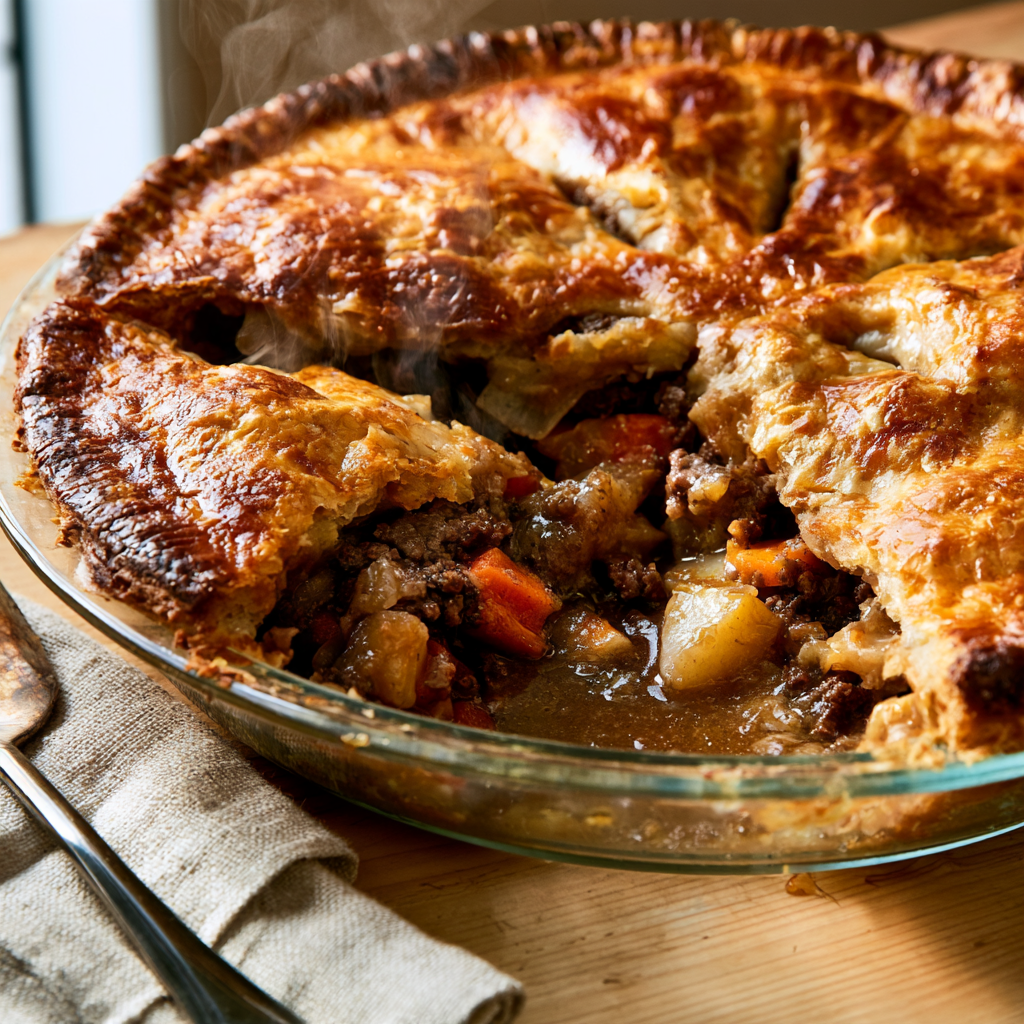
A few specific decisions make this ground beef pot pie work.
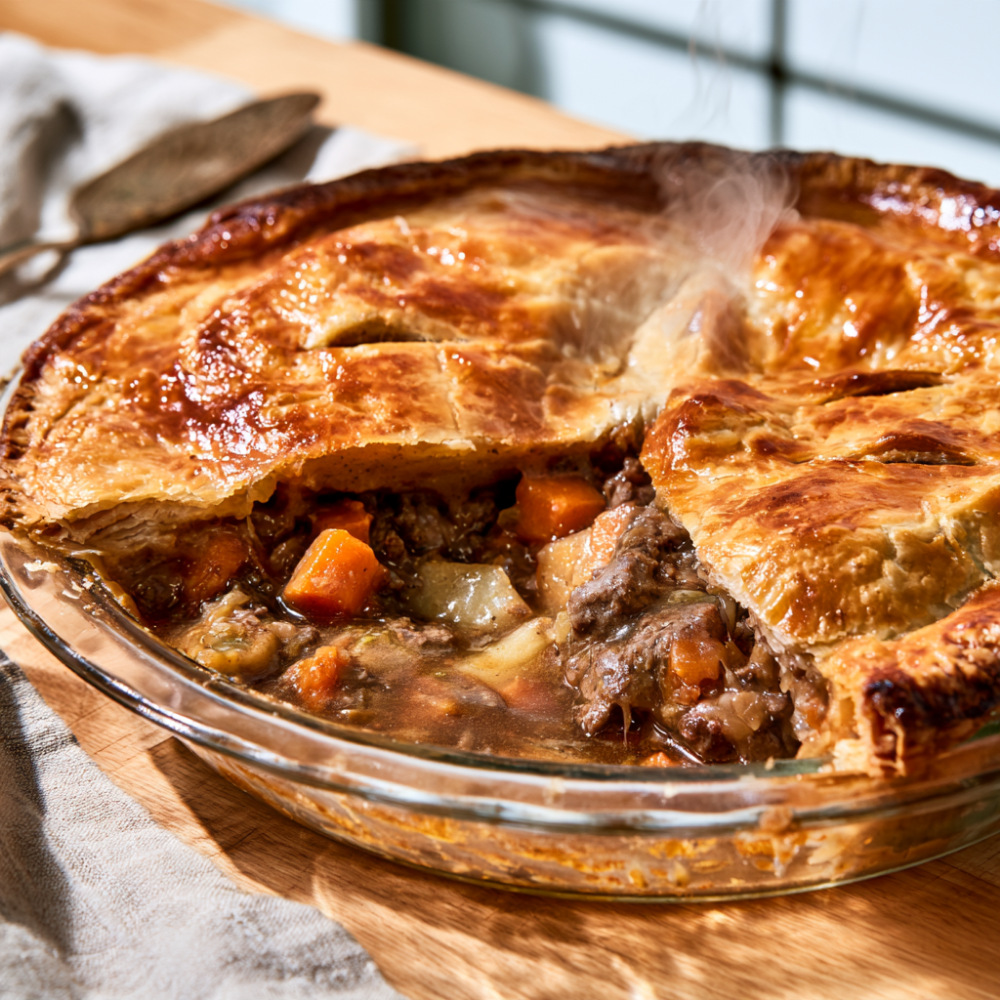
Bake at 400°F, not 350°F, and brush the top crust with egg wash. Refrigerated pie crust needs high heat to blast steam into the fat layers so the pastry turns flaky instead of gummy, and the bottom crust needs to set before the liquid soaks into it. Baking at 400°F for 30 to 35 minutes gets both. Brushing the top crust with a beaten egg and water gives it that deep golden-mahogany shine you see on bakery pies.
Build the filling in one skillet, and cook the vegetables right in the gravy. Simmer the potatoes and carrots in the beef broth in the same pan as the beef so they absorb the beef and aromatics as they cook, and you avoid washing a second pot. It also keeps the potato starch in the filling instead of washing it down the drain, which helps the gravy thicken naturally.
Add onion, garlic, tomato paste, Worcestershire sauce, and thyme. Ground beef simmered in plain canned beef broth tastes flat and slightly metallic. This version builds a real flavor base: diced onion and garlic cooked into the beef, a tablespoon of tomato paste for depth and color, a teaspoon of Worcestershire for umami, and a pinch of dried thyme for a warm, savory note. That combination is what makes the gravy taste like something instead of just brown liquid.
Thicken with a cornstarch slurry, and finish with butter. Cornstarch thickens quickly and gives the gravy a glossy, translucent texture instead of a cloudy, floury one. Whisking it into cold water first prevents lumps. Stir in a tablespoon of cold butter at the end to make the gravy silky and rich, the same way it works in a pan sauce.
Let the filling cool for 5 minutes before it goes into the crust. Piping-hot filling will start to cook the bottom crust and make it soggy before the pie even goes into the oven. Five minutes off the heat lets the filling settle without losing its warmth.
Cut vents and rest the pie before slicing. Vents let steam escape so the top crust doesn’t get soggy, and the filling doesn’t bubble over. Resting the pie for 10 minutes after it comes out of the oven lets the gravy set so the slices hold together instead of running all over the plate.
A Note on Peas
The pot pie I grew up with had peas, and most pot pie recipes call for them. I don’t like peas, so I leave them out of this version. That’s a personal preference, not a recipe decision — the peas don’t affect how the filling sets or how the crust bakes. If peas are part of your pot pie tradition, stir 1 cup of thawed frozen peas into the filling along with the cornstarch slurry. The recipe below includes them as an optional add-in, so you can decide.
Ingredients That Matter
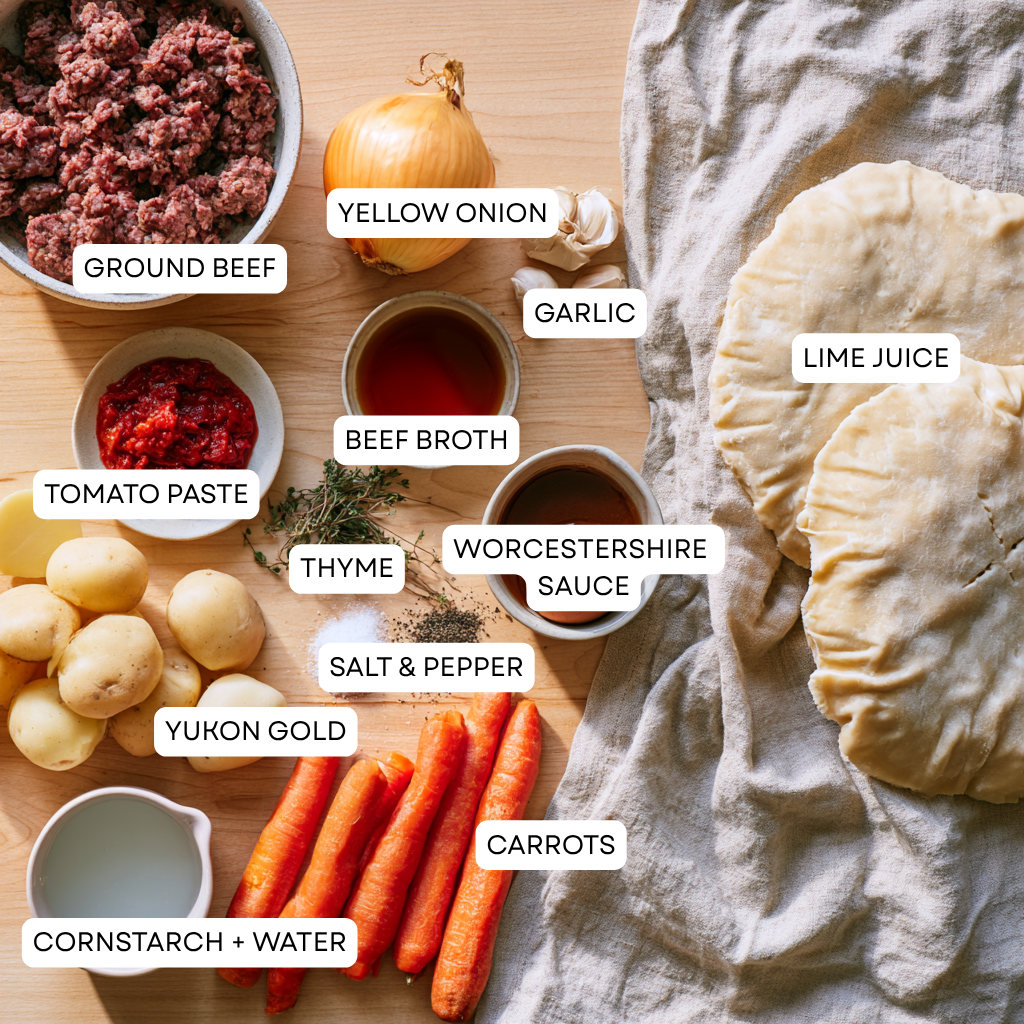
Most of the ingredients in this pot pie are straightforward. Three of them are easy to get wrong, so those are the ones worth explaining.
Ground beef. Use 85% lean ground beef, not 99% fat-free. The small amount of fat in 85% lean keeps the filling rich and gives the gravy a beefy flavor. If you only have 93% lean, add an extra tablespoon of butter to the skillet when you brown the beef. If you only have 99% fat-free, the filling will taste noticeably leaner, so add a little more Worcestershire and a splash more beef broth to compensate.
Refrigerated pie crust. The kind in the box, near the refrigerated cookie dough at the grocery store. Two crusts — one for the bottom and one for the top. Let them sit at room temperature for about 15 minutes before unrolling so they don’t crack. Frozen pie crust works too, but thaw it overnight in the refrigerator.
Cornstarch. Cornstarch is what thickens the gravy, and it’s easy to get wrong. Whisk it into cold water before adding it to the hot broth, or it will clump into little white balls that never dissolve. Once the slurry hits the simmering broth, it thickens within a minute or two.
How to Make It
Step 1: Preheat the oven and prep the pie plate.
Preheat the oven to 400°F. Lightly grease a 9-inch pie plate. Line it with one refrigerated pie crust, pressing it gently into the corners and trimming any excess from the edges. Set aside.
Step 2: Brown the beef with the onion and garlic.
Heat 1 tablespoon of olive oil in a large skillet or Dutch oven over medium-high heat. Add 1 pound of ground beef, 1 diced yellow onion, and 2 minced garlic cloves. Cook for 6 to 8 minutes, breaking the beef into small pieces with a wooden spoon, until browned and the onion is soft. Drain off all but about 1 tablespoon of the fat.
Step 3: Build the flavor base.
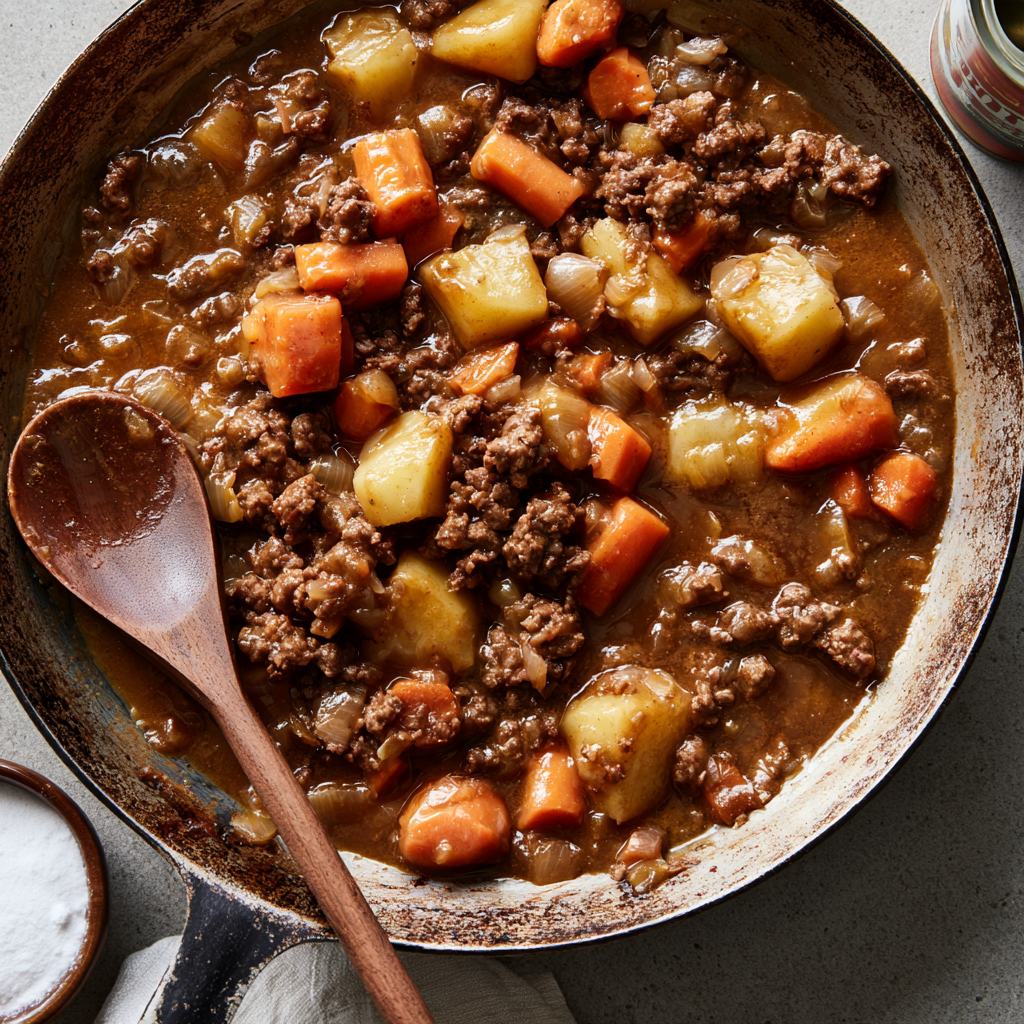
Stir in 1 tablespoon tomato paste, 1 teaspoon Worcestershire sauce, ½ teaspoon dried thyme, 1 teaspoon kosher salt, and ½ teaspoon black pepper. Cook for 1 minute, stirring constantly, until the tomato paste darkens slightly and the whole mixture smells savory.
Step 4: Simmer the vegetables in the gravy.
Pour in 1½ cups of low-sodium beef broth. Add 3 medium Yukon Gold potatoes, cut into ½-inch cubes, and 3 large carrots, diced into ¼-inch pieces. Bring to a boil, then reduce the heat to medium-low, cover, and simmer for 10 to 12 minutes, until the potatoes and carrots are tender-crisp.
Step 5: Thicken the gravy.
Whisk 2½ tablespoons cornstarch into 3 tablespoons cold water until fully dissolved. Stir the slurry into the simmering beef and vegetables. Cook uncovered for 2 minutes, stirring constantly, until the sauce thickens into a glossy, rich gravy. Remove from the heat, stir in 1 tablespoon of cold butter, and let the filling cool for 5 minutes. If you’re using peas, stir 1 cup of thawed frozen peas into the filling now.
Step 6: Assemble the pie.
Spoon the warm filling evenly into the prepared pie crust. Lay the second pie crust over the top and press the edges together to seal. Trim any excess crust and crimp the edges with a fork or your fingers. Cut 4 to 5 small slits in the center of the top crust so steam can escape.
Step 7: Egg wash and bake.
Whisk 1 egg with 1 tablespoon water, then brush it evenly over the top crust. Bake at 400°F for 30 to 35 minutes, until the crust is deep golden-brown and the filling is bubbling through the vents. If the edges start to brown too quickly, cover them loosely with strips of aluminum foil after 20 minutes.
Step 8: Rest and serve.
Transfer the pie to a wire rack and let it rest for 10 minutes before slicing. This lets the gravy set, so the slices hold together. Slice into wedges and serve warm, with a simple green salad or a side of roasted vegetables.
Tips and Troubleshooting
The bottom crust is soggy. This is almost always a temperature or timing issue. Bake at 400°F, not 350°F, and make sure the filling has cooled for 5 minutes before it goes into the crust. If the bottom crust is still soggy, your oven may be running cool — check it with an oven thermometer and adjust.
The gravy is too thin. Cornstarch needs to simmer for a full minute or two to fully activate. If the gravy still looks thin after 2 minutes, whisk another teaspoon of cornstarch into a tablespoon of cold water and stir it in. If it’s too thick, add a splash of beef broth.
The filling tastes flat. Taste the filling before it goes into the crust. Season it with more salt and pepper, and if it still tastes flat, add a splash more Worcestershire sauce or a pinch more dried thyme. The filling should taste slightly more seasoned than you want the finished pie, because the crust mutes the flavor a little.
The crust edges are burning. Cover the edges with strips of aluminum foil halfway through baking, and remove them for the last 5 to 10 minutes so the whole crust browns evenly.
The filling bubbled over in the oven. This means the vents weren’t large enough or the filling was too full. Cut 5 vents, not 3, and leave about ½ inch of space between the filling and the top crust so it has room to bubble.
Substitutions and Variations
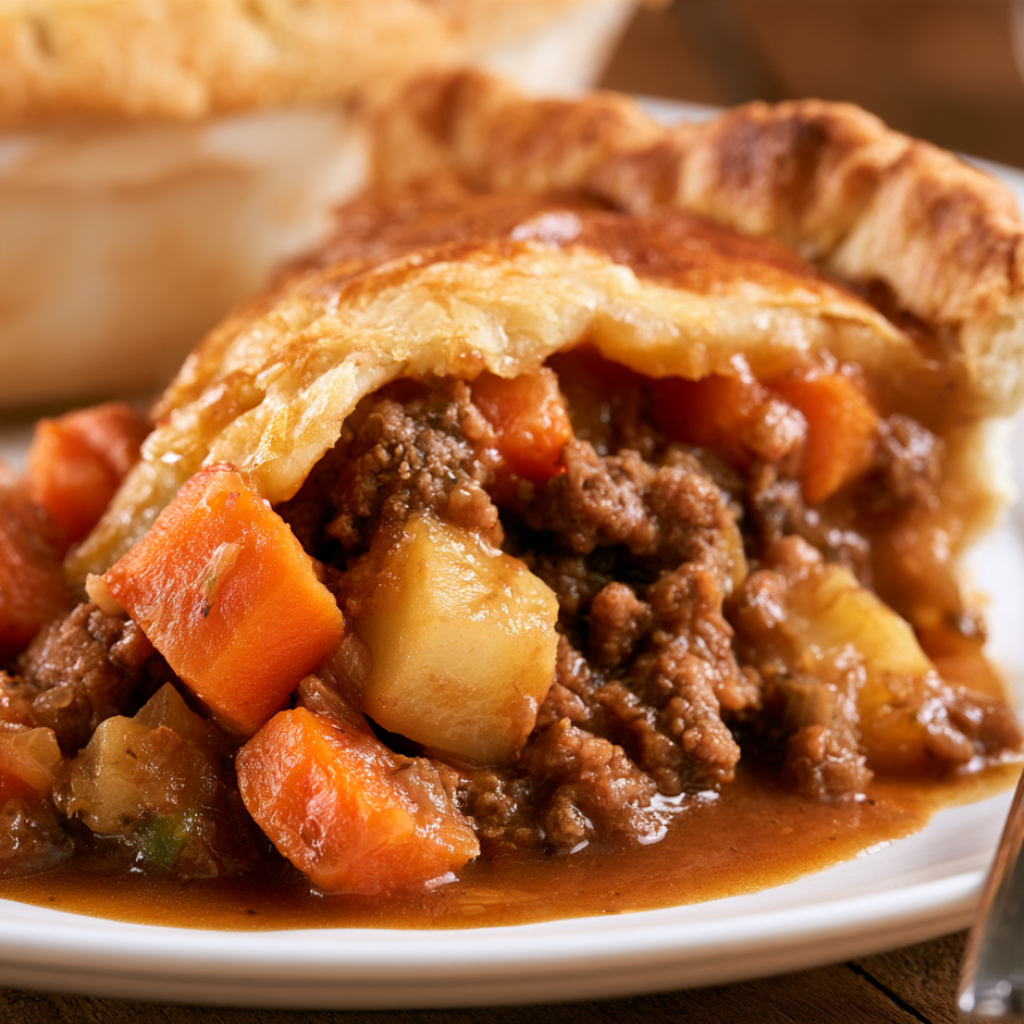
Beef pot pie with stew meat (tested by the original recipe). For the classic version, use 1 pound cubed sirloin steak instead of ground beef; brown it in a saucepan, add water to almost cover, and simmer 2 to 3 hours, until the meat falls apart. Then proceed with the rest of the recipe. This version takes about 3 hours total, but the meat is more substantial, and the flavor is deeper.
Beef pot pie with frozen vegetables (I have not tried this). Swap the fresh potatoes and carrots for 3 cups of frozen mixed vegetables. Add them along with the broth and simmer for 5 minutes instead of 10 to 12, since frozen vegetables cook faster. I haven’t tested this version, so the texture may vary.
Storage and Make-Ahead
You can make the filling up to 2 days ahead and store it in a sealed container in the refrigerator. When you’re ready to bake, warm the filling on the stovetop before adding it to the crust, then proceed with the recipe.
You can assemble the unbaked pie up to 1 day ahead, cover it, and refrigerate it. Add 5 to 10 minutes to the bake time to account for the cold filling.
Store cooked pot pie in a sealed container in the refrigerator for up to 3 days. Reheat individual slices in a 350°F oven for 10 to 12 minutes, or in the microwave in 60-second bursts. The crust will soften in the microwave, so the oven gives the best texture.
You can freeze the baked pie whole or in individual slices for up to 3 months. Thaw overnight in the refrigerator and reheat in a 350°F oven for 15 to 20 minutes, until warmed through and the crust is crisp again.
Store leftovers in the refrigerator within 2 hours of cooking. Reheat to 165°F before serving. Discard any pie left at room temperature for more than 2 hours.
FAQ
Can I use stew meat instead of ground beef?
Yes. Use 1 pound of cubed sirloin steak, brown it in a saucepan, add water to almost cover, and simmer for 2 to 3 hours until the meat falls apart. Then proceed with the rest of the recipe. This version takes about 3 hours total, but the texture and flavor are closer to the classic.
Can I add peas?
Yes. Stir 1 cup of thawed frozen peas into the filling along with the cornstarch slurry. The peas don’t affect how the filling sets or how the crust bakes — leaving them out is just a personal preference, and either version works.
Can I make this pot pie ahead of time?
Yes. You can make the filling up to 2 days ahead and refrigerate it. You can assemble the unbaked pie up to 1 day ahead, cover it, and refrigerate it. Add 5 to 10 minutes to the bake time to account for the cold filling.
Why do you bake this at 400°F instead of 350°F?
Refrigerated pie crust needs high heat to turn flaky and to set the bottom crust before the liquid soaks in. Baking at 350°F produces a pale, gummy bottom crust. 400°F for 30 to 35 minutes gets a deeply golden, flaky crust and a filling that’s bubbling but not burned.
How do I keep the bottom crust from getting soggy?
Bake at 400°F, let the filling cool for 5 minutes before adding it to the crust, and make sure the gravy is fully thickened before you add it. If you’re still worried, brush the bottom crust with a beaten egg before adding the filling — it creates a barrier against moisture.
More Ground Beef Recipes You’ll Love
- Cottage Pie Recipe — Easy Ground Beef Dinner, Budget-Friendly & Cozy
- Crockpot Pierogi Casserole with Kielbasa Recipe — High Protein, Budget-Friendly
- High-Protein Chicken Pot Pie Casserole: All the Comfort, None of the Guilt
Closing
Serve this beef pot pie warm with a simple green salad or roasted vegetables. Eat it the day it’s baked, but leftovers reheat beautifully in the oven.
I made this ground beef version in my kitchen with refrigerated pie crust and 85% lean ground beef, and the recipe card’s timing and texture reflect what worked in that test.
The puff pastry, frozen vegetable, and ground turkey variations in the substitutions section are untested, so the timing and texture may vary.