Two kinds of dinners earn a permanent spot in my winter rotation.
The kind I plan for—the Sunday roast, the holiday spread, the meal I shop for specifically.
And the kind I don’t plan for at all. The clean-out-the-fridge dinner that starts with a pound or two of ground beef and whatever vegetables are on their last legs, and ends with a bubbling, golden-topped casserole that nobody realizes was built from leftovers.
Cottage pie is that second kind of dinner. And it might be the best of them.
Here’s what makes it so forgiving. Start with a base of savory ground beef, onions, and a rich gravy made from tomato paste, Worcestershire sauce, and a splash of red wine or stout.
Then you fold in whatever vegetables you have on hand—carrots and celery and peas are the classic trio, but mushrooms, parsnips, frozen corn, or a handful of spinach all work beautifully.
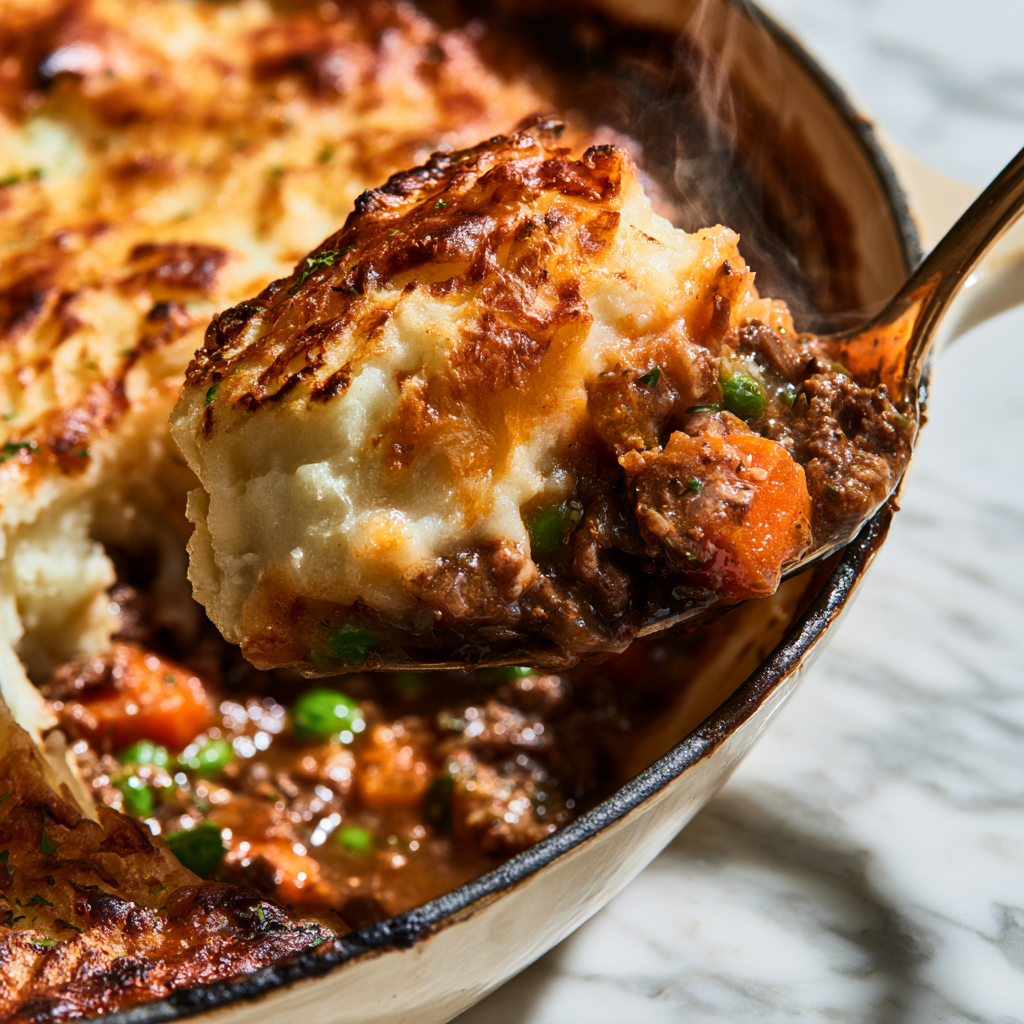
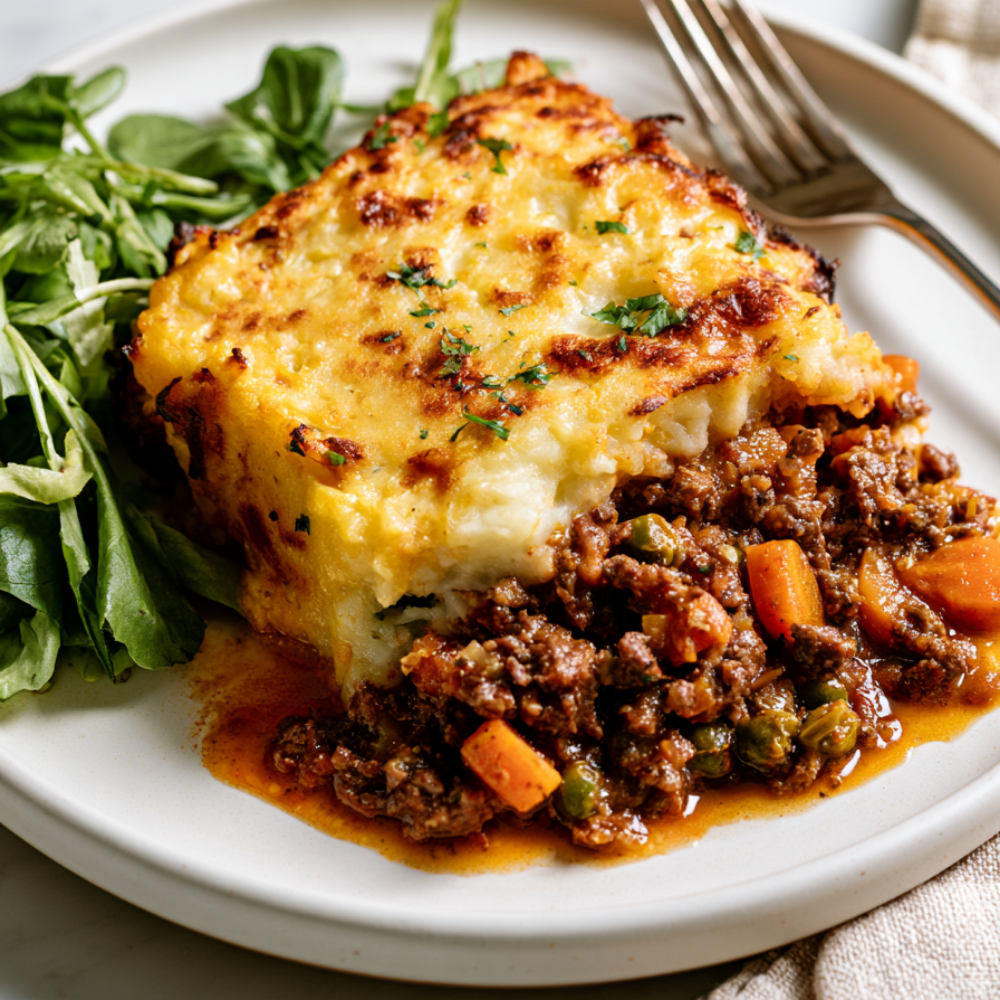
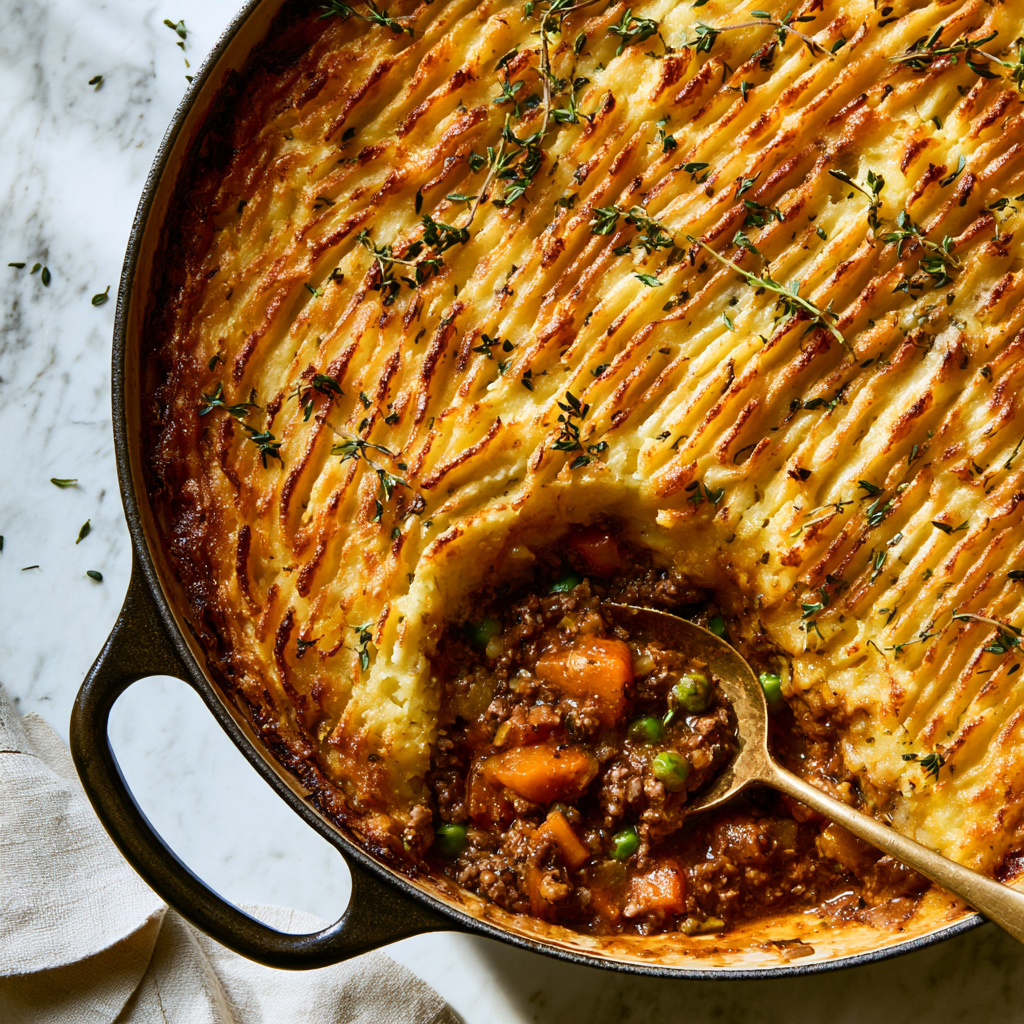
Simmer it in a Dutch oven until it thickens into something deeply savory, then top with a thick layer of creamy mashed potatoes and bake until the top is golden and crispy at the edges.
The vegetables you have on hand. The meat you bought on sale. The mashed potatoes that cost pennies to make. And you get a casserole that feeds eight people for about $3 a serving.
That’s the whole point of cottage pie. It’s hearty, it’s warm, it’s packed with protein and vegetables, and it’s the kind of dinner that makes a cold Tuesday feel like a holiday.
A quick note on the name, since people ask. Cottage pie is made with beef. Shepherd’s pie is made with lamb (shepherds tend sheep). Same idea, same construction, different meat.
This version uses ground beef, which is cheaper, more widely available, and, honestly, what most people picture when they think of this dish anyway.
This cottage pie earns a permanent spot on your winter menu.
Why This Recipe Works
This isn’t a complicated dish, but a few small decisions make it work better than most cottage pie recipes. Here’s what actually matters:
Use a Dutch Oven, Not a Skillet. A heavy Dutch oven is the right vessel for this dish. It holds heat evenly for browning the beef, contains splatter while the filling simmers, and can go straight into the oven to bake. If you don’t have a Dutch oven, a deep oven-safe skillet or a large braising pot works too.
Brown the Beef in Batches. Two pounds of ground beef is a lot for a standard pan. If you add it all at once, the temperature drops, the meat releases liquid, and it steams instead of searing. Brown it in two batches so each batch gets a deep, caramelized crust. That browning is where the flavor comes from.
Use 80/20 or 85/15 Ground Beef. Lean beef doesn’t have enough fat to develop real flavor in the filling. 80/20 or 85/15 has just enough fat to brown beautifully without leaving the dish greasy. Drain off the excess fat after browning, but leave a little behind to flavor the vegetables.
Add Mushrooms to Stretch the Beef. Finely chopped mushrooms add meaty, savory depth that mimics beef and stretches two pounds of meat to feed more people. They also bring umami that makes the filling taste richer than it is. It’s a classic budget-cooking trick.
Bloom the Tomato Paste. Tomato paste straight from the can tastes raw and metallic. Cooking it with the vegetables for a full minute, stirring constantly, until it darkens from bright red to deep brick-red, is what transforms it into a sweet, concentrated base.
Layer the Umami. Worcestershire sauce, soy sauce (or fish sauce), and a splash of red wine or stout all add depth to the filling. Each one brings something different. Worcestershire brings tang and anchovy umami, soy sauce brings salt and savory depth, and the wine or stout brings richness and a little acidity.
Thicken With Flour, Not Cornstarch. Cook a tablespoon of flour into the beef and vegetables to create a roux that thickens the broth into a proper gravy as it simmers. Cornstarch works but can turn gluey. Flour gives you a silky, savory gravy that holds up under the mashed potato topping.
Simmer Until Thick, Not Soupy. The filling should be thick enough to hold its shape when you spoon it, not loose and watery. If it looks thin before the topping goes on, simmer uncovered for another 5 minutes to reduce.
Steam the Potatoes After Draining. This step keeps the mashed potatoes fluffy instead of waterlogged. After you drain the boiled potatoes, return them to the hot pot over low heat for 1 to 2 minutes, stirring occasionally, to steam off the excess moisture. Wet mashed potatoes make a soggy cottage pie topping.
Cool the Filling Slightly Before Topping. If you spoon mashed potatoes over a boiling hot filling, the potatoes sink into the gravy and never form a proper layer. Let the filling cool for 5 to 10 minutes before adding the mashed potatoes.
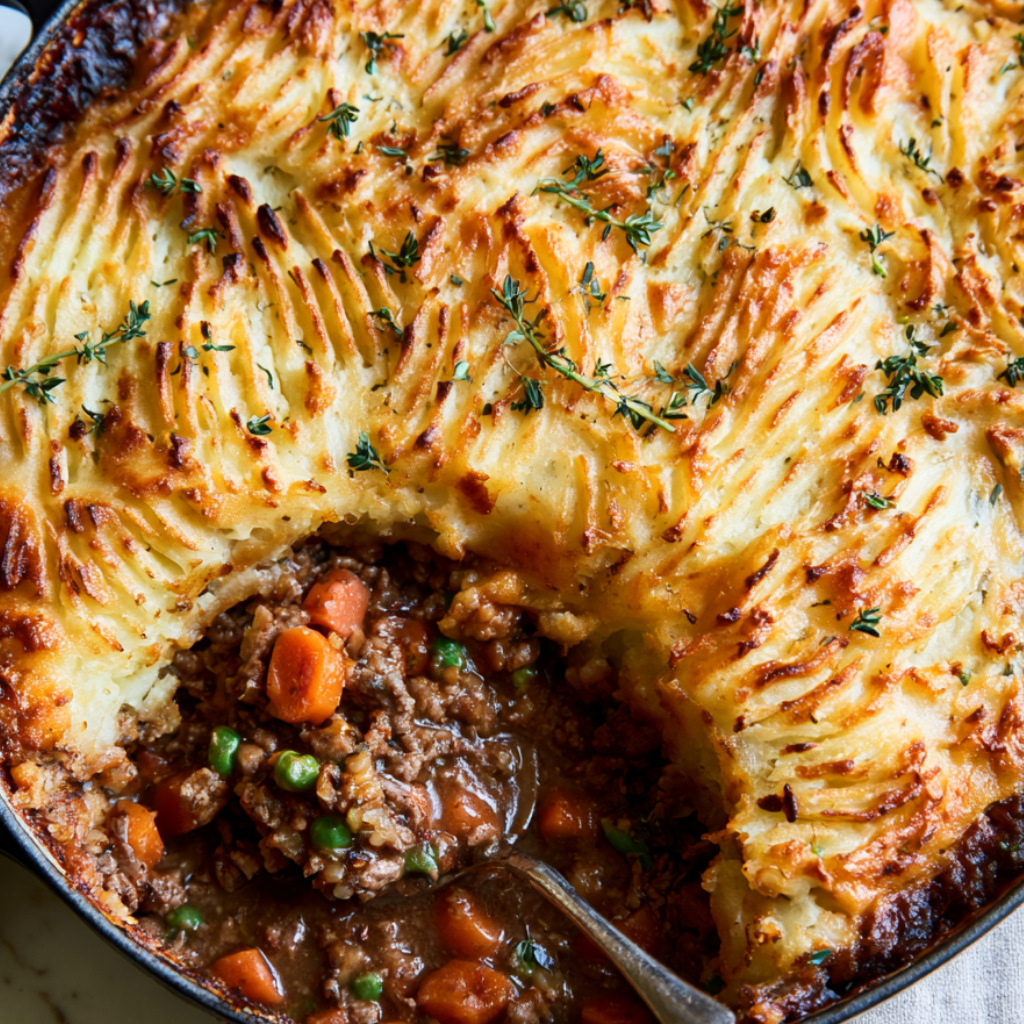
Fork the Top of the Mashed Potatoes. Dragging a fork across the top creates ridges and peaks that crisp up beautifully in the oven. It’s what gives cottage pie that golden, craggy, deeply browned top that looks so good.
Bake at 400°F, Then Broil. Baking at 400°F heats the filling through and starts to brown the potatoes. A quick 2 to 3 minute broil at the end gives you that deep golden top with crispy edges.
Let It Rest Before Serving. Cottage pie needs to rest for 10 to 15 minutes after it comes out of the oven. This lets the filling set so servings hold together on the plate instead of sliding apart.
This meal earns its spot in the rotation. It’s savory, hearty, and undeniably delicious.
Cost Breakdown
This casserole costs about $23 to $25 to make, or roughly $3 per serving across 8 generous portions. Ground beef is the biggest line item, so buying it on sale or using 90% lean brings the total down further—and if you already have carrots, celery, or mushrooms in the fridge, this dinner gets even cheaper.
Cottage Pie Recipe
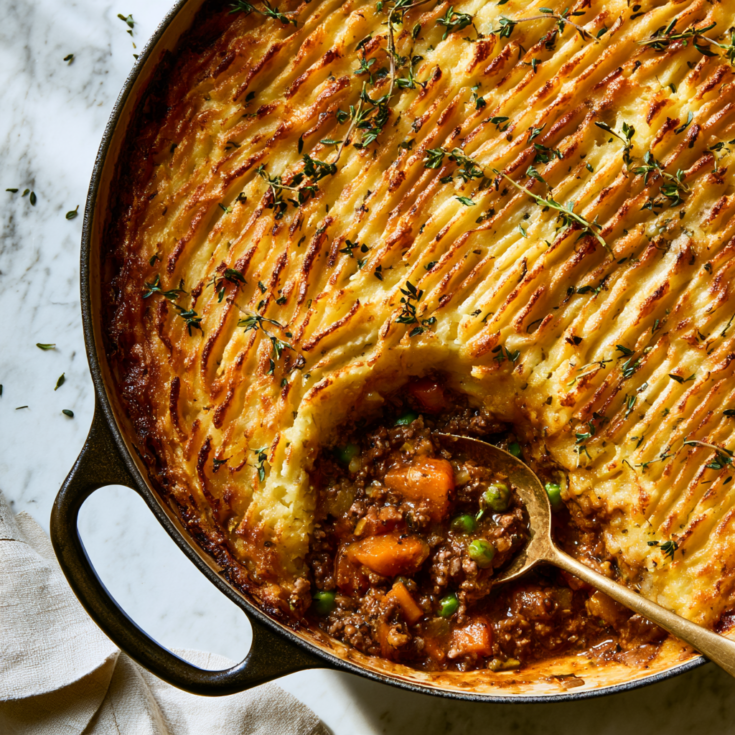
A budget-friendly cottage pie with ground beef, mushrooms, vegetables, and a rich gravy, topped with creamy mashed potatoes and baked until golden and crispy.
Ingredients
For the Beef Filling
- 2 lbs 85% lean ground beef
- 2 tbsp olive oil, divided
- 1 large yellow onion, diced
- 3 large carrots, peeled and diced
- 2 celery stalks, diced
- 8 oz cremini mushrooms, finely chopped
- 4 cloves garlic, minced
- 3 tbsp tomato paste
- 2 tbsp all-purpose flour
- 1 cup low-sodium beef broth
- ½ cup dry red wine or stout (or additional beef broth)
- 2 tbsp Worcestershire sauce
- 1 tbsp soy sauce or fish sauce
- 1 tsp dried thyme
- 1 tsp dried rosemary, crushed
- 2 bay leaves
- 1 tsp kosher salt
- ½ tsp freshly ground black pepper
- 1 cup frozen peas
For the Mashed Potato Topping
- 2½ lbs Yukon Gold potatoes, peeled and cut into 1-inch chunks
- 1 tbsp kosher salt, for the boiling water
- 4 tbsp unsalted butter
- ½ cup whole milk, warmed
- ½ cup sour cream or plain Greek yogurt
- 1 large egg yolk
- 1 cup shredded sharp cheddar (optional but recommended)
- ¼ cup freshly grated Parmesan
- Kosher salt and freshly ground black pepper, to taste
Instructions
- Preheat and prep. Preheat the oven to 400°F. If you're not baking in the Dutch oven, set a 9x13 baking dish or a large cast-iron skillet on the counter.
- Brown the beef. Heat a large Dutch oven over medium-high heat. Add 1 tablespoon of olive oil. Add half the ground beef and cook for 5 to 6 minutes, breaking it into crumbles but letting it sit undisturbed for 30 seconds at a time so it browns. Transfer to a bowl. Repeat with the remaining beef. Drain off all but about 1 tablespoon of fat from the pot.
- Sauté the vegetables. Reduce the heat to medium. Add the remaining 1 tablespoon of olive oil, the diced onion, carrots, and celery. Cook for 6 to 8 minutes, until the vegetables soften and the onion becomes translucent. Add the chopped mushrooms and cook for another 4 to 5 minutes, until they release their liquid and it cooks off. Add the minced garlic and cook for 30 seconds.
- Bloom the tomato paste. Stir in the tomato paste, thyme, rosemary, salt, and pepper. Cook for 1 minute, stirring constantly, until the tomato paste darkens to a deep brick-red color.
- Add the flour. Sprinkle the flour over the vegetables and stir constantly for 1 minute, until the flour is absorbed and the raw taste cooks out.
- Build the filling. Pour in the beef broth, red wine or stout, Worcestershire sauce, and soy sauce. Stir to combine, scraping up any browned bits from the bottom of the pot. Add the bay leaves and return the browned beef to the pot. Bring to a gentle simmer and cook for 12 to 15 minutes, uncovered, until the filling thickens into a rich gravy. Stir in the frozen peas and cook for 2 more minutes. Remove the bay leaves.
- Make the mashed potatoes. While the filling simmers, place the potatoes in a large pot and cover with cold water by 1 inch. Add 1 tablespoon of kosher salt. Bring to a boil and cook for 15 to 18 minutes, until the potatoes are fork-tender. Drain well, then return the potatoes to the hot pot over low heat for 1 to 2 minutes, stirring occasionally, to steam off excess moisture. This step is what keeps the mashed potatoes fluffy instead of waterlogged. Add the butter, warmed milk, sour cream or Greek yogurt, and egg yolk. Mash until smooth and creamy. Stir in the shredded cheddar and Parmesan if using. Season with salt and pepper to taste.
- Assemble. If your filling is in the Dutch oven, smooth it into an even layer. If not, transfer the filling to a 9x13 baking dish. Let it cool for 5 to 10 minutes so the mashed potatoes don't sink in. Spoon the mashed potatoes over the filling and spread them into an even layer, making sure they reach the edges to seal in the filling. Drag a fork across the top to create ridges and peaks.
- Bake. Place the baking dish on a rimmed sheet pan to catch any drips. Bake at 400°F for 25 to 30 minutes, until the filling is bubbling at the edges and the mashed potato topping is golden brown.
- Broil for extra color. Switch the oven to broil and broil on the middle rack for 2 to 3 minutes, watching closely, until the top is deeply golden and crispy at the ridges.
- Rest and serve. Let the cottage pie rest for 10 to 15 minutes before serving. This allows the filling to set so the portions hold together. Cut into 8 squares and serve with a simple green salad or steamed green beans.
Notes
Protein per Serving: About 24gNutrition Note: Protein calculated from 2 lbs 85% lean ground beef yielding about 24 oz cooked (≈136g protein), 8 oz cremini mushrooms (≈3g), 1 cup frozen peas (≈8g), and 1 cup shredded cheddar in the potatoes (≈28g) — about 175g total across 8 servings — about 24g per serving. About 520 calories per serving. Using 90% lean ground beef drops the calories to about 480 per serving, and the protein stays about the same. Skipping the cheddar drops the calories by about 50 per serving.
Make-Ahead and Storage Instructions
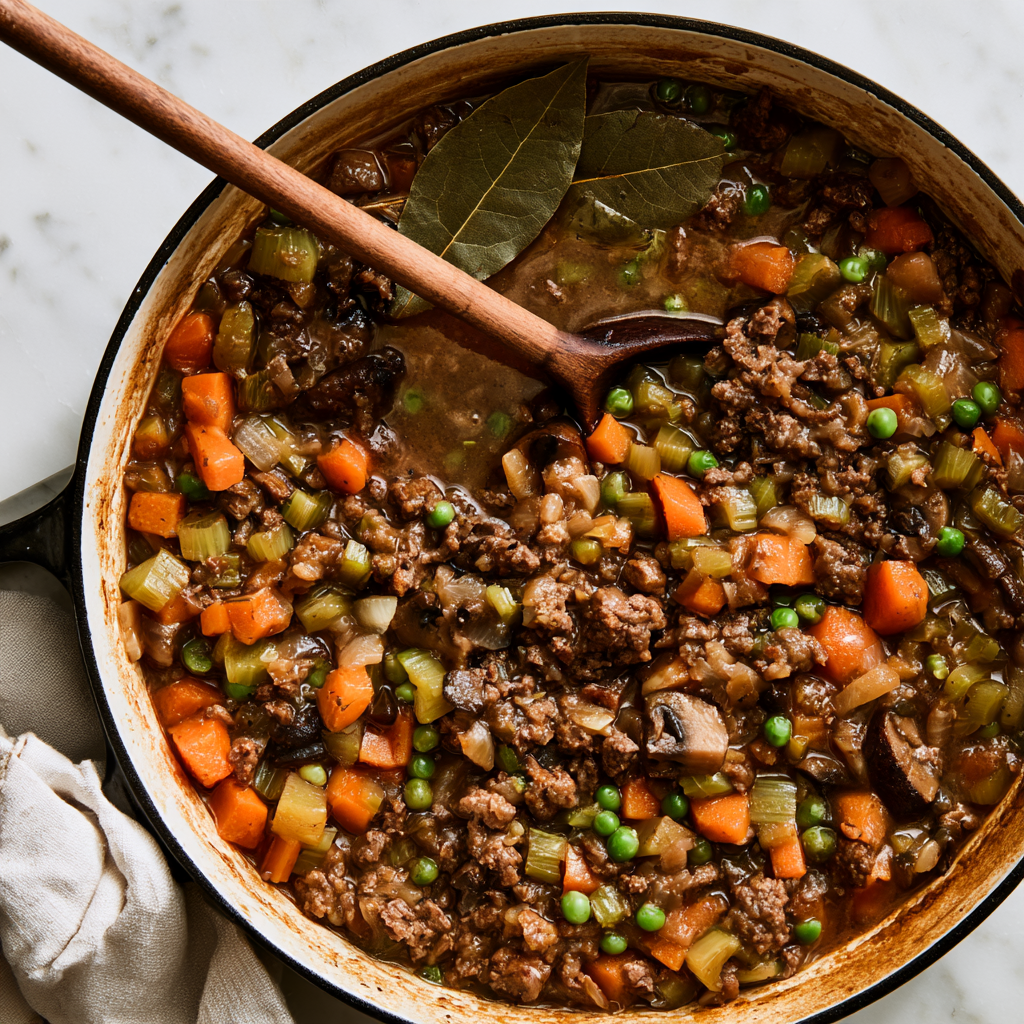
Make Ahead: You can make the beef filling up to 3 days ahead and store it covered in the refrigerator. You can make the mashed potatoes up to 2 days ahead and store them in a separate container. Assemble and bake fresh, or assemble the whole dish, cover, and refrigerate up to 24 hours in advance. Add 5 to 10 minutes to the bake time if starting from cold.
Refrigerator: Store leftovers covered in an airtight container for up to 4 days. Reheat individual portions in the microwave for 2 to 3 minutes, or in a 350°F oven for 15 to 20 minutes if you’re reheating a larger portion.
Freezer: This is one of the best freezer-friendly casseroles you can make. Assemble the cottage pie completely in a foil pan, cover tightly with plastic wrap and heavy-duty foil, and freeze for up to 3 months. Bake from frozen at 400°F covered for 50 minutes, then uncovered for 20 to 25 minutes, until heated through and golden on top. Or thaw overnight in the refrigerator and bake as directed.
Tips for the Best Cottage Pie
Brown the beef in batches. Two pounds of beef in a standard pot will steam instead of sear. Cook in two batches so each batch gets deep browning.
Add mushrooms to stretch the beef. Finely chopped mushrooms add a meaty, savory depth and stretch two pounds of meat to feed more people.
Bloom the tomato paste until it darkens. Cook it for a full minute with the vegetables, stirring constantly, until it turns deep brick-red.
Thicken with flour, not cornstarch. Cooking a tablespoon of flour into the vegetables creates a proper roux. Cornstarch can turn gluey.
Simmer until thick, not soupy. The filling should hold its shape when spooned. If it looks thin, simmer uncovered for another 5 minutes.
Steam the potatoes after draining. Return drained potatoes to the hot pot over low heat for 1 to 2 minutes to steam off excess moisture. This keeps the mashed potatoes fluffy and the topping sturdy.
Cool the filling slightly before topping. A 5- to 10-minute rest prevents the mashed potatoes from sinking into the gravy.
Reach the potatoes to the edges. This seals in the filling and prevents it from bubbling up around the sides.
Fork the top for crispy ridges. Drag a fork across the mashed potatoes to create peaks that brown deeply in the oven.
Bake on a sheet pan. The filling can bubble over the edges. A rimmed sheet pan catches drips and keeps your oven clean.
Rest for 10 to 15 minutes before serving. This lets the filling set, so portions hold together on the plate.
Easy Variations
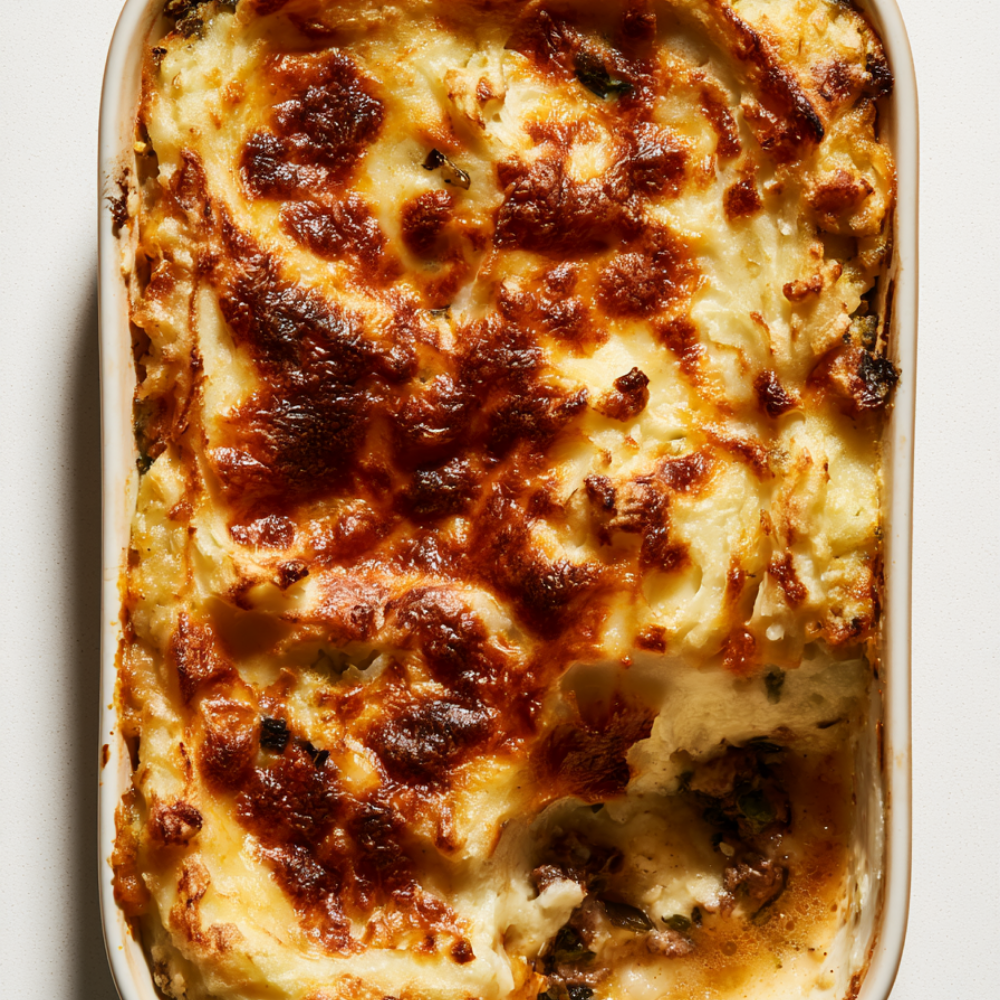
Shepherd’s Pie. Swap the ground beef for 2 lbs of ground lamb. The flavor is richer and gamier, and it’s the traditional version.
Cottage Pie with Guinness. Swap the red wine for 1 cup Guinness or another stout. The stout adds a deep, roasted, slightly bitter depth that pairs beautifully with the beef.
Cheesy Cottage Pie. Double the cheddar in the mashed potatoes to 2 cups, and sprinkle another ½ cup over the top before baking.
Sweet Potato Cottage Pie. Swap the Yukon Gold potatoes for sweet potatoes. The slightly sweeter topping pairs beautifully with the savory beef filling.
Storage and Food Safety
Refrigerator: Store leftovers covered in an airtight container for up to 4 days. Reheat in the microwave or in a 350°F oven.
Freezer: Assemble in a foil pan, cover tightly with plastic wrap and foil, and freeze for up to 3 months. Bake from frozen as directed.
Make Ahead: Make the filling up to 3 days ahead. You can make the mashed potatoes up to 2 days ahead. Assemble and bake fresh.
Food Safety: Ground beef must reach an internal temperature of 160°F before serving. Cool leftovers within 2 hours and refrigerate promptly. Reheat leftovers to 165°F. Do not leave the cottage pie at room temperature for more than 2 hours.
Frequently Asked Questions
What’s the difference between cottage pie and shepherd’s pie? Cottage pie uses ground beef. Shepherd’s pie uses ground lamb. The two dishes are otherwise identical.
Is cottage pie the same as cottage cheese pie? No. Cottage pie is a savory beef-and-mashed-potato casserole. Cottage cheese pie is a completely different dish, usually a dessert or a cheesecake-style pie made with cottage cheese.
How much protein is in cottage pie? About 24g per serving from the ground beef, mushrooms, peas, and cheddar across 8 servings.
How much does this cottage pie cost to make? About $23 to $25 total, or roughly $3 per serving across 8 portions.
Can I use leftover vegetables? Yes, and that’s the whole spirit of this dish. Carrots, celery, and peas are the classic combination, but mushrooms, parsnips, frozen corn, or a handful of spinach all work beautifully. Add them during the simmer so they have time to cook through.
Can I use ground turkey instead of beef? Yes. Use 2 lbs of 93% lean ground turkey. Brown it the same way, and add 1 extra tablespoon of olive oil to help it brown.
Can I make this without wine? Yes. Use an extra ½ cup of beef broth and add 1 tablespoon of Worcestershire sauce. The flavor will be slightly less complex but still delicious.
Can I use instant mashed potatoes? Yes, but the texture won’t be the same. Homemade mashed potatoes with butter, milk, and sour cream are what make the topping so good.
Can I make this ahead and freeze it? Yes. Assemble the cottage pie completely in a foil pan, cover tightly, and freeze for up to 3 months. Bake from frozen at 400°F covered for 50 minutes, then uncovered for 20 to 25 minutes.
Can I make this dairy-free? Yes. Use dairy-free butter, dairy-free milk, dairy-free sour cream, and skip the cheddar. Expect a slightly different texture but the same flavor profile.
Can I make this gluten-free? Yes. Use gluten-free all-purpose flour or cornstarch in place of the flour, and use gluten-free Worcestershire sauce and soy sauce.
What do I serve with cottage pie? Serve with a simple green salad, steamed green beans, roasted Brussels sprouts, or crusty bread. It’s a complete meal on its own.
Can I double the recipe? Yes. Use two 9×13 baking dishes or a larger Dutch oven. You may need to cook the beef in three batches instead of two.
More Ground Beef Recipes You’ll Love
Homemade Hamburger Helper Recipe
Creamy Tomato Ground Beef Orzo Recipe
Freezer Cheeseburger Casserole Recipe
Shepherd’s Pie Recipe with Ground Beef
Conclusion
A Cottage Pie recipe is the kind of dinner that earns its spot on the fall and winter table. It’s savory, hearty, and undeniably delicious. With about 24 grams of protein per serving and a price of about $3 a plate, it’s one of the most budget-friendly casseroles you can make.
The restaurant version is delicious and also expensive. This one keeps all the rich beef filling, the creamy mashed potato topping, and the golden, crispy edges you love, and rebuilds it at home in one Dutch oven in about an hour. Brown the beef in batches for maximum flavor.
The mushrooms stretch the meat and add depth. The umami comes from tomato paste, Worcestershire, soy sauce, and a splash of wine. Fork the mashed potatoes on top for ridges that crisp up deep golden in the oven.
Three things make it work: Brown the beef in batches. Simmer the filling until it’s thick, not soupy. And steam the potatoes after draining so the topping stays fluffy.
About 24 grams of protein per serving. Eight generous portions for about $3 each. Ready in about an hour, freezer-friendly, and endlessly adaptable with lamb, turkey, or sweet potato versions.
Make it this weekend and watch the whole family go back for seconds. This cottage pie earns a permanent spot on the table.