For years, I bought bone broth at the store. It’s convenient and it’s shelf-stable, but the more I used it in daily cooking — in rice, in gravy, in soup — the more I realized I could never keep enough of it at home.
I’d buy three cartons, use them in a week, and be back at the store buying more. So instead of trying to keep up with the store, I started making my own broth out of chicken bones I’d otherwise throw away.
Homemade broth turns out to be almost embarrassingly easy. Chicken bones, vegetables, water, and time are all it takes, and the crockpot does most of the work. Now, almost every Tuesday, a grocery store near me puts rotisserie chicken on sale, so I buy one almost every week. On Wednesday or Thursday, I make homemade chicken broth out of the carcass and whatever vegetables are in the fridge, and I almost never have to buy chicken broth at the store anymore.
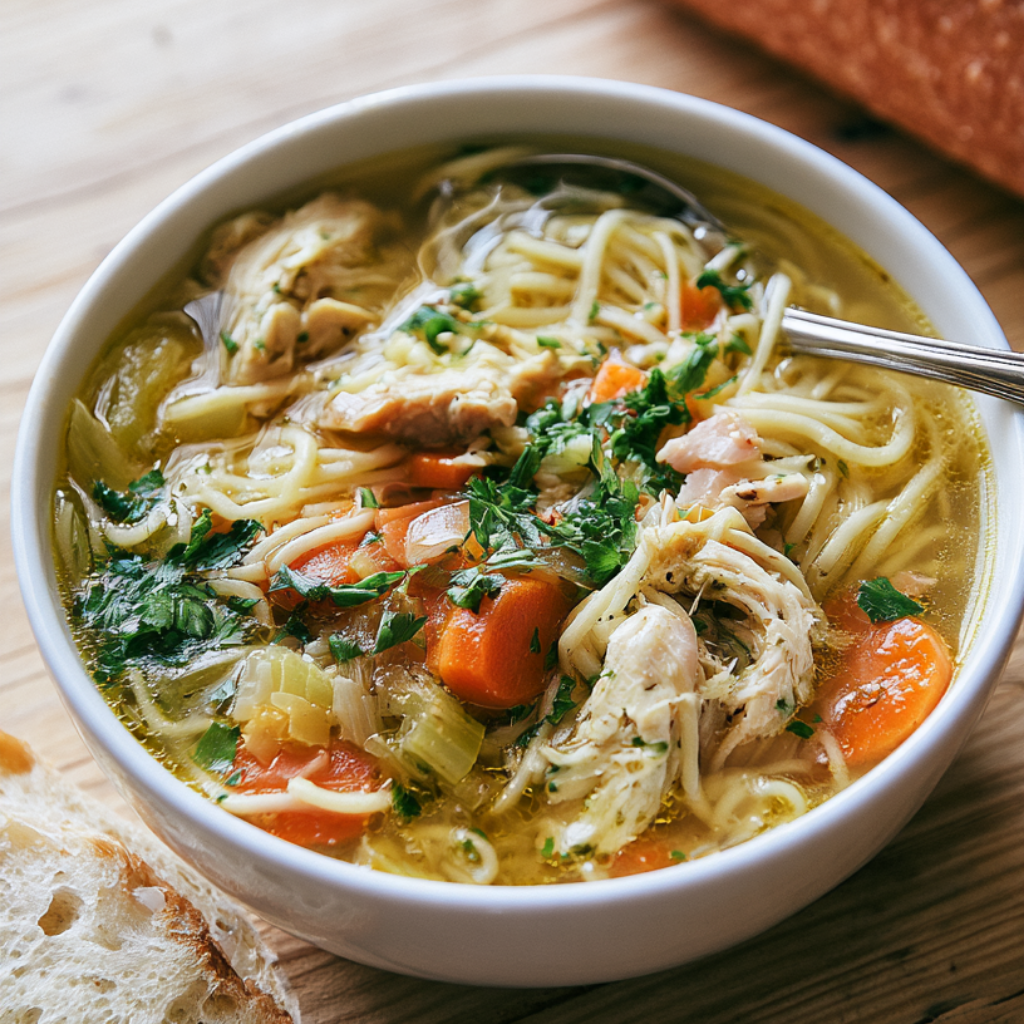
This broth is the base for my gravy all fall and winter, and I use it to make seasoned rice, soup, and any dish that needs a richer, deeper flavor than water can give.
It’s the kind of thing that makes the whole kitchen smell like a Sunday afternoon as it simmers, and it makes you realize how much flavor you’ve been missing from the carton.
If you’re looking for a collagen boost — the thick, jiggly texture that store-bought broth rarely has — the secret is adding chicken wings or chicken feet. I’ll be honest: I’ve included chicken neck and chicken feet in the recipe because they’re the richest source of collagen, and I recommend them to anyone who wants a truly gelatinous broth.
But I haven’t gotten comfortable using them in my own cooking yet, so I don’t use them in this version. If you’re a more adventurous cook, by all means, go for it — the instructions for both versions are in the recipe below.
Why This Method Works
A few specific decisions make this crockpot bone broth work.
Roast the bones first, even for chicken. Roast raw chicken and beef bones at 400°F for 20 to 30 minutes before adding them to the slow cooker. Roasting kicks off the Maillard reaction, deepening the broth’s flavor and color, and it also helps prevent the gamey odor raw bones can develop during a long cook. If you’re using a leftover cooked rotisserie carcass, you can skip the roasting step — the chicken has already been roasted.
Add chicken wings or chicken feet for maximum collagen. The carcass alone will give you a good broth, but if you want the thick, jiggly “gel” that indicates dense collagen and gelatin, add ½ pound of chicken wings or chicken feet. They’re packed with joint collagen, and they turn a good broth into a great one. I’ve included both versions in the recipe, and I’ve been honest about which one I use.
Add the vinegar directly to the water, and skip the 30-minute soak. Letting the bones sit in cold water and vinegar for 30 minutes before turning on the slow cooker doesn’t extract meaningful minerals or collagen on its own. Heat combined with acid over hours breaks down the connective tissue. Skip the soak and add the vinegar directly to the water.
For beef broth, add the vegetables during the last 6 hours of cooking. Vegetables and sulfur-rich garlic break down over a long cook, and after 24 hours they can make the broth cloudy, sweet, or slightly bitter. Adding the vegetables during the last 6 hours of cooking keeps the flavor brighter and cleaner.
Don’t add salt during the cook. Bone broth reduces as it cooks, and if you salt it at the beginning, the final broth can end up too salty. Season it to taste after it’s strained and cooled.
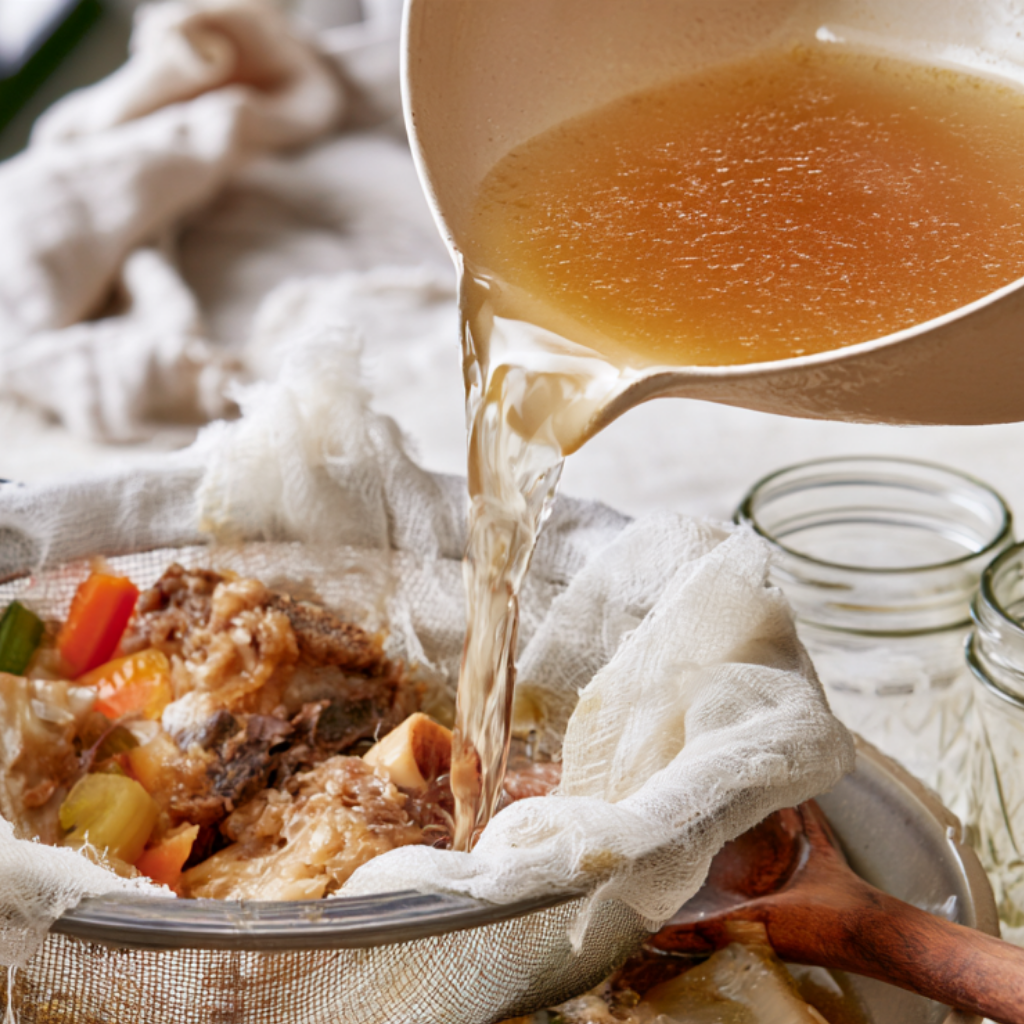
Strain well, and chill the broth to remove the fat. Pour the broth through a fine-mesh strainer lined with cheesecloth to remove the bones, vegetables, and any small particles. Then refrigerate the broth overnight so the fat rises and solidifies on top. Skim off the fat, and you’re left with a clear, golden, rich broth that turns jiggly when cold.
Ingredients That Matter
Most of the ingredients in this bone broth are straightforward. Three of them are easy to get wrong, so those are the ones worth explaining.
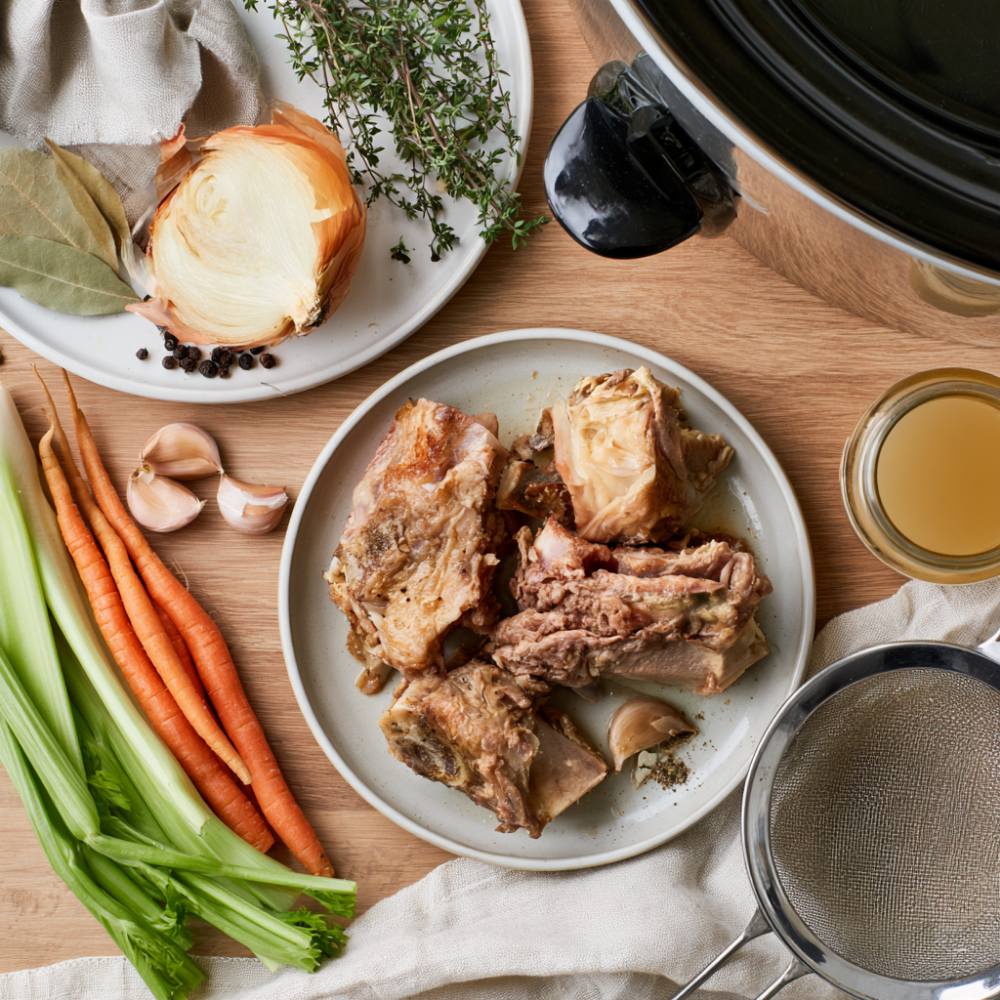
Bones. Chicken bones — a rotisserie chicken carcass, raw chicken backs and necks, or a bag of chicken frames from the butcher — will make chicken bone broth in about 12 to 14 hours. Beef bones — marrow bones, knuckle bones, and oxtail or short rib bones — will make beef bone broth in about 18 to 24 hours. If you’re using raw bones, roast them at 400°F for 20 to 30 minutes first.
Apple cider vinegar. The vinegar helps pull minerals and collagen out of the bones, which is why the broth comes out rich and gelatinous instead of thin and watery. Use a good quality apple cider vinegar with “the mother” if you can find it, and add it directly to the water rather than soaking the bones in advance.
Chicken wings or chicken feet (optional but recommended). If you want a broth that’s thick and jiggly when chilled, add ½ pound of chicken wings or chicken feet. They’re packed with joint collagen, and they’re the richest source of gelatin in the pot. I’ve included this as an option in the recipe, and I’ve been honest in the intro that I don’t use them in my own cooking yet.
How to Make It
Step 1: Roast the raw bones.
Preheat the oven to 400°F. Spread the raw bones on a rimmed baking sheet and roast beef bones for 25 to 30 minutes, or chicken bones for 20 to 25 minutes, until deeply golden brown. If you’re using a leftover cooked rotisserie carcass, skip this step.
Step 2: Load the slow cooker.
Transfer the roasted or cooked bones into a 6-quart or larger slow cooker. Scrape in any caramelized pan drippings. Add 2 tablespoons of apple cider vinegar.
Step 3: Add the aromatics and water.
Add 1 halved yellow onion (skins on), 2 carrots cut into 2-inch chunks (unpeeled), 2 celery stalks cut into 2-inch chunks, 4 smashed garlic cloves, 2 bay leaves, 1 teaspoon of whole black peppercorns, and 3 to 4 sprigs of fresh thyme or parsley stems. Pour in cold filtered water until the bones and vegetables are fully submerged, leaving about 1 inch of headspace at the top.
Step 4: Cook on low.
For chicken bone broth, cover and cook on low for 12-14 hours. For beef bone broth, cover and cook on low for 18 to 24 hours, adding the vegetables during the last 6 hours of cooking for the cleanest flavor.
Step 5: Strain.
Turn off the slow cooker and let the broth cool for 30 minutes. Set a fine-mesh strainer lined with cheesecloth or a clean flour-sack towel over a large bowl or pot. Ladle the broth through the strainer, pressing lightly on the solids to extract liquid, then discard the bones and vegetables.
Step 6: Chill and skim the fat.
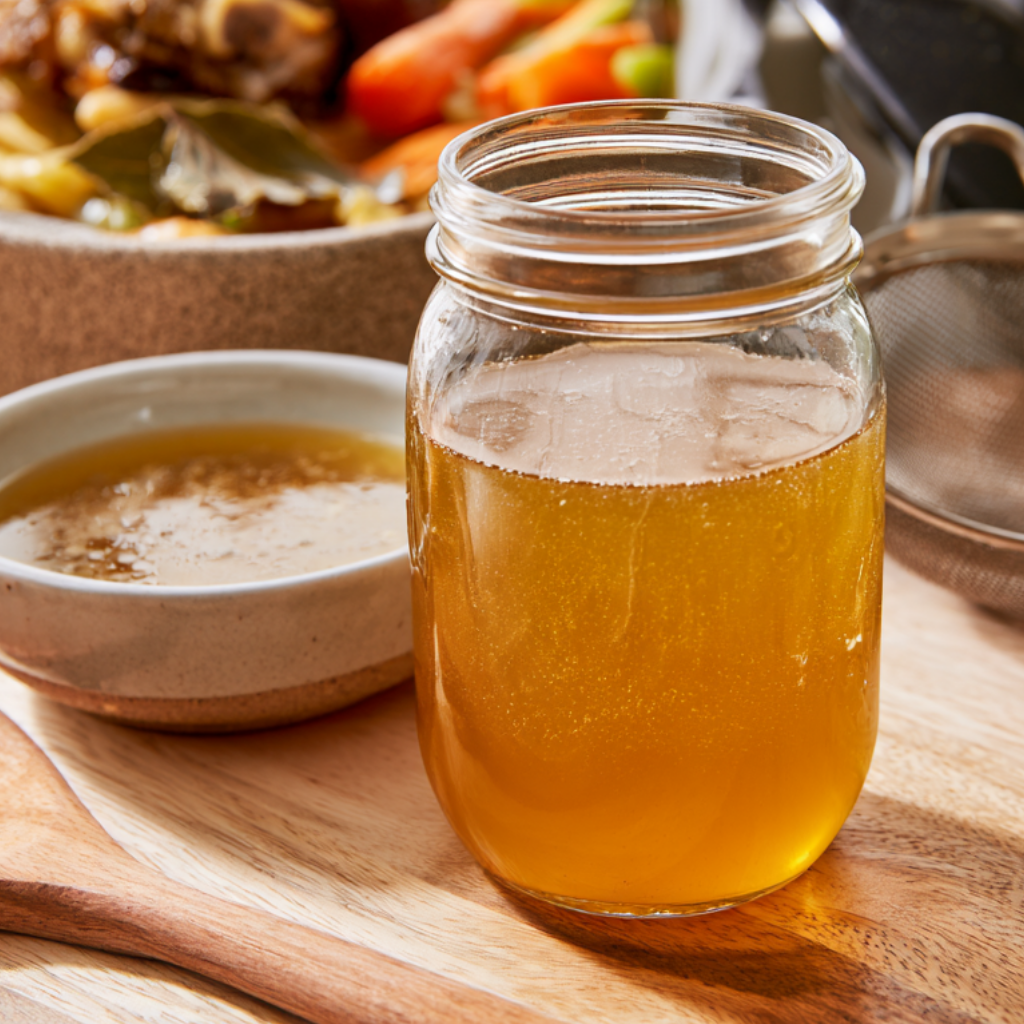
Divide the broth into glass jars or airtight containers and refrigerate overnight. As it cools, the fat will rise to the top and form a solid yellow or white disk. Scrape it off with a spoon and save it for roasting vegetables, or discard it. Underneath the fat, the broth should be clear, golden, and jiggly when cold.
Step 7: Season and store.
Season the broth with kosher salt to taste. Store in the refrigerator for up to 5 days, or freeze in portions for up to 6 months.
Tips and Troubleshooting
The broth turned out thin and watery. This usually means the bones didn’t cook long enough, or the pot didn’t have enough joint collagen. Chicken bones need 12 to 14 hours, and beef bones need 18 to 24 hours. Add ½ pound of chicken wings or chicken feet next time for a thicker, jigglier result.
The broth tasted gamey or slightly off. This happens when you put raw bones in the slow cooker without roasting them first. Roast raw chicken and beef bones at 400°F for 20 to 30 minutes before adding them to the pot.
The broth turned cloudy or tasted slightly bitter after a long beef cook. This usually means the vegetables cooked for the full 18 to 24 hours. Add the vegetables during the last 6 hours of cooking for beef broth to keep the flavor brighter and the broth clearer.
The broth spoiled quickly in the refrigerator. Properly strained bone broth, stored in a sealed container, will keep for up to 5 days. If it spoiled faster, it may not have cooled quickly enough before you refrigerated it. Cool it in an ice bath, or divide it into smaller containers before refrigerating.
Substitutions and Variations
Chicken bone broth with chicken wings or feet. Add ½ pound of chicken wings or chicken feet to the pot along with the chicken carcass. The broth will come out noticeably thicker and jigglier when chilled. I haven’t tested this version myself because I haven’t gotten comfortable cooking with chicken feet yet, but I’d recommend it for anyone who wants maximum collagen.
Beef bone broth (tested). Use a mix of beef marrow bones, knuckle bones, and oxtail or short rib bones. Roast the raw bones at 400°F for 25 to 30 minutes before putting them in the slow cooker. Cook on low for 18 to 24 hours, adding the vegetables during the last 6 hours. I tested this version in my kitchen, and the broth came out deeply colored, rich, and gelatinous.
Turkey stock from carcass bone broth (I have not tested this). Use a turkey carcass instead of chicken bones, and cook on low for 12 to 14 hours. Turkey bones are larger than chicken bones, so they may need an extra hour or two. I haven’t tested this version, so the timing may vary.
Bone marrow broth. Use marrow bones as the main bone in the pot, and roast them at 400°F for 25 to 30 minutes before adding them. Marrow bones produce a richer, fattier broth that’s delicious but heavier. I haven’t tested this version, so the texture may vary.
Storage and Make-Ahead
You can make bone broth up to 5 days ahead and store it in a sealed container in the refrigerator. It can also be frozen in portions — mason jars, freezer bags, or ice cube trays — for up to 6 months.
If you’re freezing bone broth in mason jars, leave about 2 inches of space at the top so the broth has room to expand as it freezes. Otherwise, the jar can crack.
Reheat bone broth gently on the stovetop over low heat, or in the microwave in 60-second bursts. Don’t boil it, which can break down the collagen and turn the broth cloudy.
Store leftovers in the refrigerator within 2 hours of cooking. Reheat to 165°F before serving. Discard any broth left at room temperature for more than 2 hours.
Bone Broth in a Crockpot
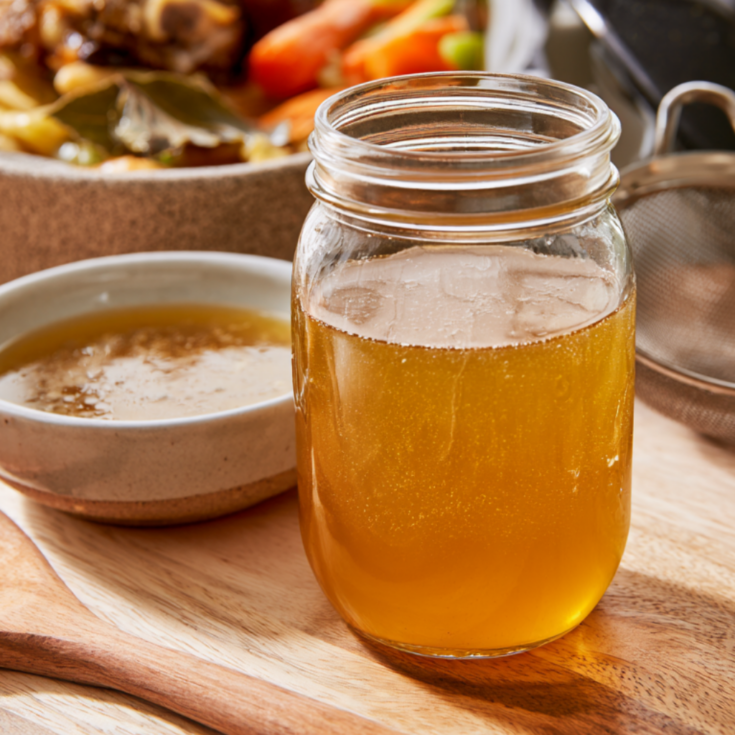
A rich, velvety, collagen-packed bone broth slow-cooked with roasted bones, fresh aromatics, and apple cider vinegar. Naturally gelatinous, deeply savory, and perfect for sipping or cooking.
Ingredients
- 3 lbs bones (for chicken: a rotisserie chicken carcass plus raw backs and necks; for beef: marrow bones, knuckle bones, and oxtail or short rib bones)
- Optional for maximum collagen: ½ lb chicken wings or chicken feet
- 2 tbsp apple cider vinegar
- Cold filtered water, enough to cover (about 12 to 14 cups)
- 1 large yellow onion, halved (skins on)
- 2 large carrots, cut into 2-inch chunks (unpeeled)
- 2 celery stalks, cut into 2-inch chunks
- 4 cloves garlic, smashed (unpeeled)
- 2 bay leaves
- 1 tsp whole black peppercorns
- 3 to 4 sprigs fresh thyme or parsley stems
- Kosher salt, to taste (season after straining)
Instructions
- If using raw chicken or beef bones, preheat the oven to 400°F and roast them on a rimmed baking sheet for 20 to 25 minutes for chicken or 25 to 30 minutes for beef, until deeply golden. If using a leftover cooked rotisserie carcass, skip this step.
- Transfer the roasted or cooked bones to a 6-quart or larger slow cooker. Scrape in any caramelized pan drippings. Add the apple cider vinegar.
- Add the onion, carrots, celery, garlic, bay leaves, peppercorns, and fresh thyme. If you're using chicken wings or chicken feet for extra collagen, add them now. Pour in cold filtered water until the bones and vegetables are fully submerged, leaving about 1 inch of headspace at the top.
- For chicken bone broth, cover and cook on low for 12 to 14 hours. For beef bone broth, cover and cook on low for 18 to 24 hours, adding the vegetables during the last 6 hours of cooking.
- Turn off the slow cooker and let the broth cool for 30 minutes. Set a fine-mesh strainer lined with cheesecloth or a clean flour-sack towel over a large bowl, and ladle the broth through the strainer. Discard the bones and vegetables.
- Divide the broth into glass jars or airtight containers and refrigerate overnight. Scrape off the solidified fat from the top and save it for cooking, or discard it.
- Season the broth with kosher salt to taste. Store in the refrigerator for up to 5 days, or freeze in portions for up to 6 months.
Notes
Notes: Store in the refrigerator for up to 5 days or in the freezer for up to 6 months. If freezing in mason jars, leave about 2 inches of space at the top so the broth has room to expand. Nutrition information is an estimate and varies based on the bones and vegetables used.
Nutrition (per cup, estimated): About 45 calories, 9g protein, 1g carbs, 1g fat, 0g fiber, 150mg sodium.
FAQ
What kind of bones should I use for bone broth?
Chicken bones — a rotisserie chicken carcass, raw chicken backs and necks, or chicken frames — make chicken bone broth in about 12 to 14 hours. Beef bones — a mix of marrow, knuckle, and oxtail or short rib bones — make beef bone broth in about 18 to 24 hours. Roast raw bones of either kind at 400°F for 20 to 30 minutes before adding them to the slow cooker.
How do I make my bone broth gelatinous?
The thick, jiggly texture comes from collagen, which is concentrated in joints and connective tissue. Add ½ pound of chicken wings or chicken feet to the pot with the other bones, and cook long enough for the collagen to break down. Chicken needs 12 to 14 hours, and beef needs 18 to 24 hours.
Do I need to soak the bones in vinegar before cooking?
No. Adding apple cider vinegar directly to the slow cooker water is enough. The heat combined with the acid over hours is what breaks down the connective tissue — a 30-minute soak at room temperature doesn’t extract meaningful collagen or minerals on its own.
Can I make bone broth in the Instant Pot instead of the crockpot?
Yes. Combine the same ingredients in an Instant Pot, pressure cook on high for 2 hours for chicken bones or 3 hours for beef bones, and let the pressure release naturally for 30 minutes. I haven’t tested this method for this specific recipe, so the timing may vary.
What do I do with the fat that solidifies on top of the broth?
Skim it off and discard it, or save it for cooking. Bone broth fat — especially beef fat — is excellent for roasting vegetables or searing meat.
More High Protein Crockpot Recipes You’ll Love
- [Crockpot Jambalaya Recipe — Chicken and Sausage, 35g Protein](internal link)
- [Kalua Pork Crockpot Recipe — 4 Ingredients, 8 Hours, Hawaiian Style](internal link)
- [High Protein Vegan Chili Crockpot Recipe — 24g Protein, Three-Bean](internal link)
- [Chicken Cacciatore Crock Pot Recipe — High Protein, 15 Minutes Prep](internal link)
- [Freezer Meal Prep — 6 Freezer-to-Oven Casseroles for Easy Weeknights](internal link)
Closing
Make this bone broth on a Sunday and use it all week — as a base for gravy, a cooking liquid for rice and grains, or a warm drink on a cold morning. I tested both the chicken and beef versions in my kitchen, and the recipe card’s timing and sensory cues reflect what worked in that test.
I’ve also been honest in the intro about which collagen-boosting ingredients I use and which ones I don’t — the chicken wings and chicken feet versions in the substitutions section are untested by me, but they’re the versions I’d recommend for anyone who wants a truly gelatinous broth.
The Instant Pot, turkey, and marrow bone variations are also untested, so the timing and texture may vary.