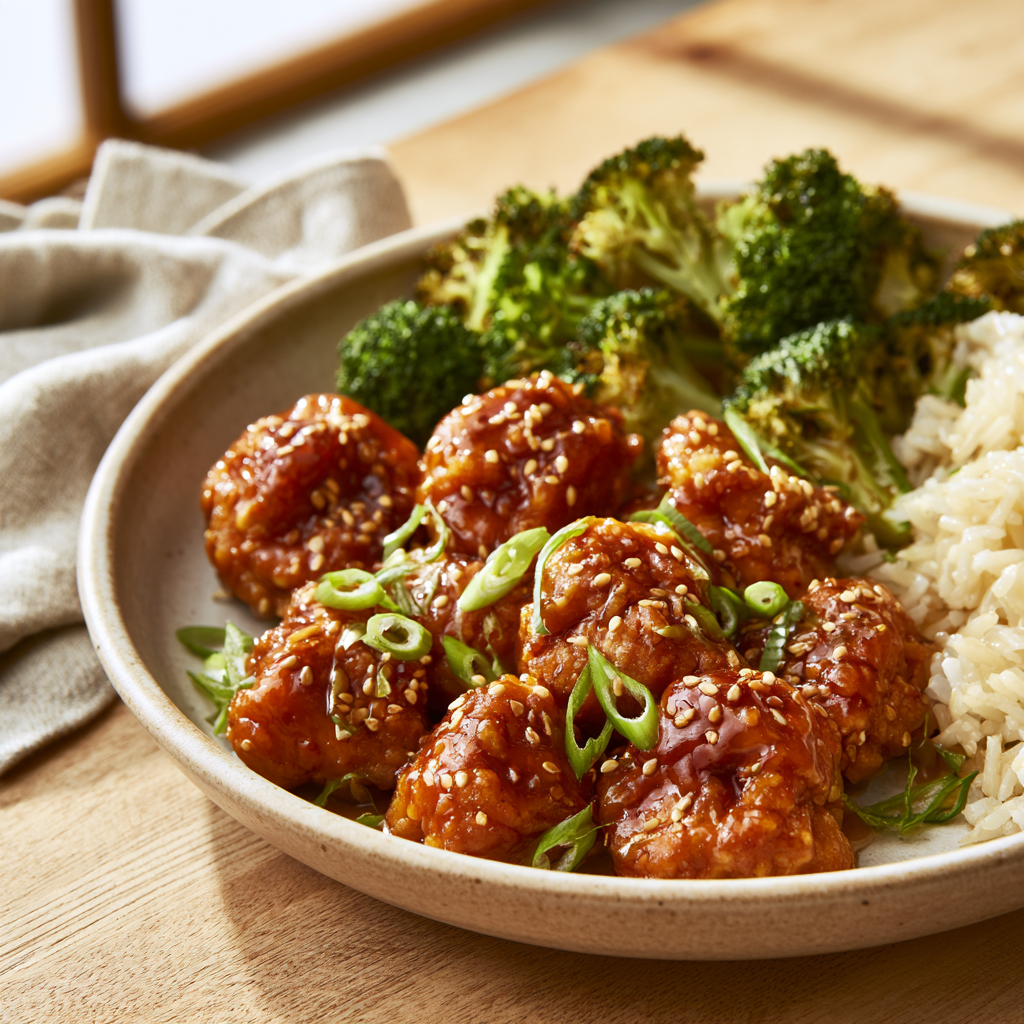

Sesame chicken is the takeout order my family asks for most, and the homemade version has one thing going for it that delivery never does: it’s still crispy when it hits the table. The chicken gets a light, bubbly coating that fries up golden and shatteringly crisp, and then it’s tossed in a sticky glaze of honey, soy, garlic, and ginger that clings to every piece. It’s sweet, savory, and just tangy enough to keep you going back for more.
The recipe is also simpler than it looks. The coating is a whisk-together dredge of flour, cornstarch, and baking powder, and the sauce is a single saucepan mixture that thickens in about a minute. The chicken shallow-fries in batches, which sounds like a project but takes about ten minutes total, and the glaze comes together while the first batch is draining. It’s a thirty-minute dinner that feels like a treat, and it’s the kind of thing you can put on the table on a Tuesday without anyone at the table knowing you didn’t order it.
The detail that matters most is the double fry. Frying the chicken once at 350°F cooks it through and sets the crust, and a quick sixty-second flash fry at 375°F afterward is what makes it shatteringly crisp and keeps it crisp under the sauce. It’s the same technique Chinese restaurants use, and it’s the difference between chicken that’s crispy for a minute and chicken that’s still crunchy when you sit down.
Why This Recipe Works
The dredge with flour, cornstarch, and baking powder is what creates the light, bubbly crust. Cornstarch crisps, flour gives structure, and baking powder creates tiny air pockets that puff the coating as it fries. Chicken bouillon powder in the dredge adds a savory note to the crust itself, so the chicken tastes seasoned even before the sauce.
The velvet marinade — egg white, soy sauce, cornstarch — is what keeps the chicken tender. Egg white and cornstarch coat the chicken pieces and protect them from the heat of the oil, so the interior stays juicy while the outside crisps. Fifteen to thirty minutes is enough time for the coating to adhere and the seasoning to penetrate.
The double fry is what keeps the crust crisp under a wet glaze. A single fry gives you a crust that softens within minutes of being tossed in sauce. The first fry at 350°F cooks the chicken through, and the second flash fry at 375°F drives off surface moisture and creates a barrier that the glaze sits on top of instead of soaking into.
Draining on a wire rack instead of paper towels is what keeps the bottom crisp. Paper towels trap steam underneath the chicken, and that steam softens the crust. A wire rack lets the air circulate so the coating stays crisp all the way around.
The sauce thickens with cornstarch in the saucepan, not in the pan with the chicken. Cooking the glaze separately and tossing the fried chicken in it at the very end means the crust never sits in liquid. It’s the same logic as dressing a salad at the last second.
The garlic and ginger go into the oil before the sauce does. Thirty seconds in hot oil blooms their flavor and takes the raw edge off, which is what makes the glaze taste like more than honey and soy.
Ingredients That Matter
Most of this list is flexible. Three ingredients are easy to get wrong, so those are the ones worth explaining.
Boneless, skinless chicken thighs, cut into 1-inch pieces. Thighs stay juicy through frying in a way breasts don’t, and the velveting marinade makes them even more forgiving. Breasts work if you prefer them, but cut them smaller and pull them from the oil at 3 minutes.
Cornstarch, in both the marinade and the dredge. Cornstarch is what makes the crust crisp instead of bready. It’s in the velvet marinade to help the coating adhere, and it’s in the dredge alongside the flour to create that light, crackly texture.
Honey, for the glaze. Honey gives the sauce its stickiness and its floral sweetness, and it’s what makes the glaze cling to the chicken. Don’t substitute sugar — the texture won’t be the same.
How to Make It
Step 1: Velvet the chicken.
Whisk 1 egg white in a bowl until foamy. Stir in 1 tablespoon of reduced-sodium soy sauce, ½ teaspoon of granulated garlic, ½ teaspoon of honey, and a pinch of white pepper. Add 1 pound of 1-inch chicken thigh pieces and 2 tablespoons of cornstarch, and toss until evenly coated. Set aside for 15 to 30 minutes.
Step 2: Make the dredge.
In a medium bowl, whisk ¼ cup of cornstarch, ¼ cup of all-purpose flour, 2 teaspoons of baking powder, and 1½ teaspoons of chicken bouillon powder. Toss the marinated chicken in the dredge until thoroughly coated, then transfer to a parchment-lined baking sheet.
Step 3: Simmer the sauce.
In a small bowl, whisk ¼ cup of honey, ¼ cup of reduced-sodium soy sauce, 2 tablespoons of white or rice vinegar, 2 tablespoons of water, 2 teaspoons of cornstarch, and 2 teaspoons of toasted sesame oil. Heat 1 tablespoon of neutral oil in a saucepan over medium-high. Add 4 teaspoons of minced garlic and 1 tablespoon of minced ginger and cook for 30 seconds, until fragrant. Pour in the sauce mixture, bring to a boil, and cook for 1 minute, until thickened. Remove from the heat.
Step 4: First fry.
Heat ½ inch of neutral oil in a large skillet or wok to 350°F. Fry the chicken in batches for 3 minutes, until pale golden and cooked to 165°F. Remove and drain on a wire rack.
Step 5: Flash fry.
Raise the oil to 375°F. Return all the fried chicken to the oil at once and flash-fry for 60 seconds, until deeply golden brown and shatteringly crisp. Drain on a wire rack.
Step 6: Toss and serve.
Reheat the sauce gently. Add the flash-fried chicken directly into the warm sauce and toss quickly to coat every piece. Garnish with toasted sesame seeds and serve immediately with steamed broccoli and jasmine rice.
Tips and Troubleshooting
The chicken isn’t crispy. It was single-fried, or it sat in the sauce too long. Do the second flash fry, and toss with the sauce right before serving.
The crust is soggy on the bottom. It drained on paper towels. Use a wire rack set over a baking sheet.
The coating fell off in the oil. The chicken wasn’t marinated long enough, or the dredge was too thin. Let it sit for the full 15 minutes and press the dredge on firmly.
The sauce is too thick. It cooked too long, or there was too much cornstarch. Whisk in a splash of water until it loosens.
The sauce is too sweet. The honey was on the high end. Add a splash more vinegar and taste.
The oil temperature dropped between batches. Shallow-frying multiple batches cools the oil. Fry in small batches and let the oil come back to temperature between them.
The chicken is dry. It was overcooked, or the pieces were too small. Fry for exactly 3 minutes on the first pass and pull at 165°F.
Storage and Make-Ahead
The fried chicken and the sauce are best stored separately. The chicken keeps in a sealed container in the refrigerator for up to 3 days, and the sauce for up to 5 days. Reheat the chicken in a 400°F oven for 8 to 10 minutes, until crisp again, then toss with warmed sauce.
The sauce can be made up to 3 days ahead and refrigerated. The chicken can be marinated and dredged up to a few hours ahead and refrigerated on a baking sheet.
I don’t recommend freezing the finished dish. The crust softens on thawing. Freeze leftover fried chicken on its own for up to 2 months and re-crisp it in the oven.
Store leftovers in the refrigerator within 2 hours of cooking, and discard anything left at room temperature for more than 2 hours.
Sesame Chicken with Honey-Sesame Sauce
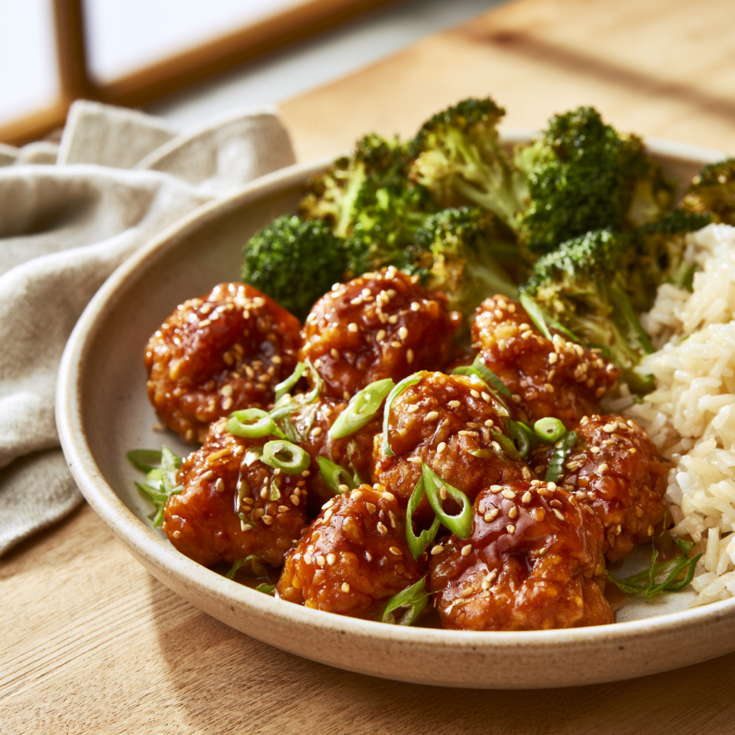
Tender, velvetted chicken thighs, double-fried until shatteringly crisp, tossed in a sticky garlic-ginger honey glaze, and sprinkled with toasted sesame seeds. A 30-minute takeout classic for a simple family dinner.
Ingredients
For the velvet marinade:
- 1 lb boneless, skinless chicken thighs, cut into 1-inch pieces
- 1 large egg white, beaten until foamy
- 1 tbsp reduced-sodium soy sauce
- ½ tsp granulated garlic
- ½ tsp honey
- Pinch of white pepper
- 2 tbsp cornstarch
For the dredge:
- ¼ cup cornstarch
- ¼ cup all-purpose flour
- 2 tsp baking powder
- 1½ tsp chicken bouillon powder
- For the glaze:
- ¼ cup honey
- ¼ cup reduced-sodium soy sauce
- 2 tbsp white or rice vinegar
- 2 tbsp water
- 2 tsp cornstarch
- 2 tsp toasted sesame oil
- 1 tbsp neutral oil
- 4 tsp fresh garlic, minced
- 1 tbsp fresh ginger, finely minced
For serving:
- 1 tbsp toasted sesame seeds
- Steamed broccoli and jasmine rice
Instructions
- Whisk the egg white until foamy, then stir in the soy sauce, garlic, honey, and white pepper. Add the chicken and cornstarch and toss to coat. Rest 15 to 30 minutes.
- Whisk the dredge ingredients in a bowl. Toss the marinated chicken in the dredge until coated and set on a parchment-lined baking sheet.
- Whisk the honey, soy sauce, vinegar, water, cornstarch, and sesame oil. Sauté the garlic and ginger in 1 tablespoon oil for 30 seconds, pour in the sauce, boil for 1 minute until thickened, and remove from the heat.
- Heat ½ inch of oil to 350°F. Fry the chicken in batches for 3 minutes, until pale golden and 165°F. Drain on a wire rack.
- Raise the oil to 375°F and flash-fry all the chicken for 60 seconds, until deeply golden and crisp. Drain on a wire rack.
- Reheat the sauce, quickly toss the chicken in it, and garnish with sesame seeds. Serve with broccoli and rice.
Notes
Notes: Store fried chicken and sauce separately up to 3 days; re-crisp the chicken at 400°F. Not recommended for freezing assembled. Nutrition information is an estimate.
Nutrition (per serving, estimated, chicken and sauce): About 420 calories, 28g protein, 38g carbs, 18g fat, 1g fiber, 720mg sodium.
FAQ
Can I use chicken breast instead of thighs?
Yes. Cut the breasts into 1-inch pieces, marinate the same way, and fry for 2½ to 3 minutes on the first pass. Breasts dry out faster than thighs, so pull them as soon as they reach 165°F.
Can I bake this instead of frying?
Yes, but the crust won’t be the same. Arrange the dredged chicken on a wire rack over a baking sheet, spray with oil, and bake at 425°F for 18 to 20 minutes, flipping once.
Can I make this in the air fryer?
Yes. Air fry the dredged chicken at 400°F for 10 to 12 minutes, shaking the basket once, then toss with the warm sauce.
Can I make this in the crockpot?
Not with this method. A slow cooker can’t crisp the coating. A crockpot sesame chicken would be a different recipe with a sauce-based, unfried chicken.
Can I make it gluten-free?
Yes. Use tamari instead of soy sauce, a gluten-free flour blend in place of the all-purpose flour, and check the bouillon powder label.
What do you serve with sesame chicken?
Jasmine rice and steamed broccoli are the classic pairing. Sliced cucumber, sesame noodles, or a simple cabbage slaw also work.
Closing
Sesame chicken is the recipe I make when I want the family to feel like it’s a takeout night without the delivery wait or the bill. The double fry is the one step worth the extra minute — it’s what keeps the crust crunchy under the glaze and makes the whole thing taste like the version you’d get from a restaurant. Serve it with rice and broccoli, and watch how fast the plate clears.