This is the pasta salad I make on Sunday when I want lunch handled for the week. It’s built for the refrigerator in a way most pasta salads aren’t — the pasta is oiled so it doesn’t drink up all the dressing, the cucumber is seeded, and the tomatoes are drained so they don’t water everything down, and two-thirds of the dressing goes in up front with a third held back to refresh the bowls later in the week.
It’s a high-protein tuna pasta salad that’s still good on Thursday, a claim most can’t make.
The beans and chickpeas are the trick. Cannellini beans and chickpeas add protein and fiber, making the salad feel like a meal instead of a side.
The tuna adds a savory note and more protein, and the vegetables bring the crunch pasta salad usually lacks.
A serving lands at about 26 grams of protein and 8 grams of fiber.
And the dressing is what holds it together. A creamy lemon-herb dressing made with Greek yogurt, mayonnaise, lemon zest and juice, Dijon, and garlic is tangy and bright, and it clings to the pasta instead of pooling at the bottom of the container.
It’s the difference between a pasta salad that tastes like a deli side and one that tastes like a lunch you made for yourself on purpose.
If you’re prepping on Sunday, add this to the rotation. It makes six containers, lasts four days, and gets better by day two as the flavors settle.
Why This Recipe Works
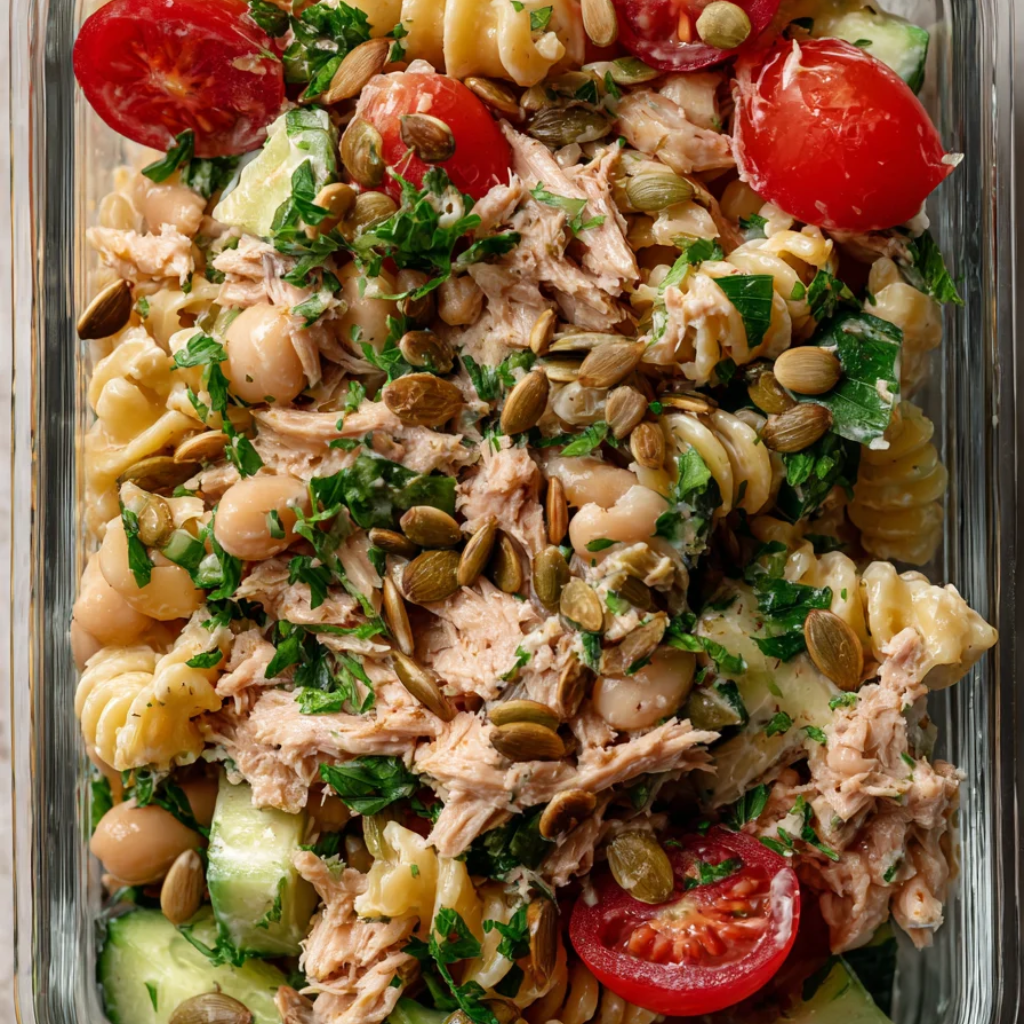
Tossing the cooked pasta with olive oil seals the starch pores and keeps it from soaking up all the dressing. Whole-grain pasta drinks up liquid as it cools, and without the oil barrier, the salad dries out by day two. A tablespoon of olive oil coats the noodles and keeps them separate.
Seeding the cucumber and salting the tomatoes keep the dressing from breaking. Both release a lot of water, which thins the Greek yogurt emulsion and pools at the bottom of the container. Seed the cucumber and drain the tomatoes on paper towels for ten minutes to fix it.
Reserving a third of the dressing is what lets you refresh the salad on day three or four. The pasta absorbs dressing as it sits, no matter how well you oil it. Stir in a small jar of reserved dressing before serving to bring back the creaminess.
The Greek yogurt and mayonnaise combination makes the dressing creamy and high in protein. Greek yogurt adds tang and protein, while mayonnaise adds richness and stability. All mayo is too heavy and low in protein; all yogurt is too sharp.
The beans and chickpeas are what make it a high-protein meal instead of a side. They add protein, fiber, and substance, and they soak up the dressing so every bite is seasoned.
Lemon zest and capers sharpen the flavor when the salad is cold. Cold Greek yogurt dressings taste dull straight from the fridge. Zest carries the citrus oil that juice alone doesn’t, and capers bring a briny note that cuts through the fishiness of canned tuna.
Add the sunflower seeds right before eating, not when you pack it. They lose their crunch overnight in the dressing. Keep them in a small container and sprinkle them over the top.
Ingredients That Matter
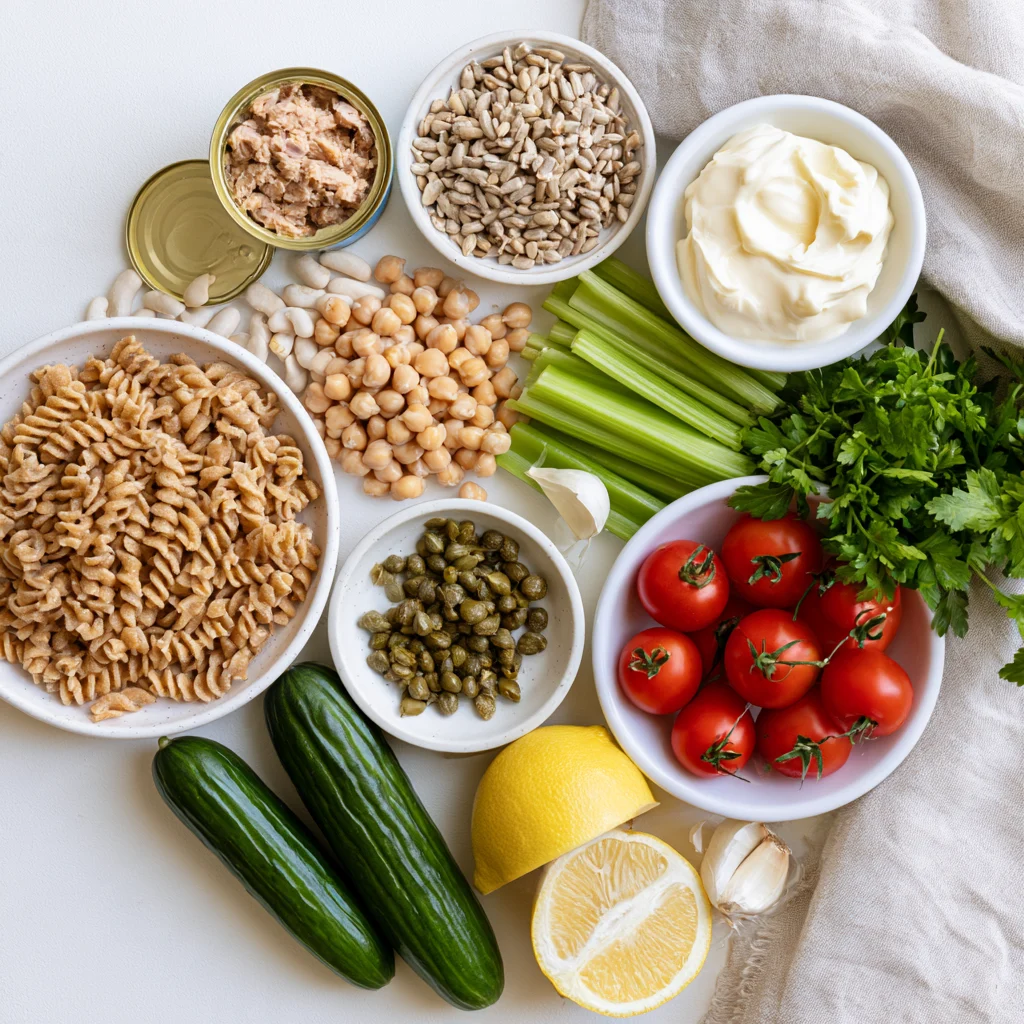
Most of this list is flexible. Three ingredients are easy to get wrong, so those are the ones worth explaining.
Whole grain pasta. Rotini, cavatappi, or fusilli all work because the ridges and hollows hold the dressing. Whole grain holds its texture in the fridge far better than white pasta, and it’s part of what makes this a high-protein pasta salad rather than a standard one.
Rinse, drain, and pat dry canned cannellini beans and chickpeas. These are the protein backbone. Rinse them thoroughly to remove the canning liquid, and pat them dry so they don’t water down the dressing.
English cucumber, seeded. English cucumbers have fewer seeds and thinner skin than regular cucumbers, and seeding them removes the watery center. If you only have a regular cucumber, peel it and scoop out the seeds.
How to Make It
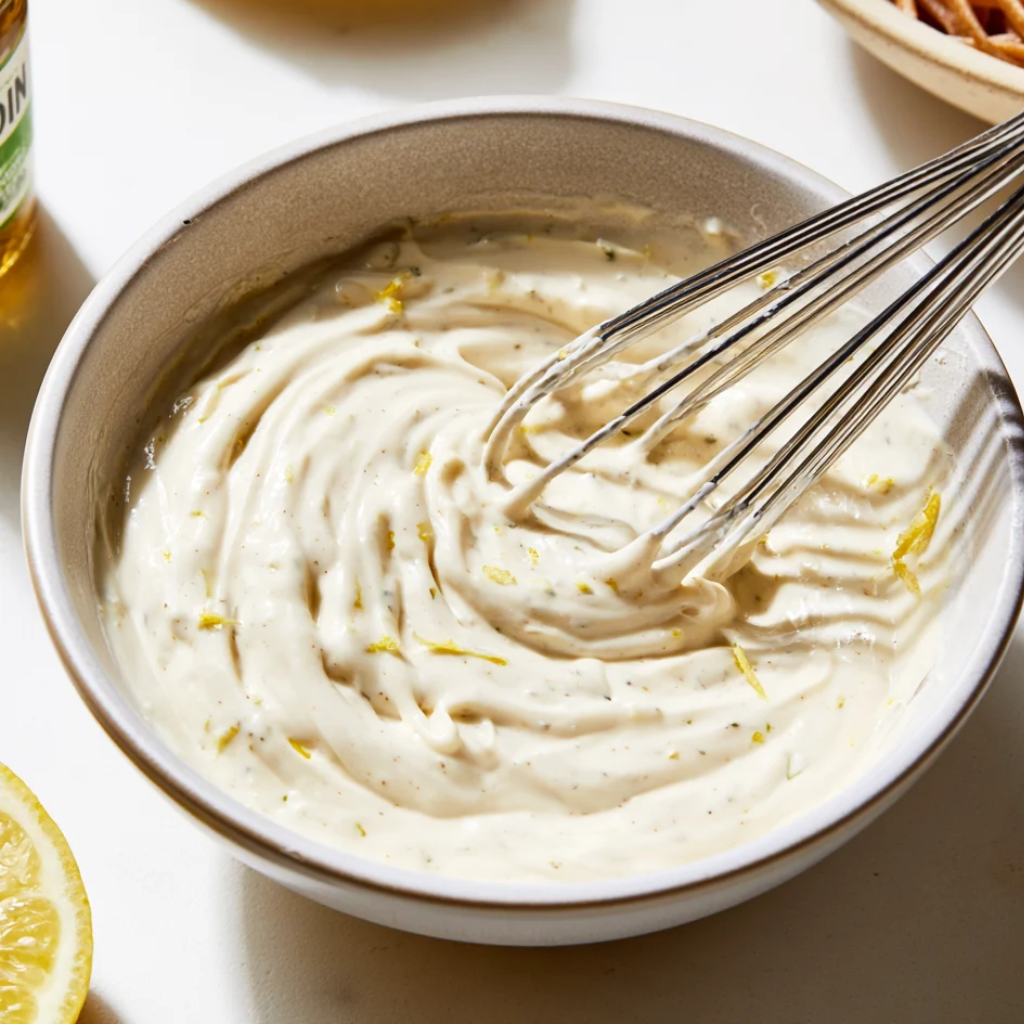
Step 1: Cook and seal the pasta.
Bring a large pot of well-salted water to a boil. Cook 8 ounces of whole grain pasta 1 minute short of the package directions, until al dente. Drain, rinse thoroughly with cold water until completely cool, drain well, and toss with 1 tablespoon of extra-virgin olive oil to coat.
Step 2: Prep and drain the produce.
Halve 1 English cucumber lengthwise, scoop out and discard the seeds, and dice the flesh. Halve 1 cup cherry tomatoes, toss with a pinch of salt in a colander, and let drain over paper towels for 10 minutes. Dice 2 celery stalks and finely chop ¼ cup of flat-leaf parsley. Drain and coarsely chop 1 tablespoon of capers if using.
Step 3: Whisk the dressing.
In a small bowl or glass measuring cup, whisk ½ cup of plain 2% Greek yogurt, ¼ cup of mayonnaise, the zest and juice of 1 lemon, 1 tablespoon of Dijon mustard, 1 grated garlic clove, ½ teaspoon of kosher salt, and ¼ teaspoon of black pepper until smooth and creamy.
Step 4: Assemble and toss.
In a large bowl, combine the oiled pasta, 2 cans (5 oz each) of drained and flaked tuna, the patted-dry cannellini beans and chickpeas, the diced cucumber, the drained tomatoes, the celery, parsley, and capers. Pour two-thirds of the dressing over the salad and toss gently to coat evenly. Store the remaining third of the dressing in a small airtight container.
Step 5: Chill and portion.
Cover the salad and refrigerate for at least 30 minutes. Portion into meal prep containers for up to 4 days.
Step 6: Refresh and serve.
When you’re ready to eat, stir in a spoonful of the reserved dressing to restore the creaminess, then top with toasted sunflower seeds for crunch.
Tips and Troubleshooting

The salad is watery by day two. You didn’t seed the cucumber, or you didn’t drain the tomatoes. Both release water that breaks the dressing.
The salad is dry by day three. You didn’t oil the pasta, or you added all the dressing at once. Oil the pasta and reserve a third of the dressing.
The dressing is too thick. Add a teaspoon of lemon juice or water and whisk. It should coat the pasta but still drizzle.
The dressing is too tangy. The Greek yogurt was very sharp, or there was too much lemon. Add a teaspoon of mayonnaise or a pinch of sugar.
The pasta is mushy. It was cooked past al dente, or you didn’t rinse it with cold water. Cook it a minute short and rinse it thoroughly.
The tuna disappeared into the salad. It was overmixed. Flake it into large pieces and fold it in gently.
The salad tastes flat when cold. It needs the lemon zest and the capers. Both sharpen the flavor straight from the fridge.
The sunflower seeds got soft. They were mixed in instead of sprinkled on top. Keep them separate until you eat.
Storage and Make-Ahead
Store the salad in a sealed container in the refrigerator for up to 4 days. It’s best on days 2 through 4, once the flavors have settled.
Store the reserved dressing and sunflower seeds separately in small containers. Stir the dressing in before serving on days 3 and 4.
You can assemble the salad up to a day ahead and refrigerate it before portioning. Add the sunflower seeds right before serving.
I don’t recommend freezing this salad. The vegetables get watery, and the dressing separates when you thaw it.
Store leftovers in the refrigerator within 2 hours of making, and discard anything left at room temperature for more than 2 hours.
High-Protein Tuna Pasta Salad
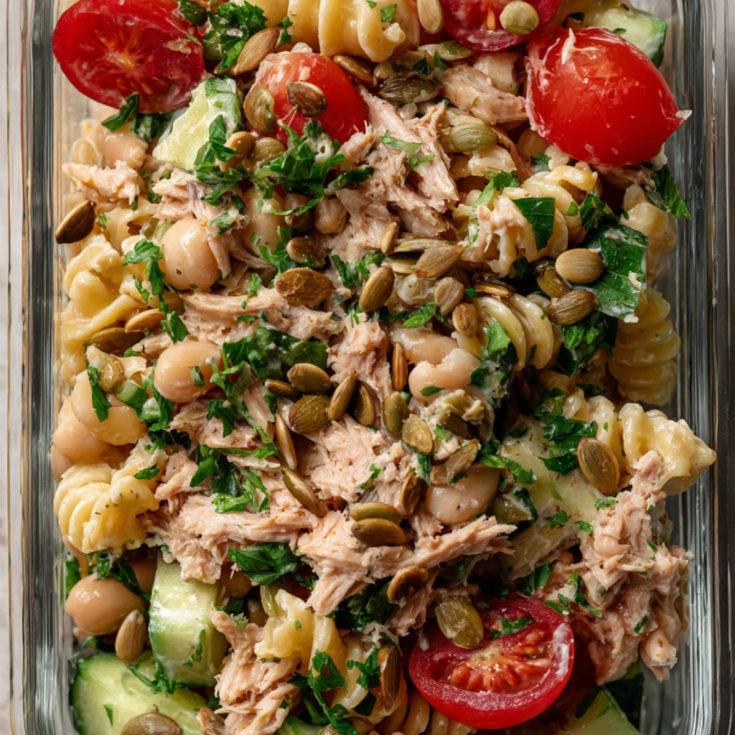
Whole grain pasta tossed with flaked tuna, cannellini beans, crisp chickpeas, seedless cucumber, and drained cherry tomatoes in a bright Greek yogurt and lemon-Dijon dressing. Six meal prep containers, about 26g protein each.
Ingredients
For the salad:
- 8 oz whole grain pasta (rotini, cavatappi, or fusilli)
- 1 tbsp extra-virgin olive oil, for tossing the pasta
- 2 cans (5 oz each) solid white albacore tuna in water, drained and flaked
- 1 can (15 oz) cannellini beans, rinsed, drained, and patted dry
- 1 can (15 oz) chickpeas, rinsed, drained, and patted dry
- 1 English cucumber, halved, seeded, and diced
- 1 cup cherry tomatoes, halved, lightly salted, and drained
- 2 celery stalks, finely diced
- ¼ cup fresh flat-leaf parsley, finely chopped
- 1 tbsp capers, drained and coarsely chopped (optional)
- ¼ cup toasted sunflower seeds, for serving
For the creamy lemon-herb dressing:
- ½ cup plain 2% Greek yogurt
- ¼ cup mayonnaise
- Zest and juice of 1 lemon (about 1 tsp zest and 2 tbsp juice)
- 1 tbsp Dijon mustard
- 1 garlic clove, finely grated
- ½ tsp kosher salt
- ¼ tsp black pepper
Instructions
- Cook the pasta 1 minute short of the package directions. Drain, rinse under cold water until cool, drain well, and toss with 1 tablespoon olive oil.
- Seed and dice the cucumber. Salt the halved cherry tomatoes and drain them on paper towels for 10 minutes. Dice the celery and chop the parsley and capers.
- Whisk the Greek yogurt, mayonnaise, lemon zest and juice, Dijon, garlic, salt, and pepper until smooth.
- Combine the pasta, tuna, beans, chickpeas, cucumber, tomatoes, celery, parsley, and capers. Pour two-thirds of the dressing over the salad and toss to coat. Store the remaining third separately.
- Cover and refrigerate for at least 30 minutes, then portion into 6 containers.
- Stir in the reserved dressing before serving and top with sunflower seeds.
Notes
Notes: Keep refrigerated up to 4 days and is best on days 2 through 4. Store the reserved dressing and sunflower seeds separately. Not recommended for freezing. Nutrition information is an estimate and depends on the pasta, tuna, and yogurt brands.
Nutrition (per serving, estimated): About 420 calories, 26g protein, 46g carbs, 14g fat, 8g fiber, 620mg sodium.
FAQ
Can I use white pasta instead of whole grain?
Yes, but it won’t hold up as well in the refrigerator. White pasta absorbs more dressing and turns soft by day three. Whole grain and chickpea pasta both hold their structure better.
Can I use cottage cheese in the dressing?
Yes. Blend ½ cup of cottage cheese until smooth and use it in place of the Greek yogurt. It adds protein and makes the dressing even creamier.
Can I make a Mediterranean version?
Yes. Skip the chickpeas and add ½ cup of chopped Kalamata olives, ½ cup of crumbled feta, and a pinch of dried oregano. It’s a different flavor profile but the same method.
Can I add dill pickles?
Yes. Dice ¼ cup dill pickles and stir them into the vegetables. They add a briny note that pairs well with the lemon-Dijon dressing.
Can I make this low carb?
Yes. Swap the pasta for chickpea pasta or cauliflower florets. Chickpea pasta keeps the protein high; cauliflower lowers the carbs but also the protein.
Can I make this without tuna?
Yes. Swap in canned salmon, shredded chicken, or extra chickpeas for a vegetarian version.
How long does this last in the fridge?
Up to 4 days in a sealed container. It’s best on days 2-4.
More Salad Recipes with Protein You’ll Love
- Protein Pasta Salad Recipe — 32g Protein, Meal Prep Lunch
- High-Protein Italian Pasta Salad (Meal Prep & Potluck Perfect)
- Tortellini Pasta Salad: High-Protein, Crowd-Pleasing & Make-Ahead
- 15 Easy Pasta Salad Recipes You Can Make in 30 Minutes
Closing
This is the pasta salad I make on Sunday when I want lunch handled for the week.
The oiled pasta, the seeded cucumber, and the reserved dressing are the three things that make it last — and the beans and chickpeas are what make it a meal instead of a side.
Make a batch and see how much better Thursday lunch looks.