Most turkey meatballs are dry. It’s not the turkey’s fault — it’s lean meat, and lean meat dries out fast, especially when it’s rolled into balls and baked.
These Greek turkey meatballs fix that.
Feta cheese folded into the mixture keeps them moist from the inside, a spoonful of Greek yogurt adds a little more, and a hot oven gets them golden in twenty minutes without drying them out.
The flavor is what makes them worth making beyond the texture. Oregano, dill, garlic, and a little cumin go into the meatball itself, and the feta brings a briny saltiness that seasons the whole thing.
They’re Greek in the way that matters — herbaceous, savory, and bright.
And they’re one of the most useful proteins you can keep in the fridge or freezer.
They go into bowls, soups, and pasta; they reheat without drying out, and they freeze beautifully. Make a double batch on Sunday, and you’ve got the protein for several meals handled.
Why This Recipe Works
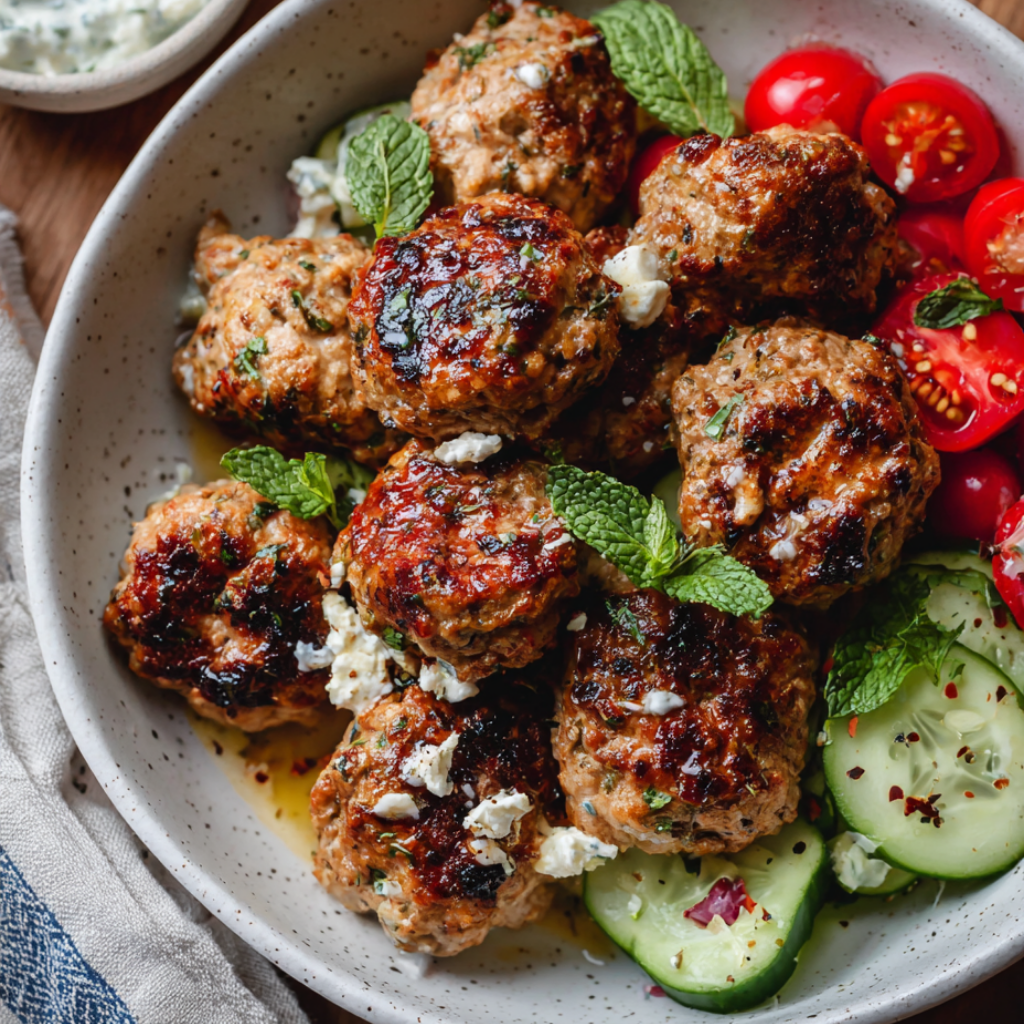
Feta cheese is what keeps lean turkey from drying out. Feta melts slightly as the meatballs bake and adds moisture and fat to the mixture, which is the difference between a juicy meatball and a dry one. Use a block packed in brine and crumble it yourself — pre-crumbled feta is drier and doesn’t meld as well.
The Greek yogurt adds moisture without adding much fat. A tablespoon of plain Greek yogurt in the meatball mixture keeps the turkey tender and adds a little tang that works with the herbs.
Grating the onion instead of dicing it is what distributes it evenly. Grated onion releases its juice into the mixture, which adds moisture and flavor, and it disappears into the meatball instead of leaving chunks. Use the fine side of a box grater.
The panko and egg are the binders. Lean turkey doesn’t hold together on its own. Panko absorbs moisture, and the egg binds the mixture, so the meatballs stay intact through baking.
Mixing gently and stopping as soon as it comes together is what keeps them tender. Overworked ground meat turns dense and bouncy. Use your hands or a fork and mix just until there are no dry spots.
Bake at 425°F for about 15 to 18 minutes for lean turkey. A hot oven cooks them quickly and evenly, and brushing them with olive oil before baking helps them brown. A final minute under the broiler gives you a golden crust if you want one.
Baking on parchment or greased foil is what keeps them from sticking. Lean turkey doesn’t release much fat, so the pan needs a little help. Parchment or well-greased foil releases them cleanly.
Ingredients That Matter
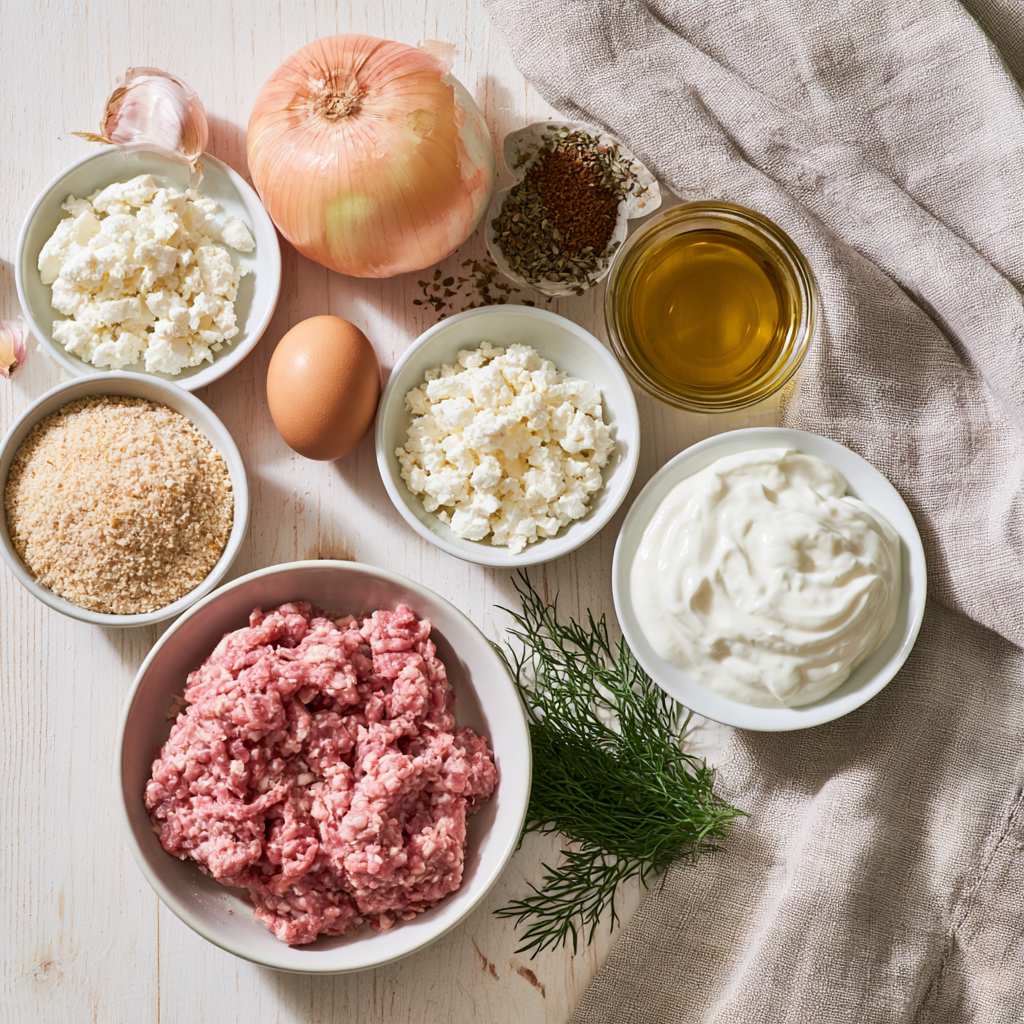
Most of this list is flexible. Three ingredients are easy to get wrong, so those are the ones worth explaining.
93% lean ground turkey. Lean enough to be healthy, but not so lean that it dries out. 99% fat-free turkey will make dry meatballs no matter what you add. Ground chicken works the same way.
Feta cheese, crumbled from a block. The briny, creamy feta is what seasons the meatballs and keeps them moist. A block packed in brine has better texture than pre-crumbled.
Panko breadcrumbs, not regular breadcrumbs. Panko is coarser and absorbs moisture without turning the meatballs dense. Regular breadcrumbs pack tighter and make a heavier meatball.
How to Make It
Step 1: Preheat and prep.
Preheat the oven to 425°F. Line a rimmed baking sheet with parchment paper or foil and lightly grease it.
Step 2: Make the meatball mixture.
In a large bowl, combine 1 pound of 93% lean ground turkey, ⅓ cup of panko breadcrumbs, ⅓ cup of crumbled feta, 1 beaten egg, 1 tablespoon of plain Greek yogurt, 3 minced garlic cloves, ¼ cup of grated yellow or white onion, 2 teaspoons of dried oregano, 1½ teaspoons of dried dill, 1 teaspoon of cumin, 1 teaspoon of kosher salt, and ¼ teaspoon of black pepper. Mix gently with your hands or a fork just until combined — don’t overwork it.
Step 3: Form the meatballs.
Roll the mixture into 15 meatballs, about 1½ inches each. Use slightly damp hands so the mixture doesn’t stick. Place them on the prepared baking sheet with a little space between each, and brush lightly with olive oil.
Step 4: Bake.
Bake for 15 to 18 minutes, until cooked through and an instant-read thermometer reads 165°F. For a golden crust, switch to broil for the last 1 to 2 minutes, watching closely.
Step 5: Rest and serve.
Let the meatballs rest for 5 minutes before serving. They’re good on their own, over rice or quinoa, or added to a bowl or soup.
How to Use These Meatballs
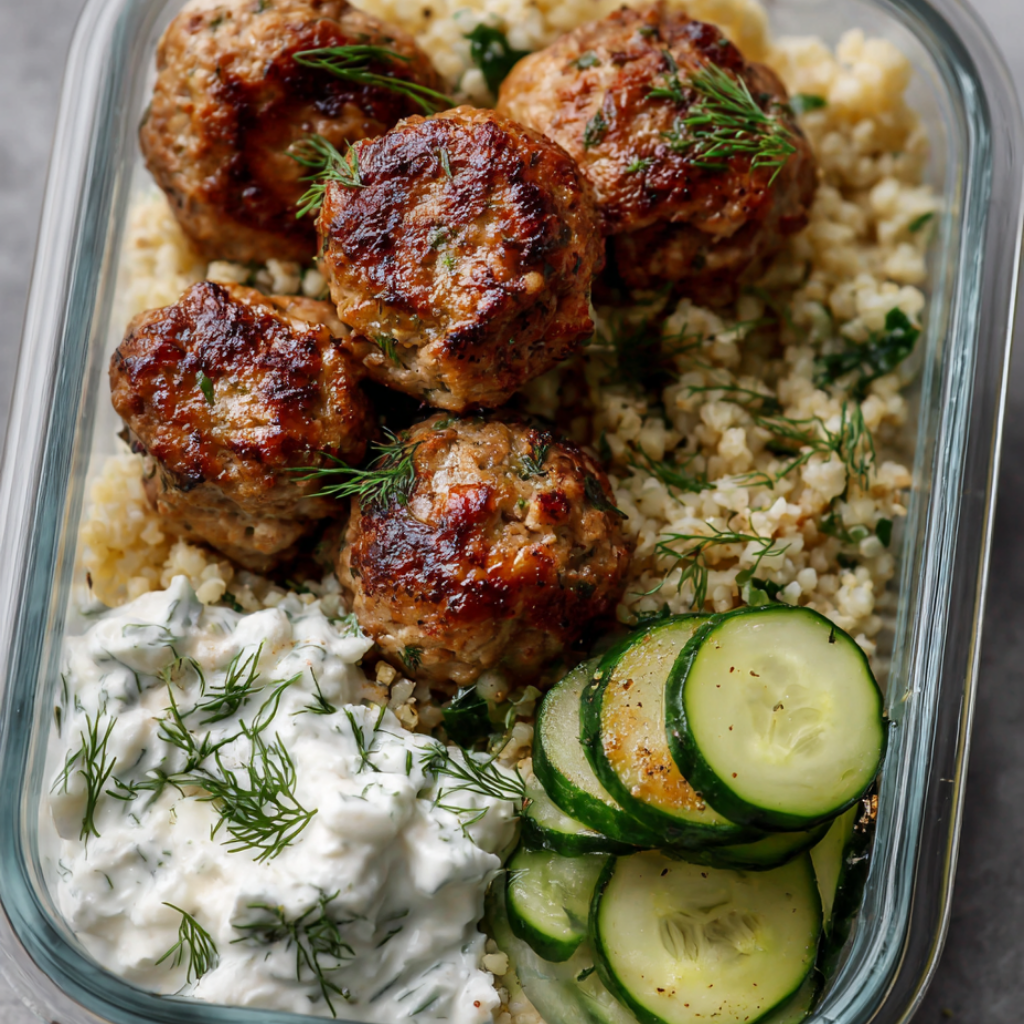
The meatballs are the protein, and a few additions turn them into a full meal. Here are three ways to build them into dinner.
Greek Turkey Meatball Bowls. Serve the meatballs over quinoa or rice with diced cucumber, cherry tomatoes, Kalamata olives, and sliced red onion, with a dollop of tzatziki or a lemon-yogurt sauce. It’s a bowl that meal-preps well — pack the components separately and assemble at lunch.
Greek Meatballs with Orzo. Cook orzo in chicken broth with a little lemon zest and juice, then stir in baby spinach at the end. Nestle the meatballs into the orzo and top with crumbled feta. It’s a one-pot meal that feels like a Greek version of chicken and rice.
Italian Wedding Soup with Turkey Meatballs. The meatballs work in soup, too. Simmer them in chicken broth with carrots, celery, and small pasta, and stir in spinach at the end. The feta and herbs give the soup a Greek twist on the classic.
Tips and Troubleshooting
The meatballs are dry. The turkey was too lean, or they baked too long. Use 93% lean and pull them at 165°F.
The meatballs fell apart. The mixture was too wet or didn’t have enough binder. If it feels wet, add a tablespoon more panko, and make sure the egg is fully mixed in.
The meatballs are bland. The feta was mild, or you under-measured the herbs. Taste the mixture before rolling and adjust the salt as needed.
The meatballs stuck to the pan. You didn’t grease the pan, or you placed the meatballs too close together. Grease the parchment or foil, and leave space between the meatballs.
The onion is too chunky. It was diced instead of grated. Grate it on the fine side of a box grater so it disappears into the meatball.
The meatballs cracked on top. The mixture was too dry, or you overworked it. If it feels dry, add a splash of milk or another spoonful of yogurt and mix gently.
Storage and Make-Ahead
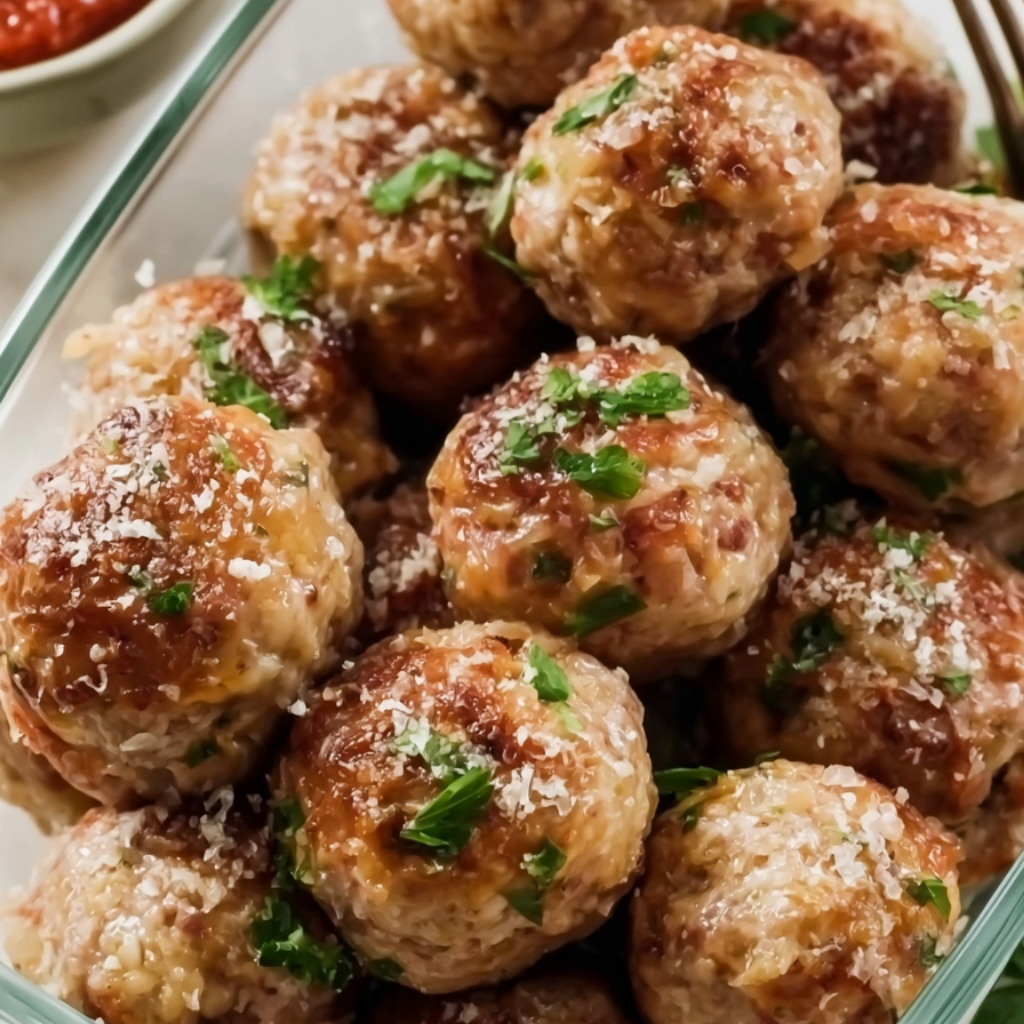
Store the cooked meatballs in a sealed container in the refrigerator for up to 4 days. Reheat gently in a 350°F oven for 10 to 12 minutes, or in the microwave for 60 to 90 seconds.
Form the raw meatball mixture and refrigerate it up to a day ahead. Bake straight from the fridge, adding 2 to 3 minutes to the cook time.
The cooked meatballs freeze well for up to 3 months. Freeze them in a single layer on a baking sheet, then transfer to a freezer bag. Thaw overnight in the refrigerator and reheat in the oven.
Store leftovers in the refrigerator within 2 hours of cooking, and discard anything left at room temperature for more than 2 hours. Reheat to 165°F.
Juicy, Feta & HerbGreek Turkey Meatballs
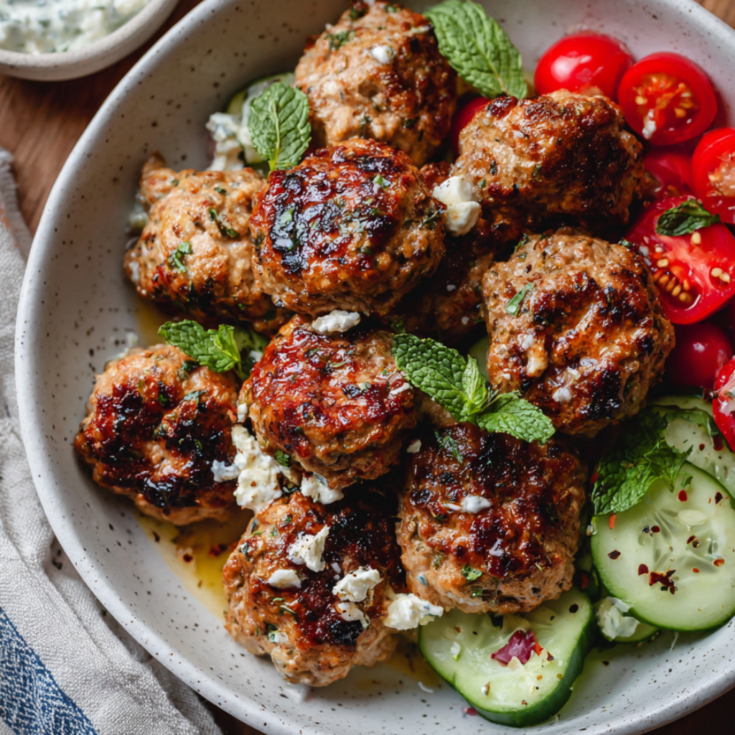
Juicy, feta-flecked turkey meatballs baked until golden, with oregano, dill, garlic, and cumin. Freezer-friendly and ready for bowls, soups, or pasta.
Ingredients
- 1 lb 93% lean ground turkey
- ⅓ cup panko breadcrumbs
- ⅓ cup crumbled feta cheese
- 1 large egg, beaten
- 1 tbsp plain Greek yogurt
- 3 cloves garlic, minced
- ¼ cup yellow or white onion, grated on a box grater
- 2 tsp dried oregano
- 1½ tsp dried dill
- 1 tsp ground cumin
- 1 tsp kosher salt
- ¼ tsp black pepper
- 1 tbsp olive oil, for brushing
Instructions
- Preheat the oven to 425°F and line a rimmed baking sheet with greased parchment or foil.
- Combine the turkey, panko, feta, egg, yogurt, garlic, grated onion, oregano, dill, cumin, salt, and pepper in a bowl. Mix gently just until combined.
- Roll into 15 meatballs and place on the baking sheet. Brush lightly with olive oil.
- Bake 15 to 18 minutes, until 165°F. Broil for 1 to 2 minutes for a golden crust, if desired.
- Rest 5 minutes before serving.
Notes
Notes: Use 93% lean turkey — leaner turkey dries out. Grate the onion so it disappears into the meatball. Leftovers keep refrigerated up to 4 days; meatballs freeze up to 3 months. Nutrition information is an estimate.
Nutrition (per serving, estimated, meatballs only): About 260 calories, 30g protein, 8g carbs, 12g fat, 1g fiber, 560mg sodium.
FAQ
Can I use ground chicken instead of turkey?
Yes. Ground chicken works the same way, and the feta and herbs carry the flavor.
Can I use ground beef instead?
Yes. Ground beef makes a richer meatball. Use 90/10 and follow the same method.
Can I make these without feta?
You can, but feta keeps them moist and adds that Greek flavor. Mild goat cheese or ricotta salata is the closest substitute.
Can I pan-fry these instead of baking?
Yes. Heat a tablespoon of olive oil in a skillet over medium heat, then cook the meatballs in batches, turning, for 5 to 6 minutes per side, until cooked through.
Can I make these ahead for meal prep?
Yes. Cook the meatballs and store them in the refrigerator for up to 4 days. Reheat gently and serve with whatever sauce or bowl you’re building.
Are these gluten-free?
Not as written. Use gluten-free panko and check your feta and spices.
More Easy Healthy Dinner Recipes You’ll Love
- Juicy Greek Turkey Burgers with Feta & Spinach — Ready in 25 Minutes
- Mediterranean Greek Lemon Chicken — Juicy, Garlicky, 42g Protein
- Greek Bowl Meal Prep — 50g Protein, 6 Containers, Mediterranean
- Easy One-Pot Greek Chicken and Lemon Rice — 28g Protein, 45 Minutes
Closing
These are the meatballs I make when I want something that tastes like a Greek taverna but fits into a weeknight.
The feta keeps them juicy, the herbs make them taste like more than ground turkey, and they’re versatile enough to go into a bowl, a soup, or a pot of orzo.
Make a double batch and freeze half — you’ll be glad you did.