
I have a complicated history with slow cooker pork. The first few times I made it, I ended up with meat that shredded into chalky strings and sat in a pool of thin, grayish liquid.
It took me longer than it should have to figure out why: pork tenderloin has almost no fat and almost no collagen, and the long cook times that make a pork shoulder fall apart turn a tenderloin into something closer to sawdust.
This slow cooker pork tenderloin is the version that works, and the fix is mostly about time.
Sear the pork first for a golden crust, then braise it in apple cider and Dijon with onions until it hits 140°F—about two hours for a loin roast and closer to an hour and a half for a tenderloin.
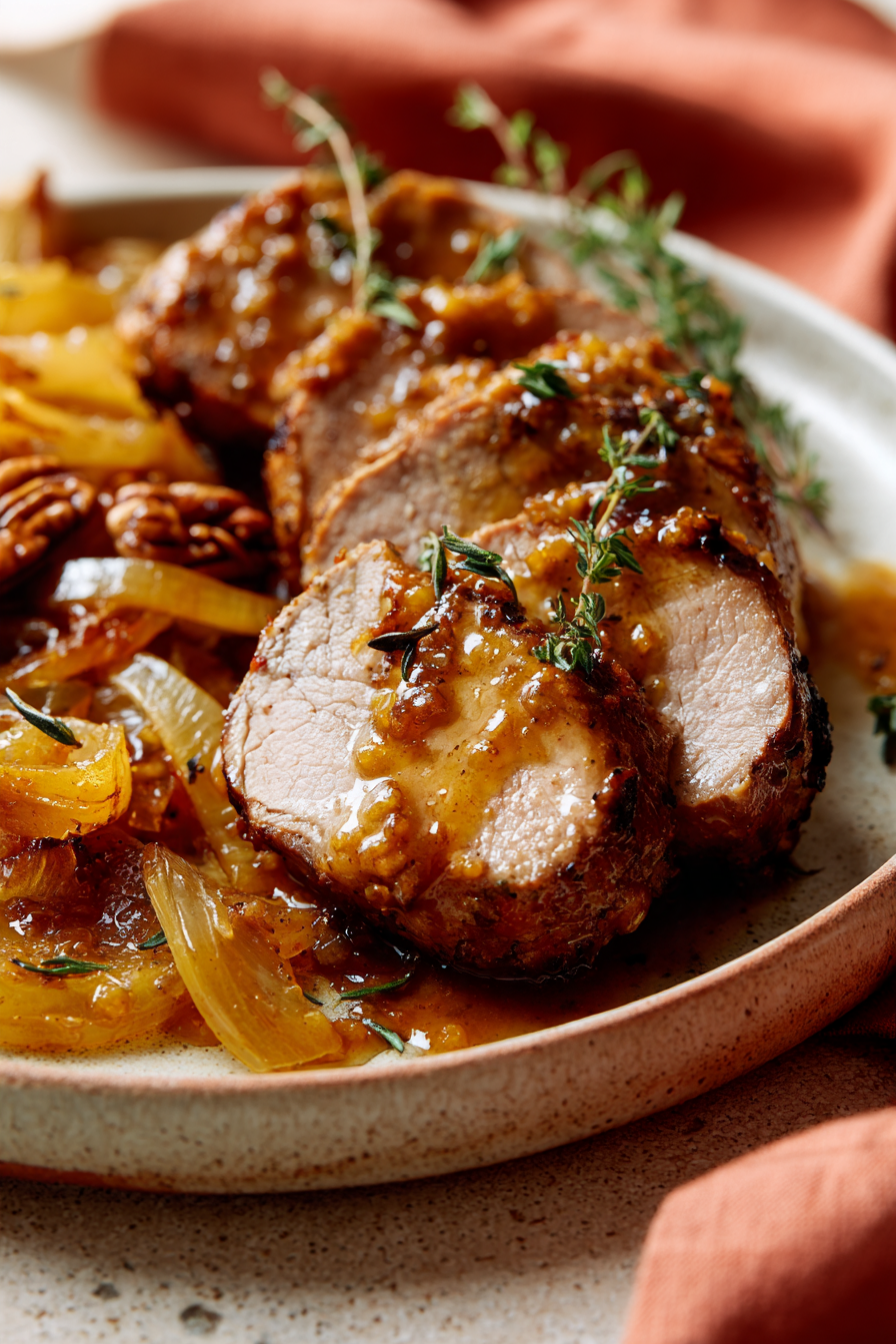
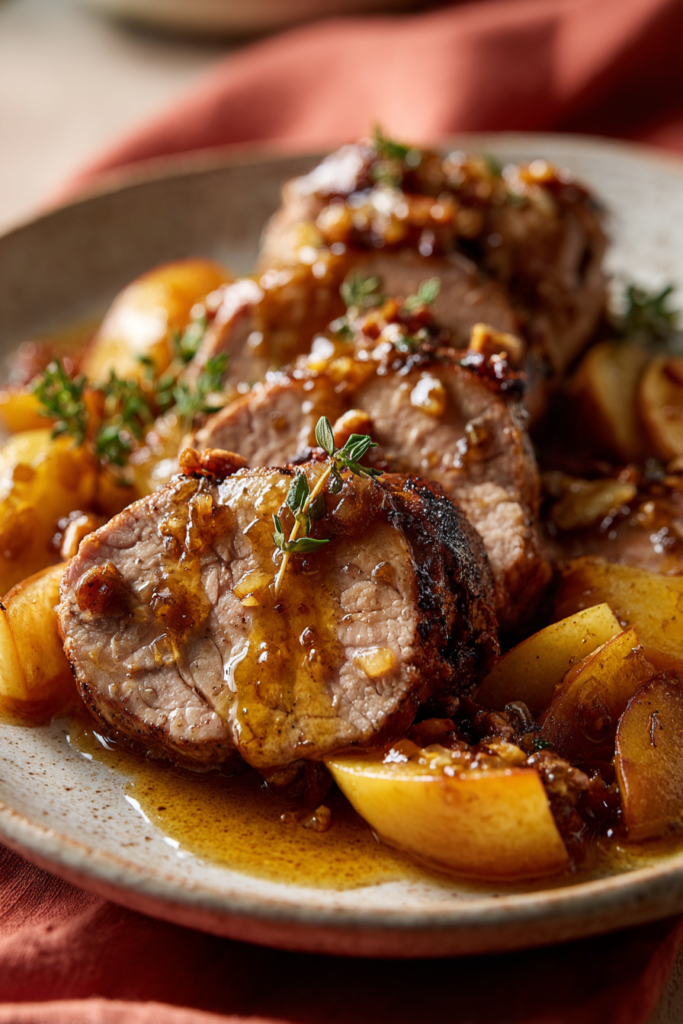
It comes out juicy and slightly rosy in the middle, with a sweet-savory cider glaze and tender Honeycrisp apples added near the end so they soften without dissolving.
The flavor is what makes this a fall dinner worth repeating. Apple cider reduces into a glossy amber glaze with Dijon and thyme, and it’s tangy and sweet and a little sharp all at once.
The apples and onions caramelize in the braising liquid, and the whole thing tastes like something that simmered all afternoon even though the actual hands-on time is about fifteen minutes.
It’s also genuinely high in protein at about 42 grams per serving, which is a real number for a pork dish and one that comes from scaling up to two pounds.
Why This Recipe Works
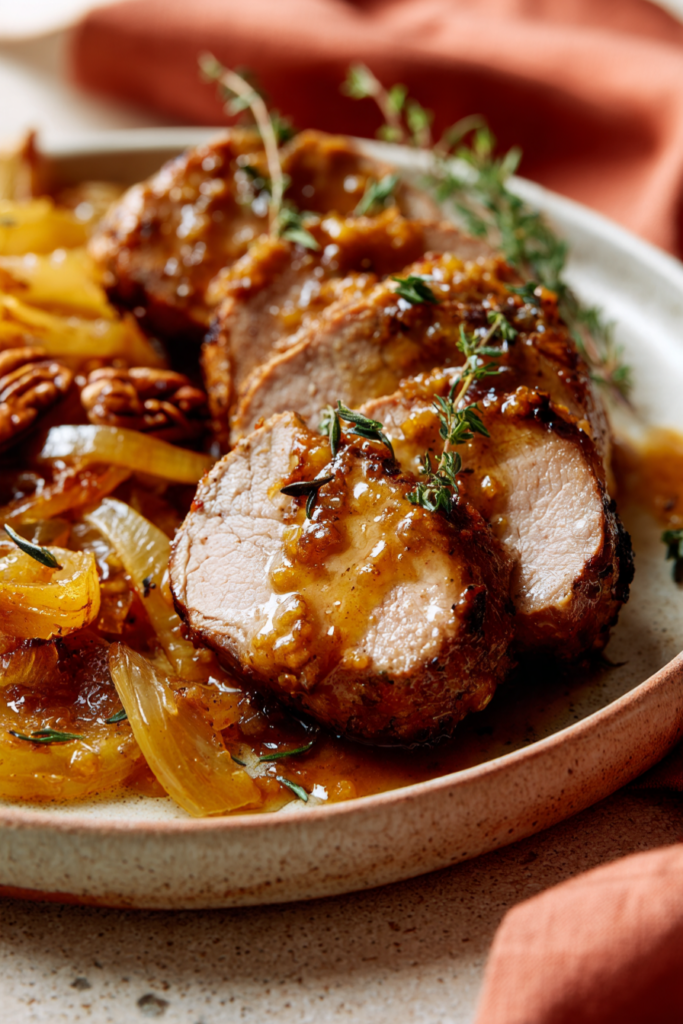
The cook time is the whole recipe. Pork tenderloin is an ultra-lean muscle with virtually no intramuscular fat or collagen, and three to four hours on LOW drives it well past 165°F into dry, chalky territory. Pull it at 140–142°F and let carryover heat bring it to 145°F during the rest to keep it juicy and slightly pink in the center.
Searing first gives it a crust that slow cooking can’t. A slow cooker traps moisture, and moisture is the enemy of browning. Two to three minutes per side in a hot skillet builds a golden crust and a layer of fond that the cider deglazes into the braise.
Add the apples near the end so they hold their shape. Honeycrisp wedges cooked for three hours turn into applesauce. Added in the last 45 to 60 minutes, they soften into tender bites that still have structure and a little tartness left.
Reducing the braising liquid separately is what makes it a glaze. Whisk cornstarch into hot liquid in the slow cooker to make a thick, cloudy sauce. Pour it into a saucepan and simmer for two minutes; it turns into a glossy amber glaze that clings to the pork instead of running off.
The Dijon and cider balance each other. Cider is sweet, and Dijon is sharp; together, they keep the sauce from tasting like candy. The fresh thyme at the end adds an herby note that keeps the whole thing from tasting one-note.
Ingredients That Matter
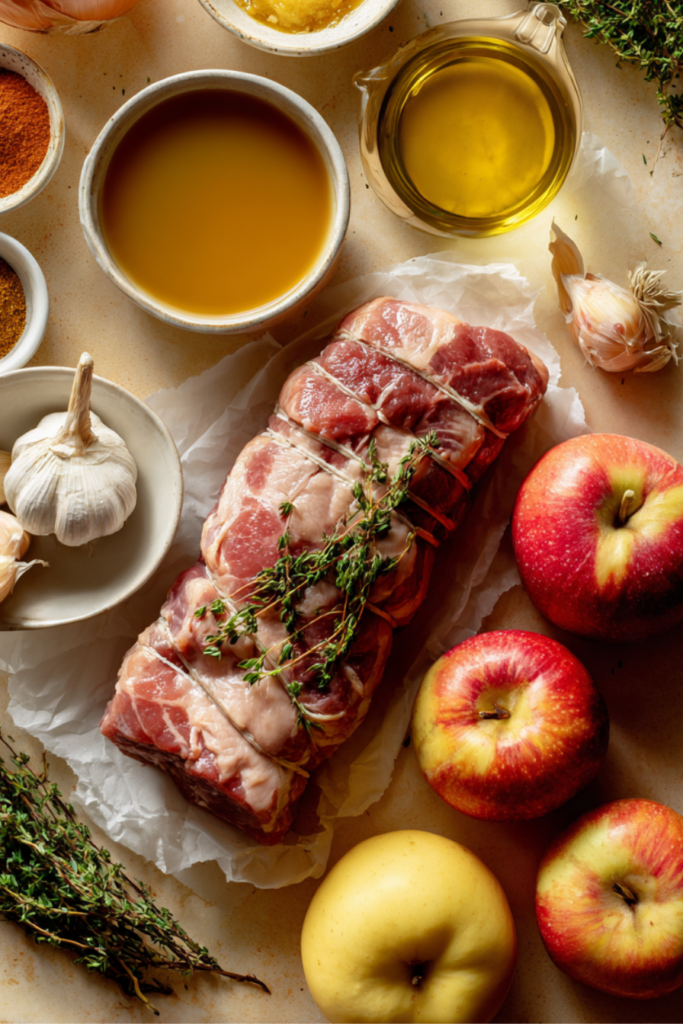
A 2-lb center-cut pork loin roast, or 2 lbs of tenderloin. Both work, but they cook at different speeds. A loin roast needs about 2 hours on LOW; a tenderloin needs closer to 1.5. Either way, the temperature is the authority, not the clock.
Pure unsweetened apple cider, not apple juice. Apple juice is sweeter and thinner, and the sauce comes out syrupy instead of balanced. Cider has more body and a little tartness that works with the Dijon.
Honeycrisp apples, cut into thick wedges. Honeycrisp holds its shape better than softer varieties like McIntosh or Gala. Thick wedges — eighths, not slices — are what keep them from dissolving.
How to Make It
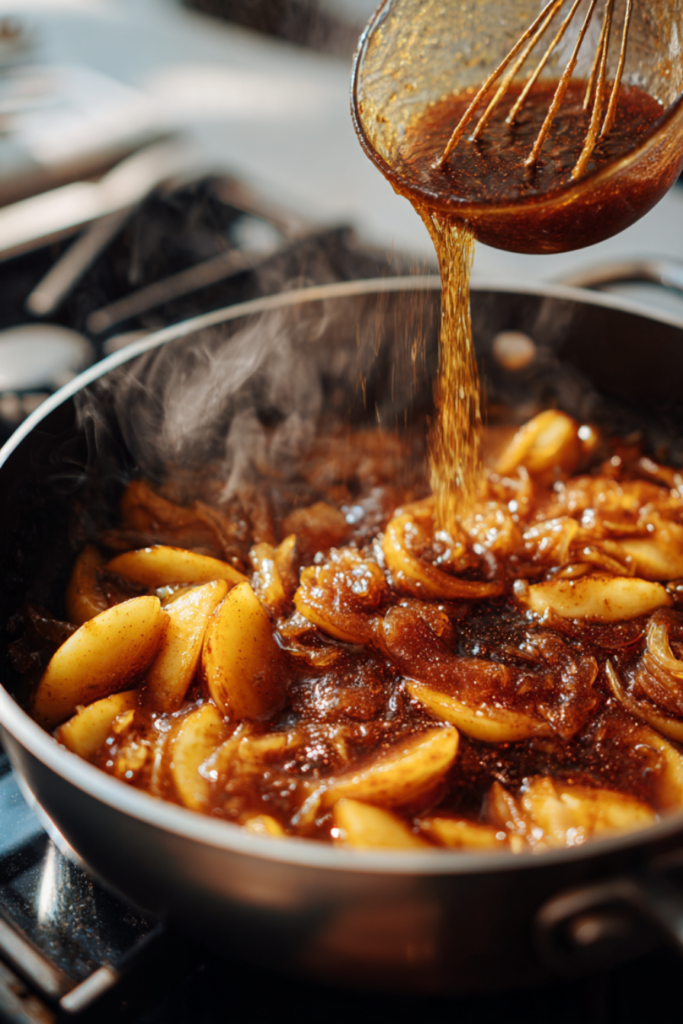
1. Sear the pork. Pat a 2-lb pork loin roast or tenderloin dry, then season with 1 teaspoon kosher salt, ½ teaspoon black pepper, 1 teaspoon dried thyme, and ½ teaspoon smoked paprika. Heat 1 tablespoon of olive oil in a heavy skillet over medium-high heat and sear the pork 2 to 3 minutes per side, until a golden-brown crust forms. Transfer to the slow cooker.
2. Build the braise. In a bowl, whisk together 1 cup apple cider, ½ cup low-sodium chicken broth, 2 tablespoons Dijon mustard, 1 tablespoon maple syrup, and 4 cloves minced garlic. Pour it into the skillet to deglaze, scraping up the browned bits, then pour it over the pork. Scatter 1 large sliced yellow onion around the pork.
3. Braise. Cover and cook on LOW for 2 hours for a loin roast, or 1.5 hours for a tenderloin.
4. Add the apples. Add 2 Honeycrisp apples cut into thick wedges around the pork. Cover and cook another 45 to 60 minutes, until the pork reaches 140–142°F on an instant-read thermometer. Do not overcook.
5. Rest the pork. Transfer to a cutting board, tent loosely with foil, and rest 10 minutes. Carryover heat brings it to 145°F.
6. Reduce the glaze. Pour the slow cooker juices, apples, and onions into a saucepan over medium-high heat. Whisk in a slurry of 1 tablespoon cornstarch and 2 tablespoons cold water and simmer 2 to 3 minutes, until thickened into a glossy amber glaze. Taste and adjust salt.
7. Slice and serve. Carve the pork into ½-inch slices and serve with the glazed apples and onions, spooning the glaze over. Garnish with fresh thyme and, for crunch, toasted pecans or pomegranate seeds.
Tips and Troubleshooting
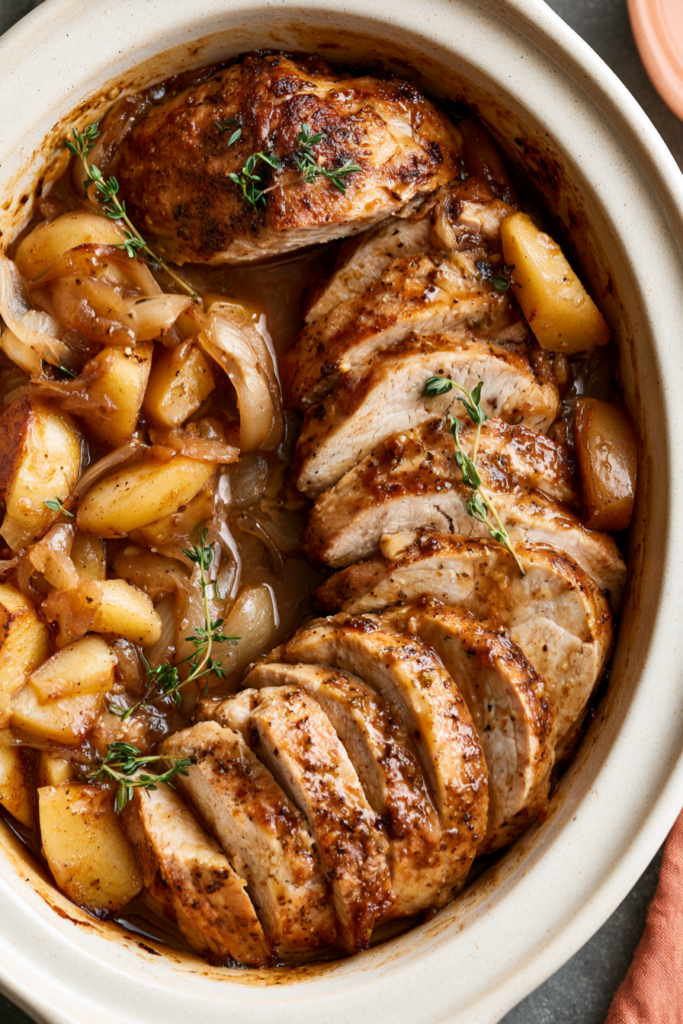
The pork came out dry and chalky. It cooked past 145°F. Pull it at 140–142°F and rest it 10 minutes — carryover does the rest. Check it early rather than relying on the clock.
The apples turned to mush. They went in too early. Add them in the last 45 to 60 minutes and cut them into thick wedges rather than slices.
The glaze is thin. The slurry wasn’t simmered long enough, or you added too much braising liquid. Simmer 2 to 3 more minutes, and reduce the liquid in the saucepan before adding the slurry if it’s very thin.
The glaze is too sweet. The cider was actually apple juice, or you used too much maple syrup. Use unsweetened cider, cut the maple syrup in half, and add a splash more Dijon.
It tastes too salty. Pork loin is often enhanced with a salt solution. Check the label, and taste the glaze before adding any salt — Dijon and broth both carry salt too.
The pork didn’t brown. It was wet when it went into the skillet. Pat it thoroughly dry before searing, and make sure the pan is hot before you add it.
The leftovers dried out on reheat. Reheat covered with a splash of broth or cider for 90 seconds — the glaze thickens in the fridge and needs a little liquid to loosen.
Storage and Reheat
Store sliced pork, apples, and glaze in an airtight container in the refrigerator for up to 4 days.
The glaze thickens as it chills, so reheat covered with a splash of broth or cider for 75-90 seconds. The pork and glaze freeze well for up to 3 months; thaw overnight in the refrigerator and reheat covered.
Slow Cooker Pork Tenderloin With Apple Cider Glaze
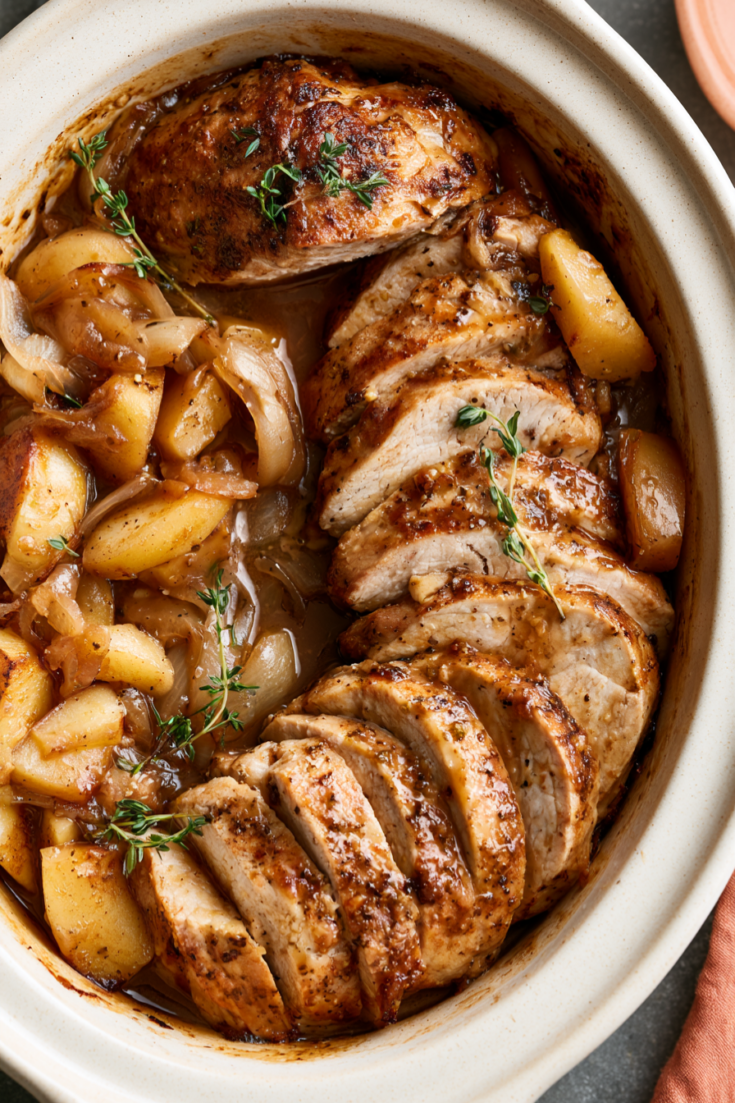
Juicy pork slow-braised in an apple cider-Dijon broth, served with caramelized Honeycrisp apples and onions in a glossy cider glaze — 42g protein per serving.
Ingredients
Pork & Cider Braise
- 2 lbs boneless center-cut pork loin roast, trimmed (or 2 lbs pork tenderloin)
- 1 tsp kosher salt
- ½ tsp freshly cracked black pepper
- 1 tsp dried thyme
- ½ tsp smoked paprika
- 1 tbsp olive oil
- 1 cup pure unsweetened apple cider
- ½ cup low-sodium chicken broth
- 2 tbsp Dijon mustard
- 1 tbsp pure maple syrup or dark brown sugar
- 4 cloves garlic, minced
Apples & Glaze
- 2 medium Honeycrisp apples, cored and cut into 8 thick wedges
- 1 large yellow onion, sliced into ½-inch ribbons
- 1 tbsp cornstarch + 2 tbsp cold water, whisked
- 1 tbsp fresh thyme leaves
- Optional: ¼ cup toasted pecans or pomegranate seeds
Instructions
- Pat the pork dry and season with salt, pepper, dried thyme, and smoked paprika. Sear in oil over medium-high heat, 2–3 minutes per side, until golden. Transfer to the slow cooker.
- Whisk the cider, broth, Dijon, maple syrup, and garlic. Deglaze the skillet, then pour over the pork. Scatter the onions around the pork.
- Cover and cook on LOW for 2 hours for a loin roast, or 1.5 hours for a tenderloin.
- Add the apple wedges and cook another 45–60 minutes, until the pork reaches 140–142°F.
- Rest the pork 10 minutes, tented with foil.
- Pour the juices, apples, and onions into a saucepan. Whisk in the slurry and simmer 2–3 minutes until glossy and thickened. Taste and adjust salt.
- Slice the pork into ½-inch slices and serve with the glazed apples and glaze. Garnish with thyme and pecans or pomegranate seeds.
Notes
Notes: Freeze
Nutrition (per serving, estimated): ~380 calories, 42g protein, 22g carbs, 11g fat, 3g fiber, 720mg sodium.
FAQ
Can I use pork tenderloin instead of a loin roast? Yes. Tenderloin is leaner and cooks faster — about 1.5 to 2 hours on LOW. Pull it at 140–142°F either way; the thermometer matters more than the clock.
Can I cook this on HIGH? Yes, but check it early. HIGH for about 1 to 1.5 hours for tenderloin, 1.5 to 2 hours for a loin roast, and start checking at the low end.
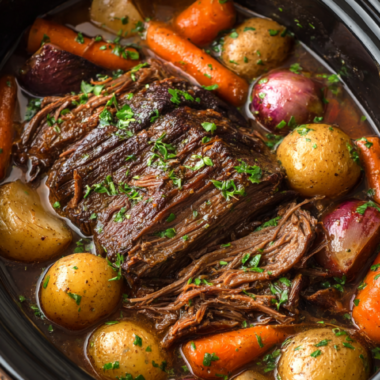
Can I add potatoes? Yes — it works as a crockpot pork tenderloin and potatoes. Add halved baby potatoes with the onions at the start, since they need the full cook time.
Why did my pork come out dry? It cooked past 145°F. Pork tenderloin has almost no fat, so the margin between juicy and chalky is narrow. Pull at 140–142°F.
Can I make this without apple cider? Apple juice works but is sweeter; cut the maple syrup to ½ tablespoon. Hard cider also works and adds a little tang.
Is this good for meal prep? Yes. The glaze protects the lean pork during reheating, and it holds up for four days. Store the glaze separately if you want to control how much you add to each portion.
More Recipes You’ll Love
- Kalua Pork Crockpot Recipe
- Pork and Sauerkraut Crockpot Recipe
- Country-Style Boneless Pork Ribs In The Crockpot
- Sweet and Sticky Crockpot Pork Tenderloin
Closing
The temperature pull and the separate saucepan reduction are the two things that make this dish work — everything else is cider and thyme.
It’s the one I’d hand you first when you want a fall slow cooker dinner that doesn’t turn out dry. Make it once, and tell me whether you used the pecans or the pomegranate.