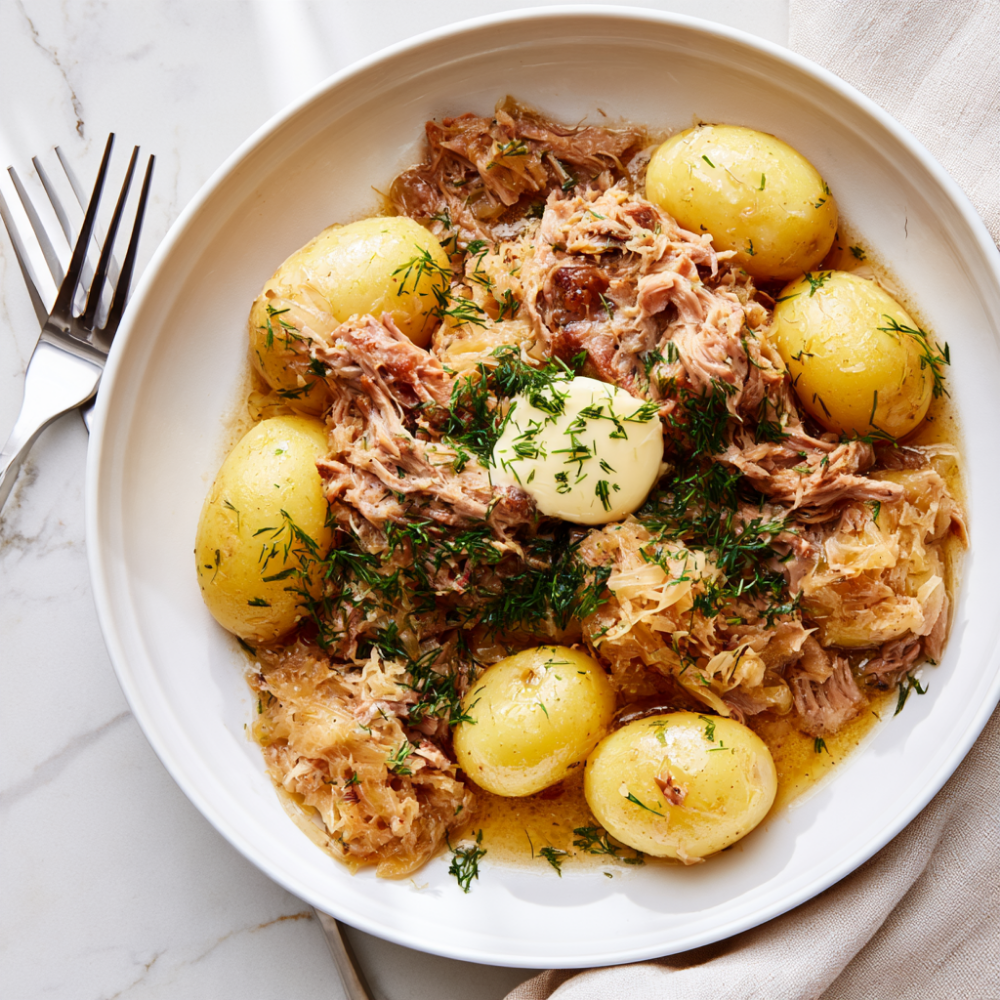
There’s something about walking in the door after a long, cold day and smelling pork and sauerkraut that’s been simmering for hours.
The tang hits you first—bright, sharp, alive—followed by the deep, savory richness of pork that’s been falling apart since morning. The potatoes soak it all up.
The butter melts into the brine, turning it into a glossy sauce that clings to every bite.
It’s the kind of dinner that warms you from the inside out, and it’s waiting for you in the crockpot without you having done a thing since 8 AM.
It’s also the meal that shows up on New Year’s Day tables across Pennsylvania Dutch country and Eastern Europe. Pork for progress. Sauerkraut for luck and longevity. Potatoes for prosperity.
Whether you believe in the symbolism or not, it’s a comfort-food classic earned over generations.
And here’s what makes this version truly special: it’s built for protein without losing any of the flavor. With about 38 grams of protein per serving from the pork and a sauce that’s rich, buttery, and bright from the sauerkraut, this isn’t just a side dish you eat once a year. It’s a real weeknight dinner that keeps you full.
The best part? Everything goes in one pot. No browning required. No sautéing. No extra dishes. You layer it in the morning, walk away, and come back to dinner.
This pork and sauerkraut earns a permanent spot in your rotation.
Why This Recipe Works
This isn’t a complicated dish, but a few small decisions make it better than most pork and sauerkraut recipes. Here’s what actually matters:
Pork Shoulder, Not Tenderloin. This is the most important fix. Pork tenderloin is lean, but it’s also small and cooks fast. After 8 hours in a crockpot, it turns dry and stringy. Pork shoulder (also called pork butt or Boston butt) is the right cut for a long slow cook. It has enough intramuscular fat and connective tissue to stay moist and tender through the whole cook. It also shreds beautifully and delivers about 38 grams of protein per serving.
Drain Half the Sauerkraut Liquid. This keeps the dish from turning into a sour, watery bath. A full jar of sauerkraut dumped in undrained, plus a cup of broth, plus the liquid from 3 pounds of pork and potatoes, creates a diluted base that’s aggressively sour. Drain the sauerkraut and use just ½ cup of the reserved brine to keep the tang without overwhelming the dish.
Reduce the Broth to ½ Cup. The sauerkraut, pork, potatoes, onion, and apple all release liquid as they cook. A full cup of chicken broth on top of all that turns the crockpot into a soup. Half a cup is enough to keep the sauce concentrated and flavorful.
Layer Potatoes at the Very Bottom. This small step makes a big difference. The acid in sauerkraut slows down the breakdown of pectin in potatoes. If the potatoes are buried under the sauerkraut, they can stay firm and waxy even after 8 hours. Placing them at the very bottom, in direct contact with the heating element and the butter, lets them cook through and turn creamy.
Halve the Baby Potatoes. Whole baby potatoes take longer to cook through and can stay firm in the center. Halving them gives the heat direct access to the middle and ensures they’re tender all the way through in 8 hours.
Whole-Grain Dijon Mustard for Depth. This is the secret ingredient. A tablespoon of whole-grain Dijon, stirred in with the butter and apple, adds savory, tangy depth that pairs naturally with pork and caraway. You won’t taste mustard in the finished dish—you’ll just taste a sauce that’s more complex and more satisfying.
Apple and Brown Sugar for Balance. Sauerkraut is tangy and salty. A chopped apple, a splash of apple juice, or a splash of apple cider does the job without turning the dish sweet. It’s the same trick used in traditional German and Polish versions.
Butter, Not Oil. Cubed butter melts into the sauerkraut brine, creating a rich, glossy sauce that clings to the pork and potatoes. It’s the secret to making this taste as a German grandma made it.
Sear the Pork First (Optional but Worth It). If you have 5 minutes in the morning, sear the pork on all sides before it goes in the crockpot to build a deeply caramelized crust that flavors the whole pot. If you’re short on time, skip it. The dish still works—it just tastes a little more layered with the sear.
Caraway Seeds Are Traditional. If you like the flavor, add 1 teaspoon. If you don’t, skip it. It’s a classic pairing with sauerkraut for a reason, and it’s what makes this taste authentically German.
Cook Low and Slow for 8 to 9 Hours. High heat makes the pork tough and causes the sauerkraut to lose its texture. Low and slow is the way. Eight hours is the sweet spot. If your crockpot runs hot, check at 7.
Shred, Don’t Slice. After 8 hours, the pork shoulder falls apart with a fork. Shredding it into the sauce means every bite has pork, sauerkraut, and potatoes together instead of separate components on a plate.
Finish With Fresh Parsley or Dill. A handful of chopped fresh herbs at the end adds color and a fresh, grassy note that cuts through the richness. Dill is traditional with sauerkraut, but parsley works too.
This meal earns its spot in the weekly rotation. It’s tender, tangy, and undeniably delicious.
Pork and Sauerkraut Crockpot Recipe

A tender, tangy pork and sauerkraut crockpot recipe with baby potatoes and a buttery, tangy sauce. Set it and forget it for 8 to 9 hours, and dinner is already handled.
Ingredients
For the Pork
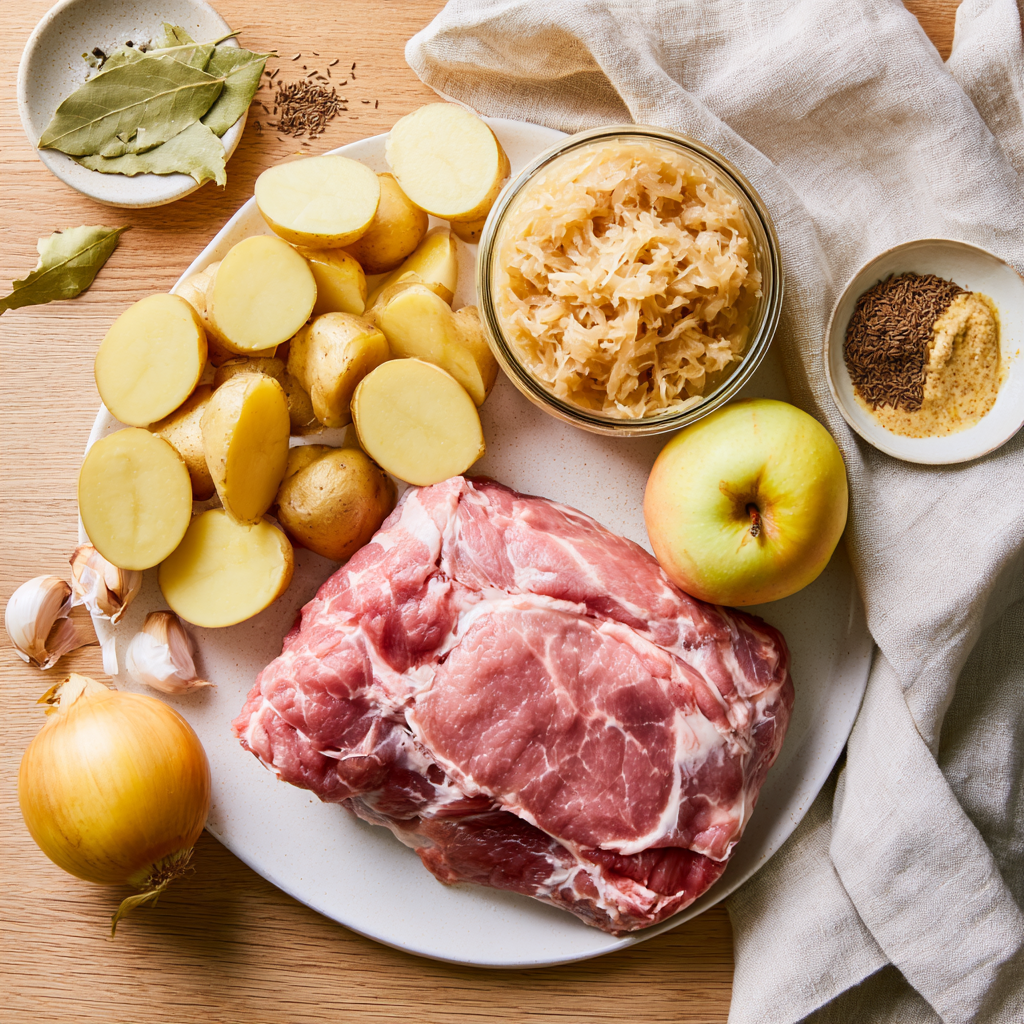
- 3 lb boneless pork shoulder (pork butt or Boston butt), cut into 3 to 4 large chunks
- 1 tbsp kosher salt
- 1 tsp freshly ground black pepper
- 1 tsp garlic powder
- 1 tsp smoked paprika
- 1 tbsp olive oil (if searing)
For the Crockpot
- 1½ lbs baby Yukon Gold potatoes, halved
- 1 (24 to 32 oz) jar or 2 (15 oz) cans sauerkraut, drained, reserving ½ cup brine
- 1 medium yellow onion, sliced
- 4 cloves garlic, smashed
- 1 crisp sweet apple (Honeycrisp or Fuji), cored and diced
- ¼ cup unsalted butter, cubed
- ½ cup low-sodium chicken broth
- ½ cup reserved sauerkraut brine
- 1 tbsp brown sugar or pure maple syrup
- 1 tbsp whole-grain Dijon mustard
- 1 tsp caraway seeds (optional, but traditional)
- 2 bay leaves
For the Finish
- ¼ cup fresh parsley or dill, finely chopped
- Freshly ground black pepper
Instructions
- Season the pork. Pat the pork shoulder chunks dry with paper towels, then season all sides with kosher salt, black pepper, garlic powder, and smoked paprika. If you want to sear, heat 1 tablespoon of olive oil in a skillet over medium-high heat and sear each chunk for 2 to 3 minutes per side, until deeply golden. Transfer to the crockpot.
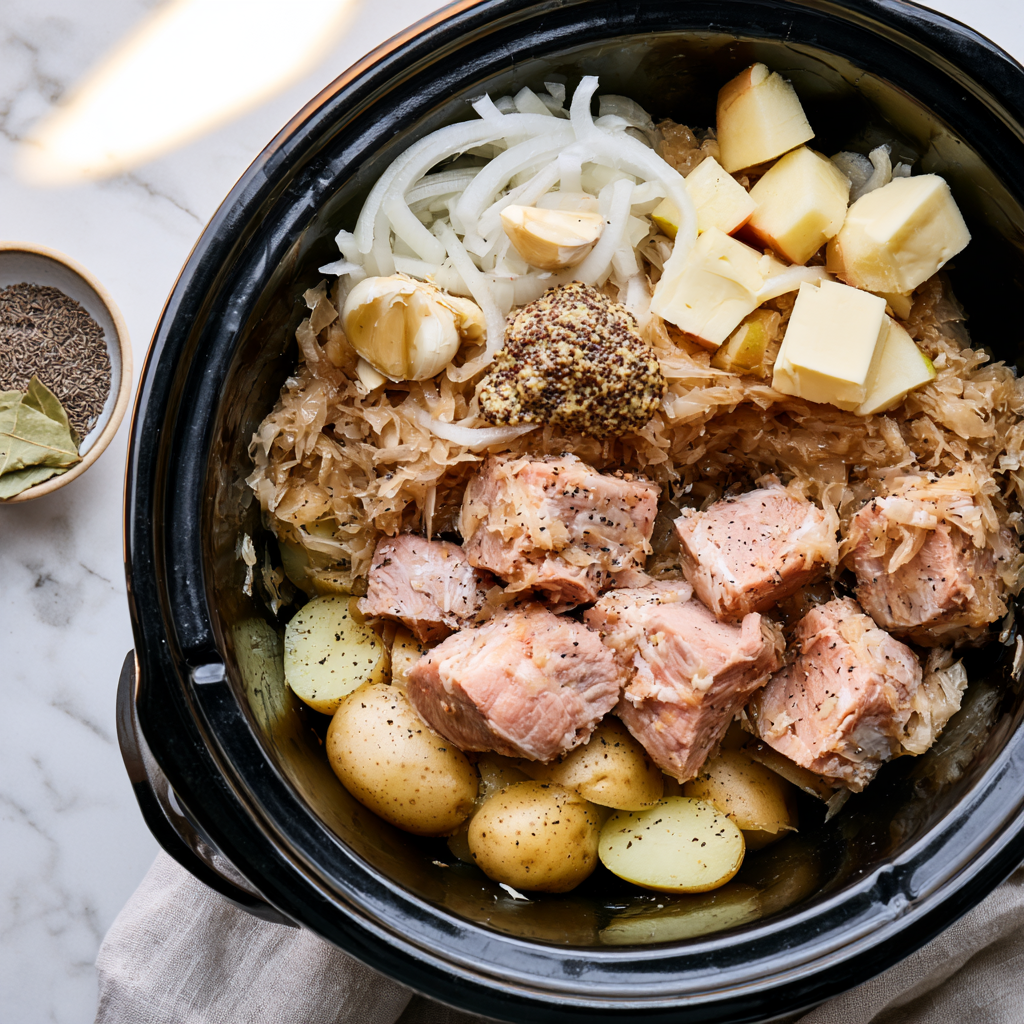
- Layer the potatoes at the very bottom. Place the halved baby potatoes in an even layer in a 6-quart or larger slow cooker. This is where they'll cook most evenly, in direct contact with the heat and the butter. Place the seasoned pork shoulder chunks on top.
- Add the aromatics and sauerkraut. Scatter the sliced onion, smashed garlic, and diced apple around the meat. Layer the drained sauerkraut over the top. Drizzle with the ½ cup of reserved sauerkraut brine and the ½ cup of chicken broth. Sprinkle with the brown sugar.
- Add the butter, mustard, and spices. Top with the cubed butter, whole-grain Dijon mustard, caraway seeds (if using), and bay leaves.
- Cover and cook. Cover the slow cooker and cook on Low for 8 to 9 hours, until the pork is fork-tender and shreds easily.
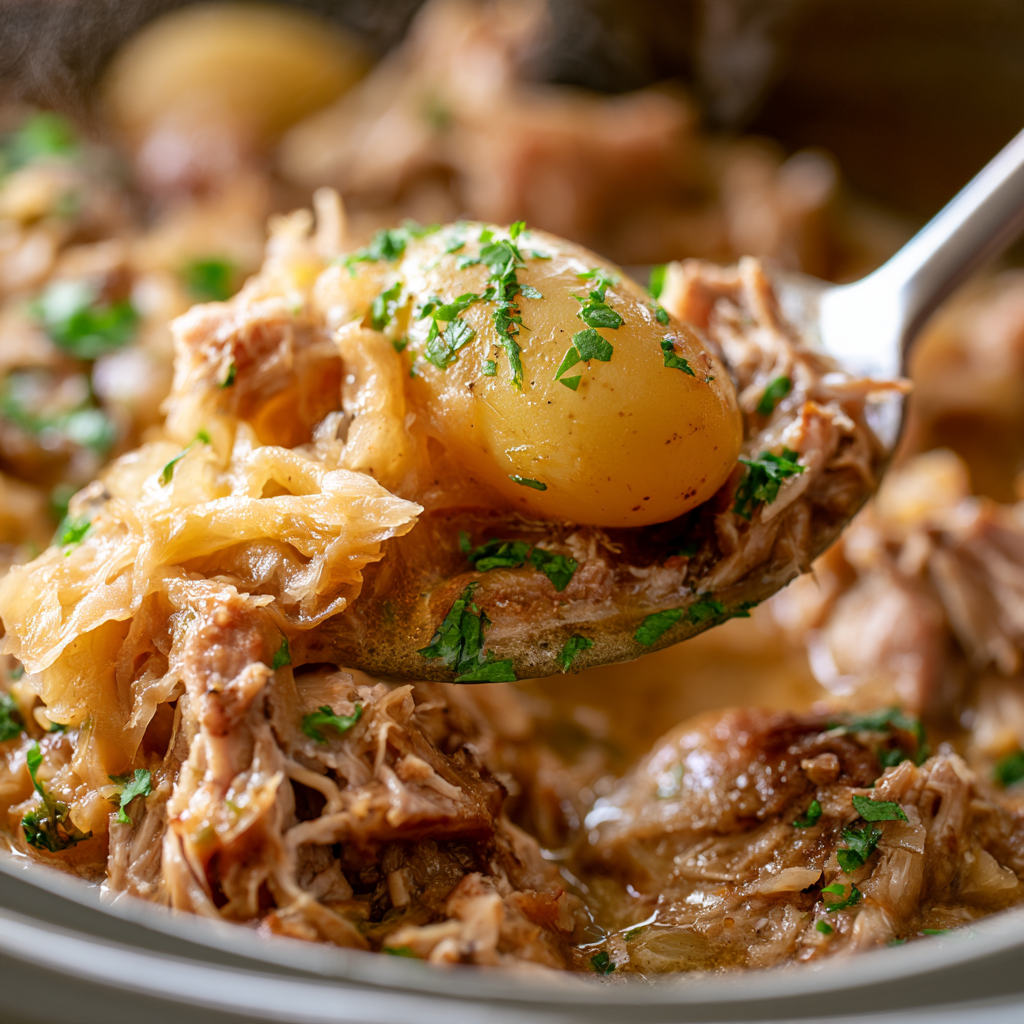
- Shred the pork. Remove the pork from the crockpot and transfer it to a cutting board or a large bowl. Shred it with two forks, discarding any large pieces of fat. Remove and discard the bay leaves. Return the shredded pork to the crockpot and fold it gently into the potatoes and sauerkraut.
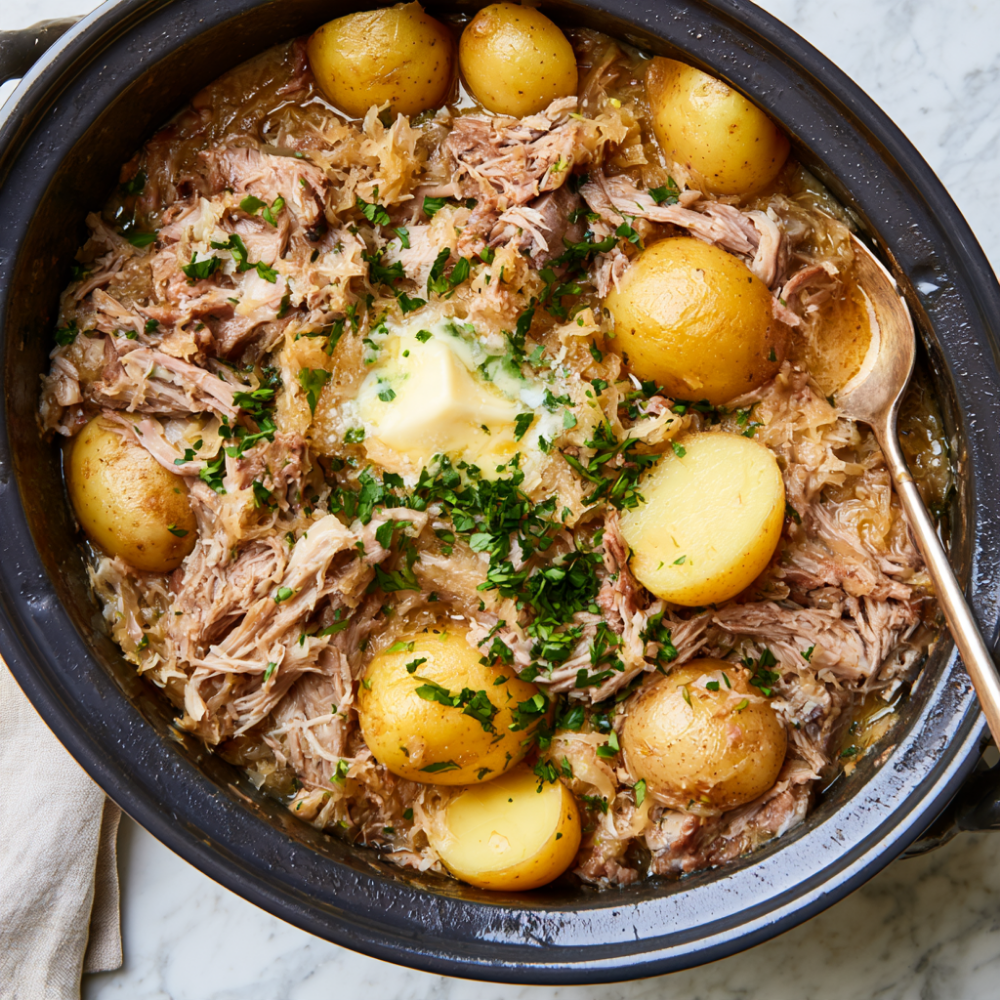
- Finish and serve. Stir in the fresh parsley or dill. Taste and adjust salt and pepper. Serve in deep bowls with crusty rye bread or dinner rolls on the side, and add a pat of butter on top for extra richness.
Notes
Protein per Serving: About 38gNutrition Note: Protein calculated from a 3 lb boneless pork shoulder roast yielding about 24 oz cooked (≈228g protein), divided across 6 servings — about 38g per serving. About 480 calories per serving, including sauerkraut, potatoes, and butter. Using pork loin instead of pork shoulder drops fat by about 10g per serving, while protein stays about the same. Using a 2 lb roast and increasing potatoes drops the protein to about 26g per serving.
Make-Ahead and Storage Instructions
Make Ahead: This is a true dump-and-go crockpot meal. To prep ahead, combine the drained sauerkraut, reserved brine, onion, garlic, apple, butter, broth, brown sugar, mustard, and caraway seeds in a zip-top bag the night before. Store the pork and potatoes separately in the refrigerator. In the morning, layer everything into the crockpot and cook.
Refrigerator: Store leftovers covered in an airtight container for up to 5 days. Reheat gently in a skillet over medium-low heat or in the microwave. The flavors deepen as it sits.
Freezer: Cool completely, then transfer to freezer-safe containers or zip-top bags laid flat. Freeze for up to 3 months. Thaw overnight in the refrigerator and reheat on the stovetop or in the microwave.
Tips for the Best Pork and Sauerkraut Crockpot
Use pork shoulder, not tenderloin. Pork tenderloin is lean but dries out and becomes stringy after 8 hours in a slow cooker. Pork shoulder has enough fat and connective tissue to stay moist and shred beautifully.
Drain the sauerkraut and use only ½ cup of brine. A full jar of sauerkraut dumped in undrained creates an aggressively sour, watery base. Draining it and using just ½ cup of the reserved brine keeps the tang balanced.
Reduce the broth to ½ cup. The sauerkraut, pork, and vegetables all release liquid as they cook. A full cup of broth turns the dish into a soup. Half a cup keeps the sauce concentrated.
Layer potatoes at the very bottom. The acid in sauerkraut slows down the breakdown of pectin in potatoes. Placing them at the very bottom, in direct contact with the heat and butter, lets them cook through and turn creamy.
Halve the baby potatoes. Whole baby potatoes take longer to cook through and can stay firm in the center. Halving them ensures they’re tender all the way through.
Add whole-grain Dijon mustard. Stir in a tablespoon with the butter for savory, tangy depth that pairs naturally with pork and caraway. You won’t taste mustard—you’ll just taste a sauce that’s more complex.
Add apple for balance. Sauerkraut is tangy and salty. A chopped apple brings natural sweetness that balances the whole pot.
Caraway seeds are traditional. If you like the flavor, add 1 teaspoon. If you don’t, skip it.
Sear the pork if you have time. Searing builds a deeply caramelized crust that flavors the whole pot. If you’re short on time, skip it.
Low and slow is the way. High heat makes the pork tough. Low for 8 to 9 hours is the sweet spot.
Shred, don’t slice. After 8 hours, the pork falls apart with a fork. Shred it into the sauce so every bite has pork, sauerkraut, and potatoes.
Serve with crusty bread. The sauce is the best part. Use a piece of crusty bread or a slice of rye to soak it up.
Easy Variations
Polish Sausage and Sauerkraut. Swap the pork shoulder for 2 lbs of smoked kielbasa or Polish sausage, cut into 2-inch pieces. Reduce the cook time to 4 hours on Low. Add 1 tablespoon of Dijon mustard to the pot.
Kielbasa and Sauerkraut Crockpot. Combine 1 lb of kielbasa with the pork shoulder for a mixed-meat version. The kielbasa adds smoky flavor, and the pork shoulder adds lean protein.
Pork and Sauerkraut Oven. No crockpot? Arrange everything in a Dutch oven, cover, and bake at 325°F for 3 to 3½ hours, until the pork is fork-tender.
Sauerkraut Casserole. After shredding the pork, transfer everything to a 9×13 baking dish, top with 1 cup shredded Gruyère or Swiss, and bake at 375°F for 15 minutes, until the cheese is melted and bubbly.
German Sauerkraut with Apples and Bacon. Add 6 slices of cooked, crumbled bacon and the apple to the crockpot. Skip the brown sugar.
Storage and Food Safety
Refrigerator: Store leftovers covered in an airtight container for up to 5 days. Reheat gently in a skillet over medium-low heat or in the microwave.
Freezer: Cool completely, then transfer to freezer-safe containers or zip-top bags laid flat. Freeze for up to 3 months. Thaw overnight in the refrigerator and reheat on the stovetop.
Make Ahead: Combine the sauerkraut, onion, garlic, apple, butter, broth, brown sugar, mustard, and caraway seeds in a zip-top bag the night before. Store the pork and potatoes separately. In the morning, layer everything into the crockpot and cook.
Food Safety: Pork must reach an internal temperature of 145°F before serving. Cool leftovers within 2 hours and refrigerate promptly. Reheat leftovers to 165°F. Do not leave pork at room temperature for more than 2 hours.
Frequently Asked Questions
How much protein is in pork and sauerkraut crockpot? About 38g per serving from a 3 lb pork shoulder roast across 6 servings. Using pork loin instead keeps the protein about the same but drops the fat. Using a 2 lb roast drops the protein to about 26g per serving.
What pork cut is best for this recipe? Pork shoulder (pork butt or Boston butt). It has enough fat and connective tissue to stay moist and shred beautifully after 8 hours. Pork tenderloin turns dry and stringy.
Why do I need to drain the sauerkraut? A full jar of sauerkraut dumped in undrained, plus broth, plus the liquid from the pork and potatoes, creates an aggressively sour, watery base. Draining it and using just ½ cup of the reserved brine keeps the tang balanced.
Why layer potatoes at the bottom? The acid in sauerkraut slows down the breakdown of pectin in potatoes. Placing them at the very bottom, in direct contact with the heat and butter, lets them cook through and turn creamy instead of staying firm and waxy.
Why halve the baby potatoes? Whole baby potatoes take longer to cook through and can stay firm in the center. Halving them ensures they’re tender all the way through in 8 hours.
Do I drain the sauerkraut? Drain the sauerkraut and reserve ½ cup of the brine. Use the drained sauerkraut and the ½ cup of brine in the recipe.
Can I use kielbasa instead of pork shoulder? Yes. Swap the pork shoulder for 2 lbs of smoked kielbasa or Polish sausage, cut into 2-inch pieces. Reduce the cook time to 4 hours on Low.
What do I serve with pork and sauerkraut? Serve with crusty bread, rye bread, mashed potatoes, or a simple green salad. A dollop of sour cream or applesauce on the side is also traditional.
Can I make this in the oven instead? Yes. Arrange everything in a Dutch oven, cover, and bake at 325°F for 3 to 3½ hours, until the pork is fork-tender.
Can I make this in an Instant Pot? Yes. Add everything to the Instant Pot, seal, and pressure cook on High for 60 minutes, then do a 15-minute natural release. Shred the pork and stir.
Can I add other vegetables? Yes. Sliced carrots, parsnips, or turnips all work well. Add them with the potatoes.
Can I make this without potatoes? Yes. Skip the potatoes and serve the pork and sauerkraut over mashed potatoes, egg noodles, or rice.
More High Protein Crockpot Recipes You’ll Love
Red Beans and Rice Crockpot Recipe
Buffalo Chicken Chili Crockpot Recipe
Chicken Chili Crockpot Recipe
Creamy Crockpot Chicken Corn Chowder
Easy Cranberry Meatballs Crockpot Recipe
Conclusion
A Pork and Sauerkraut Crockpot recipe is the kind of dinner that earns its spot in the weekly rotation. It’s tender, tangy, and undeniably delicious.
And with about 38 grams of protein per serving, it’s a real meal that keeps you full.
The original version uses pork tenderloin and dries out after 8 hours. This one uses pork shoulder—the right cut for a long slow cook—so the meat stays moist and shreds beautifully.
It drains the sauerkraut and uses just ½ cup of the brine so the dish stays tangy without turning sour. It uses only ½ cup of broth so the sauce stays concentrated. It layers the halved potatoes at the very bottom so they cook through. It adds a tablespoon of whole-grain Dijon for savory depth that ties everything together.
The three things that make it work are these. Use pork shoulder, not tenderloin. Drain the sauerkraut and use only ½ cup of brine. And layer the potatoes at the very bottom.
About 38 grams of protein per serving. Six generous portions. Ten minutes of prep, then hands-off in the slow cooker.
Make it for New Year’s Day, a cold Sunday, or any weeknight when you want comfort food that’s already handled. This pork and sauerkraut earns a permanent spot on the table.