
I love all kinds of curry. Butter chicken, Japanese curry, Thai seafood curry—I’ll take them all.
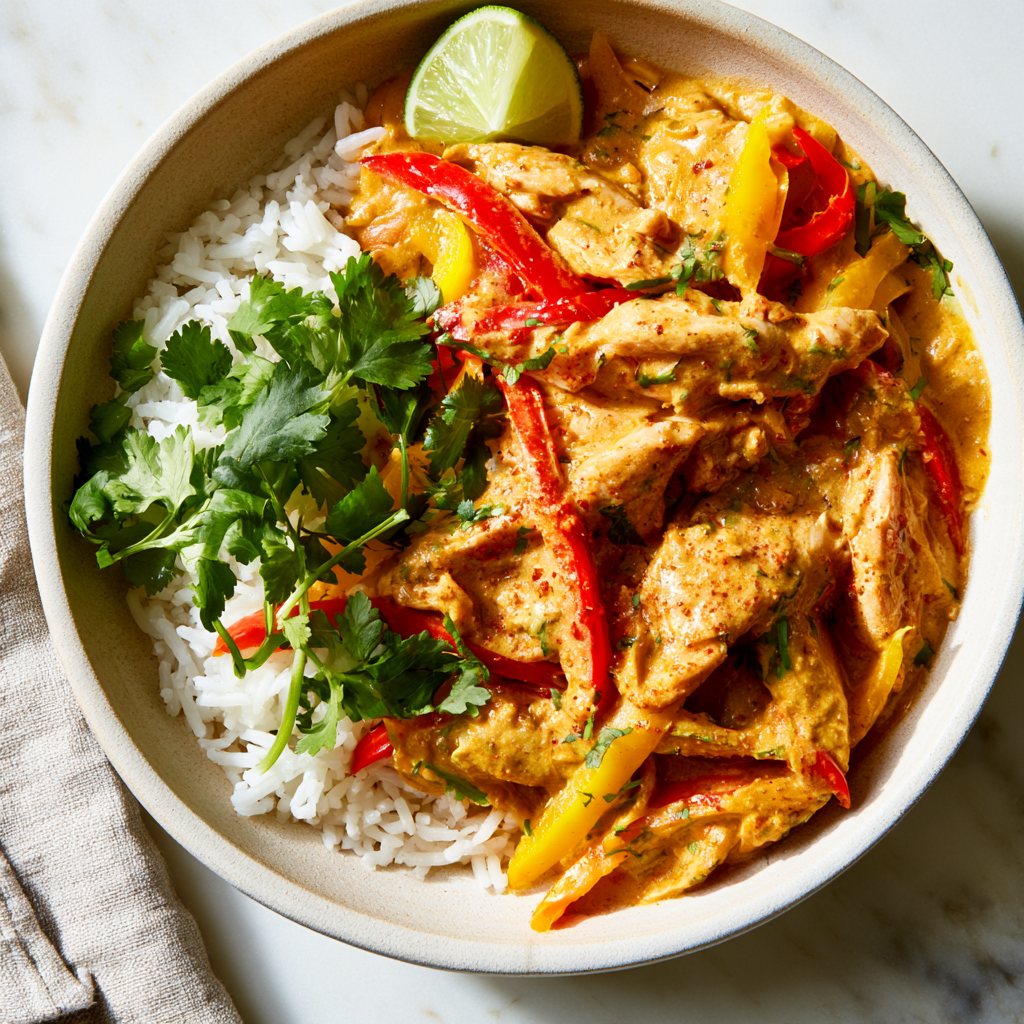
But this coconut curry chicken is easy enough for a weeknight dinner and flavorful enough to satisfy a curry craving.
It comes together in one pan in about 30 minutes. It packs 45 grams of protein per serving.
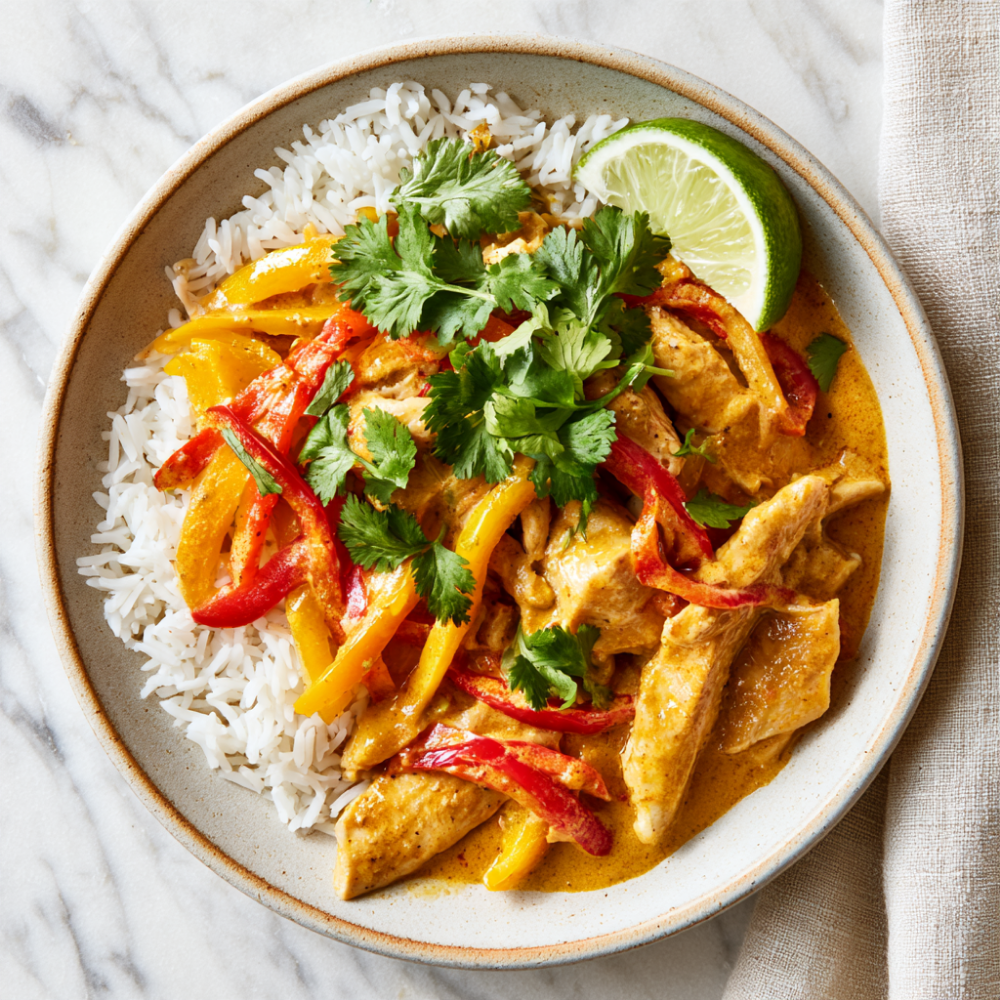
Served over a bowl of jasmine or basmati rice, it’s a plateful of coconut curry that might just beat the takeout version.
The sauce does all the work.
Full-fat coconut milk, Thai curry paste, ginger, garlic, and a touch of fish sauce come together in a creamy, fragrant sauce that coats every piece of chicken and every strip of bell pepper.
A squeeze of lime at the end brightens the whole pot.
A sprinkle of cilantro and crushed peanuts on top adds freshness and crunch.
This curry earns its spot in your weeknight rotation.
Why This Recipe Works
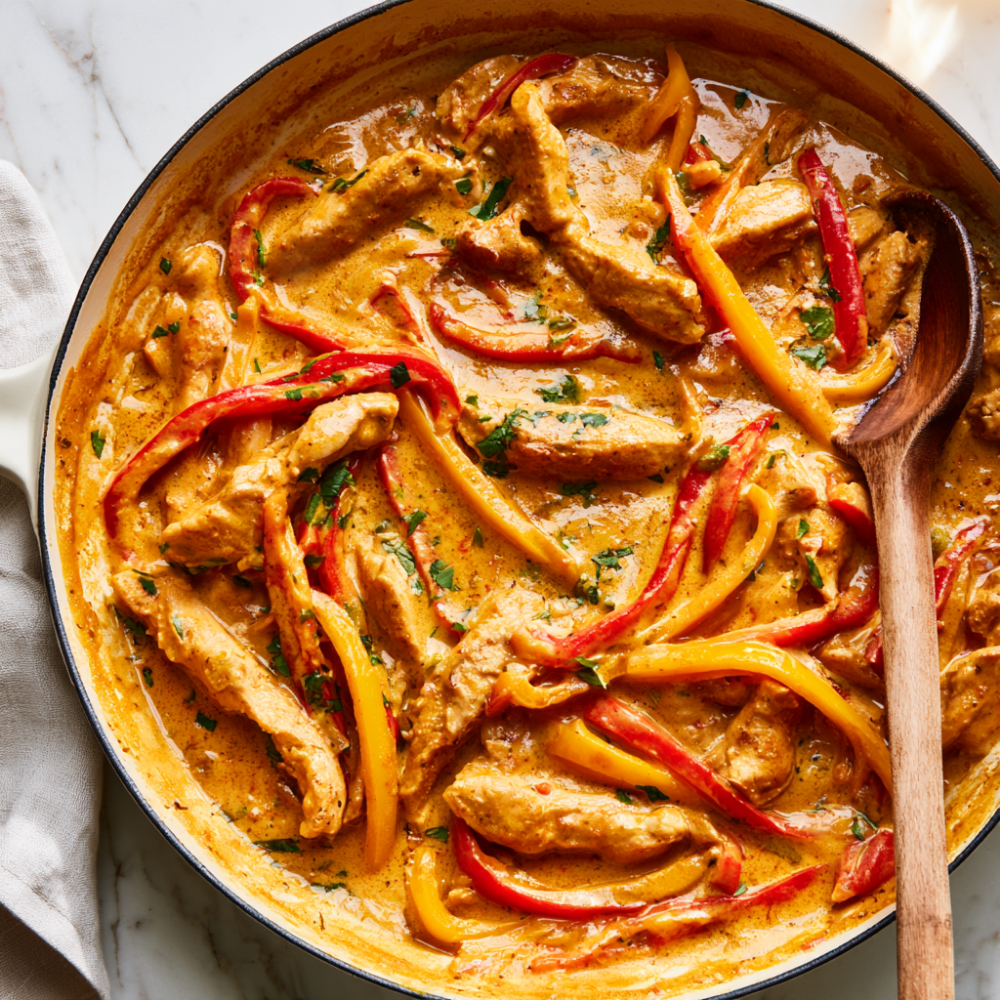
This isn’t a complicated dish, but a few small decisions make it better than most coconut curry chicken recipes. Here’s what actually matters:
Chicken Breast Sliced Thin, Not Chunked. Chicken thighs are forgiving and stay juicy no matter what. Chicken breast is leaner and higher in protein, but it dries out quickly if you’re not careful.
The fix is to slice the breast into thin strips instead of chunking it. Thin strips cook in minutes and stay tender in the sauce. The result is 45 grams of protein per serving instead of the 30 you’d get from thighs.
Thai Curry Paste, Not Just Powder. Curry powder alone gives a curry a flatter, more westernized flavor.
Thai yellow or red curry paste is what gives it a deep, authentic curry body.
Frying the paste in coconut oil along with the garlic and ginger unlocks the fat-soluble aromatics—galangal, lemongrass, kaffir lime—that powder alone can’t match. One to two tablespoons is the difference between a decent curry and a great one.
Marinate the Chicken in the Spices. Coating the chicken in curry powder, paprika, and salt before it hits the pan does two things.
First, it seasons the meat all the way through, not just the surface. Second, the spices bloom in the oil as the chicken sears, which deepens the flavor of the whole dish.
Even 10 minutes makes a difference.
A Touch of Brown Sugar. Full-fat coconut milk plus lime juice plus fish sauce can turn sharp and overly tangy without something sweet to round it out. A teaspoon of light brown sugar or palm sugar ties the salty, savory, and tangy elements together into a glossy, balanced glaze. It’s a small amount, but it’s the difference between a curry that tastes complete and one that tastes like it’s missing something.
Red and Yellow Bell Peppers for Color and Sweetness. The peppers aren’t just for looks. Red and yellow bell peppers are sweeter and more flavorful than green ones, adding natural sweetness that balances the warm spices. They also add a pop of color that makes the bowl look restaurant-worthy.
Full-Fat Coconut Milk, Not Light. Light coconut milk is mostly water. Full-fat coconut milk is what gives the curry its creamy body and rich mouthfeel. Skimping on the fat means a thin, watery sauce that doesn’t cling to the chicken or the rice.
Sear the Chicken First, Then Build the Sauce. Searing the chicken in coconut oil before adding the sauce builds a deeply flavored fond on the bottom of the pan. Then cook the onions, garlic, ginger, and curry paste in that same pan, picking up all that flavor. The sauce simmers in it too. This one step is what separates a good curry from a great one.
Fish Sauce for Umami Depth. A tablespoon of fish sauce doesn’t make the curry taste fishy. It adds a savory, salty depth that soy sauce can’t replicate. That’s why Thai and Vietnamese cooking use it in almost everything. Don’t skip it.
Lime Juice Off the Heat. Stir in lime juice at the very end to brighten the whole pot and keep the curry from tasting flat after a long simmer. Boiling lime juice turns it bitter. Add it last and taste the difference.
Cilantro and Peanuts for Texture. The creamy sauce and tender chicken need contrast. Fresh cilantro adds a bright, grassy note, and crushed peanuts add crunch. Both go on at the end so they stay fresh and crisp.
This is the kind of meal people request again and again. It’s creamy, fragrant, and undeniably delicious.
Coconut Curry Chicken Recipe
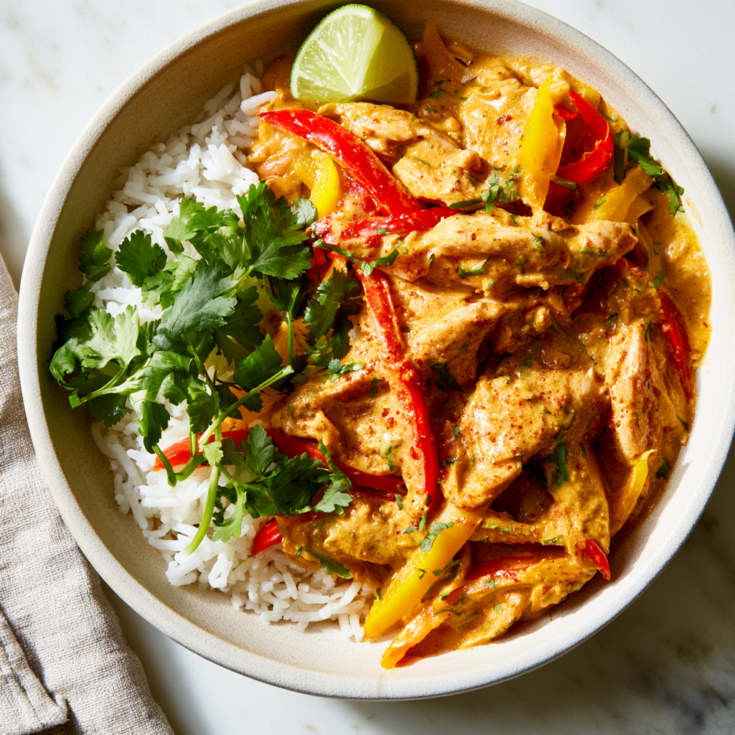
A creamy coconut curry chicken made with chicken breast, Thai curry paste, red and yellow bell peppers, and a golden coconut curry sauce. Ready in 30 minutes and packed with 45 g of protein per serving.
Ingredients
For the Chicken
- 2 lbs boneless, skinless chicken breast, sliced into 1-inch strips
- 1 tbsp curry powder
- 1 tsp sweet paprika
- 1 tsp kosher salt
- 2 tbsp refined coconut oil (for searing)
For the Curry Base
- 1 medium yellow onion, finely chopped
- 4 cloves garlic, minced
- 1 (2-inch) piece fresh ginger, peeled and minced
- 1 to 2 tbsp Thai yellow or red curry paste
- 1 medium jalapeño, half thinly sliced and half finely chopped
- 1 red bell pepper, seeded and sliced into thin strips
- 1 yellow bell pepper, seeded and sliced into thin strips
- 1 (14 oz) can full-fat unsweetened coconut milk
- 1 tsp light brown sugar or palm sugar
- 1 to 1½ tbsp fish sauce
- 1 tbsp fresh lime juice (about 1 lime)
- Kosher salt, to taste
For Serving
- Cooked jasmine or basmati rice
- Fresh cilantro, coarsely chopped
- ¼ cup dry roasted peanuts, coarsely chopped
- Lime wedges
- Thinly sliced jalapeño
Notes
Protein per Serving: About 45gNutrition Note: Protein calculated from 2 lbs raw boneless, skinless chicken breast yielding about 24 oz cooked (≈200g protein), 1 can full-fat coconut milk (≈3g), and ¼ cup peanuts (≈7g) — about 210g total across 4 servings, minus roughly 5% loss during cooking — about 45g per serving. Calories: about 560 per serving for the chicken and sauce alone. Adding 1 cup of cooked jasmine rice brings it to about 760 calories per serving. The calorie breakdown is 2 lbs of chicken breast (~1,000 kcal), 1 can of full-fat coconut milk (~700 kcal), 2 tbsp coconut oil (~240 kcal), ¼ cup dry-roasted peanuts (~200 kcal), and vegetables and sauces (~100 kcal), totaling about 2,240 kcal before rice.
Tips for the Best Coconut Curry Chicken
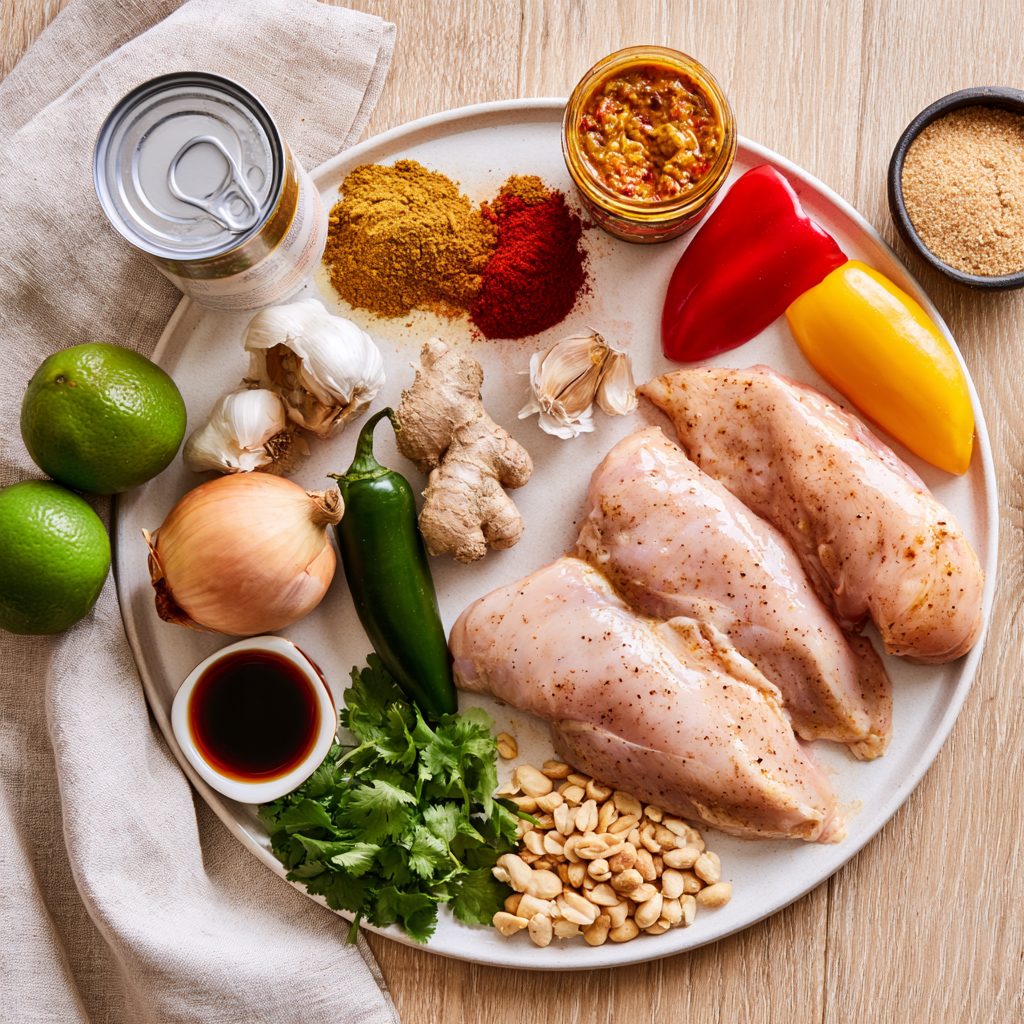
Slice the chicken thin instead of chunking it. Thin strips cook in 2 to 3 minutes and stay tender in the sauce. Chunks take longer, dry out more easily, and don’t coat as evenly. This is the single most important step for juicy chicken breast.
Use Thai curry paste, not just curry powder. Curry powder gives you a westernized flavor. Thai yellow or red curry paste gives you the deep, aromatic curry body you’d get from a restaurant. Fry the paste in the oil with the garlic and ginger for 1 minute before the coconut milk goes in.
Don’t skip the marinating step. Even 10 minutes makes a difference. The spices season the chicken through and bloom in the oil when it hits the pan. That’s where the depth of flavor comes from.
Add a teaspoon of brown sugar. Full-fat coconut milk, lime, and fish sauce can turn sharp without something sweet to round them out. One teaspoon of brown sugar ties everything together into a glossy, balanced glaze.
Use full-fat coconut milk. Light coconut milk is mostly water, so it makes a thin, watery sauce. Full-fat coconut milk is what gives the curry its creamy body and rich mouthfeel.
Sear the chicken first, then build the sauce in the same pan. The browned bits left behind from the chicken are pure flavor. Cooking the onions, garlic, ginger, and curry paste in that same pan picks up all of it.
Add the lime juice and fish sauce off the heat. Lime juice loses its brightness when it cooks, and fish sauce gets saltier and more intense. Both are best added at the very end.
Taste before serving, then adjust. Curry paste brands vary in strength and salt content. Coconut milk brands vary in richness. Taste the finished curry and add more salt, lime, or curry paste if needed.
Easy Variations
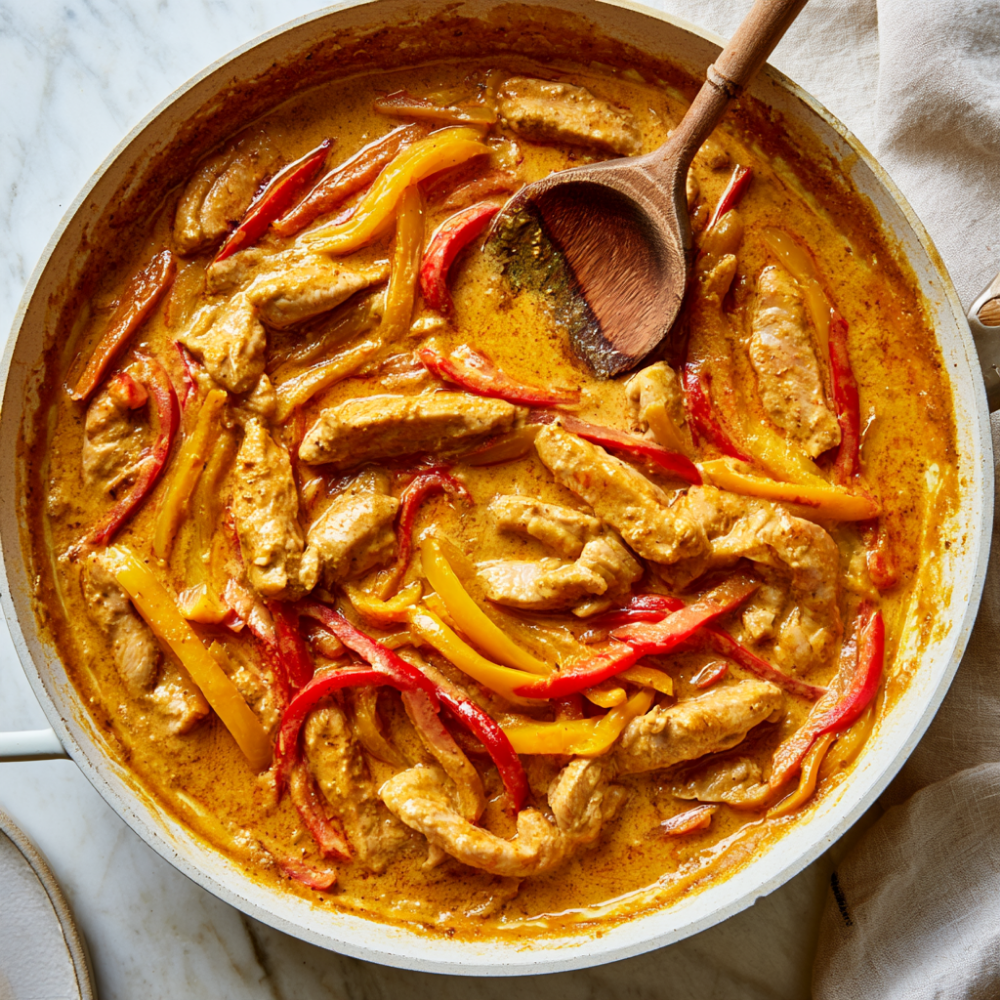
Thai Coconut Curry Chicken. Swap the yellow or red curry paste for green curry paste. The result is more herbal, slightly spicier, and pairs beautifully with the coconut milk.
Coconut Curry Chicken with Vegetables. Add 2 cups broccoli florets, 1 cup snap peas, or 1 sliced zucchini to the bell peppers. The vegetables cook in the sauce, making the curry a full one-pan meal.
Yellow Curry Chicken. Use yellow curry paste and add 1 teaspoon of ground turmeric. The result is a brighter, more golden curry with a slightly sweeter flavor.
Coconut Lime Curry Chicken. Double the lime juice and add 1 teaspoon of lime zest with the fish sauce. The citrus flavor is more pronounced and pairs beautifully with the coconut milk.
Simple Coconut Chicken Curry. Skip the jalapeño and bell peppers and use just the onion, garlic, ginger, curry paste, and spices. The result is a simpler, more kid-friendly curry that comes together in 20 minutes.
Storage and Food Safety
Refrigerator: Store leftovers covered in an airtight container for up to 4 days. Reheat gently in a skillet over medium-low heat or in the microwave. The sauce will thicken as it sits; add a splash of coconut milk or water to loosen it.
Freezer: The curry freezes well. Cool completely, then transfer to a freezer-safe container and freeze for up to 3 months. Thaw overnight in the refrigerator and reheat gently on the stovetop. The sauce may separate slightly; stir it back together as it heats.
Make Ahead: You can slice and marinate the chicken up to 24 hours ahead and store it covered in the refrigerator. Chop the vegetables up to 2 days ahead. Cook fresh when you’re ready.
Food Safety: Chicken must reach an internal temperature of 165°F before serving. Cool leftovers within 2 hours and refrigerate promptly. Reheat leftovers to 165°F.
Frequently Asked Questions
How much protein is in coconut curry chicken? About 45g per serving from the chicken breast, coconut milk, and peanuts across 4 servings. Using chicken thighs instead drops this to about 38g per serving.
Can I use chicken thighs instead of chicken breast? Yes. Boneless, skinless chicken thighs work beautifully and stay juicy even if you slightly overcook them. Cut them into 1-inch chunks and simmer them in the sauce for 15 minutes instead of searing and adding back at the end. Protein drops to about 38g per serving.
Can I use light coconut milk? You can, but the sauce will be thinner and less creamy. Full-fat coconut milk is what gives the curry its rich body. If you use light, add 1 tablespoon of cornstarch slurry to thicken it.
What is Thai curry paste and where do I find it? Thai curry paste is a concentrated blend of lemongrass, galangal, kaffir lime, chilies, and spices.
You can find it in small jars in the international aisle of most grocery stores. Mae Ploy and Thai Kitchen are both widely available brands.
Can I make this in a slow cooker? Yes. Add everything except the lime juice, fish sauce, cilantro, and peanuts to a slow cooker.
Cook on Low for 4 hours or High for 2 hours. Stir in the lime juice and fish sauce at the end. The chicken will be more shredded than sliced, but it still holds the flavor.
Can I make this in an Instant Pot? Yes. Sauté the aromatics and curry paste using the sauté function. Add the chicken, coconut milk, and brown sugar. Pressure cook on High for 5 minutes, then quick release. Stir in the lime juice and fish sauce.
Can I make this dairy-free? This recipe is already dairy-free. Coconut milk is the sauce base.
Can I make this vegetarian? Yes. Swap the chicken for 2 cans of chickpeas or 1 block of extra-firm tofu, cubed and seared. Use soy sauce instead of fish sauce.
What do I serve with coconut curry chicken? Serve with jasmine rice, basmati rice, cauliflower rice, naan, or roti. A simple cucumber salad with rice vinegar on the side is a nice contrast.
More Chicken Breast Recipes You’ll Love
Easy Butter Chicken Recipe (Creamy & Healthy Indian Curry)
Sticky Honey Garlic Chicken Breast
Creamy Smothered Chicken and Rice
Conclusion
A Coconut Curry Chicken is the kind of dinner that earns its spot in the rotation. It’s creamy, fragrant, and undeniably delicious. And with 45 grams of protein per serving, it’s a real meal that keeps you full.
The takeout version is delicious, but it’s also loaded with sodium and often uses cheaper cuts of meat.
This one keeps every bit of the creamy coconut sauce, warm spices, and bright hit of lime, and you can rebuild it at home with lean chicken breast, Thai curry paste, red and yellow bell peppers, and full-fat coconut milk. One pan. Thirty minutes. No delivery fee.
The three things that make it work are these. Slice the chicken thin so it stays tender. Fry the curry paste in the oil so the flavor blooms. And finish with lime juice and fish sauce off the heat.
Forty-five grams of protein per serving. Four generous portions. Ready in 30 minutes and endlessly adaptable.
Make it tonight and add it to your weekly rotation. This curry earns a permanent spot on the table.