
Bone-in chicken thighs are one of the most underrated cuts in the store.
They’re cheaper than breast, they have more fat and connective tissue, and that’s exactly what makes them taste like something — the meat stays juicy, the skin renders crisp, and the bones give the sauce a depth that boneless chicken can’t match.
This garlic butter chicken thighs recipe takes all of that and builds a glossy, garlicky pan sauce around it, so every bite is rich, savory, and completely satisfying.
The method is what makes it work.
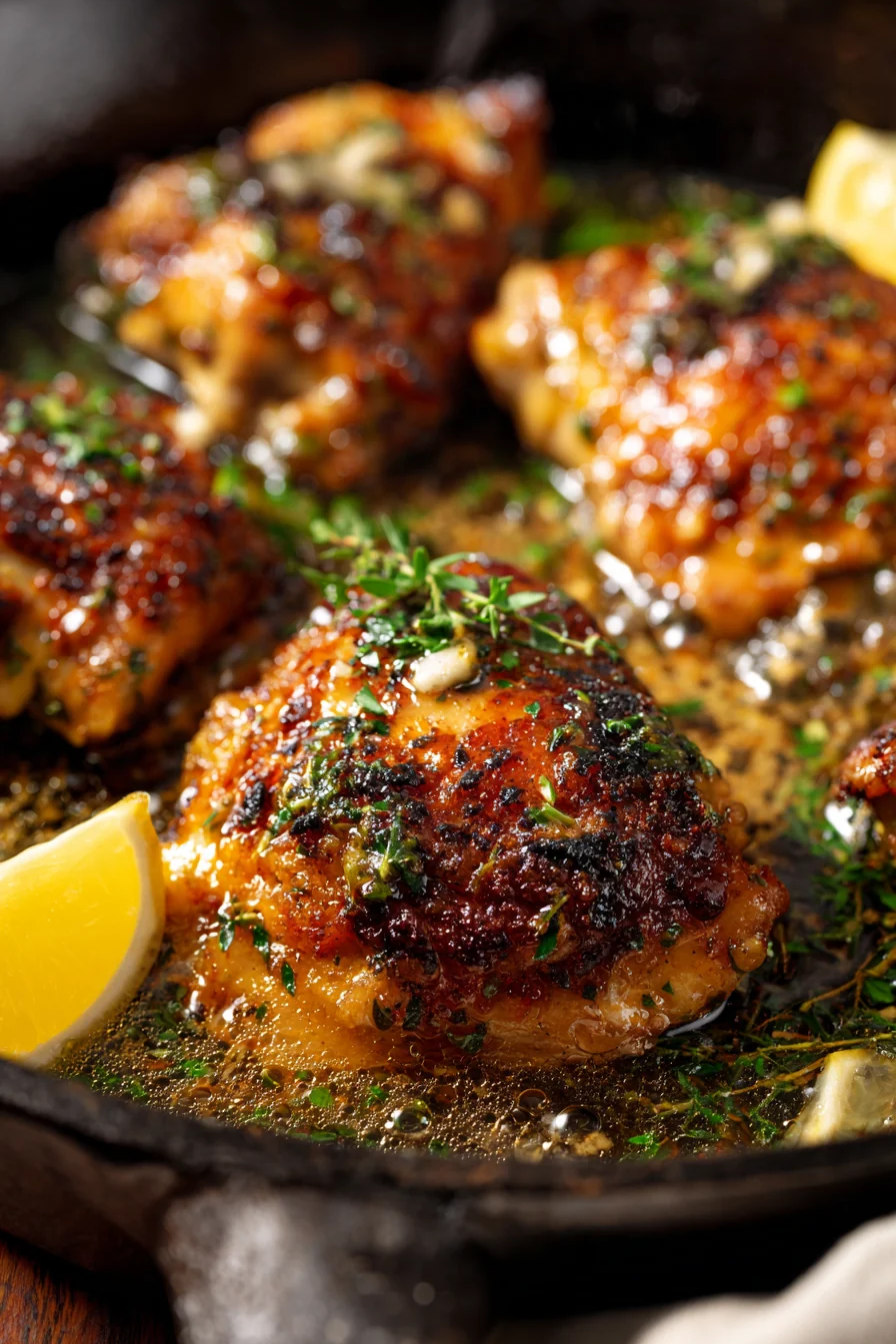
The thighs get seared skin-side down in a hot skillet until the skin is deeply golden and crisp, then they finish in a 400°F oven, where the collagen breaks down, and the meat turns tender enough to pull from the bone.
That two-step cook is the difference between a thigh that’s cooked and a thigh that’s actually good.
The sauce is the other half.
The pan the chicken seared in is full of browned fond, and that fond is what flavors the garlic, broth, Dijon, and lemon that go in after.
Off the heat, mount in cold butter, one piece at a time, until the sauce turns silky and clings.
It’s about 42 grams of protein per serving, and it tastes like a restaurant dish without the restaurant price.
Why This Recipe Works
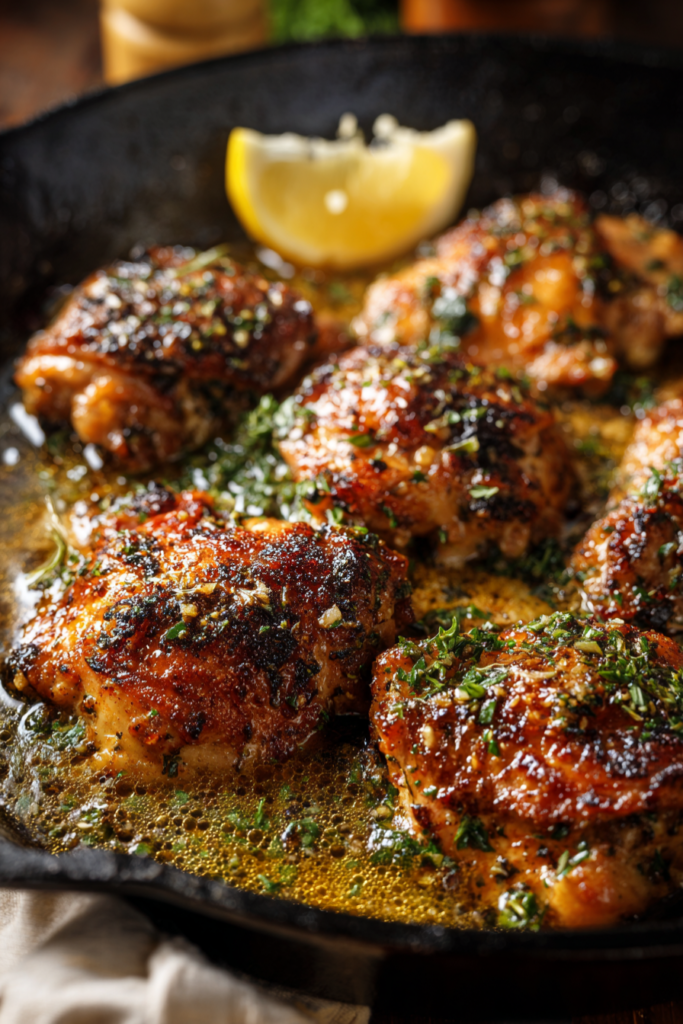
The flour dredge is what makes the sauce a sauce. A light dusting of flour on the chicken thickens the pan juices as they cook, so when the broth and butter go in, they emulsify into something that clings instead of running off. Without it, you get a thin broth-butter mixture that separates on the plate.
Searing on the stovetop and finishing in the oven is what gives you both crust and tenderness. The stovetop gives the skin a deep golden crust, and the oven gives the bone-in thigh time for the collagen to break down. Bone-in thighs need 175–185°F, not 165°F, for that breakdown to happen.
Add the garlic over medium-low heat and deglaze immediately. Garlic added to hot butter and left for a minute burns, and burnt garlic turns the whole sauce bitter. Adding it over lower heat and pouring in the broth right away stops it from scorching.
Cold butter is what makes the sauce glossy. Butter added at the start of cooking melts and separates. Adding cold butter off the heat, one piece at a time, and swirling it into the reduced broth emulsifies it into a silky sauce that coats a spoon.
Dijon and lemon keep the sauce from tasting flat. Butter and broth alone are rich but one-note. A teaspoon of Dijon adds tang and helps the emulsion hold, and the lemon at the end brightens the whole pan.
Ingredients That Matter
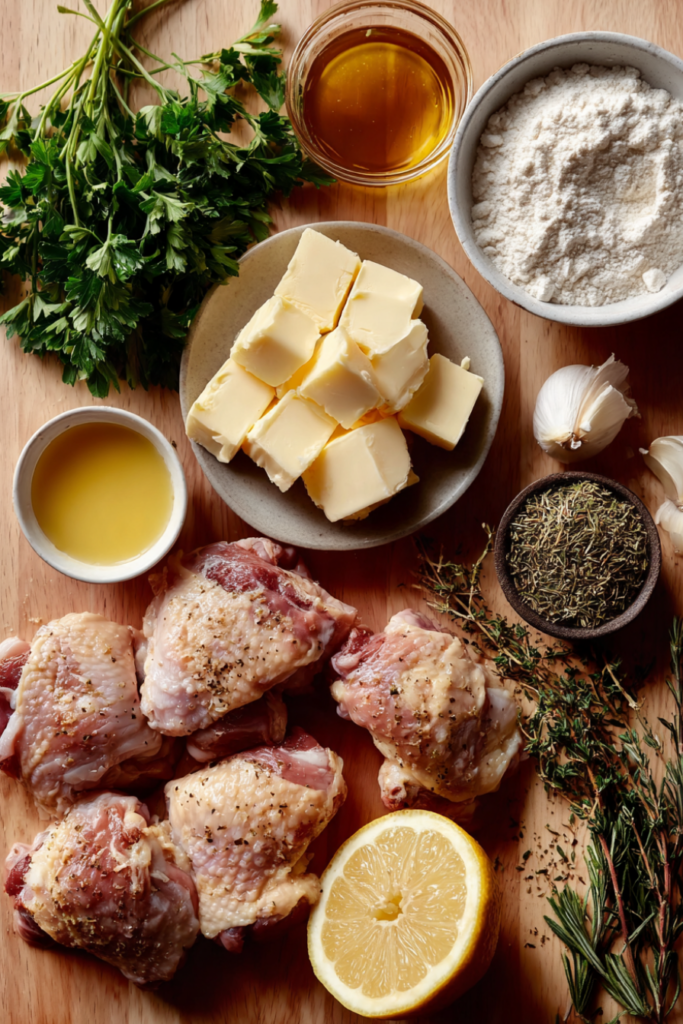
Bone-in, skin-on chicken thighs. Bone-in thighs are more forgiving than boneless and need the oven time to become tender. The skin renders into the sauce and gives it flavor. Boneless thighs work but need a shorter cook — 5 to 6 minutes per side on the stovetop, no oven.
Cold unsalted butter, cubed. The butter has to be cold and cubed so it melts gradually as you swirl. Room-temperature butter melts all at once and separates. Unsalted lets you control the seasoning.
A light dusting of flour, not a heavy coat. The flour is there to thicken the pan juices, not to bread the chicken. Shake off the excess so the crust is skin, not flour.
How to Make It
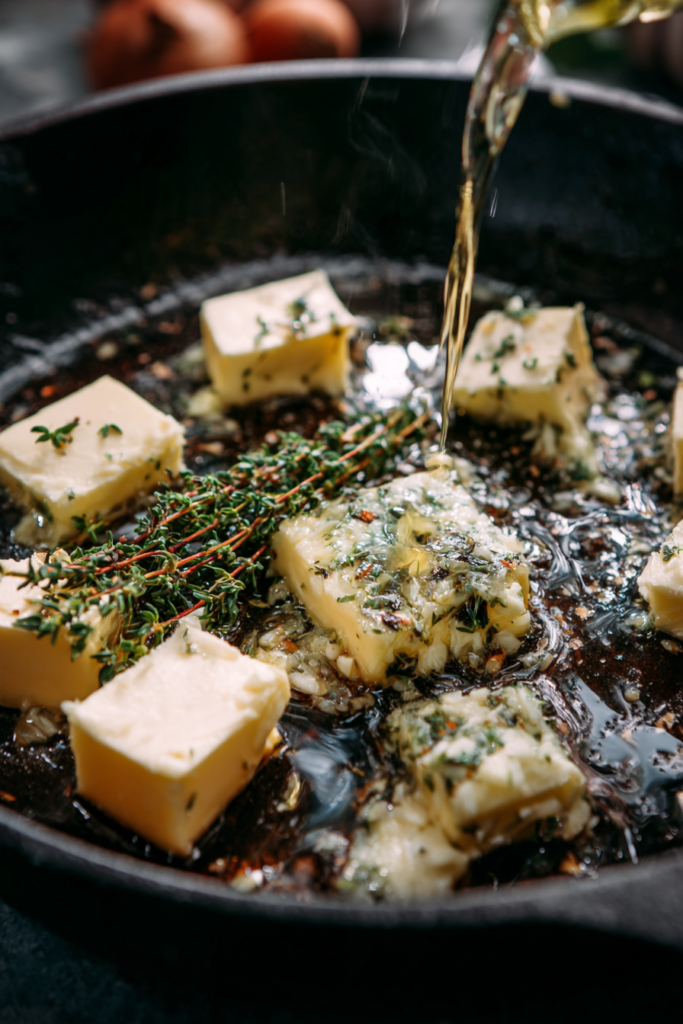
- Preheat the oven to 400°F. Pat the chicken thighs completely dry. Mix the flour, salt, pepper, and garlic powder, and lightly dust both sides of the chicken, shaking off the excess.
- Heat 1½ tablespoons of olive oil in a large cast iron skillet over medium-high until shimmering. Add the chicken skin-side down in a single layer and sear undisturbed 5 to 6 minutes, until deeply golden. Flip and sear 3 minutes more.
- Transfer the skillet to the oven and roast 15 to 20 minutes, until the thighs reach 175–185°F. Transfer the chicken to a warm plate and tent with foil. Pour off all but about a tablespoon of the fat from the skillet.
- Return the skillet to the stovetop over medium-low heat. Add the garlic, thyme, and rosemary and stir 30 to 45 seconds, just until fragrant — do not let the garlic brown. Immediately pour in the broth and Dijon, scraping up the browned bits.
- Simmer 2 to 3 minutes, until the liquid reduces by about half. Stir in the lemon juice.
- Turn off the heat completely. Add the cold butter one piece at a time, swirling the pan continuously until it melts into a glossy, emulsified sauce. Taste and adjust salt.
- Return the chicken and any juices to the skillet, spoon the sauce over the top, and garnish with parsley. Serve with crusty bread for dipping.
Tips and Troubleshooting
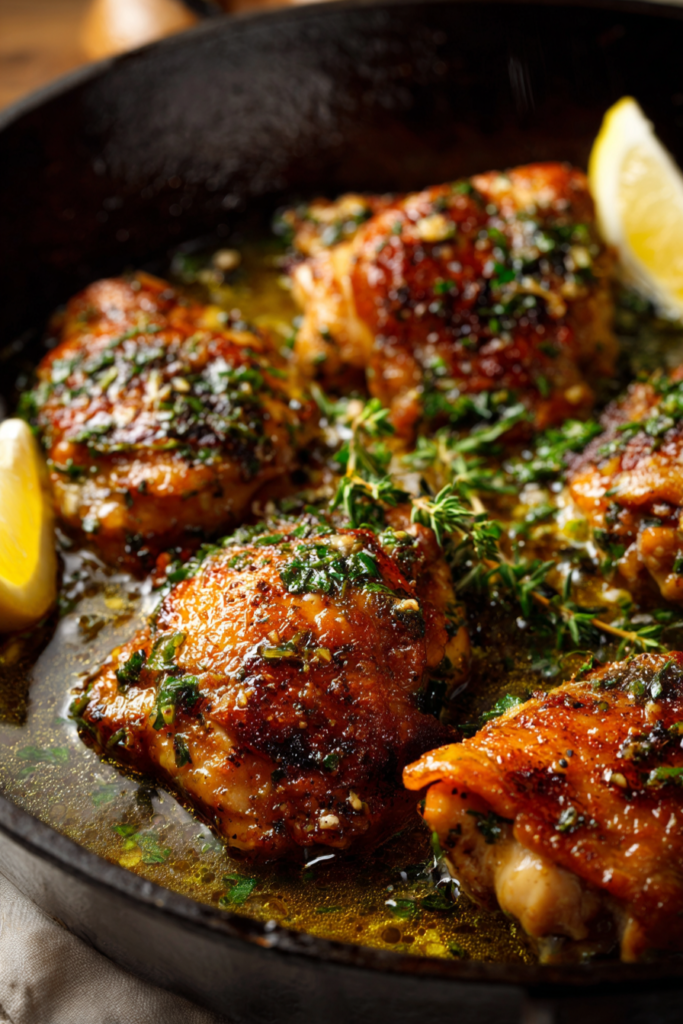
The sauce turned greasy. The butter went in over heat. Turn the burner off completely before adding the butter, use cold cubed butter, and swirl constantly.
The sauce is too thin. The flour dredge was too light, or the broth wasn’t reduced enough. Reduce it for the full 2 to 3 minutes before adding the butter.
The garlic tastes bitter. It burned. Add it over medium-low heat and deglaze within 30 to 45 seconds.
The chicken came out dry. It overcooked. Pull it at 175–185°F — bone-in thighs are more forgiving than breast, but they still dry out past 190°F.
The skin didn’t get crispy. You didn’t pat it dry enough, or the pan wasn’t hot. Pat the thighs dry and let the oil shimmer before they go in.
It tastes too salty. Broth and Dijon both carry salt. Use low-sodium broth, taste the sauce before adding any salt, and adjust at the end.
The sauce broke on reheat. It was boiled. Reheat gently with a splash of broth, covered, and don’t let it simmer.
Substitutions and Swaps
The chicken: Boneless thighs work but need a shorter cook — 5 to 6 minutes per side on the stovetop, no oven, pulled at 175°F. Chicken breast works but dries out faster; pound to even thickness and pull at 160°F.
Make it creamy: Stir in ¼ cup heavy cream or 2 oz cream cheese into the reduced broth before the butter mount. It becomes a creamy garlic butter chicken, and the sauce is richer.
Add Parmesan: Stir ¼ cup of freshly grated Parmesan into the sauce off the heat with the butter. It becomes a garlic parmesan chicken thighs recipe, and the sauce gets sharper.
Add honey: Stir in 1 tablespoon of honey before reducing. It becomes a honey butter garlic chicken, sweeter and glossier.
Add more herbs: Thyme and rosemary are the classic pairing. Oregano, sage, or a tablespoon of chopped fresh basil at the end all work.
Make it dairy-free: Use a dairy-free butter and a dairy-free Dijon. The sauce won’t be quite as silky, but the flavor holds.
Storage and Reheat
Refrigerate in an airtight container for up to 4 days.
The sauce thickens as it chills, so reheat covered with a splash of broth for 90 seconds — don’t let it boil, or the butter breaks.
Freeze for up to 3 months; the sauce may separate slightly on thawing, so reheat gently and stir to recombine.
Garlic Butter Chicken Thighs
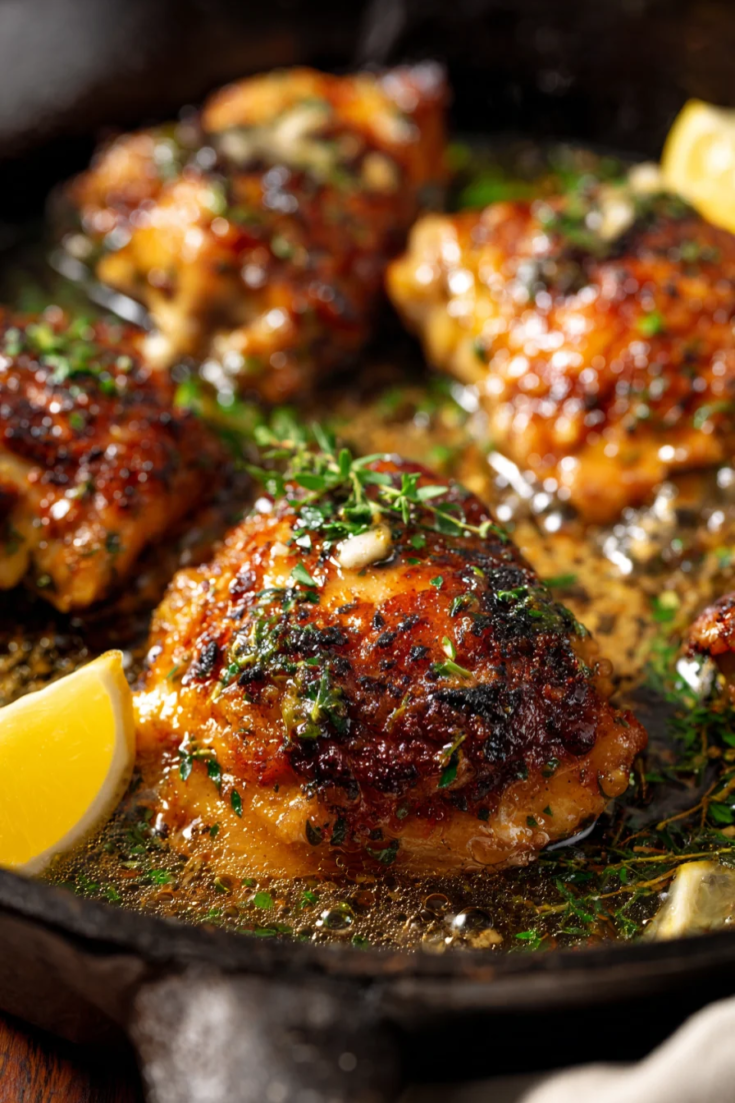
Bone-in chicken thighs seared golden in a cast iron skillet, finished in the oven, and served in a glossy garlic-lemon butter sauce mounted off the heat — 42g protein per serving.
Ingredients
Chicken
- 2 lbs bone-in, skin-on chicken thighs, trimmed and patted dry
- 1½ tbsp all-purpose flour
- 1 tsp kosher salt
- ½ tsp black pepper
- ½ tsp garlic powder
- 1½ tbsp olive oil
Sauce
- 6 cloves garlic, finely minced
- ½ cup low-sodium chicken bone broth (or ¼ cup dry white wine plus ¼ cup broth)
- 1 tsp Dijon mustard
- ½ tsp dried thyme
- ½ tsp dried rosemary, finely crushed
- Juice of ½ fresh lemon
- 3 tbsp cold unsalted butter, cubed
- 2 tbsp fresh flat-leaf parsley, chopped
To Serve
- Crusty bread, for dipping
- Roasted potatoes, rice, or a crisp green salad
Instructions
- Preheat the oven to 400°F. Pat the thighs dry, dust with flour, salt, pepper, and garlic powder, then shake off the excess.
- Sear skin-side down in olive oil over medium-high heat for 5–6 minutes, then flip and sear for 3 more minutes.
- Roast 15–20 minutes, until 175–185°F. Rest on a plate, tented. Pour off all but a tablespoon of fat.
- Over medium-low heat, add the garlic, thyme, and rosemary for 30–45 seconds, then deglaze with the broth and Dijon.
- Simmer 2–3 minutes to reduce by half, then stir in the lemon juice.
- Off heat, mount with the cold butter one piece at a time, swirling until glossy. Taste and adjust salt.
- Return the chicken to the skillet, spoon the sauce over, and garnish with parsley.
Notes
Notes: Freezes up to 3 months. Nutrition is an estimate.
Nutrition (per serving, estimated): ~450 calories, 42g protein, 6g carbs, 28g fat, 0g fiber, 640mg sodium.
FAQ
Can I use boneless thighs? Yes, but skip the oven. Sear them 5 to 6 minutes per side on the stovetop and pull at 175°F, then make the sauce in the same pan.
Can I use chicken breast? Yes. Pound to even thickness, sear 4 to 5 minutes per side to 160°F, and skip the oven. The sauce works the same way.
Why did my sauce turn greasy? The butter went in over heat. Turn the burner off completely, use cold cubed butter, and swirl constantly as it melts.
Can I make this creamy? Yes. Stir ¼ cup of heavy cream or 2 oz of cream cheese into the reduced broth before the butter melts.
Can I add Parmesan? Yes. Stir ¼ cup of freshly grated Parmesan into the sauce off the heat with the butter.
Can I make this dairy-free? Yes. Use a dairy-free butter. The sauce won’t be quite as silky, but the flavor holds.
More Recipes You’ll Love
- Garlic Parmesan Chicken Thighs
- Creamy Garlic Butter Chicken
- Honey Butter Garlic Chicken
- Garlic and Herb Chicken
- Best Chicken Thigh Recipe
- High Protein Meals
Closing
The flour dredge and the cold butter mount are the two things that make this sauce work — everything else is garlic and lemon. It’s the one I’d hand you first when you want a pan sauce that tastes like a restaurant plate. Make it once, and tell me whether you served it with bread or potatoes.