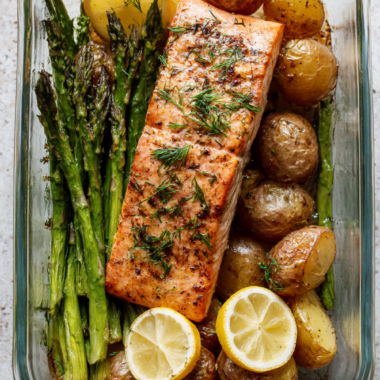

If your go-to salmon seasoning has been lemon and dill, or nothing but salt and pepper, this is the one that changes the rotation.
Cajun seasoning brings smoke and a low, warm heat; honey softens it into something sticky and sweet; butter carries both across the surface of the fish and pools underneath it.
Salmon is rich and fatty on its own, which is exactly why that trio works on it — the sweetness cuts the richness, the smoke sits against the fat, and nothing gets lost.
And it is genuinely a twenty-minute dinner.
The glaze is four ingredients, the pan is one sheet of foil, and the fish bakes plain for six minutes before the glaze goes anywhere near it — which is the whole reason this version doesn’t burn.
Honey scorches above 350 to 375°F in a dry oven within eight to ten minutes, so glazing at the start means a blackened surface over a raw center.
Baked first, glazed last, broiled for ninety seconds: that’s the sequence.
There’s also a food-safety detail that most honey-glazed salmon recipes get wrong.
The glaze touches raw fish, so it can’t go back into its own bowl. Split it into two cups before you start — one for the bake, one that stays untouched for the table — and don’t put a used brush back into either.
Serve it over jasmine rice so the glaze soaks in, or mashed potatoes if you want something that holds the butter, or pasta with a squeeze of lemon over the top.
Two 6-ounce fillets come in around 35 grams of protein, and the lemon and parsley at the end are what keep it from tasting heavy.
Why This Recipe Works
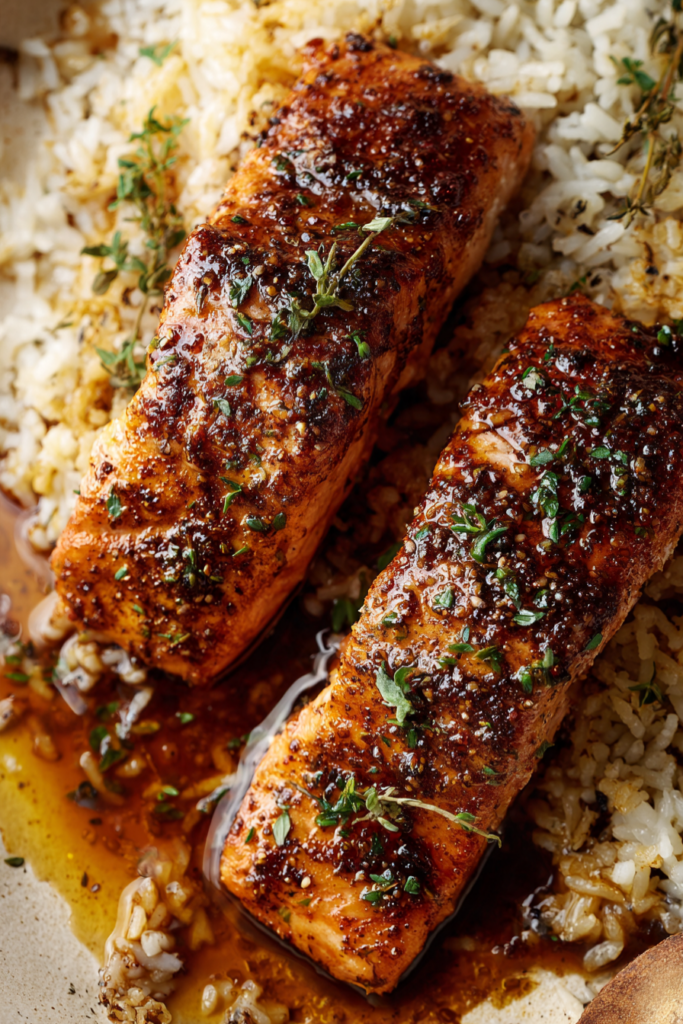
The salmon bakes plain first and gets glazed last. Six to seven minutes of bare oven heat cooks the fish most of the way and dries the surface slightly, which is what lets the glaze grip. The glaze goes on for a ninety-second broil, where the honey caramelizes and blisters instead of scorching over twelve minutes of dry heat.
The glaze is split into two cups before anything touches fish. One cup for the bake, one untouched cup for the finish. No brush goes back into a bowl, so there is no path for raw-fish bacteria to reach the glaze you spoon over the finished fillets.
The butter-honey emulsion gets re-whisked and stays warm. Melted butter and honey separate as they cool, and a cold glaze slides off the fish instead of coating it. Whisk it again right before brushing, and keep it warm enough to pour.
No salt is added anywhere in the recipe. Cajun seasoning blends are salt-forward and vary a lot by brand, so the seasoning is the salt. Taste your blend before you commit to a quantity — a salty supermarket blend needs less than a low-sodium homemade mix.
The lemon and parsley are structural, not decorative. A rich, buttery, spicy glaze needs acid and freshness to keep it from reading as one heavy note. The lemon juice in the glaze and the squeeze at the table do that work, and the parsley adds the only cool, raw element on the plate.
Ingredients That Matter
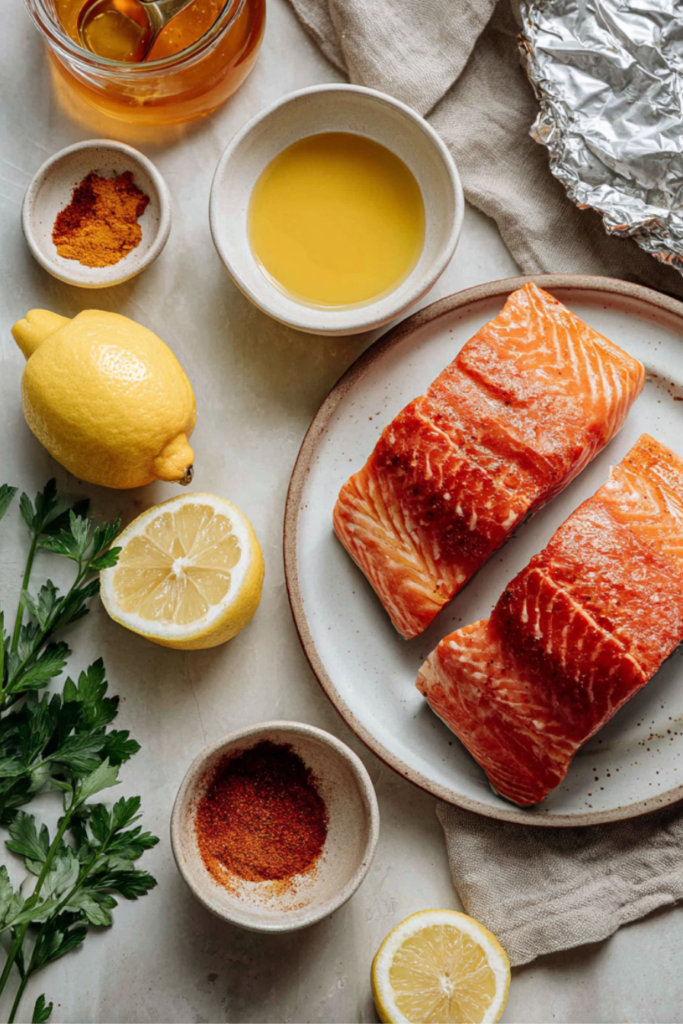
The Cajun seasoning, and knowing how salty yours is. This is the only salt in the recipe, and blends range from mild to aggressively salty. Taste a pinch before you season the fillets, and start with 1½ teaspoons for two fillets if the blend is standard. If it’s a low-sodium or homemade mix, you can go slightly heavier.
The honey, and when it goes on. Any honey works, but the timing is what matters. Honey applied at minute one in a hot oven burns before the fish is cooked. It goes on after the initial bake, for the broiler finish, and that is the whole recipe.
Salmon fillets patted completely dry. Surface moisture steams instead of searing, and a wet fillet will not take the glaze evenly. Pat both sides with paper towels and let them sit a minute before they hit the pan.
How to Make Cajun Honey Butter Salmon
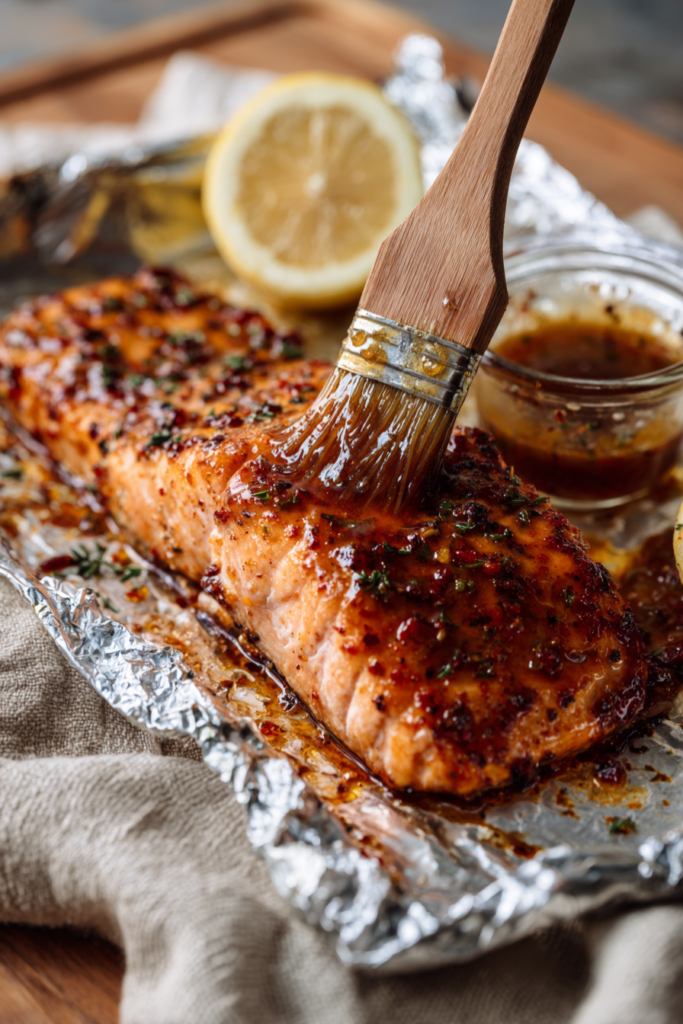
- Heat the oven and line the pan. Preheat to 425°F. Line a baking sheet with foil or parchment and brush it lightly with ½ teaspoon olive oil. Cue: a thin sheen, no pooling.
- Mix and split the glaze. Whisk 2 tablespoons honey, 1 tablespoon melted unsalted butter, 1½ teaspoons low-sodium Cajun seasoning, and 2 teaspoons fresh lemon juice until uniform. Divide into two small cups — one for baking, one that stays untouched. Cue: two cups, and the untouched one never gets a brush in it.
- Dry and season the salmon. Pat two 6-ounce fillets completely dry and place them skin-side down on the pan. Dust lightly with a pinch more Cajun seasoning. Cue: the surface looks matte, not wet.
- Bake plain. Bake 6 to 7 minutes, until the fish is opaque at the edges and still translucent at the center. Cue: the thickest part reads about 120°F on an instant-read thermometer.
- Brush with the baking cup only. Pull the pan out and brush the fillets generously with the first cup of glaze. Cue: an even coat over the top surface, none running off the sides.
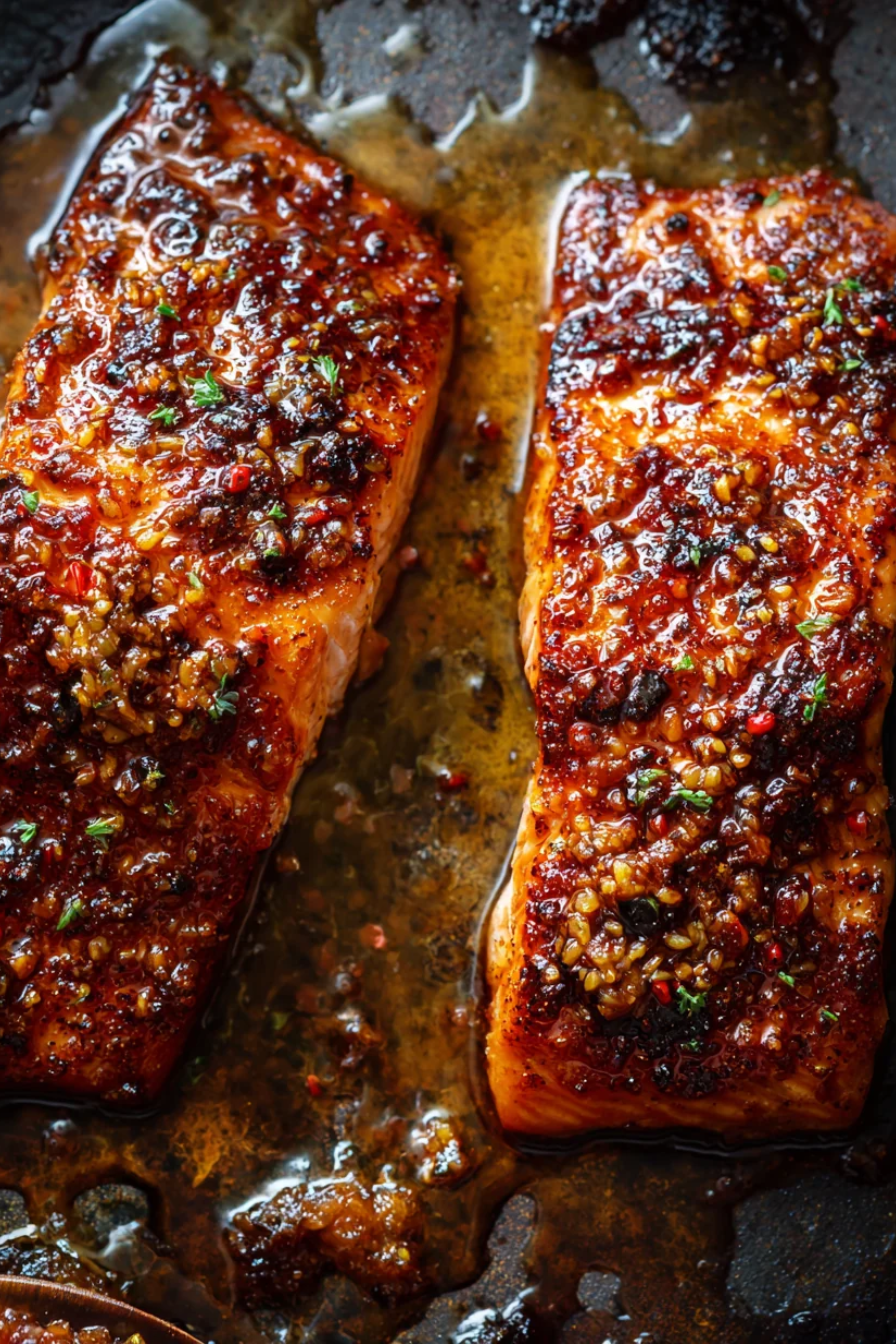
- Broil to blister. Switch the oven to broil and return the pan to the upper-middle rack for 90 seconds to 2 minutes, watching the whole time. Cue: the glaze bubbles, darkens to amber at the edges, and blisters in spots — pull it the moment it starts to blacken.
- Check the temperature. The thickest part should read 135 to 140°F for medium, 145°F for well done. Cue: the flesh flakes at the thickest point but the center is still barely opaque.
- Finish with the untouched glaze. Spoon the second cup of fresh glaze over the hot fillets, then scatter parsley and serve with lemon wedges. Cue: the finish glaze thins as it hits the hot fish and pools around the base.
Tips and Troubleshooting
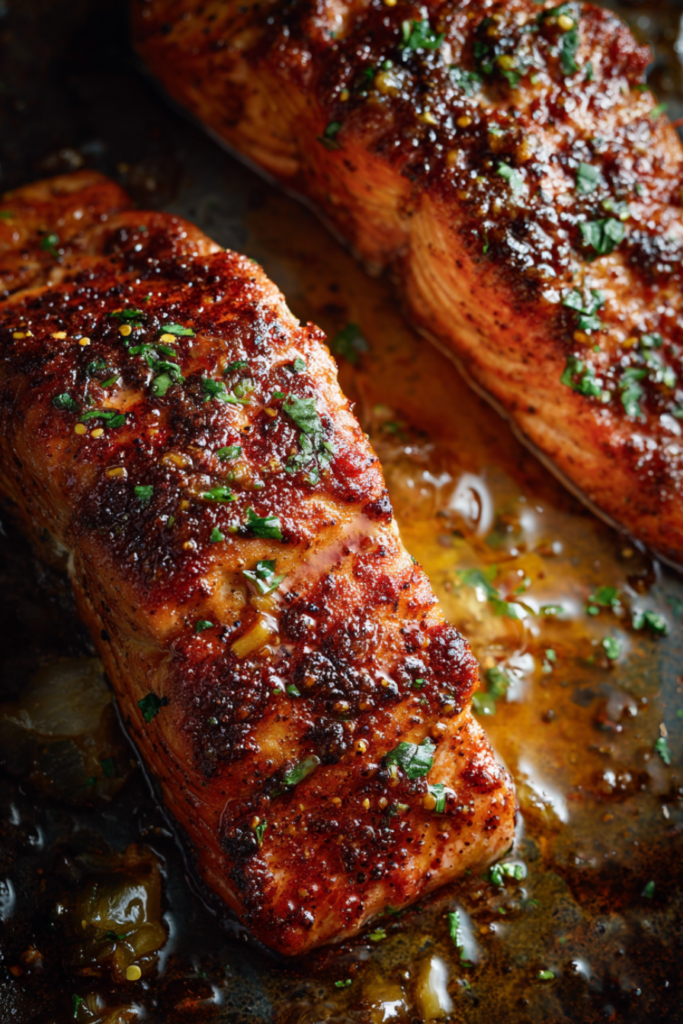
The glaze burned black. It was applied too early, or the broiler ran too long. Glaze only after the initial bake, and stay at the oven for the broil — ninety seconds is the whole window, and it goes from blistered to burnt fast.
The glaze slid off the fish. The fillets were wet, or the glaze was cold. Pat the salmon completely dry and re-whisk the glaze warm right before brushing.
The glaze split into butter and honey. That is normal for a butter-honey mix as it cools. Whisk it back together right before use; it will hold long enough to brush.
The salmon came out dry. It was baked past 140°F before the broil, or broiled too long. Pull it from the initial bake at 120°F and let the broiler finish the job.
It tastes too salty. The Cajun blend is a salty one. Use less next time, and skip any additional salt entirely — the recipe has none.
The bottom of the fillet steamed instead of searing. Too much oil on the pan, or the fish was crowded. Use a half teaspoon of oil and space the fillets well apart.
It reheated badly the next day. Glazed salmon never reheats as well as fresh. Reheat gently, covered, at 300°F for 6 to 8 minutes, or flake it cold into a salad — the honey butter glaze works cold over greens.
Substitutions and Swaps
- Fish: the same method works for trout, arctic char, or thick cod loin. Cod needs 2 to 3 extra minutes in the initial bake because it is denser.
- Butter: olive oil substitutes one-for-one for a dairy-free version, but the glaze will be thinner and less rich. Use 1 tablespoon olive oil and reduce the honey to 1½ tablespoons.
- Honey: maple syrup works one-for-one and browns slightly faster — watch the broiler closely and pull at 90 seconds.
- Cajun seasoning: a homemade blend of 1 teaspoon paprika, ½ teaspoon garlic powder, ½ teaspoon onion powder, ¼ teaspoon cayenne, ¼ teaspoon oregano, and ¼ teaspoon black pepper replaces 1½ teaspoons of commercial blend and lets you control the salt.
- Heat level: add ¼ to ½ teaspoon cayenne to the glaze, or a few slices of jalapeño under the broiler, for a spicier version.
- Lower sodium: use a salt-free Cajun blend and add ¼ teaspoon kosher salt to the glaze to compensate.
Storage and Reheat
Glazed salmon is best the day it’s made, and the recipe says so honestly. It holds in the refrigerator for two days, but the glaze firms up and the fish dries slightly every time it’s reheated.
Reheat covered at 300°F for 6 to 8 minutes, or in the microwave covered at 50 percent power in 30-second bursts. Do not reheat under the broiler — the glaze will burn before the center warms.
Cold, it works well flaked into a salad or over rice, where the honey butter acts as a dressing. Do not freeze cooked glazed salmon; the texture turns mealy on thaw. Raw seasoned fillets can be frozen before cooking for up to three months and thawed overnight in the refrigerator.
Cajun Honey Butter Salmon
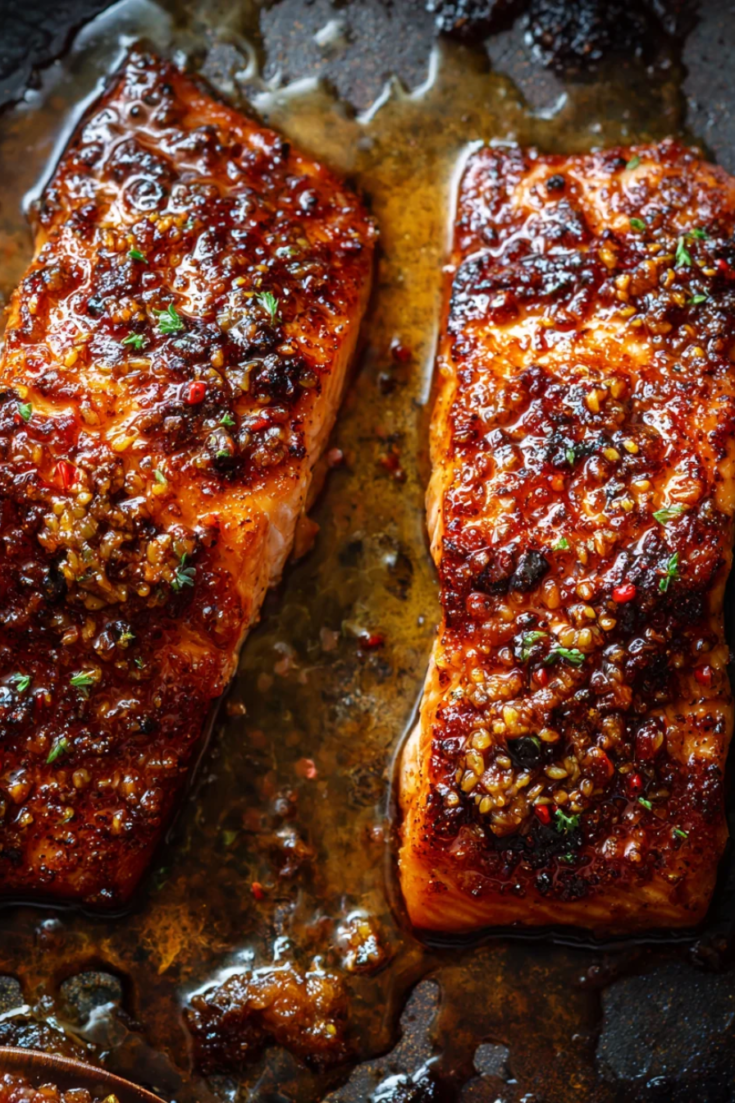
Salmon fillets baked plain, then glazed and broiled until the honey caramelizes into a sticky, blistered finish — about 35g protein per serving.
Ingredients
Salmon
- 2 salmon fillets (6 oz each), patted dry
- ½ tsp olive oil, for the pan
Cajun honey butter glaze
- 2 tbsp honey
- 1 tbsp melted unsalted butter
- 1½ tsp low-sodium Cajun seasoning
- 2 tsp fresh lemon juice
To finish
- 1 tbsp fresh parsley, chopped
- Lemon wedges
Instructions
- Preheat the oven to 425°F. Line a baking sheet with foil or parchment and brush with olive oil.
- Whisk the honey, melted butter, Cajun seasoning, and lemon juice until uniform. Divide into two small cups — one for the bake, one untouched for the finish.
- Pat the fillets completely dry and place skin-side down on the pan. Dust lightly with additional Cajun seasoning.
- Bake plain 6 to 7 minutes, until opaque at the edges and about 120°F at the center.
- Brush with the first cup of glaze.
- Switch to broil and cook 90 seconds to 2 minutes, until the glaze bubbles and blisters. Watch closely.
- Confirm the thickest part reads 135 to 140°F for medium or 145°F for well done.
- Spoon the untouched second cup of glaze over the hot fillets, scatter parsley, and serve with lemon wedges.
Notes
Frequently Asked Questions
Can I use the glaze for the whole bake instead of glazing last? You can, but the honey will darken and may turn bitter at 425°F over a full bake. The late glaze is what keeps the sweetness clean and the surface glossy.
Why do I need two cups of glaze? Because the glaze touches raw fish. One cup is for the bake and gets contaminated by the brush; the second stays untouched and goes on at the table. Never dip a used brush back into the clean cup.
Can I cook this in an air fryer? Yes — 400°F for 7 to 8 minutes plain, then brush with glaze and cook 2 minutes more. Watch it closely, since air fryers run hot and the glaze can scorch.
Is this spicy? Mildly. The heat depends entirely on your Cajun blend; standard blends are warming rather than hot. Add cayenne if you want real heat.
What do I serve with it? Rice, roasted broccoli, or a green salad — something that can catch the butter that pools on the plate. The lemon wedges are worth putting on the table, not just in the glaze.
Can I prep it ahead? Mix the glaze and refrigerate it up to two days ahead, then re-whisk it warm before use. Season and refrigerate the fillets up to 12 hours ahead, but bake them fresh — this is not a make-ahead-and-reheat dish.
More Recipes You’ll Love
- Easy Sheet Pan Salmon and Veggies – One-Pan, No-Fuss Dinner
- Miso-Glazed Salmon Bowl Meal Prep — 34g Protein, 4 Days Ready
- Baked Salmon Sushi Bowl with Spicy Mayo — Better Than Takeout
Closing
The two decisions that make this work are glazing last and splitting the glaze in two — one for the flavor, one for the safety.
Neither takes extra time, and both are the places where a honey-glazed salmon usually goes wrong.
Make it on a Tuesday and see how fast twenty minutes goes.
If the glaze blisters the way it should, tell me — and if it burns, tell me what your oven did, because that is the detail that matters.