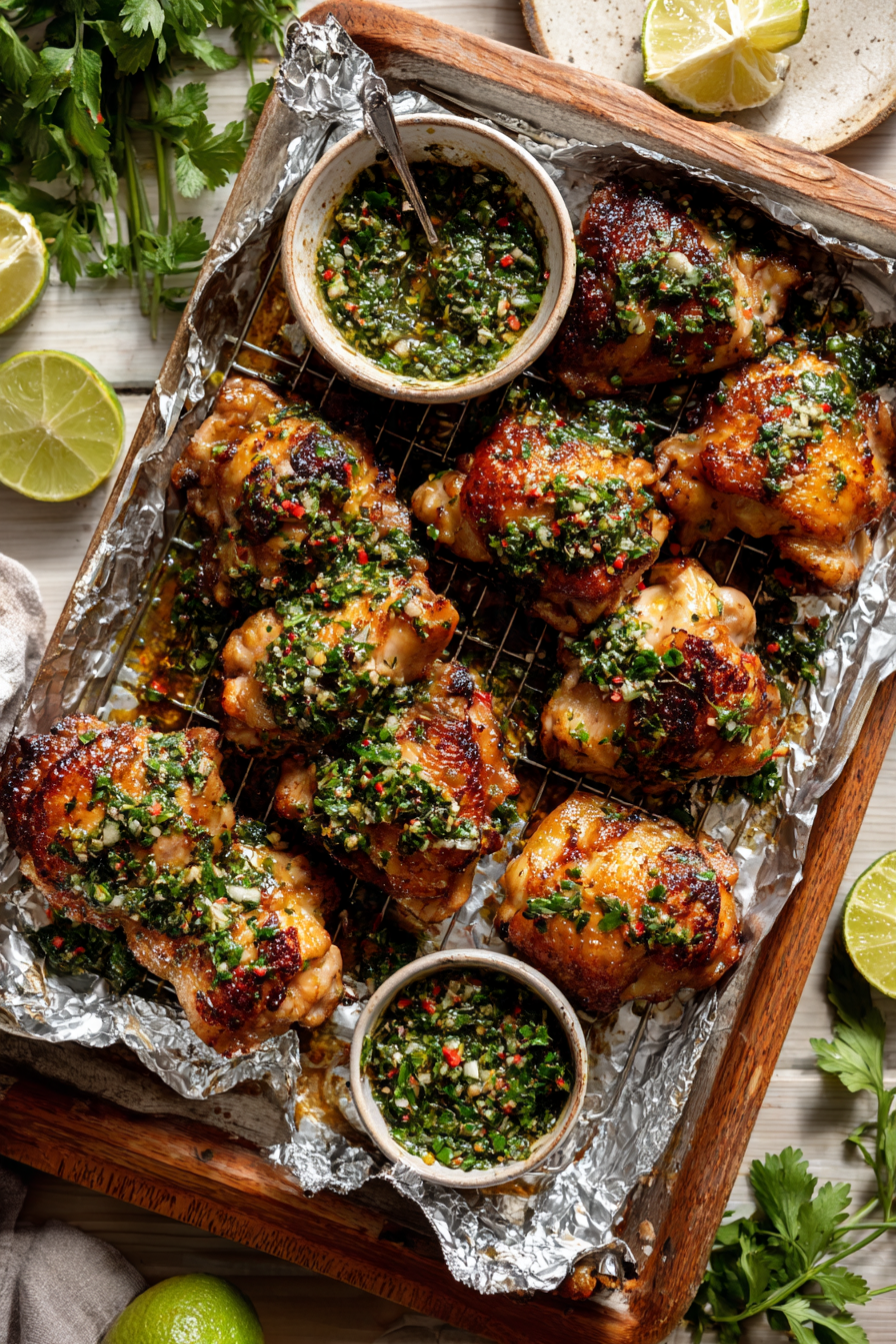

Chimichurri sauce is one of the sauces that truly wowed me the first time I tried it. I must have been a teenager, sitting at a restaurant table, and the bold, bright, herby punch of it just took me away.
I’ve been a fan ever since. And when I think about it now, it’s no brainer why I fell so hard — it’s really just a bundle of fresh herbs powering the whole sauce with a garlic kick.
Which is exactly why chimichurri chicken thighs are one of my favorite weeknight dinners. The sauce does the heavy lifting: bright parsley, cilantro, garlic, red wine vinegar, and good olive oil, hand-chopped so it stays glossy and green instead of turning into a murky paste. Spoon it over juicy roasted thighs and you get a dinner that tastes like a restaurant plate but comes together on a sheet pan.
It’s also an easy healthy dinner that doesn’t feel like one — 44 grams of protein per serving, no heavy cream, no breading, and a sauce that’s basically a salad dressing with a punch. It takes about 25 minutes in the oven, and the marinade needs just 30 minutes on the counter.
Why This Recipe Works

A lot of chimichurri chicken recipes go wrong in three specific ways. Here’s how this version solves them.
1. Hand-Chopped Chimichurri, Not Blender Paste (The Green Sauce Rule)
Chimichurri is an oil-and-vinegar spooning sauce, not a puree. Over-processing it in a blender oxidizes the fresh herbs into a murky sludge and releases excess cell-wall moisture, which dulls the color and muddies the flavor. Hand-chopping — or pulsing just 5 to 6 times in a food processor — preserves distinct flakes of parsley and cilantro held in glossy olive oil, so the sauce stays bright green and tastes like fresh herbs, not green sludge. This is how you make chimichurri sauce that actually tastes like the restaurant version.
2. Reserve ⅓ of the Sauce Before Marinating (Food Safety + Fresh Flavor)
Reserving ⅓ of the untouched chimichurri before the chicken goes anywhere near it eliminates bacterial contamination risk while keeping raw herb top-notes fresh for finishing. The remaining ⅔ becomes the marinade. That reserved spoonful at the end is what makes the finished plate taste like a fresh herb sauce instead of cooked-in marinade.
3. Roast on a Wire Rack at 425°F (No Soggy Bottoms)
Wet herb marinades lying in pools on a baking sheet will boil and steam the bottom of the chicken instead of roasting it. Shaking off excess marinade and roasting on a wire rack set inside a foil-lined sheet pan lets hot air circulate underneath, creating lightly browned edges without soggy bottoms. This is the difference between roasted chicken and steamed chicken in marinade.
The Ingredients That Matter
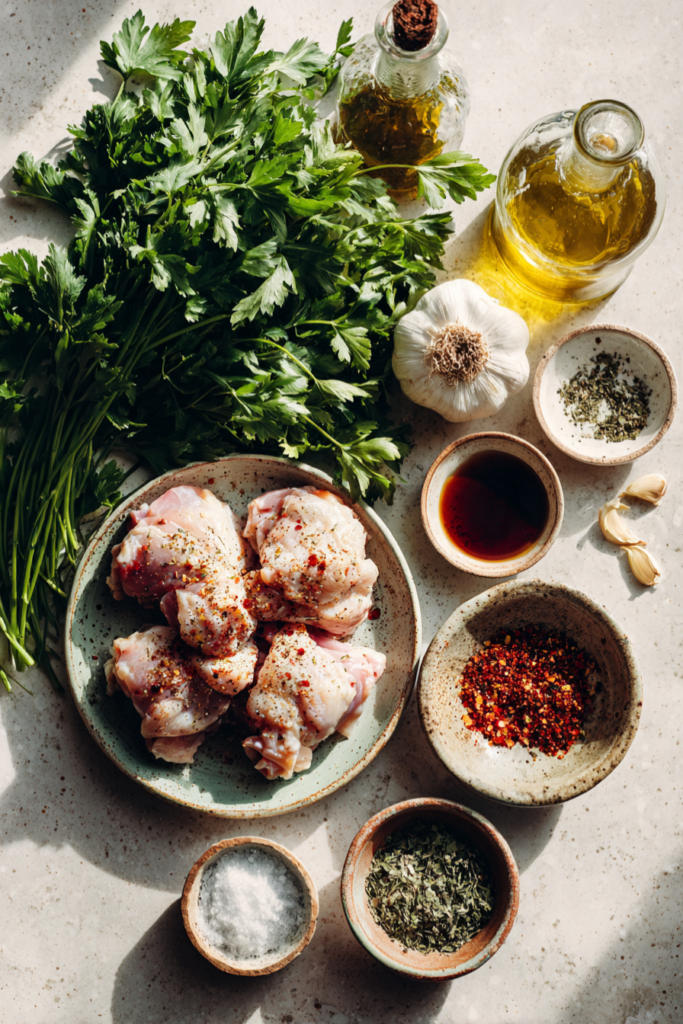
Most of these are pantry staples, but a few choices make a real difference in the final plate.
Fresh Flat-Leaf Parsley and Cilantro: This is the heart of authentic chimichurri sauce. Flat-leaf parsley (not curly) gives the sauce its backbone, and cilantro adds a brighter, greener edge. Use both, and chop them by hand.
Good Extra-Virgin Olive Oil: Chimichurri is mostly oil, so the oil is the sauce. Use one you’d be happy to taste on its own. The ratio here — ⅓ cup oil to ¼ cup red wine vinegar — gives the sauce enough acetic sharpness to cut through the rich intramuscular fat of chicken thighs.
Red Wine Vinegar: This is what makes it taste like chimichurri instead of herb oil. Don’t swap it for lemon juice; the vinegar is the point.
Boneless, Skinless Chicken Thighs: About 2 pounds, roughly 8 thighs. Thighs have more fat and collagen than breasts, which means they stay juicy at 170–175°F — a temperature window that would dry out chicken breast. This is the cut that makes the recipe forgiving.
Fresh Garlic, Minced or Microplaned: Four cloves. Microplaning gives you a finer, more even garlic punch; mincing gives you little bursts of garlic as you eat. Either works.
How to Make Chimichurri Chicken Thighs
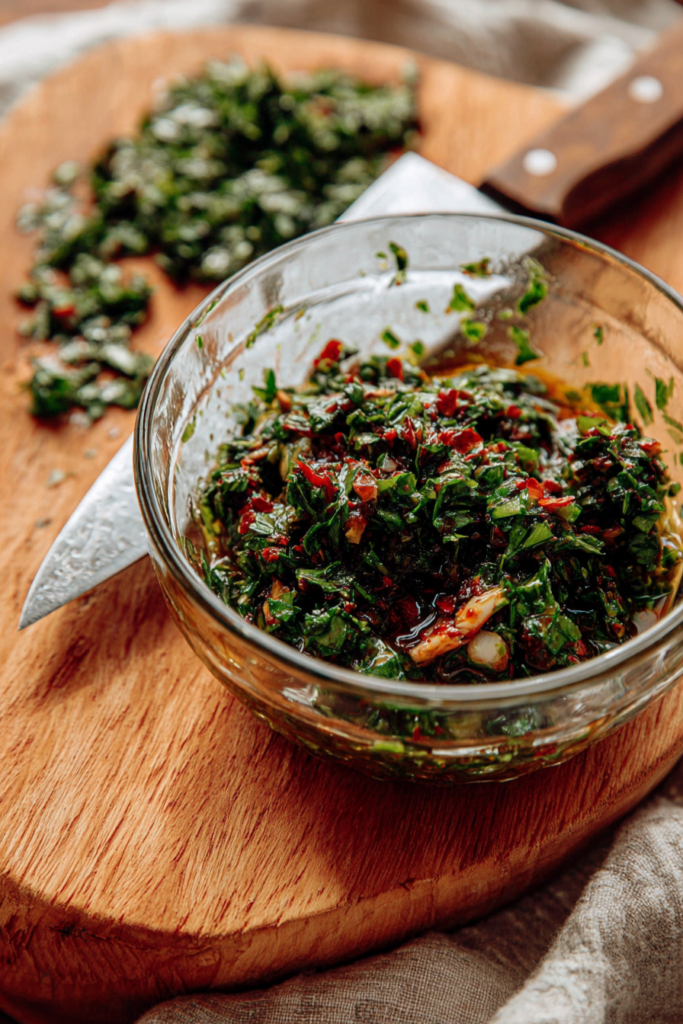
Step 1: Make the Coarse Chimichurri
Finely chop the parsley, cilantro, and garlic with a sharp chef’s knife, or pulse 5 to 6 times in a food processor until coarsely textured — do not process into a paste. Transfer to a bowl and stir in the extra-virgin olive oil, red wine vinegar, dried oregano, red pepper flakes, and salt. Let it sit at room temperature for 10 minutes to bloom the flavors.
Step 2: Separate the Sauce (Food Safety)
Transfer ⅓ of the chimichurri (about ¼ cup) to a clean small bowl and set it aside for serving. Reserve the remaining ⅔ for the marinade. This is the step that keeps the finishing sauce fresh and uncontaminated.
Step 3: Season and Marinate the Chicken
Pat the chicken thighs completely dry with paper towels. Season both sides evenly with 1 teaspoon kosher salt and ½ teaspoon black pepper. Toss the chicken with the ⅔ marinade portion until coated. Cover and refrigerate for at least 30 minutes, or up to 12 hours.
Step 4: Prep for Roasting
Preheat the oven to 425°F. Line a rimmed baking sheet with aluminum foil and set a wire roasting rack inside. Arrange the chicken thighs on the rack in a single layer, letting excess marinade drip off. Discard any remaining bowl marinade.
Step 5: Roast Until 170–175°F
Roast for 22 to 28 minutes, until the thickest part of the thigh reaches 170–175°F and the edges are lightly golden. Thighs have dark-meat collagen, so taking them a little past 165°F actually renders residual fat better without drying out the meat — the opposite of how chicken breast behaves.
Step 6: Broil for Extra Color (Recommended)
For extra caramelized edges, switch the oven to BROIL for the last 2 minutes, watching closely so the herbs don’t scorch. This step is what gives skinless thighs a golden finish; skip it and the edges stay pale.
Step 7: Rest and Serve
Let the chicken rest for 5 minutes on the rack so the juices redistribute. Transfer to a platter and spoon the clean, reserved fresh chimichurri over the top just before serving.
Tips and Troubleshooting
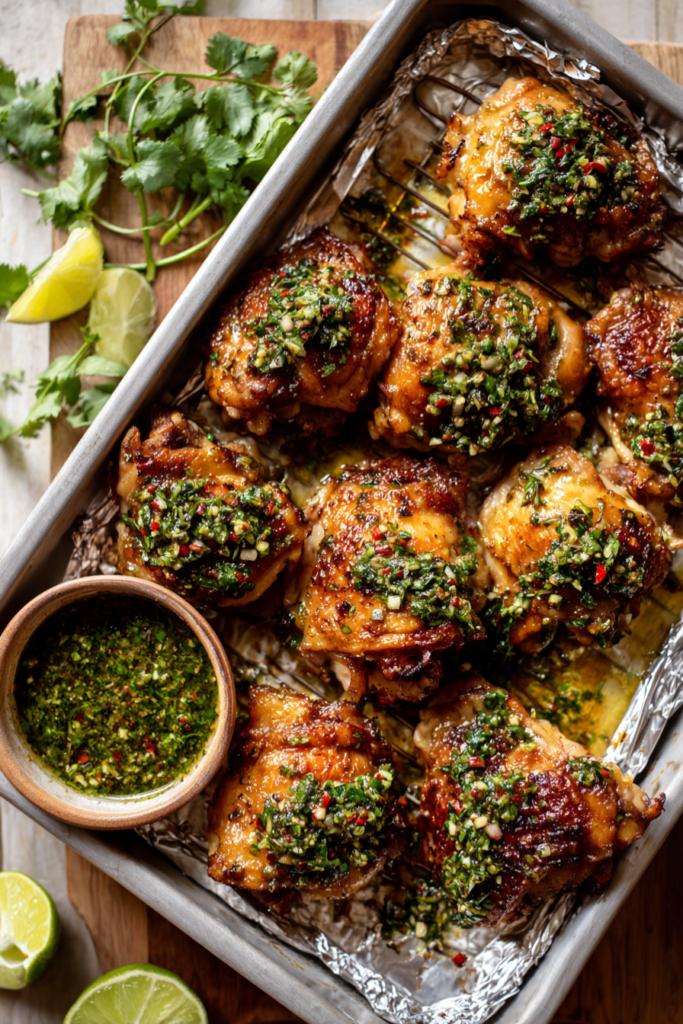
The chimichurri turned murky green. It was over-processed. Pulse fewer times or chop by hand — you want distinct herb flakes suspended in oil, not a paste.
The chicken came out dry. It went past 175°F, or it was roasted on a crowded pan. Use a wire rack, keep the thighs in a single layer, and pull them at 170–175°F.
The bottom of the chicken is soggy. The thighs sat in pooled marinade. Shake off excess marinade before they go on the rack, and make sure the rack sits above the foil so air can circulate.
The sauce tastes flat. The chimichurri needed more acid or salt, or it didn’t sit long enough to bloom. Let it rest 10 minutes before using, and taste it — it should be bright and garlicky, not oily.
The garlic tastes harsh and raw. The garlic was chopped too far in advance or in too large pieces. Microplane it for a smoother, mellower punch, or let the sauce sit 15 minutes so the vinegar mellows the raw edge.
The reserved sauce tastes different from the marinade. It should — that’s the point. The reserved ⅓ is raw and fresh; the marinated portion cooks into the chicken. Spoon the fresh one over the top at serving.
Easy Variations
Creamy Chimichurri Sauce: Stir 2 tablespoons Greek yogurt into the reserved chimichurri for a creamy chimichurri sauce that’s excellent over rice or roasted vegetables. It won’t be authentic, but it’s a great weeknight shortcut.
Chimichurri Shrimp: Swap the chicken thighs for 1½ pounds large shrimp. Marinate 15 minutes only (shrimp is fragile), then roast at 425°F for 6 to 8 minutes. Same sauce, different protein.
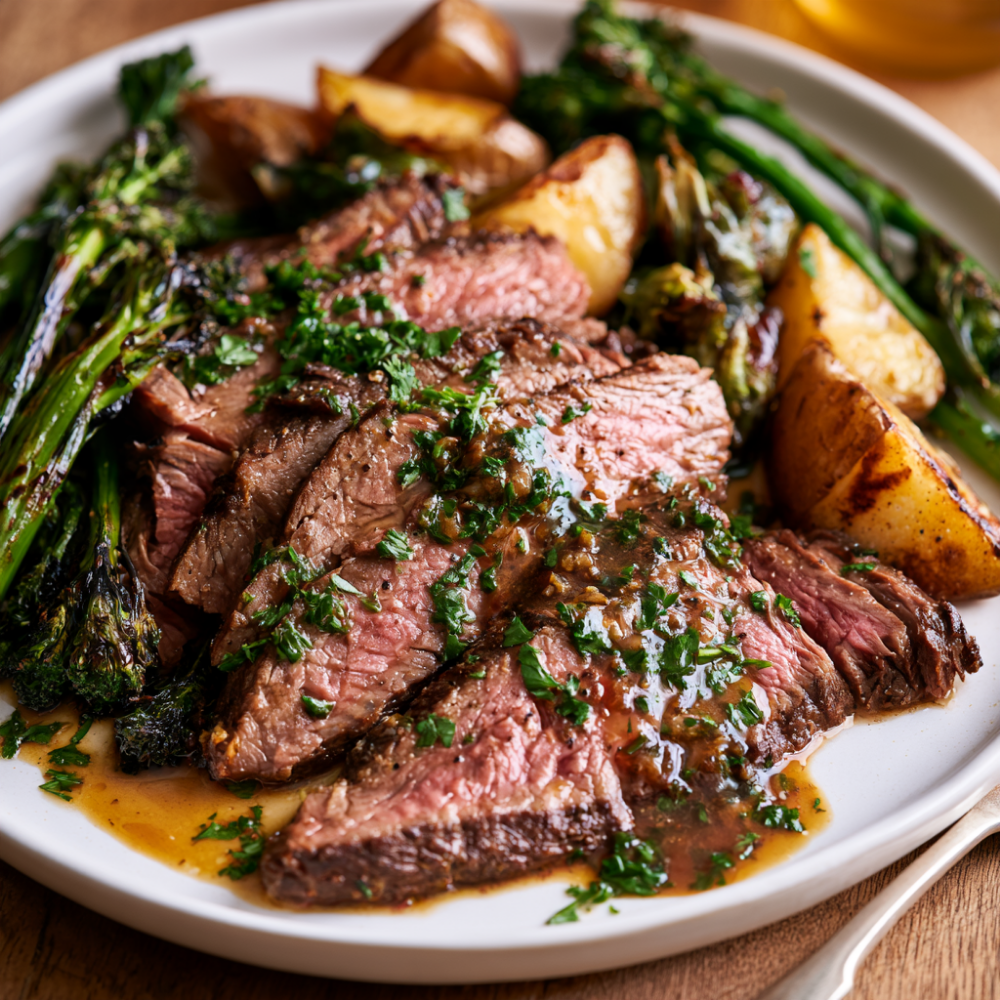
Skirt Steak with Chimichurri: Swap the chicken for 1½ pounds skirt steak, marinate 30 minutes, and sear in a cast-iron skillet 3 to 4 minutes per side. Rest 5 minutes before slicing against the grain. This is the classic Argentinian chimichurri recipe pairing.
Chimichurri Chicken Breast: Swap the thighs for 2 pounds boneless skinless chicken breast. Roast at 425°F for 18 to 22 minutes, until the thickest part reaches 165°F. Breast dries out faster, so pull it at 165°F, not 175°F.
Chimmi Churri Chicken (Alt Spelling): Same recipe, same sauce — a quick note for anyone searching the alt spelling of the name.
Storage and Make-Ahead
Make-Ahead: Make the chimichurri up to 2 days ahead and store it in a sealed jar in the fridge. Bring it to room temperature before using so the oil loosens. Marinate the chicken up to 12 hours ahead.
Storage: Store roasted chicken in an airtight glass container for up to 4 days. Store the reserved fresh chimichurri in a small separate container in the fridge so it retains its vibrant green color.
Reheating: Reheat the chicken in a 350°F oven or air fryer for 5 to 6 minutes, or microwave at 70% power for 90 seconds. Spoon room-temperature chimichurri over the warm chicken right before eating.
Freezing: Freeze the cooked chicken without the fresh finishing sauce for up to 3 months. Thaw overnight in the fridge and reheat gently. Add fresh chimichurri at serving.
Food Safety: Store leftovers within 2 hours of cooking. Reheat to 165°F before serving. Discard any chicken left at room temperature for more than 2 hours.
Chimichurri Chicken Thighs
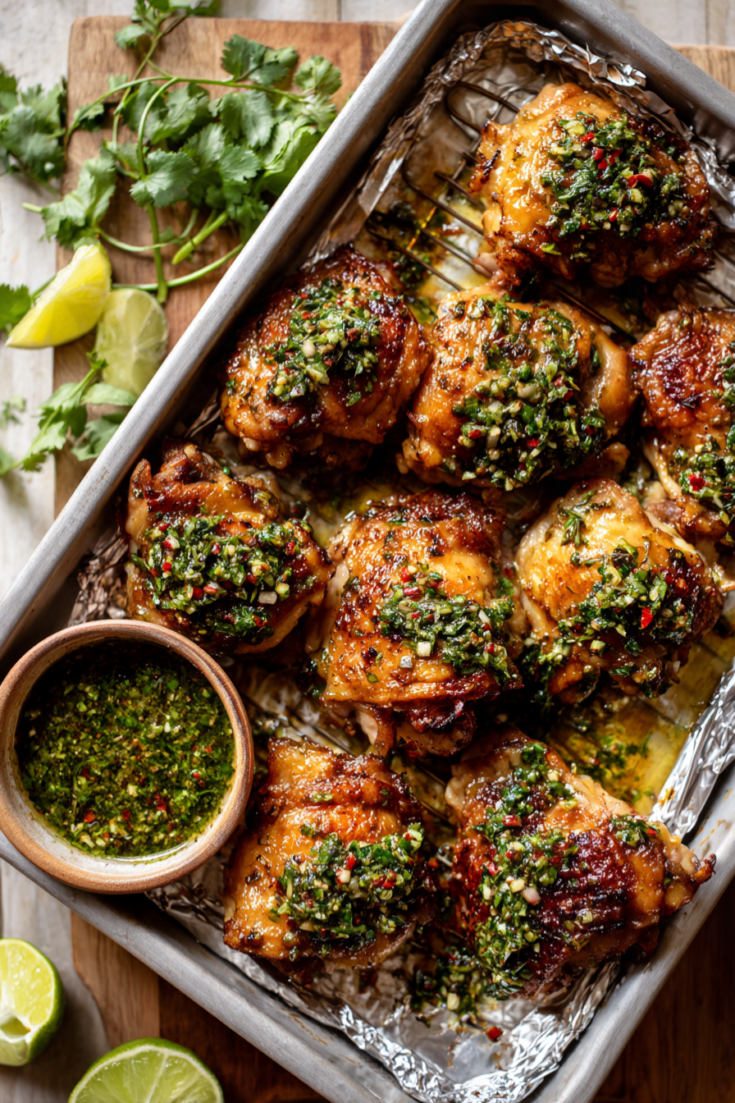
Juicy, oven-roasted chicken thighs marinated in a vibrant homemade chimichurri with flat-leaf parsley, cilantro, minced garlic, and red wine vinegar. Finished with an extra spoonful of fresh herb sauce — 44g protein per serving.
Ingredients
Seasoned Chicken Base
- 2 lbs boneless, skinless chicken thighs (about 8 thighs, trimmed of excess fat)
- 1 tsp kosher salt
- ½ tsp freshly cracked black pepper
Coarse-Cut Chimichurri
- 1 cup fresh flat-leaf parsley, loosely packed
- ¼ cup fresh cilantro, loosely packed
- 4 cloves garlic, minced or microplaned
- ⅓ cup extra-virgin olive oil
- ¼ cup red wine vinegar
- 1 tsp dried oregano
- ½ tsp red pepper flakes
- ½ tsp kosher salt
Instructions
- Make Coarse Chimichurri: Finely chop the parsley, cilantro, and garlic with a sharp chef's knife (or pulse 5 to 6 times in a food processor until coarsely textured — do not process into a paste). Transfer to a bowl and stir in the olive oil, red wine vinegar, dried oregano, red pepper flakes, and salt. Let sit at room temperature for 10 minutes to bloom the flavors.
- Separate Sauce (Food Safety): Transfer ⅓ of the chimichurri (about ¼ cup) to a clean small bowl and set aside for serving. Reserve the remaining ⅔ for the marinade.
- Season & Marinate: Pat the chicken thighs completely dry with paper towels. Season both sides evenly with 1 tsp kosher salt and ½ tsp black pepper. Toss the chicken with the ⅔ marinade portion until coated. Cover and refrigerate for at least 30 minutes (up to 12 hours).
- Prep for Roasting: Preheat the oven to 425°F. Line a rimmed baking sheet with aluminum foil and set a wire roasting rack inside. Arrange the chicken thighs on the rack in a single layer, letting excess marinade drip off. Discard any remaining bowl marinade.
- Roast & Broil: Roast 22 to 28 minutes, until the thickest part reaches 170–175°F and the edges are lightly golden. For extra caramelized edges, switch the oven to BROIL for the last 2 minutes, watching closely.
- Rest & Serve: Let the chicken rest 5 minutes on the rack. Transfer to a platter and spoon the clean, reserved fresh chimichurri over the top just before serving.
Notes
Notes
The reserved ⅓ chimichurri is the finishing sauce and is intentionally kept raw — it tastes bright and fresh against the roasted chicken. Store the chicken up to 4 days in an airtight container and the fresh sauce separately so it keeps its green color. Reheat chicken in a 350°F oven or air fryer 5 to 6 minutes, or microwave at 70% power for 90 seconds. Freeze cooked chicken without the fresh sauce for up to 3 months. Nutrition is an estimate and varies by brand and portion size.
Estimated per serving: 390 calories · 44g protein · 3g carbs · 22g fat · 1g fiber · 680mg sodium
Frequently Asked Questions
Can I use chicken breasts instead of thighs?
Yes. Roast 2 pounds boneless skinless chicken breast at 425°F for 18 to 22 minutes, until the thickest part reaches 165°F. Breast dries out faster, so pull it at 165°F — not the 170–175°F window thighs use.
Can I make chimichurri in a blender?
You can, but pulse only 5 to 6 times and stop at coarse texture. A full puree oxidizes the herbs, turns the sauce murky, and releases cell-wall moisture that dulls the flavor. Hand-chopping is best.
Is chimichurri sauce healthy?
It’s mostly olive oil and fresh herbs — heart-healthy fat and a lot of flavor, with no added sugar. The chicken thighs keep the meal high in protein at 44 grams per serving. It’s an easy healthy dinner that doesn’t taste like one.
How long does chimichurri last?
Up to 5 days in a sealed jar in the fridge. The oil may solidify when cold; let it sit at room temperature 15 minutes and stir before using. It’s best in the first 2 days while the herbs are still bright.
Can I make this ahead for meal prep?
Yes. Marinate the chicken up to 12 hours ahead, roast, and store in portioned containers up to 4 days. Keep the fresh chimichurri in a separate small container and spoon it over after reheating.
What do you serve with chimichurri chicken thighs?
Roasted potatoes, rice, crusty bread, grilled vegetables, or a simple green salad. The sauce is also excellent spooned over steak, shrimp, or roasted cauliflower.
More Easy Healthy Dinner Recipes You’ll Love
- Silky Chicken Tortilla Soup — 35g Protein, No Cream, 40 Minutes!
- Creamy White Bean Chicken Chili — the other pot of chicken and beans on the site, thicker and creamier.
- 6 Freezer Meals to Make Ahead -with a Shopping List & Prep Timeline
Closing
I’ve made these chimichurri chicken thighs more times than I can count, and the hand-chopped sauce is the step that changed everything for me.
The first time I made chimichurri in a blender, it turned into a murky green paste — hand-chopping it is the fix, and it’s the step I’d fight you over now.
If you make it with shrimp or spoon the creamy version over rice, let me know how it turns out in the comments.