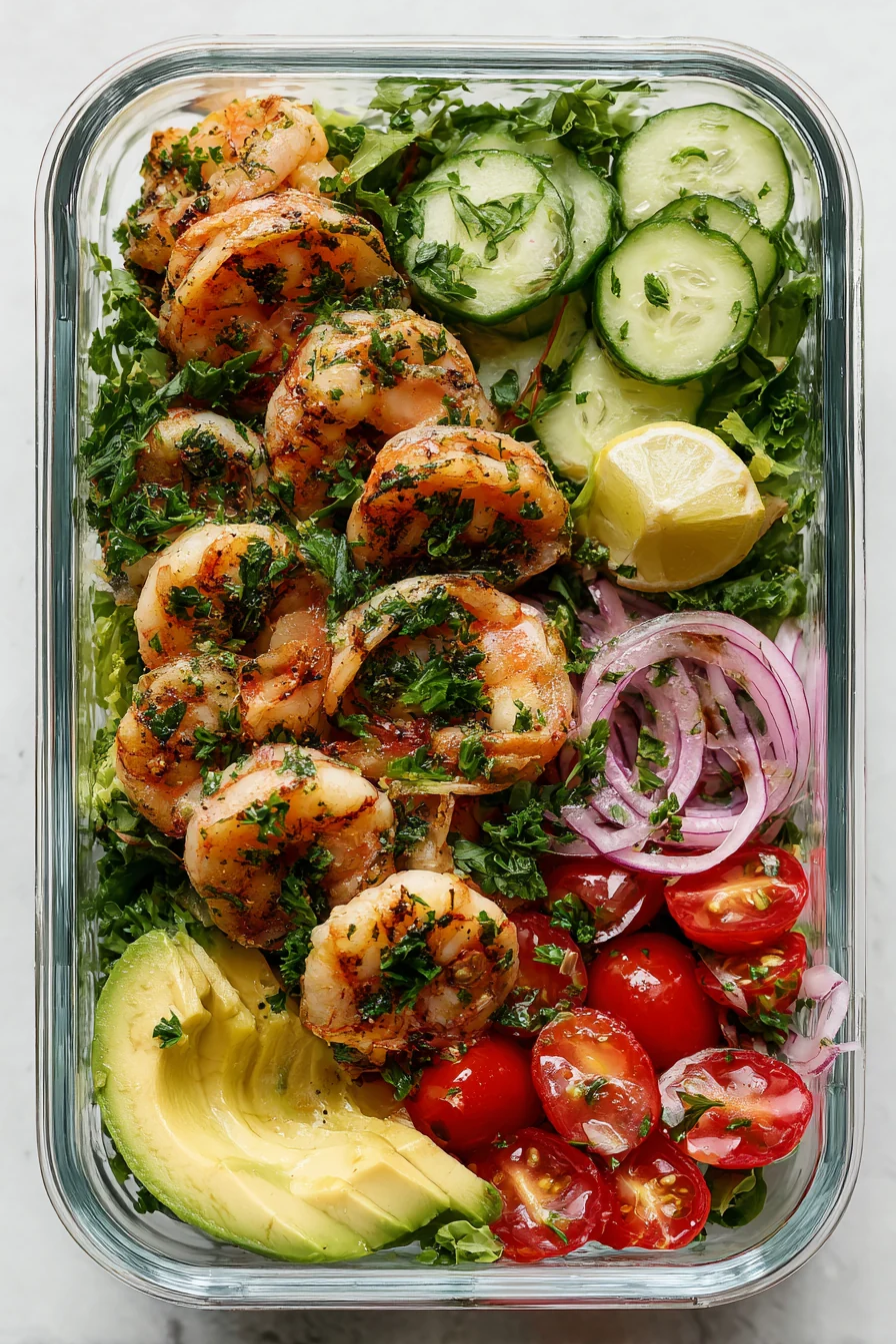

Shrimp salad meal prep is the lunch I make when I want something bright and light that doesn’t feel like a sad container of greens by Wednesday. The first version I ever meal-prepped went soggy by day two — I’d tossed the dressed salad together on Sunday and packed it, and by Monday afternoon the greens were limp and the avocado had turned brown. The fix wasn’t a different recipe. It was how I packed it.
The layering order is what makes a shrimp salad meal prep hold up for three days. Greens go in dry, on the bottom, with a paper towel on top to catch moisture. Cucumber and tomatoes go in their own compartment or on top of the greens in a paper towel-lined section. Shrimp stays separate until serving, or goes on top of the greens at the last minute. Avocado gets diced fresh the morning of, or tossed in lemon juice before it goes in the container. Dressing gets its own little jar.
The other thing that matters is the shrimp itself. Shrimp is unforgiving — it goes from translucent to rubbery in about 30 seconds, and there’s no fixing it once it’s overcooked. The rule is to sear it hot and fast, 90 seconds to 2 minutes per side, and pull it the moment it turns pink and opaque. The lemon juice goes on after the pan comes off the heat, never during cooking, because acid before cooking makes shrimp tough.
The salad comes out at 34 grams of protein per serving with garlic lemon shrimp, mixed greens, cucumber, cherry tomatoes, red onion, avocado, and a bright lemon-herb vinaigrette. It takes 20 minutes start to finish and holds three days in the fridge. It’s a meal prep seafood lunch that actually tastes good on day three.
Why This Recipe Works
Shrimp salad meal prep goes wrong in three specific ways: rubbery shrimp, soggy greens, and brown avocado. Here’s how this version solves each one.
1. Sear the Shrimp Hot and Fast, Then Acid Off the Heat
Shrimp cooks in minutes and turns from translucent to rubbery almost instantly. The sear is 90 seconds to 2 minutes per side in a hot skillet, and the shrimp comes out the moment it’s pink and opaque. The lemon juice goes on after the pan is off the heat, because acid before cooking denatures the shrimp proteins and makes them tough. This is the same principle as ceviche, just reversed.
2. Layer the Container in the Right Order for Meal Prep
The greens go in dry and on the bottom. The cucumber and tomatoes go in a separate compartment or a paper towel-lined section — they release moisture, and moisture is what wilts greens. The shrimp and avocado stay separate or go on top at the last minute. The dressing gets its own jar. That layering is what keeps the salad crisp through day three instead of wilting by day two.
3. Dice the Avocado Fresh or Toss It in Lemon Juice
Avocado browns the moment it hits the air, and once it’s brown there’s no un-browning it. If you’re prepping ahead, dice the avocado the morning of and add it to the container then, or toss the cubes in a teaspoon of lemon juice before they go in. The lemon slows the oxidation enough that it stays green for a day.
Ingredients That Matter
Large raw shrimp. One and a half to one and three-quarter pounds, peeled, deveined, tails removed. Large shrimp (21–25 per pound) are the right size for a salad — they’re substantial enough to be the protein, and they cook evenly. Smaller shrimp overcook; larger shrimp need more time in the pan and dry out.
Olive oil, garlic powder, dried oregano, salt, and black pepper. The dry seasoning for the shrimp. Garlic powder and dried oregano hold up to the high heat of the sear better than fresh garlic and herbs, which burn.
Fresh lemon juice, reserved for off the heat. One tablespoon for the shrimp, more for the vinaigrette. The lemon on the shrimp goes on after the pan is off the heat — during cooking it makes the shrimp tough.
Mixed baby greens or crisp romaine. Eight cups, washed and thoroughly dried. The drying matters — wet greens wilt faster. A salad spinner or a towel-lined bowl gets them dry enough.
English cucumber. One large, sliced into half-moons. English cucumbers have thinner skins and fewer seeds than regular cucumbers, which means less moisture released into the container.
Cherry tomatoes, halved. One cup. Halved so they release their juices into the salad instead of sitting whole and bland — but they still need their own compartment in meal prep.
Red onion, thinly sliced. A quarter cup. Thin slices are milder than thick ones; if you want it even milder, soak the slices in cold water for 10 minutes and drain before adding.
Ripe avocados. Two, diced right before serving. Ripe but firm — an overripe avocado will turn to mush in the container.
Fresh parsley. Two tablespoons for the salad, one for the vinaigrette. Fresh, not dried.
Lemon-herb vinaigrette. Olive oil, fresh lemon juice, lemon zest, Dijon mustard, garlic, parsley, thyme, salt, and pepper. The Dijon is the emulsifier — it’s what keeps the oil and lemon juice combined instead of separating.
How to Make Lemon Herb Shrimp Salad Meal Prep
(See the recipe card below — the steps are identical and the card is the single source of truth.)
Tips and Troubleshooting
The shrimp turned rubbery. It cooked too long, or the pan wasn’t hot enough. Sear 90 seconds to 2 minutes per side in a hot skillet and pull the shrimp the moment it’s pink and opaque. If in doubt, pull early — shrimp continues cooking off the heat.
The greens went soggy by day two. They weren’t dry enough, or the cucumber and tomatoes were packed with them. Dry the greens thoroughly in a salad spinner, add a paper towel to the container, and keep the wet ingredients in their own compartment.
The avocado turned brown. It was diced too far in advance without lemon juice. Dice it the morning of, or toss the cubes in a teaspoon of lemon juice before packing.
The shrimp tastes bland. It wasn’t seasoned enough, or it wasn’t seared hard enough. Season generously with garlic powder, oregano, salt, and pepper, and get the pan hot before the shrimp goes in.
The vinaigrette separated. The Dijon was skipped, or the dressing wasn’t whisked enough. The Dijon is the emulsifier — without it, the oil and lemon juice separate.
The red onion is too sharp. The slices were too thick. Slice them thin, or soak them in cold water for 10 minutes and drain before adding.
The shrimp is overcooked by the time you eat it. It was reheated. Shrimp is best eaten cold or at room temperature in this salad — reheating it in the microwave will overcook it. If you want it warm, sear fresh shrimp and assemble fresh.
The container leaked dressing into the greens. The dressing wasn’t in its own container. Use a small separate jar or a compartment with a lid.
Substitutions and Swaps
Shrimp → cooked chicken breast or salmon. Same quantity by weight. Chicken should be sliced thin; salmon should be flaked into large pieces. Both work in the same layering order.
Shrimp → chickpeas. Two cans, drained and rinsed, for a vegetarian version. The protein drops to about 15g per serving, so add a hard-boiled egg or a handful of nuts to compensate.
English cucumber → Persian cucumbers or regular cucumber, seeded. Persian cucumbers are similar in texture; regular cucumbers need the seeds scooped out or they release too much moisture.
Mixed greens → chopped romaine or kale. Romaine is the sturdiest for meal prep. Kale holds up even better but needs a massage with olive oil and salt to soften.
Avocado → skip it or add it fresh. Avocado is the ingredient that causes the most meal-prep trouble. Skip it entirely if you want the container to hold longer, or add it fresh the morning you’re eating.
Lemon-herb vinaigrette → store-bought lemon vinaigrette. Works in a pinch, but the homemade version is fresher and takes 2 minutes.
For a Mediterranean bowl: serve the shrimp and salad over quinoa or farro instead of greens, and add a scoop of hummus and a few kalamata olives.
For a gym-food version: double the shrimp and skip the avocado, or swap the avocado for extra cucumber. The protein goes up, the fat comes down, and the container holds longer.
Storage and Reheat
Refrigerate the seared shrimp, salad greens, and dressing in separate airtight containers for up to 3 days. Keeping the components separate prevents the greens from wilting.
Avocado prep: dice the avocado fresh just before eating to prevent browning. If prepping ahead, toss the cubes in 1 teaspoon of fresh lemon juice before packing.
Serving temperature: the shrimp can be eaten warm straight from the pan, or chilled straight from the fridge. The salad is designed for cold or room-temperature eating, and reheating the shrimp in the microwave will overcook it.
Food safety: store leftovers within 2 hours of cooking. Discard anything left at room temperature longer than 2 hours.
Lemon Herb Shrimp Salad
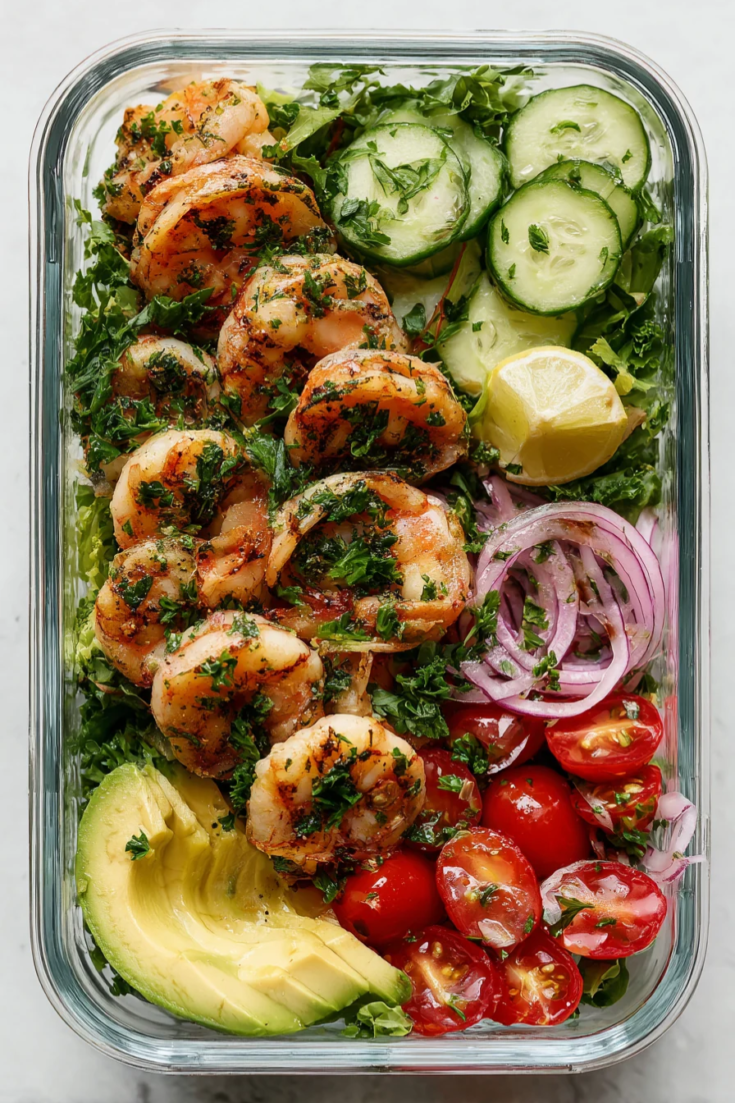
Pan-seared garlic lemon shrimp tossed over crisp mixed greens, crunchy cucumbers, sweet cherry tomatoes, and creamy avocado in a bright lemon-herb vinaigrette — 34g of protein per serving.
Ingredients
Pan-Seared Garlic Herb Shrimp
- 1½ to 1¾ lbs large raw shrimp, peeled, deveined, tails removed
- 1 tablespoon olive oil
- ½ teaspoon garlic powder
- ½ teaspoon dried oregano
- ½ teaspoon fine sea salt
- ¼ teaspoon freshly cracked black pepper
- 1 tablespoon fresh lemon juice, reserved for finishing off the heat
Salad Base
- 8 cups mixed baby greens or crisp romaine hearts, washed and thoroughly dried
- 1 large English cucumber, sliced into half-moons
- 1 cup cherry tomatoes, halved
- ¼ cup red onion, thinly sliced into half-moons
- 2 ripe avocados, diced right before serving
- 2 tablespoons fresh flat-leaf parsley, finely chopped
Emulsified Lemon-Herb Vinaigrette
- ¼ cup extra-virgin olive oil
- 2 tablespoons fresh lemon juice
- 1 teaspoon lemon zest
- 1 teaspoon Dijon mustard
- 1 clove garlic, finely microplaned or minced
- 1 tablespoon fresh parsley, finely chopped
- ½ teaspoon fresh thyme leaves
- ¼ teaspoon fine sea salt
- ⅛ teaspoon black pepper
Instructions
- Season the Shrimp (No Acid Before Cooking): Pat the shrimp completely dry with paper towels. Toss in a medium bowl with the olive oil, garlic powder, dried oregano, salt, and black pepper until evenly coated. Do not add the lemon juice yet — acid before cooking makes shrimp tough and rubbery.
- Sear the Shrimp: Heat a large skillet (cast iron or stainless steel) over medium-high heat until hot. Arrange the shrimp in a single layer, working in two batches if needed to avoid overcrowding. Sear undisturbed 90 seconds to 2 minutes per side, until pink, opaque, and cooked through.
- Finish with Lemon Juice: Remove the skillet from the heat immediately. Drizzle 1 tablespoon of fresh lemon juice over the hot shrimp and toss to coat in the pan juices. Transfer the shrimp to a plate to cool slightly.
- Whisk the Vinaigrette: In a small bowl or jar, whisk together the extra-virgin olive oil, fresh lemon juice, lemon zest, Dijon mustard, microplaned garlic, parsley, thyme, salt, and black pepper until glossy and fully emulsified.
- Assemble and Serve: In a large salad bowl, or across 4 meal-prep containers, arrange the mixed greens, sliced cucumber, cherry tomatoes, and red onion. Top with the warm or chilled seared shrimp and freshly diced avocado. Drizzle the dressing over the top right before serving and toss gently to combine.
Notes
Notes
Shrimp cooks fast and turns rubbery quickly — sear 90 seconds to 2 minutes per side and pull the moment it's pink and opaque.
The lemon juice goes on after the pan is off the heat; acid before cooking makes shrimp tough. For meal prep, keep the greens dry on the bottom, the cucumber and tomatoes in a separate compartment, and the dressing in its own jar — that layering is what keeps the salad crisp for three days.
Dice the avocado fresh or toss it in lemon juice before packing. The Dijon in the vinaigrette is the emulsifier; without it the dressing separates. Nutrition is an estimate and varies by shrimp size and dressing portion.
Estimated per serving (with dressing and avocado): 380 calories · 34g protein · 12g carbs · 22g fat · 6g fiber · 480mg sodium
Frequently Asked Questions
Can I use frozen shrimp?
Yes. Thaw it overnight in the refrigerator, then pat it completely dry before seasoning. Frozen shrimp releases a lot of water when it thaws, and wet shrimp steams instead of sears.
How do I keep the salad from getting soggy?
Dry the greens thoroughly in a salad spinner, add a paper towel to the container, and keep the cucumber, tomatoes, and dressing in separate compartments. That layering is what holds the salad crisp through day three.
Can I eat this warm instead of cold?
Yes. The shrimp is best eaten warm straight from the pan, and the salad is designed for cold or room-temperature eating. Reheating shrimp in the microwave will overcook it.
Can I make this ahead for the week?
Yes — it’s designed for it. Store the shrimp, greens, and dressing in separate containers and assemble fresh each day. It holds up to 3 days in the fridge.
Is this gluten-free?
Yes, as long as your Dijon mustard is gluten-free. Most are, but check the label if you’re sensitive.
What can I use instead of shrimp?
Cooked chicken breast, salmon, chickpeas, or white beans all work in the same layering order. Adjust the protein claim if you swap — chickpeas, for example, drop the protein to about 15g per serving.
How much protein is in one serving?
About 34 grams per serving when divided into 4 portions with shrimp and avocado. If you skip the avocado or reduce the shrimp, the protein drops — see the substitutions section.
Can I make this for a crowd?
Yes. Double the recipe and assemble on a large platter instead of in containers, dressing it right before serving.
More Meal Prep Recipes You’ll Love
Flank Steak Salad With Blue Cheese — 38g protein, meal-prep ready, 35 minutes.
Beef Yaki Udon With Teriyaki — 37g protein, one pan, 30 minutes.
Slow-Cooker Lemon Herb Chicken Breast — 44g protein, juicy every time, one pot.
Peanut Butter Protein Balls — 12g protein, no-bake, 10 minutes, keeps a week.
High-Protein Slow Cooker Dinners — ten weeknight dinners organized by cook time.
14 Dinner Ideas That Actually Save Your Weeknight Sanity — the whole easy-dinner category covered.
Closing
I’ve made this shrimp salad meal prep more times than I can count, and the two things that changed everything for me were searing the shrimp hot and fast and pulling them the moment they turn pink, and layering the containers in the right order instead of tossing everything together on Sunday. The first version I meal-prepped was soggy by day two — the layering habit fixed that completely.
If you make it with salmon or add it to a Mediterranean bowl over quinoa, let me know how it turns out in the comments.