You love lasagna. It’s the ultimate comfort meal, the one dish everyone in the family repeatedly asks for, and the one that always delivers.
But making traditional lasagna — boiling noodles, spreading ricotta, layering everything in a deep dish, praying it holds together — isn’t something you have time for on a Tuesday, or honestly, something you’re up for most days.
This sheet pan lasagna is the answer. It’s everything you love about lasagna — rich meat sauce, creamy spinach ricotta, melted mozzarella, crispy edges — baked on one sheet pan instead of layered in a deep dish. About 32–36 grams of protein per serving, and it feeds eight. The whole thing comes together in under an hour with about 25 minutes of actual work.
The trick is the method. Instead of layering noodles, ricotta, meat sauce, and mozzarella in a deep baking dish, break the lasagna noodles into pieces, toss them with the meat sauce, spread everything onto a sheet pan, and dollop the spinach ricotta on top. The oven does the rest. You get all the flavor and texture of lasagna without the fuss.
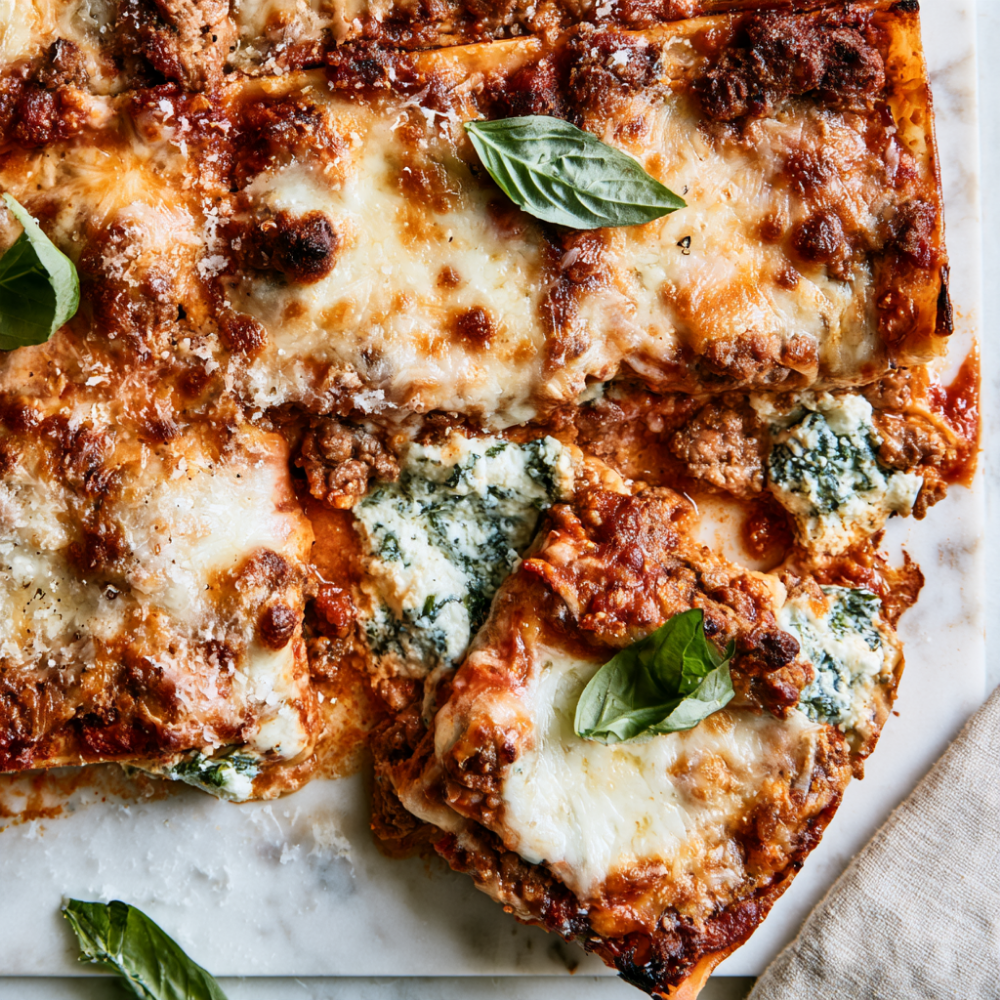
The best part is the crispy edges. Because the lasagna is spread thin on a sheet pan, more of the surface area gets deeply golden and caramelized. Every piece has crispy edges and a soft, cheesy center — which is honestly better than traditional lasagna.
Two things decide whether this turns out tender and saucy or dry and crunchy, and neither is optional.
Par-boil the noodles for 4–6 minutes. Breaking raw lasagna noodles and baking them in sauce seems like it would work, but the noodles on the edges and top of the pan don’t get enough moisture to cook through. Boiling them for four to six minutes gives them a head start so they finish cooking evenly in the oven.
Cover with foil for the first 20 minutes. The foil traps steam, which is what cooks the noodles through and keeps the lasagna moist. If you bake it uncovered the whole time, the top noodles dry out, and the cheese burns before the center is hot.
Everything else is forgiving and flexible, and it takes about 25 minutes of actual work.
Why This Recipe Works
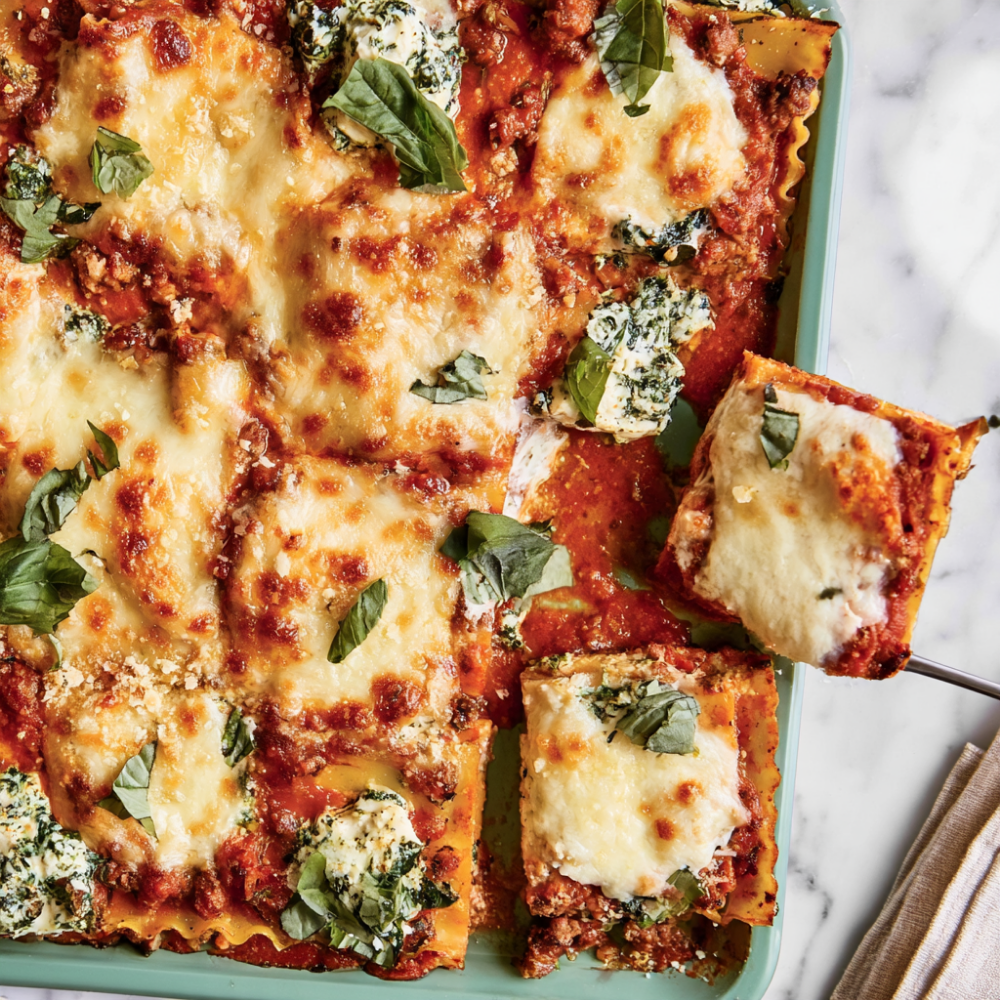
The sheet pan gives you more crispy edges. Traditional lasagna bakes in a deep dish, so only the top layer browns. A sheet pan spreads the lasagna thin, which means more surface area gets deeply golden and caramelized. Every piece has crispy edges and a soft, cheesy center.
The ground beef-to-spicy sausage ratio is deliberate. Using 1½ lbs of ground beef with ½ lb of spicy Italian sausage keeps beef as the dominant flavor while the sausage quietly adds garlic, fennel, herbs, and heat. It tastes like beef lasagna, not sausage pasta.
Broken noodles mean no layering. Instead of carefully arranging whole lasagna sheets in precise layers, you break the noodles into pieces, toss them with the meat sauce, and spread everything onto the pan. It’s faster, easier, and tastes the same.
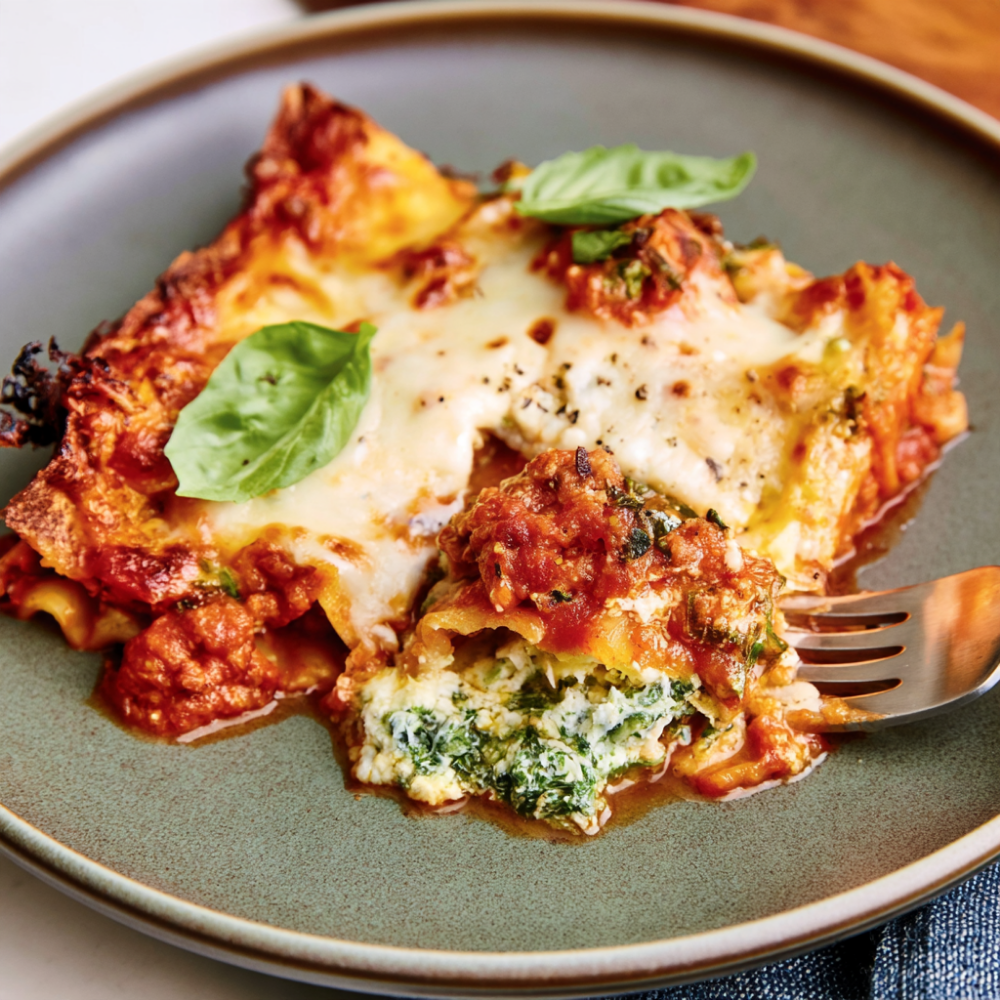
The spinach ricotta adds creaminess and prevents the dish from being just meat and cheese. A layer of ricotta mixed with wilted spinach adds creaminess that balances the rich meat sauce. The spinach also adds color and a subtle earthy note that keeps the lasagna from tasting too heavy.
Passata gives you a thicker, richer sauce than crushed tomatoes. Passata is strained tomato puree—thicker and smoother than crushed tomatoes—so the sauce clings to the noodles instead of pooling at the bottom of the pan. If you can’t find passata, crushed tomatoes work, but the sauce will be slightly thinner.
The egg in the ricotta helps it set. Traditional lasagna ricotta has an egg to bind it. Without it, the ricotta mixture can be loose and watery. One egg helps the ricotta set, so the slices hold together when you cut them.
Browning the meat properly builds a real flavor foundation. Let the beef and sausage sit in the hot skillet before breaking them up to create browned bits that make the sauce taste richer.
It’s a genuine crowd-pleaser. One sheet pan feeds eight generously. It’s perfect for potlucks, family dinners, game days, and meal prep batches.
It reheats beautifully. Unlike traditional lasagna, which can dry out when reheated, sheet pan lasagna holds its moisture and texture. Portion into containers and you’ve got lunch or dinner handled for days.
Sheet Pan Lasagna with Ground Beef & Spicy Sausage
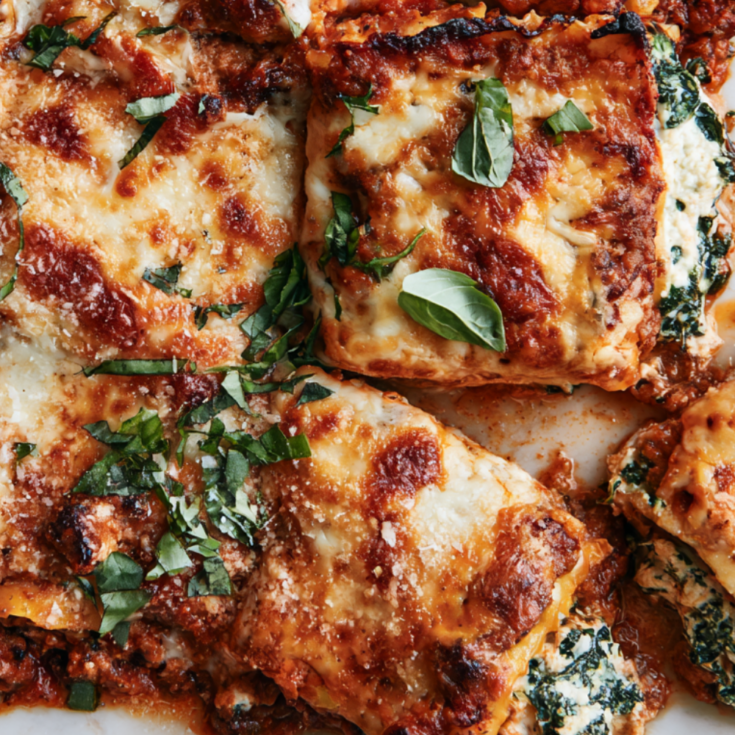
A hearty sheet-pan lasagna made with seasoned ground beef, spicy Italian sausage, tomato sauce, creamy spinach-ricotta, mozzarella, and Parmesan. It has all the comforting layers of traditional lasagna without the time-consuming assembly. It has about 32–36 grams of protein per serving and feeds eight.
Ingredients
For the Lasagna:
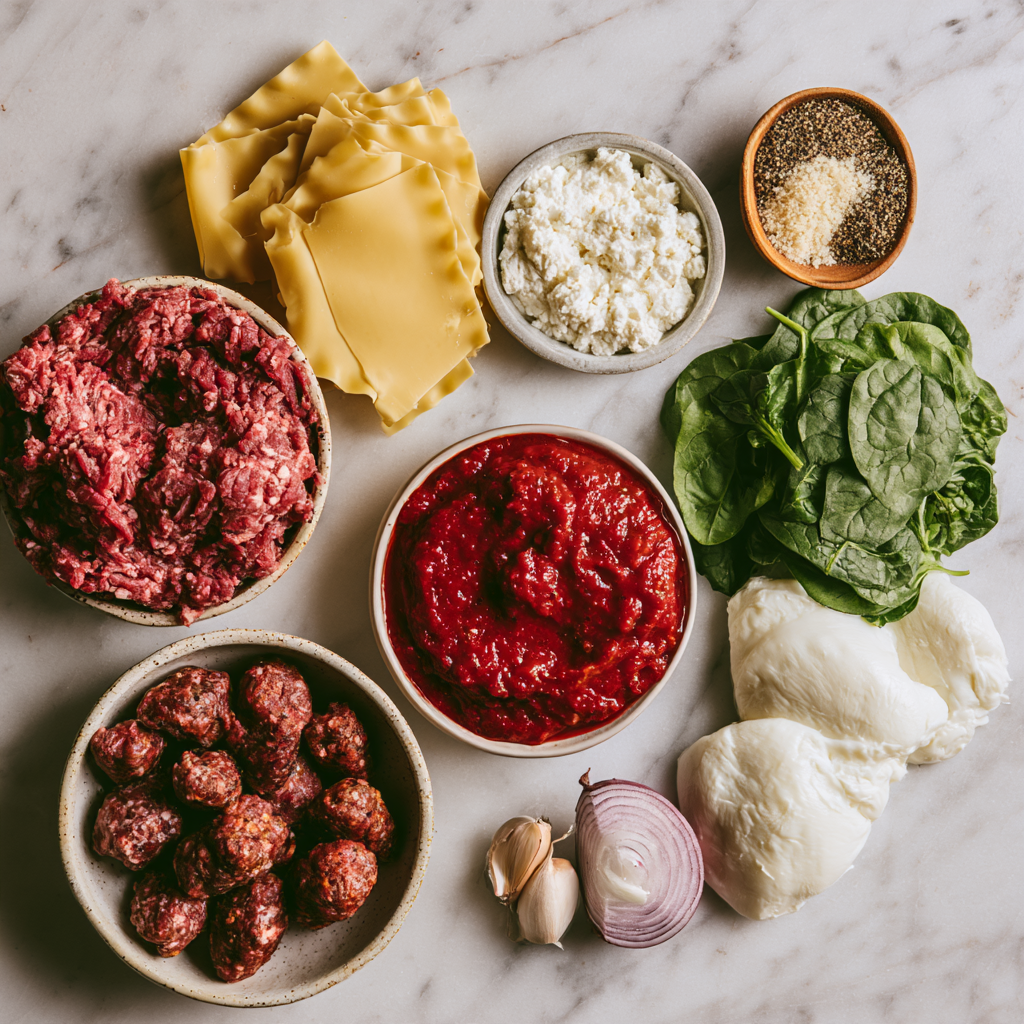
- 1 tbsp olive oil, plus more for greasing the pan
- 1½ lbs 90–93% lean ground beef
- ½ lb spicy Italian sausage, casings removed
- 1 medium red onion, finely diced
- 5 garlic cloves, finely chopped, divided
- 1 (5-oz) package baby spinach
- 1 cup whole-milk ricotta cheese
- 1 large egg
- 3 jars (12–13 oz each) tomato passata, about 37–39 oz total (or 3 cups crushed tomatoes)
- 1½ tsp Italian seasoning
- 1½ tsp kosher salt, divided
- ½ tsp freshly ground black pepper
- ¼ tsp red pepper flakes, optional
- 1 lb dried lasagna noodles, broken into large, irregular pieces
- 2½ cups shredded low-moisture mozzarella, divided
- 1½ cups finely grated Parmesan cheese, divided
- ½ cup reserved pasta water, as needed
For Serving:
- Fresh basil or parsley, chopped.
- Additional Parmesan, if desired
- Red pepper flakes, for serving
Instructions
1. Prepare the pan and oven. Preheat the oven to 375°F. Lightly grease a 12x17-inch rimmed sheet pan with olive oil. Use a sturdy sheet pan with sides at least 1 inch high. A standard 13x18 half-sheet pan works too.
2. Cook the spinach. Heat a large skillet over medium heat and add 1 teaspoon of the olive oil. Add 2 chopped garlic cloves and cook for about 30 seconds, until fragrant.
Add the spinach and cook for 3–5 minutes, stirring frequently, until completely wilted and most of the moisture has evaporated.
Transfer the spinach to a bowl and let it cool slightly. Chop into bite-sized pieces, then stir into the ricotta with the egg. Season with a pinch of salt and pepper. Set aside.
If there is visible liquid in the bowl, drain it before combining the spinach with the ricotta. Watery spinach is one of the easiest ways to loosen the ricotta layer.
3. Brown the beef and sausage. Wipe out the skillet and return it to medium-high heat. Add the ground beef and sausage. Cook for 3–4 minutes without stirring too much, allowing the meat to develop some browning.
Break the meat into small pieces and continue cooking for another 5–6 minutes, stirring occasionally, until browned and cooked through.
If there is a large amount of rendered fat in the skillet, carefully spoon off most of it, leaving about 1 tablespoon behind for flavor.
4. Add the onion and garlic. Add the diced onion to the meat and cook for 3–4 minutes, stirring occasionally, until softened. Stir in the remaining 3 chopped garlic cloves and cook for 30 seconds.
5. Make the meat sauce. Add the passata, Italian seasoning, 1 teaspoon kosher salt, black pepper, and red pepper flakes (if using). Bring the sauce to a gentle simmer and cook uncovered for 8–10 minutes, stirring occasionally.
The sauce should thicken slightly and look rich and cohesive, but still loose enough to coat the pasta generously. Taste and add the remaining ½ teaspoon of kosher salt if needed.
If using crushed tomatoes instead of passata, the sauce may be slightly thinner. Simmer for an extra 2–3 minutes to thicken.
Remove from the heat.
6. Cook the lasagna noodles. While the sauce is simmering, bring a large pot of generously salted water to a boil. Break the lasagna noodles into large, irregular pieces. Cook until very al dente and flexible, usually about 4–6 minutes depending on the brand.
The noodles should still be firm in the center. They will finish cooking in the oven.
Before draining, reserve 1 cup of pasta water. Drain the noodles well. Do not rinse.
7. Combine the noodles and meat sauce. Add the drained noodles to the skillet with the meat sauce. Add ½ cup mozzarella and ½ cup Parmesan. Gently toss until the noodles are evenly coated, and the cheese is distributed throughout.
If the pasta looks dry, add 2–3 tablespoons of the reserved pasta water. The mixture should be generously saucy but should not have excess liquid pooling in the skillet.
The noodle mixture should look slightly saucier than you think it needs to be. The noodles will absorb sauce as they bake.
8. Build the sheet-pan lasagna. Transfer about two-thirds of the pasta mixture to the prepared sheet pan and spread it into an even layer.
Dollop about half of the spinach ricotta mixture over the pasta in small spoonfuls. It won't completely cover the noodles — that's fine.
Add the remaining pasta and spread it evenly over the first layer. Dollop the remaining spinach-ricotta mixture on top.
Sprinkle evenly with the remaining 2 cups mozzarella and 1 cup Parmesan.
9. Bake covered. Cover the pan tightly with foil. Bake for 20 minutes, until the cheese is melted and the lasagna is hot throughout.
The foil traps steam, which is what cooks the noodles through and keeps the lasagna moist.
10. Uncover and finish. Remove the foil and continue baking for 10–15 minutes, until the cheese is bubbly and golden brown in spots and the pasta is tender.
For a deeper golden top, switch to broil for 1–2 minutes at the end, watching constantly so the cheese does not burn.
11. Rest before serving. Remove the lasagna from the oven and let it rest for 15 minutes before cutting. This gives the sauce and melted cheese time to settle, making the lasagna much easier to cut into portions.
12. Serve. Cut into 8 portions and garnish with fresh basil or parsley and additional Parmesan if desired. Add a pinch of red pepper flakes for heat.
Notes
Protein per Serving: About 32–36g
Nutrition note: Protein and calories vary by brand of ground beef, sausage, ricotta, mozzarella, Parmesan, and noodles. Estimated per serving: ~560 calories, 32–36g protein, ~44 g carbs, ~26 g fat. Calculate with your specific products for the most accurate numbers.
Make-ahead: Assemble the lasagna, cover, and refrigerate for up to 24 hours. Bake covered for the first 25 minutes, then uncover and continue baking for 10–15 minutes, adding approximately 5–10 minutes to the total baking time.
Freezer: Bake, cool completely, then wrap tightly and freeze for up to 3 months. Thaw overnight in the refrigerator and reheat covered at 350°F for 25–30 minutes.
Recipe Notes
Use 90–93% lean ground beef. It provides enough fat for a flavorful sauce without leaving the sheet pan greasy.
The beef and sausage combination matters. The ground beef gives the lasagna its classic, hearty flavor, while the spicy Italian sausage adds garlic, fennel, herbs, and heat. If your sausage is particularly spicy, you can omit the red pepper flakes.
Don’t skip browning the meat. Let the beef and sausage sit in the hot skillet before breaking it up to create browned bits that make the sauce taste richer.
Cook the spinach until the excess moisture is gone. Watery spinach is one of the easiest ways to loosen the ricotta layer. Drain any visible liquid before combining the spinach with the ricotta.
Add an egg to the ricotta. The egg helps the ricotta set, so the slices hold together when you cut them.
Keep the noodles very al dente. They should be flexible but still firm when drained. Fully cooked noodles can become too soft after the additional oven cooking.
Use low-moisture mozzarella. It melts evenly and gives the lasagna a better browned, stretchy topping without releasing excessive water.
Let it rest for 15 minutes. This gives the sauce and melted cheese time to settle, making the lasagna much easier to cut into portions.
Pan size matters. A 12×17-inch rimmed sheet pan gives the best balance of browned edges, cheesy top, and enough depth for the pasta and sauce. Make sure the sides are at least 1 inch high.
If you use crushed tomatoes instead of passata, simmer the sauce for an extra 2–3 minutes to thicken it before combining it with the noodles.
The “layers” are dollops, not distinct layers. This is a sheet pan lasagna, not a traditional layered lasagna. Dollop the ricotta mixture over the pasta rather than spreading it into a perfect layer. The result is a more rustic, casserole-style dish that tastes just as good.
Taste the sauce before assembling. It should taste slightly more seasoned than you’d want on its own, because the noodles and cheese will absorb some of the flavor.
Tips for the Best Sheet Pan Lasagna
Par-boil the noodles for 4–6 minutes. Raw lasagna noodles won’t cook through evenly in the oven. Four to six minutes in boiling water gives them a head start so they finish cooking evenly.
Break the noodles into large, irregular pieces. Smaller pieces distribute more evenly and give you more surface area for sauce. You can do this by hand or in a zip-top bag.
Use passata for a thicker sauce. Passata is strained tomato puree—thicker and smoother than crushed tomatoes—so the sauce clings to the noodles instead of pooling at the bottom of the pan.
Brown the beef and sausage properly. Let them sit in a single layer for a few minutes before breaking them up. That’s how you get deeply caramelized, savory meat instead of gray crumbles.
Cook the spinach until dry. Watery spinach makes the ricotta layer loose and can make the lasagna soggy. Cook it until most of the moisture has evaporated, then drain any remaining liquid before adding it to the ricotta.
Add an egg to the ricotta. It helps the ricotta set so the slices hold together when you cut them.
The noodle mixture should look saucy. If it seems dry before it goes on the pan, add 2–3 tablespoons of reserved pasta water or extra sauce. The noodles absorb sauce as they bake.
Cover with foil for the first 20 minutes. The foil traps steam, which cooks the noodles through and keeps the lasagna moist. Uncover for the last 10–15 minutes to let the cheese brown.
Broil at the end for a golden, bubbly top. Watch closely — the cheese can go from golden to burnt in under a minute.
Rest for 15 minutes before slicing. This lets the cheese set and the portions hold together.
Use a sharp knife or pizza cutter. A pizza cutter actually works great for sheet pan lasagna. It cuts through the noodles and cheese cleanly.
Easy Variations
Million Dollar Sheet Pan Lasagna. Add 8 oz of softened cream cheese to the ricotta mixture. Blend until smooth. About 34–38g protein per serving.
Sheet Pan Lasagna with Cottage Cheese (Ricotta Swap). Swap the ricotta for 16 oz of cottage cheese, blended completely smooth. About 34–38g protein per serving.
Giada Sheet Pan Lasagna Recipe (Inspired). Add 1 cup of halved cherry tomatoes and ½ cup of chopped fresh basil to the meat sauce during the last 2 minutes of cooking. About 32–36g protein per serving.
Sheet Pan Baked Ziti. Swap the lasagna noodles for 1 lb of ziti or penne. Cook for 6 minutes instead of 4–6. About 32–36g protein per serving.
Sheet Pan Ravioli Lasagna. Swap the lasagna noodles for 1½ lbs of frozen cheese ravioli. Don’t par-boil them — add them frozen to the sauce and bake as directed, adding 5 minutes to the covered bake time. About 30–34g protein per serving.
Lazy Lasagna Casserole. Use 1 lb of rotini or fusilli instead of lasagna noodles. Cook for 6 minutes, then toss with the meat sauce and proceed. About 32–36g protein per serving.
Sloppy Lasagna Recipe. Break the noodles into smaller, bite-sized pieces and use 4 jars of passata instead of 3. The result is saucier and more casserole-like. About 30–34g protein per serving.
One Pan Lasagna (Vegetarian). Swap the ground beef and sausage for 3 cups of cooked lentils and 8 oz of finely chopped mushrooms—about 24–28g protein per serving.
Sheet Pan Lasagna with Turkey. Swap the ground beef for 1½ lbs of 93% lean ground turkey and the sausage for turkey sausage. About 32–36g protein per serving.
Sheet Pan Lasagna with Spinach (Extra Greens). Double the spinach to 10 oz. About 33–37g protein per serving.
Recipes for 12 People. Double the recipe and use two sheet pans. Bake both at once and rotate the pans halfway through. About 32–36g protein per serving.
Storage and Food Safety
Refrigerator: Store leftovers in an airtight container for up to 4 days. Reheat individual portions in the microwave for 90 seconds to 2 minutes, or in a covered dish at 350°F for 15–20 minutes.
Freezer: Bake, cool completely, then wrap tightly or transfer to freezer-safe containers. Freeze for up to 3 months. Thaw overnight in the refrigerator and reheat covered at 350°F for 25–30 minutes.
Reheating: Add a splash of marinara or water if the lasagna has dried out. Cover when reheating to trap steam.
Food safety: Cook ground beef and sausage to 160°F. Refrigerate leftovers within 2 hours. Reheat leftovers to 165°F throughout.
Frequently Asked Questions
How much protein is in each serving?
About 32–36 grams per serving. Most of it comes from the ground beef and sausage (about 20–22g per serving), with the rest from the ricotta, mozzarella, Parmesan, and noodles.
Can I use ricotta instead of cottage cheese?
Yes. This recipe uses ricotta, not cottage cheese. If you prefer cottage cheese, swap the ricotta for 16 oz of cottage cheese, blended completely smooth. About 34–38g protein per serving.
Can I use regular lasagna noodles without par-boiling?
No. Raw lasagna noodles won’t cook through evenly in the oven, especially the pieces on the edges and top of the pan. Boiling them for four to six minutes gives them a head start.
Can I use no-boil lasagna noodles?
Yes. Skip the par-boil. Add an extra ½ cup of water to the meat sauce, cover with foil for 25 minutes instead of 20, and bake uncovered for 10–15 minutes.
Can I use a different pasta shape?
Yes. Ziti, penne, rotini, and fusilli all work. Cook them for 6 minutes instead of 4–6, then toss with the meat sauce and proceed.
Why did my lasagna turn out dry?
The noodle mixture wasn’t saucy enough, or it baked uncovered for too long. Make the mixture saucier than you think it needs to be, and keep it covered for the first 20 minutes.
Why did my lasagna turn out watery?
The passata was thin, the spinach wasn’t drained well, or the ricotta was watery. Use passata for a thicker sauce, drain the spinach thoroughly, and drain the ricotta if it has visible liquid.
Can I make this ahead of time?
Yes. Assemble the entire lasagna up to 24 hours ahead, cover, and refrigerate. Bake covered for 25 minutes, then uncover and bake for 10–15 minutes more.
Can I double this recipe?
Yes. Use two sheet pans and double all ingredients. Bake both at once and rotate the pans halfway through.
Is this recipe gluten-free?
Not as written, because of the lasagna noodles. Use gluten-free lasagna noodles and confirm your passata and Parmesan are gluten-free. About 32–36g protein per serving.
Can I make this vegetarian?
Yes. Swap the ground beef and sausage for 3 cups of cooked lentils and 8 oz of finely chopped mushrooms—about 24–28g protein per serving.
What goes with sheet pan lasagna?
Serve with a simple green salad with Italian dressing, garlic bread, or roasted vegetables.
More High-Protein Italian Recipes You’ll Love
- Creamy Butternut Squash & Turkey Sausage Pasta Bake
- 10 Ground Beef Pasta Recipes to Save for Busy Nights
- The Crockpot Lasagna with Ricotta That Tastes Like It Simmered All Day
- Homemade Lasagna Recipe That Turns Out Perfect Every Time
Conclusion
This sheet pan lasagna with ground beef and spicy sausage is the Italian dinner that skips the layering without skipping the flavor.
Rich meat sauce, creamy spinach ricotta, and melted mozzarella baked on a sheet pan instead of layered in a deep dish. About 32–36 grams of protein per serving, and it feeds eight.
The keys are simple: par-boil the noodles for 4–6 minutes, brown the beef and sausage properly, use passata for a thicker sauce, cook the spinach until dry, add an egg to the ricotta, make the noodle mixture saucier than you think it needs to be, cover with foil for the first 20 minutes, uncover for the last 10–15, and rest for 15 minutes before slicing.
Do that, and you’ll have a lasagna that tastes like the real thing but comes together in about 25 minutes of actual work.
Make it for a family dinner, a potluck, or a Sunday meal prep. It reheats beautifully and holds up for days.