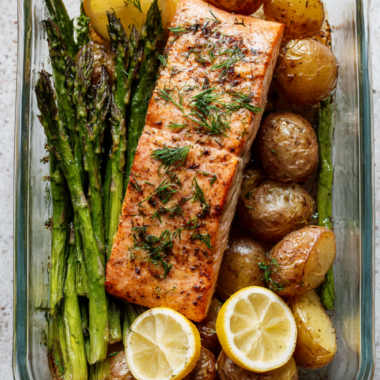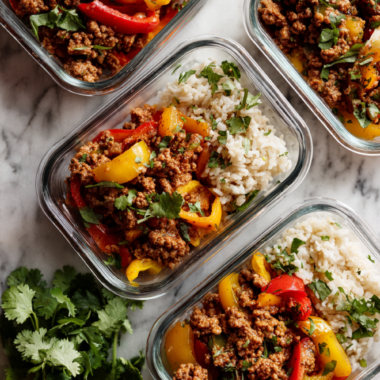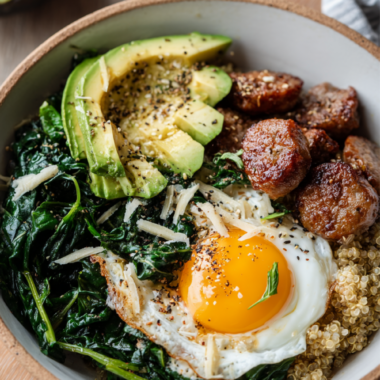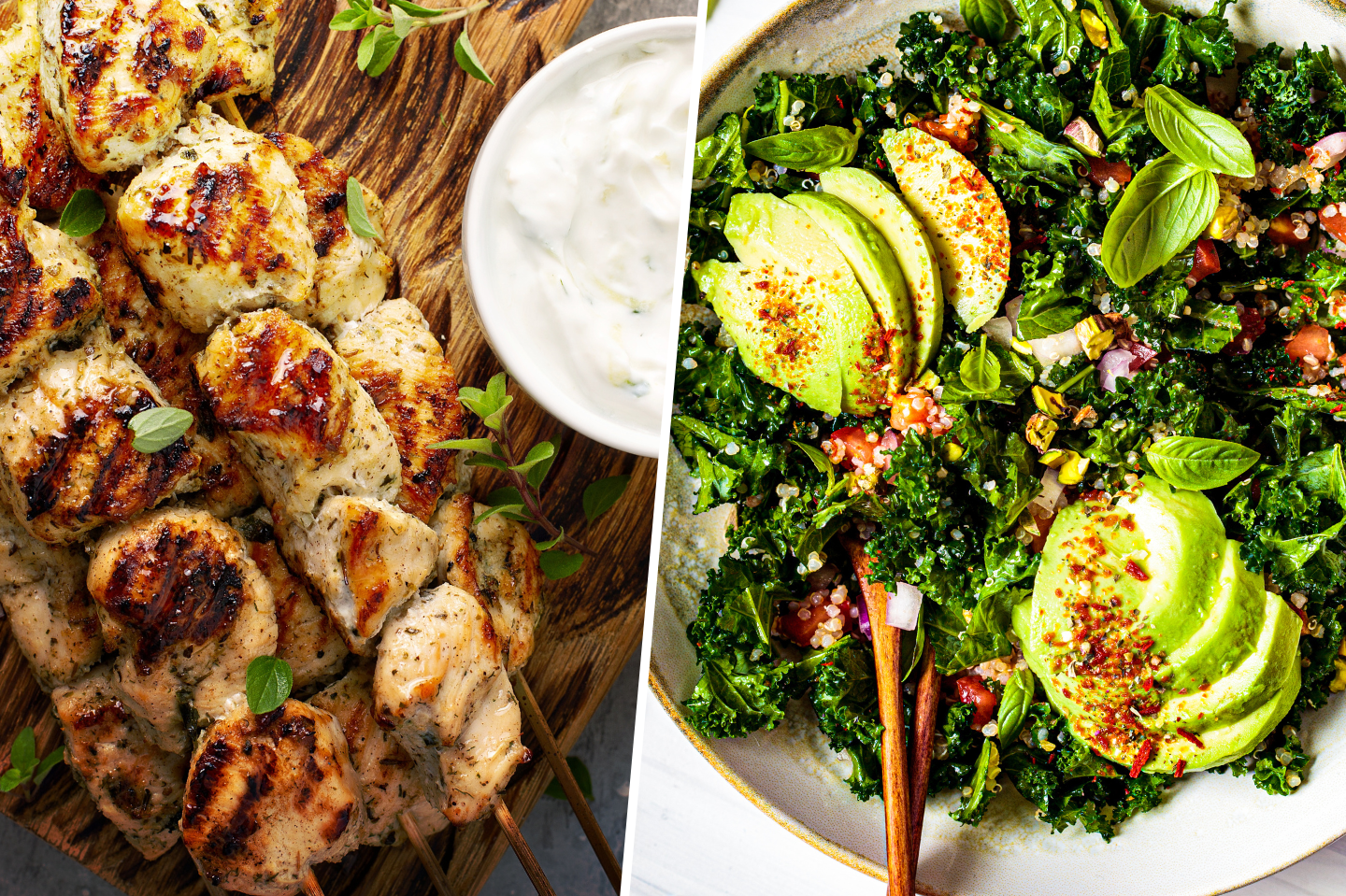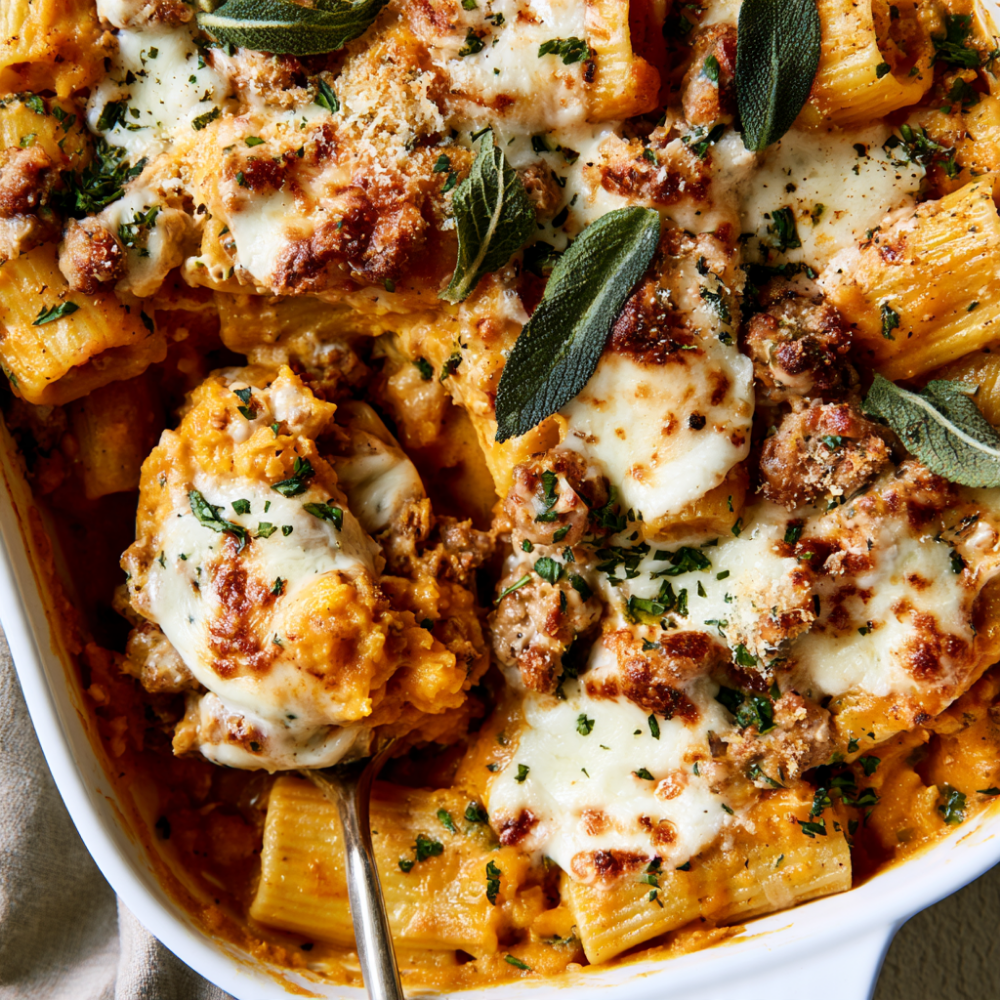

Whether you’re staring down a Tuesday night that needs to feel like a Sunday dinner, or you’re trying to get something seasonal and vegetable-forward on the table that your family will eat without asking what’s in it — this is the one.
It’s a creamy butternut squash and turkey sausage pasta bake. Rigatoni, browned turkey sausage, and a velvety squash sauce that tastes like it’s loaded with cream.
One baking dish feeds eight, about 30–34 grams of protein per serving.
The sauce is the trick. Blend roasted butternut squash with cottage cheese, Parmesan, chicken broth, Dijon, and a squeeze of lemon.
No heavy cream, no flour, no roux. The Dijon and lemon keep it from tasting flat—they add just enough tang to balance the squash’s natural sweetness.
The best part is that it’s a bake. You assemble it in the dish, and the oven does the rest.
It reheats better than almost any pasta dish, which means Sunday’s dinner becomes Tuesday’s lunch.
Two things decide whether this turns out creamy or dry, and neither is optional.
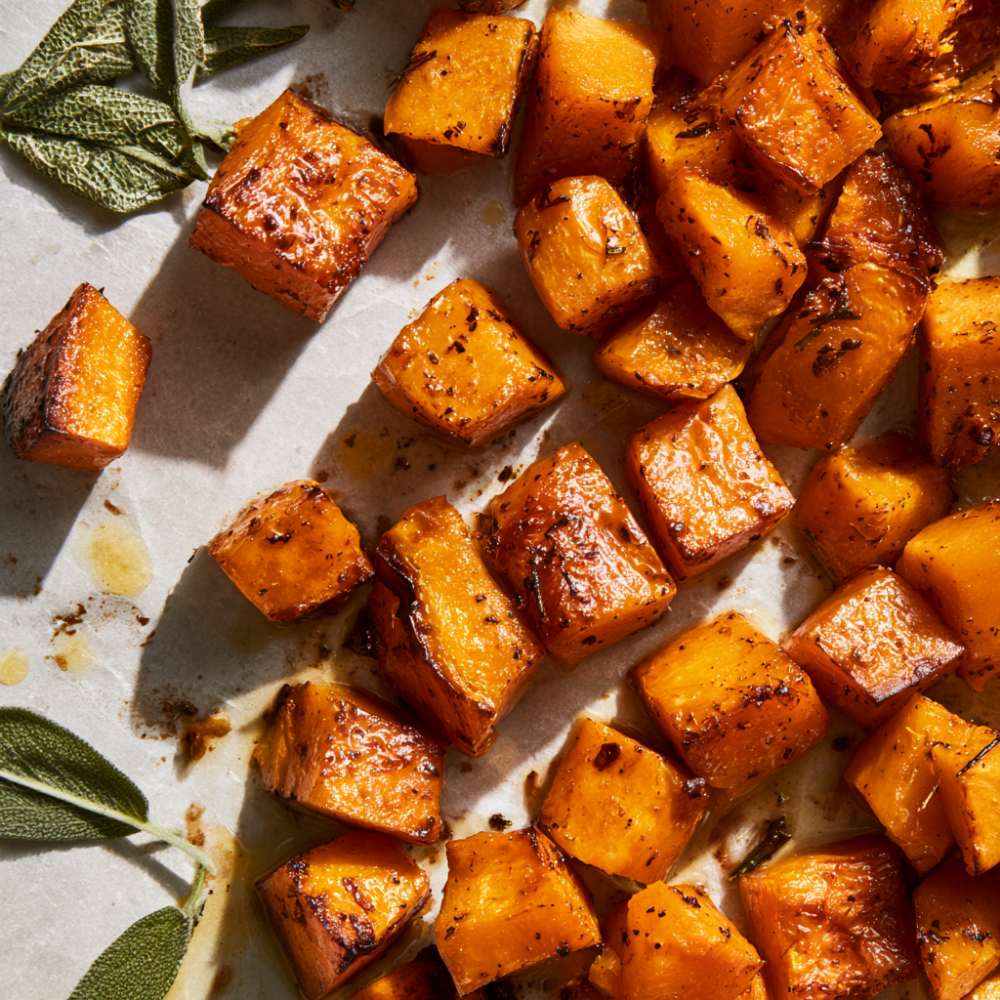
Roast the squash; don’t steam or boil it. Roasting caramelizes the sugars and drives off the water. Boiled squash makes a thin sauce that tastes like nothing.
Undercook the pasta by 2–3 minutes. It finishes cooking in the oven while absorbing the sauce. Cook it fully, and you get mush.
Everything else is forgiving, flexible, and takes about 25 minutes of hands-on work.
Why This Recipe Works
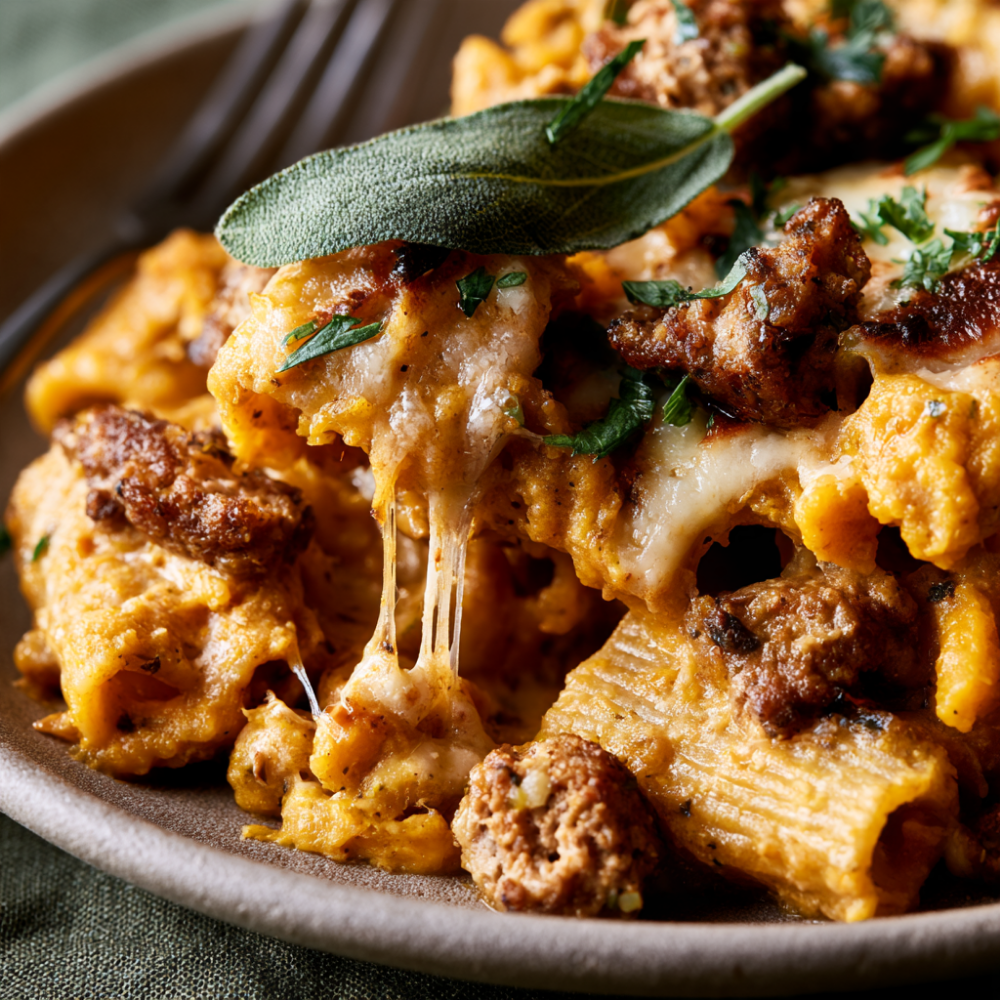
The sauce is high-protein without tasting like it. Blended cottage cheese gives you the same creamy body as heavy cream with a fraction of the fat and a real protein contribution. Once it’s blended smooth with roasted squash, nobody can tell it’s there.
Roasting the squash does the heavy lifting. Roasting a whole butternut squash until caramelized makes it deeply sweet and concentrated. It’s the difference between a sauce that tastes like squash and a sauce that tastes like autumn.
The Dijon and lemon balance the sweetness. Squash and cottage cheese can both lean sweet. A tablespoon of Dijon and a tablespoon of lemon juice give the sauce enough acidity and savory depth to keep it from tasting heavy or one-note.
Browning the sausage is the flavor foundation. Turkey sausage cooked only until gray tastes flat. Turkey sausage that’s browned until the edges are deeply golden gives the whole casserole a savory backbone.
It’s a bake, so it holds up. Baked pasta dishes reheat better than stovetop pasta because the sauce is already absorbed and the structure holds. This is a true meal-prep recipe.
It’s seasonal without being precious. Butternut squash, sage, and nutmeg are fall flavors, but this is a weeknight casserole, not a dinner party dish. It’s a pan of pasta your family will eat.
Creamy Butternut Squash & Turkey Sausage Pasta Bake
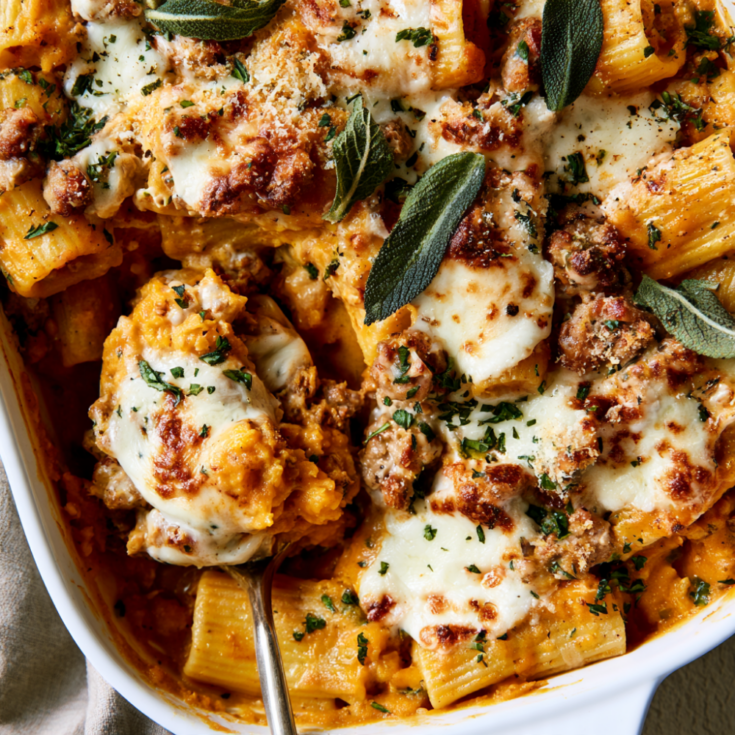
A cozy, creamy pasta bake made with caramelized butternut squash, savory Italian turkey sausage, spinach, Parmesan, mozzarella, and a velvety squash sauce blended with cottage cheese. Fresh sage, fennel, garlic, and a touch of red pepper give the sauce plenty of flavor without heavy cream.
Ingredients
For the Roasted Squash:
- 1 large butternut squash, about 3 lbs before peeling and seeding, peeled, seeded, and cut into 1-inch cubes
- 2 tbsp olive oil
- ¾ tsp kosher salt
- ½ tsp black pepper
- ½ tsp smoked paprika
For the Pasta and Sausage:
- 1 lb rigatoni, penne, ziti, or cavatappi
- 1½ lbs Italian turkey sausage, casings removed
- 1 tbsp olive oil, only if needed
- 1 medium yellow onion, finely diced
- 4 cloves garlic, minced
- 2 tbsp fresh sage, finely chopped (or 2 tsp dried sage)
- 1 tsp fennel seeds, lightly crushed
- ½ tsp red pepper flakes, or less to taste
- ½ tsp kosher salt
- ½ tsp black pepper
- 5 oz fresh baby spinach, roughly chopped
For the Creamy Squash Sauce:
- 1½ cups full-fat cottage cheese, blended completely smooth
- 1 cup low-sodium chicken broth
- ½ cup finely grated Parmesan cheese
- 1 tbsp Dijon mustard
- 1 tbsp fresh lemon juice
- ¼ tsp ground nutmeg
- ½ tsp kosher salt
- ¼ tsp black pepper
- ½–1 cup reserved pasta water, as needed
For the Topping:
- 2 cups shredded low-moisture mozzarella
- ½ cup finely grated Parmesan cheese
- Fresh sage leaves, optional
- Fresh parsley, chopped, for serving
Instructions
1. Roast the butternut squash. Preheat the oven to 425°F. Line a large rimmed baking sheet with parchment paper. Add the cubed squash and toss with the olive oil, kosher salt, black pepper, and smoked paprika.
Spread in a single layer, leaving space between pieces. Roast for 25–30 minutes, tossing once halfway through, until the squash is completely tender and browned around the edges. Don't rush this step — the browned edges are what give the finished sauce a deeper, sweeter roasted flavor instead of tasting like boiled squash.
2. Cook the pasta. While the squash roasts, bring a large pot of generously salted water to a boil. Cook the pasta 2–3 minutes less than the package directions. It should be firm and noticeably underdone in the center because it will continue cooking in the oven. Before draining, reserve 1½ cups of the pasta water. Drain the pasta well and set aside. Do not rinse it.
3. Brown the turkey sausage.While the pasta cooks, heat a large Dutch oven or deep oven-safe skillet over medium-high heat. Add the turkey sausage and cook for 7–9 minutes, breaking it into small, bite-size pieces as it cooks. Continue until the sausage is cooked through and has developed browned edges.
If the pan seems completely dry, add up to 1 tbsp olive oil. Transfer the sausage to a plate, leaving any browned bits and flavorful fat in the pan. For the best flavor, don't just cook the sausage until gray — let it actually brown.
4. Build the sausage mixture. Reduce the heat to medium. Add the diced onion to the same pan and cook for 4–5 minutes, stirring occasionally, until softened and lightly golden.
Add the garlic, sage, crushed fennel seeds, and red pepper flakes. Cook for about 30–45 seconds, stirring constantly, until fragrant.
Add the chopped spinach and cook for 1–2 minutes, stirring, until wilted. Return the browned sausage to the pan and stir to combine. Remove from the heat.
5. Blend the squash sauce. When the squash is finished roasting, transfer it to a high-powered blender or food processor.
Add the cottage cheese, chicken broth, Parmesan, Dijon mustard, lemon juice, nutmeg, salt, and black pepper. Blend for 1–2 minutes, scraping down the sides as needed, until the sauce is completely smooth and creamy. Add about ¼ cup of the reserved pasta water and blend again.
The sauce should be thick and creamy but loose enough to coat pasta easily.
Add more pasta water, 2–3 tablespoons at a time, only if needed.
Don't add all the pasta water automatically. The amount needed depends on how moist the squash is and how thick your cottage cheese is.
Taste the sauce. It should taste savory, slightly sweet from the squash, creamy, lightly tangy, and well-seasoned. Add another pinch of salt if needed.
6. Lower the oven temperature. Reduce the oven temperature to 375°F. Lightly grease a 9x13-inch baking dish.
7. Combine the pasta, sausage, and sauce. Add the drained pasta to the Dutch oven with the sausage and spinach mixture. Pour in the squash sauce and gently stir until the pasta is evenly coated.
If the mixture looks dry before going into the baking dish, add another splash of reserved pasta water.
The mixture should look slightly saucier than you think it needs to be — the pasta will absorb some of the sauce as it bakes. Taste one piece of pasta and adjust the salt or pepper if needed.
8. Assemble the pasta bake. Transfer the mixture to the prepared 9x13-inch baking dish and spread it into an even layer. Sprinkle the mozzarella evenly over the top, then sprinkle with the Parmesan. If using fresh sage leaves, scatter a few over the cheese.
9. Bake uncovered for 20–25 minutes, until the edges are bubbling and the cheese is completely melted. For a more deeply browned top, switch to broil for 1–2 minutes at the end.
Watch closely during broiling because the cheese can go from golden to burnt quickly.
10. Rest before serving. Let the pasta bake rest for 5–10 minutes before serving. This gives the sauce time to settle and makes it easier to scoop without the casserole falling apart. Garnish with fresh parsley and additional Parmesan if desired. Serve warm.
Notes
Protein per Serving: About 30–34g
Nutrition note: Protein and calories vary depending on the turkey sausage, cottage cheese, pasta, mozzarella, Parmesan, and other brands you use. Use your specific products to calculate the most accurate numbers.
Make-Ahead, Storage, and Freezing
Make-Ahead: For best results, assemble the pasta bake up to 24 hours ahead. Prepare the recipe through Step 8, but do not bake it.
Let the assembled casserole cool slightly, then cover tightly and refrigerate. When ready to bake, remove from the refrigerator while the oven preheats.
Bake covered with foil at 375°F for 25 minutes, then remove the foil and continue baking for 15–20 minutes, until hot throughout and bubbling around the edges. Broil for 1–2 minutes at the end for a more golden cheese topping.
Because refrigerated pasta absorbs sauce while it sits, reserve a little extra pasta water or chicken broth. If the pasta looks noticeably dry before baking, drizzle ¼–½ cup around the edges and gently press it down into the casserole before covering.
Refrigerator: Cool leftovers promptly and refrigerate in an airtight container for up to 4 days. Reheat individual portions in the microwave until hot, or reheat larger portions in a covered dish in a 350°F oven until warmed through. If the pasta seems dry when reheating, add a small splash of chicken broth before covering.
Freezer: For best quality, freeze the casserole before baking whenever possible. Assemble in a freezer-safe baking dish but do not bake. Cool any ingredients that are still warm before assembling and freezing. Wrap tightly in plastic wrap, then foil, and freeze for up to 3 months. Thaw overnight in the refrigerator before baking, following the make-ahead instructions. You can also freeze fully baked leftovers, although the pasta texture will be slightly softer after thawing and reheating.
Food safety: Cook turkey sausage to 165°F. Refrigerate leftovers within 2 hours. Reheat leftovers to 165°F throughout.
Tips for the Best Sausage Pasta Bake
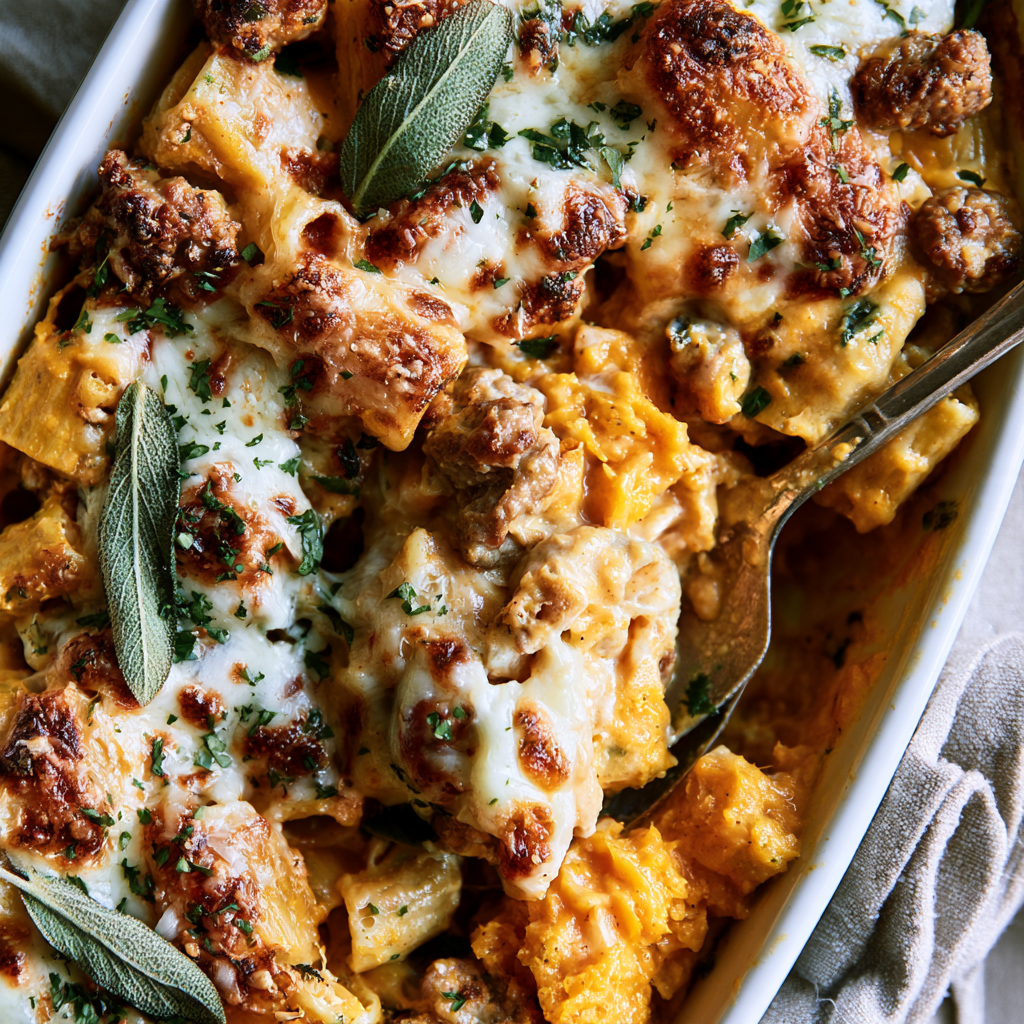
Roast the squash, don’t boil it. Boiled squash holds water, which makes the sauce thin. Roasting caramelizes the sugars and drives off moisture. This is the single most important step.
Blend the cottage cheese completely smooth. A full 1–2 minutes in a food processor or high-speed blender. Any visible curds make the sauce grainy.
Brown the sausage properly. Let it sit in a single layer for a few minutes before breaking it up. That’s how you get browned, savory crumbles instead of gray ones.
Undercook the pasta by 2–3 minutes. It finishes cooking in the oven while absorbing the sauce. Fully cooked pasta turns to mush when baked.
Reserve more pasta water than you think you need. You’ll use it to adjust the sauce and to loosen the pasta mixture before it goes in the dish. It’s starchy, salty, and free.
Don’t add all the pasta water at once. The amount needed depends on how moist your squash is and how thick your cottage cheese is. Start with ¼ cup and add more 2–3 tablespoons at a time.
Season the sauce before it goes in the dish. Taste the blended squash sauce and adjust salt and pepper. Once it’s baked, you can’t fix it.
Don’t skip the fennel seeds. They’re what make Italian sausage taste like Italian sausage. Crush them lightly between your fingers or with the back of a spoon.
The Dijon and lemon are not optional. They balance the squash’s natural sweetness and keep the casserole from tasting heavy.
Add the nutmeg. A small amount makes the squash taste sweeter and more complex. It’s a classic pairing for a reason.
Make the mixture saucier than you think it needs to be. The pasta absorbs sauce as it bakes. If it looks perfect going in, it’ll be dry coming out.
Use a 9×13 dish, not a smaller one. A deeper dish means the middle stays wet while the top browns. A wider surface area gives you more crispy cheese.
Let it rest before serving. Five to ten minutes lets the sauce set, so portions hold together on the plate.
Easy Variations
Spinach Rigatoni Pasta. Skip the sausage and double the spinach to 10 oz. About 20–24g protein per serving.
Rigatoni with Sausage and Tomato Cream Sauce. Add 1 (14.5-oz) can of crushed tomatoes to the sausage mixture before adding the pasta. Reduce the chicken broth in the sauce to ½ cup. About 30–34g protein per serving.
Baked Penne with Italian Sausage. Swap the rigatoni for penne. Everything else stays the same. About 30–34g protein per serving.
Cheesy Sausage Pasta. Add 1 cup shredded provolone on top with the mozzarella. About 32–36g protein per serving.
Smoked Sausage Pasta. Swap the turkey sausage for 1 lb of sliced smoked turkey kielbasa. Brown it in the pan for 4–5 minutes per side. About 28–32g protein per serving.
Pasta with Kielbasa Sausage. Swap the turkey sausage for 1 lb of sliced kielbasa. Reduce the sage to 1 tbsp and add 1 tsp of smoked paprika to the onion. About 28–32g protein per serving.
Tuscan Rigatoni. Add ½ cup of sun-dried tomatoes and 1 tsp of Italian seasoning to the sausage mixture. Swap the sage for basil. About 30–34g protein per serving.
Ground Italian Sausage Pasta. Use 1½ lbs of ground Italian sausage (mild or hot) instead of links. Brown it the same way. About 30–34g protein per serving.
Sausage and Noodle Recipes. Swap the rigatoni for egg noodles. Reduce the bake time to 15–18 minutes. About 30–34g protein per serving.
Dairy-Free Version. Skip the cottage cheese, mozzarella, and Parmesan. Blend the roasted squash with 1 cup of unsweetened coconut milk and 2 tbsp of nutritional yeast. Top with dairy-free mozzarella. About 22–26g protein per serving.
Gluten-Free Version. Use gluten-free rigatoni and confirm your sausage, broth, and Parmesan are gluten-free. About 30–34g protein per serving.
Frequently Asked Questions
Can I make this ahead of time?
Yes. Assemble the whole bake up to 24 hours ahead, cover, and refrigerate. Bake covered with foil for 25 minutes, then uncovered for 15–20 minutes. If the pasta looks dry before baking, drizzle ¼–½ cup of broth around the edges.
Why did my bake turn out dry?
The sauce was too thick, or the pasta absorbed too much liquid. Make the mixture saucier than you think it needs to be before it goes in the dish, and add extra broth when reheating.
Why did my bake turn out watery?
The squash was boiled or steamed instead of roasted, or the cottage cheese wasn’t blended smooth. Roast the squash and blend for a full 1–2 minutes.
Can I use frozen butternut squash?
Yes, in a pinch. Roast it from frozen at 425°F for 25–30 minutes. The texture will be slightly softer and the flavor less sweet than fresh.
Can I use ricotta instead of cottage cheese?
Yes. Use 1½ cups of whole-milk ricotta. Blend it with the squash the same way. About 28–32g protein per serving.
Can I make this without sausage?
Yes. Skip the sausage and add 2 cups of cooked lentils or 1 lb of browned ground turkey. See the variations section for a vegetarian version.
What pasta shapes work best?
Rigatoni, penne, ziti, and cavatappi all work because they’re sturdy and hold sauce in their ridges. Avoid long pasta like spaghetti or linguine.
Can I use a different cheese on top?
Yes. Provolone, fontina, or a shredded Italian blend all work well. Keep the Parmesan for the salty, nutty finish.
Is this recipe gluten-free?
Not as written, because of the pasta. Use gluten-free rigatoni and confirm your sausage and broth are gluten-free.
Can I double this recipe?
Yes. Use two 9×13 dishes. Bake one and freeze the other, or bake both at the same time and rotate the pans halfway through.
How many people does this serve?
Eight as a dinner, or 10–12 as a side dish.
More High-Protein Fall Recipes You’ll Love
- Balsamic Fig & Rosemary Slow Cooker Pot Roast
- Crockpot Ground Turkey, Sweet Potato & Broccoli Casserole
- Creamy Crockpot White Chicken Chili
- One-Pot Creamy Chicken Pot Pie Pasta
Conclusion
This creamy butternut squash and turkey sausage pasta bake is the autumn comfort food that doesn’t taste like a compromise.
Sweet roasted squash blended into a velvety sauce with cottage cheese, Dijon, and lemon, savory browned turkey sausage, rigatoni, and a melted mozzarella and Parmesan top.
About 30–34 grams of protein per serving. The keys are simple: roast the squash instead of boiling it, brown the sausage properly, blend the cottage cheese completely smooth, undercook the pasta by 2–3 minutes, make the mixture saucier than you think it needs to be, and let the bake rest before serving.
Do that, and you’ll have a pan of pasta that tastes like it came out of a restaurant kitchen but feeds your family on a Tuesday.
Make it on a Sunday, portion it into containers, and you’ve got dinner handled for most of the week. It reheats better than almost any pasta dish.