Pot roast has a reputation problem.
It’s the dinner people think of as heavy, brown, and vaguely old-fashioned — a slab of beef cooked with carrots and potatoes until everything tastes the same. Comforting, sure. But not something you’d call elegant.
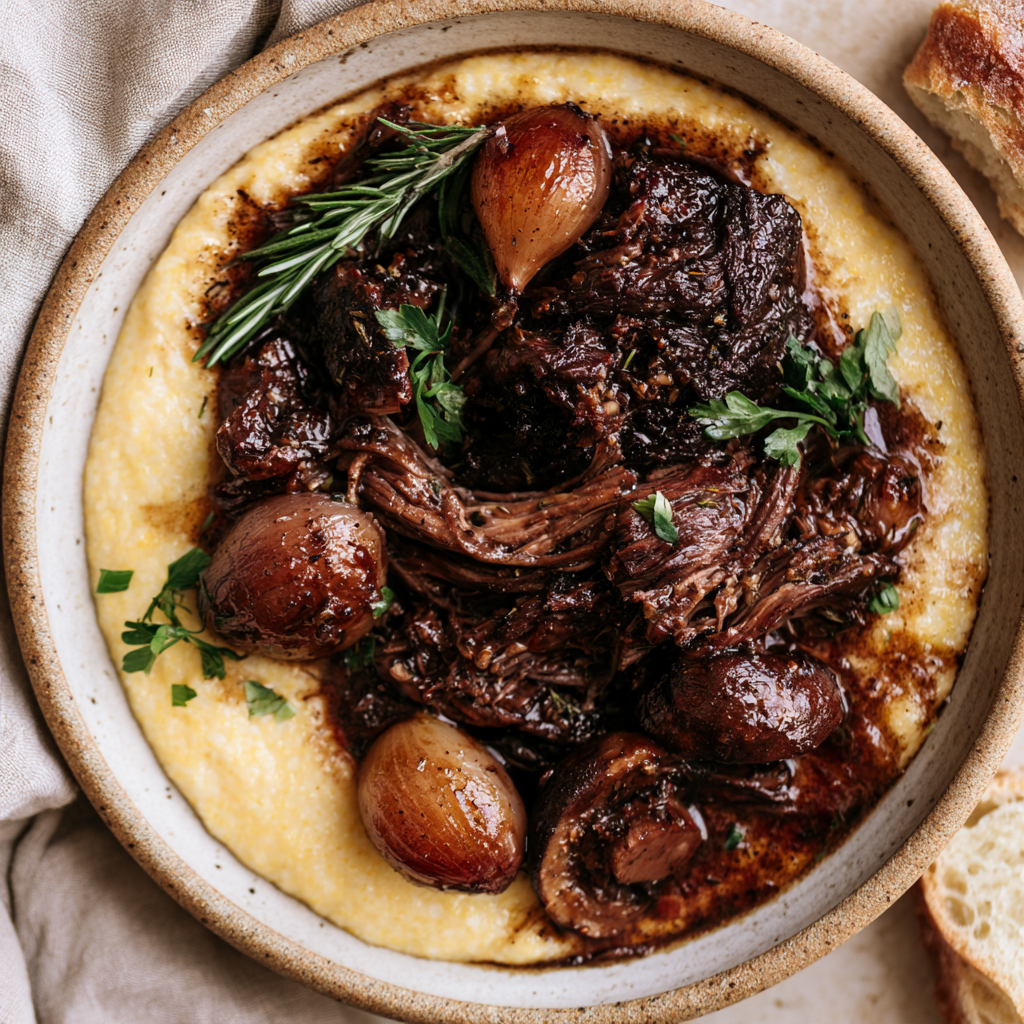
This version fixes that. It’s a balsamic-fig braised chuck roast with rosemary and shallots, served over creamy Parmesan polenta.
The figs melt into the braising liquid during the long cook, creating a rich sweet-savory sauce that’s spooned over every serving. The balsamic adds tang and depth.
The rosemary ties it together. And the polenta — creamy, buttery, cheesy — soaks up every drop.
Each serving delivers about 40–43 grams of protein from the beef, which makes this a genuinely satisfying dinner rather than a special-occasion indulgence.
It’s cozy enough for a Sunday dinner and special enough for a holiday or dinner with guests.
One honest thing worth knowing: this is not a dump-and-go recipe. You sear the roast, brown the mushrooms and shallots, and build the braising liquid in the same skillet.
It takes about 25 minutes of hands-on time before the slow cooker takes over. That 25 minutes is what separates a good pot roast from a great one — the sear builds flavor, the browned mushrooms add depth, and the braising liquid needs to be whisked together before it goes in.
And a second honest note: the figs are not optional. They’re what make this recipe distinctive. The figs dissolve into the sauce and create the dish’s sweet-savory backbone. If you remove them, this becomes another balsamic pot roast — good, but not the same.
If you can’t find dried Mission figs, black Mission figs or another soft dried fig work as a substitute.
Why This Slow Cooker Pot Roast Works
The figs are the secret weapon. Dried Mission figs break down completely during an 8-hour braise, dissolving into the liquid and creating a naturally sweet, rich, glossy sauce. They add depth and complexity that no amount of sugar or honey could replicate. This is what makes the dish taste like a bistro dish rather than a diner dish.
Balsamic vinegar does double duty. It adds tang to balance the figs’ sweetness and helps break down the connective tissue in the chuck roast, making the beef more tender—a good-quality regular balsamic works perfectly — no need for expensive aged vinegar in the braise.
Chuck roast is the right cut. It has enough intramuscular fat and connective tissue to stay moist through a long braise. When it becomes fork-tender, the collagen has melted, and the meat pulls apart with little resistance. This is the cut that pot roast was invented for.
Browning the mushrooms and shallots adds real flavor. Raw mushrooms thrown into a slow cooker taste boiled. Mushrooms browned in the same skillet that seared the beef pick up all those browned bits and develop a deep, savory flavor that carries through the entire dish.
The polenta is the perfect base. Polenta is creamy, slightly sweet, and absorbs the braising liquid like a sponge. It’s a better choice than potatoes because it doesn’t compete with the beef — it complements it.
It’s better on day two. Like most braised dishes, the flavors meld overnight. The sauce thickens, the beef absorbs more flavor, and the whole thing tastes even better the next day.
Balsamic Fig & Rosemary Slow Cooker Pot Roast with Creamy Parmesan Polenta
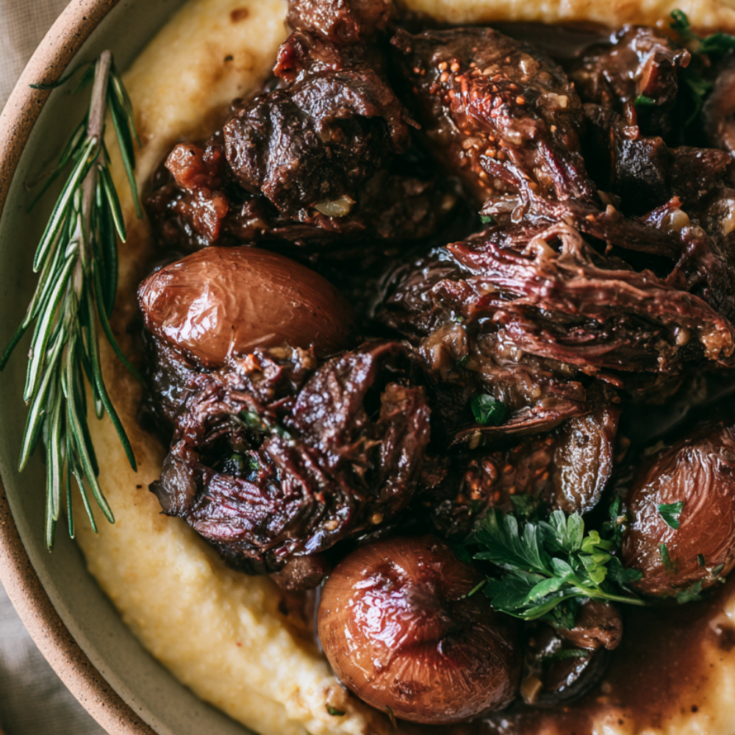
Slow-braise tender chuck roast with balsamic vinegar, dried figs, rosemary, shallots, and garlic until it pulls apart easily with a fork.
The figs melt into the braising liquid, creating a rich, sweet-savory sauce that you spoon over creamy Parmesan polenta.
Ingredients
For the Pot Roast:
- 3½ lbs beef chuck roast, trimmed of large pieces of excess fat
- 1 tbsp olive oil
- 1½ tsp kosher salt
- ½ tsp black pepper
- 1 tsp garlic powder
- 1 tsp smoked paprika
- 8 oz baby bella mushrooms, quartered
- 4 medium-large shallots, peeled and halved
- 12 dried Mission figs, stems removed and quartered
- 4 cloves garlic, smashed
- 2 tbsp tomato paste
- 1½ cups low-sodium beef broth
- ¼ cup balsamic vinegar
- 2 tbsp Dijon mustard
- 3 sprigs fresh rosemary
- 2 bay leaves
For the Sauce:
- 1 tbsp balsamic vinegar, for finishing
- 1 tbsp cornstarch
- 2 tbsp cold water
For the Creamy Parmesan Polenta:
- 4 cups low-sodium beef broth
- 1 cup coarse-ground polenta
- ¾ tsp kosher salt
- ½ cup finely grated Parmesan cheese
- 3 tbsp unsalted butter
- ¼ cup whole milk or heavy cream
- ¼ tsp black pepper
- ½ cup additional hot broth or water, as needed
For Serving:
- Fresh parsley, chopped
- Fresh rosemary, optional
- Additional Parmesan, optional
- Aged balsamic, for drizzling (optional)
Instructions
1. Prepare the roast. Pat the chuck roast thoroughly dry with paper towels. Season all sides with the salt, black pepper, garlic powder, and smoked paprika. Let the seasoned roast sit while you prepare the skillet.
2. Sear the beef. Heat the olive oil in a large Dutch oven or heavy skillet over medium-high heat. Add the chuck roast and sear until deeply browned, about 4–5 minutes on the first side. Turn and brown the remaining large surfaces for about 3–4 minutes each. Use tongs to hold the roast against the pan and brown the edges for about 30 seconds at a time. Don't worry about cooking the roast through — you're building flavor at this stage. Transfer the roast to a 6-quart slow cooker.
3. Brown the mushrooms and shallots. Add the mushrooms and shallots to the same skillet. Cook for about 4–5 minutes, stirring occasionally, until the mushrooms develop some color and the shallots begin to brown. Transfer them to the slow cooker and arrange them around the roast.
4. Build the braising sauce. Reduce the skillet heat to medium. Add the tomato paste and cook for about 1 minute, stirring constantly. Slowly pour in the beef broth, scraping the browned bits from the bottom of the pan. Whisk in the balsamic vinegar and Dijon mustard. Simmer for about 1–2 minutes.
5. Assemble the slow cooker. Add the quartered figs and smashed garlic around the roast. Pour the hot braising liquid over everything. Tuck the rosemary sprigs and bay leaves into the liquid. The liquid does not need to cover the roast completely.
6. Slow cook. Cover and cook on LOW for 8–10 hours or HIGH for 5–6 hours. The roast is ready when it is very tender and a fork slides into the thickest part easily. The meat should pull apart with little resistance. If using an instant-read thermometer, chuck roast is generally tender once it reaches roughly 195–205°F, but tenderness is the more important test. Avoid repeatedly opening the slow cooker during cooking because each opening releases heat and can extend the cooking time.
7. Rest the beef. Carefully transfer the roast to a large cutting board or platter. Loosely tent it with foil and let it rest for 15–20 minutes. Remove the rosemary stems and bay leaves from the slow cooker.
8. Finish the sauce. Taste the braising liquid before thickening. If it tastes balanced and concentrated, proceed to the next step. If it seems a little thin, turn the slow cooker to HIGH and cook uncovered or with the lid slightly ajar for 10–15 minutes to allow some excess moisture to evaporate. For a thicker, glossy sauce, whisk the cornstarch with the cold water in a small bowl. Stir the slurry into the hot braising liquid and cook on HIGH for 5–10 minutes, stirring occasionally, until the sauce thickens. Stir in the remaining 1 tablespoon balsamic vinegar. Taste and adjust the salt and pepper if needed.
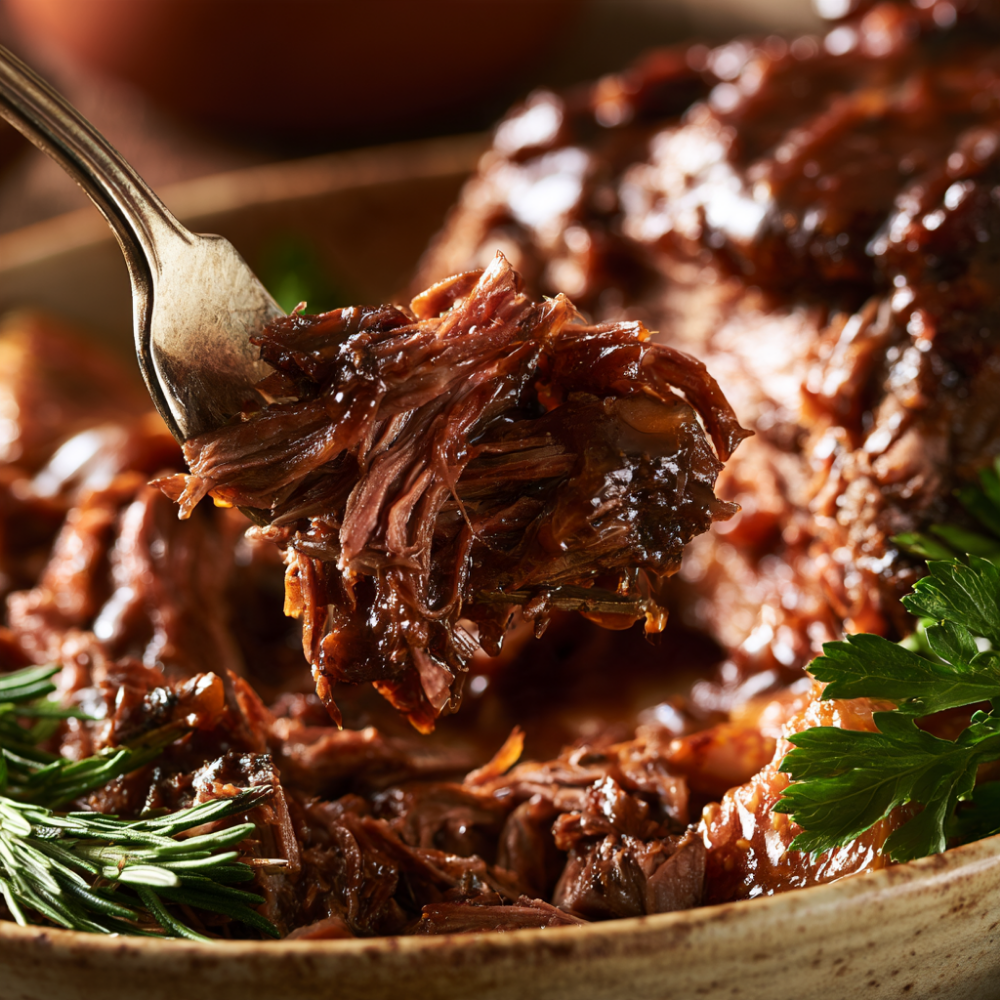
9. Shred the beef. Use two forks to pull the rested beef into large, tender pieces. Discard any large pieces of fat or tough connective tissue. Return the beef to the slow cooker and gently toss it with the fig-balsamic sauce. Let it sit in the sauce for 5 minutes before serving so the meat can absorb some of the flavor.
10. Make the Parmesan polenta. While the beef rests, bring the 4 cups of beef broth to a gentle boil in a large saucepan. Stir in the salt. Slowly pour in the polenta while whisking constantly to prevent lumps. Reduce the heat to low. Cook according to the package directions, usually about 25–30 minutes for coarse-ground polenta, stirring frequently, until very creamy and tender. Remove from the heat. Stir in the Parmesan, butter, milk or cream, and black pepper. If the polenta becomes too thick, stir in some of the reserved hot broth or water, a few tablespoons at a time, until it reaches a soft, creamy consistency.
11. Serve. Spoon creamy Parmesan polenta into shallow bowls. Top with generous portions of the shredded beef, mushrooms, shallots, figs, and plenty of the balsamic sauce. Finish with fresh parsley and additional Parmesan if desired. If you have aged balsamic, drizzle a small amount over each serving as a finishing touch. Serve immediately while the polenta is creamy.
Notes
Protein per Serving: About 40–43g
Nutrition note: Protein and calories vary depending on the size and trimming of the chuck roast, as well as the specific polenta, broth, and Parmesan brands you use. Use your specific products to calculate the most accurate nutrition information.
A Quick Note on Braising Chuck Roast
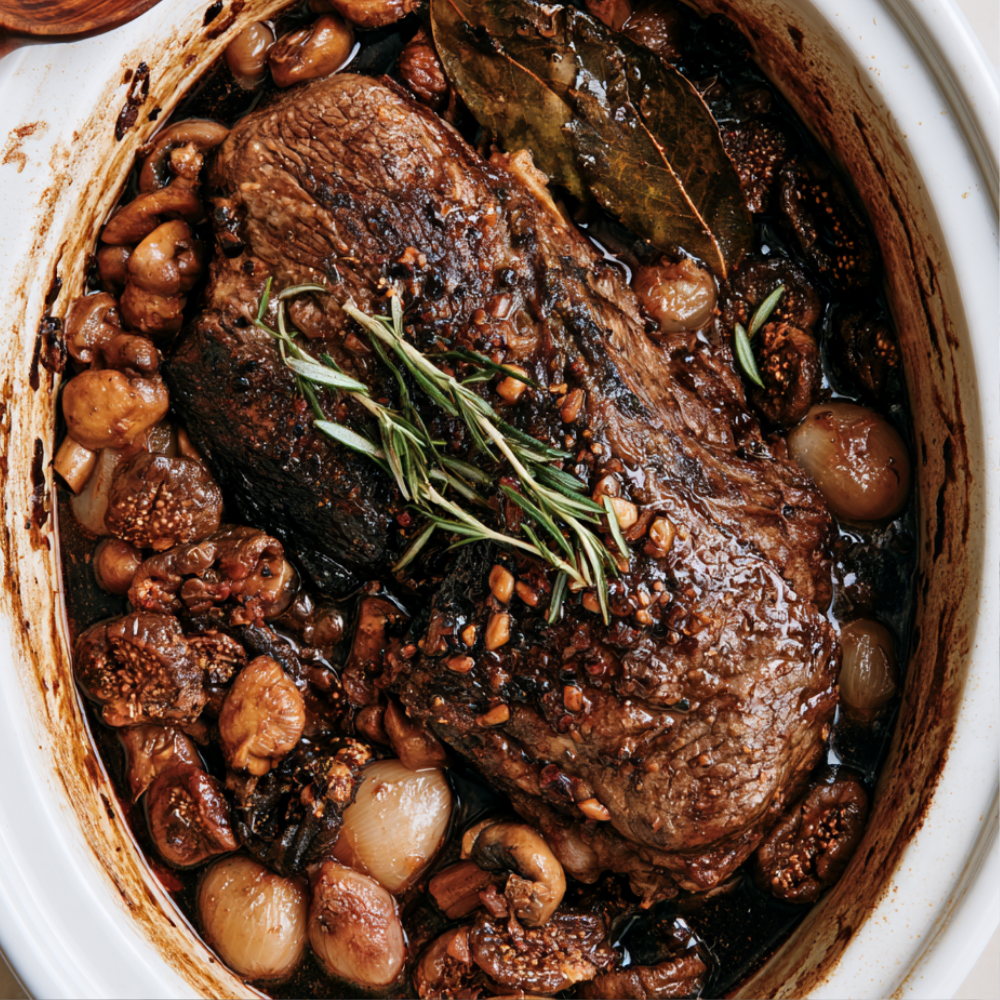
Three things determine whether a chuck roast turns out fork-tender or dry and chewy:
Sear it properly. A deep brown crust on the roast is flavor. Don’t rush this step. Sear it properly. A deep brown crust on the roast adds flavor. Don’t rush this step.
Cook it until it’s fork-tender, not until it hits a number. Chuck roast becomes tender as its connective tissue breaks down. A thermometer is helpful — the tender range is generally around 195–205°F — but the real test is whether a fork slides in easily and the meat pulls apart with little resistance. If it’s still tough, it needs more time, not less.
Let it rest before shredding. After cooking, let the roast rest in the braising liquid for 15–20 minutes. This lets the juices redistribute and the meat firm up slightly, making it easier to shred.
A Quick Note on the Polenta
Polenta has a reputation for being fussy. It isn’t, if you follow three rules:
Whisk constantly when adding the polenta to the liquid. This prevents lumps from forming.
Use the right ratio. 1 cup of dry polenta to 4 cups of liquid gives you a creamy, spoonable polenta. More liquid makes it thinner; less makes it thicker.
Keep it loose. Polenta continues absorbing liquid as it sits. It should be slightly looser than you think you need when you finish cooking. Reserve ½ cup of hot broth to stir in if it thickens too much.
Recipe Tips
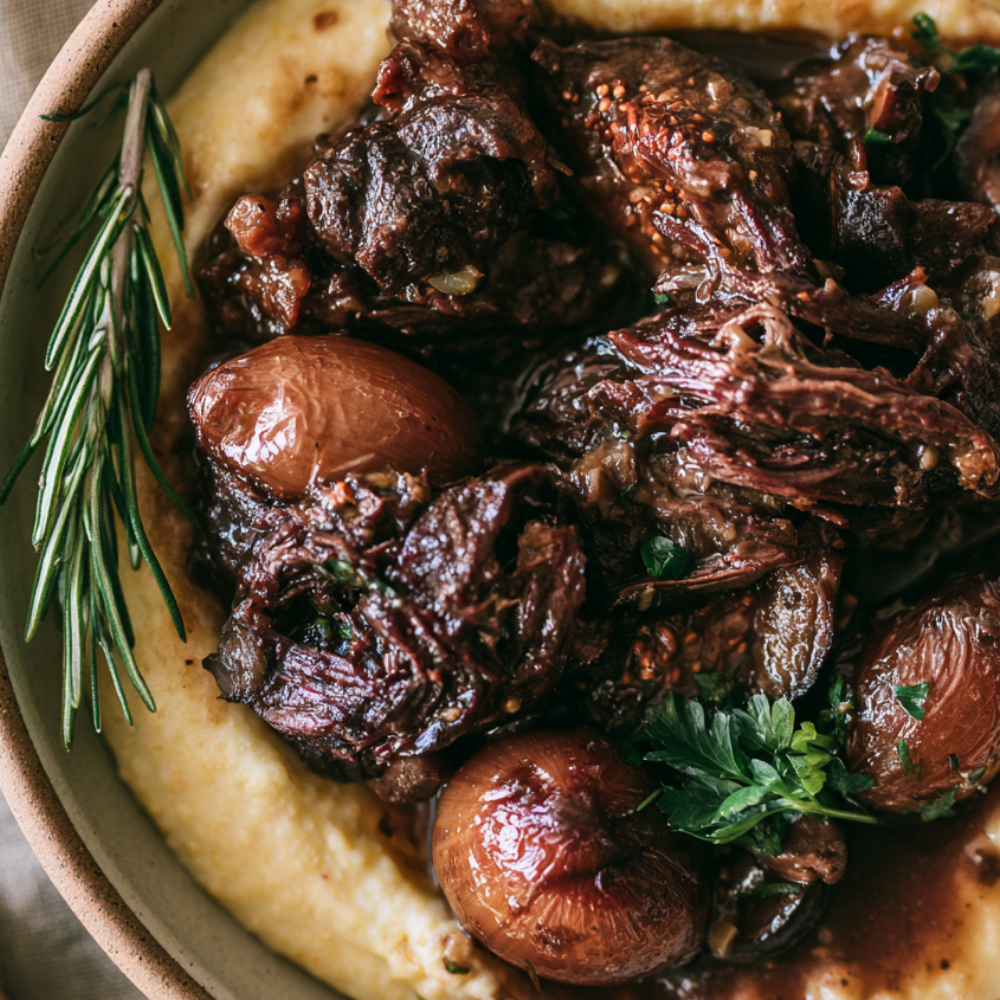
Don’t rush the sear. The browned bits left in the skillet become part of the braising sauce. Take the time to develop a deep brown crust rather than simply coloring the outside of the beef.
Brown the mushrooms and shallots. This is what separates a deeply savory pot roast from one that tastes like everything was boiled together. The mushrooms pick up the beefy browned bits from the skillet and carry that flavor into the dish.
The roast doesn’t need to be submerged. Slow cookers retain moisture extremely well. The braising liquid should come partway up the roast, not completely cover it.
Don’t skip the finishing balsamic. The balsamic added during cooking adds depth and sweetness, but the small amount added at the end restores brightness lost during the long braise.
Let tenderness determine when the roast is done. Slow cookers and chuck roasts vary. If a roast reaches a particular temperature but is still hard to shred, it needs more time. Keep cooking until a fork slides in easily and the meat pulls apart with little resistance.
Keep the polenta loose. Polenta continues absorbing liquid as it sits. It should be slightly looser than you think you need when you finish cooking it. If it thickens while the beef rests, stir in a little hot broth or water.
Use regular balsamic for cooking. You don’t need expensive aged balsamic for the braising liquid. A good-quality balsamic vinegar provides plenty of flavor. If you have an aged balsamic, drizzle it over individual servings as an optional finishing touch.
Taste the sauce before thickening. The sauce may be perfectly balanced after the long braise. Thicken it only if it’s thinner than you’d like. Reduction is the flavor-first method; cornstarch is the reliable backup.
Easy Variations
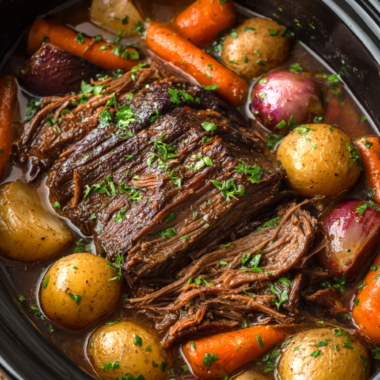
Slow Cooker Pot Roast With Potatoes. Instead of polenta, add 1½ lbs of baby gold potatoes and 4 large carrots, cut into 2-inch pieces, to the slow cooker with the mushrooms and shallots. Cook as directed. The potatoes soak up the sauce, making it a complete one-pot meal.
Oven Version. Preheat the oven to 325°F. Sear the roast in a Dutch oven, then add all the ingredients and bring to a simmer on the stovetop. Cover and transfer to the oven. Cook for 3–3½ hours, until the beef is fork-tender. Finish as directed.
Instant Pot Version. Sear the roast using the sauté function. Add all the ingredients, lock the lid, and cook on high pressure for 75 minutes with a 15-minute natural release. Thicken the sauce and shred the beef as directed.
Red Wine Version. Replace ½ cup of the beef broth with ½ cup of dry red wine. The wine adds depth and acidity that complements the figs and balsamic.
Cranberry Fig Version. Add ½ cup of dried cranberries with the figs. The cranberries add a tart brightness that balances the sweetness.
Cauliflower Polenta (Lower Carb). Replace the polenta with 6 cups of riced cauliflower. Cook according to the cauliflower polenta recipe below. Cuts the carbs significantly while keeping the creamy texture.
Cauliflower Polenta (Lower-Carb Alternative)
Ingredients:
- 6 cups riced cauliflower (about 1 large head)
- 1 cup low-sodium beef broth
- ½ cup grated Parmesan cheese
- 3 tbsp unsalted butter
- ¼ cup heavy cream
- ¾ tsp kosher salt
- ¼ tsp black pepper
Instructions:
- Steam the riced cauliflower in the beef broth in a covered saucepan over medium heat for 8–10 minutes, until very tender.
- Transfer the cauliflower and any remaining liquid to a blender or food processor. Blend until completely smooth, about 1–2 minutes.
- Return the purée to the saucepan over low heat. Stir in the Parmesan, butter, heavy cream, salt, and pepper. Cook for 2–3 minutes, until heated through and creamy.
- Taste and adjust salt and pepper. Serve as you would polenta.
Serving Ideas
This pot roast and polenta is a complete meal on its own, but it also pairs well with:
- A simple arugula salad with lemon vinaigrette
- Roasted broccolini with garlic and red pepper flakes
- Sautéed kale with olive oil and lemon
- Crusty bread for soaking up the sauce
- A glass of full-bodied red wine (Barolo, Chianti, or Cabernet Sauvignon)
- Pickled red onions or shallots
Make-Ahead Instructions
This pot roast is an excellent make-ahead meal. You can prepare the beef and sauce up to 3 days ahead and refrigerate them in a covered container. For the best results, reheat the beef gently in its sauce. Make the polenta fresh just before serving. If you have leftover polenta, loosen it with a little broth or milk while reheating and stir until creamy again.
Storage and Food Safety
Refrigerator: Refrigerate leftover beef and sauce in a covered container and use within 3–4 days.
Freezer: Freeze the cooked beef and sauce for up to 3 months. For the best texture, freeze the beef and sauce separately from the polenta. Thaw overnight in the refrigerator and reheat gently until hot throughout.
Reheating: Reheat the beef and sauce on the stovetop over medium-low heat, stirring occasionally, until hot throughout. Reheat the polenta in a saucepan with a splash of broth or milk, stirring until creamy.
Food safety: Cook beef until fork-tender and safe (minimum 145°F, but chuck roast needs to reach the tender range, generally around 195–205°F, to become shreddable). Refrigerate leftovers within 2 hours. Reheat leftovers to 165°F throughout.
Frequently Asked Questions
Can I use another cut of beef?
Chuck roast is the best choice for this recipe because its marbling and connective tissue tenderize during the long, slow cooking process. A boneless chuck roast is easiest to shred, but you can also use a bone-in chuck roast. Bottom blade roast and arm roast also work.
Can I use fresh figs instead of dried figs?
Dried figs are recommended because their concentrated sweetness gives the sauce its distinctive flavor. Fresh figs contain much more water and won’t produce the same result.
What if I don’t have Mission figs?
Other dried figs can be substituted. Black Mission figs are especially good, but any soft dried fig will work.
Can I skip the mushrooms?
Yes. The recipe will still work without them, although the mushrooms add savory depth to the sauce.
Can I make this without polenta?
Yes. You can serve the beef and sauce over mashed potatoes, mashed cauliflower, egg noodles, or crusty bread.
Can I make the polenta ahead?
Yes, but freshly made polenta has the best creamy texture. If making it ahead, refrigerate it in a covered container and reheat gently with additional broth or milk, stirring until smooth.
Why is my pot roast still tough?
If the roast is cooked but still hard to shred, it usually needs more time, not less. Chuck roast becomes tender as its connective tissue breaks down. Continue cooking until a fork slides into the meat easily, and the roast pulls apart with little resistance.
Can I use a different herb?
Yes. Fresh thyme is an excellent substitute for rosemary, although rosemary pairs particularly well with the balsamic and figs in this recipe.
Why did my sauce turn out thin?
The braising liquid is naturally thin after cooking. Leave the lid ajar on HIGH for 10–15 minutes to reduce and concentrate the sauce, or whisk in a cornstarch slurry for a thicker, glossier result. Taste first — the sauce may be perfectly balanced as-is.
Can I double this recipe?
Yes. Use a 7- or 8-quart slow cooker and double all ingredients. The cook time stays roughly the same, but check that the beef is fork-tender before serving.
Is this recipe gluten-free?
Yes, as written, but check your broth, balsamic vinegar, Dijon mustard, and any packaged ingredients to confirm. Most are naturally gluten-free.
More High-Protein Comfort Food Recipes You’ll Love
- Crockpot Pork Loin: The Easiest High-Protein Sunday Roast
- Beef Meal Prep: The Ultimate Melt-In-Your-Mouth French Onion Roast
- Mississippi Pot Roast Crockpot Recipe — 35g Protein, 5 Minutes of Prep
Conclusion
This balsamic fig and rosemary slow cooker pot roast proves pot roast can be elegant. A deeply seared chuck roast braised with balsamic vinegar, dried Mission figs, shallots, and rosemary until it’s fork-tender. Served over creamy Parmesan polenta that soaks up every drop of the sweet-savory sauce. About 40–43 grams of protein per serving.
The keys are simple: sear the roast properly, brown the mushrooms and shallots in the same skillet, use real dried figs (they’re not optional), cook until fork-tender rather than until a specific temperature, taste the sauce before thickening, and make the polenta fresh. Do that, and you’ll have a pot roast that tastes like something from a bistro, not a diner.
Make it on a Sunday, portion it into containers, and you’ve got dinner handled for most of the week. It’s even better on day two.